TRT World carries an interesting piece about Riyadh being celebrated as “capital of media”. The piece gives a detailed account of the Khashoggi affair and rightly wonders how this sits with having a media event.
People attend a symbolic funeral prayer for Saudi journalist Jamal Khashoggi at the courtyard of Fatih mosque in Istanbul, Turkey November 16, 2018 (Reuters)
The event, which will take place on December 19, almost three months after Khashoggi’s killing, comes following the Council of Arab Information Ministers’ decision to choose Riyadh as the Arab Media Capital last May, according to a statement by the Media and Communication sector of the Arab League.
….For years the Saudi Arabian government has been accused of human rights violations, including imprisoning human rights defenders and silencing its critics. However, human rights organisations have been increasingly expressing their concerns since the crown prince’s takeover in 2015, saying that the limited freedom of expression under his father King Salman has been completely shut down. Three Saudi princes living in the Europe, all critics of the Saudi government, disappeared between 2015 and 2017. Human Rights Watch reported in May 2018 that the kingdom arbitrarily detained thousands more people in a six-month period, without referring them to courts for criminal proceedings.
“[MBS] wants to control the whole scene: He’s a transformer, he wants to have a monopoly on the narrative, on the ideas that are being exchanged in Saudi Arabia. And right now he does have total control,” Khashoggi was quoted as saying in March 2018, in an article by the Columbia Journalism Review. “The American media should not see the cup half full—see only the reform. Yes, he’s fulfilling a promise to purge radicalism in Saudi Arabia. At the same time however, he’s not allowing any form of expression, except expression that supports him,” he said. [see also: https://humanrightsdefenders.blog/2018/10/19/novak-djokovic-and-rafael-nadal-have-a-chance-to-score-a-point-for-human-rights-defenders/]
The last year or so there has been a lot soul-searching within the broader human rights movement, questioning its relevance or even survival at a time of resurgent ‘anti-human rights’ attitudes in the superpowers (regression in China, USA, and Russia, with the EU vacillating between careful diplomacy and trade interest). A number of smaller countries have also taken enthusiastically to human rights bashing (just to mention Turkey, Philippines, Hungary, Venezuela and Burundi). In all these cases the leadership seems to imply that human rights are niceties that no longer have the support of the majority of their population, which could well be true due to the extent that their control over the media and relentless whipping up of populist feelings make this self-fulling.This blog has tried to monitor – at least illustrate – this phenomenon on many occasions [too many to list]. Now comes along an interesting piece written by professor Samuel Moyn of Yale university under the provocative title “How the Human Rights Movement Failed” (published on 23 April 2018 in the New York Times). The piece is a must read (in full) and I give the text below in green. Even if I disagree with some important parts, it remains a coherent and thought-provoking article (once you get over feeling offended by the idea that you are a plutocrat).
The key notion is expressed in the following quotes:
“.those who care about human rights need to take seriously the forces that lead so many people to vote in majoritarian strongmen in the first place.”
and
“The truth is that the growth of international human rights politics has accompanied the very economic phenomena that have led to the rise of radical populism and nationalism today. In short, human rights activism made itself at home in a plutocratic world.”
Where I most disagree with the author is that there is lot more going on in the human rights movement than the defense of civil and political rights or playing along with elites. Either he does not know it or ignores it on purpose. The thousands of human rights defenders working in their own countries are fully aware of the realities on the ground and are often prioritizing social, economic, cultural and community rights [just a cursory sample of blog posts on environmental activists will show this: https://humanrightsdefenders.blog/tag/environmental-activists/]. International and regional NGOs mostly help and protect them! Also, the author seems to underestimate the potential attraction of the human rights cause in civil society (especially victims and young people), whose mobilization is still patchy. If the human rights movement can overcome its fragmentation and use media better this potential could turn tides. Say I!.
Here the piece in full/ judge for yourselves:
The human rights movement, like the world it monitors, is in crisis: After decades of gains, nearly every country seems to be backsliding. Viktor Orban in Hungary, Rodrigo Duterte in the Philippines and other populist leaders routinely express contempt for human rights and their defenders. But from the biggest watchdogs to monitors at the United Nations, the human rights movement, like the rest of the global elite, seems to be drawing the wrong lessons from its difficulties.
Advocates have doubled down on old strategies without reckoning that their attempts to name and shame can do more to stoke anger than to change behavior. Above all, they have ignored how the grievances of newly mobilized majorities have to be addressed if there is to be an opening for better treatment of vulnerable minorities.
“The central lesson of the past year is that despite considerable headwinds, a vigorous defense of human rights can succeed,” Kenneth Roth, the longtime head of Human Rights Watch, contended recently, adding that many still “can be convinced to reject the scapegoating of unpopular minorities and leaders’ efforts to undermine basic democratic checks and balances.”
That seems unlikely. Of course, activism can awaken people to the problems with supporting abusive governments. But if lectures about moral obligations made an enormous difference, the world would already look much better. Instead, those who care about human rights need to take seriously the forces that lead so many people to vote in majoritarian strongmen in the first place.
The truth is that the growth of international human rights politics has accompanied the very economic phenomena that have led to the rise of radical populism and nationalism today. In short, human rights activism made itself at home in a plutocratic world.
It didn’t have to be this way. The Universal Declaration of Human Rights, which was promulgated in 1948 amid the consolidation of welfare states in Europe and North America and which formed the basis of the human rights agenda, was supposed to enshrine social protections. But in the 1970s, when activists in the United States and Western Europe began to take up the cause of “human rights” for the victims of brutal regimes, they forgot about that social citizenship. The signature group of that era, Amnesty International, focused narrowly on imprisonment and torture; similarly, Human Rights Watch rejected advocating economic and social rights.
This approach began to change after the Cold War, especially when it came to nongovernmental advocacy in post-colonial countries. But even then, human rights advocacy did not reassert the goal of economic fairness. Even as more activists have come to understand that political and civil freedom will struggle to survive in an unfair economic system, the focus has often been on subsistence.
In the 1990s, after the Cold War ended, both human rights and pro-market policies reached the apogee of their prestige. In Eastern Europe, human rights activists concentrated on ousting old elites and supporting basic liberal principles even as state assets were sold off to oligarchs and inequality exploded. In Latin America, the movement focused on putting former despots behind bars. But a neoliberal program that had arisen under the Chilean dictator Augusto Pinochet swept the continent along with democracy, while the human rights movement did not learn enough of a new interest in distributional fairness to keep inequality from spiking.
Now the world is reaping what the period of swelling inequality that began in the 1970s through the 1990s sowed.
There have been recent signs of reorientation. The Ford Foundation, which in the 1970s provided much of the funding that made global human rights activism possible, announced in 2015 that it would start focusing on economic fairness. George Soros, a generous funder of human rights causes, has recently observed that inequality matters, too.
Some have insisted that the movement can simply take on, without much alteration of its traditional idealism and tactics, the challenge of inequality that it ignored for so long. This is doubtful.
At the most, activists distance themselves from free-market fundamentalism only by making clear how much inequality undermines human rights themselves. Minimum entitlements, like decent housing and health care, require someone to pay. Without insisting on more than donations from the rich, the traditional companionship of human rights movements with neoliberal policies will give rise to the allegation that the two are in cahoots. No one wants the human rights movement to be remembered as a casualty of a justifiable revolt against the rich.
If the movement itself should not squander the chance to reconsider how it is going to survive, the same is even truer of its audience — policymakers, politicians and the rest of the elite. They must keep human rights in perspective: Human rights depend on majority support if they are to be taken seriously. A failure to back a broader politics of fairness is doubly risky. It leaves rights groups standing for principles they cannot see through. And it leaves majorities open to persuasion by troubling forces.
It has been tempting for four decades to believe that human rights are the primary bulwark against barbarism. But an even more ambitious agenda is to provide the necessary alternative to the rising evils of our time.
—–
Samuel Moyn is the author of “Not Enough: Human Rights in an Unequal World.”
The World Organisation Against Torture <http://www.omct.org> (OMCT) and the Committee Against Torture from Nizhny Novgorod <http://pytkam.net/eng> organize a panel discussion on 9 November 2017 from 6:30–8:30 p.m.
The topic is “Can the media help promote human rights and fight torture in Russia and elsewhere?”
Panellists:
Ms. Olga Sadovskaya, Committee Against Torture from Nizhny Novgorod, Deputy Director
Ms. Therese Obrecht Hodler, journalist and former President of Reporters sans frontières <https://rsf.org>
Mr. MaksimKurnikov, Editor-in-Chief of radio EkhoMoskvy
Mr. Protsenko Nikita, Editor at Mediazone <zona.media>
Moderator: Mr. Gerald Staberock, OMCT Secretary General
—————
The panel discussion will be followed by a cocktail
Free entrance. Maison international des associations, Salle Gandhi, Rue des Savoises, 15. Geneva
On 23 September 2017 quite a number of observers and some media responded to the ill-deserved claim by the Philippines Government that it has scored a “big victory” in the UN’s UPR (Universal Periodic Review). The problem remains that the UN itself does not have the outreach and ‘spinning’ capacity to counter the propaganda spread, especially at the national level in the Philippines.
Seat of the United Nations Human Rights Council in Geneva. UN Brief photo
In reality it was ignoring important issues raised and rejected key recommendations made by other States. The Philippine delegation on Friday at the session in Geneva accepted only 103 out of 257 recommendations made by member-states. On Saturday, the Department of Foreign Affairs claimed the country “scored a big victory in Geneva” when the UN body “overwhelmingly adopted Manila’s human rights report card.” (Foreign Affairs Secretary Alan Peter Cayetano claimed the “adoption” of Manila’s report means that the country “has nothing to hide with its human rights record.“) [see also: https://humanrightsdefenders.blog/2016/11/02/duterte-is-wrong-human-rights-defenders-are-beautiful/]
Adoption of the UPR outcome report, however, cover both the report by the Philippines’ and also the other states’ positions on its human rights record, which included calls to investigate killings (the final document “consists of the questions, comments and recommendations made by States to the country under review, as well as the responses by the reviewed State,” according to a UN human rights office’s brief on its website.)
While member-states welcomed the Philippines’ acceptance of some of the recommendations such as on poverty and education, many expressed concern over its decision not to take action on most of the points raised. Key recommendations merely “noted” by the Philippines—a move interpreted as a rejection by observers—include 44 related to extrajudicial killings in the Duterte government’s campaign against illegal drugs. The Philippines also snubbed recommendations relating to the protection of journalists and human rights defenders, as well as those urging it to lift conditions to allow access of the UN special rapporteur on extrajudicial killings.
“A farce”. This was how human-rights group Karapatan described the Philippine government’s supposed “victory”. Karapatan secretary general Tinay Palabay said on Saturday the Philippine government delegation to Geneva “conveniently glosses over” the fact that it did not accept a number recommendation that aimed to resolve pressing issues on human rights. The Philippine delegation, however, practically denied before the UN body the existence of extrajudicial killings in the drug war despite the increasing number of deaths of suspects without trial.
International watchdog Human Rights Watch also reminded the Philippines to cooperate as a member of the council in all of its mechanisms, such as in allowing the special rapporteur without conditions to look into cases in the Philippines.
Yesterday, 20 June, was World Refugee Day 2017. Kristy Siegfried, IRIN’s Migration Editor, wrote an excellent ‘summary’ with a selection of 7 short stories ensuring that the problem is not viewed from a euro-centric position.
In recent years, it’s become an annual ritual on World Refugee Day for the UN’s refugee agency, UNHCR, to declare that levels of forced displacement have reached an “unprecedented high”. This year is no exception. As of the end of 2016, there were 65.6 million people worldwide forcibly displaced from their homes by war, violence, or persecution. That figure encompasses 40.3 million people displaced within their countries’ borders (IDPs) and 2.8 million asylum seekers, as well as 22.5 million refugees. While 2016 was another record year for forced displacement, the increase from 2015 was only 300,000. That may not sound like cause for celebration, but when you consider that the figure in 2015 jumped by 5.8 million from the previous year, it is something of an improvement.
……
In 2016, just as in 2015, more than half of refugees (55 percent) came from just three countries, but South Sudan has replaced Somalia as one of those countries. Syria and Afghanistan remain in the top two spots. Contrary to public perceptions in the West, the vast majority of refugees (84 percent) are still being hosted in the developing world. The top three host countries at the end of 2016 were Turkey, Lebanon, and Pakistan (although Uganda is likely to enter the top three this year as it continues to absorb the majority of South Sudanese refugees).
IRIN’s coverage of refugees and forced displacement is year-round and not dependent on how many boats arrive in Italy or Greece. Below is a selection of our 2017 work designed to highlight more recent developments and the wide range of issues facing refugees around the globe today:
Andrea Ixchíu Hernandez is an indigenous rights defender working for several organisations in Guatemala. She talks – in English – to ISHR (International Service for Human Rights) about her work to build up community media so the voices of indigenous people are heard and the violations they face are publicly unveiled.
Videre Est Credere founder, Oren Yakobovich, holds a miniature camera with which he equips human rights defenders to expose abuses on the ground. Videre Photo
Astrid Zweynert of the Thomson Reuters Foundation published a very interesting interview on 15 April 2016 with Oren Yakobovich, founder of Videre Est Cruder:
Videre Est Credere, founded by Yakobovich, equips human rights defenders with cameras – some of them almost as small as a shirt button – and training to expose violence and human rights abuses around the world. “Our vision is that no human rights violation anywhere should go unnoticed, no matter how remote and dangerous a place is,” Yakobovich, a former Israeli army officer, told the Thomson Reuters Foundation before being awarded the $1.25 million Skoll Award for Social Entrepreneurship at a conference in Oxford this week.
Videre’s mission is to reveal abuses of armies, security forces, militia groups or officials through a network of activists who film and record abuses and violations of human rights, often at enormous personal risk. Since Videre was founded in 2008 it has distributed more than 500 videos to more than 140 media outlets, including major broadcasters such as the BBC and CNN. “It’s great to get something broadcast by a big TV channel but it’s most effective when it goes out on local stations – it makes it very clear to the perpetrators that they are being watched – and that’s powerful,” Yakobovich said. Footage has also been used in court cases to prosecute corruption and incitement to political violence.Yakobovich said his own journey to becoming a human rights activist started after he joined the Israeli Defense Forces at the age of 18.
“I spent a lot of the time in the West Bank and it shocked me what we were doing there – checkpoints in crowded areas in the city, raids on Palestinian homes in the middle of the night, scaring small children,” the 45-year-old said. Eventually, he refused to serve in the West Bank, a decision that landed him in jail. “It gave me time to think and it struck me how powerful information is, but also how little voice those have who are suffering – and how little accurate information we are getting from those places.”
He became a documentary filmmaker but said he was not happy spending more time at film festivals than helping people. “I realised that people who are suffering need to tell their own stories, not the journalists or the filmmakers.” In 2005 Yakobovich joined the Israeli human rights group B’Tselem and set up a video unit. Three years later he co-founded Videre Est Credere – which means “to see is to believe” – with Israeli filmmaker Uri Fruchtmann.
Videre has deployed some 600 people across Africa, the Middle East and Asia and has partnered with organisations such as Human Rights Watch and Amnesty International. In-depth research, solid on-the-ground contacts and thorough verification are key for Videre, which is highly secretive about its work to avoid putting human rights activists at risk. No one has been killed as a result of its work but some activists have been arrested. “The safety of the people we work with is paramount,” Yakobovich said, adding that Videre applies a “military-style” precision and security to its operations. “I’m still a soldier, just not in the army anymore,” he said.
Health and holidays (in that order) have slowed down my blog production somewhat this summer, but perhaps this was a welcome break for many of my readers for reasons of holiday and health (in that order I hope). Anyway, during these summer months I read quite some instances of HRD repression related to countries involved in major ‘geo-political’ progress and I started wondering whether this is coincidental. Take the following three cases: Colombia, Iran and Cuba. Read the rest of this entry »
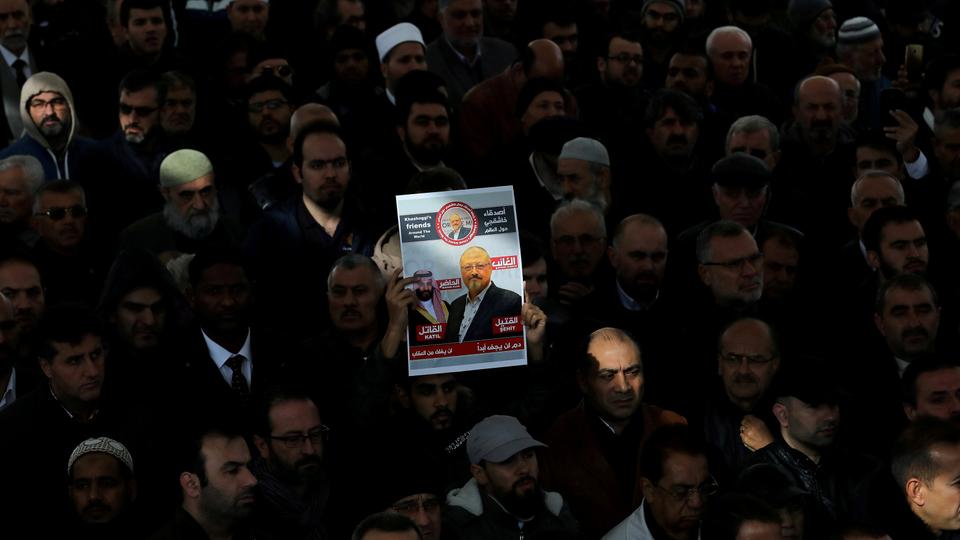 People attend a symbolic funeral prayer for Saudi journalist Jamal Khashoggi at the courtyard of Fatih mosque in Istanbul, Turkey November 16, 2018 (Reuters)


 Hans Thoolen on Human Rights Defenders and their awards