Drivetime on RTE Radio of 13 March 2026 carries an interview with Mary Lawlor the departing UN Special Rapporteur on Human Rights Defenders about her work as a human rights activists.
The Human Rights Council President has proposed that States select Bolaños Vargas as the Special Rapporteur on human rights defenders by the end of the body’s ongoing 61st session.
The Office of the President of the United Nations Human Rights Council has made public a letter in which it presents 15 candidates to fill mandates within the UN human rights system. This includes the key position of Special Rapporteur on the situation of human rights defenders, for which the President has proposed Andrea Bolaños Vargas.
In selecting a new mandate holder, we urge States to commit to fully cooperating with the Special Rapporteur to promote and enable the work of human rights defenders everywhere. The work under this mandate is central at this time where we urgently need the voices of individual activists and civil society to reinvent multilateralism.
A Colombian national, Andrea Bolaños Vargas is a human rights expert with experience as a researcher and advisor for UN agencies, regional bodies, international, regional civil society and grassroots organisations across Latin America, particularly on migration, gender, and human rights protection issues.
Should the Council approve this nomination in the closing days of its 61st session, Bolaños Vargas will succeed Mary Lawlor, who has held the position of Special Rapporteur since 2020.
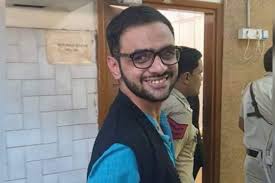
On 19 February 2026, an important group of NGOs stated that the international community must call for the immediate release of Umar Khalid
On Jan. 5, 2026, the Indian Supreme Court denied bail to human rights defender and student activist Umar Khalid, who has been detained for over five years without trial, in violation of India’s obligations under international human rights law. The undersigned organisations are disturbed by the Court’s decision. As domestic legal remedies have proven ineffective, we urge the international community to take urgent and coordinated action.
Khalid was arrested on Sept. 13, 2020, after he became a prominent face of nationwide peaceful protests against the discriminatory Citizenship Amendment Act, a law excluding Muslims from eligibility for a fast-tracked path to Indian citizenship. Khalid’s unfounded prosecution stems solely from the exercise of his rights to freedom of expression and peaceful assembly.
Khalid was charged under India’s anti-terror law, the Unlawful Activities (Prevention) Act (UAPA), as well as other laws, for a total of 29 charges. The UAPA has been criticised by the UN Working Group on Arbitrary Detention and several other UN Special Procedures mandate holders, particularly for its vague definitions and restrictive bail provisions that enable prolonged pre-trial detention. Indian authorities have frequently used these anti-terror legislations to detain political dissenters, human rights defenders, activists, and Muslims by keeping them in prison for extensive periods of time prior to trial. Indian grassroots organisation People’s Union for Civil Liberty has demonstrated through its investigation how UAPA has been systematically abused to silence dissent.
Since his arrest, Khalid has been languishing in Delhi’s Tihar jail for over five years awaiting trial. According to the Supreme Court, this excessively long pre-trial detention has not “crossed the threshold of constitutional impermissibility,” but Khalid should not be detained at all — he is being held simply for exercising his rights. The Supreme Court’s Jan. 5, 2026, decision also forbids Khalid from applying for bail for one year. His trial is yet to begin.
In the same judgment in which the Court denied bail to Khalid, it released his co-defendants in the case, activists Gulfisha Fatima, Shifa Ur Rehman, Meeran Haider, Saleem Khan, and Shadab Ahmed, a development the undersigned organisations welcome. However, Khalid’s co-defendants, released on bail, are not entirely free. The Supreme Court imposed strict bail conditions: a blanket ban on participating in “any programme or address”, attending “any gathering, rally or meeting, whether physically or virtually” and on circulating “any post either in electronic or physical form or circulate any hand bills, posters, banners, etc. in any form whatsoever.” These conditions violate their rights to freedom of expression and association.
All of Khalid’s co-defendants remain at risk of re-arrest if eventually convicted in the case. This includes activist Safoora Zargar, who was charged in the same case but released on bail in June 2020 due to her pregnancy, and following a decision of the United Nations Working Group on Arbitrary Detention rendering her detention arbitrary.
The Indian judicial system has failed Umar Khalid and his co-defendants. It is time for the international community to take meaningful and coordinated action. Governments, particularly those with strong bilateral relationships with India, should publicly and privately call for Umar Khalid’s immediate and unconditional release and raise his case in all high-level diplomatic engagements.
As a sitting member of the UN Human Rights Council, India should be reminded of its commitment under UN General Assembly Resolution 60/251 to “uphold the highest standard in the promotion and protection of human rights.”
Pending the acquittal of Khalid and his co-defendants, diplomatic missions in New Delhi should also closely monitor court proceedings and reaffirm the importance of due process and presumption of innocence.
Signed by;
Human Rights Foundation
Hindus for Human Rights
Diaspora in Action for Human Rights and Democracy (DAHRD)
Amnesty International
InSAAF India
Indian American Muslim Council
UK Indian Muslim Council
Scottish Indians for Justice
India Alliance Paris
South Asia Solidarity, UK
South Asia Justice Campaign
Joint Committee to Stop Repression in India
India Labour Solidarity
Freedom House
India Civil Watch International
Karwaan-e-Mohabba
World Organisation Against Torture (OMCT), within the framework of the Observatory for the Protection of Human Rights Defenders
Free Voices Collective e.V.
International Federation for Human Rights (FIDH), within the framework of the Observatory for the Protection of Human Rights Defenders
The mandate of the United Nations Special Rapporteur on the situation of Human Rights Defenders plays a critical role in promoting the protection of individuals and groups who peacefully work to advance human rights worldwide. As the current mandate-holder, Mary Lawlor, approaches the end of her tenure (March 2026), the UN Human Rights Council is in the process of appointing a successor.
Together with partner organisations, ISHR is campaigning for the appointment of a mandate holder who is independent, impartial, highly competent, and whose backgrounds reflect the diversity of our world. Such appointments are essential to ensuring a strong and effective system of Special Procedures, which is fundamental to the proper functioning of the Human Rights Council.
As the appointment process for the next Special Rapporteur reaches its final stages, the ISHR would like to create a space for meaningful exchange between shortlisted candidates and civil society organisations and human rights defenders.
In this context, there will be an online roundtable with the shortlisted candidates:
The discussion aims to provide shortlisted candidates with an opportunity to present their background, experience, and vision for the mandate Facilitate a safe and inclusive space for dialogue between candidates, civil society organisations, and human rights defenders Enable human rights defenders to share priorities, concerns, and expectations regarding the future direction of the mandate
The roundtable will take place on 10 February, from 3:00 to 5:00 PM (CET). Interpretation will be available in English and Spanish.
Confirm your participation by 9 February EOD using this form. A link to the meeting will be shared later. Important: At the end of the form, there is a section where you can write any questions you would like the candidates to answer. The organisers will review these questions and choose some of them in advance, and those selected questions will be asked during the meeting. Because many people are expected to attend, participants will not be able to ask their own questions directly to the candidates during the meeting. We very much look forward to your participation., ISHR Team
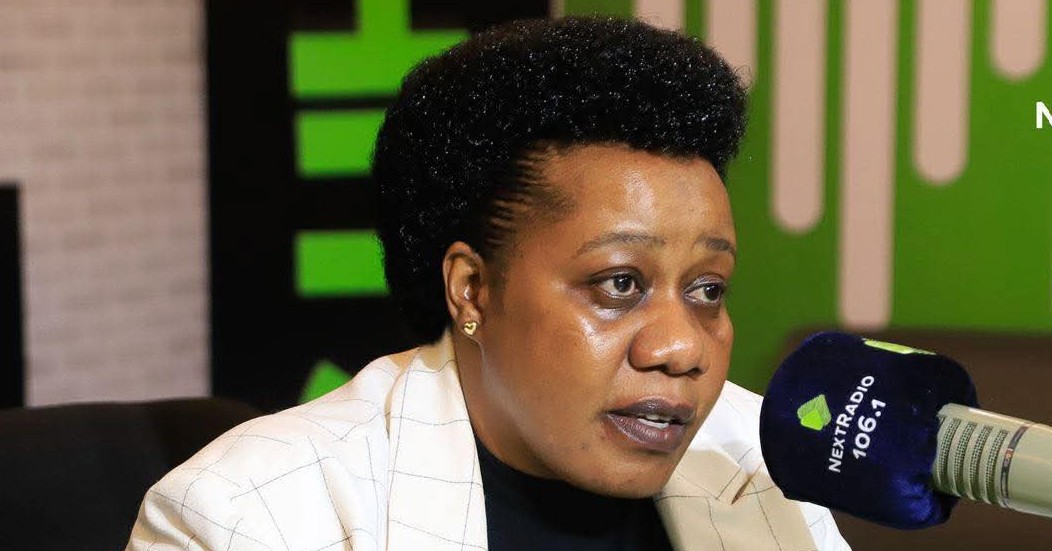
Sarah Bireete was arrested on December 30, 2025, after police and military personnel surrounded her home in Kampala. Shortly before her arrest, she posted on X, “My house is under siege by police and army”. As reported by East and Horn of Africa Election Observation Network (E-HORN) on 2 January 2026
The Police Reforms Working Group (PRWG) Kenya has called for the immediate release of Uganda’s human rights lawyer and civil society leader, Dr Sarah Bireete, warning that her detention ahead of the January elections threatens civic space and undermines democratic processes.
The Uganda Police confirmed her arrest in a brief social media post, stating she would be produced in court “in due course”. Police spokesperson Rachel Kawaala described the detention as part of “ongoing operations” but offered no further details.
“Dr Bireete is widely recognised for her unwavering passion for the protection of civil liberties, her lifelong quest for justice, and her steadfast commitment to democracy, a clarion call that has consistently advanced accountable governance across the region,” the Group said.
Bireete currently serves as Executive Director of the Centre for Constitutional Governance (CCG), Chairperson of the East Africa Civil Society Forum (EACSOF), and Chairperson of the Horn of Africa Election Observers Network (E-HORN).
PRWG Kenya described these roles as reflective of her integrity, credibility and long-standing contributions to human rights, electoral integrity and democratic governance.
The group urged Ugandan authorities to respect civil liberties, the rule of law and democratic processes.
“Respect for civil liberties, rule of law and democratic processes is fundamental to ensuring free, fair, and transparent elections,” PRWG Kenya said.
The statement also highlighted that Uganda’s constitution, under Article 23, guarantees that anyone arrested must be promptly informed of the reasons for their detention, a step that has not been followed in Dr Bireete’s case.
Bireete’s arrest follows her recent advocacy for Starlink, a satellite internet service operated by SpaceX, as a safeguard against potential internet shutdowns during the elections.
In a post dated December 23, 2025, she wrote, “Dear Ugandans, are you thinking of ways to navigate internet shutdown during elections? Starlink got you covered.”
As the country approaches general elections on 15 January 2026, UN experts* today warned that the pervasive climate of fear in Uganda, marked by allegations of enforced disappearance, the use of disproportionate force against political opposition supporters, and the intensified suppression of civil society and independent media, is not conducive to peaceful elections.
On 23 December 2025, the Special Rapporteur on human rights defenders, Mary Lawlor, renewed her call on authorities in Togo to release Togolese-Irish citizen and human rights defender Abdoul Aziz Goma from prison on the seventh anniversary of his arrest.
“Abdoul has now been arbitrarily detained for seven years and has been on hunger strike since 8 November 2025, protesting against the injustices he has faced. As he marks his 44th day without food, I am seriously concerned for his life,” Lawlor said.
Abdoul Aziz Goma was arrested in Lomé in 2018 after providing shelter to a group of young people who had travelled to the capital to demonstrate. Although he did not participate in any protests himself, Aziz Goma offered help to the youths when approached by an acquaintance.
Aziz Goma was initially held in secret for a number of years before being transferred to Togo’s formal prison system in 2022. He has been reportedly subjected to ill-treatment and denial of adequate medical care in prison, which have left him with a debilitating health condition.
In February 2025, when he was finally tried, Aziz Goma was convicted on multiple charges, including undermining national security, in a single day procedure and sentenced to ten years in prison.
Aziz Goma is reportedly very weak from hunger and reduced to spending much of the day lying down.
In September 2023, the UN Working Group on Arbitrary Detention determined that Aziz Goma’s ongoing detention was arbitrary.
The Special Rapporteur has also raised her concerns about Aziz Goma’s treatment and ongoing detention with Togolese authorities in 2021 and 2024.
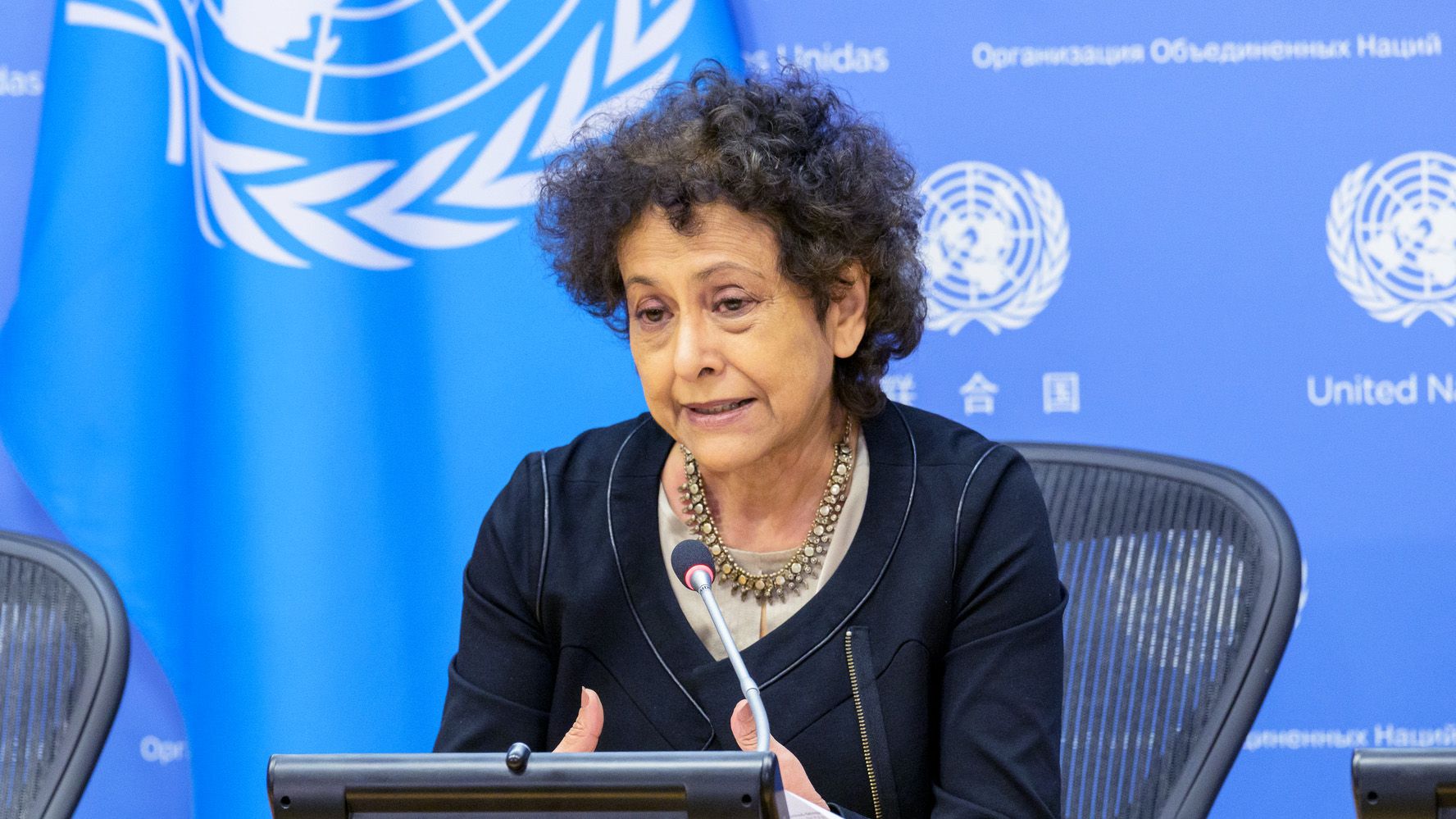
UN Special Rapporteur on Freedom of Expression and Opinion Irene KhanMary Lawlor UN Special Rapporteur for human rights defenders
On 5 August 2025 a group of United Nations human rights experts has written to the Kenyan government over allegations of serious human rights violations. These violations include the killing of protesters, the arrest and detention of human rights defenders, the deportation of a Ugandan lawyer, and the suppression of media freedom during the June 25 protests across the country.
The letter (referenced AL KEN 3/2025,) was sent by four UN Special Rapporteurs, namely Mary Lawlor (Human Rights Defenders), Matthew Gillett (Arbitrary Detention), Irene Khan (Freedom of Expression), and Gina Romero (Freedom of Assembly and Association).
Copies of the letter were also shared with the governments of Uganda and Tanzania, given their involvement in the alleged incidents. The Kenyan government was given 60 days to respond to the communication before being made public on the UN’s human rights website.
By October 22, Kenya had not responded to the contents of the letter. The experts expressed grave concern over what they described as “an emerging pattern of criminalisation and harassment of human rights defenders in Kenya.”
According to the communication, nationwide protests on June 25, 2025, left 16 people dead and hundreds injured. The demonstrations, which marked the first anniversary of the 2024 anti-Finance Bill protest, were allegedly met with excessive police force.
During the protests, several major media houses reportedly had their transmission centres raided by police and communication officials who switched off live broadcasts. The Communications Authority of Kenya allegedly issued a directive barring media outlets from airing live coverage of the protests, a decision later suspended by the High Court in Milimani, which termed it “potentially unconstitutional” pending a hearing scheduled for October 24, 2025.
The letter cites the arrest of Mark Amiani, John Mulingwa Nzau, and Francis Mutunge Mwangi, all members of the Social Justice Centres Working Group, who were detained by police on June 27 while travelling to work in Mombasa. They were later charged with incitement of violence, damage to property, and theft, though the experts said no credible evidence was presented in court.
They were held for five days before being released on bail on July 2, with conditions requiring them to report to the police twice weekly. Their next court hearing was scheduled for August 21, 2025.
Prominent activist and photojournalist Boniface Mwangi was also arrested at his Nairobi home on July 19, where police allegedly confiscated electronic equipment and even tear gas canisters. He was charged with unlawful possession of ammunition and released on bail two days later.
The UN experts noted that Mwangi had previously been arrested several times and was abducted in Tanzania in May 2025, before being found in Kenya’s coastal town of Ukunda days later.
The letter further highlighted the deportation of Ugandan lawyer Martin Mavenjina, a senior legal advisor at the Kenya Human Rights Commission (KHRC), who was expelled from Kenya on July 5 despite having a valid residency and a Kenyan family.
He was allegedly detained at Jomo Kenyatta International Airport and forced onto a flight to Kampala without being informed of the reason or given access to legal counselADVERTISEMENT
A day after Mavenjina’s deportation, armed men reportedly stormed a press conference hosted at the KHRC offices in Nairobi, where women and widows were calling for an end to police brutality and enforced disappearances. The assailants allegedly destroyed journalists’ equipment and accused the women of organising protests. Despite reports being filed, no investigations have been launched, according to the letter.
UN calls for action and accountability: The UN experts urged the Kenyan government to clarify the legal basis for the arrests, detentions, and deportations, and to end the intimidation of journalists and human rights defenders.
They also demanded investigations into the killings and injuries from the protests.
The experts warned that the events “constitute blatant violations” of international human rights laws, including the International Covenant on Civil and Political Rights, which guarantees freedoms of
On 13 October 2025, Nina Lakhani, climate justice reporter the Guardian, published this interview with Mary Lawlor, UN special rapporteur for human rights defenders, who presented her final annual thematic report during an interactive dialogue at the 80th session of the United Nations General Assembly’s Third Committee. The Special Rapporteur’s report focused on the contributions of human rights defenders addressing climate change and working to realise a just transition from fossil fuels, and the risks they face in carrying out this work.
Mary Lawlor, the UN special rapporteur for human rights defenders since 2020, has documented hundreds of cases where states have sought to smear and silence climate defenders engaged in peaceful protest, non-violent civil disobedience and litigation.
“Attacks against climate defenders have surged over the course of the mandate, and we now see outright repression against people who are organizing for climate action. It’s some of the states that have claimed to be the strongest supporters of human rights defenders including the UK, Germany, France and the US, that are most often repressing climate activists and where the right to protest is being denigrated and delegitimized.
“These big countries spew out the rhetoric about 1.5C, but they don’t mean it. They are playing the game to suit themselves. It’s business as usual,” Lawlor said in an interview with the Guardian.
It documents state repression including police violence and surveillance, civil litigation deployed to deliberately wear down and silence climate defenders known as Slapp (strategic lawsuits against public participation), as well as bogus criminal charges ranging from sedition, criminal defamation, terrorism and conspiracy to trespass, to public disorder and to disobedience.
One trend documented by Lawlor is the conflation of non-violent climate action with terrorism. In 2022, the French minister of interior at the time, and current minister of justice, accused the national environmental movement Les Soulèvements de la Terre of “ecoterrorism”. The government sought to close down the group, but the country’s highest administrative court eventually overturned the effort.
Lawlor is adamant that climate activists are human rights defenders. They use non-violent protest, disruptive civil disobedience and litigation to stop fossil fuel projects and pressure elected officials to take meaningful action precisely because they are trying to protect the right to food, clean water, health, life and a healthy environment.
But it’s not just fossil fuels. Human rights are now being targeted in the rush for critical minerals and new sources of non-fossil energy. The same repressive playbook is being used by governments and private companies involved in land grabs, pollution and Indigenous rights violations in pursuit of a green transition.
“Governments are repressing human rights defenders and the current trajectory is incompatible with the realization of human rights for all. It’s just a road to destruction … I think states are behaving in a criminal fashion,” Lawlor said.
“No system, no power, no government, no big company seeking profit should trump the rights of billions of people in the world. And that’s what’s happening. It’s the rich, the powerful that are creating such a disaster for humanity.”
We, the undersigned organizations, express deep concern over the continued arbitrary detention of the Saudi human rights defender Mohammed al-Bejadi more than two years beyond his sentence. His continuing detention, along with countless others, demonstrates that despite a recent spate of prisoner releases, the Saudi authorities’ severe repression of rights activists and critics remains. We call for his immediate release, along with all others arbitrarily detained in the kingdom for peacefully exercising their fundamental freedoms.
Al-Bejadi, a founding member in 2009 of the now-banned Saudi Civil and Political Rights Association (ACPRA), has been arrested and imprisoned three times for his peaceful human rights activism, most recently on 24 May 2018 during a crackdown on women’s rights defenders. He was subsequently sentenced to an egregious 10-year prison term, with five years suspended, which expired in April 2023.
More than two years later, he remains in Buraydah Prison, where he has been denied access to legal representation. According to ALQST, an independent Saudi human rights group, he has also experienced torture and other ill-treatment, including physical abuse and prolonged incommunicado detention.
The UN Special Rapporteur on human rights defenders, Mary Lawlor, highlighted al-Bejadi’s case in April 2025 to draw attention to a worrying trend in Saudi Arabia, in which the authorities continue to hold prisoners past their completed sentences, in violation of basic international standards and Saudi Arabia’s own laws.
Two other prominent human rights defenders, Mohammed al-Qahtani – another ACPRA co-founder –and Essa al-Nukheifi, were held arbitrarily for more than two years beyond their prison terms before being conditionally released in January 2025.
In other instances, when political prisoners have neared the end of their prison terms Saudi authorities have retried them and increased their sentences. Besides inflicting further injustice on these people after years of arbitrary imprisonment, the failure to release prisoners whose sentences have concluded creates fear that they too may be retried.
Saudi authorities have released dozens of people imprisoned for peacefully exercising their rights in recent months, yet continue to arbitrarily hold many more. Released prisoners continue to face heavy restrictions, such as arbitrary travel bans and having to wear an ankle monitor.
Meanwhile, the Saudi authorities’ record of rights violations continues to deteriorate, notably with their escalating use of the death penalty, including the recent execution of a prominent Saudi journalist Turki al-Jasser, and a notable surge in executions of foreign nationals for non-violent drug-related offences.
Al-Bejadi is one of several people arbitrarily imprisoned whose activism stretches back for decades. He spent four months in prison without charge or trial from September 2007 to January 2008, and was again jailed for more than five years, from March 2011 to April 2016, after taking part in a protest outside the Ministry of Interior. During that protest he said: “I do not have a family member in detention, but we must defend not only our own family but our whole country and all those who are oppressed. All prisoners of conscience are my family.”
The undersigned organizations call on the Saudi authorities to immediately and unconditionally release Mohammed al-Bejadi, all others detained beyond the completion of their prison sentences, and all individuals who are imprisoned for the peaceful exercise of their fundamental rights and freedoms.
Signatories:
ALQST for Human Rights
DAWN
European Saudi Organisation for Human Rights (ESOHR)
FairSquare
Freedom House
Gulf Centre for Human Rights (GCHR)
Human Rights Watch
HuMENA for Human Rights and Civic Engagement
International Federation for Human Rights (FIDH), within the framework of the Observatory for the Protection of Human Rights Defenders
MENA Rights Group
Middle East Democracy Center (MEDC)
World Organisation Against Torture (OMCT), within the framework of the Observatory for the Protection of Human Rights Defenders
In March 2026, the UN Human Rights Council (the Council) will appoint the next Special Rapporteur on the situation of Human Rights Defenders. The role of this Special Rapporteur is essential: they promote the work of those who defend human rights and they protect human rights defenders at risk. The Special Rapporteur serves in a voluntary capacity and is independent of the UN, States and non-governmental organisations. As other Special Rapporteurs, they are tasked by the UN to monitor and report on human rights situations around the world. They also provide advice and recommendations for the implementation of those rights.
The four rapporteurs until now have all been of exceptional calibre:
Mary Lawlor (Ireland)
2020-2026
She became a Board member of the Irish Section of Amnesty International in 1975, was elected Chair from 1983 -1987 and in 1988 became its Director. She founded Front Line Defenders in 2001 to focus specifically on the protection of human rights defenders at risk.
On 1 May 2020, she took up the mandate of the Special Rapporteur on the situation of human rights defenders, where she has adopted a people-centred approach to the mandate. Her mandate was renewed for another three-year term by the UN Human Rights Council in April 2023.
She is also currently an Adjunct Professor of Business and Human Rights in the Centre for Social Innovation (CSI), School of Business, Trinity College Dublin.
Mr. Michel Forst (France) was Special Rapporteur on the situation of human rights defenders from June 2014 until April 2020. From 2008 to 2013, Mr. Forst was the UN Independent Expert on the situation of human rights in Haiti, and between 2012 and 2013 he was the Chair of the Coordination Committee of the Special Procedures of the Human Rights Council.
Mrs. Margaret Sekaggya (Uganda) was the Special Rapporteur on the situation of human rights defenders from 2008 to 2014. Before her appointment as Special Rapporteur, Ms. Sekaggya was the Chairperson of the Uganda Human Rights Commission and a High Court Judge in the country.
Ms. Hina Jilani (Pakistan) was Special Rapporteur on the situation of human rights defenders from 2000 – 2008. In 1980, she and her sister founded Pakistan’s first women-only legal practise. She became an Advocate of the Supreme Court shortly after her tenure as Special Rapporteur came to an end.
We should becampaigning so the new person appointed is independent, impartial and competent and comes from a background that represents the diversity of our world.
Are you a suitable candidate? Apply! (1) Complete the online survey (2) Submit the application form in Word format. The deadline for applications is 31 August 2025, noon Geneva time (CEST).


&format=jpeg)

 Hans Thoolen on Human Rights Defenders and their awards