Posts Tagged ‘journalism’

RSF World Press Freedom Index 2025: economic fragility now major threat

September 22, 2025

Although physical attacks against journalists are the most visible violations of press freedom, economic pressure is also a major, more insidious problem. The economic indicator on the RSF World Press Freedom Index now stands at an unprecedented, critical low as its decline continued in 2025. As a result, the global state of press freedom is now classified as a “difficult situation” for the first time in the history of the Index. See the Index

At a time when press freedom is experiencing a worrying decline in many parts of the world, a major — yet often underestimated — factor is seriously weakening the media: economic pressure. Much of this is due to ownership concentration, pressure from advertisers and financial backers, and public aid that is restricted, absent or allocated in an opaque manner. The data measured by the RSF Index’s economic indicator clearly shows that today’s news media are caught between preserving their editorial independence and ensuring their economic survival.

“Guaranteeing freedom, independence and plurality in today’s media landscape requires stable and transparent financial conditions. Without economic independence, there can be no free press. When news media are financially strained, they are drawn into a race to attract audiences at the expense of quality reporting, and can fall prey to the oligarchs and public authorities who seek to exploit them. When journalists are impoverished, they no longer have the means to resist the enemies of the press — those who champion disinformation and propaganda. The media economy must urgently be restored to a state that is conducive to journalism and ensures the production of reliable information, which is inherently costly. Solutions exist and must be deployed on a large scale. The media’s financial independence is a necessary condition for ensuring free, trustworthy information that serves the public interest.” Anne Bocandé, RSF Editorial Director

Of the five main indicators that determine the World Press Freedom Index, the indicator measuring the financial conditions of journalism and economic pressure on the industry dragged down the world’s overall score in 2025. 

The economic indicator in the 2025 RSF World Press Freedom Index is at its lowest point in history, and the global situation is now considered “difficult.”

Human rights defender’s story: Basma Mostafa, from Egypt

November 30, 2024

On 27 November 2024 ISHR shared this profile:

The Egyptian authorities must open the civic space for civil society to play its role. They must stop persecuting human rights defenders, political opponents, and journalists simply for doing their jobs. The UN and the international community must maintain pressure on them to comply with human rights standards.’

Basma Mostafa is an Egyptian investigative journalist and co-founder of the Law and Democracy Support Foundation. She began her journalism career amid the Egyptian revolution, focusing on sensitive issues such as torture, enforced disappearances, and extrajudicial killings. 

Basma’s commitment to exposing human rights violations in Egypt came at a high personal cost. Over the years, she faced numerous threats and severe reprisals for her work, including being detained three times, forcibly disappeared, and accused of ‘affiliation with a terrorist organisation’ and of ‘spreading false information’. Following a sustained campaign of intimidation, Basma was forced to leave Egypt in 2020.

What happened during the Egyptian revolution strengthened my commitment to the principles of human rights and to defending them.

https://ishr.ch/defender-stories/human-rights-defenders-story-basma-mostafa-from-egypt

Kofi Annan Courage in Cartooning Award 2024

May 10, 2024

On World Press Freedom Day, May 3, the Freedom Cartoonists Foundation recognized the talent and
courage of cartoonists working under difficult circumstances. The Kofi Annan Courage in Cartooning Award 2024 was presented by Nobel Peace Prize laureate Dr. Shirin Ebadi of Iran, during a public ceremony at the Geneva Graduate Institute, in presence of CNN’s international chief anchor Christiane Amanpour. For more on this award see: https://www.trueheroesfilms.org/thedigest/awards/f60cb3d4-c79a-43aa-9b5c-351c56c02ae1. This award is presented every two years in alternance with a prize presented by the allied organization Cartoonists Rights in the United States.
The accompanying international exhibition Cartooning for Freedom, visible on the shores of Lake Geneva until June 2, 2024, features nearly 60 press cartoons selected by Freedom Cartoonists, in partnership with Cartooning for Peace in Paris.
Chaired by Kenneth Roth, former Executive Director of Human Rights Watch, the international jury shares the 2024 Prize between two winners: Rachita Taneja (India) and Zunzi (Hong Kong).

see also: https://humanrightsdefenders.blog/2022/05/10/new-kofi-annan-courage-in-cartooning-award-to-ukrainian-and-hungarian-press-cartoonists/

For Chappatte, president of the Foundation, “Both brilliantly embody the fundamental values of editorial cartooning: talent, freedom of spirit, and courage. With a bit of mischief.

https://www.barrons.com/news/indian-hong-kong-satirists-win-press-cartoon-award-8db6c9b8

Investigative journalism in Arab states: the threats to journalists

February 12, 2024

The Gulf Centre for Human Rights (GCHR) is working with journalists in the Middle East and Northern Africa to investigate various violations affecting the safety of journalists and their ability to do their work.

Investigative journalism: Unveiling the threats to journalists in Arab States

Shutterstock

I find myself wishing there was more protection [for investigative journalists], a sense of safety and even simply just hope. I watch in awe as they investigate crimes that they unfortunately know they could well be victims of in the future, or in some cases already have been.“ Zaynab Al-Khawaja, GCHR’s Journalists Protection Coordinator, working with journalists conducting the investigations

Supported by the Global Media Defence Fund, GCHR’s project Investigating impunity for crimes against journalists in the Arab States, while providing protection has identified a range of threats journalists face, such as arbitrary detentions and gendered threats.

With a strong gender focus, the GCHR ensures that the majority of the investigations are carried out by women, empowering them and shedding light on cases involving women.

One investigation highlights the story of an anonymous woman journalist who quit her job and relocated due to sexual harassment. She writes:

A large proportion of society is aware of widespread harassment in the streets, resulting from an exacerbated hypermasculinity. However, statements by several Iraqi women journalists confirm that this phenomenon did not spare women in press and media outlets, forcing a considerable number of them to quit journalism for good.

The investigation also reported that 41% of women journalists in Iraq have been victims of harassment, forcing 15% to leave their jobs and 5% to quit their profession for good.

This data aligns with UNESCO’s Chilling report, revealing increasing offline and online attacks against women journalists, including stigmatization, sexist hate speech, trolling, physical assault, rape and murder.

Another investigation looked into the imprisonment and silencing of journalists, some facing fabricated allegations of sexual harassment. GCHR collaborates with the NGO Vigilance and 40 partners on a joint appeal to end the persecution and detention of journalists and human rights defenders exercising their right to freedom of expression. GCHR also supported a journalist in the Middle East investigating the case of a disappeared journalist in Syria. 

Since 2022, GCHR and UNESCO have joined forces to support investigative journalism, reducing impunity for crimes against journalists and enhancing their safety through the Global Media Defence Fund. Established in 2019, this fund has supported over 120 projects globally, directly benefiting over 5,000 journalists, 1,200 lawyers and 200 non-governmental organizations.

In 2022, UNESCO published recommendations on addressing violence against women journalists, based on The Chilling, a global research project by UNESCO and the International Center for Journalists (ICFJ). All reports related to this project are available here on UNESCO’s website.

see also: https://humanrightsdefenders.blog/tag/journalist/

https://www.unesco.org/en/articles/investigative-journalism-unveiling-threats-journalists-arab-states

Turkmenistan through the eyes of photojournalist Soltan Achilova, master class 21 November

November 14, 2023
Turkmenistan through the eyes of photojournalist Soltan Achilova
Join us for a Master Class on Turkemnistan at UNIGE Human Rights Week, Tuesday Nov. 21 @12h30-14h !

The World Press Freedom Index ranked Turkmenistan one of the five most repressive regimes globally in 2023.
Martin Ennals Award Finalist Soltan Achilova is a 74 years-old photojournalist who captures the lives of ordinary people in Turkmenistan with her camera. Soltan’s pictures describing food insecurity, forced and illegal evictions, lack of adequate healthcare and the discrimination faced by people with disabilities, are an invaluable source of information on human rights violations endured by the people of Turkmenistan. In collaboration with the University of Geneva Human Rights Week this event will explore how independent journalism can push back on the denial of freedom of expression in the toughest authoritarian contexts.


Free Entry
Tuesday Nov
. 21, 2023
12h30-14h
Unimail Salle MS150

see also: https://humanrightsdefenders.blog/2021/02/23/soltan-achilova-has-issued-a-rare-rebuke-of-the-turkmen-president-on-youtube/

https://mailchi.mp/martinennalsaward.org/invitation-turkmenistan-master-class-unige-9415682?e=2898c3ec1a

New, anti-populist media forum “Free America” launched

November 3, 2023
Foro América Libre

A new political space wanting to shape the future of Latin America was born in Mexico City on 1 November 2023. In an unprecedented meeting, more than 30 organisations, leaders and young people from Latin America gave life to the Free America Forum. A space to defend an agenda of Freedom and Democracy, as an alternative to the populism of the Puebla Group and the Sao Paulo Forum.  

Those of us who believe in the ideas of freedom and democracy are more and we are also better,” said Mexican Congresswoman Mariana Gómez del Campo, president of ODCA, when she opened the Free America Forum. 

This group, together with political leaders from 18 Latin American countries, parliamentarians from Ukraine, Germany, the European Parliament, political representatives from the United States, civil society activists and human rights defenders, ratified their commitment to freedom and democracy.

The result of this first meeting was the signing of the Mexican declaration “For a Free America”, which alerts the world to authoritarianism and its consequences in the region, the need for respect for democratic principles such as free elections, the separation of powers, the need for independent justice, limits to the actions of those in power and respect for human rights.  

As part of this declaration, the Free America Forum warns how the conditions of poverty and inequality have been “breeding grounds” for populist alternatives and how we must focus on “the integral development of the people”, guaranteeing a free and competitive economy. In the fight against organised crime, he called for the use of “the full force of the law and the rule of law”, rejecting “radically any negotiation and complicity with those who extort, steal, kidnap, murder and sow terror on the continent”. 

In the face of human rights violations, they expressed their support and solidarity with the peoples of Cuba, Venezuela and Nicaragua as “sister nations that Bolivarian socialism has subjected to atrocious dictatorships and suffering”. The declaration also condemns the “unjustified aggression” of Vladimir Putin’s Russia against Ukraine.  

This new space linking defenders of democracy around the world was created to counterbalance those who venerate and validate dictators and promote authoritarian narratives. 

https://www.atalayar.com/en/articulo/politics/the-free-america-forum-is-born/20231101150000193017.html

Profile interview with Ahmer Khan, a journalist from J&K with a mission

November 4, 2020

On 18 October 2020 the Week published an interesting interview with Ahmer Khan, an award winning multimedia journalist under the title: “Covering other humanitarian stories helped me process the trauma of J&K, my homeland’’
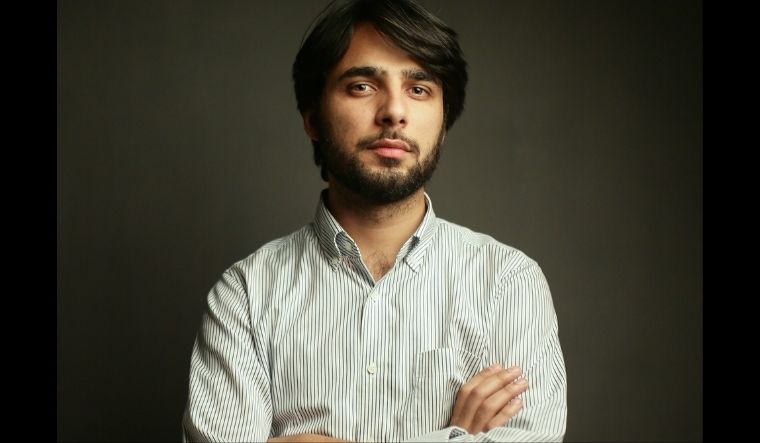
ahmer-khan Ahmer Khan, multimedia journalist from Kashmir

Ahmer Khan is an award-winning, multimedia journalist from Kashmir. He was nominated for the Emmys 2020 for the Vice News film, India Burning, which focused on the plight of the 200 million Muslims in the country after the rise of Hindu nationalism. Khan is also the recipient of numerous awards, including the Lorenzo Natali Media Prize by European Commission 2018, AFP Kate Webb Prize 2019, and the Human Rights Press Award 2020. He is also among the finalists for the Rory Peck Award 2020. He has contributed to major international publications such as The New York Times, The Guardian, TIME, Al-Jazeera, Radio France International,, The Christian Science Monitor and Vice News, among others. Khan talks to THE WEEK about his career and what it is to be a journalist in Kashmir.

Edited excerpts:

Was it the camera or telling stories through visuals that you were attracted to? 

Well, it was a little bit of both. Kashmir and photography are directly proportional to each other. First, I used to click pictures with a Sony Ericson handset. But I always knew what I was going to do in future. So I studied journalism and worked simultaneously.   

What exactly did your work consist of in ‘India Burning’? 

..I was a local producer of the film and I shot some parts of the film as well. My responsibility was to take care of everything in Assam. From set-up to the execution.

Is there a reason why you work with international media rather than the national media?  

Yes, of course. I have never worked with any Indian organisation purposely. I did not want my stories to get distorted and manipulated the way editors of most of the Indian organisations do. I am grateful that I have found work elsewhere because there is too much saturation and it is hard for stories to get accepted anywhere now.  

How did you establish your name in the industry? 

I think I chose to report outside Kashmir from the beginning. I didn’t restrict myself to Kashmir or even India. I have reported from Nepal, Sri Lanka, Bangladesh and Afghanistan. That is something not everyone does.  

Has living amidst the conflict in Kashmir, in any way, affected you as a person and as a journalist?

Our home is a dystopian state. We all have had encounters affecting our lives forever. My father passed away when I was 10 years old. I think every job/assignment in Kashmir is scary. The fear of uncertainty is always there. 

You deal with more humanitarian stories, you are always in the middle of conflict and turbulence, you report on natural disasters and political disruptions. What is it that drives you to this beat? 

It all comes from the basic human tendency of wanting to explore more of what you have grown up seeing. I grew up in the ’90s in Kashmir when the turmoil was at its peak and then I witnessed the uprising from 2008, 2010 and the following years. I, like any other Kashmiri, witnessed young Kashmiris being killed, tortured and extreme human rights violations on the streets. It is too much to handle and process, but when one looks at the other side of the world, we see pain everywhere and start being grateful for what we have. I think for me, covering other humanitarian stories helped me process the daily trauma of my own homeland.  

How is covering stories in Kashmir different from other places in India?

In Kashmir, everything is way too personal. At times, we have to cover the stories while looking at the dead bodies of our own people. It is hard to keep aside your human side. But covering other human rights stories elsewhere and in mainland India, including Assam and Delhi has surely strengthened me more. Although, in Kashmir, it is getting extremely difficult to work freely as days pass. There is a constant fear of being muzzled for telling the truth. And, I think it’s happening across the South Asian countries.

You deal with a lot of life-threatening situations, you have also been harassed by the authorities. How does that make you feel? 

Most people in the media in Kashmir have faced harassment and intimidation by the state. We have recently seen journalists being booked in stringent terror laws. We are living through one of the most dangerous periods of all times for the Kashmiri press to work. It is natural to feel worried. There is a continuous fear of life for all of us. .. 

You identify yourself as a multimedia journalist. How is covering a story through writing, photography and videography different? 

I am quintessentially a photographer and videographer. I started writing because I know the media nowadays is shrinking into one multimedia space. One skill isn’t enough. So the work adds. When you go to cover the story, you have to shoot, take quotes, video interviews and also make sure that you have got all aspects of the story in terms of text, video and photos. It is hard work but satisfactory in many ways. I also do radio stories. In fact, my Lorenzo Natali Media award was for my first radio story for Radio France International. Being a freelance journalist, you have to keep up with the demands of editors as there is a lot of uncertainty. 

What do you have to say about the mainstream journalism that is turning blasphemous? 

What they are doing is not journalism. It is dangerous and authoritarian. If a journalist does not report about the oppressed, undermined or underprivileged, he or she is just doing PR. …

https://www.theweek.in/leisure/society/2020/10/18/covering-other-humanitarian-stories-helped-me-process-the-trauma-of-jandk-my-homeland.html

First Breach-Valdez Prize to Mexican journalist Daniela Rea

May 5, 2018

I reported already on the creation of a new award in Mexico [https://humanrightsdefenders.blog/2018/03/24/new-national-award-to-honor-slain-mexican-journalists/].  On 3 May 2018, the Mexican journalist Daniela Rea, known for her chronicles of the violence gripping her native country, was awarded the first edition of the Breach-Valdez Prize in Journalism and Human Rights. “We are gathered here today for them, for a prize born out of pain,” Rea said on accepting the award from Valdez’s widow. “But we are also here for all those other colleagues, many of them anonymous, who continue going out into the street, notebooks in hand, to ask questions, to write, to try to understand the workings of this machinery of death… despite our narco-government.”

(Rea, 35, was born in Guanajuato, in central Mexico, but launched her journalism career in the eastern state of Veracruz, one of the most violent in the country because of turf wars between rival drug cartels. From 2005 to 2012 she worked in Mexico City for respected newspaper Reforma, focusing on the consequences of the Mexican government’s decision in 2006 to deploy the military to fight drug trafficking. “I didn’t make a conscious choice and say ‘I’m going to write about human rights.’ It was the natural result of writing about Mexican life,” Rea told AFP.)

For more on World Press Freedom Day and awards see: https://humanrightsdefenders.blog/2018/05/04/world-press-freedom-day-a-good-time-for-honoring-journalists/

https://www.telesurtv.net/english/news/Mexico-Daniela-Rea-Wins-Coveted-Breach-Valdez-Journalism-Prize-20180503-0024.html

Young human rights defenders in the UK motivated with Youth Awards

December 22, 2015

When looking for ways to engage young people in human rights work, this is an idea: Amnesty International UK has been running for many years a series of media awards. In 2010 it added human rights awards for YOUNG reporters, photographers, reporters, campaigners, fundraisers and poets. Read the rest of this entry »

What’s in a name: journalist, blogger, activist and why not Human Rights Ambassador?

January 26, 2013


When I saw that William Gomes was named ‘human rights ambassador‘ back in April 2012 my curiosity was piqued and I wondered how on earth I had never heard of him or his appointment. Which country or international organization had  bestowed upon him this official function and title and why? A bit of internet research revealed that it is the Oregon-based news agency Salem-News.com that had given him the grandiose title because “in this rapidly changing world, we believe this newly-created position and program, are large steps in raising our effectiveness as a news agency“.

At first I was a bit annoyed that the well-known title had been appropriated by a journalist but then reflected that we already have quite a few of ‘Goodwill’ Ambassadors and that Amnesty International has a ‘Ambassador of Conscience Award’, so that the charge of inflation hardly stands. Moreover, the definition coined in 1604 by Sir Henry Wotton that “an ambassador is an honest gentleman sent to lie abroad for the good of his country” does not guarantee better reporting.

What is interesting is that Salem-News.com describes itself “as a tireless band of writers, many of whom constantly explore the stinging issues surrounding human rights violations all over the world. We have long been a voice for the downtrodden, the people who fight for human independence, and resistance movements in the world that battle fascism and state terrorism” and stresses “that human rights reporting is our centerpiece; and in that respect our reporters are all incredible ambassadors for humanity“. William’s qualities and credentials as a “new kind of journalist” are provided in florid detail with his involvement in the Global Independent Media Center, the Italian Asia news agency, and the Asian Human Rights Commission, 

Tim King, News Editor for Salem-News.com, states “We are very excited about the inclusion of this new role for William, he is already seeing progress from his letters to high level officials who are capable of resolving serious issues. There are people in really tough circumstances in need of intervention, this will be an increasingly powerful method in helping draw public attention to the ordeals they face” and he encourage all of us to send a congratulations letter to: williamgomes.org@gmail.com!