Posts Tagged ‘ISHR’

2017 (9): Business can be better allies of human rights defenders

March 9, 2017
 Just discovered that the penultimate post in my series “2017” was never published. So here comes – with delay- the missing piece “2017 (9)“:

With the USA government abandoning any leadership on human rights issues, perhaps we should turn more to the business world. So writes Sarah Brooks who works for the Geneva-based NGO, the International Service for Human Rights, in Open Democracy on 1 February 2017 (“Business can and should ally with those defending human rights”)

Business should heed the views of human rights defenders, and do more to protect their crucial work—which advances the rule of law that benefits business too. Global businesses and grassroots human rights activists may seem like strange bedfellows.  But as attacks on basic democratic freedoms and the rule of law intensify around the world, they may have more shared values and interests than one might think. We know businesses are driven by the bottom line. If they didn’t seek to increase profits, they simply wouldn’t exist. But we also know—and many business leaders are coming around to the idea—that long-term success relies on more than just profit generation and is linked to a range of external factors such as transparency, certainty, stability. And a social license to operate. Failures to understand that social license, and in particular to prevent and respond to the human rights impacts of their work, have thrust many global businesses into an unwanted spotlight. They didn’t need to find themselves there.

Because human rights defenders use public advocacy as a key tool for change, businesses often make the mistake of seeing them as additional drivers of cost. Reputational damage and operational risks for a company are expensive. Because human rights defenders—such as lawyers, trade unionists, community leaders, or NGO workers—use public advocacy as a key tool for change, businesses often make the mistake of seeing them as additional drivers of cost. However, business should see human rights defenders as priceless allies. They are the canaries in the coal mines, pointing to when governance failures become real financial, legal, and reputational risks to business. They are also the witnesses to corporate abuse of communities and the environment. Because of this, the work of defenders often makes those in power uncomfortable—both states and non-state actors. They are targeted with laws and policies to stifle their activities, and face intimidation and threats to their work and their lives. Yet without the work of defenders, whole societies and economies lose out. And that means businesses lose out, too.

[the author refers as examples to the 2013 Rana Plaza factory collapse in Bangladesh and Berta Caceres in Honduras which both let business to reassess their work] 

These cases show business can make a difference. It has a unique ability to create, maintain, and defend space for civil society through three tools: leverage, leadership, and partnerships. How do these work? Take as an example a government drafting a law that aims to close down space for NGOs to operate. In addition to running counter to international law, this would also close off channels for businesses to benefit from NGOs’ work—whether implementing community projects or helping train workers. So how might businesses respond? They can use the leverage provided by access, personal relationships and market share to push back on authoritarian impulses. To take just one example, when 30 global brands and global trade unions joined together to speak out against violent dispersal of protests and detention of activists in Cambodia in 2014, not only were the activists released, but the underlying issues of minimum wage took center stage in brand discussions with the government.

Businesses, and especially progressive businesses, also need to show leadership. In 2015, Adidas released a policy statement on human rights defenders that clearly led the pack, creating a company-wide commitment to speak out in defense of fundamental freedoms in the countries where they source. It takes a lot for a business to get in front, especially when they know that NGOs will be watching carefully to see those policies implemented. But setting the bar high has consumer appeal and can drive a race to the top. [see also my: https://humanrightsdefenders.blog/tag/business-and-human-rights/]

Finally, businesses have resources. Partnerships directly with NGOs can be contentious, and businesses need to listen to and address the concerns of co-optation and whitewashing. But the global environment for traditional funding mechanisms is increasingly toxic. According to UN experts and leading funders, nearly a hundred governments have put limits on NGOs’ operations, including the ability to accept foreign (especially NGO) funding. For the financial survival of civil society, seeking support from businesses might be an option—if it is on equal footing and with clear redlines to maintain independence.

Civil society needs space and protection to carry out its work, and it is not just a moral imperative, but an investment opportunity for businesses to help secure that space and protection. The leadership, leverage and solidarity shown by companies who see support to civic freedoms and human right defenders as part of core business will pay long-term dividends.

Along similar lines runs the article “Davos | Global crackdown on civil society and civic freedoms warrants global business response” by the International Service of Human Rights on 20 January 2017:

Business and civil society alike thrive in open democracies. It is in their collective interest that business enterprises play an active role in responding to the global crackdown on human rights defenders and civic freedoms, participants at the World Economic Forum in Davos have been told.

Human rights defenders and other civil society actors play a vital role in promoting and contributing to good governance, sustainable development and the rule of law. This is explicitly recognised in Sustainable Development Goal 16 and its associated indicators. In many cases, this work involves defenders exposing corruption, protesting environmental degradation, and demanding that the benefits of development are shared by all, including the most poor and disadvantaged. In an increasing number of jurisdictions, this work also involves defenders being subject to restrictions and attacks, with recent research demonstrating that those working on land and environment rights and in the field of business and human rights are most at risk of being killed. This week’s assassination of Mexican indigenous and environmental rights activist Isidro Baldenegro is just the most recent tragic example of the global crackdown on human rights defenders and civic freedoms.

What is the role and responsibility, and what should be the response, of business enterprises to this crackdown? This was a key question at the World Economic Forum attended by ISHR representatives in Davos, Switzerland this week. Progressive business enterprises are increasingly recognising the shared values and interest of business and civil society in an open, enabling operating environment. This is an environment characterised by respect for the rights to freedom of expression, association, assembly, access to information, public participation, non-discrimination and the rule of law. It is in such open environments that innovation, productivity and development thrive. Progressive business enterprises are also recognising the significant costs associated with the global crackdown on human rights defenders and civic freedoms, with the World Economic Forum’s most recent Global Risks Reportidentifying the ‘fraying of the rule of law and declining civic freedoms’ as a key business risk. In his statement to the Forum, the UN High Commissioner for Human Rights similarly said: ‘Business cannot thrive in failing societies, where tension spikes and communities bristle with grievances and mutual contempt. Strong civil societies, due process, equality and justice: these are what enable real economic empowerment’.

Business enterprises and business leaders exercise significant influence in shaping public and political opinion and legislative and policy-making processes, not just in areas of corporate and economic policy but on social issues such as LGBTI rights. They should exercise similar influence in response to the increasing restrictions and risks faced by defenders. The conversations in Davos this week recognised the shared interest of business and civil society in the protection of human rights defenders and civic freedoms. The killing in Mexico of Isidro Baldenegro at the same time as these discussions were taking place tragically demonstrates the need for business to move beyond recognition to action.

This action could encompass a range of responses, such as:

The global crackdown on civil society and civic freedoms warrants a global business response.

Sources:

https://www.ishr.ch/news/davos-global-crackdown-civil-society-and-civic-freedoms-warrants-global-business-response

Business can and should ally with those defending human rights | openDemocracy

High-level endorsements of crucial role of human rights defenders in UN Human Rights Council

March 7, 2017

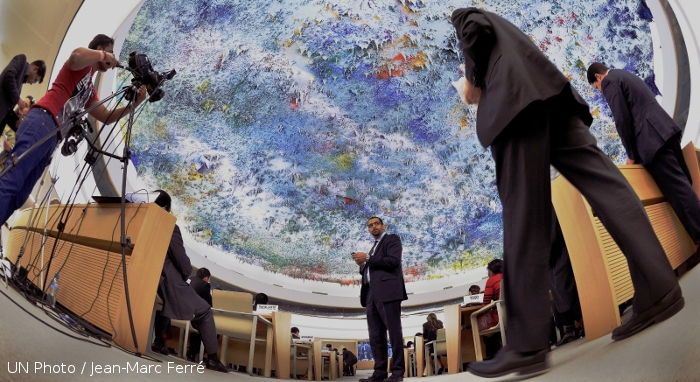
The 34th Session of the UN Human Rights Council started off last week (as usual) with the so-called “high-level segment” during which important officials addressed the Council [see: https://humanrightsdefenders.blog/2017/02/28/new-secretary-general-at-human-rights-council-tells-human-rights-defenders-and-i-am-on-your-side/].

On 6 March the ISHR reported on that first week during which several dignitaries emphasised the key role that a vibrant civil society plays in promoting and protecting human rights.

 The President of the General Assembly, Peter Thomson, highlighted the importance of civil society by calling States, the UN and civil society to work shoulder to shoulder and advance with common purpose. Other high-level speakers expressed concern regarding increasing restrictions to civil society space, particularly against HRDs and journalists.
  • Delegates from Botswana, the Czech Republic, Costa Rica, the European Union, France, Malta, Liechtenstein and Luxembourg, among others, reiterated their support to the work of HRDs and journalists and stressed the importance of guaranteeing their protection.
  • Delegates from Germany, Norway, Poland, Slovenia, Sweden and the United Kingdom, among others, condemned acts of reprisals against HRDs and emphasised that HRDs must be able to participate and engage with the Council without fear of intimidation or reprisals.

The pivotal role defenders play in promoting sustainable development was also recognised. Georgia underscored the importance of strengthening the role of NGOs and safeguarding civil society’s space to ensure they are heard. ‘Without close cooperation with all stakeholders, it is impossible to secure the sustainable development of the country.’

So, there is no shortage of good statements in Geneva, but the what matters most is the upcoming renewal of the mandate of the Special Rapporteur on Human Rights Defenders and any real action on reprisals!

Source: #HRC34 | High-level officials kick off Council session, emphasise critical role of defenders | ISHR

Plethora of side events in Geneva parallel to the UN Human Rights Council

February 27, 2017

The number of ‘side events’ in Geneva during the UN Human Rights Council is mind boggling. A full (provisional) list of 7 pages can be found at: http://www.files.ishr.ch/public/hrc34/Draft-HRC34-NGO.pdf. Some days have from 15 to 20 (parallel) events a day! I will from time to time draw attention to some that are specifically relevant to human rights defenders such as the one mentioned below:

ISHR-logo-colour-highThe ISHR, together with the permanent mission of Finland, will organise and event on Ensuring sustainable development: the role and protection of defenders. On Thursday 2 March 2017, 10:30-11:45 in room 25. Palais des Nations. This event will explore the role and challenges faced by human rights defenders in contributing to sustainable development, and the interests and obligations of States and business should play in that regard. It will feature the participation of Joe Moses, the protagonist of the award-winning documentary “The Opposition” (extracts of which will be shown) about his activism in protecting the Paga Hill community from forced eviction in the wake of a real-estate project in Papua New Guinea, as well as experts from the UN and business community. see: https://humanrightsdefenders.blog/2016/04/14/showing-of-the-film-the-opposition-about-land-rights-in-papua-new-guinea-cancelled-until-further-notice/


34th Human Rights Council: ISHR guide to key issues for human rights defenders

February 24, 2017

A preview of what to look out for at the upcoming session of the UN Human Rights Council from 27 February – 24 March 2017. This selection of what is most relevant to human rights defenders is based on the excellent overview provided by the International Service for Human Rights (ISHR): Read the rest of this entry »

Camara Salimata SY talks about human rights of women in Mauritania

February 18, 2017

Camara Salimata SY, is the vice-president of Association des Femmes Chefs de Famille (AFCF – Association of female family heads). She talked to ISHR about her work on women’s rights and political participation in Mauritania. She also highlights the risks and challenges facing her and calls for more respect from the African Commission and African States for their human rights obligations.

The interview above is only available in French

Interview with human rights defender Victor Nanklan Touré of Ivory Coast (in French)

February 13, 2017

Victor Nanklan Touré is the president of NGO ‘Club Union Africaine Côte d’Ivoire’ which is mainly working on statelessness and land issues. A human rights advocate for over 15 years he participated in the civil society training organised in Banjul from 15 to 16 October 2016 by ISHR, the Office of the High Commissioner for Human Rights and the African Centre for Democracy and Human Rights Studies. On this occasion he presented his work to ISHR and shared a message towards African political leaders.

The interview mentioned above is unfortunately only available in French.

Video interview with Andrea Ixchíu Hernandez, human rights defender from Guatemala

February 5, 2017

Andrea Ixchíu Hernandez  is an indigenous rights defender working for several organisations in Guatemala. She talks – in English – to ISHR (International Service for Human Rights) about her work to build up community media so the voices of indigenous people are  heard and the violations they face are publicly unveiled.

Video profile of Surendra Pratap, labour rights defender from India

December 7, 2016

Surendra Pratap works for the Centre for Workers’ Education in India. He talked to ISHR about his activities promoting workers’ rights and trade unions. This video clip was published in the ISHR Monitor of December 2016.

Farewell to Jacobus Witbooi, LGBTI defender from Namibia

December 7, 2016

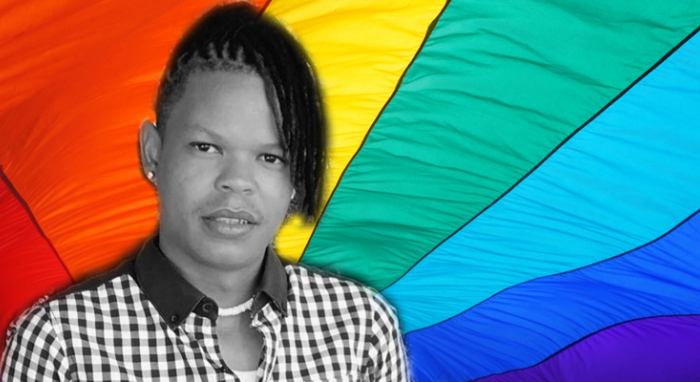
Sad news. Jacobus Witbooi who was profiled in this blog in August [https://thoolen.wordpress.com/2016/08/31/profile-of-jacobus-witbooi-lgbti-human-rights-defender-from-namibia/] has died from malaria.

Jacobus was a human rights defender from Namibia who proudly defended and promoted the rights of of lesbian, gay, bisexual, trans and intersex people via Pan Africa ILGA. ISHR reported this in their ISHR Monitor of December 2016.

Source: Farewell to Jacobus Witbooi | ISHR

ISHR 2017 training course for human rights defenders now open for applications

November 12, 2016

 The International Service for Human Rights (ISHR) is calling for applications for its flagship Human Rights Defenders Advocacy Program in 2017 – the extensive training programme for human rights defenders. The training will take place in Geneva between 29 May and 9 June 2017 and provides defenders with opportunities to put their advocacy skills directly into action at the 35th session of the UN Human Rights Council.

ISHR’s Human Rights Defender Advocacy Programme (HRDAP) equips defenders with the knowledge and skills to make strategic use of the international human rights system. It also provides an opportunity for participants to directly engage in lobbying and advocacy activities at the UN level to effect change on the ground back home. As well as receiving training modules on all the UN human rights mechanisms from a range of experts, participants will also have the opportunity to build networks in Geneva and around the world, carry out lobbying of UN member States and UN staff, and learn from peers from a range of regions working on a range of human rights issues.

Participants will take part in:

  1. A short online learning component, prior to face-to-face training, to enable you to consolidate your existing knowledge and develop your advocacy objectives;
  2. Intensive training in Geneva during June, to coincide with the 35th session of the Human Rights Council. The training will focus on ways to effectively use international human rights mechanisms and to influence outcomes;
  3. Specific advocacy at Human Rights Council sessions and other relevant meetings, with regular feedback and peer education to learn from the experiences, including expert input from leading human rights advocates.

This programme is directed at experienced human rights defenders in non governmental organisations and national human rights institutions, with existing advocacy experience at the national level and some prior knowledge of the international human rights system. If you are interested in applying for ISHR’s training programme, please read the call for applications to check that you comply with the requirements. The link to the online application form can be found under point 5 of the call for applications.

The call for applicants can be found here. For more information, write to hrdap2017@ishr.ch.

Source: ISHR 2017 training for human rights defenders: now open for applicants! | ISHR