Tibetans in Sydney celebrate Nobel Peace Prize Day and Int’l Human Rights Day.
Hundreds of Tibetans and supporters across New South Wales gathered at Forestville to celebrate the 29th anniversary of the conferment of Noble Peace Prize to the spiritual leader of Tibet, His Holiness the 14th Dalai Lama….Speakers also reminded that 10 December is international human rights day. This must provide the opportunity for us to recall the continuing violation of human rights in Tibet.
2. In the Hong Kong Free Press of 16 December Kong Tsung-gan lists the best human rights books, October to December 2018: The 14 books are set in Argentina, China, Guatemala, India, Israel, Mexico, Niger, Northern Ireland, Palestine (3), Russia, South Sudan, the United States (4), and globally. They deal with the following human rights issues: activism and nonviolent struggle, arbitrary detention, censorship and propaganda, children’s rights, rights of civilians in conflict, corruption, democracy and dictatorship, right to education, enforced disappearance, equality, extrajudicial killings, genocide, human rights defenders, indigenous peoples’ rights, labour rights, land rights, the right to life, nonviolent protest, prisoners’ rights, racism and discrimination, the right of self-determination, sexual violence and harassment, slavery, torture, war crimes, and women’s rights.
3. “For People of Faith, 70-Year-Old Human Rights Document Holds Special Meaning“. Under this title Nelu Burcea, the Seventh-day Adventist Church’s liaison to the United Nations, reflects that “seventy years ago this week, the international community entered into a groundbreaking agreement to uphold a set of shared principles and values that would guide humanity as it moved into the future. …….For me, as a person of faith, Article 18 of the Declaration holds special significance……Although Article 18 deals specifically with religious freedom, it is not an isolated, stand-alone human right. It is inextricably bound up with many other fundamental freedoms, such as the freedom of assembly, freedom of thought, freedom of speech, and so on. As a Seventh-day Adventist I would suggest that there is an earlier, even more fundamental expression of Article 18. As I read the Bible, I learn that we are all born free and equal; that every human being is endowed with the spark of Divine by his or her Creator; that every man, woman, and child stands equal before God in value and dignity. Even more, Scripture teaches us that every person has the personal right—indeed, the obligation—to choose freely whether or not to worship God and follow His will.”
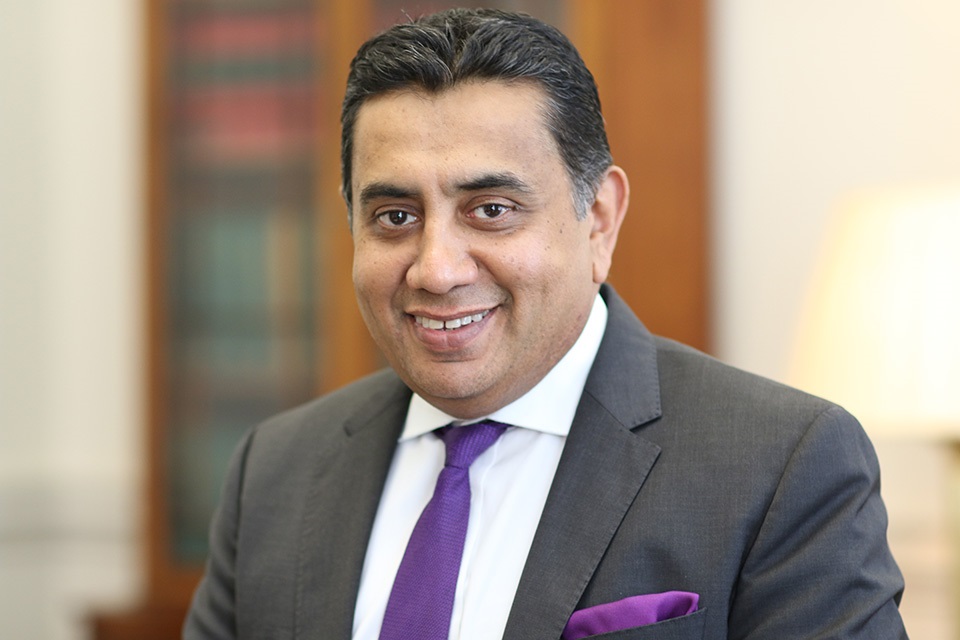
4. Lord Ahmad of Wimbledon delivered a speech at the Amnesty International Annual Human Rights Day Reception on 12 December 2018. Through the link below you can get the transcript of the speech, exactly as it was delivered.
….The area of Human Rights is something I believe in very passionately and take very seriously, and therefore not withstanding other events – and there are a few others going on today – it is important that we show our commitment, not just through events like this, but through collaborative and collective action on this important agenda. It should not matter who you are, where you are, what country, what age, what gender, what faith, what creed, what colour – no matter who you are, wherever you are our collective responsibility on this important agenda is clear. Therefore, I am delighted to support, amongst other human rights defender organisations, the sterling work done by Amnesty International around the world, and Kate, thank you for this opportunity to allow me to come and share some of my thoughts…
Threats to Human Rights Defenders
Indeed, as we look at 70 years on from the Human Rights declaration, there are 300 Human Rights Defenders have been murdered this year alone. Why? For defending the human rights of others – that is crucial. That is 300 families shattered. 300 communities shocked and living in fear. And many thousands of ordinary people robbed of a brave and committed advocates, close friends and family. For every one of those killed, there are many, many more thousands locked up, attacked and threatened. …These incredibly courageous people ..put themselves at risk to defend the rights that matter to us all, and that is why, here at the Foreign and Commonwealth Office, I and others that work with me make it a priority that we put human rights and Human Rights Defenders at the heart of our work. We learn from them. We not only advocate for them, we seek to also protect and strengthen the work they do – we must continue to strengthen the work we do in this area…. Over the past year, I have done this on many occasions during overseas visits, including in Iraq, Algeria, Egypt and Indonesia, to name but a few. It is so important, as we are defending the right to Freedom of Religion or Belief, we should not do so alone; it is the responsibility of us collectively, to promote and respect those who hold different religious beliefs, or no religious beliefs whatsoever, but collectively stand up for their right to do just that – not just internationally, but when we see challenges at home, we should stand up. As we approach Christmas in a year of goodwill – good to remember at this particular time. It is important that we do, and it is an area that I have been looking at very closely, and as we look at Freedom of Religion or Belief, we also recognise that there are many people, because of their Christian faith around the world who won’t be able to celebrate, who will not be able to have the family dinners, who will not be able to go to church to worship in the way they wish to do – a poignant moment to reflect on.
There Are No Dead Here is a deep dive into key human rights cases that exposed the murderous nexus between right-wing paramilitaries, drug lords, and Colombia’s military and political establishment. Through dogged reporting, in part as a Human Rights Watch researcher, McFarland unravels the links that led to the murders of Colombian rights investigators by powerful interests that reached as high as military leadership and even the Colombian presidency.
First awarded in 2008, the Méndez Human Rights Book Award honors the best current, fiction or non-fiction book published in English on human rights, democracy, and social justice in contemporary Latin America. The books are evaluated by a panel of expert judges drawn from academia, journalism, and public policy circles.
6. The Human Rights Centre held an event in Burao to observe Human Rights Day. Burao is the second largest city in Somaliland and is located in the eastern part of the country. Regional and district administration officials including the regional coordinator of ministries of Justice, Employment and Social Affairs, Religious Affairs, and Burao district officials attended the celebration with community members, IDPs, youth activist and civil society activists. ‘We warmly welcome the celebration. It is the first time such event is held in our city, Burao. We are thanking Human Rights Centre for coming to here,’ the secretary of Burao local government, Osman Shiekh, said. ‘Somaliland constitution upholds human rights. We have to all work toward its realization,…..At the same time, HRC celebrated with the law students of the University of Hargeisa. Human rights defenders and activists encouraged the students to advocate for human rights and raise awareness. Students, activists, academics and other members of the public attended the event…..This year also marks the 20-year anniversary of the United Nations Declaration on Human Rights Defenders. Human rights defenders endure tremendous pressure and intimidations. The marking will elevate their work and will call on the government of Somaliland to respect the work of human rights defenders as recognized in the United Nations Declaration on Human Rights Defenders.
in the UN family: ReliefWeb published an overview of how the UN family has been making sure that this year’s Human Rights Day succeeds in raising awareness of the principles enshrined in the document, which are as important and relevant today, as they were in 1948. It refers to SG António Guterres and UN High Commissioner Michelle Bachelet in Marrakesh for global migration pact on Monday…..
Threats to human rights were also being highlighted at UN headquarters in New York on Monday, where charities, non-governmental organizations and members of civil society were joined by Andrew Gilmour, UN Assistant Secretary-General for Human Rights, for a discussion about the ways that modern challenges, unforeseen 70 years ago, are impacting rights. The talk covered digital technologies, which have led to many benefits, but also brought about new risks which could replicate, and even exacerbate existing threats to human rights; and climate change, which risks making much of the planet uninhabitable.
Defending human rights in conflict zones:
..In Afghanistan, the UN Assistance Mission (UNAMA) renewed its call for human rights and fundamental freedoms to be respected in the country, welcoming breakthroughs such as the work of the Afghanistan Independent Human Rights Commission, new laws empowering the media, a new Penal Code reflecting the country’s commitment to promote fundamental freedoms, and the presence of women in civil service positions and in the private sector. Meanwhile, in South Sudan, commuters in the capital, Juba, got the chance to see their military in a different light on Monday: as athletes. Hundreds of military personnel – as well as police and prison officers, fire-fighters and members of the wildlife services – took part in a 10-kilometre race around the streets of the capital, organized by the United Nations Mission in South Sudan (UNMISS), to promote awareness of human rights and the need for peace in the conflict-affected country. Speaking on Monday, David Shearer, Special Representative of the Secretary-General and Head of UNMISS, said that “the only way that South Sudan is going to recover is by having peace and respect for human rights. If respect for human rights is there, then there is peace. If there is peace, it involves respect for human rights and people’s ethnicity and political persuasion. The two things go hand in hand.”
2. The Phnom Penh Post of 10 December (Niem Chheng) reports that the Cambodian authorities used the occasion to a ban march for Human Rights Day
Phnom Penh authorities have banned a planned march as local NGOs and workers’ unions gear up to celebrate the 70th anniversary of the signing of the Universal Declaration of Human Rights on Monday, with a youth group leader saying they would march nonetheless….In a letter issued on Saturday, Mean Chanyada, Phnom Penh’s deputy governor, said the NGOs concerned had been told that they could celebrate the anniversary at Freedom Park but marching was prohibited. “If [you] gather at a location outside the permitted area and continue to march on the street, which would affect security, safety and public order, the representatives will face the law,” Chanyada said. Sar Mory, the deputy chief of the Cambodian Youth Network (CYN) said on Sunday that he was concerned that important messages would not reach the public if they were to celebrate the anniversary without marching. “The reason we want to march is that we want to get our messages heard, ……
3. The winners of the “Kids for Human Rights” international drawing competition were announced on 10 December 2018. Nine young, creative artists from Australia, Bangladesh, Bolivia, Canada, Iran, Portugal, Thailand and the United States have won the top prizes in the “Kids for Human Rights” international drawing competition, launched earlier this year by the United Nations and the Gabarron Foundation. The call generated more than 17,000 entries. The full list winners is available here. The international jury was presided by internationally known Spanish artist Cristóbal Gabarrón and included Hani Abbas, a Syrian-Palestinian cartoonist who won the 2014 Editorial Cartoon International Prize awarded by Cartooning for Peace, Kate Gilmore, United Nations Deputy High Commissioner for Human Rights, Susanna Griso, Spanish journalist and television presenter, Jenna Ortega, a young American actress, Tomas Paredes, President of the Spanish chapter of the International Association of Art Critics, and Jayathma Wickramanayake, the United Nations Secretary-General’s Special Envoy on Youth.
4. The International Policy Digest used the occasion to draw attention to another international document that celebrates its 70th anniversary: the Genocide Convention which was signed into life a day before the UDHR, 9 December.,, It was the Polish-Jewish lawyer, Raphael Lemkin, who advocated for an international law for the crime of genocide. Before 1944, there was no law. However, in the wake of the Holocaust, the United Nations General Assembly adopted Resolution 260 (III) A on December 9, 1948 outlawing genocide. On January 12, 1951, the Convention came into force. …The UN’s High Commissioner for Human Rights, Michelle Bachelet, has argued that genocide continues to remain a “threat and reality.” She urged nations to act based on the “warning signs” often preceding genocide. She added that the crime of genocide is as real today as it was at the time of its signing. There are still 45 UN Member States who yet to ratify or agree to the Convention...
5. In Zimbabwe, a prominent human rights defender reminded Zimbabwean President Emmerson Mnangagwa that he had termed the abduction of journalist activist Itai Dzamara “barbaric” and called on him to follow his words with actions to prevent and punish rights abuses. [Dzamara has been missing since March 2015]. Zimbabwe Peace Project director Jestina Mukoko said: “With all due respect, I call upon the President to return to the words and show that it is barbaric. Such things are not expected from civilised people, inflicting pain on another person and the constitution clearly states that.”….Lawyer Jeremiah Bhamu, who has represented many abduction victims, called on the Zimbabwean government to ratify the convention on torture…The Zimbabwe Human Rights Association said while the adoption of the new constitution with a modern Declaration of Rights, enshrined in chapter four, in 2013 has been an important milestone, a lot needed to be done to align laws, respect its provisions and establish a culture of constitutionalism. [see also: https://humanrightsdefenders.blog/2018/10/08/jestina-mukokos-150-000-triumph-in-zimbabwe-gives-hope-to-all-torture-victims/]
6. “As human rights declaration turns 70, development banks have a way to go to respect and protect rights defenders” writes Olexi Pasyuk in Bankwatch. To coincide with this milestone, Bankwatch together with more than 200 organisations globally has called on international financiers to ensure that these institutions support the realisation of human rights, avoid causing or contributing to rights abuses, promote an enabling environment for public participation, and safeguard rights defenders.
7.
Today, on the occasion of the Human Rights Day – 20 years on from the first UN Declaration on Human Rights Defenders and on the 70th anniversary of the UN Universal Declaration on Human Rights – The Human Rights Defenders World Summit 2018published the final document of the action plan for the protection and the promotion of the work of human rights defenders. This action plan proposes a concrete set of measures and calls for a lasting commitment from States and other key actors to act to protect human rights defenders and to take concrete actions to offer better protection and create a more enabling environment for their work. We trust that this document will become a key reference for advocacy work at national, regional and international levels for the years to come. The action plan is available to download in five languages on the Summit’s website https://hrdworldsummit.org/action-plan/ It will be presented at the United Nations in New York on December 18th during the high level panel of experts on the situation of HRDs at the initiative of Norway. More information soon on the summit facebook page and website. See also Summit’s Facebook page, and on the website. [see also: https://humanrightsdefenders.blog/2018/07/24/announcement-of-the-human-rights-defenders-world-summit-in-paris-october-2018/]
8. Democracy without Borders writes on the occasion that Human rights defenders continue to face onerous challenges. In response to these challenges, Democracy Without Borders joined more than 900 other civil society organizations from across the world in supporting a global statement that urges governments “to create an enabling environment for HRDs to operate in line with regional and international human rights obligations and standards.”
Supporters of the Yellow Umbrella human rights and democracy movement in Hong Kong face state persecution. Source: Studio Incendo/Flickr
…..Unfortunately, as is evident from the monitoring of the situation of HRDs, those at the forefront of defending, promoting and protecting human rights are prime targets of attacks perpetrated by state and non-state actors. HRDs are often victims of physical assaults, and arbitrary and unlawful detention is the number one tactic of repression used by states. It is the increasingly threatening situation for HRDs that motivates the current global statement. [CIVICUS: World Alliance for Citizen Participation,. [see: https://humanrightsdefenders.blog/2018/12/07/global-statement-on-the-20th-anniversary-of-the-un-declaration-on-human-rights-defenders/]
9. In the Philippines, in line with the country’s celebration of Human Rights Day, the Commission on Human Rights (CHR) opened on Monday a freedom park to honor those who fought against human rights violation. Dubbed as the Liwasang Diokno, the CHR commemorated the heroic act of late Senator Jose ‘Ka Pepe’ Diokno, whom the agency tagged as a “symbol of freedom, democracy, and human rights.” Diokno was one of those individuals who fought to attain democracy in the country during the Martial Law era under the Marcos administration. a statue of Diokno was also installed inside the park with the approval of the National Historical Commission of the Philippines.With the opening of the Liwasang Diokno at the central office of CHR in Quezon City, the human rights group urged the public to continue to be more active in defending the human rights. The freedom park has a 30-tier fountain in its center, symbolizing the 30 articles of the Universal Declaration of Human Rights (UDHR).
10. A lights projection showing the faces of imprisoned, threatened and at-risk human rights defenders (HRDs) from around the world will shine at Dublin City Hall to mark the anniversary of the Universal Declaration of Human Rights. The faces will be projected on December 10th and 11th during a public reception, hosted by the Lord Mayor of Dublin Nial Ring with Front Line Defenders, Dublin City Council and the Department of Foreign Affairs.
In commemoration of International Human Rights Day, the Aditus foundation (a non-governmental organisation established in 2011 by a group of young lawyers who monitor, report and act on access to human rights by individuals and groups; the focus is primarily Malta, but also covers the regional & international dimensions of human rights in Malta) noted the precarious situation of Malta’s human rights defenders and called for a broader respect for their central role in promoting and contributing towards Malta’s overall well-being. [see also: https://humanrightsdefenders.blog/2017/12/04/the-new-normal-rising-attacks-on-human-rights-defenders/]
In a statement released to the media, the foundation said that Malta’s human rights defenders are …are present where State interventions are either absent or insufficient, where the risk of human rights violations is high. It continued to say that without human rights defenders, Malta would probably not be able to boast today’s’ levels of social wellbeing. As activists dedicated to ensuring human rights enjoyment for all persons, most of us push for stronger legal and policy standards, support the training of public officials, provide public information, support victims of violations and strive to hold the State accountable and responsible for its failures. “In return, many of us are bullied, harassed, insulted, threatened and stigmatised. Many of us are denied access to important dialogue with State entities, or exploited by the State as we provide those public services the State refuses or is unable to provide. As the community of Malta’s human rights defenders is still mourning the brutal assassination of Daphne Caruana Galizia, we are uncertain of the security of our working environment and are concerned for the physical and psychological safety of our staff and volunteers.”
“We are not satisfied that our concerns are being taken seriously by the competent authorities, especially in view of the fact that we are often victims of hatred perpetuated by those entities responsible for our protection.”
“Understanding the importance of human rights defenders is fundamental for the fostering of a society that is geared towards respecting, protecting and fulfilling everyone’s human rights.”
“By tolerating this on-going abuse of its human rights defenders, Malta is not only offending the principles human rights embody – equality, non-discrimination, individual and social empowerment – but it is also further marginalising those communities and themes human rights defenders so vehemently stand up for.”
“On International Human Rights Day, we therefore urge Malta to rethink its relationship with human rights defenders. This means to not merely refrain from activities that instil fear and insecurity, but to take steps towards actively supporting human rights defenders.”
International Human Rights Day 2017was celebrated all over the world by governmental and non-governmental entities alike. Here some cases of MIND THE GAP as reported in the media in Asia:
Cambodia:
The government celebrated Human Rights Day under the theme of ‘peace’, but 103 civil society groups spoke out against state ‘attacks’. KT/Mai Vireak
The government yesterday celebrated the 69th anniversary of International Human Rights Day under the theme of peace, while 103 civil society groups called for more protection for human rights defenders. Prime Minister Hun Sen posted on his Facebook page to say how the rights and freedoms of Cambodian people have been restored since the end of the Khmer Rouge regime in 1979: “December 10 is International Human Rights Day, which people all over the world celebrate. On January 7, 1979, the rights and freedoms of the Cambodian people were restored and have been until this day.”
Civil society meanwhile marked the day at different locations around Phnom Penh and in other provinces. A group of 103 civil society organisations issued a joint statement calling for justice and respect for human rights from the government. “On the occasion of International Human Rights Day, we, the undersigned members of Cambodian civil society, call for an end to government attacks on human rights defenders and civil society groups and the lifting of unjustifiable restrictions on fundamental freedoms,” the statement said.
Philippines:
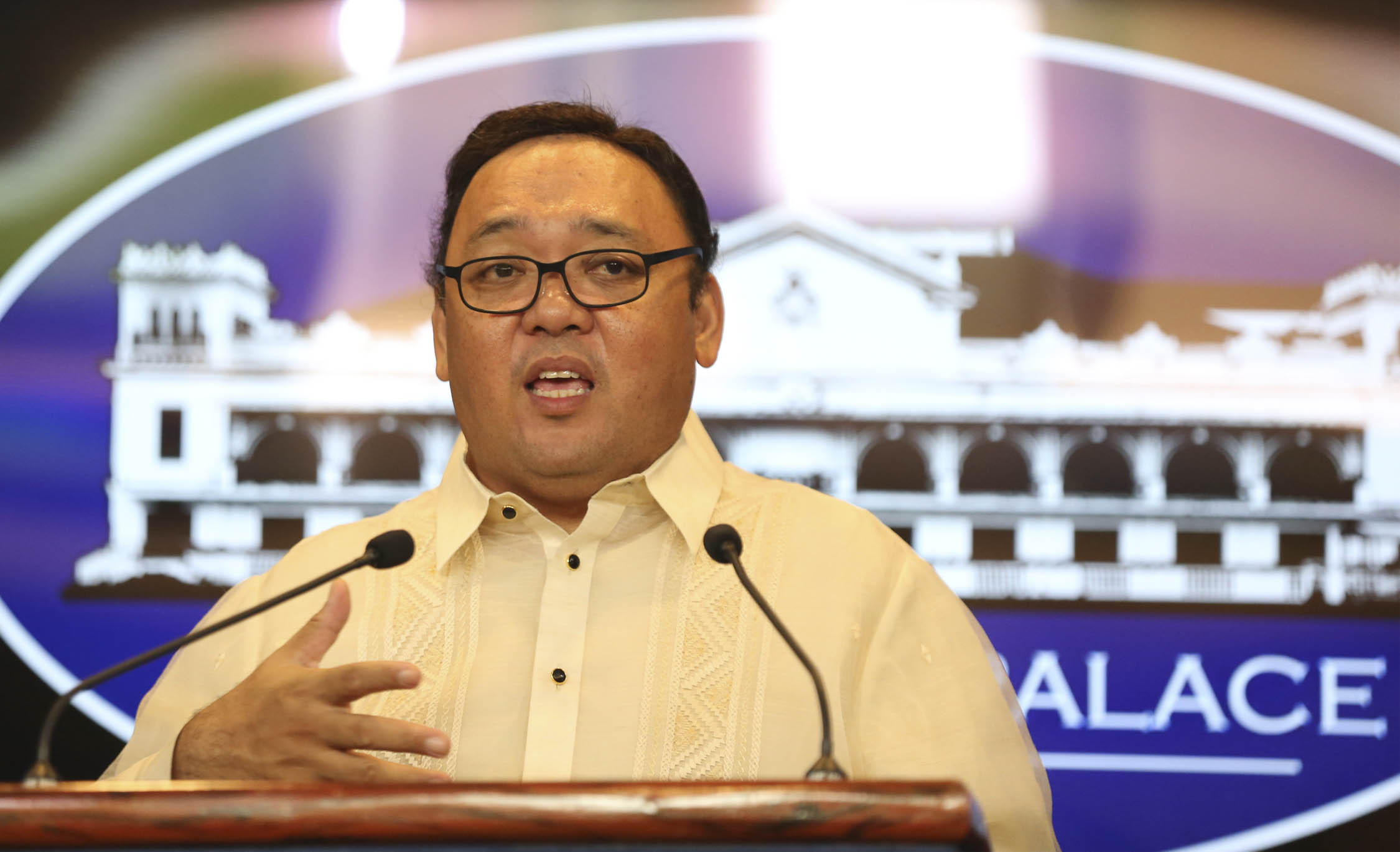
Presidential spokesperson Harry Roque INQUIRER PHOTO/JOAN BONDOC
On the observance of the International Human Rights Day, Presidential Spokesperson Harry Roque reiterated President Rodrigo Duterte’s commitment to uplift the lives of Filipinos, especially the poor, marginalized and vulnerable. Noting that the Philippines is an active member of the United Nations Human Rights Council and that respect for human rights is enshrined in the 1987 Constitution, Roque assured that the Duterte administration “works hard with the best interest of every Filipino.” ..“That direction is what inspires the government’s compliance with its human rights obligations. As a Nobel Peace Prize winner once said, ‘poverty is the absence of human rights” .
The Philippines has experienced a precipitous drop in basic human rights standards since President Rodrigo Duterte came to power last year, resulting in large, mass mobilizations across the country for the occasion of December 10, Human Rights Day. At least 12 rallies were held across the archipelago on Sunday, with human rights group KARAPATAN and progressive alliance BAYAN taking the lead alongside a range of like-minded groups calling for an end to what they describe as the U.S.-Duterte regime. In addition to over 13,000 small-time drug dealers and addicts killed during Duterte’s “war on drugs,” Karapatan has documented 113 victims of political killings, 81 victims of torture, 54,573 victims of threat, harassment, and intimidation, 364,617 who have suffered due to indiscriminate firing and aerial bombing, and 426,170 internally displaced who were subject to forced evacuation.
Turkey:
Turkish President Recep Tayyip Erdogan. Photo: AA
“Respect for human rights based on the principles of equality and non-discrimination of individuals before the law is the irreplaceable nature of the Republic of Turkey,” said Erdogan, according to state-run Anadolu Agency, on the occasion of Human Rights Day on Sunday. Erdogan specifically referenced Turkey’s commitment to “all oppressed people and victims from Palestine to Syria and Asia to Africa.”
National Human Rights Commission (NHRC) commissioner and human rights defender Angkhana Neelaphaijit said that despite the government’s claim that it cherished human rights and had made them a priority, in reality it had done nothing to do so.
Angkhana Neelaphaijit
Thailand is still far from its goal of valuing human rights since the junta’s policies and actions have eroded rights, while many people do not even understand the principle. Prominent Thai campaigners marked Human Rights Day yesterday to lament that the country was still far from its professed goal of ensuring everyone was accorded the freedoms they deserve. The nation’s most severe human rights violation was the lack of freedom of expression, they said in an appeal to the National Council for Peace and Order (NCPO) to restore democracy to truly guarantee human rights for every citizen. They also said Thailand faced many serious human rights crises. For instance, social movements across the country continued to be suppressed by authorities, the justice system was being used against human rights defenders, and many people in society still did not understand human rights and harmed others. National Human Rights Commission (NHRC) commissioner and human rights defender Angkhana Neelaphaijit said that despite the government’s claim that it cherished human rights and had made them a priority, in reality it had done nothing to do so. On the contrary, Angkhana said the government was doing the very opposite, enforcing many laws and regulations that violated human rights and curbing the activities of campaigners, both through law enforcement and by force. In effect, the regime was deepening Thailand’s human rights crisis, she said.
Pakistan:
Message by Foreign Minister of Pakistan : ”On behalf of the people and Government of Pakistan, I wish to reiterate our strong commitment to promote and protect human rights and fundamental freedoms, as well as needs. Pakistan has demonstrated its resolve by enacting wide ranging legislation, establishing strong institutional machinery and putting in place robust policy measures in the field of human rights. Pakistan’s Constitution serves as an anchor and guarantor of fundamental freedoms and human rights of all Pakistanis. The Government of Pakistan accords high priority to advancing mutually reinforcing objectives of development, human rights and democracy…This year is also significant for Pakistan in the field of human rights. Pakistan actively engaged with the UN human rights institutions and partners through regular submission of national reports, participation in review processes and implementation of recommendations arising from such mechanisms. Pakistan filed reports and participated in the review mechanism of three international treaty bodies, namely CAT, ICESCR and ICCPR. Pakistan also successfully presented its third national report on Universal Periodic Review (UPR) on 13 November 2017. This level of engagement, participation and contribution demonstrates Pakistan’s commitment as well as actions to advance the cause of human rights. Pakistan’s success as the newly elected member of the Human Rights Council (HRC) this year is a testimony to the confidence reposed in Pakistan by the international community as a consensus builder within the international human rights policy framework.
The struggle against enforced disappearance was seen in Sindh alone while though there have been cases of missing persons in other provinces but Sindh has dared to raise voice against such violations of human rights. These views were expressed at a seminar on occasion of Human Rights Day organized here by SAFWCO and Social Change. Noted Human Rights activist and lawyer Faisal Siddiqui said only voice against forced disappearances was being heard from Sindh while voice of Balochistan has been crushed with force. Though many persons were missing in KPK and Punjab but from there no voice is heard. He said our judiciary has come out of colonization era and was giving right decisions. He said it was he who had filed petition in SHC for IG Sindh A.D.Khwaja. He said he was harassed for being advocate against Baldia Factory burning of 258 persons, Shahzeb Jatoi case and other cases for which he was harassed and could not open his office for many months. He said now powerful forces were active human rights. The gathering paid tributes to Pubhal Saryo, convener of missing persons forum who was whisked away by agencies and released after more than 2 months. Punhal Saryo said it has become very difficult to work for human rights in situation where human rights defenders were also not safe.
—————–
publishes a series of 10 profiles human rights defenders to commemorate International Human Rights Day, 10 December 2016. Here two women HRDs from Mexico: Olga Guzmán and Stephanie Brewer: Read the rest of this entry »
On 13 December 2016 Human Rights First convened its annual Human Rights Summit: American ideals. Universal values, at the Newseum in Washington D.C. in the context of International Human Rights Day. During the Summit Human Rights First awarded the 2016 Roger N. Baldwin Medal of Liberty to anti-slavery activist Janvier Murairi Bakihanayeof the Democratic Republic of Congo (DRC). Murairi was selected for his work on behalf of vulnerable rural populations to combat contemporary forms of slavery in the mining sector in the DRC. (The Roger Baldwin Medal is given in alternating years by the ACLU to US citizens).
It also presented the 2016 Beacon Prize, awarded annually to an individual or organization whose work embodies the best in the tradition of American leadership on human rights, to Marilyn Carlson Nelson, former CEO of Carlson Inc., in recognition of her pioneering leadership in the fight to end modern slavery.
Human Rights Day was the occasion for the Indonesian Government – together with the National Commission on Violence Against Women (Komnas Perempuan) – to honor six women with posthumous Women Human Rights Defenders Awards for their fight against inequality and for the human rights of women. On 10 December 2016 officials from the Law and Human Rights Ministry and the National Development Planning Board handed the awards to the activists’ families, as part of the global 16 Days of Activism against Gender-based Violence Campaign:
Siti Latifah Herawati Diah
Lily Zakiyah Munir
Zohra Andi Baso,
Mientje DE Roembiak,
Darmiyanti Muchtar
Theresia Yuliawati Sitanggang.Komnas Perempuan chairman Azriana said the awards were presented to remind the nation that these women fought to promote gender equality. “They never once asked to be awarded, but they dedicated their lives to help Indonesian women”.
International Human Rights Day commemorates the day on which, in 1948, the United Nations General Assembly adopted the Universal Declaration of Human Rights. In 1950, the Assembly passed resolution 423 (V), inviting all States and interested organisations to observe 10 December as Human Rights Day. The theme this year is: Stand up for someone’s rights today, in other words: be a human rights defender. .
There is a lot going on during this period, so I just give a small sample (10!) from different parts of the world: Read the rest of this entry »
The Institute for Human Rights and Businesshas published: Human Rights Defenders and Business – Searching for Common Ground. This is the fourth in a series of Occasional Papers by IHRB to provide independent analysis and policy recommendations about timely subjects on the business and human rights agenda. In this instance, this paper is co-published with Civil Rights Defendersand Front Line Defenders, both organisations with practical research, campaigning, and advocacy experience of the issues raised in the paper.
As cases in this Paper show, journalists exposing corruption, Internet activists demanding accountability, and community activists campaigning for land rights have all faced pressure.
More than sixty governments have passed laws in the last three years to place restraints on the ability of human rights defenders to hold their governments to account. Among those targeted are individuals and organisations who challenge economic policies or business conduct. Human rights defenders’ activities are being criminalised and they face surveillance, intimidation, lawsuits, arrests, and torture – in some cases, even death.
Companies are engaging with civil society, but mutual suspicions remain. Companies share common goals with human rights defenders – accountability, transparency, the rule of law, and due process. Companies should build on these common interests and engage human rights defenders, and where possible, speak out in their defense. To download:
The same institution – to mark International Human Rights Day 2015 – published the seventh annual list of the Top 10 Business & Human Rights Issues for the 2016 (these issues are not ranked in order of importance). The one specific on human rights defenders reads:
More than sixty governments have passed laws in the past three years to place restraints on the ability of human rights defenders to hold their governments to account for actions that undermine respect for international standards. Among those targeted are individuals and organisations who champion alternate economic paradigms or challenge government policies or business conduct. Some have faced intimidation, surveillance, lawsuits, arrests, and torture.
Twenty years ago, after a trial that failed to meet international standards, the Nigerian Government executed Ken Saro-Wiwa and eight other Ogoni leaders who opposed the activities of Shell in the Niger Delta. The case sparked global awareness of business’ human rights responsibilities beyond the factory walls, leading to the development of standards, advocacy, initiatives, codes of conducts, and eventually a comprehensive UN framework and principles for business and human rights.
Despite some progress over the past two decades, suppression of activists too often continues. The UN has passed a resolution recognising the legitimate role of peaceful activists who call out abusive behaviours, including business actions that undermine respect for human rights. Yet a growing number of governments are also passing new laws to restrain civil society activities.
In the year ahead, some governments, businesses, and NGOs will likely sharpen criticism of states that unjustifiably attack human rights defenders, as well as the companies that benefit from such crackdowns and choose to say nothing. With rising concerns over terrorism and the resulting tendency in many countries to emphasise security threats over protecting human freedoms, the road ahead for those who dissent will not be easy. The combined voice of global business will be critical in effectively promoting the legitimate role of individuals and organisations that champion human rights principles and standards in societies around the world.
International human rights day is an occasion for a multitude of local activities, some denouncing violations others quietly remembering, some (trying to) march in the streets, others issuing statements. This anthology of 10 such events is far from complete but gives an idea of the variety, from human rights defenders speaking out to governmental institutions ‘celebrating’ …. Read the rest of this entry »


 5. The Duke University Human Rights Center@the Franklin Humanities Institute and the Human Rights Archive have named María McFarland Sánchez-Moreno’s book, There Are No Dead Here: A Story of Murder and Denial in Colombia(Nation Books, 2018) as the winner of the 2018 Juan E. Méndez Book Award for Human Rights in Latin America. McFarland will visit Duke University during spring semester 2019 to accept the award.




 Hans Thoolen on Human Rights Defenders and their awards