In the lead up to the Malaysia’s Universal Periodic Review, a delegation from Suaram (Suara Inisiatif Sdn Bhd) under the accreditation of Aliran (Persatuan Aliran Kesedaran Negara) attended the United Nations Human Rights Council in Geneva last week. The group submitted an oral statement as part of the Interactive Dialogue on the Situation of Human Rights Defenders urging the Malaysian Government to allow the Special Rapporteur Ms Margaret Sekaggya to carry out an independent inquiry. The statement touched on the intensified threats against Bersih steering committee members, native rights defenders in East Malaysia, Lynas activists and the ongoing harassment and intimidation against Suaram.
The group also submitted an oral statement as part of the Interactive Dialogue on Freedom of Religion or Belief. The statement highlighted a number of cases where freedom of religion was not respected, in relation to the ability of individuals to decide which faith they wished to practice. It highlighted how children in Malaysia are often exposed to religious instruction against their will, citing the example of the Orang Asli children who were slapped by a teacher at a school in 2012 for not reciting the doa (Islamic prayer). It also covered the controversial “Allah” issue and the bureaucratic obstructions that non-Muslims often face when constructing a place of worship in Malaysia.
The ongoing persecution and harassment of Malaysia’s human rights defenders is a blatantly obvious example as is ignoring the rights of minorities and indigenous people stated Suaram. http://aliran.com/11976.html
I reported earlier that on 28 February the International Federation for Human Rights (FIDH) and the World Organisation Against Torture (OMCT), in the framework of their joint programme the Observatory for the Protection of Human Rights Defenders, organised a meeting on (legal) restrictions increasingly imposed on human rights defenders. This was followed up on 11 March with an oral intervention at the UN Human Rights Council.
The statement referred to the recently published Annual Report 2013 of the Observatory, which states that NGOs’ access to funding, in particular foreign funding, is increasingly being hindered by governments around the world. Restrictive laws combined with unfounded criticism, smear campaigns and judicial harassment directed against human rights defenders because of the source of their funding create a hostile environment towards their activities as a way to silence them. Belarusian law now prohibits any possibility for an NGO to hold a bank account in an institution based abroad, and criminalises the use of so-called unauthorised funds. These new provisions were adopted as FIDH Vice-President and “Viasna” President Ales Bialiatski was sentenced to 4.5 years’ imprisonment after he made use of foreign funds to finance human rights activities in his country. Read the rest of this entry »
The Cairo Institute for Human Rights Studies (CIHRS) presented an oral intervention before the Human Rights Council on 12 March, 2013, in which it expressed its concerns over the continued deterioration in the situation of human rights in Egypt since President Mohamed Morsi took power. The oral intervention was based on the assessment of members of the Egyptian NGO Forum, a collective of 23 independent human rights organizations in Egypt, on the situation of human rights in Egypt during the first 8 months of Morsi’s presidency. It asserted that three major rights-related crises have been seen over this period: undermining of the independence of the judiciary, violations to the right to free expression and media freedoms, and violations to the right to assembly and peaceful protest. http://www.cihrs.org/?p=6159&lang=en
In addition, CIHRS organized a side event at the HRC, on 11 March, featuring representatives of the Egyptian NGO Forum, including Mohammed Zaree, director of the Egypt Roadmap Program at CIHRS, Masa Amir, researcher at Nazra for Feminist Studies, and Nihad Abboud, from the Association for Freedom of Thought and Expression. The event was chaired by Ziad Abdel Tawab, deputy director of the Cairo Institute for Human Rights Studies. He expressed concern for an independent civil society in Egypt, referring to recent attempts by the current government to put in place unprecedented restrictions on the funding and activities of non-governmental organizations.
Next, Nihad Abboud drew attention to the violations which have been committed against journalists and photographers as examples of the threats to freedom of expression and of opinion in Egypt. Ms. Abboud further pointed out that the right to freedom of expression is particularly targeted in the context of the right to protest. She spoke about draft legislation to regulate demonstrations, stating that the draft law contains many restrictions on the right to free assembly by allowing the authorities broad powers to ban or restrict demonstrations. ..Perhaps most worrying is that the new constitution includes provisions which restrict on the right to free assembly for the first time in Egypt. Masa Amir turned to the precarious situation of women human rights defenders in Egypt, reminding the audience of the specific targeting of women through virginity tests and other violations by the Supreme Council of the Armed Forces. The side event was concluded with the call that the international community should reassess its engagement with Egypt, in order to avoid replicating the mistakes of the past, including support for dictatorships which blatantly violate human rights.
As if to demonstrate the precarious situation of HRDs in Egypt Front Line Defenders reports that the Egyptian Human rights defender Hassan Mustafa sentenced to two years imprisonment on 12 March by the Mansheya Misdemeanour Court in Alexandria on charges of allegedly assaulting a member of Alexandria Prosecution Office. Numerous supporters of the human rights defender gathered in front of the Courthouse at the time of the hearing to protest against his trial and demand his release. Hassan Mustafa is a well-known human rights defender in Alexandria who has defended the rights of detainees and campaigned on issues such as police brutality and economic rights. According to Hassan Mustafa’s lawyer, the Court heard only two out of fifteen testimonies, of witnesses who denied that he assaulted the Prosecution Office member.
Ms. Perveen Rehman (56), worked for the betterment of the poor and neglected
A statement of 14 March 2013 by the Asian Human Rights Commission (AHRC) starts dramatically with this “When a small lady weighing hardly 60 kilograms working for the betterment of poor slum-dwellers, and amongst the under-privileged in poorer residential areas, is viewed as a dire threat to the Taliban and the local administration, the sanity of these institutions, and those that man them, is called into question. However, with yesterday’s murder of Ms. Perveen Rehman, an even more fundamental question confronts us: the raison d’être of the Pakistani state itself.”
Ms. Perveen Rehman, an architect by profession, was targeted and murdered in broad daylight yesterday, March 13th. Fifty-six years of age, having worked for the poor and underprivileged for 25 of them, Ms. Rehman was murdered close to her office as she arrived in a car. Armed men riding two motorcycles approached and opened fire on her. She was struck twice in the face and once in the neck. She was rushed to the Abbasi Shaheed Hospital where she succumbed to her wounds. It is believed that she was assassinated by Deobandi militants of Ahle Sunnat Wal Jamat (ASWJ). These are said to be the same militants responsible for the deaths of the four anti-polio workers and the attack on Malala Yusufzai.
The statement then continues to describe Ms. Rehman as a tireless social activist, working for people living in slum areas. She had, however, been receiving death threats for some time. Read the rest of this entry »
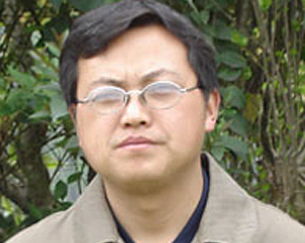
On 5 March 2013, human rights defender Liu Feiyue was taken from his home by police in Hubei Province. One week later, he remains missing with no further information available on his whereabouts. Liu Feiyue is a former teacher and founder of Civil Rights and Livelihood Watch, a human rights website based in China which documents cases of human rights violations from all over the country. He set up the website in 2005 after becoming increasingly involved in the defence of human rights in Hubei Province. As a result of his human rights work, Liu Feiyue has been harassed, placed under house arrest, detained and beaten.
Liu Feiyue had been under increased surveillance in the weeks prior to this incident, due to the convening of the Chinese People’s Political Consultative Congress and the National People’s Congress in Beijing, which began on 3 and 5 March 2013 respectively. Liu Feiyue has been repeatedly targeted in the past during politically sensitive periods and has often been brought into police custody without any legal procedures. In addition to Liu Feiyue, it is reported that dozens of other human rights defenders have been placed under house arrest or have had their freedom of movement restricted owing to the governmental meetings taking place in Beijing. Those under increased surveillance include Messrs Hu Jia, He Depu and Xu Zhiyong in Beijing, Ms Liu Ping and Mr Li Sihua in Xinyu City, Jiangxi Province and Mr Feng Zhenghu in Shanghai.
The new International Civil Society Network on Infrastructures for Peace (I4P) is launched today with its website: www.I4Pinternational.org
Many countries lack capacities and structures to deal adequately with on-going and potential violent conflict. This has emerged as a central obstacle to the attainment of equitable and sustainable development. In recent years, the number of conflicts has been increasing once again. What is needed – in the same way as for threatening natural disasters – is a comprehensive, inclusive and long-term approaches to peacebuilding, which involves the main stakeholders. Infrastructures for peace and Local Peace Committees can be important pillars to counter these dangerous developments or substantially reduce their impact. Several local peacebuilding NGOs and practitioners felt the need to exchange experiences and best practices about this approach and make I4P more recognised:the network was born and counts now some seventy members. There is an Interim Steering Committee with members from three continents.
Human rights and human rights defenders play a crucial role in this process – even if not spelled out in the main pages of the new website. The local peace groups mentioned as members however frequently refer to the need for human rights and social justice as they realise that lasting peace cannot be the ‘peace of the graveyard’. Moreover, it is the local Human Rights Defenders who suffer most from the absence of peace as this blog and many more sources regularly demonstrate.
Last Saturday, two distinguished human rights defenders in Saudi Arabia were sentenced to jail in Riyadh for establishing an unlicensed human rights organization. Mohammed Al-Qahtani and Abdullah Al-Hamad (or Hamid) established the Saudi Civil and Political Rights Association (ACPRA) in 2009. The organization’s mission is to promote human rights awareness within the Kingdom. ACPRA called for political representation of Saudi citizens and creation of laws to protect minorities. The organization also worked on documenting human rights abuses within the Kingdom. Despite multiple efforts to license ACPRA, the organization’s petitions were rejected and the group was eventually banned by Saudi authorities. The two men were sentenced to 10 and 11 years in prison on accusations including the rather illiberal sounding “breaking allegiance to the King”, “disseminating false information through foreign entities” and “forming an unlicensed organization“. This trial and the ensuing heavy sentence are clearly linked to them exercising their rights to freedom of opinion and association.
Front Line report s that on 4 March 2013, human rights defender and prominent radio and television journalist Mr Julio Ernesto Alvarado announced his resignation from presenting the week night news commentary programme Medianoche on national radio station Radio Globo, due to serious fears for his life. Julio Ernesto Alvarado, who is also Director of Mi Nación, an hourly news programme transmitted nightly by television station Globo TV, has been subjected to continuous threats and surveillance since he began presenting the radio programme in 2011, the most recent incidents of which occurred on 1 and 2 March 2013.
On 1 March 2013, a vehicle prevented him from entering the tunnel which gives access to the car park of the premises of Radio Globo and Globo TV. The journalist was subsequently forced to park elsewhere. Upon entering the building, Julio Ernesto Alvarado was informed by security guards that an unknown man had entered the premises of Radio Globo. When the journalist went to investigate, he was unable to locate the individual. It is believed that the man had entered the building in order to inspect Julio Ernesto Alvarado’s work environment and system of security.
What is apparent from this blog, which has featured many cases of environmental Human Rights Defenders, has now been clearly stated (on 7 March 2013) by the United Nations Independent Expert on human rights and environment, John Knox. In his report to the Council of Human Rights, he highlighted the urgent need to clarify the human rights obligations linked to the enjoyment of a safe, clean, healthy and sustainable environment. Such clarification, he said, “is necessary in order for States and others to better understand what those obligations require and ensure that they are fully met, at every level from the local to the global.”……………….In his report Mr. Knox also identifies rights whose implementation is vital to environmental policymaking, such as the rights to freedom of expression and association, rights to receive information and participate in decision-making processes, and rights to legal remedies. “The exercise of these rights, makes environmental policies more transparent, better informed and more responsive to those most concerned.” “States should recognize the important work carried out by human rights defenders working on land and environmental issues in trying to find a balance between economic development and environmental protection, should not tolerate their stigmatization and should ensure prompt and impartial investigations into alleged violations of their rights,” he said.
John Knox was appointed as the Independent Expert on human rights and the environment in July 2012 by the United Nations Human Rights Council.
I would also like to refer now to an article by Lauri R. Tanner in the Oxford Press Journal of Human Rights Practice on the landmark environmental defenders cases by the Inter-American Court of Human Rights: the milestone case of ‘Kawas v. Honduras‘ and the so-called ‘Mexican Ecologists case‘. In its first-ever ruling on environmental defenders, the Court found a positive obligation on the part of member states in the Hemisphere to protect environmentalists who are in serious jeopardy from human rights violations. The Kawas case is a paradigmatic example of the constant threats these activists encounter, both in the Americas and internationally, and states in the region are now on notice to ensure special protection to those most in danger of harm. The Court arrived at the remarkable juncture of ‘making visible and potentially punishable what heretofore has been invisible and unpunished’. In an epilogue Tanner addresses the subsequent ruling in the ‘Mexican Ecologists’ case, and offers recommendations to human rights and environmental defenders and practitioners both regionally and internationally.






 Hans Thoolen on Human Rights Defenders and their awards