On 14 November 2025, Al Jazeera (Mariamne Everett) and other media reported that international NGOs, such as Human Rights Watch and Amnesty International, have decried a sharp decline in civil liberties and a pervading “injustice” in Tunisia since President Kais Saied came to power in 2019, as authorities escalate their crackdown on the opposition, activists and foreign nongovernmental organisations.
“Tunisian authorities have increasingly escalated their crackdown on human rights defenders and independent non-governmental organizations (NGOs) through arbitrary arrests, detention, asset freezes, bank restrictions and court-ordered suspensions, all under the pretext of fighting ‘suspicious’ foreign funding and shielding ‘national interests’,” Amnesty International said in a statement on Friday.
Tunisia’s crackdown on civil society has reached an unprecedented level, according to Amnesty, as six NGO workers and human rights defenders from the Tunisian Council for Refugees are “being criminally prosecuted on charges solely related to their legitimate work supporting refugees and asylum seekers”. The trial’s opening session, initially scheduled for October 16, has been adjourned to November 24.
Within the past four months, Tunisia has temporarily suspended the activities of at least 14 Tunisian and international NGOs, said Amnesty, including the Tunisian Association of Democratic Women and the World Organisation against Torture.
Human Rights Watch said in a statement on Friday that Tunis’s Court of Appeal will hear on November 17 the appeal of more than 30 people “unjustly sentenced to heavy prison terms in a politically motivated ‘Conspiracy Case’” mass trial in April.
“Four of those detained are on hunger strike, including one who, according to his lawyers, was subjected to physical violence in prison on November 11.”
The 37 people detained include opponents of Saied, lawyers, activists and researchers. Their prison terms range from four to 66 years for “conspiracy against state security” and terrorism offences. Jawhar Ben Mbarek – cofounder of Tunisia’s main opposition alliance, the National Salvation Front – began a hunger strike on October 29 to protest his arbitrary detention. Ben Mbarek was sentenced to 18 years behind bars on charges of “conspiracy against state security” and “belonging to a terrorist group”.
For this 31st edition, ten of the world’s leading human rights NGOs composing the Jury of the Martin Ennals Award – Amnesty International, Human Rights Watch, FIDH, HURIDOCS, Bread for the World, Human Rights First, World Organisation Against Torture, International Commission of Jurists (ICJ), International Service for Human Rights (ISHR), and Front Line Defenders – have selected, after much deliberation, three human rights defenders for their exceptional contribution to the human rights movement. [se also https://www.trueheroesfilms.org/thedigest/awards/043F9D13-640A-412C-90E8-99952CA56DCE]
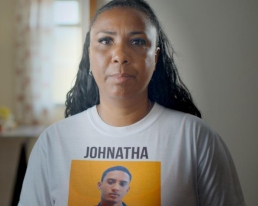
The 2025 Laureate is Ana Paula Gomes de Oliveira (Brazil), who co-founded the collective ‘Mothers of Manguinhos’ to fight for justice after the killing of her son, a 19-year-old Black man, who was shot in the back by a military police officer in the favelas of Rio on his way back from his girlfriend’s house in May 2014. The collective serves as a front for resistance and advocacy, but also as a network of emotional support and solidarity between women who share stories of similar loss. These women, in their majority Black, many of whom have lost children and other family members to violent actions by law enforcement officials, came together to denounce violence in the favelas, especially police violence that disproportionately affects poor Black youth. ‘When we are born Black and raised in the favelas, we are targeted by a racist system that is also reinforced by public security policies based on death and imprisonment,’ says Ana Paula. According to the UN, killings by the police have more than doubled in the last ten years in Brazil, with more than 6000 killings every year over the past six years. Black people, overwhelmingly men, represent a shocking rate of 82,7% of the killings by police officers in 2023. ‘The racist violence in Brazilian streets merits the full attention of the federal government and the international community,’ says Hans Thoolen, Chair of the Martin Ennals Award Jury. The collective ‘Mothers of Manguinhos’ fights for truth, memory, justice, freedom and the human rights of Black, poor, and peripheral lives. The collective is a member of the UN Antiracism Coalition (UNARC) and during the 57th session of the Human Rights Council, Ana Paula delivered a powerful message at a side event organised by UNARC on the perspectives of the Afro-Brazilian community directly affected by police violence in Brazil.
The Jury also recognised two finalists: Aloikin Praise Opoloje (Uganda) and Saadia Mosbah (Tunisia).
Aloikin Praise Opoloje is a 26-year-old Ugandan student who has become a leading voice against corruption, social injustice, and human rights abuses in Uganda. Inspired by the dire living and educational conditions in her home district of Palisa, she has mobilised thousands through social media and organised major peaceful protests, including the March to Parliament and the Nude Protest against government mismanagement, which prompted official accountability for the Kiteezi landfill tragedy. Despite repeated arrests in 2024 and ongoing legal charges, Aloikin went on to create the WeThePeople movement, which informs young Ugandans about their civic rights and non-violent resistance.
Saadia Mosbah is a leading Tunisian human rights activist and co-founder of Mnemty (‘My Dream’), the main organisation dedicated to fighting racism and racial discrimination in Tunisia. She has spearheaded initiatives through education, awareness raising and legislative advocacy, which have led to the 2016 national debate on systemic racism, the adoption of the Anti-Racism Law No. 50 (2018), and the declaration of 23 January as the National Day for the Abolition of Slavery for Tunisia (since 2019). Her work has also focused on combatting prejudice against migrant people and promoting migrant and refugee rights. Despite her legitimate activism, Saadia Mosbah and Mnemty have faced intense smear campaigns. She was arrested on 6 May 2024 on false accusations of financial crimes and remains in pre-trial detention without a set trial date. [https://www.amnesty.org/en/documents/mde30/0846/2026/en/]
The UN High Commissioner for human rights will award the selected laureate during the ceremony to take place on 26 November 2025 in Geneva, Switzerland. [https://www.martinennalsaward.org/2025-edition/]
The Tiruchelvam Fellowship will provide opportunities for outstanding legal scholars and practitioners of Sri Lankan background to undertake research, writing, and scholarly engagement on themes related to human rights in Sri Lanka and South Asia for up to one academic semester at Harvard Law School. The Fellowship is named in honor of the late Neelan Tiruchelvam, a Sri Lankan peace and human rights activist, lawyer, scholar, and politician.
Applications and all supporting materials must be received by March 2, 2026. Please click here for more information and to access the online application.
On 5 November, 2025Camilla Pollera, Human Rights and Climate Change Program Associate at the Center for International Environmental Law published a blog post about the upcoming COP30 and the role of human rights defenders:
There is no climate justice in a climate of fear. As governments prepare to meet in Belém, Brazil for, COP30, attention turns to a country where defending nature still comes at a high cost. Deep-rooted and intertwined impunity and violence against environmental human rights defenders (EHRDs) — including Indigenous defenders, Afro-descendent communities, women, and defenders from LGBTQIA+ —persist in Brazil.
COP30 decisions must recognize the efforts of those protecting the planet, in Brazil and beyond, and ensure that they can do so safely, freely, and without fear.
Around the world, EHRDs are on the frontlines of the climate crisis — protecting land, water, communities, and their rights, often at great personal risk. Faced with an escalating climate crisis and the inaction of governments, a growing number of people are stepping up to defend their rights, the rights of future generations and the right to a clean, healthy and sustainable environment, exercising their fundamental freedoms of expression, peaceful assembly, and association, guaranteed under international human rights law.
…The violence and repression faced by defenders are intensified by intersecting forms of marginalization, especially affecting women defending the environment, who often suffer gender-based violence that rarely appears in the data, including sexual violence, harassment, and rejection within their families and communities. They are targeted not only as defenders of rights and natural resources but also as women, in all their diversity, challenging discriminatory societal norms, a combination that makes their work particularly dangerous and invisible. …The persistent violence and lack of effective guarantees for human rights protection are a stark reminder of what is at stake as COP30 comes to Belém.
The Advisory Opinion of the Inter-American Court of Human Rights on the climate emergency and human rights made it clear: States must take proactive steps to ensure the effective protection of environmental defenders — including for those such as Indigenous and women EHRDs who are most at risk of retaliation. The Court recognized EHRDs are “allies of democracy”, whose work takes on even greater importance amid the urgency and complexity of the climate emergency. It reaffirmed the right to defend human rights as an autonomous right and declared that States have a special duty of protection toward those who exercise it, and recognized the double layer of risk faced by women environmental defenders, requiring an even higher duty of care. The Court also formulated very concrete recommendations on what this means at the national level.
The Escazú Agreement and the Aarhus Convention both enshrine explicit provisions on the protection of EHRDs, setting legal and institutional frameworks to operationalize these duties. Recent work under these instruments has provided concrete guidance for States and businesses to uphold their obligations, safeguard civic space, and ensure defenders are protected and not penalized. The recent Action Plan under Escazú and the ad hoc rapid response mechanism under Aarhus are just a few examples marking concrete advances in protecting those facing threats.
At COP30, Parties can no longer ignore their human rights obligations. They have a duty to ensure that the UN Framework Convention on Climate Change (UNFCCC)—the central forum for global cooperation on climate action—and its outcomes align with legal standards. Rightsholders have been obstructed from participating and silenced the climate talks, a process that is deciding on their future. Restrictions on the rights to freedom of expression and assembly, lack of transparency in the host country agreements, persistent visa barriers and financial burdens, continue to limit access. In recent COPs, civic space has continued to shrink, with obstruction often led by the very States hosting the negotiations.
Brazil has a chance to do things differently, by making civic space at COP30 and the protection of environmental defenders a true priority. This includes guaranteeing safe conditions for the meaningful participation before, during, and after COP30 and beyond. And it also means taking steps domestically, starting with the urgent ratification of the Escazú Agreement. Brazil has a key role to play in building upon its legacy of international environmental leadership and steering negotiations at the COP towards rights-based outcomes.
COP30 indeed offers a crucial moment to enhance the protection of defenders through critical decisions expected in Belém: the Just Transition Work Programme (JTWP) and the Gender Action Plan (GAP).
As highlighted by the recent report of the UN Special Rapporteur on Human Rights Defenders, Mary Lawlor, a just transition should be grounded in the protection of those who defend rights and call out false climate solutions, from Indigenous Peoples and land defenders opposing harmful mining projects to workers’ advocates demanding fair and equitable transitions. All decisions, measures, and mechanisms designed to enable a just transition from the fossil fuel economy must protect a safe and enabling civic space, and ensure the meaningful participation of EHRDs.
..
There is no climate justice without human rights and without protecting those on the frontlines. EHRDs step in to protect what governments have neglected, and their courage exposes States’ failure to meet their climate and human rights obligations. Despite the risk, around the world, defenders continue to organize, resist, and demand climate justice, leading the way forward. In their resistance lies the chance of a just and sustainable future.
Since 1989, CIEL has used the power of law to protect the environment, promote human rights, and ensure a just and sustainable society.
With offices in Washington, DC, and Geneva, Switzerland, CIEL’s team of attorneys, policy experts, and support staff works to provide legal counsel and advocacy, policy research, and capacity building across our four program areas: Climate & Energy, Environmental Health, Fossil Economy, and People, Land & Resources.
On 5 November 2025 Amnesty international endorsed this kind of view under the title “What is COP and why is this year’s meeting in Brazil so important?”
As part of DefendDefenders’ 20th anniversary commemorations, it has gathered 15 stories that reflect the impact of its work over the past two decades. Through interviews with human rights defenders (HRDs), key partners, and friends, these stories highlight our journey as told by those we have worked with, stood alongside, and served. They include reflections from those present at our founding 20 years ago, as well as from partners who have walked this path with us. We are deeply grateful for the personal experiences shared, and we celebrate the memories and milestones we have achieved together. We are because you are.
On 29 October, 2025 Amnesty International came with a report: “Closing the door – How Europe’s Schengen area visa policies fail human rights defenders“. International travel is crucial for human rights defenders (HRDs), and the Schengen area is a key destination, offering many opportunities for human rights advocacy, networking, learning, and for temporary respite for those facing threats and burnout. The importance of mobility for HRDs has been recognized by EU institutions and Schengen states. However, gaps remain between commitments and practice.
HRDs who are nationals of the 104 visa-restricted countries and who are in their vast majority racialized as Black, Asian and/or Muslim, continue to encounter huge barriers in obtaining a visa.
The report brings together real-life cases showing the impact of these obstacles on racialized HRDs, including many examples of visa denials because HRDs were not believed for the purpose of their travel. These experiences occur within a broader context of systemic racism, a legacy of colonial practices that shape visa policies and practices to this day. The report calls on authorities to ensure the full implementation of existing flexible arrangements for HRDs applying for visas, to develop a new visa procedure specifically designed to facilitate the process for HRDs, and to eliminate and prevent racial discrimination in the context of visa policies and processes.
Patricia Egessa, Director of Global Communications, published this NGO assessment:
Looking back at the year 2000 from a gender justice perspective is sobering. The previous decade had famously been declared as ‘the end of history’ by Western male political pundits. But women knew better. As conflicts continued to rage with devastating and disproportionate impacts on women and families, gender justice activists decided history still had some way to go and demanded a central role in peacebuilding. Their efforts galvanized the adoption of the pathbreaking UN Resolution 1325, which established the Women, Peace and Security (WPS) agenda.
As the WPS agenda marks its 25th anniversary, civil society organizations are uniting to reaffirm the importance of women’s full and meaningful participation and leadership in global processes. The NGO Working Group on Women, Peace and Security has released its annual Open Letter calling on the international community to defend the core values of the WPS agenda amid growing threats to women’s rights globally. We cite just a part of that letter as a statement of our shared concern:
Yet, when we should be paying tribute to the hard-fought achievements of these feminist movements, we are instead confronting an alarming backlash against women’s autonomy and rights, and against those who advocate for them, at a time when the consequences of armed conflict and crises on the lives of women and girls could not be more devastating. The very term gender—a core concept in international human rights law mobilized by feminist movements for decades to challenge the systematic oppression of women and LGBTQIA+ people—is today being blatantly undermined by anti-gender movements globally, including at the United Nations (UN). Civil society and human rights defenders around the world, especially those defending gender equality, women’s rights, sexual and reproductive rights, and LGBTQIA+ rights, are being targeted for who they are and the work they do. Combined with rising militarism, erosion of respect for international law, capitalist exploitation and slashing of funding for gender equality and women’s rights organizations, these attacks have thrown our work and our movements into crisis, even as the vision of the WPS agenda is more necessary than ever.
ICRW has proudly signed on to this collective statement precisely for the reason so clearly articulated in this letter: to remain silent as the WPS agenda and those who advocate for it are attacked not only undermines decades of progress but jeopardizes peace and security for everyone. Twenty-five years after the adoption of the UN resolution, our work is unfinished. We join over 600 organizations worldwide in ensuring that our unified voice reaches the UN Security Council, governments, and the world’s citizens who understand and support a more peaceful world for our children.
On 25 September 2025, 11 States raised individual cases of intimidation and reprisal in 15 different countries and territories at the Human Rights Council‘s 60th session. The cases of Kadar Abdi Ibrahim (Djibouti) and Loujain Al-Hathloul (Saudi Arabia) were cited by States. Cases from ISHR’s 2022 and 2024 campaigns were also among the cases mentioned, as well as the case of Basma Mostafa (Egypt) facing transnational repression.
On 16 October 2025, at the Third Committee of the General Assembly‘s 80th session, specific cases and situations of intimidation and reprisal were raised again by Belgium, the Netherlands and Luxembourg during this dialogue with the Assistant Secretary-General. They raised the cases of Human Rights Center Viasna (Belarus), Chow Hang Tung (Hong Kong) and Pham Doan Trang (Viet Nam).
Additionally, 70 States joined the cross-regional statement on reprisals led by Ireland and Uruguay, delivered at the General Discussion on the promotion and protection of human rights (item 71) at the General Assembly’s Third Committee.
This is what happened to Loujain and Mohamed, prominent human rights defenders from Saudi Arabia and Egypt respectively.
Meanwhile, Anexa, an Indigenous human rights defender, is unable to return to her home country of Nicaragua, and Kadar from Djibouti had his passport confiscated since 2018, preventing him from leaving the country and doing his work.
IThrough this campaign, we share their stories. These are not just cases of reprisals — they are real lives disrupted, silenced, and confined. But they are also stories of resilience and perseverance for social change.
Loujain Al-Hathloul
Loujain is an iconic figure in Saudi Arabia’s women’s rights movement. She has actively campaigned for women’s rights in the country and against the driving ban imposed on women. She has also publicly and consistently called for the dismantlement of the male guardianship system.
Mohamed El-Baqer is a human rights lawyer from Egypt. He is the director of the Adalah Center for Rights and Freedoms, founded in 2014. It is a non-governmental, independent legal and human rights organisation with a focus on four Programmes: 1) Criminal Justice 2) Student Rights and Academic Freedoms; 3) Refugees; 4) and Minorities. All these Programmes are implemented through legal support and strategic litigation, research, monitoring and documentation, advocacy activities and capacity-building. [https://www.trueheroesfilms.org/thedigest/laureates/a845697d-4b51-4e7f-b7d0-219c1e18ecd3]
Anexa Alfred Cunningham is a Miskitu Indigenous leader, woman human rights defender, lawyer and expert on Indigenous Peoples’ rights from Nicaragua. She defends the ancestral land and natural resources of Indigenous and Afro-descendant Peoples of the Caribbean Coast of Nicaragua. She has also worked with Indigenous and Afro-descendant communities to investigate the many abuses they suffer and denounce them to the United Nations. These Peoples face attacks by armed groups who seek to take away their ancestral territory with the State’s approval.
Kadar Abdi Ibrahim is a human rights defender and journalist from Djibouti. He has drawn inspiration from historic figures in the human rights movement in the hopes of building a solid and lasting democracy in his country. From 2015, Kadar was the co-director and chief editor of L’Aurore, Djibouti’s only privately-owned media outlet. In 2016, the newspaper was banned following the publication of a story on one of the victims of the Buldhuqo massacre, crackdown by Djibouti security forces on a religious celebration and a meeting of the opposition on 21 December 2015 that left at least 27 people dead. Kadar is also the president of the political party Movement for Democracy and Freedom (MoDEL) since December 2021. Over the years, Kadar has been arrested several times by the police in an attempt to silence him.
#EndReprisals
Join our campaign by writing a letter to State representatives so they publicly raise the cases of Kadar, Anexa, Loujain and Mohamed at the General Assembly’s Third Committee in New York.
ISHR’s #EndReprisals database
In order to assist stakeholders with research, analysis and action on cases of reprisals and intimidation, ISHR launched an online database compiling cases or situations of intimidation and reprisals documented by the United Nations (UN) Secretary-General between 2010 and 2024.
On this International Day of Political Prisoners, the NGOs mentioned below stand together to affirm a simple truth: no one should be imprisoned for exercising their fundamental rights or for peacefully expressing their beliefs. Yet around the world, there are an estimated one million political prisoners, who are unjustly detained for political reasons. These individuals—journalists, human rights defenders, democratic opposition leaders, religious leaders, artists, and ordinary citizens—represent the conscience of their societies. Their imprisonment is an assault not only on their freedom, but on the shared principles of human dignity and justice.
The International Day of Political Prisoners originated in the Soviet Union in 1974, when political prisoners collectively held a one-day hunger strike. Soviet prisoners of conscience repeated this protest every October 30, supported by demonstrations of solidarity in major cities. In response to Vladimir Putin’s ongoing and deepening repression, Russian political prisoners rekindled the tradition in 2021. In the years since, it has become an international day of solidarity with political prisoners worldwide.
Political imprisonment corrodes the rule of law, silences dissent, undermines press freedom, and weakens the foundations of democracy. Authoritarian governments use it to suppress opposition, instill fear, and consolidate control. Each unjust detention sends a chilling message to others who seek to speak truth to power.
We, as organizations who advocate on behalf of those unjustly detained around the world, call on democratic governments to continue to make the release of political prisoners a global priority—to raise these cases consistently in bilateral and multilateral forums, to request information and specific actions be taken on the prisoners’ behalf, to support accountability mechanisms, and to continue to provide support to organizations that advocate on behalf of those unjustly detained and provide legal and humanitarian assistance to them and their families. Solidarity with the unjustly detained must be sustained, coordinated, and visible.
We also stand in solidarity with the families, lawyers, and civil-society organizations who continue to advocate for freedom in the face of repression. Their courage reminds us that the defense of liberty is a collective responsibility.
On this day, and every day, we reaffirm our shared commitment to the universal right to freedom of thought, expression, association, and belief. The world’s political prisoners must not be forgotten—and their freedom must remain a global cause.
Signed:
Freedom House
Free Russia Foundation
McCain Institute
National Endowment for Democracy
Abdorrahman Boroumand Center for Human Rights in Iran
Al-Tahreer Association for Development (TAD)
Amnesty International
Center for Civil Liberties
Committee to Protect Journalists
Freedom Now
George W. Bush Institute
Global Magnitsky Justice Campaign
Human Rights Center Viasna
Human Rights Defense Center Memorial
Human Rights First
Human Rights Foundation
Human Rights Watch
International Republican Institute
James W. Foley Legacy Foundation
Lantos Foundation for Human Rights & Justice
Oma Organization for Human Rights and Democracy Promotion
Organization for Community Civic Engagement
OVD-Info
Political and Governance Development Academy
Socio-Economic Rights and Accountability Project (SERAP)
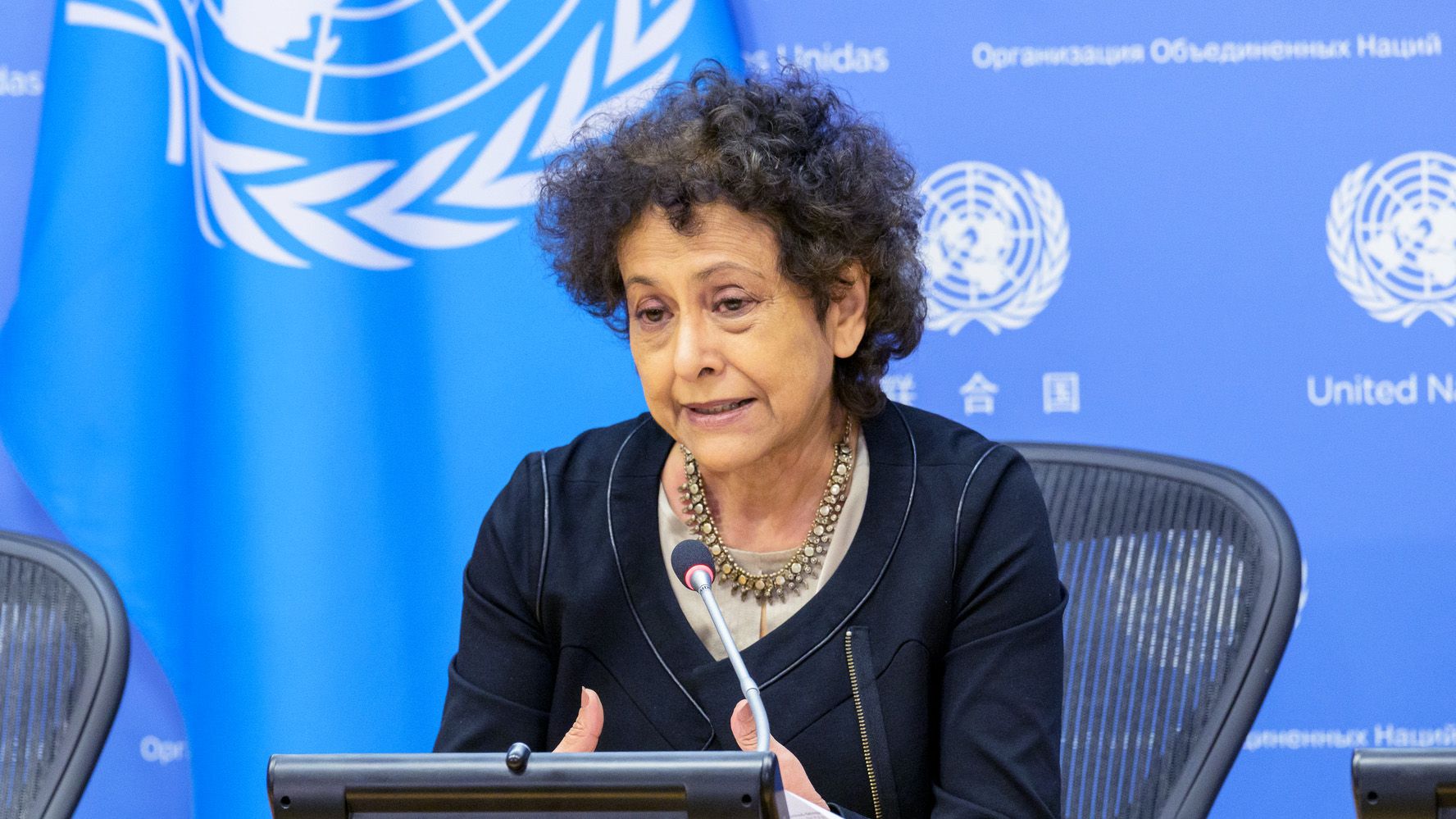
UN Special Rapporteur on Freedom of Expression and Opinion Irene KhanMary Lawlor UN Special Rapporteur for human rights defenders
On 5 August 2025 a group of United Nations human rights experts has written to the Kenyan government over allegations of serious human rights violations. These violations include the killing of protesters, the arrest and detention of human rights defenders, the deportation of a Ugandan lawyer, and the suppression of media freedom during the June 25 protests across the country.
The letter (referenced AL KEN 3/2025,) was sent by four UN Special Rapporteurs, namely Mary Lawlor (Human Rights Defenders), Matthew Gillett (Arbitrary Detention), Irene Khan (Freedom of Expression), and Gina Romero (Freedom of Assembly and Association).
Copies of the letter were also shared with the governments of Uganda and Tanzania, given their involvement in the alleged incidents. The Kenyan government was given 60 days to respond to the communication before being made public on the UN’s human rights website.
By October 22, Kenya had not responded to the contents of the letter. The experts expressed grave concern over what they described as “an emerging pattern of criminalisation and harassment of human rights defenders in Kenya.”
According to the communication, nationwide protests on June 25, 2025, left 16 people dead and hundreds injured. The demonstrations, which marked the first anniversary of the 2024 anti-Finance Bill protest, were allegedly met with excessive police force.
During the protests, several major media houses reportedly had their transmission centres raided by police and communication officials who switched off live broadcasts. The Communications Authority of Kenya allegedly issued a directive barring media outlets from airing live coverage of the protests, a decision later suspended by the High Court in Milimani, which termed it “potentially unconstitutional” pending a hearing scheduled for October 24, 2025.
The letter cites the arrest of Mark Amiani, John Mulingwa Nzau, and Francis Mutunge Mwangi, all members of the Social Justice Centres Working Group, who were detained by police on June 27 while travelling to work in Mombasa. They were later charged with incitement of violence, damage to property, and theft, though the experts said no credible evidence was presented in court.
They were held for five days before being released on bail on July 2, with conditions requiring them to report to the police twice weekly. Their next court hearing was scheduled for August 21, 2025.
Prominent activist and photojournalist Boniface Mwangi was also arrested at his Nairobi home on July 19, where police allegedly confiscated electronic equipment and even tear gas canisters. He was charged with unlawful possession of ammunition and released on bail two days later.
The UN experts noted that Mwangi had previously been arrested several times and was abducted in Tanzania in May 2025, before being found in Kenya’s coastal town of Ukunda days later.
The letter further highlighted the deportation of Ugandan lawyer Martin Mavenjina, a senior legal advisor at the Kenya Human Rights Commission (KHRC), who was expelled from Kenya on July 5 despite having a valid residency and a Kenyan family.
He was allegedly detained at Jomo Kenyatta International Airport and forced onto a flight to Kampala without being informed of the reason or given access to legal counselADVERTISEMENT
A day after Mavenjina’s deportation, armed men reportedly stormed a press conference hosted at the KHRC offices in Nairobi, where women and widows were calling for an end to police brutality and enforced disappearances. The assailants allegedly destroyed journalists’ equipment and accused the women of organising protests. Despite reports being filed, no investigations have been launched, according to the letter.
UN calls for action and accountability: The UN experts urged the Kenyan government to clarify the legal basis for the arrests, detentions, and deportations, and to end the intimidation of journalists and human rights defenders.
They also demanded investigations into the killings and injuries from the protests.
The experts warned that the events “constitute blatant violations” of international human rights laws, including the International Covenant on Civil and Political Rights, which guarantees freedoms of







&format=jpeg)

