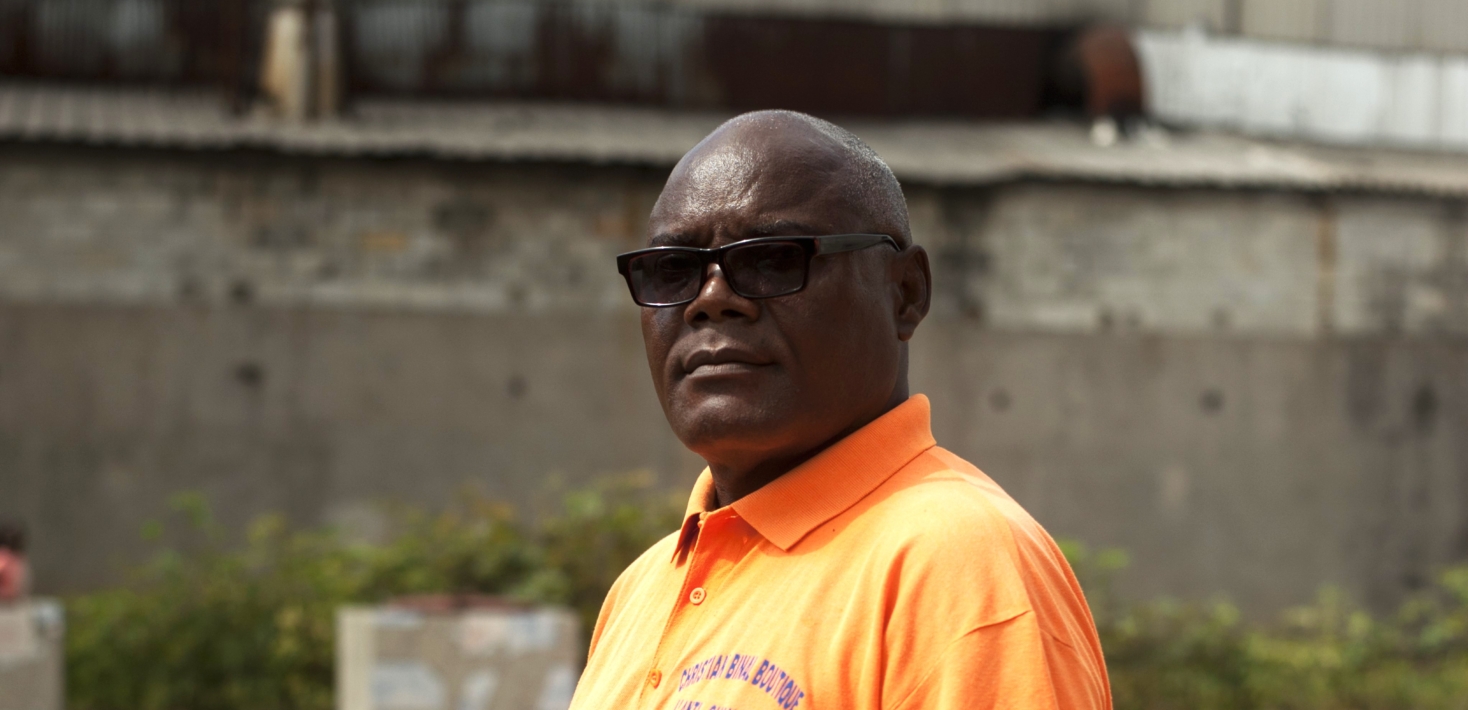
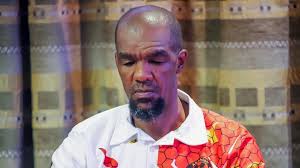
Cyrille Traoré Ndembi, 61, is the President of the Vindoulou Residents’ Collective, a neighbourhood on the outskirts of Pointe-Noire in the Republic of Congo. This retired community development specialist has been fighting to defend the residents’ right to a healthy environment since he moved there in 2019.
His house is located just ten metres from the Metssa Congo plant run by a subsidiary of the India-based Metssa Group. This recycling plant produced lead bars for export from 2013 to 2024, 50 metres from a school and in the middle of a residential area. Cyrille noticed severe health problems in his family including respiratory and digestive disorders. Blood tests on some residents showed lead levels far above the alert level set by the WHO.
Following Cyrille’s campaigning, and with the help of Amnesty International, the authorities ordered the plant’s closure in December 2024. Cyrille continues to fight for justice for his community.
“When I arrived in Vindoulou, I quickly realized the danger we were in. The air was unbreathable!
Black dust and fumes were spreading and invading our homes. Sometimes, when we went out, we couldn’t even see our nearest neighbour. The plant staff discharged oil and wastewater in front of our houses. Metal debris from the plant’s chimney fell onto our roofs. Once, I went to walk along the wall of the plant and debris fell on me like hail.
Right from the start, I had doubts about the legality of this activity in the middle of a populated area. I couldn’t understand how a substance as dangerous as lead could be recycled using processes that were, in my view, contrary to the standards and regulations in force.
‘My whole family was ill’
We arrived in Vindoulou in August 2019 and by January 2020 my whole family was ill. Our children were found to have the beginnings of pneumonia, bronchitis and bronchopneumonia. We also had diarrhoea and abdominal pains.
Across the neighbourhood, people had the same problems. I was told that the children who had moved away from Vindoulou no longer suffered from those symptoms.
The residents believed that nothing could make this company leave. For the community, it was David against Goliath. Some even called me King David.
I went door-to-door to convince people that something serious was going on. Everywhere I went, I reminded people of article 41 of our Constitution: every citizen has the right to live in a healthy environment.
I explained to people the benefits of getting organized together and taking up the fight. Today, our collective has over a hundred members.
From survivor to human rights defender
We tried to meet the directors of Metssa Congo. We met the plant’s manager, who said he was not authorized to comment on the subject. He promised us an audience with the CEO, but it never took place. They wouldn’t talk to us, simply saying that they had authorization to operate. We couldn’t even consult their environmental impact report, which is a document that we were entitled to access under the current legislation. After calling in a bailiff, I was finally able to consult another type of document, their environmental audit report produced after they had already begun operations.
In 2022, I went to meet Amnesty International’s representatives to alert them. From 2023 onwards, Amnesty investigated and provided funds to carry out blood tests on a sample of the population. We then had proof that people tested had high levels of lead in their blood.
At the time, the workers were against what I was doing. Now, most of them have joined us in our fight.Cyrille Traoré Ndembi
I took two blood tests, in March and September 2023. They showed blood lead levels above 400 µg/L. For the 17 other people tested, the levels were alarming. When the ministry carried out other tests in 2024, some ex-workers had levels of 1,000 µg/L – that’s enormous!
My youngest daughter just turned four. Of the nine children tested, she had the highest lead level, above 530 µg/L. I’m worried about her. She’s running fevers even though she has no infection.
Amnesty also helped us take legal action in 2023, to publicize our situation and, in the face of the administration’s inaction, to make a plea to the authorities. As a result, the minister [of Environment] came here and spoke to the population in December 2024. We as a collective did not have a formal audience with the minister. The authorities received Metssa Congo’s managers for an audience in Brazzaville [the Republic of Congo’s capital] several times, but never our collective! I’m not being heard. Ideally, we should be able to talk directly to the authorities.
I’ve been under pressure. Metssa filed a complaint against me alleging defamation in May 2024. I went to court, but Metssa didn’t show up. They were bolstered by the decision of the Supreme Court’s public prosecutor that allowed them to resume their activities after a suspension ordered by an administrative judge in April 2024.
One night, some young people came and threatened me. It was stressful, but I didn’t back down. At the time, the workers were against what I was doing. Now, most of them have joined us in our fight.
When the company’s operations were suspended again in June 2024 by the Ministry of Environment, we continued to fight because the word suspension meant nothing to us. We wanted to hear the word closure. When the decision was taken on 11 December 2024 to close and dismantle the plant, we were relieved, but the fight was far from over.
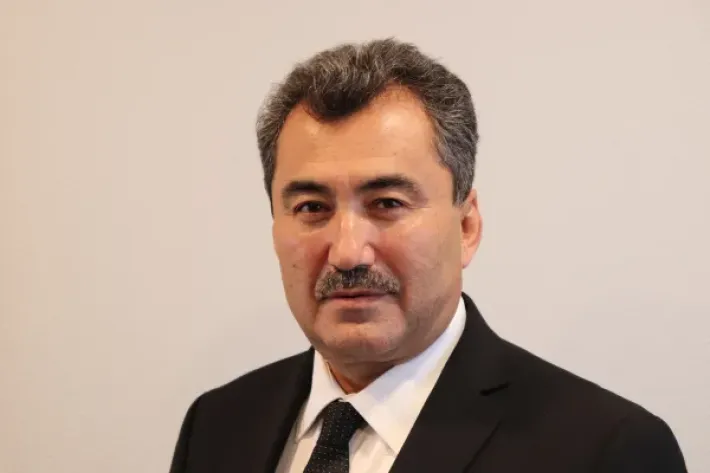
In a Q&A on 16 April 2026 with Abdulhakim Idris, head of the Center for Uyghur Studies, Freedom Housediscusses his work exposing the Chinese Communist Party’s repression and how Chinese authorities have menaced him and his family in an attempt to prevent him from speaking out. Here some excerpts:
Abdulhakim Idris (Photo Credit: Center for Uyghur Studies)
The People’s Republic of China conducts the world’s most sophisticated and comprehensive campaign of transnational repression, targeting human rights defenders, journalists, students, artists, and members of religious and ethnic minorities. Uyghurs, an ethnic group from the Xinjiang Uyghur Autonomous Region, have fled repression in China for decades. Abroad, many members of the group face the threat of transnational repression via detention, unlawful deportation, rendition, coercion by proxy, surveillance, and digital harassment. Uyghur individuals are involved in over 20 percent of the incidents in Freedom House’s transnational repression database, which catalogues direct, physical cases around the world from 2014 to 2025.
Last month, Abdulhakim Idris, head of the Center for Uyghur Studies in Washington, DC, and a leading Uyghur scholar and advocate, was detained for nearly a day and subsequently expelled from Malaysia at the behest of Chinese authorities, preventing him from launching the Malay-language edition of his book about how the Chinese Communist Party (CCP) pressures governments in the Islamic world to remain silent about its persecution of Uyghurs. As Idris explains, this act of transnational repression sets a dangerous precedent for every other American advocate, journalist, and researcher operating abroad. Below, Idris describes his work exposing CCP abuses, and how they sought to silence him—in Malaysia and elsewhere.
Freedom House: Could you describe your work as executive director of the Center for Uyghur Studies?
Abdulhakim Idris: As executive director of the Center for Uyghur Studies (CUS), I lead a mission at the intersection of human rights advocacy, academic research, and diplomatic engagement to address the crisis in East Turkistan (known formally as the Xinjiang Uyghur Autonomous Region). By producing rigorous, evidence-based reports and briefing global lawmakers, I work to expose Chinese Communist Party narratives and ensure the international conversation on its persecution of Uyghurs remains rooted in scholarly data and cultural expertise. My work translates this research into action, raising awareness through media advocacy and high-level briefings to reach the audiences most capable of effectuating change. I also work to engage Muslim-majority countries where Chinese economic pressure often buys silence. By briefing religious leaders and civil society across the Middle East, Africa, and Asia, I demonstrate that the persecution of Uyghurs is an assault on our shared faith and part of China’s war on religious beliefs.
My advocacy is deeply personal: 24 of my family members have been missing since 2017, including my mother, Habibehan Idris; my brother Abdurehim; my sister Buhedichehan; and all of my nieces and nephews. In August 2023, I learned about my father’s passing in Hotan seven months earlier in January 2023.
As a bridge between the diaspora and the international community, I provide the strategic recommendations and testimony needed to transform our personal data into global action.
How long have you been involved in advocacy on behalf of the Uyghur people?
I was born in Hotan, East Turkistan, in 1968. My journey began with a foundation in faith and scholarship; I studied Islamic Sciences and Arabic in underground madrasas in Hotan before leaving in 1986 to study at Al-Azhar University in Egypt. This background gave me a profound understanding of the religious identity that the CCP is currently attempting to erase.
In 1990, I became one of the first Uyghurs to seek asylum in Germany. Settling in Munich, I balanced my studies in Industrial Management with a mission to organize our people. I am one of the founders of the East Turkistan Union in Europe (1991), the very first Uyghur organization on the continent. Over the next two decades, I focused on building the institutional architecture of our struggle. I am proud to be one of the founders of both the World Uyghur Youth Congress (1996), where I served as chairman of the executive committee, and the World Uyghur Congress (2004), where I have held different leadership roles.
Since moving to the United States in 2009, I have continued this work in Washington, DC, serving on the board of the Uyghur American Association. In 2017, my wife, Rushan Abbas, and I cofounded Campaign for Uyghurs (CFU) to bring more urgent awareness to CCP abuses against Uyghurs.
In recent years, the nature of the struggle has changed. As the Chinese government intensified its repression campaign, our response needed to become more robust. This led me to establish the Center for Uyghur Studies, where I have combined advocacy with the intellectual and scholarly dimension necessary to challenge China’s influence, particularly in the Muslim-majority countries.
Why were you traveling to Malaysia? Can you describe what happened when you arrived?
We have been engaging in Uyghur advocacy in Malaysia since 2022, and since then, I have been there several times, including for a meeting with Malaysian Prime Minister Anwar Ibrahim.
The CCP considers me one of the foremost experts on its influence in Muslim-majority countries. My book is now translated into Turkish, Arabic, Malay, and Bahasa Indonesia. It has been an eye-opener about Chinese infiltration into Muslim-majority countries. Following its publication, both my wife and I were subjected to coordinated death threats and digital harassment. When I traveled to Jakarta for the Indonesian launch of the book, the Chinese embassy mobilized local proxies to stage public protests, including the burning of my picture and copies of my book.
Our Malaysian partner planned this advocacy trip and invited me to join. We were well prepared with reports and planned to launch the Malay-language edition of my book alongside several new reports from the Center for Uyghur Studies. My arrival in Kuala Lumpur was on March 29, 2026, and my departure was scheduled for April 8, 2026.
I arrived in Kuala Lumpur on March 29 at 7:00 am local time. When I came to the immigration hall, a Malaysian immigration officer pulled me aside, took my passport, and brought me to his office. An officer introduced himself as a Royal Malaysia Police officer and said that I would be denied entry and be deported. Five hours into this conversation, they put me in a temporary detention center at the airport. [Note: US citizens are not required to apply for a visa for a business or tourism stay in Malaysia of less than 90 days.]
My US passport was seized, and I was held without justification for 21 hours in detention, given only one small meal and one small bottle of water, before being escorted by four police officers onto a deportation flight.
After approximately 70 hours of continuous travel and detention, I arrived safely back in the United States. Our partner in Kuala Lumpur confirmed to me that my denied entry was the result of pressure directly from Beijing.
This is not an isolated incident but a pattern of Chinese intimidation. Last year, I was similarly denied entry to Indonesia under pressure from the Chinese embassy in Jakarta, but that time, after intervention by the US government, I was able to secure entry. This time, despite the State Department and the US embassy in Kuala Lumpur escalating the matter to Malaysian immigration, Beijing prevailed. The escalation is alarming.
Beijing’s goal is to silence my research before it reaches Malay-speaking communities. My only “crime” is being a dissident from a community persecuted by the Chinese government and exposing China’s broader threats to humanity, freedom, and democracy. China has now successfully used a third country to detain and expel a US citizen. If this stands, it sets a dangerous precedent for every American advocate, journalist, and researcher operating abroad. This is a clear case of Chinese transnational repression, specifically targeting me as a US citizen.
Has anything like this happened before?
Yes. We held an advocacy trip to Indonesia between July 11, 2024, and July 20, 2024. Our partner in Indonesia organized the events and invited me. The trip involved multiple meetings, seminars, and roundtable discussions with key Indonesian stakeholders, including politicians, NGO leaders, and religious figures. In total, we visited and held activities in five cities, including Jakarta, Pontianak, Surabaya, Yogyakarta, and remotely in Medan.
There were several challenges we faced during this trip. The CCP propaganda campaign is now widespread across Indonesia, including among NGOs and social media platforms such as TikTok, X, and Facebook. The Chinese government’s extensive propaganda campaigns, including social media advertisements and influence on local leaders, have created a significant hurdle.
When we held our event in Pontianak, Indonesian immigration officials showed up, checked my visa, and told me I was not allowed to speak at events on a tourist visa and that I would need a C10 visa for that purpose. We then changed our approach: I gave all my presentations to our Indonesian partners, who then proceeded with the seminars. We could adapt because our Indonesian colleagues were trained and experienced on the Uyghur issue after two years of working together.
On a subsequent trip between April 26, 2025, and May 6, 2025 to Indonesia, I traveled on a speaker visa and was detained at the airport for three hours before being allowed to enter the country after the intervention of the US government.
In both cases, as in Malaysia, the pressure traced back to Beijing. The difference is that in Indonesia, I was eventually able to seek clarity and secure entry. In Malaysia, I was not.
Have you ever experienced any other forms of transnational repression, such as threats, harassment, or coercion of your family?
Transnational repression is not an abstract concept for me. It is a painful, daily reality that has fundamentally reshaped my family’s life. The Chinese government frequently uses the safety and freedom of our loved ones back home as leverage to silence our advocacy in the West. Since repression of Uyghurs has intensified deeply since 2017, I have lost all contact with my relatives in Hotan. In Uyghur culture, family is everything. Being severed from one’s roots is a form of psychological warfare.
In August 2023, I received a devastating message from an anonymous source. I was informed that my father, Abdulkarim Zikrullah Idris, had passed away seven months earlier, in January 2023, in our hometown of Hotan. Because the CCP has cut all lines of communication between the diaspora and our families in East Turkistan, I was not able to be with him, speak to him, or even know he was gone when it happened. The last time I heard my father’s voice was in April 2017. Shortly after that phone call, the mass detentions began, and contact was severed entirely. For six years, I lived with the agonizing uncertainty of not knowing if he was safe, if he was in a camp, or if he was even alive.
This is a form of psychological torture that hundreds of thousands of Uyghurs in the diaspora face every day. Because of the total lack of transparency in the region, the exact circumstances of his death remain unclear. We do not know if he had access to medical care, or if the stress of the ongoing persecution contributed to his passing. What we do know is that he died in a police-state environment where his children were unable to fulfill their final duties to him.
My family was not the only one targeted. In September 2018, just six days after my wife Rushan Abbas spoke publicly about my families’ disappearance while highlighting the Chinese government’s mass detention of Uyghurs, her sister Dr. Gulshan Abbas was forcibly disappeared from her home in Urumqi. The spokesperson of China’s Foreign Ministry officially confirmed on December 31, 2020, that she had been sentenced to 20 years in prison on baseless charges in connection with terrorism. Dr. Gulshan Abbas was a retired medical doctor who had never been involved in politics. Her imprisonment remains an act of transnational repression, intended to terrorize our family, silence us, and force us to stop advocating for our people.
The CCP’s tactics of transnational repression have taken other forms as well. After I gave testimony before the Uyghur Tribunal in London in 2021, which concluded that China was committing crimes against humanity against the Uyghur people, Chinese state television broadcast my photograph and denounced me for testifying. This was meant to intimidate me publicly and to warn others of the consequences of speaking the truth. Before the 2024 General Assembly of the World Uyghur Congress in Sarajevo, my wife and I received an online video message containing direct death threats. The Federal Bureau of Investigation (FBI) contacted me and confirmed they were aware of the threat.
We have become targets of dehumanization, smear campaigns, character assassination, and threats against our lives. Even outside China, we live under constant fear and intimidation. Through these tactics, the Chinese government seeks not only to punish individuals but to spread fear across entire families and communities.
reminds us that Mr Surendra Gadling is a lawyer specialising in the defence of human rights and marginalised communities, particularly Dalits and indigenous peoples in India. He has been held in detention for nearly eight years in connection with the Bhima Koregaon case. He is now the only defendant still in prison – the other fifteen people prosecuted in this case have been released on bail.
Gadling was arrested in 2018 and is one of a group of human rights defenders prosecuted for their alleged involvement in violence that occurred in Bhima Koregaon. Several organisations believe that these prosecutions are in fact targeting committed activists and denounce the charges as baseless. [see also: https://www.frontlinedefenders.org/en/case/surendra-gadling-arrested]
Mr Gadling is also being prosecuted in another case linked to a fire at a mining site in Surajgarh. According to several lawyers, inconsistencies have been identified in the complaint (including the absence of evidence linking him directly to the incident).
In both cases, the key evidence used against him is the purported discovery of incriminating documents found on his PC. Independent Cyber forensic analysts have observed that these documents were planted using a Remote Access Trojan unknown to Mr. Gadling. Several lawyers’ organisations have called for his immediate release and condemned the use of the Unlawful Activities Prevention Act (UAPA), which is considered particularly repressive. The prolonged detention of Mr Surendra Gadling raises serious concerns regarding respect for the right to liberty and a fair trial. It also raises questions about the protection of lawyers and human rights defenders, particularly when they are involved in sensitive cases.
The Observatory calls on the Indian authorities to ensure that Surendra Gadling’s fundamental rights are respected, in particular his right to a fair trial within a reasonable time.
France has reversed its earlier decision and granted a national visa to Palestinian human rights activist Shawan Jabarin, following criticism from European lawmakers, a French MP said on Monday. Jabarin, director of the West Bank-based rights group Al-Haq, had previously been denied entry by French authorities despite being invited to attend a session of the European Parliament’s Human Rights Subcommittee in Strasbourg.
“I take note that France has finally reversed its decision by granting a national visa to Shawan Jabarin,” French Green MEP Mounir Satouri said on the US social media company X Satouri called for full transparency over the initial refusal, urging authorities to clarify the reasons behind the blockage and to lift all remaining obstacles to issuing a Schengen visa.
In a joint statement, the groups said the last-minute visa denial prevented Jabarin from attending meetings with the French Parliament, civil society organizations, and the Foreign Ministry, restricting his work as a human rights defender.
Al-Haq had earlier said the rejection undermined efforts to advocate for Palestinian rights and accountability, particularly amid ongoing Israeli attacks in Gaza, warning that restricting access for rights defenders contributes to impunity.
We express our profound disappointment and outrage that the French Ministry of the Interior has once again refused to grant a visa to Mr. Shawan Jabarin, the General Director of Al-Haq. This action directly contravenes Administrative Court of Nantes Order No. 2607793, issued on 30 April 2026.
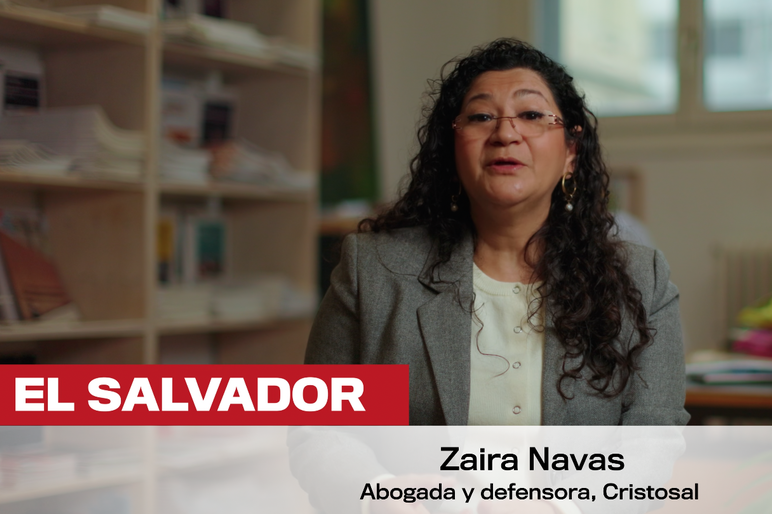
Zaira Navas, woman human rights defender from El Salvador.
In recent years, civic space has significantly reduced in El Salvador, under a state of exception, a state of emergency that suspended several constitutional rights. Human rights defenders have faced increasing threats and criminalisation, forcing many into silence or exile. Zaira Navas is a lawyer and human rights defender at Cristosal, partner of OMCT and the SOS-Torture Network. She is also a member of OMCT’s Latin America litigators’ group, part of four regional litigators’ groups that bring together lawyers and human rights defenders working at the front lines of the fight against torture and ill-treatment. Last year, Zaira Navas was pushed to flee El Salvador, after her colleague, Ruth López, prominent Salvadoran activist, was arrested. In Geneva to attend the Human Rights Council, she tells us about her experience being a woman human rights defender in exile, and where she still finds hope in her work.
What was it like to make the decision to leave El Salvador?
I am currently in exile due to repression under the state of exception in El Salvador imposed by President Nayib Bukele, which intensified in 2025. In May, my colleague Ruth López was detained on absurd corruption charges. That same week, I learned I could also be arrested. Our organisation, Cristosal, asked us to protect ourselves. There was no time to think about it. We left the country believing we would return in 15 days, but I have now been outside El Salvador for nine months.
How has exile affected you, as a woman and as a human rights defender?
The first months were filled with uncertainty. Violence and aggression against defenders increased, and our organisation was forced to close its operations in the country. There was no turning back.
There was a period when I felt depressed. Not only for being away from my country, but because I thought I could not continue my work. I am now separated from my family, but I am working, and that is a very important source of encouragement….
What actions should the international community take to ensure a safe environment for defending human rights in El Salvador?
The international community must closely monitor human rights violations in El Salvador and must pay close attention to what is happening in our country, questioning the anti-democratic methods and internal policies. International cooperation allows us to keep working. It is important that organisations that support human rights groups look for new ways to cooperate so that the work can continue from outside the country.
On 15 April 2026 UN experts deplored the killing of Zweli “Khabazela” Mkhize and urged South Africa to ensure accountability.
“Mkhize’s murder forms part of a sustained pattern of violence and killings targeting human rights defenders within the Abahlali baseMjondolo movement,” the experts said. “Such heinous acts of violence constitute a direct assault on the exercise of fundamental rights and freedoms.”
On 20 January 2026, Mkhize was shot and killed by two men in the eNkanini occupation. Prior to his murder, he had been subjected to death threats as a result of his opposition to the illegal sale of local land. “Zweli ‘Khabazela’ Mkhize, a leading member of the Abahlali baseMjondolo movement, was renowned for his dedication to the protection of housing and land rights in South Africa,” the experts said.
They warned that land rights defenders face heightened vulnerability to attacks and threats to their lives in retaliation for their human rights work, stressing that robust measures must be put in place to ensure their effective protection in line with the State’s obligation under international law.
“We urge South Africa to ensure a prompt, effective, impartial and thorough investigation into the killing and to take all necessary measures to hold those responsible accountable,” the experts said.
Front line Defenders on 27 March 2026 shared an update on human rights defender Makhabat Tazhibek Kyzy:
On 23 March 2026, the Leninskii District Court of the City of Bishkek, Kyrgyzstan, ordered the release of a woman human rights defender Makhabat Tazhibek Kyzy from prison. At the preliminary session of the retrial in her case, the Court changed the measure of restraint and granted her release from the penal colony where she had been detained. Her release is conditional upon an order not to leave the country. The retrial is scheduled to begin on 7 April 2026.
Makhabat Tazhibek Kyzyis a woman human rights defender and journalist. She is the director of Temirov Live and Ayt Ayt Dece. Temirov Live is a YouTube-based media outlet that investigates and reports on corruption by state and non-state actors in Kyrgyzstan, founded in 2020 by Bolot Temirov, a prominent Kyrgyzstani human rights defender and journalist. Ayt Ayt Dese is a YouTube-based project aimed at popularising human rights issues through the performance and publication of folk songs on human rights topics. Among other topics, Ayt Ayt Dese has covered investigations by Temirov Live.
On 23 March 2026, Leninskii District Court of the city of Bishkek commenced the retrial of the case of Makhabat Tazhibek Kyzy with a preliminary session. The retrial was set following a decision of the Supreme Court of Kyrgyzstan on 10 March 2026. Based on Opinion No. 52/2025 by the UN Working Group on Arbitrary Detention, the Supreme Court ordered a retrial and overturned the previous rulings that sentenced the woman human rights defender to six years in prison.
At the preliminary session, Makhabat Tazhibek Kyzy’s lawyers filed three motions. First, the defence attorneys requested the Court to declare the expert witness evidence from previous trials as inadmissible, arguing that authorities had pressured the expert witnesses into giving false testimonies. The issue of evidence tampering by the authorities was previously highlighted in the case of human rights defender and whistleblower Zhoomart Karabaiev, who was on trial for reporting that authorities pressured expert witnesses to provide statements supporting the prosecution. The second motion requested that the Court immediately and unconditionally ceases all judicial proceedings against Makhabat Tazhibek Kyzy. The third motion sought a change in her measure of restraint, from detention in the penal colony to release under the condition that she remains in the country. While the Court denied the first two motions, it agreed to change the measure of restraint for Makhabat Tazhibek Kyzy, leading to her release later that day.
Upon her release, Makhabat Tazhibek Kyzy expressed gratitude for the support she has received since the beginning of the prosecution against her in 2024. However, she also shared that she was subjected to psychological pressure and violence from the authorities in the penal colony, which aimed at exacerbating her isolation from the community supporting and defending her rights.
Front Line Defenders welcomes the Court’s decision to release Makhabat Tazhibek Kyzy, who has been targeted solely for her peaceful and legitimate human rights work. The organisation continues to call upon the authorities in Kyrgyzstan to immediately and unconditionally cease all types of persecution targeting the woman human rights defender and drop all charges against her.
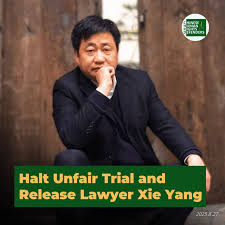
A court in China sentenced the prominent human rights lawyer Xie Yang to five years in prison on March 23, 2026, on politically motivated charges of “inciting subversion of state power,” Human Rights Watch said on 24 March 2026. The Chinese government should immediately quash the conviction, which followed serious procedural violations and years of persecution, and free Xie unconditionally
The Changsha Intermediate People’s Court cited several of Xie’s WeChat posts as the basis for the verdict, Xie’s former wife, Chen Guiqiu, posted on social media. The court also ordered the confiscation of 100,000 yuan (US$14,500).
“The Chinese authorities’ prosecution of Xie Yang and the court’s harsh sentence reflects Beijing’s utter contempt for the rule of law,” said Maya Wang, deputy Asia director at Human Rights Watch. “This case not only aimed to persecute a brave human rights lawyer like Xie, but to intimidate all lawyers seeking to protect Chinese people’s rights.”
Xie’s trial violated the right to a fair trial by an independent and impartial court as provided under international human rights law, Human Rights Watch said. In addition, the proceedings violated China’s Criminal Procedural Law, which guarantees a right to a defense (articles 33-35), public trial hearings (article 188), and time limits for a criminal investigation. With time served, Xie’s sentence is expected to go to January 2027.
The United Nations Working Group on Arbitrary Detention has recognized Xie’s detention as arbitrary and called for his immediate release.
Xie, 54, from Changsha, Hunan province, began practicing law in 2011. He has defended activists and victims of rights abuses in politically sensitive cases, including cases of religious persecution and land rights disputes.
Xie has faced repeated retaliation for his work. In July 2015, during the nationwide arrests of human rights lawyers known as the “709 crackdown,” Xie was tortured and subjected to enforced disappearance, convicted of “inciting subversion,” and imprisoned until 2017.
The authorities detained him again in January 2022 after he pressed for the release of a young teacher who had been forcibly committed to a psychiatric facility for criticizing censorship in education. Police raided Xie’s home, tortured him in custody, and held him on charges of “inciting subversion” and “picking quarrels and provoking trouble,” said the US-based Chinese Human Rights Defenders.
“Foreign governments should continue to speak out for human rights lawyers like Xie Yang because this kind of support is most important when the circumstances are so dire,” Wang said. “Vocal international support could improve Xie’s treatment, and crucially, help give him and others in China the strength to persevere.”
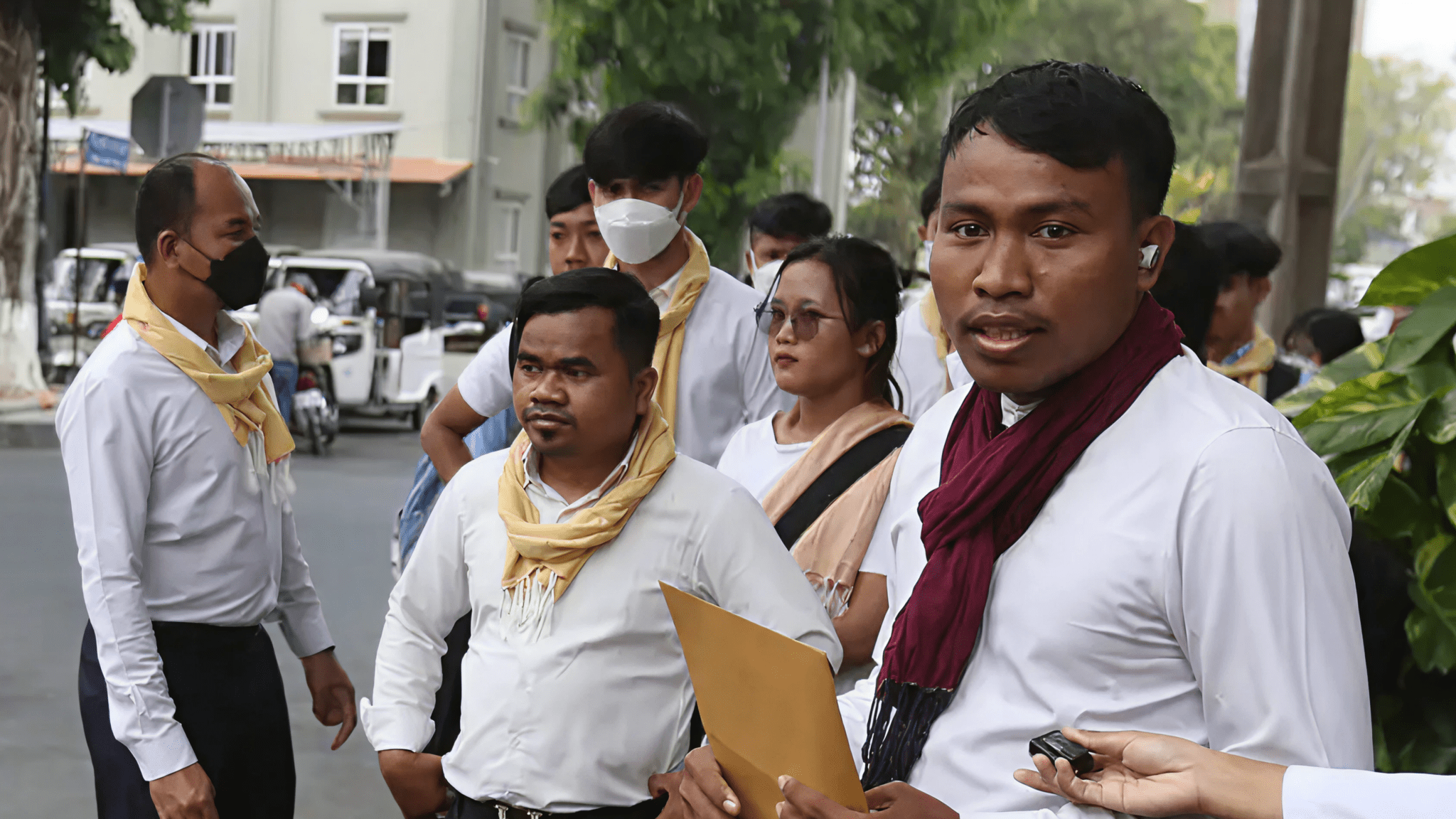
On 23 March 2026 the Human Rights Foundation welcomed the opinion issued by the UN Working Group on Arbitrary Detention (WGAD) finding that Cambodia’s detention of activist Koet Saray violates international human rights law, following an HRF submission.
Mr. Koet Saray is a human rights defender and former president of the Khmer Student Intellectual League Association (KSILA), a group dedicated to promoting human rights, democracy, development, and environmental protection that has now ceased operations after the regime targeted more of its members. He was arrested on April 5, 2024, after posting photos on social media from a meeting with Preah Vihear Province villagers who had been forcibly evicted from their homes to make way for a rubber plantation. Mr. Koet Saray advocated for the villagers on social media and through interviews given to media outlets about the evictions.
Cambodia charged Mr. Koet Saray with “incitement” under Articles 494 and 495 of the Criminal Code, controversial provisions that the WGAD described as so vague and overbroad as to invite abuse and misuse and as incompatible with international legal principles. He was also charged under Article 88, Cambodia’s recidivism provision, due to prior fabricated incitement charges for participating in a peaceful protest in 2020. He was held in pretrial detention for six months before being tried in a one‑day, closed‑court proceeding, and he was convicted and sentenced to four years in prison on Nov. 6, 2024.
“The Working Group’s opinion confirms that Cambodia weaponized vague criminal statutes to silence a peaceful human rights defender,” said HRF International Legal Associate Kaitie Holland. “Cambodia clearly violated Mr. Koet Saray’s rights to the freedoms of expression, peaceful assembly, and association. We commend the Working Group for its thorough legal analysis recognizing the pattern of abuse against Mr. Koet Saray and calling out his illegal pre‑trial detention, the use of overbroad incitement provisions against him, and the denial of a fair trial.”
HRF joins the WGAD’s call for the immediate release of Mr. Koet Saray and for a full, independent investigation into the circumstances of his arrest, trial, and imprisonment. HRF urges the international community to hold Cambodia accountable for the detention of Mr. Koet Saray and other activists who are arbitrarily imprisoned under the country’s abusive incitement laws.
Drivetime on RTE Radio of 13 March 2026 carries an interview with Mary Lawlor the departing UN Special Rapporteur on Human Rights Defenders about her work as a human rights activists.