Posts Tagged ‘human rights’

European Parliament pledges to tackle transnational repression against human rights defenders

November 15, 2025

On 14 November 2025, Scilla Alecci of the International Consortium of Investigative Journalists, Inc. (ICIJ) wrote about a parliamentary report which identified China and other authoritarian regimes as harassing and attacking dissidents abroad, echoing findings from ICIJ’s China Targets.

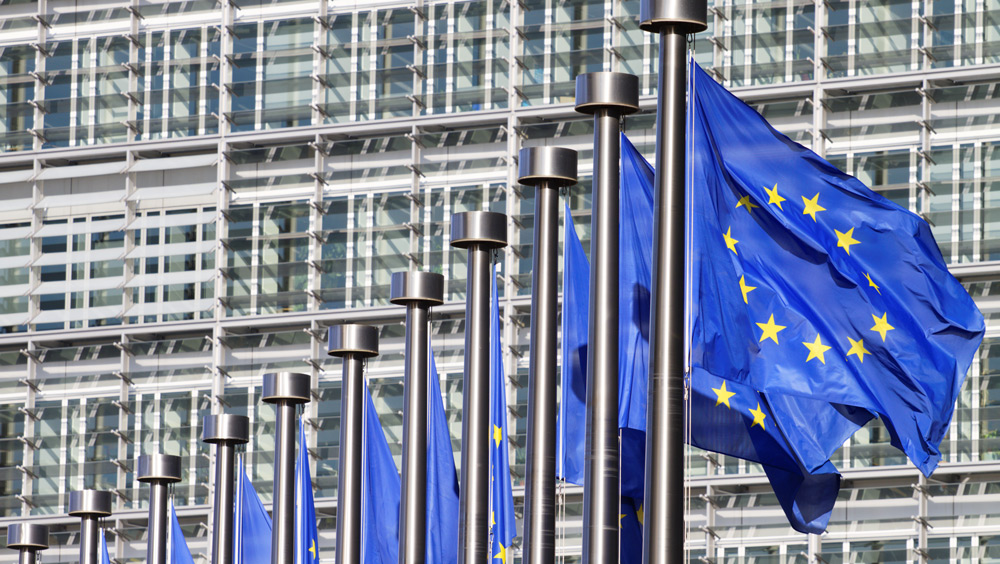
European Parliament in Brussels, Belgium.

The European Parliament has adopted a resolution urging member states to confront efforts by authoritarian regimes to coerce, control or silence political opponents and dissidents living in Europe. “Human rights defenders are a key pillar of democracy and the rule of law, and they are insufficiently protected,” a statement from the parliament said.

The resolution, adopted with a majority of 512 votes (to 76 against and 52 abstentions), called for targeted sanctions against perpetrators, market surveillance of spyware and better coordination among European authorities to counter what lawmakers labeled “transnational repression.”

“For the first time, the European Union will call this phenomenon by its name,” rapporteur Chloe told reporters ahead of the Nov. 13 vote. [see also: https://humanrightsdefenders.blog/2024/03/19/transnational-repression-human-rights-watch-and-other-reports/]

The resolution is not legally binding but signals that European lawmakers want to take a clear position on the issue and draw attention to it, Elodie Laborie, a spokesperson for the Parliament’s Subcommittee on Human Rights, told the International Consortium of Investigative Journalists in an email.

The parliamentary report identifies China, Egypt and Russia among 10 countries whose governments are responsible for nearly 80% of known cases, which include targeted killings, abductions, harassment and the misuse of international policing tools such as Interpol’s red notice system.

It confirms findings by ICIJ’s China Targets investigation, which revealed how Beijing continues to use surveillance, hacking and threats against Chinese and Hong Kong dissidents, Uyghur and Tibetan advocates and their families to quash any criticism of the regime abroad.

See also: https://humanrightsdefenders.blog/2025/04/28/chinas-tactics-to-block-voices-of-human-rights-defenders-at-the-un-major-report/

https://www.icij.org/investigations/china-targets/european-parliament-pledges-to-tackle-transnational-repression-against-human-rights-defenders

Human Rights Watch and Amnesty International condemn Tunisia’s ‘assault on the rule of law’

November 15, 2025

On 14 November 2025, Al Jazeera (Mariamne Everett) and other media reported that international NGOs, such as Human Rights Watch and Amnesty International, have decried a sharp decline in civil liberties and a pervading “injustice” in Tunisia since President Kais Saied came to power in 2019, as authorities escalate their crackdown on the opposition, activists and foreign nongovernmental organisations.

Tunisian authorities have increasingly escalated their crackdown on human rights defenders and independent non-governmental organizations (NGOs) through arbitrary arrests, detention, asset freezes, bank restrictions and court-ordered suspensions, all under the pretext of fighting ‘suspicious’ foreign funding and shielding ‘national interests’,” Amnesty International said in a statement on Friday.

Tunisia’s crackdown on civil society has reached an unprecedented level, according to Amnesty, as six NGO workers and human rights defenders from the Tunisian Council for Refugees are “being criminally prosecuted on charges solely related to their legitimate work supporting refugees and asylum seekers”. The trial’s opening session, initially scheduled for October 16, has been adjourned to November 24.

Within the past four months, Tunisia has temporarily suspended the activities of at least 14 Tunisian and international NGOs, said Amnesty, including the Tunisian Association of Democratic Women and the World Organisation against Torture.

Human Rights Watch said in a statement on Friday that Tunis’s Court of Appeal will hear on November 17 the appeal of more than 30 people “unjustly sentenced to heavy prison terms in a politically motivated ‘Conspiracy Case’” mass trial in April.

Four of those detained are on hunger strike, including one who, according to his lawyers, was subjected to physical violence in prison on November 11.

The defendants were charged with plotting to destabilise the country under various articles of Tunisia’s Penal Code and the 2015 Counterterrorism Law. Human Rights Watch, which reviewed the judicial documents, said the charges are unfounded and lack credible evidence. The NGO has called on the court to immediately overturn the convictions and ensure the release of all those detained.

The 37 people detained include opponents of Saied, lawyers, activists and researchers. Their prison terms range from four to 66 years for “conspiracy against state security” and terrorism offences. Jawhar Ben Mbarek – cofounder of Tunisia’s main opposition alliance, the National Salvation Front – began a hunger strike on October 29 to protest his arbitrary detention. Ben Mbarek was sentenced to 18 years behind bars on charges of “conspiracy against state security” and “belonging to a terrorist group”.

Note that on 10 November the Martin Ennals Award announced that Saadia Mosbah, a leading Tunisian human rights activist and co-founder of Mnemty (‘My Dream’), was selected as a runner up. [see https://humanrightsdefenders.blog/2025/11/10/breaking-news-women-human-rights-defenders-recognised-with-the-2025-martin-ennals-award/]

https://www.aljazeera.com/amp/news/2025/11/14/rights-groups-decry-tunisias-injustice-crackdown-on-activists

https://www.ft.com/content/15a04a32-f975-4f5e-9748-874f8e26cbe5

https://www.rfi.fr/en/africa/20251130-prominent-tunisian-activist-chaima-issa-arrested-as-hundreds-protest-clampdown-on-dissent

https://thearabweekly.com/tunisia-calls-eu-parliament-rights-resolution-blatant-interference-releases-high-profile-lawyer

Breaking news: Women human rights defenders recognised with the 2025 Martin Ennals Award

November 10, 2025

For this 31st edition, ten of the world’s leading human rights NGOs composing the Jury of the Martin Ennals Award – Amnesty International, Human Rights Watch, FIDH, HURIDOCS, Bread for the World, Human Rights First, World Organisation Against Torture, International Commission of Jurists (ICJ), International Service for Human Rights (ISHR), and Front Line Defenders – have selected, after much deliberation, three human rights defenders for their exceptional contribution to the human rights movement. [se also https://www.trueheroesfilms.org/thedigest/awards/043F9D13-640A-412C-90E8-99952CA56DCE]

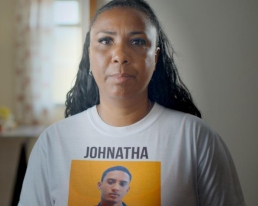
The 2025 Laureate is Ana Paula Gomes de Oliveira (Brazil), who co-founded the collective ‘Mothers of Manguinhos’ to fight for justice after the killing of her son, a 19-year-old Black man, who was shot in the back by a military police officer in the favelas of Rio on his way back from his girlfriend’s house in May 2014. The collective serves as a front for resistance and advocacy, but also as a network of emotional support and solidarity between women who share stories of similar loss. These women, in their majority Black, many of whom have lost children and other family members to violent actions by law enforcement officials, came together to denounce violence in the favelas, especially police violence that disproportionately affects poor Black youth. ‘When we are born Black and raised in the favelas, we are targeted by a racist system that is also reinforced by public security policies based on death and imprisonment,’ says Ana Paula. According to the UN, killings by the police have more than doubled in the last ten years in Brazil, with more than 6000 killings every year over the past six years. Black people, overwhelmingly men, represent a shocking rate of 82,7% of the killings by police officers in 2023. ‘The racist violence in Brazilian streets merits the full attention of the federal government and the international community,’ says Hans Thoolen, Chair of the Martin Ennals Award Jury. The collective ‘Mothers of Manguinhos’ fights for truth, memory, justice, freedom and the human rights of Black, poor, and peripheral lives. The collective is a member of the UN Antiracism Coalition (UNARC) and during the 57th session of the Human Rights Council, Ana Paula delivered a powerful message at a side event organised by UNARC on the perspectives of the Afro-Brazilian community directly affected by police violence in Brazil.

The Jury also recognised two finalists:  Aloikin Praise Opoloje (Uganda) and Saadia Mosbah (Tunisia).

Aloikin Praise Opoloje is a 26-year-old Ugandan student who has become a leading voice against corruption, social injustice, and human rights abuses in Uganda. Inspired by the dire living and educational conditions in her home district of Palisa, she has mobilised thousands through social media and organised major peaceful protests, including the March to Parliament and the Nude Protest against government mismanagement, which prompted official accountability for the Kiteezi landfill tragedy. Despite repeated arrests in 2024 and ongoing legal charges, Aloikin went on to create the WeThePeople movement, which informs young Ugandans about their civic rights and non-violent resistance.

Saadia Mosbah is a leading Tunisian human rights activist and co-founder of Mnemty (‘My Dream’), the main organisation dedicated to fighting racism and racial discrimination in Tunisia. She has spearheaded initiatives through education, awareness raising and legislative advocacy, which have led to the 2016 national debate on systemic racism, the adoption of the Anti-Racism Law No. 50 (2018), and the declaration of 23 January as the National Day for the Abolition of Slavery for Tunisia (since 2019). Her work has also focused on combatting prejudice against migrant people and promoting migrant and refugee rights. Despite her legitimate activism, Saadia Mosbah and Mnemty have faced intense smear  campaigns. She was arrested on 6 May 2024 on false accusations of financial crimes and remains in pre-trial detention without a set trial date.

The UN High Commissioner for human rights will award the selected laureate during the ceremony to take place on 26 November 2025 in Geneva, Switzerland. [https://www.martinennalsaward.org/2025-edition/]

https://www.frontlinedefenders.org/en/statement-report/martin-ennals-award-2025-laureate-and-finalists-announced

https://www.amnestyusa.org/press-releases/brazil-police-massacre-in-rio-de-janeiro-is-evidence-yet-again-of-systemic-and-racist-violence/

https://www.fidh.org/en/region/americas/brazil/brazil-police-repression-and-massacre-in-rio-de-janeiro

NGO Statement on the International Day of Political Prisoners (30 October)

October 30, 2025
Freedom House Logo - Torch next to words Freedom House

On this International Day of Political Prisoners, the NGOs mentioned below stand together to affirm a simple truth: no one should be imprisoned for exercising their fundamental rights or for peacefully expressing their beliefs. Yet around the world, there are an estimated one million political prisoners, who are unjustly detained for political reasons. These individuals—journalists, human rights defenders, democratic opposition leaders, religious leaders, artists, and ordinary citizens—represent the conscience of their societies. Their imprisonment is an assault not only on their freedom, but on the shared principles of human dignity and justice.

The International Day of Political Prisoners originated in the Soviet Union in 1974, when  political prisoners collectively held a one-day hunger strike. Soviet prisoners of conscience repeated this protest every October 30, supported by demonstrations of solidarity in major cities. In response to Vladimir Putin’s ongoing and deepening repression, Russian political prisoners rekindled the tradition in 2021. In the years since, it has become an international day of solidarity with political prisoners worldwide.

Political imprisonment corrodes the rule of law, silences dissent, undermines press freedom, and weakens the foundations of democracy. Authoritarian governments use it to suppress opposition, instill fear, and consolidate control. Each unjust detention sends a chilling message to others who seek to speak truth to power.

We, as organizations who advocate on behalf of those unjustly detained around the world, call on democratic governments to continue to make the release of political prisoners a global priority—to raise these cases consistently in bilateral and multilateral forums, to request information and specific actions be taken on the prisoners’ behalf, to support accountability mechanisms, and to continue to provide support to organizations that advocate on behalf of those unjustly detained and provide legal and humanitarian assistance to them and their families. Solidarity with the unjustly detained must be sustained, coordinated, and visible.

We also stand in solidarity with the families, lawyers, and civil-society organizations who continue to advocate for freedom in the face of repression. Their courage reminds us that the defense of liberty is a collective responsibility.

On this day, and every day, we reaffirm our shared commitment to the universal right to freedom of thought, expression, association, and belief. The world’s political prisoners must not be forgotten—and their freedom must remain a global cause.

Signed:

  1. Freedom House
  2. Free Russia Foundation
  3. McCain Institute
  4. National Endowment for Democracy
  5. Abdorrahman Boroumand Center for Human Rights in Iran
  6. Al-Tahreer Association for Development (TAD)
  7. Amnesty International
  8. Center for Civil Liberties
  9. Committee to Protect Journalists
  10. Freedom Now
  11. George W. Bush Institute
  12. Global Magnitsky Justice Campaign
  13. Human Rights Center Viasna
  14. Human Rights Defense Center Memorial
  15. Human Rights First
  16. Human Rights Foundation
  17. Human Rights Watch
  18. International Republican Institute
  19. James W. Foley Legacy Foundation
  20. Lantos Foundation for Human Rights & Justice
  21. Oma Organization for Human Rights and Democracy Promotion
  22. Organization for Community Civic Engagement
  23. OVD-Info
  24. Political and Governance Development Academy
  25. Socio-Economic Rights and Accountability Project (SERAP)
  26. The 30 October Foundation
  27. The Raoul Wallenberg Centre for Human Rights
  28. Victims of Communism Memorial Foundation
  29. World Liberty Congress

https://freedomhouse.org/article/joint-statement-international-day-political-prisoners

https://goodlander.house.gov/media/press-releases/goodlander-helps-introduce-resolution-supporting-international-day-of-political-prisoners/

Interview with Mary Lawlor, departing UN special rapporteur

October 29, 2025

On 13 October 2025, Nina Lakhani, climate justice reporter the Guardian, published this interview with Mary Lawlor, UN special rapporteur for human rights defenders, who presented her final annual thematic report during an interactive dialogue at the 80th session of the United Nations General Assembly’s Third Committee. The Special Rapporteur’s report focused on the contributions of human rights defenders addressing climate change and working to realise a just transition from fossil fuels, and the risks they face in carrying out this work.

Mary Lawlor, the UN special rapporteur for human rights defenders since 2020, has documented hundreds of cases where states have sought to smear and silence climate defenders engaged in peaceful protest, non-violent civil disobedience and litigation.

“Attacks against climate defenders have surged over the course of the mandate, and we now see outright repression against people who are organizing for climate action. It’s some of the states that have claimed to be the strongest supporters of human rights defenders including the UK, Germany, France and the US, that are most often repressing climate activists and where the right to protest is being denigrated and delegitimized.

“These big countries spew out the rhetoric about 1.5C, but they don’t mean it. They are playing the game to suit themselves. It’s business as usual,” Lawlor said in an interview with the Guardian.

Lawlor will present the penultimate report of her six-year mandate, “Tipping points: Human rights defenders, climate change and a just transition”, to the UN general assembly on 16 October.

It documents state repression including police violence and surveillance, civil litigation deployed to deliberately wear down and silence climate defenders known as Slapp (strategic lawsuits against public participation), as well as bogus criminal charges ranging from sedition, criminal defamation, terrorism and conspiracy to trespass, to public disorder and to disobedience.

One trend documented by Lawlor is the conflation of non-violent climate action with terrorism. In 2022, the French minister of interior at the time, and current minister of justice, accused the national environmental movement Les Soulèvements de la Terre of “ecoterrorism”. The government sought to close down the group, but the country’s highest administrative court eventually overturned the effort.

Lawlor is adamant that climate activists are human rights defenders. They use non-violent protest, disruptive civil disobedience and litigation to stop fossil fuel projects and pressure elected officials to take meaningful action precisely because they are trying to protect the right to food, clean water, health, life and a healthy environment.

But it’s not just fossil fuels. Human rights are now being targeted in the rush for critical minerals and new sources of non-fossil energy. The same repressive playbook is being used by governments and private companies involved in land grabs, pollution and Indigenous rights violations in pursuit of a green transition.

Governments are repressing human rights defenders and the current trajectory is incompatible with the realization of human rights for all. It’s just a road to destruction … I think states are behaving in a criminal fashion,” Lawlor said.

No system, no power, no government, no big company seeking profit should trump the rights of billions of people in the world. And that’s what’s happening. It’s the rich, the powerful that are creating such a disaster for humanity.

https://www.theguardian.com/environment/2025/oct/13/climate-defenders-mary-lawlor-human-rights

https://ishr.ch/latest-updates/unga-80-special-rapporteur-urges-states-to-protect-environmental-defenders-working-towards-a-just-transition

https://www.business-humanrights.org/en/latest-news/new-report-un-special-rapporteur-exposes-rising-global-threats-and-systemic-retaliation-against-environmental-defenders-under-the-aarhus-convention/

https://genevasolutions.news/climate-environment/environmental-crimes-go-unpunished-experts-want-to-equip-defenders-to-fight-back

New Guidelines on Environmental Protest and Civil Disobedience

October 20, 2025

During October 2025, new guidelines on Environmental Protest and Civil Disobedience were released by Michel Forst, UN Special Rapporteur on Environmental Defenders under the Aarhus Convention

The new guidelines aim to support states, civil society, environmental activists, and legal practitioners in understanding and implementing the rights guaranteed under the Aarhus Convention. The document underscores that individuals and groups have a recognised international right to engage in peaceful environmental demonstrations, even when challenging public or private actors whose practices may harm the environment.

The document outlines five guiding principles to help states ensure that peaceful environmental activism is respected, not repressed:

  1. Address the root causes of the protest: Governments should tackle the real reasons behind environmental protests, such as inaction on environmental protection, lack of transparency, or exclusion from decision-making.
  2. Reject criminalization of defenders: Authorities and media must stop portraying environmental activists as criminals and instead recognize their legitimate role in defending public interests.
  3. Protect civic space: Civil disobedience must not be used as a pretext to restrict fundamental freedoms or limit peaceful public expression.
  4. Ensure human rights–based policing: Law enforcement responses must be lawful, necessary, and proportionate — never arbitrary, excessive, or punitive.
  5. Uphold justice and civic freedom: Courts should avoid rulings or sanctions that discourage peaceful protest or shrink civic space.

Furthermore, the guidelines recognize that some environmental defenders may resort to civil disobedience when legal channels fail, and the guidelines set out conditions under which such acts may be tolerated (e.g., proportionality, non-violence, necessity, public interest). The guidelines stress the need for states to prevent and remediate retaliatory actions against protestors, such as legal harassment, surveillance, excessive use of force, or criminalisation of protest. The text encourages states to review and reform national laws, police protocols, and judicial practices to ensure that protest rights are respected, especially for environmental defenders, and it calls for transparent mechanisms to monitor how protests are handled, report abuses, and hold responsible persons and institutions to account.

The guideline highlights that public authorities (including political figures) should refrain from using language labelling protesters as threats, “eco-terrorists,” or “foreign agents”, and media (especially public or state media) should maintain factual accuracy, avoid derogatory language, and refrain from mischaracterising environmental defenders.

https://unipd-centrodirittiumani.it/en/news/un-rapporteur-michel-forst-issues-new-guidelines-on-environmental-protest-and-civil-disobedience

Guidelines on the Right to Peaceful Environmental Protest and Civil Disobedience – October 2025

UN report highlights China’s targeting of human rights defenders abroad

October 17, 2025

On 15 October 2025 Sam Ellefson of ICII summarises the new report, which recounts recent reprisals from two dozen countries, underscores ICIJ’s reporting on how Beijing abuses international institutions in its campaign to silence critics abroad

The targeted repression of human rights activists across borders is becoming more frequent and sophisticated, according to the latest annual U.N. report detailing acts of intimidation and reprisals inside the international organization.

The report lists new allegations of reprisals from two dozen countries including China, echoing the findings of ICIJ’s China Targets investigation, which revealed how suspected proxies for the Chinese government surveilled or harassed activists at the U.N. headquarters in Geneva, the center of the human rights system.

Two Hong Kong pro-democracy activists and a Uyghur linguist are among the cases compiled by the secretary-general between May 2024 and 2025, alongside updates on reprisals included in previous reports.

“Allegations of transnational repression across borders have increased, with examples from around the world,” the report said. “Targeted repression across borders appears to be growing in scale and sophistication, and the impact on the protection of human rights defenders and affected individuals in exile, as well as the chilling effect on those who continue to defend human rights in challenging contexts, is of increasing concern.”

Raphäel Viana David, the China and Latin America program manager at the International Service for Human Rights, a nonprofit that trains activists in U.N. advocacy, said the report reflected a shift within the U.N. in recognizing transnational repression as a tool states use to carry out reprisals.

“The assistant secretary-general — who is the senior focal point on reprisals — when she presented the report at the Human Rights Council a couple of weeks back, emphasized this angle of transnational repression,” Viana David said. “This is an interlinkage that I think is increasingly evident, but that needs a little bit more disentangling.” [https://humanrightsdefenders.blog/2025/10/01/un-secretary-generals-2025-report-highlights-reprisals-against-human-rights-defenders/]

In China Targets, ICIJ and 42 media partners exposed how Beijing has misused international institutions such as the U.N. and Interpol to target overseas dissidents. The investigation included interviews with 105 individuals across 23 countries who detailed how the Chinese government had reached beyond its borders to silence them.

https://www.icij.org/investigations/china-targets/new-un-report-highlights-chinas-alleged-targeting-of-human-rights-activists/?utm_campaign=news&utm_medium=social&utm_source=reddit

CESCR General Comment: States should protect environmental and Indigenous HRDs

October 17, 2025

The Committee on Economic, Social and Cultural Rights (CESCR) recently published its General Comment on the environmental dimension of sustainable development. In addition to recognising human rights defenders, the Comment clarifies State obligations towards marginalized communities and notes the importance of transitioning away from fossil fuels. It also outlines States’ extraterritorial obligations.

ISHR provided two written inputs to the draft of this General Comment earlier this year – a standalone submission regarding the recognition and protection of environmental human rights defenders (EHRDs) based on the Declaration+25, a supplement to the UN Declaration on Human Rights Defenders, and a joint submission in partnership with the Center for International Environmental Law, Earthjustice, FIAN International, the Global Initiative for Economic, Social and Cultural Rights, Human Rights Watch and Oxfam.

States parties should respect, protect, and promote the work of environmental and indigenous human rights defenders, as well as other civil society actors who support people in marginalized and disadvantaged situations in realizing their Covenant rights.’ States parties should take all necessary measures to ensure that environmental human rights defenders and journalists can carry out their work, without fear of harassment, intimidation or violence, including by protecting them from harm by third parties.

ISHR welcomes that priorities from the joint NGO submission to the CESCR are reflected in the General Comment, in particular Indigenous Peoples’ right to ‘free, prior and informed consent’ and the need to transition away from fossil fuels (including by reducing ineffective subsidies).

However, we regret that the Comment does not more explicitly acknowledge the critical role of EHRDs in promoting sustainable development or strategic lawsuits against public participation (SLAPPs) as an obstacle to their engagement. The CESCR has previously noted the risks faced by HRDs and provided guidance on their recognition and protection in the context of land issues in General Comment No. 26 and it should have extended this analysis to EHRDs in the context of sustainable development. The use of SLAPPs to silence HRDs has been acknowledged by other UN bodies, including in the most recent report of the Special Rapporteur on the Situation of Human Rights Defenders, Ms. Mary Lawlor, to the Third Committee of the General Assembly.  

 Some additional highlights from the General Comment are set out below. 

  • The Committee found that ‘[t]he full realization of Covenant rights demands a just transition towards a sustainable economy that centres human rights and the well-being of the planet’. 
  • States should supervise commercial activity, establish a legal obligation for businesses in respect of environment and human rights due diligence, and ensure that victims of human rights violations stemming from businesses have redress. 
  • States have obligations to conduct human rights and environmental impact assessments, which are to be undertaken with ‘meaningful public participation’.
  • States have an extraterritorial obligation to ensure that any activities within the State or in areas under its control do not substantially adversely affect the environment in another country. This also extends to preventing businesses in the State from causing such harm in another jurisdiction. Even though the CESCR does not expressly mention it in the Comment, this should also apply to cases of attacks against EHRDs. 
  • The CESCR also clarifies States’ obligations towards marginalized communities, spotlighting the concept of intersectionality. It also explicitly notes that equal exercise of economic, social and cultural rights by women and men is a prerequisite for sustainable development, encouraging States to redistribute the unpaid domestic work undertaken by women and girls.
  • Environment-related obligations have also been set out for States in the context of specific Covenant rights, for example, the right to self-determination , right to freely utilize natural resources , right to work , right to an adequate standard of living, right to the highest attainable standard of physical and mental health, right to education and other economic, social and cultural rights.
  • The General Comment recognises that certain communities are particularly vulnerable to the effects of environmental degradation – it calls on States to identify and protect those at risk. The CESCR focuses particularly on children (specifically calling for child rights defenders to be recognised and protected and for their participation in climate action to be facilitated), Indigenous Peoples, peasants, pastoralists, fishers and others in rural areas, and displaced persons.

‘Environmental degradation, including climate change, intensifies the vulnerabilities of individuals and groups who have historically experienced and/or experience marginalization. These vulnerabilities are shaped by intersecting factors such as socioeconomic status, race, ethnicity, gender, disability, age, migratory status, sexual orientation, and gender identity.’

https://ishr.ch/latest-updates/cescr-general-comment-states-should-protect-environmental-and-indigenous-hrds-work-in-the-context-of-sustainable-development

Ukrainian human rights defender Maksym Butkevych wins CoE’s 2025 Václav Havel Prize

September 30, 2025
2025 Václav Havel Prize awarded to Ukrainian journalist and human rights defender Maksym Butkevych

The thirteenth Václav Havel Human Rights Prize – which honours outstanding civil society action in defence of human rights – has been awarded to Ukrainian journalist and human rights defender Maksym Butkevych. The prize was presented at a special ceremony on the opening day of the autumn plenary session of the Parliamentary Assembly of the Council of Europe (PACE) in Strasbourg on 29 September 2025

Mr Butkevych is a co-founder of the Zmina Human Rights Centre and of Hromadske Radio. Despite his lifelong pacifism, he volunteered for the Ukrainian Armed Forces at the start of the 2022 Russian invasion and became a platoon commander. Captured and sentenced to 13 years in prison by Russian forces, he endured over two years of harsh imprisonment before being released in a prisoner exchange in October 2024. He remains a powerful symbol of courage and resilience in defence of justice and freedom.

The two runners-up for the 2025 Prize are Georgian journalist Mzia Amaghlobeli and Azerbaijani journalist Ulvi Hasanli. Both of them are currently detained in their home countries.

Opening the ceremony, PACE President Theodoros Rousopoulos said it was no coincidence that all three shortlisted candidates this year were journalists. Urging the immediate release of Ms Amaghlobeli and Mr Hasanli, he said: “Your voice may be silenced, but your testimony is heard loud and clear.” The President – himself a former journalist – also thanked all three candidates for their courage in opposing authoritarianism and for acting as role-models for a whole generation of journalists and human rights defenders: “Governments should not be afraid of the truth,” he declared.

For more on the Václav Havel Human Rights Prize, and its laureates, see: https://www.trueheroesfilms.org/thedigest/awards/7A8B4A4A-0521-AA58-2BF0-DD1B71A25C8D.

IPS at this occasion published a post critical of the lack of follow up to free the laureates:

The Václav Havel Prize is an important international recognition for those who stand up for human rights and against autocracy, but while recognition through such awards and solidarity matters deeply, it is not enough. The Council of Europe must match its willingness to recognise the courage of human rights defenders with efforts to stand courageously up to autocrats and dictators, even and especially those within its own membership ranks.

For PACE leadership and members, the recognition given to human rights defenders through the Václav Havel Prize must be matched with tireless, persistent and coordinated action to put pressure on the other political bodies of the Council of Europe. This includes adopting resolutions demanding the release of imprisoned laureates; organising visibility campaigns within PACE through side events, exhibitions and public initiatives; building stronger connections and networks with families of prisoners; and consistently deploying all available diplomatic tools to keep political prisoners at the forefront of European media and diplomacy.

At the same time, CoE leaders, including the Secretary General and Commissioner for Human Rights (currently Alain Berset and Michael O’Flaherty, respectively), must put the release of political prisoners at the top of the organisation’s priority list. These leaders have important public platforms that must consistently and relentlessly raise the profile of human rights defenders at risk. Leaders must work to mobilise member states to apply pressure for the release of political prisoners.

Finally, Council of Europe member states – signatories to the European Convention on Human Rights – need to recognise that the continued detention of human rights defenders poses a great risk to the long-term credibility of the institutions. Member states – on their own and through the organisation’s powerful Committee of Ministers – have to use all tools at their disposal to address the rising cases of political prisoners and crackdowns against civil society across the broader region. The Committee of Ministers needs to put enhanced enforcement pressure on member states regarding the judgments of the European Court of Human Rights on fundamental freedoms. These judgements, after all, often affect the fate of political prisoners.[https://www.ips-journal.eu/topics/democracy-and-society/prizes-without-freedom-risk-becoming-trophies-of-hypocrisy-8573/]


 Last year’s winner 

 Václav Havel Prize film

https://www.coe.int/en/web/portal/-/2025-v%C3%A1clav-havel-prize-awarded-to-ukrainian-journalist-and-human-rights-defender-maksym-butkevych-1

https://www.kyivpost.com/post/61106

Global Witness report 2024 documents killings and disappearances of environmental defenders

September 22, 2025

On 17 September 2025 Global Witness published its annual report , documenting killings and long-term disappearances of land and environmental defenders. 2024 shows continuing bad news.

Julia Francisco Martínez stands at the graveside of her husband Juan, a Honduran Indigenous defender who was found murdered in 2015.

Julia Francisco Martínez stands at the graveside of her husband Juan, a Honduran Indigenous defender who was found murdered in 2015. Giles Clarke / Global Witness

Every year, Global Witness works with partners to gather evidence, verify and document every time a land and environmental defender is killed or disappeared. Our methodology follows robust criteria, yet undocumented cases pose challenges when it comes to analysing data

Global Witness documents killings and long-term disappearances of land and environmental defenders globally. In partnership with over 30 local, national and regional organisations in more than 20 countries, we produce an annual report containing these figures, and we have done so since 2012.

Our methodology involves a year-long process of cross-referencing data from different sources to ensure its credibility. Over 2,200 killings or long-term disappearances of defenders appear in our database since 2012 – with 146 cases documented in 2024.

Every year, we maintain a database to keep a record of these crimes and create a comprehensive global picture of the systematic violence defenders face.

The data provides a snapshot of the underlying drivers behind reprisals and indicates how some defenders and their communities face increased risks. Exposing these trends is the first of many steps to ensure that defenders and their communities are protected and can exercise their rights without fearing for their lives.

Killings and disappearances documented between 2012 and 2024

  • 2,253 defenders have been killed or disappeared since 2012 Global Witness
  • 146 of these attacks occurred in 2024 Global Witness

The accompanying press release goes into considerable detail on the methodology used.

For last year’s report see: https://humanrightsdefenders.blog/2024/09/18/global-witness-2023-2024-annual-report-violent-erasure-of-land-and-environmental-defenders/

https://globalwitness.org/en/campaigns/land-and-environmental-defenders/documenting-killings-and-disappearances-of-land-and-environmental-defenders/

https://www.rappler.com/philippines/deadliest-country-asia-environmental-defenders-2024/