Posts Tagged ‘Human right’
March 26, 2013
Last Saturday I referred to the new Resolution on Human Rights Defenders in the UN Human Rights Council. Now there is an interesting interview with Counsellor, Geir Sjøberg of the Norwegian Mission to the UN, done by the International Service for Human Rights and reported by Reliefweb. The interview contains such so much meat that I have reproduced it here in full:
- The Human Rights Council has adopted a resolution which some have called a landmark in furthering the protection of human rights defenders. Are you satisfied with the results?
Let me first of all thank the ISHR and other human rights organizations for the invaluable advise and support throughout the process we have had here in Geneva. In 2011, the General Assembly expressed grave concerns about the serious nature of risks faced by human rights defenders due to threats, attacks and acts of intimidation against them. Regrettably, the situation has hardly improved since then. On the contrary, current trends are largely negative, as reported by the Special Rapporteur and others. Against this background, the Council had to respond with a clear message. The resolution ‘Protecting Human Rights Defenders’ should be seen as such, as the collective voice of the international community in 2013. On balance, we see the resolution as an appropriate response by the Human Rights Council at a very difficult time for human rights defenders in all regions of the world. The unanimous adoption of this resolution sends an important signal of support to all the courageous people who are fighting against human rights violations all over the world. We must now work to ensure that this resolution is translated into concrete results on the ground and leads to an improvement in the situation of human rights defenders. Read the rest of this entry »
Posted in human rights, Human Rights Defenders | Leave a Comment »
Tags: funding, Geneva, Human right, human rights, Human rights defender, Human Rights Defenders, International Service for Human Rights, ISHR, legal restrictions, Norway, protection, Reliefweb, Special Rapporteur, UN Resolution, United Nations, United Nations Human Rights Council
March 19, 2013
From 2-5 April 2013, Stockholm-based Civil Rights Defenders is organising Defenders’ Days, a conference in its home town for human rights defenders from the world’s most repressive regions. The objective of Defenders’ Days is to advocate for international recognition of human rights defenders at risk, to increase understanding about their vital work, and to create a forum for capacity-building and networking.
“Our aim is to create an annual event that empowers human rights defenders, and gathers key persons and institutions for the advancement of human rights. Defenders’ Days will be a place for networking, constructive coöperation and personal and institutional development”, says Robert Hårdh, Executive Director at Civil Rights Defenders. The conference will be held on 4 April, which is the date of the murder of Dr. Martin Luther King in 1968.
During the conference there will be training sessions in digital security, video campaigning and effective lobbying, along with the chance to listen to panel discussions with representatives from the international community such as Mrs. Margaret Sekaggya, UN Special Rapporteur on the situation of human rights defenders. There will also be presentations, which include “The Escape from Camp 14” with Mr. Shin Dong-hyuk, a defector from North Korea.
The conference is on invitation basis only and consists of a closed part and an open session. The closed part is for human rights defenders at risk, and relevant stakeholders, while the open session is open to everyone.
During the conference “The Civil Rights Defender of the Year Award” will be given to one of the most outstanding human rights defenders in the world. A report on the situation for human rights defenders in the award-winner’s country will be presented in connection to the conference.
For more information concerning the conference, contact Ms. Kim Matthis: kim.matthis at civilrightsdefenders.org
via Civil Rights Defenders – Annual conference to empower human rights defenders at risk.
Posted in human rights, Human Rights Defenders | 1 Comment »
Tags: Advocacy Organizations, award, Civil Rights Defenders, Defenders' Days, Human right, human rights, Human Rights and Liberties, Human rights defender, Human Rights Defenders, Margaret Sekaggya, Martin Luther King, North Korea, Stockholm, United Nations Special Rapporteur
March 17, 2013

Human rights group Reporters Without Borders has named and shamed five companies it claims allowed their products to be used by countries with bad human rights records and the NGO also named five countries as “enemies of the internet“. It said that five private sector companies; Gamma, Trovicor, Hacking Team, Amesys and Blue Coat are “digital era mercenaries”. The overall list of companies it believed were involved in selling products to authoritarian regimes was “not exhaustive” and will be expanded in the coming months. “They all sell products that are liable to be used by governments to violate human rights and freedom of information,” the group said.”Their products have been or are being used to commit violations of human rights and freedom of information. If these companies decided to sell to authoritarian regimes, they must have known that their products could be used to spy on journalists, dissidents and netizens.” It added that if surveillance products were sold to an authoritarian regime by an intermediary without their knowledge, “their failure to keep track of the exports of their own software means they did not care if their technology was misused and did not care about the vulnerability of those who defend human rights.” Research by Bloomberg, the Wall Street Journal and the University of Toronto’s Citizen Lab has established that surveillance technology used against dissidents and human rights defenders in such countries as Egypt, Bahrain and Libya came from western companies, it claimed.
The Paris-based group labelled Syria, China, Iran, Bahrain and Vietnam as“enemies of the internet” Read the rest of this entry »
Posted in human rights, Human Rights Defenders | Leave a Comment »
Tags: Bahrain, China, digital security, European Union, Human right, Human Rights Defenders, human rights group, information technology, internet, Iran, private sector companies, Reporters without Borders, RSF, security, software, spy, Syria, United States, Vietnam, Wall Street Journal
March 16, 2013
I reported earlier that on 28 February the International Federation for Human Rights (FIDH) and the World Organisation Against Torture (OMCT), in the framework of their joint programme the Observatory for the Protection of Human Rights Defenders, organised a meeting on (legal) restrictions increasingly imposed on human rights defenders. This was followed up on 11 March with an oral intervention at the UN Human Rights Council. 

The statement referred to the recently published Annual Report 2013 of the Observatory, which states that NGOs’ access to funding, in particular foreign funding, is increasingly being hindered by governments around the world. Restrictive laws combined with unfounded criticism, smear campaigns and judicial harassment directed against human rights defenders because of the source of their funding create a hostile environment towards their activities as a way to silence them. Belarusian law now prohibits any possibility for an NGO to hold a bank account in an institution based abroad, and criminalises the use of so-called unauthorised funds. These new provisions were adopted as FIDH Vice-President and “Viasna” President Ales Bialiatski was sentenced to 4.5 years’ imprisonment after he made use of foreign funds to finance human rights activities in his country. Read the rest of this entry »
Posted in FIDH, human rights, OMCT | 3 Comments »
Tags: Bahrain, Bangladesh, Belarus, Egypt, Ethiopia, FIDH, funding, Geneva, Human right, human rights, Human rights defender, Human Rights Defenders, India, International Federation for Human Rights, judicial harassment, legal restrictions, Non-governmental organization, Observatory for the Protection of HRDs, OMCT, Russia, United Nations, United Nations Human Rights Council, World Organisation Against Torture
March 15, 2013

(@SAIDYOUSIF)
The Cairo Institute for Human Rights Studies (CIHRS) presented an oral intervention before the Human Rights Council on 12 March, 2013, in which it expressed its concerns over the continued deterioration in the situation of human rights in Egypt since President Mohamed Morsi took power. The oral intervention was based on the assessment of members of the Egyptian NGO Forum, a collective of 23 independent human rights organizations in Egypt, on the situation of human rights in Egypt during the first 8 months of Morsi’s presidency. It asserted that three major rights-related crises have been seen over this period: undermining of the independence of the judiciary, violations to the right to free expression and media freedoms, and violations to the right to assembly and peaceful protest. http://www.cihrs.org/?p=6159&lang=en
In addition, CIHRS organized a side event at the HRC, on 11 March, featuring representatives of the Egyptian NGO Forum, including Mohammed Zaree, director of the Egypt Roadmap Program at CIHRS, Masa Amir, researcher at Nazra for Feminist Studies, and Nihad Abboud, from the Association for Freedom of Thought and Expression. The event was chaired by Ziad Abdel Tawab, deputy director of the Cairo Institute for Human Rights Studies. He expressed concern for an independent civil society in Egypt, referring to recent attempts by the current government to put in place unprecedented restrictions on the funding and activities of non-governmental organizations.
Next, Nihad Abboud drew attention to the violations which have been committed against journalists and photographers as examples of the threats to freedom of expression and of opinion in Egypt. Ms. Abboud further pointed out that the right to freedom of expression is particularly targeted in the context of the right to protest. She spoke about draft legislation to regulate demonstrations, stating that the draft law contains many restrictions on the right to free assembly by allowing the authorities broad powers to ban or restrict demonstrations. ..Perhaps most worrying is that the new constitution includes provisions which restrict on the right to free assembly for the first time in Egypt. Masa Amir turned to the precarious situation of women human rights defenders in Egypt, reminding the audience of the specific targeting of women through virginity tests and other violations by the Supreme Council of the Armed Forces. The side event was concluded with the call that the international community should reassess its engagement with Egypt, in order to avoid replicating the mistakes of the past, including support for dictatorships which blatantly violate human rights.

As if to demonstrate the precarious situation of HRDs in Egypt Front Line Defenders reports that the Egyptian Human rights defender Hassan Mustafa sentenced to two years imprisonment on 12 March by the Mansheya Misdemeanour Court in Alexandria on charges of allegedly assaulting a member of Alexandria Prosecution Office. Numerous supporters of the human rights defender gathered in front of the Courthouse at the time of the hearing to protest against his trial and demand his release. Hassan Mustafa is a well-known human rights defender in Alexandria who has defended the rights of detainees and campaigned on issues such as police brutality and economic rights. According to Hassan Mustafa’s lawyer, the Court heard only two out of fifteen testimonies, of witnesses who denied that he assaulted the Prosecution Office member.
http://www.frontlinedefenders.org/node/22008
Posted in human rights | 1 Comment »
Tags: Alexandria, Cairo Institute for Human Rights Studies, CIHRS, Democracy, Egypt, freedom of expression, Front Line Defenders, Hassan Mustafa, Human right, human rights, Human rights defender, Human Rights Defenders, human rights organizations, Middle East, Mohamed Morsi, side event, Supreme Council of the Armed Forces, UN Human Rights Council
March 14, 2013
 reports that on 8 March 2013, human rights defender and trade union leader Carlos Antonio Hernández Mendoza was shot dead as he travelled back from Honduras. Carlos Hernández Mendoza was a leader in the Sindicato Nacional de Trabajadores de Salud de Guatemala – SNTSG (National Health Workers Union of Guatemala), as well as a member of several other social movements. A prominent defender of labour and land rights, Carlos Hernández Mendoza was also actively engaged in struggling for prior consultation rights for indigenous communities whose lives and livelihoods are affected by large-scale dam construction and mega projects in the region. On 8 March 2013, at approximately 8.30am, Carlos Hernández Mendoza was travelling in a vehicle through the municipality of Camotán, department of Chiquimula, returning from a trip to Honduras, when he was stopped by individuals asking for a lift. When the human rights defender descended from his vehicle to assist them, he was shot and killed.
Carlos Hernández Mendoza had previously reported incidents of alleged surveillance when cars with darkly tinted windows were noticed in the vicinity of his residence. In November 2010, he was detained in Chiquimula and accused of carrying out activities that threatened national security and of holding illegal meetings. The charges were a result of the human rights defender’s participation in mobilising community protest to defend natural resources.
Posted in Front Line, human rights, Human Rights Defenders | 2 Comments »
Tags: Camotán, Carlos Hernández Mendoza, Chiquimula, Front Line Defenders, Guatemala, Honduras, Human right, Human Rights and Liberties, Human rights defender, Indigenous People, killing, labour movement, land rights
March 13, 2013
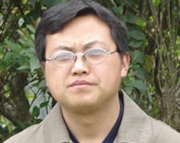
On 5 March 2013, human rights defender Liu Feiyue was taken from his home by police in Hubei Province. One week later, he remains missing with no further information available on his whereabouts. Liu Feiyue is a former teacher and founder of Civil Rights and Livelihood Watch, a human rights website based in China which documents cases of human rights violations from all over the country. He set up the website in 2005 after becoming increasingly involved in the defence of human rights in Hubei Province. As a result of his human rights work, Liu Feiyue has been harassed, placed under house arrest, detained and beaten.
Liu Feiyue had been under increased surveillance in the weeks prior to this incident, due to the convening of the Chinese People’s Political Consultative Congress and the National People’s Congress in Beijing, which began on 3 and 5 March 2013 respectively. Liu Feiyue has been repeatedly targeted in the past during politically sensitive periods and has often been brought into police custody without any legal procedures. In addition to Liu Feiyue, it is reported that dozens of other human rights defenders have been placed under house arrest or have had their freedom of movement restricted owing to the governmental meetings taking place in Beijing. Those under increased surveillance include Messrs Hu Jia, He Depu and Xu Zhiyong in Beijing, Ms Liu Ping and Mr Li Sihua in Xinyu City, Jiangxi Province and Mr Feng Zhenghu in Shanghai.
via: http://www.frontlinedefenders.org/node/21972
Posted in Front Line, Human Rights Defenders | Leave a Comment »
Tags: China, Feng Zhenghu, Front Line Defenders, He Depu, Hu Jia, Human right, human rights, Human Rights and Liberties, Human rights defender, Human Rights Defenders, Li Sihua, Liu Feiyue, Liu Ping, March 2013, National People's Congress, Xu Zhiyong
March 13, 2013
The new International Civil Society Network on Infrastructures for Peace (I4P) is launched today with its website: www.I4Pinternational.org
Many countries lack capacities and structures to deal adequately with on-going and potential violent conflict. This has emerged as a central obstacle to the attainment of equitable and sustainable development. In recent years, the number of conflicts has been increasing once again. What is needed – in the same way as for threatening natural disasters – is a comprehensive, inclusive and long-term approaches to peacebuilding, which involves the main stakeholders. Infrastructures for peace and Local Peace Committees can be important pillars to counter these dangerous developments or substantially reduce their impact. Several local peacebuilding NGOs and practitioners felt the need to exchange experiences and best practices about this approach and make I4P more recognised:the network was born and counts now some seventy members. There is an Interim Steering Committee with members from three continents.
Human rights and human rights defenders play a crucial role in this process – even if not spelled out in the main pages of the new website. The local peace groups mentioned as members however frequently refer to the need for human rights and social justice as they realise that lasting peace cannot be the ‘peace of the graveyard’. Moreover, it is the local Human Rights Defenders who suffer most from the absence of peace as this blog and many more sources regularly demonstrate.
Posted in human rights | Leave a Comment »
Tags: Advocacy Organizations, Civil society, crowdsourcing, Human right, human rights, Human Rights and Liberties, Human rights defender, Human Rights Defenders, I4P, Infrastructure, networking, Non-governmental organization, peace, peace building, politics, prevention
March 12, 2013

Last Saturday, two distinguished human rights defenders in Saudi Arabia were sentenced to jail in Riyadh for establishing an unlicensed human rights organization. Mohammed Al-Qahtani and Abdullah Al-Hamad (or Hamid) established the Saudi Civil and Political Rights Association (ACPRA) in 2009. The organization’s mission is to promote human rights awareness within the Kingdom. ACPRA called for political representation of Saudi citizens and creation of laws to protect minorities. The organization also worked on documenting human rights abuses within the Kingdom. Despite multiple efforts to license ACPRA, the organization’s petitions were rejected and the group was eventually banned by Saudi authorities. The two men were sentenced to 10 and 11 years in prison on accusations including the rather illiberal sounding “breaking allegiance to the King”, “disseminating false information through foreign entities” and “forming an unlicensed organization“. This trial and the ensuing heavy sentence are clearly linked to them exercising their rights to freedom of opinion and association.
Posted in human rights, Human Rights Defenders | Leave a Comment »
Tags: Abdullah Al-Hamad, Abdullah Al-Hamid, ACPRA, Alkarama, Civil society, freedom of association, freedom of expression, Freedom of speech, Human right, human rights, Human Rights Defenders, human rights organization, illegal detention, independence of the judiciary, jail, Middle East, Mohammed Al-Qahtani, Muftah, political prisoners, prison, Riyadh, Saudi, Saudi Arabia, Saudi Civil and Political Rights Association, Sentence (law)
March 12, 2013
Brussels-based Protection International is looking for a fundraiser with a strong capacity to investigate and follow up possible funding opportunities. What PI is looking for is a person with at least two-year experience in fundraising for NGOs or relevant organisations, a strong capacity to elaborate budgets and write proposals and reports, an interest in human rights related issues, and extensive skills to work with donors constructively.
Please read the full job description on the website: http://protectioninternational.org/2013/03/12/job-opportunity-protection-international-is-looking-for-a-fundraiser/ and send your applications to recruitment@protectioninternational.org.
The deadline for submitting your applications is : 31 March 2013.
Posted in human rights | Leave a Comment »
Tags: Advocacy Organizations, Brussels, Fundraising, Human right, Human Rights and Liberties, Human rights defender, job opportunity, Non-governmental organization, Protection International, vacancy
 Read the rest of this entry »



 Hans Thoolen on Human Rights Defenders and their awards