Posts Tagged ‘Geneva’

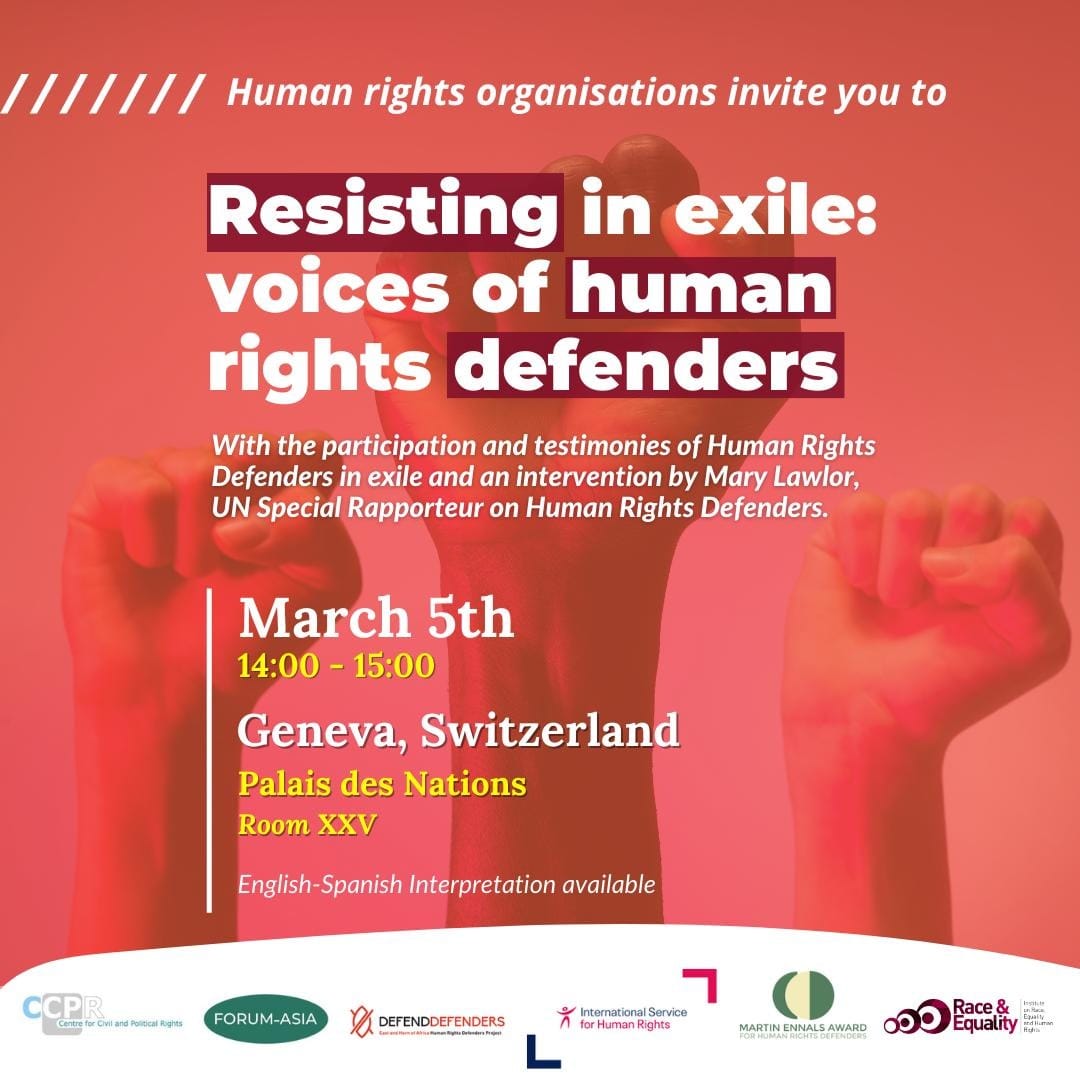
Resisting in Exile: Voice of Human Rights Defenders – side event tomorrow, 5 March 2024

March 4, 2024

On Tuesday, 5th March, 2pm – at the Palais des Nations, Room XXV- will take place the side event Resisting in Exile: Voice of Human Rights Defenders

“I do not like the idea of being a refugee. I do not want to leave the country because I wanted to make it better.”  Human rights defender quoted by the Special Rapporteur on Human Rights Defenders in A/HRC/37/51.

In ‘People Power Under Attack’ (2022), CIVICUS reports that the number of countries where civic freedoms are being curtailed and civil society is under severe attack is increasing… In such contexts and under such pressure, defenders can see leaving the country as their only option. These defenders, along with defenders expelled by their home governments, face the huge challenges of short or protracted exile, including economic insecurity and ongoing threats. Defenders in exile question if and how they can continue human rights work from abroad and how those who remain deal with a fractured human rights community.

In this event the four organisers [Centre for Civil and Political Rights (CCPR-Centre), International Institute on Race, Equality and Human Rights, (Race and Equality), International Service for Human Rights (ISHR), and DefendDefenders] will bring the voices of human rights defenders from around the world to the Council so that States, UN experts and officials and civil society colleagues can hear their voices. What is the experience of being in exile like? What is the impact on individual work and that of the community of defenders? What demands do exile defenders make to the Council?

This event aims to raise greater awareness about the phenomenon of defenders in exile and encourage discussion and action on how to support these defenders. It is also aimed at looking at what is needed to prevent exile becoming some defenders’ only feasible option.

During this event, defenders in exile from will speak of the impact of their experience of exile on their own lives, those of their families, and their communities. They will highlight the specific needs defenders in exile have in terms of legal guarantees, and political and financial support and of their ongoing work to defend rights from exile.

Defenders in exile will also send in testimonies, to be shown in video form or read out by fellow defenders. We aim to fill the room with the voices of those in exile who cannot be in Geneva to participate directly.

Recall the recommendations made by the previous Special Rapporteur on Human Rights Defenders, Michel Forst, in his 2018 report to the Council (A/HRC/37/51), including in regard to the prohibition of non-refoulement to persecution, relocation schemes, and access to protection measures for defenders in exile.

The conversation will take place during the Council session when the Special Rapporteur on Human Rights Defenders will be presenting her report to the Council. We hope that the Special Rapporteur will be available to, highlight the need for greater attention to, and investment in the prevention of, the closure of civic space so as to forestall the need for defenders to leave the country.

See also: https://humanrightsdefenders.blog/2022/03/04/warning-human-rights-defenders-in-ukraine-and-in-exile-will-be-danger/

See also: https://bnnbreaking.com/breaking-news/human/us-drl-launches-program-to-bolster-exiled-human-rights-defenders

Side event ISHR on Guatemala: 7 March 2024

March 4, 2024


In recent years, Guatemala has witnessed a concerning erosion of its State institutions. The co-optation of the judicial system has resulted in the persecution of human rights defenders and justice operators, many of whom have had to flee the country. Despite the election of President Bernardo Arévalo, who led a campaign promising to re-establish the rule of law and fight corruption, the international community must continue to monitor the human rights situation in the country.

A side event – Human rights situation in Guatemala: From Rescuing Democracy to Guaranteeing Justice – aims to shed light on the recent socio-political developments in Guatemala, with a particular focus on the 2023 presidential elections and the dynamics of peaceful protest. It will explore the fragile state of the rule of law in the country and the significant human rights challenges it faces. A critical discussion will centre on the co-optation of the judicial system by criminal groups, which has led to the persistent criminalisation of justice operators and human rights defenders.

Additionally, the event will address the pressing crisis of forced evictions in Indigenous communities. These evictions, often driven by the interests of non-State actors like extractive companies and large-scale development projects, represent a form of cruel, inhuman, and degrading treatment, amounting to torture.

Speakers:

Clément Nyaletsossi Voule, UN Special Rapporteur on freedom of peaceful assembly and of association (TBC)

Lourdes Gómez Willis, Q’eqchi’-afrodescendant professor working on issues of Indigenous women defenders and the impacts of palm oil production

Bernardo Caal Xol, Mayan Q’eqchi community leader, teacher and environmental and land rights activist [see also: https://www.trueheroesfilms.org/thedigest/laureates/dff0ef4a-af52-4d2f-8ca3-be6d31968453]

Luis Haroldo Pacheco Gutiérrez, Ex-President of the Council of Communal Mayors of the 48 cantons of Totonicapán With the participation of

Margaret Satterthwaite, Special Rapporteur on the independence of judges and lawyers

Sponsors: Centre for Civil and Political Rights, Franciscans International, Impunity Watch, ISHR, Protection international Mesoamérica, and Peace Brigades International.

Thursday 7 March, 14:00 – 15:00 (CET), Room XXV, Palais des Nations – Geneva
Language: English / Spanish


Download the flyer here

ISHR side event: SUPPORTING THE WORK OF HUMAN RIGHTS DEFENDERS

February 24, 2024
Photo: Freedom of Speech Includes The Press by Narih Lee under CC 2.0

INVITATION to the side event: IN DEFENCE OF CIVIC SPACE AND DEMOCRACY SUPPORTING THE WORK OF HUMAN RIGHTS DEFENDERS on Monday 26 February 2024, 1pm – 2pm CET, Room XXII, Palais des Nations, Geneva

Human rights defenders promote democracy and a vibrant civic space, too often, in dangerous circumstances. This event aims to discuss the crucial work of defenders, how the international community can best support them and how crucial gender equality is for the full realisation of democracy.

Speakers: 

Sviatlana Tsikhanouskaya, Leader of democratic forces (Belarus)

Dr. Sara Abdelgalil, Paediatric Consultant NHS UK, Democracy & Governance Advocate, Active member of Sudanese Diaspora

Phil Lynch, Executive Director, International Service for Human Rights

Elina Valtonen, Minister for Foreign Affairs, Finland

Moderator: Imogen Foulkes, BBC Geneva

A light lunch will be served. The event will be recorded and published as a podcast (Inside Geneva, produced by Swiss Broadcasting).

Download flyer here

Cao Shunli, her legacy should not be silenced

February 16, 2024

Our impact may be large, may be small, and may be nothing. But we must try. It is our duty to the dispossessed and it is the right of civil society.’ Cao Shunli

Ten years ago, Chinese woman human rights defender Cao Shunli was a victim of deadly reprisals for engaging with the United Nations.

The International Service for Human Rights (ISHR) and partners invite you to attend a photo exhibition on 14 March 2024, at Place des Nations to honour her memory.

The photo exhibition will also display cases of Chinese, Tibetan, Uyghur, and Hong Kong human rights defenders who have been targeted for upholding the promise of the Universal Declaration of Human Rights. See: https://mailchi.mp/ishr/side-event-situation-guatemala-hrc55-7mar-34177?e=d1945ebb90

Who was Cao Shunli? 

Cao Shunli was a brave Chinese woman human rights defender and lawyer. She campaigned for the meaningful consultation and contribution of independent civil society to the Chinese government’s national reports for its first and second Universal Periodic Reviews (UPR). On 14 September 2013, one month before this review, while on her way to Geneva to attend a human rights training organised by ISHR and CHRD, she was detained and forcibly disappeared by Chinese authorities for five weeks. When she resurfaced in custody in October 2013, she had been charged with ‘picking quarrels and provoking trouble’, and  it was evident that she was experiencing serious medical issues in detention. Despite repeated international calls for her urgent release over months of being denied adequate medical treatment, Cao Shunli died of multiple organ failure on 14 March 2014, having been granted bail for medical reasons just days before her death. Cao Shunli was one of the finalists of the prestigious Martin Ennals Award for Human Rights Defenders in 2014. [see also: https://humanrightsdefenders.blog/tag/cao-shunli/ as well as https://www.martinennalsaward.org/hrd/cao-shunli/]

To this day, Chinese authorities have ignored appeals seeking accountability for Cao’s death, including repeated calls by UN Special Procedures experts in 2014 and 2019 for a full investigation into this ‘deadly reprisal’. Her case remains the longest-standing unresolved case in the UN Secretary-General’s annual reports on reprisals. March 2024 marks the 10th anniversary of Cao Shunli’s death. A decade ago, when ISHR and many other human rights groups sought to observe a moment of silence at the Human Rights Council in her memory, the Chinese delegation, together with other delegations, disrupted the session for an hour and a half. China is consistently one of the most frequent perpetrators of reprisals against individuals or groups engaging with the United Nations. Frequently mentioned alongside Saudi Arabia, it has the second highest number of reprisals cases and situations reported by the UN Secretary-General since 2010.

Cao Shunli’s story is a paradigmatic case of reprisals, not only because of her belief in the importance of civil society participation in UN mechanisms, but also due to the array of severe human rights abuses she endured because of this belief, ranging from being barred from exiting her own country, enforced disappearance, arbitrary detention, lack of due process, torture, ill-treatment, and denial of adequate medical care, to subsequent death in custody without any accountability for these abuses. 

https://ishr.ch/events/but-we-must-try-cao-shunli-the-unsilenceable-legacy

Martin Ennals Foundation seeking urgently a Project Coordinator

January 8, 2024

After 4.5 years, Isabel de Sola is getting ready to leave her position as Director of the Martin Ennals Foundation by the end of January. The Project Coordinator is envisioned to take over a sub-set of her responsibilities while collaborating with other members of the staff and Jury organizations.

The Award is approaching its 30th anniversary in 2024 – a moment which calls for a celebration of past achievements, as well as for some reflection on the future. The objective of the MEA 30th Anniversary project is to rally the Award’s friends and partners in Geneva to reinforce the message that protecting and bolstering HRDs is fundamental to the realization of UDHR and the HRDs Declaration.

The Martin Ennals Foundation is hiring a Project Coordinator to deliver on the 30th Anniversary project in 2024 and renew the Award for 2025. The Project Coordinator will be at the center of the Award’s activities, providing an essential link between the Board, Jury members, donors, consultants, and partners to the celebration in 2024-2025. An estimated 60% FTE is envisioned for this role, with peak periods at the nominations and Ceremony stages.

The Project Coordinator’s main responsibilities include:

  • Primary responsibility for the nominations process and coordination of the Jury for the selection of the 2024 Laureate. Maintenance of the Martin Ennals Award nominations database and oversight of the Jury voting process. Preparing and follow-up to Jury meetings – two or three during the year, as necessary.
  • Primary responsibility for the development and execution of the annual Award Ceremony. Liaises with the Ville de Geneve on a concept for the 2024 Ceremony, a new graphic identity, and the agenda of the event. Oversees organizational aspects of the Ceremony in consultation with the Ville de Geneve and event consultants.
  • Collaborates with consultants in the development and execution of an Award communication strategy aimed at raising the visibility of the Laureates and celebrating the MEA’s 30 years’ history.
  • Facilitates conduct of financial and administrative aspects of the Award project, including fundraising and advocacy-related activities together with the heads of departments and the Program Officer.
  • Supports fundraising for 2024-2025 and donor management, in collaboration with the relevant departments.
  • Supports the Program Officer in executing an advocacy strategy for MEA Laureates within Geneva-based advocacy and human rights policy development.
  • Contributes to monitoring and evaluating the 30th anniversary project, and annual narrative reporting for donors.

The Foundation is looking for a versatile and experienced project-manager who is passionate about human rights and rigorous in their planning and management style. The ideal candidate would bring inter alia, the following qualities and skills:

  • A master’s degree or +8 years of work experience in international relations, sustainable development, human rights, security policy, or related fields.
  • Familiarity with the international relations, human rights advocacy, and development cooperation ecosystem of Geneva.
  • Bilingual or professional fluency in both English and French.
  • A track-record in management of complex projects with many moving pieces. Ability to oversee several service providers and consultants simultaneously. Ability to budget and keep-track of financial aspects of the project.
  • Event planning experience.
  • Exposure to fundraising, monitoring and evaluation, or general reporting on projects.

The Project Coordinator will be offered a two-year contract with possibility of renewal.

To apply, please send your CV, a motivation letter, and a 300-word response to the following question to the MEF Board at barbara-lochbihler@gmx.de by February 2nd, 2024 cob:

For the 30th anniversary celebration of the Award, the Martin Ennals Foundation and the City of Geneva will conduct a call-for-tender to identify a provider who can deliver a new graphic design for the Ceremony. How would you go about this task? Describe the steps you would take, a check-list of important items to consider, or your overall approach.”

Only short-listed candidates will be contacted for an interview in the month of February.

Türk tells students in Geneva: Human rights are the solution

November 22, 2023

On 21 November 2023 Volker Türk, UN High Commissioner for Human Rights spoke at the Université de Genève. [see also: https://humanrightsdefenders.blog/2022/09/15/new-high-commissioner-for-human-rights-volker-turk-the-man-for-an-impossible-job/] Here some extracts:

First: war. One quarter of humanity is living today in places affected by conflict. At the end of last year, the Peace Institute in Oslo, which works closely with my Office, found that the intensity, length and number of conflicts worldwide are at their highest levels since the Cold War: 55 conflicts, lasting on average between 8 and 11 years.

In Ukraine, in Sudan, in Ethiopia, in Myanmar and across the Sahel – to take just a few examples – the level of atrocities and suffering is devastating. The armed conflict in the Occupied Palestinian Territory and Israel, after just five weeks, has seen over 11,500 people killed, including more than 4500 children – and I want to emphasise that the Gaza Ministry of Health has not been lable to update those numbers since 15 November. The war has lit a firestorm of hate speech across the Middle East and the entire world. The level of Antisemitic and Islamophobic attacks, in real life and online, is deeply shocking….

Time and again, we look back and see that conflict could have been prevented. In the Occupied Palestinian Territory, for example, my Office has repeatedly issued reports that recommend practical, feasible steps towards de-escalation of tensions and overcoming human rights violations. Injustice; discrimination; oppression; extreme inequalities; a lack of accountability for human rights violations: these are among the factors that will sadly make violence more likely.

Before I took up my mandate as the UN’s High Commissioner for Human Rights, I worked for 30 years in situations of failed prevention. I was working with and for refugees –in places where conflict had erupted, with dramatic impact on civilians; or where long years of discrimination metastasized into ethnic cleansing; or where deprivation had become so overwhelming that people were massively compelled to flee. Now, I feel my utmost priority has to be prevention – and solutions. Because that is what human rights bring. They state clearly what every human being is entitled to – a life that is free from fear and from the deprivation of certain essential resources – and in advancing those rights, they bring solutions to the root causes of preventable suffering…

Harsh restriction of civic space is the Achilles heel – the fatal weakness – of governance. If there is one message that I deliver again and again to Ambassadors and Heads of State or Government, it is this: ensuring that people can speak freely – and critically – and that they can fully and meaningfully participate in decisions will build more effective policy…

These are all measures that help to prevent conflict. They are also among the steps that can de-escalate conflict, by resolving some of its root causes; and they contribute to making a peace that is real and which can endure, with development that is sustainable because it is inclusive.

They are also key guidelines for addressing challenges as crucial and complex as climate change, runaway pollution and the obliteration of biodiversity. Acting to limit the triple planetary crisis, and upholding our right to a clean, healthy and sustainable environment, are the defining struggles of our generation.

This spiralling damage is a human rights emergency. Worldwide, climate change is pushing millions of people into hunger. It is destroying hopes, opportunities, homes and lives. In the Sahel region, a recent report by my Office outlines the profound impact of climate change-related soil degradation and declining food production on income, health, resource competition, conflict, and displacement – a vicious cycle that now spins deeper with every planting season. Temperatures in the Sahel are rising much faster than the global average; even if the global temperature rise is kept to an unlikely 1.5 degrees, the impact on the people of the Sahel will be permanent and devastating.

Across the Sahel, we can see very clearly how climate change, conflict, poverty, discrimination and lack of accountability feed into each other – creating a vast knot of issues that strangle the lives and rights of people.  But this is the case everywhere, as the climate crisis continues to generate profound and increasing threats to human rights. The dignity and the very survival of communities, of nations – and ultimately, all of humanity – is at stake.

So, again, how do we prevent this? Where are the solutions?

Notably, of course, we need global solutions. The governments and people of the Sahel, and many other regions that are experiencing extreme harm, did not contribute significantly to climate change. 

In a few days, global climate negotiations will resume in Dubai. It is absolutely essential that they lead to decisive and equitable action to prevent the worst impacts of climate change, and to remedy the impacts that can no longer be prevented. We have to ensure that Governments, businesses and individuals prioritise the interests of humanity over their short-term, narrowly defined self-interest. The fact is, the COP talks have to date fallen far short of what is needed to stop climate change and remedy its worst impacts. The world is dangerously off-track to meet the promises made in the Paris Agreement. Recent discussions on loss and damage are an example of  this. The climate justice movement, and many of the countries most vulnerable to climate change, struggled for years  for an agreement to establish a new loss and damage fund, finally achieving this objective at COP27. But the recommendations that have been sent to COP28 for operationalization of that fund do not satisfy the demands of those most affected by climate change. 

A strong governance framework that is grounded in human rights. Environmental and social safeguards. An inclusive and participatory Board. And a fair funding mechanism. These should be viewed as essentials – not a point of contention, or of trade-offs in negotiation.

Point one: We must protect civic space.

On the climate and environmental issues that affect us all, key decisions continue to be made behind closed doors – and are often influenced by fossil fuel lobbies. Environmental human rights defenders working to protect communities and land from environmental harm are often vilified, attacked and even killed. Their rights to participation, freedom of expression, and access to information and to justice must be secured. We must ensure the free, meaningful and safe participation in all climate discussions of all those most affected by climate change, including women and Indigenous Peoples.

Point two: climate action must advance equality and equity.

Adaptation strategies and all other measures need to prioritize the situation of people most affected by climate change. Funding must go first to the people who need it most.

Point three: We need to ensure access to effective remedy, and accountability, for climate-related harm.

Point four: we need resources for a rapid and just transition that advances human rights, including the right to a healthy environment...

In every country, we also need to see full participation and consultation on environmental laws and measures – notably for those who are most at risk – and protection of people who raise concerns about environmental harm and the policies that produce them.  Bashing climate protests; designing laws that unfairly restrict activities that call the public’s attention to climate harms; and allowing attacks on activists to go unpunished: these are tactics that ultimately harm all States and all human beings. We need to fix this urgently. [see also: https://humanrightsdefenders.blog/2023/10/15/climate-human-rights-defenders-increasingly-seen-as-eco-terrorists/]

So: Conflict. Discrimination. Poverty. The suffocation of civic space. The triple planetary crisis. These are five immense challenges that threaten our rights and our world, and they fuel each other. We face the compounding effects of all of them – while also confronting a surge of new human rights challenges, notably in the digital realm, including artificial intelligence and surveillance.

……

Over the past 75 years, the Universal Declaration of Human Rights has guided tremendous progress in countries across the world. It has inspired vibrant, creative, powerful activism and solidarity, empowering people to claim their rights and to engage actively in their communities and societies.

How could such a simple text guide such profound transformation? Because “recognition of the inherent dignity and of the equal and inalienable rights of all members of the human family is the foundation of freedom, justice and peace.” Greater respect for human rights – all human rights, building on each other ­– constructs more sustainable development. More enduring peace. A safer future.

This is an extraordinarily powerful truth…

Economies and societies that are inclusive and participative; in which opportunities, resources and services are equitably shared; and where governance is accountable, deliver justice, opportunities and hope…

And it is precisely in our era of rising storms that the 75th anniversary of the Universal Declaration of Human Rights can help us navigate to safety. Its essential values, which connect all of humanity, were set out to ward off horror and destruction, and they have been tried and tested. They embody the power of unity of purpose and the potential for transformative action – both within societies, and globally.

It is absolutely critical, now – precisely in this time of terrible crisis – that we rekindle the spirit, impulse and vitality that led to the adoption of the Universal Declaration of Human Rights, so that we can rebuild trust in each other, and move forward, united.

https://www.ohchr.org/en/speeches/2023/11/our-utmost-priority-solutions-turk-tells-students

see also: https://www.opportunitiesforafricans.com/office-of-the-high-commissioner-for-human-rights-un-ohchr-minorities-fellowship-programme-2024/

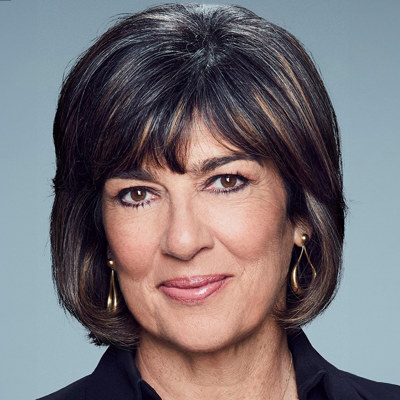
Soltan Achilova – finalist MEA 2021 – denied travel to Geneva Human Rights Week

November 21, 2023

On 21 November, 2023 the Martin Ennals Foundation, joined by HRW and the ISHR, issued the following statement:

The Martin Ennals Foundation condemns the harassment of Soltan Achilova and her daughter by government authorities at Ashgabat airport and calls for Turkmen authorities to stop their reprisals against journalists for their human rights work.

In the early hours of November 18th, 2023, Mrs. Soltan Achilova and her daughter were stopped by Turkmen government officials from boarding their flight for Switzerland. A customs official took their passports, wet them with a damp rag and declared the passports to be ruined, effectively obstructing Soltan from traveling to Geneva where she would feature as a keynote speaker at the University of Geneva’s Human Rights Week 2023.

This act of harassment and denial of freedom of movement is particularly reprehensible in that it comes only a few days after Turkmenistan’s 4th Universal Periodic Review, during which high-level government representatives expressed their “support for …the promotion and protection of fundamental freedoms and human rights“, giving multiple examples of their progress in terms of respect for freedom of expression.

Soltan Achilova believes she was not allowed to leave the country because of the authorities’ fear that negative information might be heard during the Human Rights week in Geneva. Yet, the obstruction from travel of an internationally recognized human rights defender is more striking evidence of the lack of freedoms in the country and the bad faith with which the Turkmenistan government engages with the Human Rights Council.  

Turkmenistan is one of the most repressive and isolated countries in the world, ranking 176th out of 180 countries in terms of press freedom and working conditions for journalists. Soltan has been reporting about her country for more than a decade. Her pictures of daily life are one of the few sources of documentation of human rights violations occurring in this most secretive nation. In 2021, Soltan was recognized by the Martin Ennals Award for her documentation of land grabs and forced evictions of ordinary citizens in Ashgabat.

Soltan has not been allowed to travel freely outside of her country on several occasions. She is under constant surveillance by Turkmen authorities and has suffered numerous incidents of harassment, intimidation, and threats. Despite the challenges, Soltan persists in her human rights work, regularly sending information and pictures  outside of the country so that government authorities are held to account.

We renew calls for Turkmenistan to fully implement their human rights obligations, including, inter alia, allowing human rights defenders and journalists to conduct their work peacefully. We invite Member States accompanying the 4th Universal Periodic Review of Turkmenistan to strongly sanction the silencing of Soltan Achilova and other Turkmen journalists.

For more on Soltan: https://youtu.be/7xkSvMXaZUU?si=JhWOrMxs4yQQ2wz8

https://www.hrw.org/news/2023/11/21/turkmenistan-journalist-prevented-travelling-abroad

https://www.frontlinedefenders.org/en/statement-report/turkmenistan-whrd-soltan-achilova-denied-travel-geneva-human-rights-week

https://www.rferl.org/a/turkmenistan-achilova-stopped-flying-europe/32692666.html

Turkmenistan through the eyes of photojournalist Soltan Achilova, master class 21 November

November 14, 2023
Turkmenistan through the eyes of photojournalist Soltan Achilova
Join us for a Master Class on Turkemnistan at UNIGE Human Rights Week, Tuesday Nov. 21 @12h30-14h !

The World Press Freedom Index ranked Turkmenistan one of the five most repressive regimes globally in 2023.
Martin Ennals Award Finalist Soltan Achilova is a 74 years-old photojournalist who captures the lives of ordinary people in Turkmenistan with her camera. Soltan’s pictures describing food insecurity, forced and illegal evictions, lack of adequate healthcare and the discrimination faced by people with disabilities, are an invaluable source of information on human rights violations endured by the people of Turkmenistan. In collaboration with the University of Geneva Human Rights Week this event will explore how independent journalism can push back on the denial of freedom of expression in the toughest authoritarian contexts.


Free Entry
Tuesday Nov
. 21, 2023
12h30-14h
Unimail Salle MS150

see also: https://humanrightsdefenders.blog/2021/02/23/soltan-achilova-has-issued-a-rare-rebuke-of-the-turkmen-president-on-youtube/

https://mailchi.mp/martinennalsaward.org/invitation-turkmenistan-master-class-unige-9415682?e=2898c3ec1a

Human Rights Defender Advocacy Programme 2024: applications now open

November 7, 2023

Are you a human rights defender keen to use the UN to push for change at home? If so, apply for the 2024 edition of ISHR’s flagship training, the Human Rights Defender Advocacy Programme (HRDAP)!

After a successful hybrid programme launched  in 2023, ISHR is pleased to launch the call for application for the 2024 edition of the Human Rights Defender Advocacy Programme (HRDAP), which will again take place both remotely and in Geneva! Below are some important dates to take into account before applying:

  • Mandatory distance learning course: 8 April – 3 June 2024 (part time)
  • In-person course in Geneva: 5- 15 June 2024 (full time)
  • Deadline to apply: 10 January 2024, midnight CET (Geneva Time)
  • Programme description with all the information can be downloaded here.
  • Application form can be found here.

The course equips human rights defenders with the knowledge and skills to integrate the UN human rights system into their existing work at the national level in a strategic manner, and provides an opportunity for participants to prepare for and engage in advocacy activities at the UN with the aim to effect change back home.

Defenders will complete a 10-week hybrid learning programme, online and offline, which will include:

  • Access to the HRDAP Platform, where they can complete e-learning courses on each key UN human rights mechanism and on advocacy strategies, access interactive learning materials and case studies on the ISHR Academy
  • Take part in live Q&A sessions with human rights experts
  • Receive a continuous advocacy support and coaching in order to develop concrete advocacy objectives to make strategic use of the international human rights system
  • Build networks around the world, and learn from peers from a range of regions working on a range of human rights issues
  • Apply their knowledge to case-studies scenarios and enhance their advocacy toolbox according to their specific needs
  • Receive support and advocacy accompaniment to conduct activities during the 56th and 57th Human Rights Council sessions and other relevant opportunities.

Participants will have the unique opportunity to apply their knowledge and skills while being in Geneva and practice, meet and share with their peers and experts. The blended format of the course allows defenders to continue their vital work on the ground, while diving into the inner workings of each key UN human rights mechanism, and gaining first-hand experience from advocates and UN staff on how civil society can strategically engage in the international human rights space.  

By participating in HRDAP, defenders:

  1. Gain knowledge and tools, which they can use to ensure their voice is central in international human rights decision-making
  2. Explore and compare the benefits of engagement with the Human Rights Council, the Special Procedures, the OHCHR, the Universal Periodic Review and the Treaty Bodies, and examine how they can use them to bolster their work at the national level
  3. Develop strategies and lobbying techniques to increase the potential of their national and regional advocacy work

Could you be one of our 2024 participants?

This programme is directed at experienced human rights defenders working in non-governmental organisations, with existing advocacy experience at the national level and some prior knowledge of the international human rights system.

ISHR supports, and promotes solidarity with and between, defenders working in the following areas or contexts, which we recognise as intersectional and interdependent:

  1. Equality, dignity and non-discrimination
  2. Environmental justice and sustainability
  3. International accountability for the repression of human rights defenders
  4. Transparency and rule of law

The hybrid programme will bring together around 16 committed human rights defenders from different backgrounds, who work on a wide range of areas that are linked with our programmes to ensure a sustainable collaboration. This can include, but is not limited to, defenders working on the following thematics: women rights; business, environment and human rights; the human rights of LGBTIQ+ persons; anti-racism; reclaiming civil society space and increasing protection of human rights defenders. 

What do former HRDAPers say?

16 human rights defenders from 15 countries took part in the last edition, HRDAP23. At the end of the training, 98% of the participants were either extremely satisfied or very satisfied with the programme and also felt that they would be able to apply what they learnt to their own day-to-day work. Find out more about the outcomes of HRDAP23 and where they are four months later, here.

See also: https://humanrightsdefenders.blog/2023/07/26/the-story-of-camila-zuluaga-hrd-from-colombia/. More testimonials from HRDAP23 here

How to apply?

First, download and read carefully the HRDAP 2024 Programme Description to find out more about modalities, requirements and funding. If you meet the criteria, take some time to apply using this online form before midnight Geneva time on Wednesday 10 January 2024!

As only a limited number of human rights defenders are able to participate in HRDAP each year, in addition to our range of guides and handbooks, ISHR has developed an e-learning space in English, French and Spanish to help human rights defenders strengthen their advocacy skills with the UN for greater impact on the ground: the ISHR Academy. The learning modules demystify the UN human rights system and build capacity to push for change. Discover new tools, insider tips, defender stories, and more!

For more information, please contact us : training@ishr.ch 

https://ishr.ch/latest-updates/hrdap-2024-apply-now-for-ishrs-hybrid-training-for-human-rights-defenders/

UN Secretary-General’s Report 2022/23 on Reprisals : lack of progress

September 29, 2023

On Monday 18 September, over 50 activists, members of civil society organisations and diplomatic partners gathered on Geneva’s Place des Nations, unfurling a giant banner celebrating the right to defend human rights, as enshrined in the foundational UN Declaration on Human Rights Defenders.

The banner and gathering were meant to mark the 25th anniversary of the Declaration, which was adopted by the UN General Assembly in 1998. The document explicitly laid out the rights of human rights defenders and the protection owed to them by governments and businesses, emphasising that everyone has the right to advocate and defend rights and fundamental freedoms.

On 28 September 2023, the UN Secretary-General’s report on reprisals was presented, which covers the period from 1 May 2022 to 30 April 2023. Over 220 individuals and 25 organizations in 40 countries across the world faced threats and retaliation from State and non-State actors for cooperating with the UN on human rights.

Human rights defenders and other civil society actors are increasingly under surveillance and continued to face legal proceedings, travel bans and threats, and be given prison sentences for cooperating with the UN and the UN’s human mechanisms.

A global context of shrinking civic space is making it increasingly difficult to properly document, report and respond to cases of reprisals, which means that the number is likely much higher,” said Assistant Secretary-General for Human Rights Ilze Brands Kehris in her presentation to the Human Rights Council in Geneva. [see also: https://humanrightsdefenders.blog/2020/11/16/new-assistant-secretary-general-wants-to-improve-civil-society-participation-in-the-general-assembly/]

Among the growing trends noted in the report is the increase in people either choosing not to cooperate with the UN due to concerns for their safety, or only doing so if kept anonymous. 

Victims and witnesses in two-thirds of the States listed in the report requested anonymous reporting of reprisals, compared with one-third in last year’s report.  And most people who reported facing reprisals for their cooperation with the Security Council and its peace operations, as well as with the UN Permanent Forum on Indigenous Issues did so on the condition of anonymity.

A second trend was the increasing surveillance of those who cooperate or attempt to cooperate with the UN, being reported in half of the countries named in the report.  An increase in physical surveillance by State actors was also noted, likely linked to the return to in-person forms of engagement with the UN.

Third, almost forty-five per cent of the in the report continued to apply or enact new laws and regulations concerning civil society, counter-terrorism and national security, which punish, deter or hinder cooperation with the UN and its human rights mechanisms. 
These legislative frameworks represent severe obstacles to long-standing human rights partners of the UN worldwide, and were used to outlaw some of them, raid their offices, and question, threaten or try their staff.

Finally, the specificity and severity of acts of reprisals against women and girls, which constitute half of the victims in this year’s report, was once again identified with concern.

Most of them are human rights defenders and civil society representatives targeted for their cooperation with UN human rights mechanisms and peace operations, but there is also a significant number of judicial officers and lawyers subjected to reprisals for their cooperation with the UN in search of accountability and remedy.

We have a duty to those who put their trust in us,” said Brands Kehris. “That is why at the UN, we are determined to live up to our collective responsibility to prevent and address intimidation and reprisals against those who cooperate with the organization and its human rights mechanisms.” 

The 40 States referred to in the report are: Algeria, Afghanistan, Andorra, Bahrain, Bangladesh, Belarus, Burundi, Cameroon, China, Colombia, Cuba, Democratic Republic of the Congo, Djibouti, Egypt, France, Guatemala, India, Indonesia, Iran (Islamic Republic of), Iraq, Israel, Saudi Arabia, Libya, Maldives, Mali, Mexico, Myanmar, Nicaragua, Pakistan, the Philippines, Qatar, the Russian Federation, South Sudan, United Republic of Tanzania, United Arab Emirates, Uzbekistan, Viet Nam, Venezuela (Bolivarian Republic of), Yemen, and the State of Palestine.

The full report at A/HRC/54/61

https://ishr.ch/latest-updates/defenders-gather-before-the-un-headquarters-to-call-for-better-protection-of-their-work/

https://genevasolutions.news/human-rights/punished-for-speaking-up-at-the-un