Counter-terrorism is a major concern of many governments today. Since 9/11 and more recently after the attacks in Belgium, France, Germany, Lebanon, Tunisia or Turkey, states have adopted new counter-terrorism measures and legislation intended to address the threat of terrorism.
The steps taken are diverse, ranging from surveillance to emergency legislation as well as the use military force against designated terrorist groups abroad. In some instances, more restrictive conditions of financing and the risk of criminal sanctions in cases of ‘material support’ to listed terrorist organizations – a notion which has been broadly interpreted by US case law- have impacted the implementation of certain IHL rules as well as humanitarian assistance. This has reduced the scope of action of humanitarian agencies and NGOs.
In that context, this third IHL Talk on 26 January 2017 will discuss the legal regime governing terrorism, in particular how IHL addresses acts of terrorism and what is the relationship with other international treaties. More generally, experts will discuss the legal and operational challenges counter-terrorism has created for IHL and humanitarian action.
KEYNOTE SPEAKER
Ambassador Valentin Zellweger, Permanent Representative of Switzerland to the United Nations and the other international organizations in Geneva
MODERATION
Gunilla von Hall, Foreign correspondent in Geneva for the Swedish newspaper Svenska Dagbladet
PANELISTS
Sandra Krähenmann, Research Fellow, Geneva Academy of International Humanitarian Law and Human Rights
Carla Ruta, Legal Adviser, Geneva Call
Where? Villa Moynier, 120B Rue de Lausanne, Geneva
The start of a new year is often the occasion to make some broader analysis. So it is with the issue of human rights defenders. I have collected some of the more interesting and will report on these in the days to come.
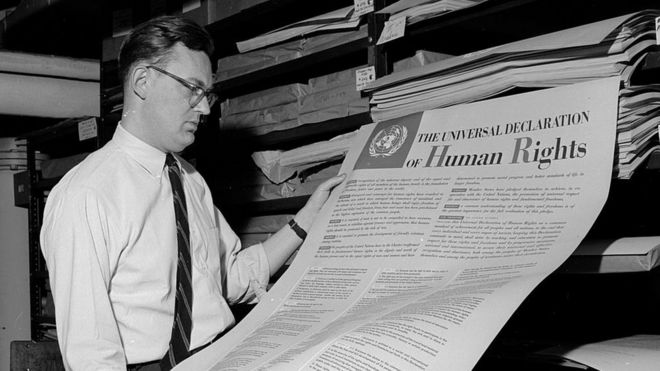
The first is an article (30 December 2016) by Imogen Foulkes of BBC News, who asks – with more states seemingly reluctant to honour human rights treaties – whether we are “heading towards a ‘post human rights world‘?:
Image copyright THREE LIONS/GETTY IMAGES
With an increasing number of states seemingly reluctant to honour human rights treaties, is there a future for this type of international agreement? “We stand today at the threshold of a great event both in the life of the UN, and in the life of mankind.” With these words, Eleanor Roosevelt presented the Universal Declaration of Human Rights to the United Nations. It was 1948 and UN member states, determined to prevent a repeat of the horrors of World War Two, were filled with idealism and aspiration…… Mrs Roosevelt’s prophecy that the declaration would become “the international magna carta of all men everywhere” appeared to have been fulfilled.
But fast forward almost 70 years, and the ideals of the 1940s are starting to look a little threadbare. Faced with hundreds of thousands of migrants and asylum seekers at their borders, many European nations appear reluctant to honour their obligations to offer asylum. Instead, their efforts, from Hungary’s fence to the UK’s debate over accepting a few dozen juvenile Afghan asylum seekers, seem focused on keeping people out. Meanwhile across the Atlantic, president-elect Donald Trump, asked during the election campaign whether he would sanction the controversial interrogation technique known as “waterboarding”, answered ‘I’d do much worse… Don’t tell me it doesn’t work, torture works… believe me, it works.” And in Syria, or Yemen, civilians are being bombed and starved, and the doctors and hospitals trying to treat them are being attacked.
Image copyrightDREW ANGERER/GETTY IMAGES
Little wonder then, that in Geneva, home to the UN Human Rights Office, the UN Refugee Agency, and the International Committee of the Red Cross (ICRC), the guardian of the Geneva Conventions, there is talk of a “post human rights” world. “There’s no denying that we face enormous challenges: the roll-back that we see on respect for rights in western Europe, and potentially in the US as well,” says Peggy Hicks, a director at the UN Human Rights Office. Just around the corner, at the ICRC, there is proof that those challenges are real. A survey carried out this summer by the Red Cross shows a growing tolerance of torture. Thirty-six per cent of those responding believed it was acceptable to torture captured enemy fighters in order to gain information. What’s more, less than half of respondents from the five permanent members of the UN Security Council, among them the US and the UK, thought it was wrong to attack densely populated areas, knowing that civilians would be killed. More than a quarter thought that depriving civilians of food, water and medicine was an inevitable part of war.
For ICRC President Peter Maurer these are very worrying figures. “Even in war, everyone deserves to be treated humanely,” he explains. “Using torture only triggers a race to the bottom. It has a devastating impact on the victims, and it brutalises entire societies for generations.” But how many people are listening, outside the Geneva beltway? Peggy Hicks attempts an explanation as to why attitudes to human rights may be changing.
“When confronted with the evil we see in the world today, it doesn’t surprise me that those who might not have thought very deeply about this [torture] might have a visceral idea that this might be a good idea.” But across Europe and the United States, traditional opinion leaders, from politicians to UN officials, have been accused of being out of touch and elitist. Suggesting that some people just haven’t thought deeply enough about torture to understand that it is wrong, could be part of the problem. “I do think the human rights community, myself included, have had a problem with not finding language that connects with people in real dialogue,” admits Ms Hicks. “We need to do that better, I fully acknowledge that.”
What no one in Geneva seems to want to contemplate, however, is that the principles adopted in the 1940s might just not be relevant anymore. They are good, so Geneva thinking goes, just not respected enough. “We aren’t looking for an imaginary fairytale land,” insists Tammam Aloudat, a doctor with the medical charity Medecins sans Frontieres. “We are looking for the sustaining of basic guarantees of protection and assistance for people affected by conflict.” Dr Aloudat is concerned that changing attitudes, in particular towards medical staff working in war zones, will undermine those basic guarantees. He was recently asked why MSF staff do not distinguish between wounded who are civilians, and those who might be fighters, who, if treated, would simply return to the battlefield.
“This is absurd, anyone without a gun deserves to be treated… We have no moral authority to judge their intentions in the future.” Extending the analogy, he suggested that doctors or aid workers could end up being asked not to treat, or feed, children, in case they grew up to be fighters. “It’s an illegal, unethical and immoral view of the world,” he says. “Accepting torture, or deprivation, or siege, or war crimes as inevitable, or ok if they get things done faster is horrifying, and I wouldn’t want to be in a world where that’s the norm.”
And Peggy Hicks warns against hasty criticism of current human rights law, in the absence of any genuine alternatives. “When we look at the alternatives there really aren’t any,” she said. “Whatever flaws there may be in our current framework, if you don’t have something to replace it with, you better be awfully careful about trying to tear it down.”
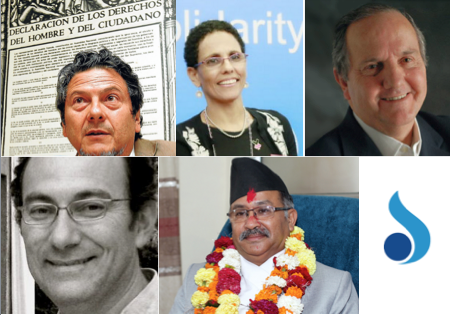
The following five new Commissioners have recently been elected: Mr Reed Brody (United States), Ms Roberta Clarke (Barbados/Canada), Professor Juan Mendez (Argentina), Mr Alejandro Salinas Rivera (Chile) and Justice Kalyan Shrestha (Nepal). It is an impressive list: Read the rest of this entry »
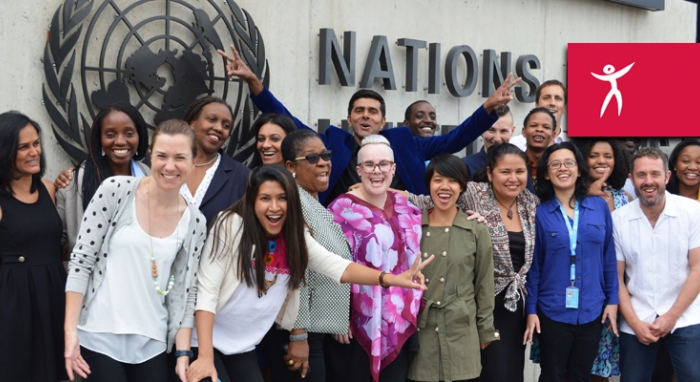
The International Service for Human Rights (ISHR) is calling for applications for its flagship Human Rights Defenders Advocacy Program in 2017 – the extensive training programme for human rights defenders. The training will take place in Geneva between 29 May and 9 June 2017 and provides defenders with opportunities to put their advocacy skills directly into action at the 35th session of the UN Human Rights Council.
ISHR’s Human Rights Defender Advocacy Programme (HRDAP) equips defenders with the knowledge and skills to make strategic use of the international human rights system. It also provides an opportunity for participants to directly engage in lobbying and advocacy activities at the UN level to effect change on the ground back home. As well as receiving training modules on all the UN human rights mechanisms from a range of experts, participants will also have the opportunity to build networks in Geneva and around the world, carry out lobbying of UN member States and UN staff, and learn from peers from a range of regions working on a range of human rights issues.
Participants will take part in:
A short online learning component, prior to face-to-face training, to enable you to consolidate your existing knowledge and develop your advocacy objectives;
Intensive training in Geneva during June, to coincide with the 35th session of the Human Rights Council. The training will focus on ways to effectively use international human rights mechanisms and to influence outcomes;
Specific advocacy at Human Rights Council sessions and other relevant meetings, with regular feedback and peer education to learn from the experiences, including expert input from leading human rights advocates.
This programme is directed at experienced human rights defenders in non governmental organisations and national human rights institutions, with existing advocacy experience at the national level and some prior knowledge of the international human rights system. If you are interested in applying for ISHR’s training programme, please read the call for applications to check that you comply with the requirements. The link to the online application form can be found under point 5 of the call for applications.
The call for applicants can be found here. For more information, write to hrdap2017@ishr.ch.
The Asian Forum for Human Rights and Development (FORUM-ASIA), together with the Martin Ennals Award and the Right Livelihood Award, will host a panel discussion on the 25th Anniversary of its founding and 10th Anniversary of its presence in Geneva, entitled ‘50 Years of the International Bill of Human Rights and 10 Years of the UN Human Rights Council – What does this mean for Asia?’, on 16 November 2016 at 18:30 at the Ivan Pictet Auditorium, Maison de la Paix, in Geneva, Switzerland.
Sam Zarifihas been appointed to serve as ICJ’s next Secretary General when the current Secretary-General retires next spring. Wilder Tayler will continue to work as SG until the end of March 2017 and Sam will begin in April 2017, although there will be some overlap to ensure a smooth transition in the Geneva based HQ.
Sam is a veteran of the human rights movement, with a most impressive array of experience and contacts, and has done phenomenal work as Director of the ICJ’s Asia and Pacific Regional Programme over the last four years. Prior to joining the ICJ Sam served as Amnesty International’s Director for Asia and the Pacific from 2008 to 2012. He was at Human Rights Watch from 2000, where he was Deputy Director of the Asia division. He was Senior Research Fellow at Erasmus University Rotterdam from 1997 to 2000, where he co-edited Liability of Multinational Corporations under International Law (Kluwer 2000) as well as several other publications on the subject. Sam was born and raised in Tehran, Iran and moved to the United States to complete his education. He received his Bachelor of Arts degree from Cornell University and his Juris Doctor from Cornell Law School in 1993. After practicing as a corporate litigator for several years, he obtained an LL.M in Public International Law from New York University School of Law in 1997.
“A moderate Uighur intellectual, who was jailed for life after opposing China’s draconian policies in its violence-stricken west, has been named the winner of a prestigious award known as the “human rights Nobel” in a move likely to infuriate Beijing. Ilham Tohti, who has been called ‘China’s Mandela’, was announced as the winner of the annual Martin Ennals Award for human rights defenders on Tuesday.” writes the Guardian after the AP news agency broke accindentally the embargo on the press release. Ilham Tohti‘s daughter will indeed receive tonight the Martin Ennals Award for Human Rights Defenders from the hands of the UN High Commisioner for Human Rights during a ceremony organized by the City of Geneva. [https://thoolen.wordpress.com/2016/10/08/martin-ennals-award-mea-ceremony-streaming-11-october-2016/]
Ilham Tohti is renowned Uyghur intellectual in China, who has worked for two decades to foster dialogue and understanding between Uyghurs and Han Chinese. He has rejected separatism and violence, and sought reconciliation based on a respect for Uyghur culture, which has been subject to religious, cultural and political repression in the Xinjiang Uyghur Autonomous Region.
In 1994 he began to write about problems and abuses in Xinjiang, which led to official surveillance. From 1999 to 2003 he was barred from teaching. Since then the authorities have also made it impossible for him to publish in normal venues. As a response, he turned to the Internet and in 2006 he established Uyghurbiz.net. Over the course of its existence, it has been shut down periodically, and people writing for it have been harassed.
In 2009, he was arrested for several weeks after posting information on Uyghurs who had been arrested, killed and “disappeared” during and after protests. In the following years he was periodically subjected to house arrest, and in 2013, while bound to take up a post as a visiting scholar at Indiana University, USA, he was detained at the airport and prevented from leaving China.
On January 15, 2014, Ilham Tohti was arrested on charges of separatism and sentenced to life imprisonment, after a two-day trial. Numerous statements were issued by Western governments and the European Union condemning his trial and sentence, and in early 2016 several hundred academics petitioned the Chinese leadership for his release.
Upon his nomination as a Finalist for the Martin Ennals Award earlier this year, his daughter stated: “My father Ilham Tohti has used only one weapon in his struggle for the basic rights of the Uyghurs of Xinjiang: Words; spoken, written, distributed, and posted. This is all he has ever had at his disposal, and all that he has ever needed. And this is what China found so threatening. A person like him doesn’t deserve to be in prison for even a day.”
But according to the Washington Post of today China’s Foreign Ministry spokesman, Geng Shuang, said his case had nothing to do with human rights. “In the classroom, Ilham Tohti openly made heroes of terrorist extremists that conducted violent terror attacks”
Martin Ennals Foundation Chair Dick Oosting stated “The real shame of this situation is that by eliminating the moderate voice of Ilham Tohti the Chinese Government is in fact laying the groundwork for the very extremism it says it wants to prevent”.
Two other finalists receive Martin Ennals Prizes”:
Razan Zaitouneh (Syria) Razan has dedicated her life to defending political prisoners, documenting violations, and helping others free themselves from oppression. She founded the Violations Documentation Center (VDC), which documents the death toll and ill-treatment in Syria’s prisons. She had started to cover all sides in the conflict when she was kidnapped, alongside with her husband and two colleagues, on 9 December 2013. Her whereabouts remain unknown.
Zone 9 Bloggers (Ethiopia) Kality prison in Ethiopia, has 8 zones and holds many journalists and political prisoners. 9 young activists called themselves ‘Zone 9’ as a symbol for Ethiopia as a whole. They document human rights abuses and shed light on the situation of political prisoners in Ethiopia. Six of its members were arrested and charged with terrorism. Although they have now been released, three are in exile while four of the six remaining in in Ethiopia are still facing charges and are banned from travel.
Ghana, Hungary, Ireland and Uruguay – in cooperation with ISHR – are organizing a panel discussion about current situations, existing practices and new ideas for better implementation of Human Rights Council resolutions on preventing and responding to reprisals.
Monday 26 September 2016, 1.00 – 3.00 pm – Room XXIII, Palais des Nations
Panelists
• Ms Peggy Hicks, Office of the High Commissioner for Human Rights
• Mr Alessio Bruni, Rapporteur on reprisals of the Committee Against Torture
• H.E. Ms Yvette Stevens, Permanent Representative of Sierra Leone to the UN
• Ms Maryam Al-Khawaja, Co-director of Gulf Center for Human Rights
• Mr Philip Lynch, Director of International Service for Human Rights
Moderator
• H.E. Ms Zsuzsanna Horváth, Permanent Representative of Hungary to the UN
Jury members of the Martin Ennals Award speak about Razan Zaitouneh, one of three Finalists for the Martin Ennals Award 2016 . Razan Zaitouneh is a prominent human rights lawyer, activist, and journalist in Syria. Razan has dedicated her life to defending political prisoners and documenting crimes against humanity, whether committed by the Government or rebel forces. This video was uploaded on 25 April 2016. The MEA ceremony will take place in Geneva on 11 October.



 Ilham Tohti is renowned Uyghur intellectual in China, who has worked for two decades to foster dialogue and understanding between Uyghurs and Han Chinese. He has rejected separatism and violence, and sought reconciliation based on a respect for Uyghur culture, which has been subject to religious, cultural and political repression in the Xinjiang Uyghur Autonomous Region.
 Razan Zaitouneh (Syria)
 Zone 9 Bloggers (Ethiopia) Kality prison in Ethiopia, has 8 zones and holds many journalists and political prisoners. 9 young activists called themselves ‘Zone 9’ as a symbol for Ethiopia as a whole. They document human rights abuses and shed light on the situation of political prisoners in Ethiopia. Six of its members were arrested and charged with terrorism. Although they have now been released, three are in exile while four of the six remaining in in Ethiopia are still facing charges and are banned from travel.

