On 30 March ProtectDefenders.eu, the European Union Human Rights Defenders mechanism implemented by international civil society, launched its Index of attacks and threats against Human Rights Defenders, featuring a monitoring of alerts concerning violations perpetrated against individuals promoting Human Rights around the globe. The Index of attacks and threats against Human Rights Defenders is available on: ProtectDefenders.eu website.
It could be a most useful tool as quite a few key information providers coöperate (but not AI, HRW?). However, to be really useful as a single stop for this kind of information it is paramount that the site is as complete as possible (otherwise one would still have to go back to the websites of the individual organizations cooperating in the project). This is apparently not yet the case (or maybe definitions still differ from NGO to NGO). Front Linee.g. in its 2017 report (covering 2016) states that 281 HRDs were killed around the world [https://hrdmemorial.org/front-line-defenders-017-annual-report-highlights-killing-of-281-hrds-in-2016/], while a search on the new site shows only 39 killed in 2016 [https://protectdefenders.eu/en/stats.php?yearFilter=2016®ionFilter=&countryFilter=#mf]. That is 242 killings missing (without checking the annual reports of other cooperating partners) ! This issue is important as the announcement claims that the site wants to become “a source of reliable and updated information that should allow the identification of worrying trends and encourage the coordination of adequate responses by decision-makers and authorities to counter the violations faced by defenders”. Read the rest of this entry »
In 2013 I reported on human rights defender, Lena Hendry, in Malaysia who was charged with showing the film “No Fire Zone: The Killing Fields of Sri Lanka”, a film on human rights violations in Sri Lanka. [see: https://humanrightsdefenders.blog/2013/09/18/human-rights-worker-in-malaysia-to-appear-in-court-tomorrow-for-screening-the-film-no-fire-zone/#more-3469]. Now Front Line reports on 21 February 2017, that the human rights defender was convicted by the Magistrate’s Court in Kuala Lumpur [https://www.frontlinedefenders.org/en/profile/lena-hendry]. On 21 February 2017, Lena Hendry was found guilty by a magistrate’s court in Kuala Lumpur for screening “No Fire Zone: The Killing Fields of Sri Lanka” under Section 6 of the Film Censorship Act 2002. She is currently on bail and intends to appeal the court’s decision. Her sentencing is scheduled for 22 March 2017.
Lena Hendry is the former Programme Coordinator for Pusat KOMAS, a human rights organisation established in 1993 in Malaysia. This organisation works to empower indigenous peoples, poor people in urban areas, workers, and civil society organisations through the use of popular media. [On 10 March 2016, The Magistrates’ Court of Kuala Lumpur acquitted Lena Hendry of the charges but on 21 September 2016, the High Court in Kuala Lumpur reversed Lena Hendry’s aquittal following an appeal issued by the prosecution.
Front Line Defenders condemns the conviction of Lena Hendry, as it believes that the charges brought against the human rights defender are directly linked to her legitimate and peaceful work in the defence of human rights, in particular in exposing human rights violations in Sri Lanka. Front Line Defenders urges the Malaysian government to repeal provisions of the Film Censorship Act 2002 that allow unnecessary and arbitrary government interference in the showing of films in Malaysia.
The New York based Human Rights Foundation has announced the initial speaker lineup for its 2017 Oslo Freedom Forum (OFF), taking place 22-24 May 2017 in Oslo. It includes quite a few well-known human rights defenders [the names are linked to short CVs]: Read the rest of this entry »
On 30 January 2017 the United Nations Special Rapporteur on the situation of human rights in Myanmar,Yanghee Lee, joined her voice to the many that have strongly condemned the brutal murder of Ko Ni, a prominent Muslim lawyer and constitutional law expert, who was also the legal adviser to the National League for Democracy (NLD). Mr. Ko Ni was shot and killed outside Yangon Airport on Sunday 29 January after returning from Indonesia where he had been part of a Government-led delegation attending an interfaith study tour. A suspect has been arrested.
“This appears to be another shocking example of a reprisal against those speaking out on behalf of the rights of others,” the expert said, recalling her recent end of visit statement, where she highlighted her concern at the increasing risks faced by human rights defenders, lawyers, journalists and others working on sensitive issues. [see below] “I am shocked to the core by the senseless killing of a highly respected and knowledgeable individual, whom I have met during all of my visits to the country, including most recently just over a week ago,” Ms. Lee said. She expressed her sincerest condolences to his family, and the family of taxi driver Nay Win killed in the same incident after he bravely attempted to apprehend the gunman. The Special Rapporteur underlined that, “U Ko Ni’s passing is a tremendous loss to human rights defenders and for Myanmar.”
Also Front Line Defenders deplores in strong term the killing of human rights defender U Ko Ni. His profile [https://www.frontlinedefenders.org/en/profile/u-ko-ni] describes him as human rights defender and human rights lawyer. He was the legal advisor for the National League for Democracy. He participated in the pro-democracy protests known as the 88 Uprising and was a former political prisoner. Upon release, he became actively involved in the interfaith peace movement and advocated for the rights of Muslim citizens in Myanmar. He strongly opposed the country’s race and religion protection bill which was introduced in August 2015 and which restricted interfaith marriage and caused a rise in anti-Muslim sentiment. In 2016, he helped found the Myanmar Muslim Lawyers Association. He also wrote six books on good governance and various human rights issues. U Ko Ni’s daughter reported that the human rights defender often received threats for speaking out against the continuing influence of the military on politics.
As recently as 25 January 2017 the Special Rapporteur had expressed her fears of government retaliation following her visit to Myanmar. She expressed concern that people may face reprisals for meeting with her. Lee recently concluded an official visit in the area during which individuals shared accounts of human rights abuses by the government. Some of the statements came from those in a hard labor camp as well as survivors of a village burning. Lee fears these individuals who met with her will face reprisals from those who believe the accounts given are contrary to the government. “I am deeply concerned about those with whom I met and spoke, those critical of the Government, those defending and advocating for the rights of others, and those who expressed their thoughts and opinions which did not conform to the narrative of those in the position of power.” (Lee will submit her report on Myanmar in March to the UN Human Rights Council).
After a short break, this blog resumes its job of selecting and summarizing events related to Human Rights Defenders. 2016 was a horrible year for HRDs and the launch of the annual report of Front Line Defendersconfirms this by reporting that “more than 1000 human rights defenders were killed, harassed, detained, or subjected to smear campaigns and other violations in 2016″.
According to the report, 281 human rights defenders were murdered in 25 countries, 49 percent of whom were defending land, indigenous and environmental rights. Front Line Defenders found that in the vast majority of cases, killings were preceded by warnings, death threats and intimidation which, when reported to police, were routinely ignored. In addition to killings, over half of the cases reported by Front Line Defenders in 2016 concerned criminalisation, a tactic which the organisation calls “the first choice of governments to silence defenders and to dissuade others”.
Republished as some readers could not properly see the post: This blog has a special interest in human rights awards, so I noted with dismay that according to some obscure sources President Duterte of the Philippines had been given an international human rights award. The announcement looked like this:
Philippine President Rodrigo Duterte has been named as one of the honorees in the annual Human Rights Award by the International Human Rights Committee.”
Unable to find any confirmation elsewhere I wrote to the American Bar Association which has an award and an ‘International Human Rights Committee’. No reply received yet but in the meantime I saw yesterday the “Fake news alert!” published on December 14, 2016 in Busted. And indeed it seems that fake news has also entered the human rights awards arena:
Various Facebook Duterte supporter groups such as “Duterte Warriors”, “Duterte News Global”, and “Duterte Media” have been sharing news of President Duterte being awarded by the International Human Rights Committee. According to the news article sourced from Trending News PH, President Rodrigo Duterte was named as one of the honorees in the annual Human Rights Award held by the International Human Rights Committee. This “committee” was said to have bestowed this award to Duterte for his “exemplary service in the promotion of human rights.” However, the said article is not linked to any other source and no major news outlets have reported on the headline. Furthermore, upon closer inspection, there are numerous inconsistencies on the dates the groups posted the article. The article itself was posted 4 months ago while the groups posted on September and October, with the “Duterte Warriors” group sharing the post twice, once in August and another in September. What was the point of posting the same news article more than once and on different months?
Moreover, the photo used in the article was originally a photo taken during LPU’s Quality Awards Convocation wherein Duterte, still a mayor that time, was awarded as the Most Outstanding Alumnus of Lyceum of the Philippines University in 2015. [http://newsinfo.inquirer.net/677750/duterte-is-lpus-outstanding-alumnus]
Even if it would turn out that some biased or incompetent committee did bestow a minor award, it does not change the fact that Duterte has issues with human rights defenders for the way he is conducting his war on drugs. In fact, recently, Human Rights Watch and other NGOs demanded that Duterte should renounce his earlier statement that seemed to threaten the lawyers of alleged drug dealers. “Duterte’s threats against lawyers and human rights defenders constitute a dangerous extension of his abusive ‘war on drugs’ that has already resulted in more than 5,000 killings,” HRW deputy Asia director Phelim Kine said. See also: https://humanrightsdefenders.blog/2016/11/02/duterte-is-wrong-human-rights-defenders-are-beautiful/
See also Front Line Defenders on 1 December: “On 28 November 2016, President Rodrigo Duterte threatened (<http://newsinfo.inquirer.net/848933/duterte-threatens-to-kill-human-rights-activists-if-drug-problem-worsens)> to kill human rights defenders in the Philippines in his speech in Malacañang. “The human rights (defenders) said I ordered the killings. I told them, ‘OK Let’s stop. We’ll let them (drug users) multiply so that when it’s harvest time, more people will die, I will include you because you are the reason why their numbers swell,” referring to human rights defenders.`
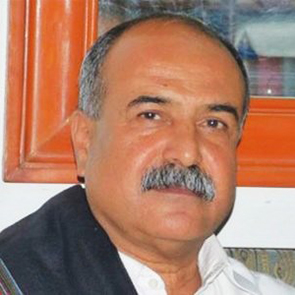
Re-appearances after a time lapse of 4 months are rare. So this case in Pakistan deserves a mention: Abdul Wahid Balochis a human rights defender who has called for justice for the Baloch community through the organisation of campaigns, protests and public condemnation of a number of high profile cases. Human rights defenders that have demanded justice for state violations against the Baloch community have been regarded as being anti-state by the Pakistani authorities. On the morning of 5 December 2015, Abdul Wahid Baloch returned to his house in Karachi, roughly four months after his disappearance on 26 July 2016. Abdul Wahid Baloch thanked human rights groups, media and individuals who campaigned for his release but refused to comment on anything involving his disappearance.
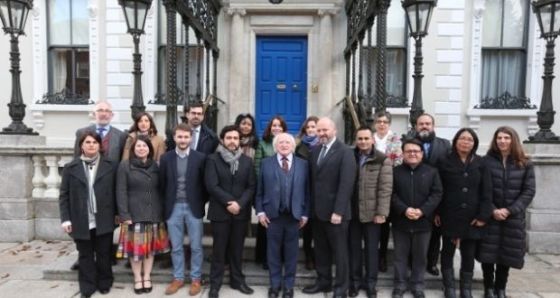
Irish President Michael D Higgins with international activists and NGO representatives in Dublin at the launch of the Human Rights Defenders Memorial. Photograph: Conor McCabe
Rachel Flaherty reports in the Irish Times of 24 November on the launch of an on-line Memorial o honour human rights defenders who have been killed The online memorial would be a tool to track investigations and advance the struggle for justice for human rights defenders. The Human Rights Defenders Memorial (HRD Memorial) has been set up by Dublin-based Front Line Defenders as an online international and interactive database. It will detail all the human rights defenders who have been murdered around the world since 1998. The Front Line Defenders organisation has estimated 3,500 have been murdered since then.
A coalition of 20 national and international human rights organisations jointly coordinated the project. Contributors included human rights groups from Colombia, Honduras and the Philippines, which Front Line Defenders said are ranked among three of the deadliest countries in the world for human rights defenders. The organisation said other countries included among the worst in terms of killing and physical attacks against human rights defenders included North Korea, China, Russia, Egypt, Saudi Arabia and Zimbabwe.
Andrew Anderson, executive director of Front Line Defenders, said the memorial sent a message the human rights community was stronger than any one person. “It will not be deterred, and its leaders will not be forgotten,” he said. “This is not random violence. This is the calculated elimination of those who speak out to defend the rights of the most vulnerable. Autocrats and powerful economic interests think that if they kill an activist, they kill a movement. The goal of the HRD Memorial is to prove them wrong.”
On 30 November 2016, Khurram Parvez was released from jail but even this was not done without wrangling by the police as reported by Front Line on 30 November: On 25 November 2016, the High Court of Jammu and Kashmir in Srinagar quashed the order of detention under the Public Safety Act (PSA) and ordered the immediate release of Khuram Parvez. Justice Muzaffar Hussain Attar in his order said Khuram Parvez’s detention was “illegal”. However, in the judge’s order there was a small clerical error, so the police at Jammu’s Kot Balwal jail decided to keep Khurram Parvez in detention until a corrigendum could be issued. On 29 November 2016 at 3 pm the Jammu’s Kot Balwal jail received the corrigendum, but did not release Khurram Parvez. Instead, at around 5 pm of the same day, he was taken to the joint interrogation centre at Meeran Sahib, Jammu. No reasons were provided for his continued detention to the human rights defender or his legal counsel. Khurram Parvez was released on the morning of 30 November.
[Khurram Parvez is the Chairperson of the Asian Federation Against Involuntary Disappearances (AFAD), a collective of 13 non-governmental organizations from ten Asian countries, that campaign on the issue of enforced disappearances. He is also the Programme Coordinator of the Jammu Kashmir Coalition of Civil Society (JKCCS), which is a coalition of various campaign, research and advocacy organisations based in Srinagar, Jammu and Kashmir, which monitor and investigate human right abuses. See: https://www.frontlinedefenders.org/en/profile/khurram-parvez]