Posts Tagged ‘EU’

Call for nominations for the Daphne Caruana Galizia Prize 2024

May 16, 2024

On 4 May 2024, during World Press Freedom Day, the European Parliament launched a call for the submission of entries for the Daphne Caruana Galizia Prize 2024. The award is for all journalists who work in newspapers registered in one of the 27 member countries. The purpose of the award is to recognize outstanding work that promotes and defends the fundamental principles and values of the European Union, such as human dignity, freedom, democracy, equality, rule of law, and human rights. [see: https://www.trueheroesfilms.org/thedigest/awards/ea7f958d-a957-4495-9ab4-9550741a8a58]

An independent jury, comprising representatives of the press and civil society from EU countries and members of leading European journalists’ associations, will award the 20,000 euro  prize. The award ceremony will be around October 16, the anniversary of Daphne Caruana Galizia’s murder. Journalists have until 12 on July 31 to submit their entries.

The award aims at remembering Daphne Caruana Galizia, a Maltese journalist active against corruption, who was killed in 2017 by an explosive device planted in her car. The president of the European Parliament, Roberta Metsola, in presenting the 2024 edition, was keen to remember Daphne Caruana Galizia: “She was murdered, but her spirit endures in the work of journalists who, like her, defend truth, pluralism, and justice. This prize is for them.”

ProtectDefenders.eu publishes annual report “REACHING FURTHER”

April 30, 2024

04224-(1920x1080px)-Annual-Report-PD-v01-Reaching-Further

On 25 April 2024, ProtectDefenders.eu, the European Union (EU) Human Rights Defenders Mechanism, presented its comprehensive annual report entitled “REACHING FURTHER,” covering the period November 2022 – October 2023. This report illustrates the support provided and efforts made by ProtectDefenders.eu to support human rights defenders (HRDs) around the world, and especially to reach those who are the most at risk.

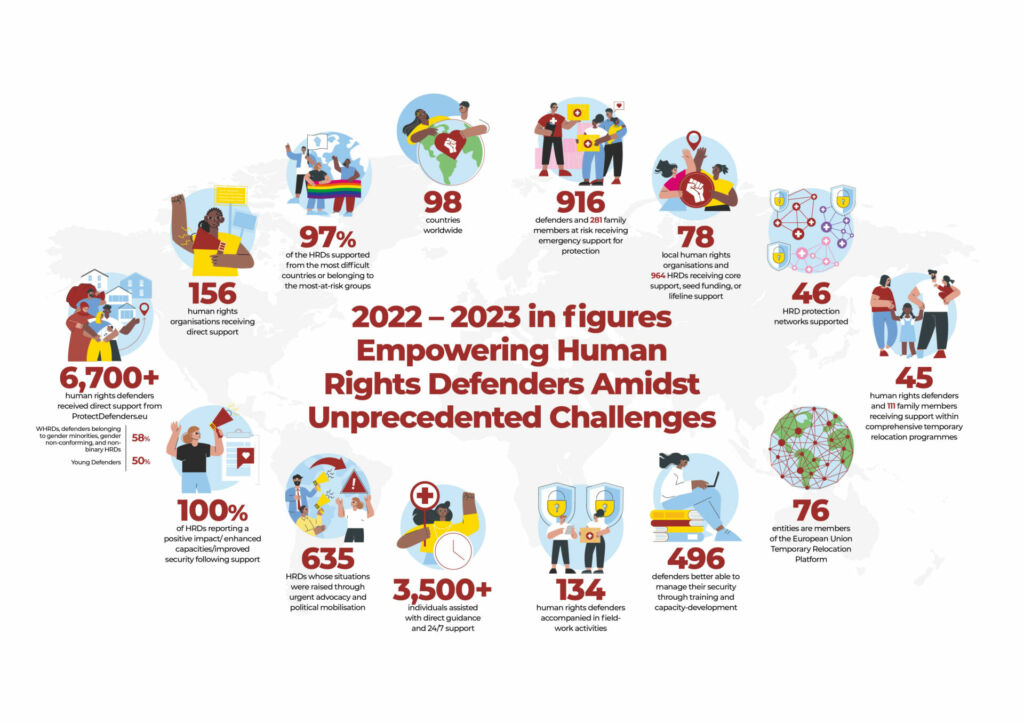
In November 2022, ProtectDefenders.eu entered the third phase of its implementation, marking a milestone in its commitment to safeguarding human rights defenders worldwide. Throughout the first year of this new phase, the renewed and consolidated EU HRD Mechanism has provided direct protection, support, and empowerment to over 6,700 at-risk HRDs, with a particular focus on those facing the highest risks. Notably, 50% of beneficiaries were young defenders, and 58% identified as women human rights defenders (WHRDs), trans-male, trans-female, genderqueer, or gender non-conforming individuals.

Despite facing extraordinary challenges amidst protracted crises globally, ProtectDefenders.eu has demonstrated remarkable effectiveness, efficiency, and adaptability in addressing the pressing needs of HRDs. The mechanism has extended support not only to individual defenders but also to their families, communities, and organizations. This comprehensive support, including financial aid, technical assistance, and guidance, has been delivered through collaboration among consortium partners, showcasing flexibility, creativity, and responsiveness in the face of evolving challenges.

ProtectDefenders.eu has actively responded to increased requests for protection support amid protracted crises in various regions, including Belarus, Myanmar, Afghanistan, Nicaragua, Sudan, Tanzania, and beyond. Emergency protection measures have been consistently provided, alongside investments in the capacity and resilience of human rights organisations and communities. The international temporary relocation system supported by ProtectDefenders.eu, including through the Shelter Initiatives program, further exemplifies the mechanism’s commitment to HRD safety.

Through reactive and preventative advocacy efforts, ProtectDefenders.eu has achieved multiple successes globally, pioneering a collective advocacy approach on shared concerns such as international funding for HRDs and EU visas. The enhanced coordination among consortium partners has facilitated continuous improvements and innovation, addressing challenges faced by HRDs and organizations at risk more effectively.

Moreover, significant progress has been made in enhancing outreach efforts to new groups, including young defenders and those with disabilities. Increased collaboration with local actors, context-specific support, and prioritized coordination have extended the impact of ProtectDefenders.eu widely, with 93% of supported organizations not affiliated with consortium partners.

Looking ahead, ProtectDefenders.eu will remain particularly committed to fulfilling its protection mandate by addressing comprehensively the unique vulnerabilities and barriers faced by HRDs with disabilities. The EU HRD mechanism will actively engage in finding innovative solutions to ensure their protection, inclusion, and access to resources.

Read the full ProtectDefenders.eu Report: REACHING FURTHER on our website.

Civil society view of the 55th session of the UN Human Rights Council

April 12, 2024

At the 55th Human Rights Council session, 22 civil society organisations share reflections on key outcomes and highlight gaps in addressing crucial issues and situations [see: https://humanrightsdefenders.blog/2024/02/26/human-rights-defenders-issues-at-the-55th-session-of-the-human-rights-council/]:

The failure of States to pay their membership dues to the United Nations in full and in time, and the practice of conditioning funding on unilateral political goals is causing a financial liquidity crisis for the organisation, the impacts of which are felt by victims and survivors of human rights violations and abuses. … Without the resources needed, the outcomes of this session can’t be implemented. The credibility of HRC is at stake. 

We welcome the adoption of three resolutions calling for the implementation of effective accountability measures to ensure justice for atrocity crimes committed in the context of Israel‘s decades long colonial apartheid imposed over the Palestinian people, and for the realisation of the Palestinian people’s right to self-determination. Special Procedures expressed their profound concern about “the support of certain governments for Israel’s strategy of warfare against the besieged population of Gaza, and the failure of the international system to mobilise to prevent genocide” and called on States to implement an “arms embargo on Israel, heightened by the International Court of Justice’s ruling […] that there is a plausible risk of genocide in Gaza […].”   This session, the Special Rapporteur on the OPT concluded that the actions of Israel in Gaza meet the legal qualifications of genocide. 

We deplore the double standards in applying international law and the failure of certain States to vote in favor of ending impunity. This undermines the integrity of the UN human rights framework, the legitimacy of this institution, and the credibility of those States. From Palestine, to Ukraine, to Myanmar, to Sudan, to Sri Lanka, resolving grave human rights violations requires States to address root causes, applying human rights norms in a principled and consistent way. The Council has a prevention mandate and UN Member States have a legal and moral duty to prevent and ensure accountability and non-recurrence for atrocity crimes, wherever they occur.

We want to highlight and specifically welcome the adoption of the first ever resolution on combating discrimination, violence and harmful practices intersex persons. The resolution builds on growing support in the Council on this topic and responds to several calls by the global coalition of intersex-led organisations. The resolution takes important steps in recognising that discrimination, violence and harmful practices based on innate variations of sex characteristics, such as medically unnecessary interventions, takes place in all regions of the world. We welcome that the resolution calls for States to take measures to protect the human rights of this population and calls for an OHCHR report and a panel discussion to address challenges and discuss good practices in protecting the human rights of intersex persons.

We welcome the renewal of the mandate of the Independent Expert on the enjoyment of human rights by persons with albinism. As attested by human rights defenders with albinism, the mandate played an invaluable role by shedding light on human rights violations against persons with albinism through ground breaking research, country visits, and human rights training, and ensuring that defenders with albinism are consulted and take part in the decision-making. The organisations also welcomed the inclusion of language reflecting the important role played by “organizations of persons with albinism and their families”, and the reference to the role of States in collaboration with the World Health Organization, “to take effective measures to address the health-related effects of climate change on persons with albinism with a view to realizing their right to the enjoyment of the highest attainable standard of physical and mental health, particularly regarding the alarming incidence of skin cancer in this population, and to implement the recommendations of the report of the Independent Expert in this regard”.

We welcome the adoption of the resolution on the renewal of the mandate of the Special Rapporteur on the human right to a clean, healthy and sustainable environment. We also welcome the update of the title of the mandate acknowledging the recognition of this right by the Human Rights Council in its resolution 48/13 on 8 October 2021 and the General Assembly resolution 76/300 on 28 July 2022. We also welcome the inclusion of gender-specific language in the text, and we call on the Special Rapporteur to devote a careful attention to the protection of environmental human rights defenders for their strong contribution to the realisation of the right to a clean, healthy, and sustainable environment, as called for by several States. We also welcome that the Council appointed for the first time a woman from the global south to fulfill this mandate, and we welcome the nomination of another woman as Special Rapporteur on the promotion and protection of human rights in the context of climate change. 

We welcome the resolution on countering disinformation, which addresses new issues whilst once again rejecting censorship and reaffirming the ‘essential role’ that the right to freedom of expression plays in countering disinformation. We welcome the specific focus on girls – besides women – as well as risks associated with artificial intelligence, gender-based violence, and electoral processes. We urge States to follow the approach of the resolution and to combat disinformation through holistic, positive measures, including by ensuring a diverse, free and independent media environment, protecting journalists and media workers, and implementing comprehensive right to information laws. Importantly, we also urge States to ensure that they do not conduct their own disinformation campaigns. At the same time, social media companies have an essential role to play and should take heed of the resolution by reforming their business models which allow disinformation to flourish on their platforms. The resolution also mandates the Advisory Committee to produce a new report on disinformation, and it is absolutely essential that this report mirrors and reinforces existing standards on this topic, especially the various reports of the Special Rapporteur on freedom of opinion and expression.

Whilst we welcome the technical renewal of the resolution on freedom of religion or belief, we regret that the parallel resolution on combating intolerance (widely known by its original name Resolution 16/18) was not tabled at the session. Since 2011, these duel resolutions have been renewed each year, representing a consensual and universal framework to address the root causes of hate based on religion or belief in law, policy, and practice. We call on the OIC to once again renew Resolution 16/18 in a future session, while ensuring no substantive changes are made to this consensual framework. We also urge all States to reaffirm their commitment to Resolution 16/18 and the Rabat Plan of Action and adopt comprehensive and evidence-based national implementation plans, with the full and effective participation of diverse stakeholders.

We welcome the adoption of the resolution on prevention of genocide and its focus on impunity, risks and early warnings, as well as the paragraph reaffirming that starvation of civilians as a method to combat is prohibited under international humanitarian law; however, we regret that the resolution fails to adequately reflect and address serious concerns relating to current political contexts and related risks of genocide. 

We welcome the adoption of the resolution on the rights of the child: realising the rights of the child and inclusive social protection, strengthening the implementation of child rights-compliant inclusive social protection systems that benefit all children. We also welcome the addition of a new section on child rights mainstreaming, enhancing the capacity of OHCHR to advance child rights mainstreaming, particularly in areas such as meaningful and ethical child participation and child safeguarding.  We remain concerned by persisted attempts to weaken the text, especially to shift the focus away from children as individual right-holders, to curtail child participation and remove the inclusion of a gender perspective.

We welcome the adoption of the resolution on torture and other cruel, inhuman or degrading treatment or punishment which addresses effective national legislative, administrative, judicial or other measures to prevent acts of torture. We welcome the new paragraph urging States concerned to comply with binding orders of the International Court of Justice related to their obligations under the Convention Against Torture.

We welcome the adoption of a new resolution on the human rights situation in Belarus. The Belarusian authorities continue their widespread and systematic politically-motivated repression, targeting not only dissent inside the country, but also Belarusians outside the country who were forced to flee for fear of persecution. Today, almost 1,500 prisoners jailed following politically-motivated charges in Belarus face discriminatory treatment, severe restriction of their rights, and ill-treatment including torture. The resolution rightly creates a new standalone independent investigative mechanism, that will inherit the work of the OHCHR Examination, to collect and preserve evidence of potential international crimes beyond the 2020 elections period, with a view to advancing accountability. It also ensures the renewal of the mandate of the Special Rapporteur who remains an essential ‘lifeline’ to Belarusian civil society.

We welcome the resolution on technical assistance and capacity building in regard to the human rights situation in Haiti and emphasis on the role civil society plays in the promotion and protection of human rights and the importance of creating and maintaining an enabling environment in which civil society can operate independently and free from insecurity. We similarly welcome the call on the Haitian authorities to step up their efforts to support national human rights institutions and to pursue an inclusive dialogue between all Haitian actors concerned in order to find a lasting solution to the multidimensional crisis, which severely impacts civil society. We welcome the renewal of the mandate of the designated expert and reference to women and children in regard to the monitoring of human rights situation and abuses developments, as well as encouragement of progress on the question of the establishment of an office of the Office of the High Commissioner in Haiti. We nonetheless regret that the resolution does not address the multifaceted challenges civil society faces amidst escalating violence, fails to further address the link between the circulation of firearms and the human rights violations and abuses, and does not identify concrete avenues for the protection of civilians and solidarity action to ensure the safety, dignity and rights of civilians are upheld.

We welcome the adoption of the resolution on Iran, renewing the mandate of the Special Rapporteur on human rights in Iran and extending for another year the mandate of the Independent International Fact-Finding Mission on Iran. The continuation of these two distinct and complementary mandates is essential for the Council to fulfill its mandate of promotion and protection of human rights in Iran. However, given the severity of the human rights crisis in the country, we regret that this important resolution remains purely procedural and fails to reflect the dire situation of human rights in Iran, including the sharp spike in executions, often following grossly unfair trials. It also fails to address the increased levels of police and judicial harassment against women and girls appearing in public without compulsory headscarves, human rights defenders, lawyers, journalists and families of victims seeking truth and justice, and the continued pervasive discrimination and violence faced by women and girls, LGBTI+ persons and persons belonging to ethnic and religious minorities in the country.  

We welcome the adoption by consensus of the resolution on Myanmar, which is a clear indication of the global concern for the deepening human rights and humanitarian crisis in the country as a result of the military’s over three-year long brutal war against the people resisting its attempted coup. We further welcome the Council’s unreserved support for Myanmar peoples’ aspirations for human rights, democracy, and justice as well as the recognition of serious human rights implications of the continuing sale of arms and jet fuel to Myanmar.

We welcome the resolution on the situation of human rights in Ukraine stemming from the Russian aggression. The latest report of the Independent International Commission of Inquiry (COI) reveals disturbing evidence of war crimes, including civilian targeting, torture, sexual violence, and the unlawful transfer of children. These findings underscore the conflict’s brutality, particularly highlighted by the siege of Mariupol, where indiscriminate attacks led to massive civilian casualties and infrastructure destruction. The report also details the widespread and systematic torture and sexual violence against both civilians and prisoners of war. Moreover, the illegal deportation of children emerges as a significant issue, as part of a broader strategy of terror and cultural erasure. The COI’s mandate extension is crucial for ongoing investigations and ensuring justice for victims. 

By adopting a resolution entitled ‘advancing human rights in South Sudan,’ the Council ensured that international scrutiny of South Sudan’s human rights situation will cover the country’s first-ever national elections, which are set to take place in De­cember 2024. With this resolution, the UN’s top human rights body extended the mandate of its Com­mis­sion on Human Rights in South Sudan.

We welcome the resolution on the human rights situation in Syria and the extension of the mandate of the Independent International Commission of Inquiry (COI), which will continue to report on violations from all sides of the conflict in an impartial and victim-centered manner. Syria continues to commit systematic and widespread attacks against civilians, in detention centers through torture, arbitrary detention and enforced disappearance and through indiscriminate attacks against the population in Idlib. We welcome that the resolution supports the mandate of the Independent Institution of the Missing People and calls for compliance with the recent order on Provisional Measures by the ICJ – both initiatives can play a significant role in fulfilling victims’ rights to truth and justice and should receive support by all UN Member States. In a context of ongoing normalisation, the CoI’s mandate to investigate and report on human rights abuses occurring in Syria is of paramount importance.

We continue to deplore this Council’s exceptionalism towards serious human rights violations committed by the Chinese government. At a time when double-standards are enabling ongoing atrocity crimes to be committed in Palestine, sustained failure by Council Members, in particular OIC countries, to promote accountability for crimes against humanity against Uyghurs and Muslim peoples in China severely undermines the Council’s integrity, and its ability to prevent and put an end to atrocity crimes globally. Findings by the OHCHR, the UN Treaty Bodies, the ILO and over 100 letters by UN Special Procedures since 2018 have provided overwhelming evidence pointing to systematic and widespread human rights violations across the People’s Republic of China. We reiterate our pressing call for all Council Members to support the adoption of a resolution establishing a UN mandate to monitor and report on the human rights situation in China, as repeatedly urged by UN Special Procedures. We further echo Special Procedures’ call for prompt and impartial investigations into the unlawful death of Cao Shunli, and all cases of reprisals for cooperation with the UN.

We regret the Council’s silence on the situation in India despite the clear and compounding early warning signs of further deterioration that necessitate preventive action by the Council based on the objective criteria. The latest of these early warning signals include the recent notification of rules to implement the highly discriminatory Citizenship Amendment Act by the Bharatiya Janata Party-led government just weeks before the election, along with recent intercommunal violence in Manipur and ongoing violence against Muslims in various parts of India amid increasing restrictions on civic space, criminalisation of dissent and erosion of the rule of law with political interference.

We further regret that this Council is increasingly failing to protect victims of human rights violations throughout the Middle East and North Africa, including in Algeria, Bahrain, Egypt, Libya, Saudi Arabia, and Yemen. The people of Yemen and Libya continue to endure massive ‘man-made’ humanitarian catastrophes caused in large part by ongoing impunity for war crimes, crimes against humanity and other grave violations of international law. In Algeria, Egypt, Bahrain, Saudi Arabia and in other MENA countries, citizens are routinely subjected to brutal, wide-spread human rights violations intended to silence dissent, eradicate independent civil society and quash democratic social movements. Countless citizens from the MENA region continue to hope and strive for a more dignified life – often at the cost of their own lives and freedom. We call on this Council and UN member States to rise above narrow political agendas and begin to take steps to address the increasing selectivity that frequently characterises this Council’s approach to human rights protection and promotion. 

We regret that once more, civil society representatives faced numerous obstacles to accessing the Palais and engaging in discussions, both in person and remotely, during this session. The UN human rights system in Geneva has always and continues to rely on the smooth and unhindered access of civil society to carry out its mandate. We remind UN Member States, as well as UNOG, that the Council’s mandate, as set out in HRC Res 5/1, requires that arrangements be made, and practices observed to ensure ‘the most effective contribution’ of NGOs. Undermining civil society access and engagement not only undermines the capacities and effectiveness of civil society but also of the UN itself.

Signatories:

  1. All Human Rights for All in Iran
  2. Asian Forum for Human Rights and Development (FORUM-ASIA)
  3. Association Arc pour la defense des droits de l’homme et des revendication democratique/culturelles du peuple Azerbaidjanais Iran -”ArcDH”
  4. Balochistan Human Rights Group
  5. Cairo Institute for Human Rights Studies
  6. Child Rights Connect (CRCnt)
  7. CIVICUS
  8. Commonwealth Human Rights Initiative (CHRI)
  9. Egyptian initiative for Personal Rights (EIPR)
  10. Ensemble contre la Peine de Mort
  11. Franciscans International
  12. Gulf Center for Human Rights
  13. Impact Iran
  14. International Bar Association’s Human Rights Institute (IBAHRI)
  15. International Federation for Human Rights (FIDH)
  16. International Lesbian and Gay Association (ILGA)
  17. International Service for Human Rights (ISHR)
  18. Kurdistan Human Rights Network
  19. Kurdpa Human Rights Organization
  20. PEN America
  21. The Syrian Legal Development Programme (SLDP)
  22. United 4 Iran

see also: https://www.eeas.europa.eu/delegations/un-geneva/eu-human-rights-council_en

https://www.fidh.org/en/international-advocacy/united-nations/human-rights-council/55th-human-rights-council-session-israel-palestine-belarus-iran
‘Foreign Agent’ Laws Spread, now also Georgia ?

April 8, 2024

Iskra Kirova, Advocacy Director, Europe and Central Asia Division of HRW, wrote on 4 April 2024: ‘Foreign Agent’ Laws Spread as EU Dithers to Support Civil Society

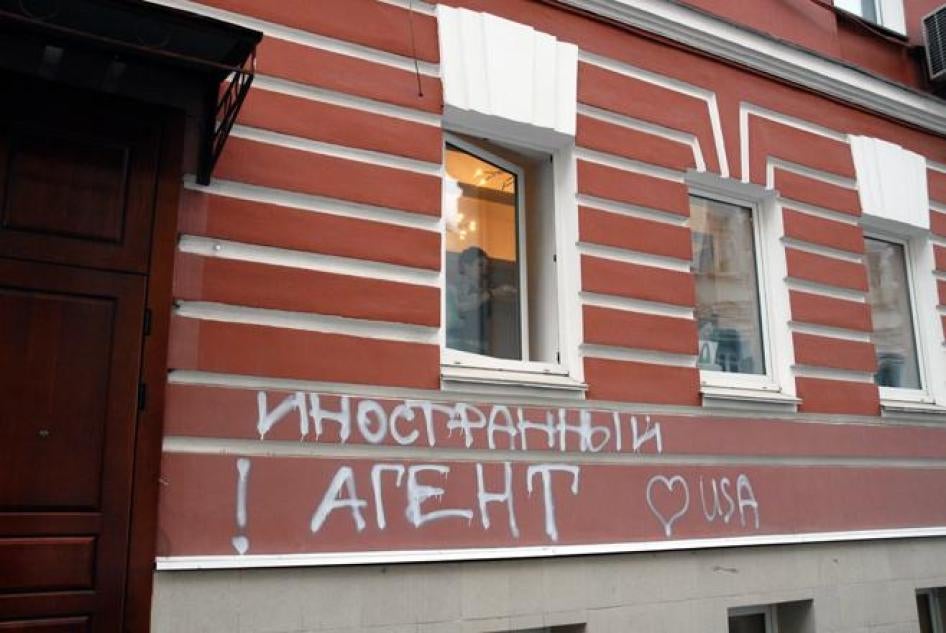
On the night before the infamous “foreign agents” law came into force back in 2012, unknown individuals sprayed graffiti reading, “Foreign Agent! ♥ USA” on the buildings hosting the offices of three prominent NGOs in Moscow, including Memorial. 
On the night before the infamous “foreign agents” law came into force back in 2012, unknown individuals sprayed graffiti reading, “Foreign Agent! ♥ USA” on the buildings hosting the offices of three prominent NGOs in Moscow, including Memorial.  © 2012 Yulia Klimova/Memorial

Georgia’s ruling party plans to reintroduce highly controversial Russia-style “foreign agent” legislation aimed at incapacitating civil society and independent media. If adopted, the laws, which were withdrawn last year in the face of massive protests, would require foreign-funded nongovernmental organizations and media to register as “agents of foreign influence”. That would make them subject to additional scrutiny and sanctions, including administrative penalties up to 25,000 GEL (about 8,600 Euro). Authorities claim the laws promote “transparency”, but their statements make it clear the laws will be used to stigmatize and punish critical voices.

Georgia was granted EU candidate status in December 2023 on the understanding it would improve conditions for civil society. This move risks derailing its EU integration even if the EU has until now been willing to move the country forward in the accession process despite limited progress on EU reform priorities. Georgia’s defiance of the EU on its civil society commitments isn’t so surprising when seen in the regional context. See also: https://humanrightsdefenders.blog/2024/03/24/kyrgyzstan-on-its-way-to-emulate-russia-with-a-draft-law-on-foreign-representatives-agents/

The day before Georgia’s announcement, Kyrgyzstan’s president signed an abusive “foreign representatives” law. Copied almost entirely from the Russian equivalent, the law would apply the stigmatizing designation of “foreign representative” to any nongovernmental organization that receives foreign funding and engages in vaguely defined “political activity”. The bill had been widely criticized after its initial submission in November 2022, including in a urgency resolution by the European Parliament.

The EU had ample opportunity to press the authorities to reject this bill. Kyrgyzstan benefits from privileged access to the EU internal market tied to respect for international human rights conventions: conventions this law clearly contravenes. The country is poised to sign an enhanced partnership agreement with the EU that centers democracy and fundamental rights. The EU has been silent on whether these deals would be imperiled by the bill’s adoption, despite the fact the European Commission’s own assessment highlighted Kyrgyzstan’s dire environment for civil society and the country’s breach of its obligations.

The latest spate of curbs on civil society comes in the wake of the European Commission’s December 2023 legislative proposal for an EU Directive on “transparency of interest representation” that would create a register of organizations which receive foreign funding. European civil society vehemently opposes the proposal because it risks shrinking space for independent organizations at home and diminishing the EU’s credibility in opposing such laws abroad. Yet the Commission forged ahead. On the same day the proposal was adopted, Hungary’s parliament approved a law that gives a government-controlled body broad powers to target civil society and independent media.

With civil society organizations under threat throughout Europe and Central Asia, we need an EU that in words and actions protects civic space and sets the right standards.

https://www.hrw.org/news/2024/04/04/foreign-agent-laws-spread-eu-dithers-support-civil-society

https://www.ohchr.org/en/press-briefing-notes/2024/04/kyrgyzstan-new-law-risks-undermining-work-ngos

https://news.un.org/en/story/2024/05/1149776

https://www.ohchr.org/en/press-releases/2024/05/georgia-un-experts-condemn-adoption-law-transparency-foreign-influence

and see this! https://oc-media.org/georgian-foreign-agent-law-protester-lazare-grigoriadis-found-guilty/

Liberties’ Rule of Law in the EU Report 2024: weakening

March 20, 2024

On 18 March 2024, the Liberties Rule of Law Report 2024 was published on the rule of law across Europe

Democracy and rule of law continued to weaken across Europe in 2023, and restrictions on the right to peaceful protest have increased significantly. That is what is shown by a new report on rule and law and human rights produced by 37 European human rights organisations. Older democracies, for example Sweden and Italy, also show signs of the gradual erosion of rule of law. 

The Liberties Rule of Law Report 2024 is the most extensive independent report submitted to the EU. A group of civil liberties groups dedicated to strengthening freedoms and rights reviewed 19 EU countries and their adherence to rule of law and human rights in 2023. The report provides this information to the EU Commission, which annually assesses how EU member states uphold their commitments to rule of law.   

According to this year’s report, the rule of law in the EU continued to deteriorate in 2023, as governments further weakened legal and democratic checks and balances. Balazs Denes, Executive Director of the Civil Liberties Union for Europe (Liberties), comments:  

Liberties Rule of Law Report 2024 shows that intentional harm or neglect to fix breaches to the rule of law by governments, if left unaddressed, can evolve into systemic issues over time. The growing far right, building on these abuses, will very quickly dismantle European democracy if the European Commission does not use the tools at its disposal, including infringement proceedings or conditional freezing of EU funds, in a much more assertive way. There is no need to wait until a captive state like Hungary’s emerges with an irremovable anti-democratic regime”.   

In 2023, many of us worry that society is becoming more divided and less equal, and we have strong opinions about the choices government makes on our behalf, such as how to treat migrants and refugees, tackle climate crisis, or respond to global conflicts. As elected representatives, we rely on politicians to use the power and resources of their office to address our concerns.

The strength of democracy is determined not by the outcome of governments’ decisions, but the democratic environment in which decisions are made. Liberties’ fifth annual rule of law report evaluates whether governments respect the rule of law structures, such as independent media, free courts, and citizen rights groups, that hold them accountable. The most in-depth ‘shadow reporting’ exercise by an independent civil liberties network covering 19 Member States, our report identifies Europe-wide trends and provides the EU with recommendations to reverse democracy’s downward trajectory.

There was a strong uptick in restrictions on peaceful protest increased in 2023 (Bulgaria, the Czech Republic, Estonia, Germany, Hungary and Sweden), often selectively applied to pro-Palestine and climate protests. The use of surveillance technology at protests persisted (Belgium, France, and the Netherlands) and civil society organisations and human rights defenders were still subject to attacks in almost all countries observed.

Governments continued to pass laws in an accelerated fashion (Bulgaria, Greece and Sweden, Slovakia), largely bypassing input put from citizens groups and resulting in poorer quality legislation. When public consultations with civil society did take place, our members reported that they were symbolic in nature (Bulgaria, Hungary, Ireland or Croatia) or faced deadlines too short to be meaningful (Germany, Slovakia and Slovenia).

Recommendations to the EU

Once authoritarian tendencies become entrenched, they are extremely difficult to reverse. The EU has a range of tools at its disposal and should use them more readily before rule of law violations take root. If violations are blatant and deliberate, infringement proceedings should be initiated without discussion, interim measures requested, and systemic infringement proceedings should follow multiple rule of law violations. Civil society should be given more support in its role fostering rule of law dialogue. The Commission’s annual report should include targeted and specific recommendations for Member States to address rule of law shortcomings, linked to enforcement measures, and we recommend evaluating civic space as a standalone topic and broadening the scope of human rights violations.

This is the fifth annual report on the state of the rule of law, democracy and fundamental rights across the EU.

See previous rule of law reports 2023 2022 2021 2020

https://www.liberties.eu/en/stories/rolreport2024-main/45014

U.S. State Department and the EU release an approach for protecting human rights defenders from online attacks.

March 13, 2024

On 12 March 2024 the U.S. and European Union issued new joint guidance on Monday for online platforms to help mitigate virtual attacks targeting human rights defenders, reports Alexandra Kelley,
Staff Correspondent, Nextgov/FCW.

Outlined in 10 steps, the guidance was formed following stakeholder consulting from January 2023 to February 2024. Entities including nongovernmental organizations, trade unionists, journalists, lawyers, environmental and land activists advised both governments on how to protect human rights defenders on the internet.

Recommendations within the guidance include: committing to an HRD [human rights defender] protection policy; identifying risks to HRDs; sharing information with peers and select stakeholders; creating policy to monitoring performance metric base marks; resource staff adequately; build a capacity to address local risks; offer safety tools education; create an incident reporting channel; provide access to help for HRDs; and incorporate a strong transparent infrastructure.

Digital threats HRDs face include target Internet shutdowns, censorship, malicious cyber activity, unlawful surveillance, and doxxing. Given the severity and reported increase of digital attacks against HRDs, the guidance calls upon online platforms to take mitigating measures.

The United States and the European Union encourage online platforms to use these recommendations to determine and implement concrete steps to identify and mitigate risks to HRDs on or through their services or products,” the guidance reads. 

The ten guiding points laid out in the document reflect existing transatlantic policy commitments, including the Declaration for the Future of the Internet. Like other digital guidance, however, these actions are voluntary. 

“These recommendations may be followed by further actions taken by the United States or the European Union to promote rights-respecting approaches by online platforms to address the needs of HRDs,” the document said

https://www.nextgov.com/digital-government/2024/03/us-eu-recommend-protections-human-rights-defenders-online/394865

UN High Commissioner for Human Rights Volker Türk urges EU to approve key business and human rights legislation

February 24, 2024

On 13 February 2024, UN High Commissioner for Human Rights Volker Türk urged EU leaders to approve a ground-breaking agreement on business and human rights, amid reports that support for the measure may now be in question in the European Council.

The adoption of the Corporate Sustainability Due Diligence Directive would show historic leadership by the EU at a time when global leadership in support of human rights is needed more than ever,” said Türk.

For the past four years, work on the Directive has seen unprecedented involvement by many stakeholders, including business and my Office, as well as political commitment from EU institutions and Member States to push it forward. This process has truly raised hopes of ensuring more effective management of human rights risks by large companies.

For the Directive to fail now would be a massive blow,” he said.

The EU-wide Directive would require certain large EU and non-EU companies to take reasonable steps to identify and address adverse human rights risks.

“Human rights due diligence is feasible and supports sustainable business processes that deliver long-term value to society at large. And for those reasons it also makes eminent business sense,” said Türk.

Many of the companies that would fall within the Directive’s scope have backed its adoption. It would create a level playing field by harmonizing disparate rules across jurisdictions.

“The agreement on the Directive is reported to be substantially aligned with the UN Guiding Principles on Business and Human Rights and other relevant international human rights standards. I am convinced the Directive can make a positive contribution to respect for human rights, and its adoption would send an important message of solidarity to those at risk from business activities,” the UN Human Rights Chief said.

A vote on the Directive is possibly due later this week.

See also:

Statements Statement of the Working Group on the issue of human rights and transnational corporations and other business enterprises to the 26th Session of the Human Rights Council

Statements Working Group on Business and Human Rights introductory remarks at HRC26 side event on “the role of human rights defenders in promoting corporate responsibility.”

Statements Working Group introductory remarks at HRC26 side event on “how to effectively integrate a gender perspective in implementing the Guiding Principles on Business and Human Rights”

https://www.ohchr.org/en/press-releases/2024/02/un-human-rights-chief-urges-eu-leaders-approve-key-business-and-human-rights

Attack against Cypriot anti-racism NGO KISA

January 19, 2024

7 January 2024 Cyprus Mail reported that a demonstration will be held condemning the attack on the offices of refugee NGO Kisa.

Kisa’s offices were attacked on Friday, when an improvised explosive device went off outside their offices, smashing windows, destroying computers and photocopiers.

In their statement, the protest organisers said: “Kisa and its members have repeatedly received threats of various forms, against which the state authorities have shown unacceptable tolerance, which, together with government policies and their racist and xenophobic rhetoric on immigration issues, have not only allowed but also encouraged racist and fascist attacks against migrants and refugees, as well as their rights defenders, thus fostering fascism in society.”

Issuing a statement after the attack, the international NGO Amnesty International’s Cyprus Research Kondylia Gogou said: “Last night’s violent attack on anti-racist organisation Kisa is despicable and raises serious concerns over the safety of human rights defenders in the country. However, it did not happen in a vacuum. Racist violence is on the rise in Cyprus, and KISA and its volunteers have been the target of repeated threats, verbal attacks, and smear campaigns in connection with their work supporting refugees and migrants and denouncing hate crimes.”

According to Amnesty, authorities in Cyprus must send an unequivocal message that attacks on human rights defenders and NGOs will not be tolerated, and conduct a prompt, thorough, independent, and impartial investigation on the attack on the Kisa’s offices “that prioritises the hypothesis that the attack was related to their human rights and anti-racist work”.

In August and September 2023, racialised people including refugees and migrants were subjected to pogrom-like attacks in Chloraka and Limassol. Previously, in early 2023, racist attacks were carried out in Limassol and in January 2022 attacks were carried out in Chloraka. In 2023, the European Commission against Racism and Intolerance (ECRI) found that the public discourse in the country had become “increasingly xenophobic”.

In December 2020, further to an amendment to the law on associations, KISA was removed from the Registry of Associations, and proceedings for its dissolution were initiated. KISA’s appeal to challenge the decision before the country’s Appeal Court remains pending, and despite its registration as a non-profit company, KISA operates with many obstacles.    

https://euobserver.com/migration/157914

More on the EU Visa Framework for at-risk Human Rights Defenders

December 21, 2023

An initiative of ProtectDefenders.eu, the EU Human Rights Defenders Mechanism implemented by international civil society

Human rights defenders have the right to carry out their legitimate work safely and to access support and protection when they are at risk, especially those who operate in the most difficult contexts. Their right to defend rights has been systematically enshrined by the European Union in its political guidelines, and statements, as well as in its financial programming and external actions. In fact, the European Union is a leading actor in the promotion and protection of human rights in the world and it is regarded by the human rights defenders’ community as an invaluable source of empowerment and legitimacy. [see the call of 2022:https://humanrightsdefenders.blog/2022/09/24/call-for-an-eu-visa-framework-for-at-risk-human-rights-defenders/]

Human rights defenders often carry out their work at great personal risk, and increasingly face killings, attacks, threats, and acts of intimidation because of their peaceful activities, in addition to being subjected to repression, restrictive legislation, and judicial harassment. For these at-risk human rights defenders, the possibility of accessing a visa to a European territory emerges as an essential security and protection tool, which empowers them to carry out their activities in their countries in a more secure and protected way. Visas and multiple-entry visas are widely regarded by the international human rights defenders community as a vital element of a comprehensive security strategy, one that enables defenders to consider the possibility to move in and out of their country in a way that allows them to manage the level of risk that they face as a result of their work, and to continue to work in their communities without forcing them to resort to permanent asylum paths when facing aggravated threats. However, despite political commitments and existing guidelines, the EU and its member states’ stated support for human rights defenders is not consistent with the current EU visa policies and practices, as human rights defenders at risk around the world lack consistent procedures to effectively and predictably access visas for the EU territory.

The community in support of human rights defenders, including the Consortium of organisations implementing the European Union Human Rights Defenders mechanism ProtectDefenders.eu, have systematically noted and documented with great concern the numerous, diverse, and blatant obstacles for defenders to access EU visas. ProtectDefenders.eu – which has supported 45,000+ human rights defenders and civil society organisations to continue their work in the most difficult situations since 2015 – encounters these obstacles also in relation to its daily operations delivering EU-funded programmes of practical support for human rights defenders. Every day, human rights defenders face an array of impediments that hinder their access to this essential security and protection tool, preventing them from accessing safe haven when necessary, as well as from engaging in existing opportunities for rest and respite and temporary relocation programmes, or carrying out essential international advocacy, mobilisation, or networking activities in the EU territory.

This lack of reliable, predictable, and coherent access for human rights defenders to EU visas unnecessarily aggravates the risk, isolation, and vulnerability they face as a result of their work – which is exacerbated for those defenders belonging to particularly threatened groups – such as women human rights defenders, LGBTI rights defenders, or indigenous rights defenders; for those facing spurious criminalisation processes aimed at impeding their mobility, or for those without secure access to basic travel documents. Major crises affecting human rights defenders and massive backlash against civil society notoriously reveal the gap in the effective implementation of the EU political commitments and guidelines related to visas, as recently illustrated by the demand for support from those human rights defenders and civil society members in Afghanistan in need of urgent evacuation. A more predictable, coordinated, and consistent policy on visas for human rights defenders – allowing for flexible and reactive protocols in critical situations, would reportedly have avoided, or at least mitigated the deficiencies of the EU response, or lack thereof.

With the exception of the positive examples of current good practices and initiatives implemented by some Member States, European institutions, or political actors in the EU, the EU as a whole has yet to make a serious effort to mainstream access to at-risk human rights defenders in their visa policies. The current legislative instruments and established practices fail to comply with the consistency required for the Union’s actions enshrined in the EU Treaties and attest to a lack of harmonisation, effort-sharing, and coordination among both the Member States and the European institutions.

ProtectDefenders.eu and the international civil society organisations participating in this initiative are convinced that with political will and clear guidelines, the EU can and should return to its political mandate in favour of human rights and human rights defenders, and lead on the implementation of concrete initiatives, good practises, and policy changes to ensure that at-risk human rights defenders can access European Union visas with guarantees, security, and predictability.

ProtectDefenders.eu and the international civil society organisations participating in this initiative are calling on all European Union actors to urgently implement all appropriate measures at all levels to develop and promote an enabling framework for human rights defenders to access visas for the EU, one that guarantees predictability, consistency, and protection for those who are most at-risk HRDs.

More specifically, ProtectDefenders.eu and the international civil society organisations participating in this initiative call on the EU stakeholders to:

  • propose a specific facilitated procedure for human rights defenders within the EU Visa Code, setting common criteria and defining the elements of a facilitated procedure;
  • include instructions in the EU Visa Handbook on granting facilitations to HRDs and their family members;
  • work towards amending the legal instruments on visas, particularly the Visa Code,
  • create an EU Directive to protect Human Rights Defenders (HRDs), outlining ways to support and protect them in accessing and staying in the EU, as well as meeting their support needs to continue their work. The Directive would provide a legal tool to grant HRDs at risk access and stay in the EU for a specified time.; and
  • introduce amendments to the Temporary Protection Directive that allow temporary protection status in the EU to be granted to defenders at risk.

see also: https://bnnbreaking.com/breaking-news/human/fra-report-proposes-changes-to-eu-visa-code-handbook-for-human-rights-defenders/

Protest follows sentencing of Adilur Rahman Khan and Nasiruddin Elan in Bangladesh

September 15, 2023

On 14 September 2023 the Cyber Tribunal, Dhaka sentenced to two years imprisonment Odhikar’s Secretary Adilur Rahman Khan and Director ASM Nasiruddin Elan for allegedly breaching Section 57 of the Information and Communication Technology Act 2006. They were charged for releasing a report on extrajudicial killings committed on 5 and 6 May 2013, centering around the Hefazat-e-Islam protests.

Immediately, 39 organizations in a joint call said that Bangladesh should quash their convictions, and end all reprisals against them and other human rights defenders for their legitimate human rights work. The Bangladesh Government has persistently targeted and launched a smear campaign against Khan and Elan, the secretary and director, respectively, of prominent Bangladesh human rights organization Odhikar. Following the 2013 publication of Odhikar’s fact-finding report documenting extrajudicial killings during a protest, both defenders were arbitrarily detained; Khan for 62 and Elan for 25 days. After being released on bail, they continued to face prosecution and judicial harassment on trumped-up allegations that their 2013 report was “fake, distorted, and defamatory.”

After years of stalling, Bangladeshi judicial authorities accelerated the hearings in their case following the designation of US sanctions against the country’s notoriously abusive paramilitary Rapid Action Battalion (RAB) and its officials in December 2021, blaming human rights organizations like Odhikar for this outcome. Their case has been marred with due process violations, such as the failure to provide the defense with advance information on the prosecution witnesses or a copy of the Criminal Investigation Department’s further investigation report until the day before a hearing. See also: https://humanrightsdefenders.blog/2021/12/21/harassment-of-adilur-rahman-khan-and-other-human-rights-defenders-in-bangladesh/

After the Government reopened the examination of witnesses and presented additional prosecution witnesses in July and August 2023, the judge convicted Khan and Elan to two years in prison and a fine of 10,000 Bangladeshi Taka (equivalent of USD$91.17).

In addition to targeting Odhikar’s leaders, the Government interfered with the organization’s ability to conduct its human rights work by blocking their access to funds and leaving its registration renewal application pending since 2014. Following the US sanction designations, the Government increased surveillance and harassment against those affiliated with Odhikar and ordered the organization to provide sources and proof for its findings of enforced disappearances and extrajudicial killings. On June 5, 2022, the Government’s NGO Affairs Bureau officially denied Odhikar’s application for renewal, stating that the organization’s publications have “seriously tarnished the image of the state to the world.” See also: https://humanrightsdefenders.blog/2023/09/06/ohchr-says-nobel-laureate-yunus-and-other-human-rights-defenders-being-harassed-through-legal-proceedings/

The Government then continued to besmirch the organization publicly, even criticizing and questioning the credibility of the US Department of State’s 2022 Country Report on Human Rights Practices: Bangladesh for relying on Odhikar’s documentation. United Nations human rights experts have expressed their concerns over the Government’s actions, stating that “the defamation of Bangladeshi-based human rights organisations by high-profile public figures is a clear attempt to undermine their credibility, reputation and human rights work in the country.” [see also: https://www.dhakatribune.com/bangladesh/foreign-affairs/325311/us-embassy-voices-concern-over-verdict-against]

Human rights defenders should be allowed to conduct their necessary and important work without fear of harassment, intimidation, and reprisals. Instead of prosecuting and punishing those who document and expose human rights violations, the Government should investigate and hold the perpetrators of these violations accountable.

List of signatories: 

  1. Advocacy Forum Nepal 
  2. Amnesty International
  3. Anti-Death Penalty Asian Network (ADPAN)
  4. Asian Federation Against Involuntary Disappearances (AFAD)
  5. Asian Forum for Human Rights and Development (FORUM-ASIA)
  6. Asian Network for Free Elections (ANFREL)
  7. Association of Family Members of the Disappeared, Sri Lanka
  8. Capital Punishment Justice Project, Australia 
  9. Citizens’ Alliance for North Korean Human Rights (NKHR)
  10. CIVICUS: World Alliance for Citizen Participation
  11. Defence for Human Rights Pakistan (DHR)
  12. Desaparecidos – Philippines
  13. Eleos Justice, Monash University, Australia 
  14. Families of Victims of Involuntary Disappearance (FIND)
  15. FIDH (International Federation for Human Rights), within the framework of the Observatory for the Protection of Human Rights Defenders
  16. Forum ONG Timor-leste
  17. Free Jonas Burgos Movement
  18. HAK Association, Timor-leste
  19. Human Rights First
  20. Human Rights Hub
  21. Human Rights Watch 
  22. Indonesian Association of Families of the Disappeared Families (IKOHI)
  23. International Coalition Against Enforced Disappearances (ICAED)
  24. International Federation of ACATs (FIACAT)
  25. International Service for Human Rights (ISHR)
  26. Karapatan Alliance Philippines (KARAPATAN) 
  27. KontraS (the Commission of the Disappeared and Victims of Violence) 
  28. Latin American Federation of Associations of Relatives of Disappeared-Detainees (FEDEFAM)
  29. Legal Literacy – Nepal
  30. Liga Guatemalteca de Higiene Mental
  31. Madres de Plaza de Mayo – Linea Fundadora, Argentina
  32. Martin Ennals Foundation
  33. Nonviolence International Canada
  34. Robert F. Kennedy Human Rights 
  35. Sindhi Foundation
  36. The Asian Alliance Against Torture (A3T) 
  37. Torture Abolition and Survivors Support Coalition, Washington DC
  38. We Remember-Belarus
  39. World Organisation Against Torture (OMCT), within the framework of the Observatory for the Protection of Human Rights Defenders

Odhikar itself denounces the arrest, trial and imprisonment of these two human rights defenders and added that “It believes that justice has not been served. As an organisation Odhikar has drawn the sustained wrath of the establishment for becoming the voice of the victims of human rights violations, including those of enforced disappearances, extrajudicial killings, torture, arbitrary detention and against the suppression of free expression and assembly; and for its engagement with the United Nations Human Rights Mechanisms. Earlier the government arbitrarily deregistered the organisation. Today’s judgement is likely to have a chilling effect on human rights defenders and civil society organisations around the country.

Also: https://www.thedailystar.net/news/bangladesh/news/human-rights-bangladesh-european-parliament-moves-resolution-expressing-concern-3418651

https://www.hrw.org/news/2023/09/14/bangladesh-quash-conviction-and-release-rights-defenders

https://www.newagebd.net/article/212570/switzerland-canada-27-rights-groups-condemn-jailing-adilur-elan

but then on 16 October “Bangladesh rights activists Adilur Rahman Khan and ASM Nasiruddin Elan were released on bail Sunday evening after being in prison since Sept. 14 in a cybercrime case.”: https://www.voanews.com/a/top-bangladesh-rights-activists-released-on-bail-/7313942.html