7 January 2024 Cyprus Mail reported that a demonstration will be held condemning the attack on the offices of refugee NGO Kisa.
Kisa’s offices were attacked on Friday, when an improvised explosive device went off outside their offices, smashing windows, destroying computers and photocopiers.
In their statement, the protest organisers said: “Kisa and its members have repeatedly received threats of various forms, against which the state authorities have shown unacceptable tolerance, which, together with government policies and their racist and xenophobic rhetoric on immigration issues, have not only allowed but also encouraged racist and fascist attacks against migrants and refugees, as well as their rights defenders, thus fostering fascism in society.”
Issuing a statement after the attack, the international NGO Amnesty International’s Cyprus Research Kondylia Gogou said: “Last night’s violent attack on anti-racist organisation Kisa is despicable and raises serious concerns over the safety of human rights defenders in the country. However, it did not happen in a vacuum. Racist violence is on the rise in Cyprus, and KISA and its volunteers have been the target of repeated threats, verbal attacks, and smear campaigns in connection with their work supporting refugees and migrants and denouncing hate crimes.”
According to Amnesty, authorities in Cyprus must send an unequivocal message that attacks on human rights defenders and NGOs will not be tolerated, and conduct a prompt, thorough, independent, and impartial investigation on the attack on the Kisa’s offices “that prioritises the hypothesis that the attack was related to their human rights and anti-racist work”.
In August and September 2023, racialised people including refugees and migrants were subjected to pogrom-like attacks in Chloraka and Limassol. Previously, in early 2023, racist attacks were carried out in Limassol and in January 2022 attacks were carried out in Chloraka. In 2023, the European Commission against Racism and Intolerance (ECRI) found that the public discourse in the country had become “increasingly xenophobic”.
In December 2020, further to an amendment to the law on associations, KISA was removed from the Registry of Associations, and proceedings for its dissolution were initiated. KISA’s appeal to challenge the decision before the country’s Appeal Court remains pending, and despite its registration as a non-profit company, KISA operates with many obstacles.
An initiative of ProtectDefenders.eu, the EU Human Rights Defenders Mechanism implemented by international civil society
Human rights defenders have the right to carry out their legitimate work safely and to access support and protection when they are at risk, especially those who operate in the most difficult contexts. Their right to defend rights has been systematically enshrined by the European Union in its political guidelines, and statements, as well as in its financial programming and external actions. In fact, the European Union is a leading actor in the promotion and protection of human rights in the world and it is regarded by the human rights defenders’ community as an invaluable source of empowerment and legitimacy. [see the call of 2022:https://humanrightsdefenders.blog/2022/09/24/call-for-an-eu-visa-framework-for-at-risk-human-rights-defenders/]
Human rights defenders often carry out their work at great personal risk, and increasingly face killings, attacks, threats, and acts of intimidation because of their peaceful activities, in addition to being subjected to repression, restrictive legislation, and judicial harassment. For these at-risk human rights defenders, the possibility of accessing a visa to a European territory emerges as an essential security and protection tool, which empowers them to carry out their activities in their countries in a more secure and protected way. Visas and multiple-entry visas are widely regarded by the international human rights defenders community as a vital element of a comprehensive security strategy, one that enables defenders to consider the possibility to move in and out of their country in a way that allows them to manage the level of risk that they face as a result of their work, and to continue to work in their communities without forcing them to resort to permanent asylum paths when facing aggravated threats. However, despite political commitments and existing guidelines, the EU and its member states’ stated support for human rights defenders is not consistent with the current EU visa policies and practices, as human rights defenders at risk around the world lack consistent procedures to effectively and predictably access visas for the EU territory.
The community in support of human rights defenders, including the Consortium of organisations implementing the European Union Human Rights Defenders mechanism ProtectDefenders.eu,have systematically noted and documented with great concern the numerous, diverse, and blatant obstacles for defenders to access EU visas. ProtectDefenders.eu – which has supported 45,000+ human rights defenders and civil society organisations to continue their work in the most difficult situations since 2015 – encounters these obstacles also in relation to its daily operations delivering EU-funded programmes of practical support for human rights defenders. Every day, human rights defenders face an array of impediments that hinder their access to this essential security and protection tool, preventing them from accessing safe haven when necessary, as well as from engaging in existing opportunities for rest and respite and temporary relocation programmes, or carrying out essential international advocacy, mobilisation, or networking activities in the EU territory.
This lack of reliable, predictable, and coherent access for human rights defenders to EU visas unnecessarily aggravates the risk, isolation, and vulnerability they face as a result of their work – which is exacerbated for those defenders belonging to particularly threatened groups – such as women human rights defenders, LGBTI rights defenders, or indigenous rights defenders; for those facing spurious criminalisation processes aimed at impeding their mobility, or for those without secure access to basic travel documents. Major crises affecting human rights defenders and massive backlash against civil society notoriously reveal the gap in the effective implementation of the EU political commitments and guidelines related to visas, as recently illustrated by the demand for support from those human rights defenders and civil society members in Afghanistan in need of urgent evacuation. A more predictable, coordinated, and consistent policy on visas for human rights defenders – allowing for flexible and reactive protocols in critical situations, would reportedly have avoided, or at least mitigated the deficiencies of the EU response, or lack thereof.
With the exception of the positive examples of current good practices and initiatives implemented by some Member States, European institutions, or political actors in the EU, the EU as a whole has yet to make a serious effort to mainstream access to at-risk human rights defenders in their visa policies. The current legislative instruments and established practices fail to comply with the consistency required for the Union’s actions enshrined in the EU Treaties and attest to a lack of harmonisation, effort-sharing, and coordination among both the Member States and the European institutions.
ProtectDefenders.eu and the international civil society organisations participating in this initiative are convinced that with political will and clear guidelines, the EU can and should return to its political mandate in favour of human rights and human rights defenders, and lead on the implementation of concrete initiatives, good practises, and policy changes to ensure that at-risk human rights defenders can access European Union visas with guarantees, security, and predictability.
ProtectDefenders.eu and the international civil society organisations participating in this initiative are calling on all European Union actors to urgently implement all appropriate measures at all levels to develop and promote an enabling framework for human rights defenders to access visas for the EU, one that guarantees predictability, consistency, and protection for those who are most at-risk HRDs.
More specifically, ProtectDefenders.eu and the international civil society organisations participating in this initiative call on the EU stakeholders to:
propose a specific facilitated procedure for human rights defenders within the EU Visa Code, setting common criteria and defining the elements of a facilitated procedure;
include instructions in the EU Visa Handbook on granting facilitations to HRDs and their family members;
work towards amending the legal instruments on visas, particularly the Visa Code,
create an EU Directive to protect Human Rights Defenders (HRDs), outlining ways to support and protect them in accessing and staying in the EU, as well as meeting their support needs to continue their work. The Directive would provide a legal tool to grant HRDs at risk access and stay in the EU for a specified time.; and
introduce amendments to the Temporary Protection Directive that allow temporary protection status in the EU to be granted to defenders at risk.
On 14 September 2023 the Cyber Tribunal, Dhaka sentenced to two years imprisonment Odhikar’s Secretary Adilur Rahman Khan and Director ASM Nasiruddin Elan for allegedly breaching Section 57 of the Information and Communication Technology Act 2006. They were charged for releasing a report on extrajudicial killings committed on 5 and 6 May 2013, centering around the Hefazat-e-Islam protests.
Immediately, 39 organizations in a joint call said that Bangladesh should quash their convictions, and end all reprisals against them and other human rights defenders for their legitimate human rights work. The Bangladesh Government has persistently targeted and launched a smear campaign against Khan and Elan, the secretary and director, respectively, of prominent Bangladesh human rights organization Odhikar. Following the 2013 publication of Odhikar’s fact-finding report documenting extrajudicial killings during a protest, both defenders were arbitrarily detained; Khan for 62 and Elan for 25 days. After being released on bail, they continued to face prosecution and judicial harassment on trumped-up allegations that their 2013 report was “fake, distorted, and defamatory.”
After the Government reopened the examination of witnesses and presented additional prosecution witnesses in July and August 2023, the judge convicted Khan and Elan to two years in prison and a fine of 10,000 Bangladeshi Taka (equivalent of USD$91.17).
Human rights defenders should be allowed to conduct their necessary and important work without fear of harassment, intimidation, and reprisals. Instead of prosecuting and punishing those who document and expose human rights violations, the Government should investigate and hold the perpetrators of these violations accountable.
List of signatories:
Advocacy Forum Nepal
Amnesty International
Anti-Death Penalty Asian Network (ADPAN)
Asian Federation Against Involuntary Disappearances (AFAD)
Asian Forum for Human Rights and Development (FORUM-ASIA)
Asian Network for Free Elections (ANFREL)
Association of Family Members of the Disappeared, Sri Lanka
Capital Punishment Justice Project, Australia
Citizens’ Alliance for North Korean Human Rights (NKHR)
CIVICUS: World Alliance for Citizen Participation
Defence for Human Rights Pakistan (DHR)
Desaparecidos – Philippines
Eleos Justice, Monash University, Australia
Families of Victims of Involuntary Disappearance (FIND)
FIDH (International Federation for Human Rights), within the framework of the Observatory for the Protection of Human Rights Defenders
Forum ONG Timor-leste
Free Jonas Burgos Movement
HAK Association, Timor-leste
Human Rights First
Human Rights Hub
Human Rights Watch
Indonesian Association of Families of the Disappeared Families (IKOHI)
International Coalition Against Enforced Disappearances (ICAED)
International Federation of ACATs (FIACAT)
International Service for Human Rights (ISHR)
Karapatan Alliance Philippines (KARAPATAN)
KontraS (the Commission of the Disappeared and Victims of Violence)
Latin American Federation of Associations of Relatives of Disappeared-Detainees (FEDEFAM)
Legal Literacy – Nepal
Liga Guatemalteca de Higiene Mental
Madres de Plaza de Mayo – Linea Fundadora, Argentina
Martin Ennals Foundation
Nonviolence International Canada
Robert F. Kennedy Human Rights
Sindhi Foundation
The Asian Alliance Against Torture (A3T)
Torture Abolition and Survivors Support Coalition, Washington DC
We Remember-Belarus
World Organisation Against Torture (OMCT), within the framework of the Observatory for the Protection of Human Rights Defenders
Odhikar itself denounces the arrest, trial and imprisonment of these two human rights defenders and added that “It believes that justice has not been served. As an organisation Odhikar has drawn the sustained wrath of the establishment for becoming the voice of the victims of human rights violations, including those of enforced disappearances, extrajudicial killings, torture, arbitrary detention and against the suppression of free expression and assembly; and for its engagement with the United Nations Human Rights Mechanisms. Earlier the government arbitrarily deregistered the organisation. Today’s judgement is likely to have a chilling effect on human rights defenders and civil society organisations around the country.“
The European Parliament’s Sakharov Fellowship is a two-week training experience for human rights defenders from non-EU countries. Since its inception in 2016, this program has empowered individuals to champion human rights across the globe, thanks to the initiative of the Sakharov Prize Community at the 25th Anniversary Conference.
What We Offer:
Training in Brussels and Venice: Immerse yourself in a comprehensive program that delves into EU and international human rights frameworks, policies, and mechanisms. Equip yourself with the skills to advocate for positive change and protect human rights.
Networking Opportunities: Join an expanding network of Sakharov Fellows to share best practices and disseminate knowledge. Forge lasting connections with the European Parliament and EU Delegations in your home country.
Bespoke Curriculum: In Brussels, focus on EU policies, funding opportunities, communication skills, and security challenges facing human rights defenders. Engage with EU decision-makers, Members of Parliament, and NGOs. Enjoy opportunities for individual advocacy and networking.
Venice Experience: At the Global Campus of Human Rights, benefit from academic expertise in international human rights law, practical tools, and case studies. Learn from distinguished academics, human rights leaders, and Sakharov Prize laureates.
In-Person and Online: Our program will be held in person in Brussels and Venice, with the flexibility to switch to an online format if necessary due to health concerns.
Who Should Apply:
If you have a proven track record in advocating for human rights in an NGO, organization, or individually, this fellowship is for you. Proficiency in English, enabling active participation in discussions and workshops, is essential. We aim to ensure diversity in terms of gender, geography, and human rights focus in our selection process.
Benefits:
The Sakharov Fellowship covers return travel from your home country, accommodation in Brussels and Venice, and a daily living allowance.
Application Deadline: Midnight, October 8, 2023 (CET)
Confirmation Emails: Successful candidates will receive confirmation by November 17, 2023. Regrettably, we will not be able to provide feedback to unsuccessful applicants.
For more information and to apply, go to the website.
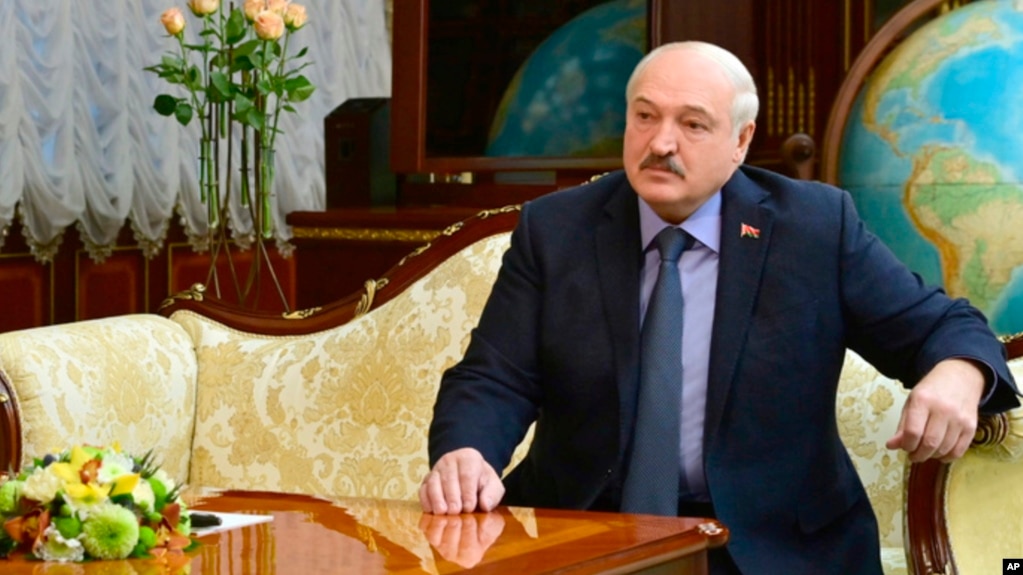
The human rights situation in Belarus is catastrophic, and only getting worse, the United Nations special rapporteur on the country said on 4 July 2023, according to AFP.
Belarusian leader Alexander Lukashenko’s regime in Minsk is deliberately purging civil society of its last dissenting voices, Anais Marin told the U.N. Human Rights Council.
“The situation remains catastrophic. Unfortunately, it keeps on worsening,” said the special rapporteur on the human rights situation in Belarus. “The Belarusian government amended an already restrictive legislation aimed at dismantling civic freedoms, leading to a surge in politically motivated prosecutions and sentencing.
“The lack of accountability for human rights violations fosters a climate of fear among victims and their families,” Marin said. Marin has been in post for five years and reminded the council that she alerted them two years ago to the “totalitarian turn” taken by Minsk, evidenced by the “disregard for human life and dignity” during the crackdown on peaceful protesters in 2020. In her annual report, the French political scientist said more than 1,500 individuals were still being detained on politically motivated charges, with a daily average of 17 arbitrary arrests since 2020.
“I have good reasons to believe that prison conditions are deliberately made harsher for those sentenced on politically motivated grounds, by placing them in punishment cells for petty infraction to prison rules,” said Marin.
“No one has been held accountable in Belarus for arbitrarily detaining tens of thousands of peaceful protesters in 2020, nor for the violence or torture many of them have been subjected to.
“This general impunity, and the climate of fear resulting from ongoing repression, have compelled hundreds of thousands of Belarusians into exile.
Human rights defenders face ongoing persecution, she said, with more than 1,600 “undesirable organizations forcibly dissolved, including all remaining independent trade unions.
“This illustrates a deliberate state policy of purging civic space of its last dissenting elements,” she said.
Marin said independent media outlets had been labelled as “extremist organizations,” while academic freedom is “systematically attacked.”
“Ideological control and disciplinary measures restrict freedom of opinion and their expression,” she said.
Primary and secondary education is also subject to “ideological control,” with children “discouraged from expressing their own opinions” and facing “threats and consequences” for holding dissenting views.
Consequences for speaking out
As for the Russian invasion of Ukraine, individuals face challenges when trying to speak out against it or question Belarus’s role in facilitating the 2022 invasion.
“Anti-war actions led to numerous detentions and arrests, some on charges of planning terrorist attacks — a crime which can now be punished by death,” she said.
Belarus was immediately offered the Human Rights Council floor to respond to Marin’s comments but was not present.
On 11 July HRW underlined this with the case of Belarusian lawyer Yulia Yurhilevich and journalist Pavel Mazheika who ace up to seven years in prison
Maria Psara – writing for Euronews of 27June 2023 – says that European Union member States are trying to water down the directives for SLAPPs and Media Freedom…European lawmakers are accusing member states of trying to water down EU legislation aimed at strengthening protections for journalists and media freedom.
It would also establish several procedural safeguards and remedies, such as compensation for damages, and dissuasive penalties for launching abusive lawsuits. The JURI vote will form the basis of the Parliament’s position in negotiations with member states if it is also endorsed by the plenary in mid-July.
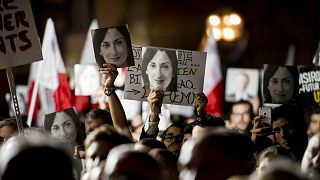
SLAPPs or Strategic lawsuits against public participation are a particular form of harassment used primarily against journalists and human rights defenders to prevent or penalise speaking up on issues of public interest. The Commission’s proposal has been dubbed as the ‘Daphne Law’ in honour of murdered Maltese journalist Daphne Caruana Galizia.
Member states, which together form the Council of the EU, have however sought to water down the text, drawing criticism for the Commission.
“I would like to express my regret concerning the weakening of the remedies against abusive court proceedings, in particular the deletion of the provision on compensation of damage and the weakening of the provision on award of costs,” Didier Reynders, Commissioner for Justice, said earlier this month after member states agreed on their negotiating position.
Parliament is seeking to redress that with German MEP Tiemo Wölken (S&D), the rapporteur on the draft directive, telling Euronews: “We made it stronger and we also added other provisions such as a creation of an ‘one stop shop’ which the SLAPPs targets can contact to receive help by dedicated national networks of specialized lawyers, legal practitioners and psychologists.”
It is not the first time member states are accused of trying to water down a proposal on media freedom. Earlier this month, a deal among the 27 member states on the European Media Freedom Act (EMFA) made a lot of eyebrows rise, because of a planned exemption to allow for the wiretapping of journalists. The regulation, first proposed by the Commission in September 2022, included safeguards against political interference in editorial decisions and against surveillance. The EU’s executive wanted to put focus on the independence and stable funding of public service media as well as on the transparency of media ownership and the allocation of state advertising.
“We have welcomed in particular as a political symbol the draft regulation for EMFA, as the Commission for the first time has adopted a legislative act dealing with all media, a traditionally sensitive subject dealt with at national level only,” Renate Schroeder, director of the European Federation of Journalists (EFJ), told Euronews. Yet, the EPJ and other NGOs, still criticised the proposal as “not ambitious enough”.
“In particular we believed that Article 4 on the protection of journalists’ sources and protection from surveillance has not met Council of Europe standards. We also advocated for stronger binding rules on media transparency,” Schroeder added.
But member states are seeking to add an exemption to Article 4, introduced by France and opposed by Germany only, that would allow them to spy on journalists in the name of national security.
The original proposal sought to ensure that governments could not “detain, sanction, intercept, subject to surveillance or search and seizure” journalists in order to uncover their sources, unless “justified by an overriding requirement in the public interest” while the deployment of spyware was to be restricted only to “serious crimes”.
The Council’s is hoping to broaden the number of offenses allowing such surveillance from 10 to 32.
“The text doesn’t protect journalists anymore and thereby makes the Act almost useless for journalists’ protection at least,” Schroeder said.
“It still proposes useful tools when it comes to independence of public service media, transparency on state advertisement, some minimum rules on media ownership and on editorial independence. But yes, some member-states are afraid of journalism and thereby give hands to illiberal countries such as Hungary who oppose the Act. We hope the European Parliament will be firm, but we are not too optimistic,” underlined the director of EFJ.
However, on 12 July, with 498 votes to 33 and 105 abstentions, MEPs adopted their negotiating position on new rules to protect those working on matters of public interest like fundamental rights, the activities of public officials or corruption allegations.
On 26 June 2023 HRW called on Spain use its six-month tenure as EU Presidency to translate into concrete and bold actions commitment to protect fundamental rights and the rule of law.
Spain holds the presidency as the world marks the 75th anniversary of the Universal Declaration of Human Rights (UDHR) on 10 December 2023. In anticipation of this pivotal moment Spain should make every effort to uphold the rights and values enshrined in this historic document.
HRW calls upon the Spanish government to consider the following priority issues and recommendations:
Fundamental Rights and Rule of Law in EU member states
Two EU member states – Hungary and Poland – currently face scrutiny under Article 7 of the Treaty on European Union (TEU)…
The freezing of EU recovery and cohesion funds under the conditionality mechanism represents a welcome step but it is insufficient to address the gravity of the erosion of rule of law and human rights. While Hungary and Poland have adopted some limited measures in response to requirements under the mechanism, these have failed to address fundamental and long-standing concerns. ….We urge the Council to hold the Polish and Hungarian governments to account by using the powers conferred to it under the Treaties and to fulfil the strong mandate to act given to it by the European Commission and Parliament. The urgency of Spain’s leadership and responsibility cannot be overstated as it is one of only two remaining presidencies before Hungary and Poland in turn assume leadership of the Council. It is highly likely that during that time progress on rule of law will at best stall, and at worst Article 7 scrutiny will come to an end altogether…
Rights-Respecting and Principled EU Migration Policy
Spain’s EU Council presidency comes at a critical time for the EU’s migration policy after the Council agreed on 8 June on a negotiating position on an EU-wide reform of its asylum and migration system. Given its mandate to lead on behalf of member states the negotiations with the European Parliament on a final agreement, Spain has an opportunity to broaden the scope for a rights-respecting approach.
We call on your government to:
Support the establishment of proactive, state-led SAR operations in the Mediterranean Sea that could involve expanding the mandates and capacity of existing initiatives like EUNAVFOR MED and Frontex, funding professional rescue NGOs and ensuring predictable disembarkation.
Promote a discussion on the critical role of NGOs to ensure that they are fully able to carry out their lifesaving SAR activities, instead of facing obstruction and criminal and administrative penalties; and provide platforms for discussion of cooperation between member state rescue coordination centers and NGOs.
Advocate for independent and effective border monitoring mechanisms to document human rights violations at EU external borders, such as unlawful pushbacks, to ensure accountability for those responsible for human rights abuses and access to justice for victims.
Ensure that migration cooperation with third countries, and all provision of financial, technical, and material assistance, are contingent on clear and verifiable human rights commitments.
Enable a constructive trialogue on the asylum procedures regulation and the asylum and migration management regulation with a view to limiting the use of accelerated border procedures, the detention of asylum seekers including families with children, and discretionary use of the “safe third country” concept.
Promote a discussion on establishing more safe and legal pathways for migration as called for by EU Justice and Home Affairs Commissioner Johansson.[8]
Human Rights as a Pillar of EU’s Foreign Policy
The EU is equipped with solid instruments to ensure that human rights protection remains at the centre of its external action. The EU has shown resolve in its response to Russia’s invasion of Ukraine and has led at the United Nations to address key human rights crises.
..
During its Presidency, we call on your government to:
Continue to combat impunity for crimes committed in Ukraine, including by providing adequate resources to the International Criminal Court’s (ICC) regular budget, advocating and supporting the implementation of ICC arrest warrants, pressing Ukraine to ratify the Rome Statute and supporting independent investigations and prosecutions under universal jurisdiction.
Continue to support Human Rights Defenders (HRDs) at risk and share your experience with other EU member states. Encourage other EU member states to learn from and replicate Spain’s forward-leaning approach with the Program for Support and Protection of Human Rights Defenders at Risk that provides dedicated one-year residential visas for HRDs. Advocate with EU member states to use their discretion and facilitate access by HRDs to multi-year multi-entry Schengen visas in line with EU guidelines.
…
Recalibrate EU’s engagement with China to address the government of China’s human rights record through measurable deliverables; counter the government of China’s flawed narratives on its own human rights record; reject efforts to undermine international human rights institutions; lead the creation of a UN investigative and monitoring mechanism for crimes against humanity committed in Xinjiang; sanction or hold accountable those responsible for such crimes; and make plans to reduce dependency on a government that assaults human rights both domestically and in its foreign policy.
On 18 April 2023 CHRD called on the Chinese government to immediately release human rights lawyer Yu Wensheng and his wife Xu Yan, who have been criminally detained and denied access to lawyers of their choice. CHRD also calls on the Chinese government to end its de facto house arrest of Yu Wensheng and Xu Yan’s 18-year-old son. CHRD urges the EU, EU member states, the US, UN bodies, and other member of the international community to forcefully condemn the Chinese government’s detention of Yu Wensheng and Xu Yan. See also: https://humanrightsdefenders.blog/2022/03/03/breaking-news-mea-laureate-yu-wensheng-released/
On April 13 at approximately 4:00 pm, human rights lawyer Yu Wensheng and his wife Xu Yan left their home in Beijing to travel by subway to attend an event at the European Delegation. They were invited to an event with the EU’s Ambassador to China Jorge Toledo Albiñana according to Politico.
However, Yu and Xu were prevented from accessing the subway by four plainclothes police officers. One of the officers, a state security police officer, told them that they were being summoned to a police station, which Yu Wensheng announced on Twitter. The four police officers took them to the Shijingshan Bajiao police station. Human rights lawyers Wang Quanzhang, Li Heping, and Bao Longjun were also harassed by authorities during this period.
The EU Delegation to China tweeted on April 13, “We demand their immediate, unconditional release. We have lodged a protest with MFA [China’s Ministry of Foreign Affairs] against this unacceptable treatment.”
According to Rights and Livelihood Watch, on April 15 in the evening, approximately seven police officers came to Yu Wensheng and Xu Yan’s home, and they orally read a criminal detention notice to the couple’s son, who had just turned 18 years old. The pair were criminally detained on the charge of “picking quarrels and provoking trouble.” Police would not allow the son to take photos, nor would they give him the criminal detention notice. Also, even though no warrant was presented, police proceeded to search the home and carried off many items.
On April 16, two lawyers, Song Yusheng and Peng Jian, paid a visit to Yu and Xu’s son to bring him fruit, and fill out paperwork to obtain legal status to represent Yu and Xu. There were two people guarding the door of Yu and Xu’s home. Lawyer Song knocked on the door, and it was answered by the son, but the lawyer saw that in the home there were also two officers inside, one plainclothes and one wearing a uniform. The plainclothes officer, who said his name was Lu Kai, asked what they wanted. The lawyers said that they were there to visit the son and have him sign an agreement (委托书) to entrust them as lawyers. However, the plainclothes police officers said that Yu Wensheng told them that he “doesn’t want to have lawyers at this stage” and that Xu Yan had already found two lawyers.
Yu Wensheng’s detention may also be related to his condemnation of the sentencing of Xu Zhiyong and Ding Jiaxi, two prominent pro-democracy figures. On April 12, Yu Wensheng wrote on Twitter that he had been visited at his home by Shijingshan police for a tweet he had sent out on April 9 that said, “[I] strongly condemn the Chinese authorities heavy sentence of scholar Xu Zhiyong to 14 years and of Lawyer Ding Jiaxi to 12 years! I pay my respects to Xu Zhiyong and Ding Jiaxi, who have worked hard in the struggle for freedom, democracy, human rights, and the rule of law. I believe that one day the Dream of a Beautiful China will be realized.”
In March 2022, Yu Wensheng was released from prison after serving four years and three months on the charge of “inciting subversion of state power.” Yu was taken away by police in 2018 the day after he released an open letter recommending changes to China’s Constitution, including a call for elections and the creation of an oversight system for the Chinese Communist Party.
The Chinese government has put heightened pressure on human rights award winners. Yu Wensheng was the recipient of the prestigious Martin Ennals Award in 2021 [see: https://www.trueheroesfilms.org/thedigest/laureates/69fc7057-b583-40c3-b6fa-b8603531248e] and the winner of the Franco-German Prize for Human Rights and the Rule of Law in 2018. Previous winners of awards have been subjected to extra-legal abuse. While Nobel Peace Prize Laureate Liu Xiaobo was at one point granted “medical parole,” he was not allowed the freedom of movement to seek medical treatment outside of China and died in de facto state custody. Likewise, Hu Jia, a prominent human rights defender and winner of the Sakharov Prize for Freedom of Thought in 2008, was prevented from seeing his dying father in his final days. Hu Jia was deprived of his liberty and “forcibly traveled” starting from March 4 of this year. Being “traveled” is a common tactic used by state security officers to ensure journalists at the annual March Two Sessions meetings or other “sensitive” political events do not talk to dissidents. Hu Jia’s father passed away from pancreatic cancer on March 9, 2023.
The Chinese government is preventing defendants in sensitive cases from having lawyers of their own choice and instead mandating government-approved lawyers in order to prevent real legal defense. On February 10, 2023, digital rights activist Ruan Xiaohuan was sentenced to seven years in prison on the charge of “inciting subversion of state power.” His wife, Ms. Bei, wanted to hire an experienced lawyer for the appeals stage, and so she went to Beijing to talk with Shang Baojun. However, upon landing in Beijing, she was taken away by eight Shanghai police. Meanwhile lawyer Shang Baojun tried to visit Ruan at the Yangpu Detention Center in Shanghai, but staff there would not allow for the visit since they claimed that Ruan already had two legal aid lawyers.
Patrick Wintour, Diplomatic editor of the Guardian, reported on Monday 20 March 2023 that the he UN rapporteur on Iran, Javaid Rehman, has said the scale and gravity of Iran’s violations of human rights amount to a crime against humanity. Javaid Rehman, a special rapporteur on Iran, told the United Nations Human Rights Council on Monday the country was experiencing the most serious violations in four decades.
Rehman warned Iran was experiencing the most serious violations in four decades. He also claimed the death in police custody of Mahsa Amini, a young Kurdish woman, in September 2022 resulted from beatings by the “morality police”. Iran has said she died from a pre-existing neurological disorder, but Rahman said reliable medical sources pointed to state culpability. He said Iran had refused to conduct an impartial or transparent inquiry into her death, including the allegations that she was beaten up and tortured.
“The scale and gravity of the violations committed by Iranian authorities, especially since the death of Ms Amini, points to the possible commission of international crimes, notably the crimes against humanity of murder, imprisonment, enforced disappearances, torture, rape and sexual violence, and persecution,” he said.
Drawing on evidence, including eyewitness testimony and comments from reliable medical sources, the report said it was clear she had died on 16 September “as a result of beatings by the state “morality police”.
“I would like to stress that her death was not an isolated event but the latest in a long series of extreme violence against women and girls committed by the Iranian authorities,” Rehman said. He said “the responsibility of top senior officials in instigating this violence can … not be ignored.”
“Protesters including children were beaten to death,” Rehman said, adding that “at least 527 people, including 71 children were killed, and hundreds of protesters severely injured.”He also said dozens of protesters “have lost their eyes because of direct shots to the head”, while Iranian doctors had reported that women and girls participating in the demonstrations “were targeted with shotgun fire to their faces, breasts and genitals”.
He said: “Children released have described sexual abuses, threats of rape, floggings, administration of electric shocks and how their heads were maintained underwater, how they were suspended from their arms or from scarves wrapped around their necks.”
The EU says it has now imposed sanctions on 204 individuals and 34 entities in six waves of sanctions. The UK announced it was putting sanctions on five members of the board of directors of the IRGC Co-operative Foundation. This organisation funnels money into the Iranian regime’s repression, the UK Foreign Office said.
He voiced outrage at the executions of at least four people associated with the protests “after arbitrary, summary, and sham trials marred by torture allegations”. He added: “These summary executions are the symbols of a state ready to use all means to instil fear and quash protests,” pointing out that at least 17 other protesters have so far been sentenced to death and more than 100 others face charges that carry the death penalty.
“This award is for those Ukrainians fighting on the ground. For those who have been forced to flee. For those who have lost relatives and friends. For all those who stand up and fight for what they believe in. I know that the brave people of Ukraine will not give up and neither will we,” said Roberta Metsola, the European Parliament’s head.
EU Commission chief Ursula von Der Leyen congratulated the people of Ukraine and said: “Their spirit and determination to fight for the values we hold dear is an inspiration to us all.”
“At (the EU Council) we’ll focus on continuing our assistance; we will stand with Ukraine for as long as it takes,” European Council President Charles Michel said on Twitter.