Repressive regimes throughout the world deploy the machinery of the state to silence criticism and dissent. It is therefore hardly surprising that artists—whose creative work can expose, ridicule, and condemn in emotive and powerful ways—are common targets of political persecution. Over the past few years, there have been crackdowns on artists and performers in Russia, Belarus, Cuba, Azerbaijan, Egypt, China, and Venezuela, among other countries. The following artists dared to use their creative expression to challenge powerful systems, and have been punished with political imprisonment. From: Political Prisoners Watch February 19, 2026
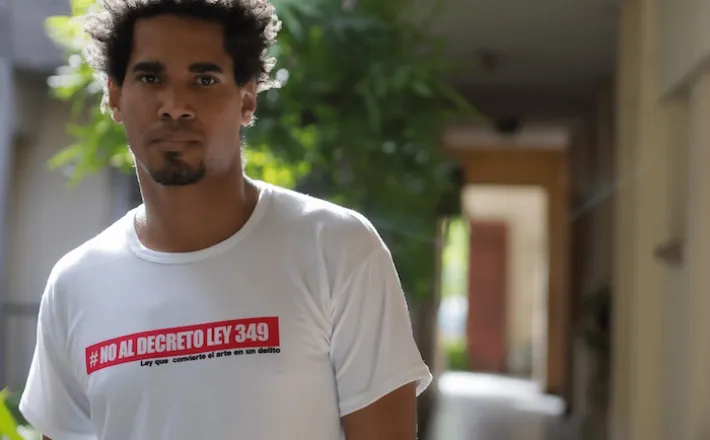
Luis Manuel Otero Alcántara is a Cuban artist and activist whose evocative performance art led to government harassment and numerous periods of detention. After the Cuban government enacted Decree 348 in 2018, which required artists to obtain advance approval for even private performances, he cofounded the San Isidro Movement to protest the increasing censorship of free expression. On July 11, 2021—the start of the historic J11 protests—he was arrested and has been detained ever since. In June 2022, he was sentenced to five years in prison for contempt, public disorder, and insulting symbols of the homeland, and remains in prison in Cuba. [https://humanrightsdefenders.blog/2024/09/19/the-rafto-prize-2024-to-cuban-artivist-luis-manuel-otero-alcantara/]
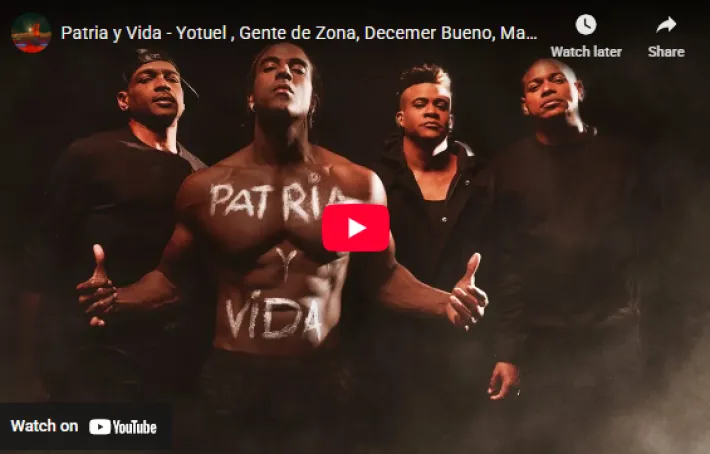
Maykel Osorbo Castillo Pérez is a Cuban musician who cofounded the San Isidro Movement with Luis Manuel Otero Alcántara. Due to his activism and vocal opposition to the Cuban regime, he was subjected to systemic harassment, including being arrested 121 times in a five-month period. He cowrote the 2021 song Patria y Vida(Homeland and Life), which inspired thousands to demonstrate against Cuba’s repressive regime and won two Latin Grammys. He was not able to accept the awards, however—in May 2021, he was arrested, forcibly disappeared for 14 days, and eventually sentenced to nine years in prison on charges of contempt, public disorder, and defamation of institutions and organizations, heroes, and martyrs.
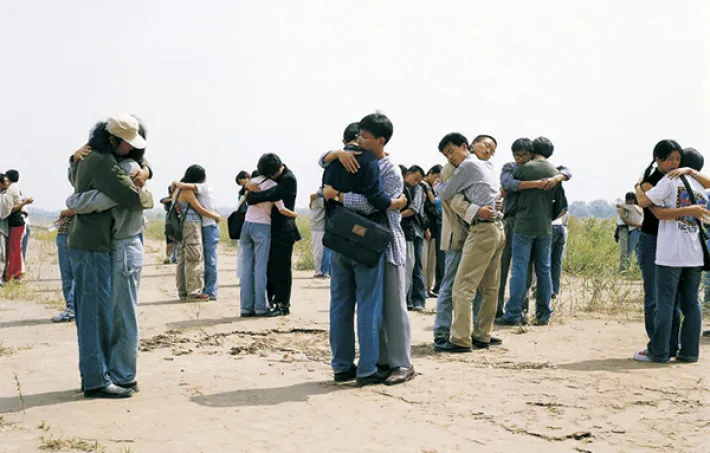
Gao Brothers, The Utopia of the 20 Minute Embrace (2000), modified image via Wikimedia Commons, used under CC BY-SA 3.0.
Gao Zhen is a Chinese artist and US permanent resident who was detained while visiting family in China in August 2024. Avant-garde works by Gao and his brother Gao Qiang—known together as the Gao Brothers—include huge, mirror-like sculptures and other works critiquing Mao Zedong and China’s Cultural Revolution. Authorities allege that Gao committed the offense of “insulting or defaming heroes and martyrs,” though the art in question had been created years before the Law on the Protection of Heroes and Martyrs was enacted. Gao’s wife Zhao Yaliang has been prohibited from leaving China, and she and their young son have remained there since his detention.
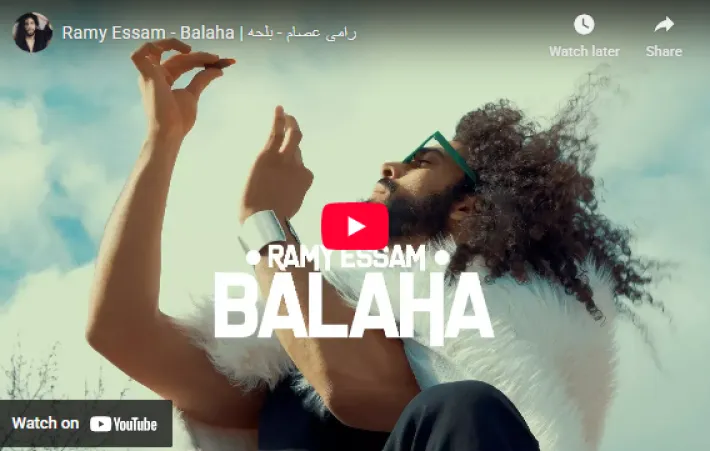
Galal El-Behairy is an Egyptian poet and singer/songwriter who has faced severe retaliation for his artistic work. He wrote the lyrics for the guitar-driven protest song Balaha, which mocked Egyptian President Abdel Fattah al-Sisi and the country’s corrupt establishment. Five days after its release in February 2018, he was arrested by the National Security Police and disappeared for a week. In July 2018, he was sentenced to three years in prison by a military court for allegedly spreading false news and rumors and insulting the Egyptian army in his poetry book The Finest Women on Earth. Although his sentence expired in 2021, he was not released, and he is now facing additional charges including disseminating fake news and joining and aiding a terrorist organization.
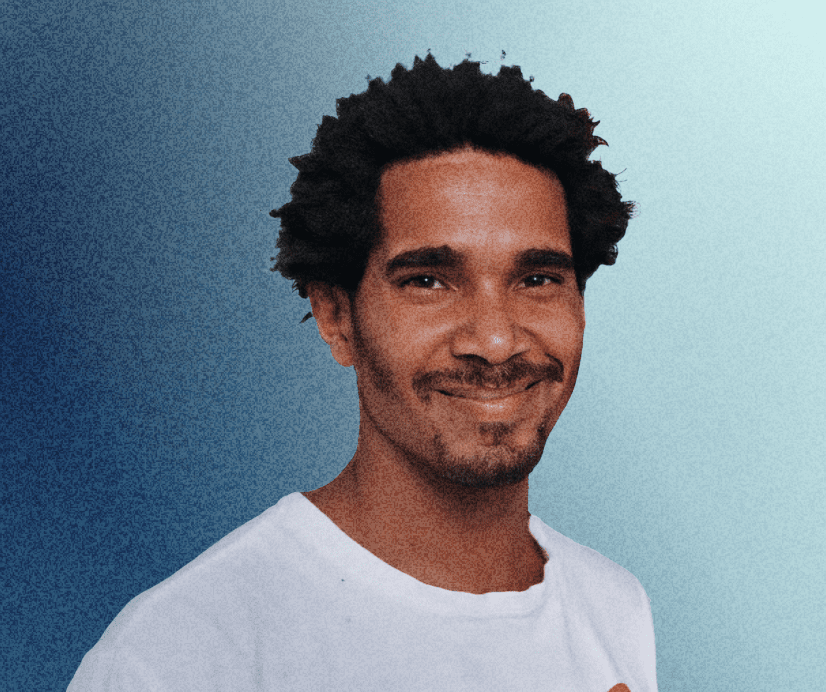
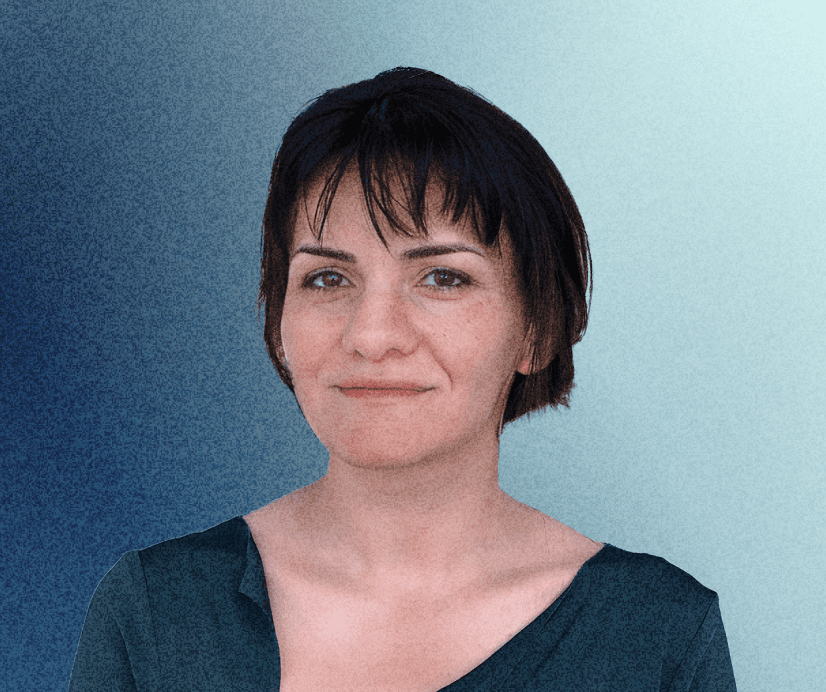
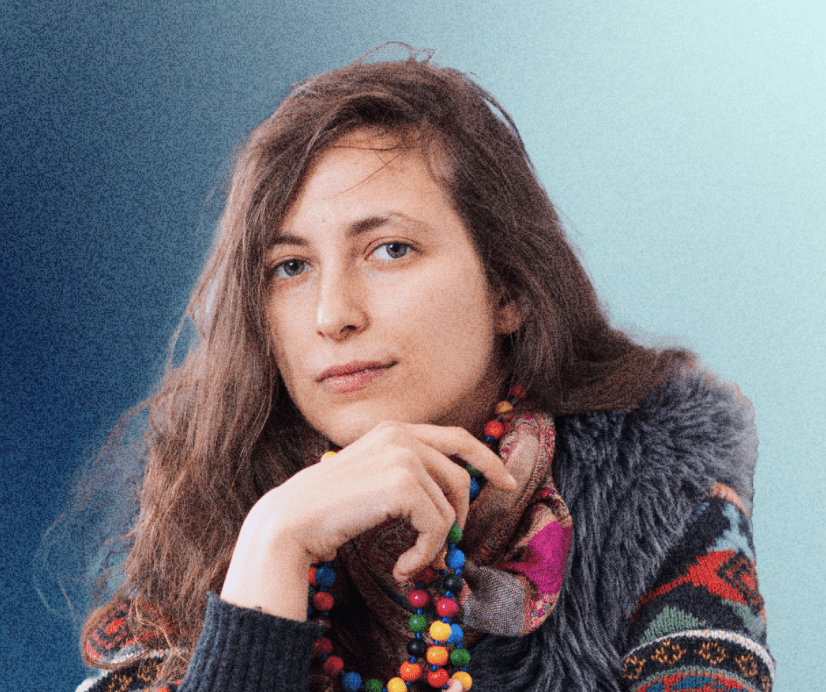
On 1 May 2025 the Human Rights Foundation announced the recipients of the 2025 Václav Havel International Prize for Creative Dissent: Cuban artist and pro-democracy activist Luis Manuel Otero Alcántara, Syrian activist and artist Azza Abo Rebieh, and Russian artist, poet, and musician Sasha Skochilenko.
He gained international attention for his performance art and peaceful protests, including hunger strikes and symbolic acts of resistance. He was arrested during Cuba’s historic 2021 protests and sentenced to five years in prison following a closed trial. In 2022, following a submission by HRF, the United Nations Working Group on Arbitrary Detention declared his imprisonment to be arbitrary and urged the Cuban regime to release him immediately. He is being held in Guanajay maximum-security prison.
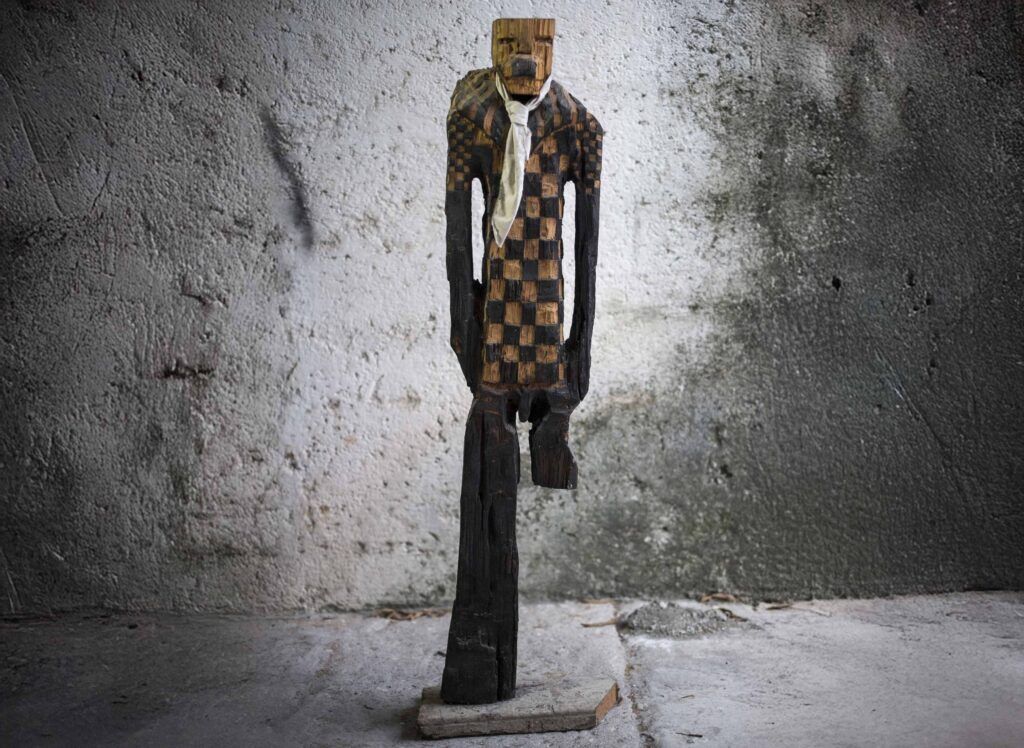
Luis Manuel Otero Alcántara, “Los Heroes no Pesan.” Courtesy of the artist.
AZZA ABO REBIEH
Azza Abo Rebieh is a Syrian artist born in Hama in 1980. During the Syrian revolution, she created graffiti, led workshops with women, and organized puppet theater for children in rural villages. In 2015, she was detained by the regime of Bashar al-Assad.
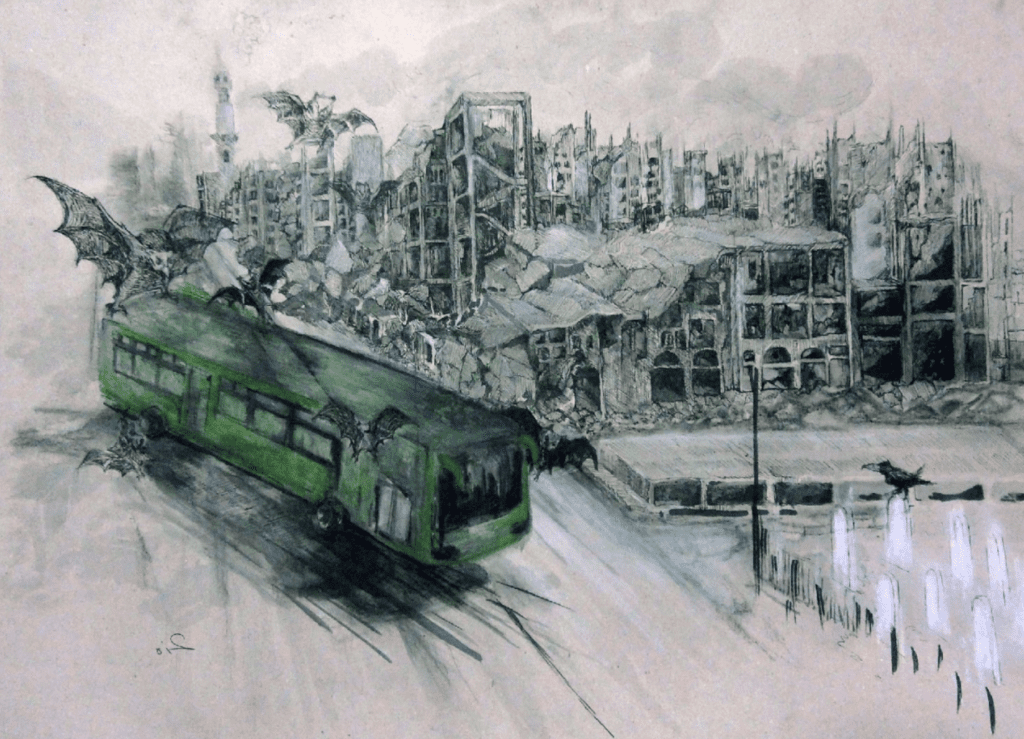
Art became her solace during her imprisonment in Adra prison, where she shared a cell with 30 women, many of whom were illiterate. Azza drew her cellmates, dignifying them through reminders and glimpses of themselves through sketches. Following her release, her prison drawings were exhibited at the Drawing Center in New York. Her work explores memory, resistance, and survival and is held in collections including the British Museum and Institut du Monde Arabe.
Azza Abo Rebieh, “Hindmosts.” Courtesy of the artist.
SASHA SKOCHILENKO
Sasha Skochilenko is a Russian artist, musician, poet, and former political prisoner. She was arrested in 2022 for distributing anti-war messages and sentenced in 2023 to seven years in prison under Russia’s so-called “fake news” law.
Skochilenko was released in 2024 as part of the Ankara prisoner exchange between the United States and Russia. She lives in Germany, where she continues her artistic work, participating in exhibitions in Paris, Amsterdam, and London to showcase the drawings she created in prison. Beyond activism, she’s the author of “Book About Depression,” which played a significant role in destigmatizing mental health issues in Russia.
Sasha Skochilenko replaced pricing labels with anti-war messages (seen here in English translation).
The U.S. government announced on 27 March the nomination of the Cuban human rights defender Rosa María Payá Acevedo as a candidate to join the Inter-American Commission on Human Rights (IACHR), an autonomous body of the Organization of American States (OAS).
The nomination underscores Washington’s support for the work that the Cuban activist has done in promoting human rights, freedom, and democratic governance in the Western Hemisphere.
Daughter of the deceased opposition leader Oswaldo Payá Sardiñas, who was awarded the Sakharov Prize and died under circumstances that have never been officially clarified, Rosa María has continued his legacy with “unmatched determination,” the State Department highlighted. [see: https://www.trueheroesfilms.org/thedigest/laureates/2522D108-8BCB-46A7-BEBD-144BC99B5926]
Payá is the founder of the Cuba Decide movement, which promotes a binding plebiscite for Cubans to freely and democratically choose their political future. She also leads the Pan-American Democracy Foundation, through which she collaborates with legislators from various countries to support regional stability and security. Among the recognitions he has received are the Morris Abram Award for Human Rights (2019) and the Valor Award from the Society of Common Sense (2022).
“I am deeply honored by the United States nomination to serve on the Inter-American Commission on Human Rights, a vital and independent institution dedicated to protecting the rights and dignity of all people across the Americas,” she wrote.
The elections to renew the members of the CIDH will be held on June 27, during the General Assembly of the OAS taking place in Antigua and Barbuda.
A group of Cubans, including human rights activist defenders, unfolded a large banner this Thursday under the iconic Eiffel Tower in Paris, in support of the 1,113 political prisoners in Cuba. The banner displays the faces of many of those imprisoned on the island for expressing their discontent with the Castro regime, criticizing communist policies, or demanding respect for human rights.
Meanwhile, activist Avana de la Torre joined this peaceful demonstration in the French capital, while the NGO Prisoners Defenders presented its latest report on political prisoners in Cuba. The report highlighted that all these detainees face sentences imposed without judicial oversight, which violates international standards.
During 2024, repression and human rights violations against political prisoners in Cuba have intensified. On August 4, two Cuban activists were sent to prison accused of “propaganda against the constitutional order” after being detained in Villa Marista. Subsequently, on August 29, the UN condemned the forced labor that political prisoners suffer on the island, supporting a report from the organization Prisoners Defenders on systematic human rights violations. At the beginning of September, the platform Justicia 11J reported that at least ten political prisoners attempted suicide in Cuban prisons due to the harsh conditions of confinement.
36-year-old Luis Manuel Otero Alcántara is a Afro-Cuban self-taught artist. He comes from a poor and marginalized neighbourhood in Havana and uses sculptural and performance art to protest violations against freedom of expression. He has been arrested multiple times for his art and activism and is currently in prison.
Otero Alcántara is the general coordinator of the San Isidro Movement – a constellation of artists, journalists and academics promoting freedom of expression. It was established in 2018 as a reaction to Decree 349. The decree requires artists to obtain advance permission for public and private exhibitions and performances. Decree 349 is one of the legal instruments used to silence artists, musicians and performers who are critical to the Cuban government.
Otero Alcántara’s artivism has come at a high personal cost. Since 2016 he has been the subject of interrogations, political persecution and arrests, and his art has been confiscated and destroyed by state security officers.
Luis Manuel Otero Alcántara creates sculptures, drawings, and performative art. He is currently serving a five-year sentence in the high-security prison Guanajay outside of Havana.
Expressing oneself through art: A basic human right
Despite this, he continued his artivism through performance pieces to raise awareness of Cuba’s ongoing repression of independent artists and activists. Otero Alcántara was detained on July 11, 2021, after posting a video online of his planned participation in the protests. In 2022, he was convicted for “contempt, public disorder and insults to national symbols”. He is currently serving a five-year sentence in Guanajay maximum security prison outside Havana.
The Rafto prize 2024 aims to highlight the importance of the work of Luis Manuel Otero Alcántara and the basic human right to expressing oneself through art. We call upon the Cuban government to stop the persecution of artists and human rights defenders. We also urge them to free Otero Alcántara and all political prisoners in Cuba.
A year after being suspended from the body, Russia will not be returning to the UN Human Rights Council in January, despite its best efforts. Running for one of two seats allocated to countries from Central and Eastern Europe, Russia received only 83 votes, significantly less than competitors Albania (123) and Bulgaria (163).
‘With this vote, States have acted in line with General Assembly resolution 60/251 and stopped Russia’s brazen attempt to undermine the international human rights system,’ said Madeleine Sinclair, co-director of ISHR’s New York office. ‘Russia must answer for a long list of crimes in Ukraine and for its ruthless and longstanding crackdown on civil society and individual liberties at home. We’re relieved voting States agreed that it could not have legitimately held a seat at the UN’s top human rights body,’. [see also: https://humanrightsdefenders.blog/tag/russia/]
In the only other competitive race, between States from Latin American and the Caribbean, the General Assembly re-elected Cuba, one of Russia’s most consistent allies. Cuba ran for one of three seats for Latin America and the Caribbean, facing three competitors and coming in first, with 146 votes, ahead of Brazil (144), the Dominican Republic (137) and Peru (108).
Results for Asia and Africa were as disappointing as they were predictable, with the election of China and Burundi. Both States ran in uncompetitive races, with only as many candidates as seats available, thus all but assured to win. They were elected with 154 (China) and 168 (Burundi), finishing bottom of each of their respective regional slates with noticeably fewer votes than their direct competitors.
Both countries are objectively and manifestly unsuitable for the Human Rights Council in view of their domestic records, their past actions as Council members, and the very criteria that nominally governs membership of the Council.
ISHR has been campaigning to call on States at the General assembly to vote in accordance with resolution 60/251 and to use their votes to ensure a strong and principled Human Rights Council. ISHR produced a series of individual and regional scorecards examining the records of all 17 candidates running this year.
On 25 July, 2023 – International Afro-Latina, Afro-Caribbean and Diaspora Women’s Day, – Amnesty International highlighted nine defenders and collectives who have devoted their lives to ending inequality and violence, advocating a dignified life for all people because their work deserves the recognition, visibility, protection and resources necessary for it to continue to spread.
Rede Vozes Negras pelo Clima, Brazil
Rede Vozes Negras pelo Clima is an initiative of 11 Black Brazilian women who are working in their respective territories to protect human rights, confront climate racism and promote anti-racist socio-environmental justice. They belong to traditional, riverine quilombola communities. They are also activists and leaders of communities that live on the margins of large urban centres, communities that are being directly affected by the consequences of the climate crisis and development projects that fail to take into account the rights of local populations.
They are thus fighting for anti-racist adaptation policies and an energy transition that will guarantee the promotion of human rights and nature. Mitigation initiatives need to incorporate the ancestral knowledge and wisdom of traditional peoples and communities and ensure the participation of those people affected by extreme weather events when decisions are being made as to the investments that need to be made to repair losses and damage.
Dayana Blanco Acendra, Colombia
Dayana Blanco is a renowned Colombian lawyer who heads ILEX Acción Jurídica, an Afro-Colombian and Afro-LGBTQI+ organization committed to racial justice in Colombia, Latin America and the Caribbean. According to Blanco, “Racial justice in Colombia requires all of society to commit to combatting the historical inequality that has affected the Afro-descendant population. This means actions to address social and economic inequality.”
With an outstanding academic background and experience in different sectors, Dayana has promoted innovative research on racist police violence, statistical invisibility in the systematization of violence against Afro-descendant leaders and economic and social rights. In addition, together with her team and in coordination with other civil society organizations, she has obtained notable rulings in defence of Afro-Colombian midwifery, overcoming the statistical invisibility of the Afro-descendant population, among others, and demonstrating her dedication to the struggle for equality and justice.
Under her leadership, ILEX has – through legal mobilization, research and strategic communications – become a reference for promoting the rights of the Afro-descendant population. Dayana and her team highlight the importance of addressing social and economic inequality as a fundamental element of racial justice in Colombia, calling on the whole of society to unite in the struggle and build a more equitable future for all.
Donaida Pérez Paseiro, Cuba
Donaida Pérez Paseiro is a Black activist, religious leader and president of the Asociación Yorubas Libres de Cuba. Yoruba is a religion of the African diaspora that is practised in many countries, including Cuba. Donaida was arrested on 16 July 2021 and sentenced in February 2022 to eight years’ imprisonment by the Santa Clara Municipal People’s Court for “public disorder”, “contempt” and “attacking” an official. According to the information available to Amnesty International, Donaida should never have been charged with these crimes.
The charges of “contempt” and “public disorder” are frequently used in Cuba to limit the right to freedom of expression and peaceful assembly. Both she and her husband, Loreto Hernández García, were tried along with 14 other protesters in what appears to have been an unfair trial.
Donaida is the wife of Yoruba leader and activist Loreto Hernandez Garcia who was unjustly sentenced to seven years in prison for demanding respect for human rights in Cuba during the 11 July 2021 demonstrations.
Donaida is an example of courage and perseverance in the resistance against repression in Cuba. Her commitment has manifested itself in numerous peaceful marches and protests. According to her family, she was a freelance journalist and founded the Laurel Express press agency, where she gave visibility to the injustices and challenges faced by her community in the city of Placetas. Her activism spans multiple spheres, having been a member of the Orlando Zapata Tamayo resistance front and the central opposition coalition. Donaida’s legacy transcends borders and leaves a profound inspiration for those who seek a Cuba without repression.
Guerline M. Jozef, Haiti
Guerline M. Jozef is the founder and executive director of the Haitian Bridge Alliance, the only Black and Haitian women-led organization serving migrants on both sides of the U.S.-Mexico border. Named one of the most influential people in 2021 on racial issues by Politico, she is also co-founder of the Black Immigrants Bail Fund and the Cameroon Advocacy Network.
The Haitian Bridge Alliance (HBA), also known as “the Bridge,” is a grassroots community-based organization that advocates for just and humane immigration policies and provides migrants and immigrants with humanitarian, legal and social services, with a special focus on Black migrants, the Haitian community, women and girls, LGBTQIA+ people, and survivors of torture and other human rights abuses. HBA also seeks to highlight issues specific to Black migrants and encourages solidarity and collective action to bring about policy changes. Through her work, Guerline reminds us that together, Anpil men, chay pa lou! Many hands lighten the load!
Miriam Miranda, Honduras
An Afro-indigenous Garífuna leader from Honduras, Miriam Miranda stands out as a courageous defender of human and environmental rights. As coordinator of the Organización Fraternal Negra Hondureña (OFRANEH), she has carried out invaluable work to protect and defend the rights of the Garífuna people in Honduras. Her tireless work, lucidity and commitment have earned her the recognition of prestigious awards, such as that of the Friedrich Ebert Foundation, as well as the Carlos Escaleras and Oscar Romero awards.
Miriam’s struggle is deeply rooted in the Garífuna territory of Honduras and is manifested through the history of OFRANEH, an organization through which these people are building their dignity and their future. The land and the sea, as an indispensable part of their identity, determine an essential struggle to preserve the natural assets of their territory.
Miriam is a highly respected thinker and leader within the social movement. She has an enormous capacity to devour books and mobilize energies from all sides to defend her people. She is one of those people who make life possible, whose words always point forward and who finds strength in the deep roots of her origin, where her future of freedom was born. As the daughter of Barauda (representing Garífuna female strength, Barauda is an historical character who pushed the Garífuna hero Sathuye to continue the struggle for the liberation of his people), Miriam has turned her critical eye to the source of it all: the predatory civilization of consumerism.
Her tireless work and courage inspire others to keep fighting. Her contribution and leadership have already left an indelible mark on the history of Honduras and global struggles for territory. [see also: https://humanrightsdefenders.blog/tag/miriam-miranda/]
Shackelia Jackson, Jamaica
The extrajudicial killing of her brother, Nakiea Jackson, in 2014 pushed Shackelia Jackson into a life of activism. Since then she has been healing, evolving, learning and gathering the tools with which to reconcile her conflicting realities. A political science scholar and communicator, Shackelia is the mother of an empathetic child, who longs with innocence to experience the world. Despite challenges and setbacks, Shackelia remains dedicated to the wider struggle, supporting causes that prevent the institutionalization and normalization of practices that violate human rights and erode the sanctity of life.
Through her grassroots organizing efforts in Jamaica, she has raised funds to support back-to-school initiatives and education programmes, recognizing the importance of empowering the younger generation. Shackelia’s work has gone far beyond her local community. She has become a global force, lending her voice and expertise to international platforms. As keynote speaker at an Amnesty International event in London, she captivated the audience with her powerful words, urging them to stand up and take action. In 2017, Shackelia also participated in roundtable discussions at Amnesty International events in Brazil and the United States, amplifying the voices of the oppressed and demanding accountability.
It was on this journey that Shackelia realized that change starts with each individual. She has encouraged others to join her in writing for rights, and to use their words as weapons against injustice. “Let us write until we are heard, let us write until justice is done,” she said.
Ivana C. Fred Millán, Puerto Rico
Ivana Fred is a prominent Black and transgender activist, writer and leader from Puerto Rico. She has dedicated her life to fighting for human rights and equality for transgender people in her country. Her passion for justice has made her an influential figure and a powerful voice in Puerto Rican society.
Since her first steps into activism in 1999, Ivana has formed part of pioneering projects aimed at trans people and has used her voice and pen to amplify the stories and needs of trans people.
As she says: “Life put me in a place where I could develop as a leader, the ‘Ponte el Sombrero’ project gave me the tools to empower and educate socially disadvantaged and discriminated populations. That was how I came to understand that to exist is to resist”.
Ivana has also made her mark in the media, writing for the Metro newspaper and participating in acclaimed documentaries and films such as “Mala Mala” and “Las Muchachas”. Her presence and perspective have helped generate greater visibility and understanding of transgender experiences in Puerto Rico.
Ivana Fred is currently one of the directors of the organization Trans Goofy Games, where she continues to lead and support initiatives that promote transgender inclusion and empowerment. With unwavering commitment, Ivana has remained a visible leader and loyal activist. From her early days of activism to the present day, her voice has been resolute in seeking dignity and respect for all transgender people.
With her courage and determination, Ivana has shown that to exist is to resist and has paved the way for a more inclusive and respectful future in Puerto Rico and beyond. Her legacy as a visible leader and her tireless activism inspire us all to continue fighting for a world where everyone can live with equality and dignity.
Elena Lorac, Dominican Republic
Elena Lorac is a prominent activist and advocate for human rights in the Dominican Republic, especially on the part of Dominicans of Haitian descent. As national coordinator of the Movimiento Reconoci.do, she has led the fight for the right to nationality and full integration of this community into Dominican society.
With more than 12 years’ experience, Elena has worked to strengthen community leadership and empower black women in the country’s bateyes [sugar mill settlements]. She also provides support to Haitian migrants and Venezuelan migrants and refugees, and is known for her community-based approach.
Elena is also a nationally and internationally renowned speaker, speaking on issues such as nationality, discrimination and racism, and raising awareness of policies that affect Dominicans of Haitian descent in the Dominican Republic. Her tireless work has been instrumental in promoting human rights and achieving the real inclusion of this community in Dominican society.
Aracelis Sánchez, Venezuela
Aracelis Sánchez, a human rights defender and the founder of Organización de Familiares de Víctimas de Violación de Derechos Humanos (Orfavideh), is promoting solidarity and demanding justice together with more than 200 mothers of victims of extrajudicial executions in Venezuela.
Aracelis, who lost her son Darwilson Sequera, has been fighting for more than 10 years to get cases of human rights violations committed by Venezuelan state security forces investigated. Orfavideh provides human rights training workshops for mothers, equipping them with tools with which to demand guarantees and use the mechanisms of justice in Venezuela.
Aracelis stresses that when victims are empowered and able to put pressure on prosecutors, their cases are investigated. She believes that support and empowerment are essential to transform grief into positive action and thus achieve justice for victims and their families.
For the first time, the Human Rights Foundation (HRF) is bringing its Oslo Freedom Forum (OFF) online. “While the circumstances may keep us apart, our commitment to supporting activists in their struggle against authoritarian regimes is stronger than ever. Join us online from September 24-25 for the only virtual conference that puts human rights at the top of the global agenda.The political and health crises of the past six months have reminded us how authoritarians use human tragedy to advance their own agendas. Corrupt regimes around the world have exploited the COVID-19 pandemic to impose restrictions on freedom of speech, to arrest peaceful protesters, and to silence dissent. The courage and determination of activists and citizens alike have been tested, yet they remain resilient in the face of tyranny.”
Confirmed speakers for the 2020 Oslo Freedom Forum include:
Taiwan’s Digital Minister Audrey Tang
Twitter and Square CEO Jack Dorsey
Uyghur journalist Gulchehra Hoja
Thai opposition leader Thanathorn Juangroongruangkit
Gambian anti-rape activist and survivor Fatou Toufah Jallow
Exiled Hong Kong pro-democracy activist Nathan Law
North Korean defector Eunhee Park
Sudanese doctor and pro-democracy activist Mohamed Nagi Alassam
Russian investigative journalist Lyudmila Savchuk
Cuban environmentalist and LGBTQ+ rights activist Ariel Ruiz Urquiola
“Who Owns Huawei?” author and professor Christopher Balding
There is a list – updated monthly – by the One Free Press Coalition of nearly 40 news organizations, which identifies the 10 most urgent cases threatening press freedom around the world. Understanding the COVID-19 requires unbiased journalists, whose work requires protection. Not only does the act of informing the public carry risk to one’s own health but, in many countries, risk of retaliation. In China, freelance video journalist Chen Quishi disappeared on February 6 after informing family of plans to report on a temporary hospital in Wuhan, where the virus originated. Beijing has since expelled journalists from outlets including The Wall Street Journal, The New York Times and The Washington Post and demanded personnel information from Voice of America and TIME. Mohammad Mosaed, a reporter in Iran who criticized the government’s response to the pandemic, has been barred from practicing journalism and suspended from social media. Family members of imprisoned Egyptian journalist Alaa Abdelfattah were detained for protesting on behalf of prisoners who are vulnerable to the spread of the virus. An Azerbaijani journalist freed in mid-March described detention conditions allowing one shower per week, without soap, he told CPJ
Journalist, who warned about pandemic, banned from work and social media.
Freelance economic reporter Mohammad Mosaed awaits a court date, after intelligence agents of the Islamic Revolutionary Guard Corps (IRGC) arrested and interrogated him in February regarding social media accounts critical of government. The criticism included lack of preparedness to tackle the coronavirus outbreak. Until trial, authorities bar him from practicing journalism and suspended his social media accounts. Last year he endured 16 days in Evin prison for his tweets and was released on bail.
Editor facing potential detention, arrested again March 28.
Rappler editor Maria Ressa is scheduled for trial April 24, expecting a verdict on a cyber-libel charge brought by local businessman Wilfredo Keng regarding a May 2012 story. The relevant law took effect four months after the story in question was published. Depending how judges interpret the 2012 Cybercrime Prevention Act, Ressa could face six years in prison.
Family of jailed journalist protests prisons’ inaction to prevent COVID-19 threat.
While blogger Alaa Abdelfattah is held in Cairo’s Tora Prison, three of his family members face charges of unlawful protest, illegal assembly and obstructing traffic in their call to protect prisoners from the spread of coronavirus. They were released on bail exceeding $300 apiece. After reporting about politics and human rights violations, Abdelfattah has endured threats and been told he will never go free if he speaks of guards’ abuse.
Journalist covering coronavirus disappeared more than six weeks ago.
Freelance video journalist Chen Quishi has not been seen since February 6, when he informed family of plans to report on a temporary hospital. In late January, he had traveled from Beijing to the city of Wuhan in Hubei province and began filming and reporting on the coronavirus health crisis, according to his posts on YouTube. Friends running his Twitter account believe he is likely held in residential surveillance.
Journalist fears for her life, amid government-orchestrated threats.
After 19 years of persecution and legal censorship, award-winning journalist Claudia Julieta Duque told IWMF that she learned on February 29 about an ongoing criminal threat against her life. According to Duque, agents of the state institution in charge of protecting human rights defenders and at-risk journalists, called the National Protection Unit (UNP), were reportedly ordered to carry out intelligence activities to infiltrate Duque’s security scheme and threaten her welfare.
Imprisoned publisher undertook hunger strike while awaiting appeal.
No date has been set, following postponement of a March 12 appeal in the case of Martin Inoua Doulguet, publisher of Salam Info. He was found guilty on criminal charges of defamation and conspiracy in September, and sentenced to three years in prison. The privately owned quarterly newspaper reports on crime and politics in Chad, and Doulguet’s penalty includes a $1,675 fine and paying part of $33,514 in plaintiff damages.
Journalist serving life sentence prepares for final appeal.
On April 6, a Kyrgyz court is scheduled to hear the final appeal in the case of award-winning journalist Azimjon Askarov. The ethnic Uzbek, who reported on human rights, has spent more than nine years imprisoned on trumped-up charges that included incitement to ethnic hatred and complicity in the murder of a police officer. The decade-long case has drawn persistent international condemnation, and Kyrgyzstan’s only imprisoned journalist’s health deteriorates.
Cuban journalist Roberto Jesús Quiñones has spent more than six months behind bars, experiencing worsening treatment. Staff listen to all of his phone calls, have served him food containing worms, and upon learning of his secretly publishing from prison, suspended family visits and put him in solitary confinement. A municipal court in Guantánamo sentenced him to serve one year as a result of “resistance” and “disobedience” when police beat and detained him for covering a trial as a CubaNet contributor last April and his refusal to pay a fine imposed on him following this incident.
Reporter experiences repeated retaliation for his work.
On two different occasions last year, Benin courts delivered prison sentences to Ignace Sossou, a reporter for privately owned site Web TV. First was a one-month imprisonment and fine of $850 for publishing “false information” about local business dealings. Then an 18-month sentence and fine of $337 for defamation and disinformation in his reporting public statements made by Public Prosecutor Mario Mètonou.
Turkish and U.S. leaders continue pressuring for murdered journalist’s justice.
On March 25 Turkish officials indicted 20 Saudi nationals in the ongoing pursuit for answers surrounding Jamal Khashoggi’s brazen killing in Istanbul in 2018 and the Saudi crown prince’s role. That follows a March 3 news conference with U.S. Senator Ron Wyden, Representative Tom Malinowsk, and The Washington Post columnist’s fiancé, Hatice Cengiz, announcing that they are invoking procedures within the Senate Intelligence Committee to provide a congressional release of information from intelligence agencies.
Cuban human rights defenders who participated to the project of presenting a report on EU’s agreement with Cuba. [Civil Rights Defenders]
The EU needs to change strategy if it wishes to stand for democracy in Cuba by opening up to independent civil society, write Anders L. Petersson and Erik Jennische (of the NGO Civil Rights Defenders) on 4 February 2020. On Saturday 1 February. five Cuban democracy activists were stopped at the airport in Havana as they were on their way to Brussels to speak at the European Parliament today. They were banned from leaving the country by the Cuban authorities. Instead, the seminar at the European Parliament was held with Cuban activists based outside the country, and five empty chairs – a vivid reminder of the current strategy’s shortcomings. [Instituto Patmos has shown that at least 226 activists were banned from travelling abroad during 2019]. The five democracy activists were supposed to present their ideas on what the EU could do to promote respect for human rights and democratisation in the country. Their proposals form part of a report by Civil Rights Defenders – a total 30 letters from Cuban democracy activists and organisations – as a contribution to the EU’s policy development.
Although the EU and Cuba in their Agreement recall “their commitment to the recognised principles of democracy”, Civil Rights Defenders regrets that the EU remained silent on the sham elections and the transfer of power that followed. Apparently, it was all acceptable under the new Agreement…..When Federica Mogherini visited Cuba for the last time as High Representative for Foreign Affairs in September 2019, she rather perplexingly concluded that “after completing its generational transition and adopting a new Constitution, Cuba now faces major challenges in carrying out its economic modernization”.
….Reflecting on the stories of harassed and imprisoned activists in Cuba, we cannot afford to make such surrender again. The EU needs to change strategy if it wishes to stand for democracy in Cuba. It needs to build a formal and open dialogue with Cuba’s independent civil society. Since the negotiations began on the Agreement in the spring of 2014, the EU has not invited civil society to a single formal discussion on the content of the Agreement or its implementation. When the EU and Cuba held its human rights dialogue in October 2019, the Cuban government took the liberty to decide which European and Cuban organisations could participate. The papers in the report of CRD hold a great number of proposals and ideas – the two core messages being:
That both European and Cuban civil societies need to be recognised as formal partners to the EU in its relations to Cuba.
That the EU needs to speak out on the absence of democracy in Cuba and denounce all human rights violations.
The EU can never contribute to positive change in Cuba via a dialogue with the Cuban government. The only way is to give legitimacy and support to the civil society that openly and peacefully supports democratisation. It is time for the EU to include civil society in its relations with Cuba.
One of the award-winning Cuban dissident who was detained this week announced that he has been released without charge but barred from a planned trip to Europe for a meeting on human rights. Guillermo Farinas, a 58-year-old psychologist, is a leading voice in the opposition to Cuba’s communist government and won the European Parliament’s Sakharov human rights prize in 2010. Farinas was arrested Tuesday in the central city of Santa Clara, where he lives, as he planned to go to the Spanish Embassy in Havana to pick up travel documents. He had been due to take part in a meeting of the human rights commission of the European Parliament. “The main reason for my arrest was to keep me from traveling to Europe,” Farinas told AFP.




 Hans Thoolen on Human Rights Defenders and their awards
