Posts Tagged ‘Council of Europe’

Ukrainian human rights defender Maksym Butkevych wins CoE’s 2025 Václav Havel Prize

September 30, 2025
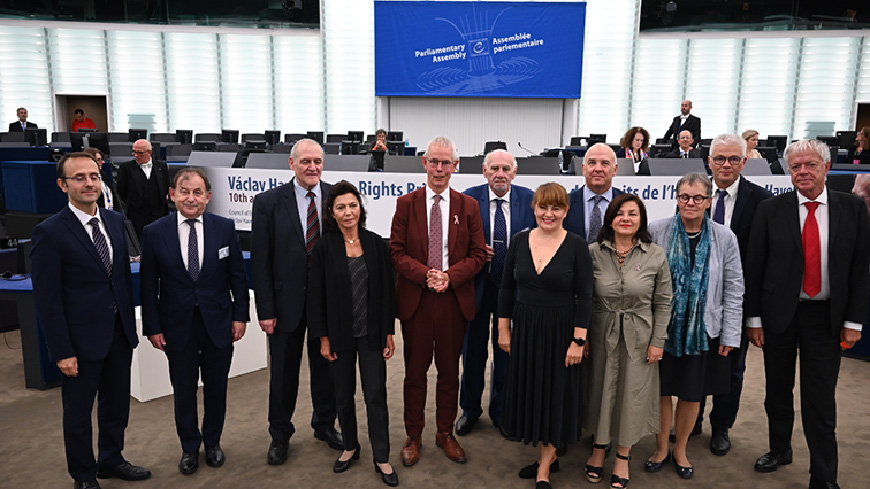
2025 Václav Havel Prize awarded to Ukrainian journalist and human rights defender Maksym Butkevych

The thirteenth Václav Havel Human Rights Prize – which honours outstanding civil society action in defence of human rights – has been awarded to Ukrainian journalist and human rights defender Maksym Butkevych. The prize was presented at a special ceremony on the opening day of the autumn plenary session of the Parliamentary Assembly of the Council of Europe (PACE) in Strasbourg on 29 September 2025

Mr Butkevych is a co-founder of the Zmina Human Rights Centre and of Hromadske Radio. Despite his lifelong pacifism, he volunteered for the Ukrainian Armed Forces at the start of the 2022 Russian invasion and became a platoon commander. Captured and sentenced to 13 years in prison by Russian forces, he endured over two years of harsh imprisonment before being released in a prisoner exchange in October 2024. He remains a powerful symbol of courage and resilience in defence of justice and freedom.

The two runners-up for the 2025 Prize are Georgian journalist Mzia Amaghlobeli and Azerbaijani journalist Ulvi Hasanli. Both of them are currently detained in their home countries.

Opening the ceremony, PACE President Theodoros Rousopoulos said it was no coincidence that all three shortlisted candidates this year were journalists. Urging the immediate release of Ms Amaghlobeli and Mr Hasanli, he said: “Your voice may be silenced, but your testimony is heard loud and clear.” The President – himself a former journalist – also thanked all three candidates for their courage in opposing authoritarianism and for acting as role-models for a whole generation of journalists and human rights defenders: “Governments should not be afraid of the truth,” he declared.

For more on the Václav Havel Human Rights Prize, and its laureates, see: https://www.trueheroesfilms.org/thedigest/awards/7A8B4A4A-0521-AA58-2BF0-DD1B71A25C8D.

IPS at this occasion published a post critical of the lack of follow up to free the laureates:

The Václav Havel Prize is an important international recognition for those who stand up for human rights and against autocracy, but while recognition through such awards and solidarity matters deeply, it is not enough. The Council of Europe must match its willingness to recognise the courage of human rights defenders with efforts to stand courageously up to autocrats and dictators, even and especially those within its own membership ranks.

For PACE leadership and members, the recognition given to human rights defenders through the Václav Havel Prize must be matched with tireless, persistent and coordinated action to put pressure on the other political bodies of the Council of Europe. This includes adopting resolutions demanding the release of imprisoned laureates; organising visibility campaigns within PACE through side events, exhibitions and public initiatives; building stronger connections and networks with families of prisoners; and consistently deploying all available diplomatic tools to keep political prisoners at the forefront of European media and diplomacy.

At the same time, CoE leaders, including the Secretary General and Commissioner for Human Rights (currently Alain Berset and Michael O’Flaherty, respectively), must put the release of political prisoners at the top of the organisation’s priority list. These leaders have important public platforms that must consistently and relentlessly raise the profile of human rights defenders at risk. Leaders must work to mobilise member states to apply pressure for the release of political prisoners.

Finally, Council of Europe member states – signatories to the European Convention on Human Rights – need to recognise that the continued detention of human rights defenders poses a great risk to the long-term credibility of the institutions. Member states – on their own and through the organisation’s powerful Committee of Ministers – have to use all tools at their disposal to address the rising cases of political prisoners and crackdowns against civil society across the broader region. The Committee of Ministers needs to put enhanced enforcement pressure on member states regarding the judgments of the European Court of Human Rights on fundamental freedoms. These judgements, after all, often affect the fate of political prisoners.[https://www.ips-journal.eu/topics/democracy-and-society/prizes-without-freedom-risk-becoming-trophies-of-hypocrisy-8573/]


 Last year’s winner 

 Václav Havel Prize film

https://www.coe.int/en/web/portal/-/2025-v%C3%A1clav-havel-prize-awarded-to-ukrainian-journalist-and-human-rights-defender-maksym-butkevych-1

https://www.kyivpost.com/post/61106

Reprisal: Turkish human rights defender Enes Hocaoğulları arrested for a speech he made at a Council of Europe

August 13, 2025

On 5 August 2025, human rights defender Enes Hocaoğulları was detained at the Ankara Esenboğa Airport, on his return to Türkiye due to an arrest warrant issued by an Istanbul court, in connection with ongoing investigations into a speech he made at the 48th session of the Congress of Local and Regional Authorities of the Council of Europe on 27 March 2025.

Enes Hocaoğulları is a youth and LGBTI+ rights defender based in Ankara, Türkiye. Since 2022, he works as the International Advocacy and Fundraising Coordinator at ÜniKuir Association, an LGBTI+ rights organisation in Türkiye. His focus is on diplomatic engagement, monitoring youth rights, reporting and advocacy. His climate activism during his high school years eventually evolved into a fight for human rights and democracy. In February 2025, he was selected as the youth delegate from Türkiye for the Congress of Local and Regional Authorities of the Council of Europe.

On 5 August 2025, human rights defender Enes Hocaoğulları was detained at the Ankara Esenboğa Airport, on his return to Türkiye due to an arrest warrant issued by an Istanbul court, in connection with ongoing investigations into a speech he made at the 48th session of the Congress of Local and Regional Authorities of the Council of Europe on 27 March 2025.

The judgeship ruled for the pre-trial detention of Enes Hocaoğulları, justifying the decision by stating that there is strong suspicion that the human rights defender might flee. This is despite the fact that he returned to Türkiye aware of the risk of arrest upon arrival. Following the pre-trial arrest decision, he was transferred to Sincan Prison in Ankara.

In February 2025, Enes Hocaoğulları was selected as the youth delegate of Türkiye for the Congress of Local and Regional Authorities of the Council of Europe. On 24-27 March 2025, the human rights defender attended the 48th session of the Congress, where he delivered several speeches, including on 27 March 2025, when he gave a speech detailing police violence imposed on protesters in Türkiye, including attacks with tear gas, rubber bullets and water cannons, and the strip search of detained students. He called on the international community to act against the human rights violations in Türkiye.

The speech, which was recorded and posted online, went viral on social media. This led to a smear and hate campaign against the youth and LGBTI+ rights defender, accusing him of being a traitor, foreign agent and a queer who wants to “spread LGBTI+ ideology”. Additionally, investigations were initiated by Ankara and Istanbul Chief Public Prosecutors’ Office under articles 216 (inciting public to hatred and hostility) and 217/A (defamation law) of the Turkish Penal Code respectively, which were later consolidated under Ankara prosecutor’s office. An additional investigation was initiated by the Kırşehir Prosecutor’s Office under article 301 of the Turkish Penal Code (insulting the Turkish nation, the Republic of Turkey, or the institutions and organs of the state).

Front Line Defenders believes that the human rights defender was solely arrested for his peaceful human rights work and for exercising his right to free expression to explain the human rights violations that he has personally witnessed. It is particularly worrying that he was targeted for a speech that he made at the Council of Europe, which Türkiye is a member of.

https://www.frontlinedefenders.org/en/case/human-rights-defender-enes-hocaogullari-arrested-speech-he-made-council-europe-meeting

https://www.frontlinedefenders.org/en/profile/enes-hocaogullari

Conference of International NGOs calls on Council of Europe to protect human rights defenders

April 27, 2025

Conference of International NGOs calls on Council of Europe and member states to act for the protection of civic space

The Conference of International NGOs (CINGO) held its General Assembly on 7-9 April and adopted a series of texts. Among these, a Recommendation on the shrinking civic space and actual political developments calls on the Council of Europe and its member states to take determined measures to counter the effects of the democracy backsliding on civil society, including:

  • to ensure that the New Democratic Pact is about people’s participation and the expansion of civic space
  • to mainstream the protection of civic space in all the CoE processes and to ensure an easy access for civil society actors to bringing complaints and seeking support
  • to prepare a legal instrument on national measures to create incentives for financial and other support to civil society organisations and human rights defenders
  • to set up a mechanism to receive and follow-up on complaints regarding civil society and human rights defenders received from the Conference of INGOs, including a process to deal with urgent requests for action to ensure protection of persons and organisations concerned, and to halt worrisome national legal developments
  • to react vigorously to civic space infringements in member states.

The Conference further issued the following statements:

  • for the immediate liberation of the Mayor of Istanbul, and a return to the prevalence of human rights and rule of law in Türkiye (proposed by the European Young Bar Association)
  • on the announced EU anti-poverty strategy (proposed by the Committee for the European Social Charter and its monitoring mechanisms);
  • a statement under the title “Internal security and border management in the context of migration: Respect for human rights is essential”.

CINGO also decided to establish a new Committee for the International Volunteer Year 2026, which will also mark the 50th anniversary of the establishment of CINGO.

The documents adopted and the abridged report of the session are all published as soon as they become available on the webpage of the Spring session.

 Civil society portal

https://www.coe.int/en/web/portal/-/conference-of-international-ngos-calls-on-council-of-europe-and-member-states-to-act-for-the-protection-of-civic-space

Council of Europe adopts international convention on protecting lawyers

March 20, 2025

ImageCouncil of Europe - Conseil de l'Europe 

Alert reader Prof Rick Lawson drew my attention to this item which strengthens the notion that lawyers are human rights defenders [It is a topic on which I made on of my first interventions as ICJ Executive Secretary as far back as 1981 and miraculously still available on the internet https://www.icj.org/wp-content/uploads/1981/01/independence-of-judges-and-lawyers-conference-report-1981-eng.pdf]:

The Council of Europe has adopted on 12 March 2025 the first-ever international treaty aiming to protect the profession of lawyer. This is to respond to increasing reports of attacks on the practice of the profession, whether in the form of harassment, threats or attacks, or interference with the exercise of professional duties (for example, obstacles to access to clients).

Lawyers play a key role in upholding the rule of law and securing access to justice for all, including to vindicate possible human rights violations. Therefore, public confidence in justice systems also depends on the role played by lawyers.

The Council of Europe Convention for the Protection of the Profession of Lawyer covers lawyers and their professional associations, whose role is vital in defending lawyers’ rights and interests as a profession. The Convention addresses entitlement to practise, professional rights, freedom of expression, professional discipline and specific protective measures for lawyers and professional associations.

Under the Convention, states must ensure that lawyers can carry out their professional duties without being the target of any form of physical attack, threat, harassment or intimidation or any improper hindrance or interference. Where such circumstances could amount to a criminal offence, parties must conduct an effective investigation. Parties must also ensure that professional associations can operate as independent, self-governing bodies.

The Convention will be opened for signature on 13 May, on the occasion of the Council of Europe Foreign Affairs ministers’ meeting in Luxembourg.At least eight countries, including six member states of the Council of Europe, must ratify it for it to enter into force. Compliance with the Convention will be monitored by an expert group and a committee of the parties.

see also: https://humanrightsdefenders.blog/2017/03/09/independence-of-the-legal-profession-subject-of-side-event-on-16-march-2017/

Explanatory report of the Convention 

https://www.coe.int/en/web/portal/-/council-of-europe-adopts-international-convention-on-protecting-lawyers

Three shortlisted candidates for the 2024 Václav Havel Prize of the CoE

August 29, 2024

August 27, 2024

The selection panel of the Václav Havel Human Rights Prize, which rewards outstanding civil society action in defence of human rights in Europe and beyond, has announced the shortlist for the 2024 Award.

Meeting in Prague, the panel – made up of independent figures from the world of human rights and chaired by the President of the Parliamentary Assembly of the Council of Europe (PACE) Theodoros Rousopoulos – decided to shortlist the following three nominees, in alphabetical order:

Akif Gurbanov, Azerbaijan

The nominee is a human rights defender, political activist and active member of the Azerbaijani civil society. He is the co-founder of the Institute of Democratic Initiative (IDI) and of the Third Republic Platform. He was arrested in March 2024 in a wave of arrests targeting journalists and activists in the country.

María Corina Machado, Venezuela

The nominee is a leading political figure in Venezuela engaged in denouncing human rights abuses in her country and defending democracy and the rule of law. She is the co-founder of the Venezuelan volunteer civil organisation ‘Súmate’ for civil and political freedom, rights and citizen participation.

Babutsa Pataraia, Georgia

The nominee is a leading feminist activist and human rights lawyer in Georgia. She is the Director of ‘Sapari’, an NGO focusing on women’s rights and providing support for victims of violence since 2013. She has worked for over a decade to fight against feminicide, sexual violence against women, and sexual harassment.

https://www.trueheroesfilms.org/thedigest/awards/7A8B4A4A-0521-AA58-2BF0-DD1B71A25C8D

Changing of the guard at European Commissioner for Human Rights

April 1, 2024

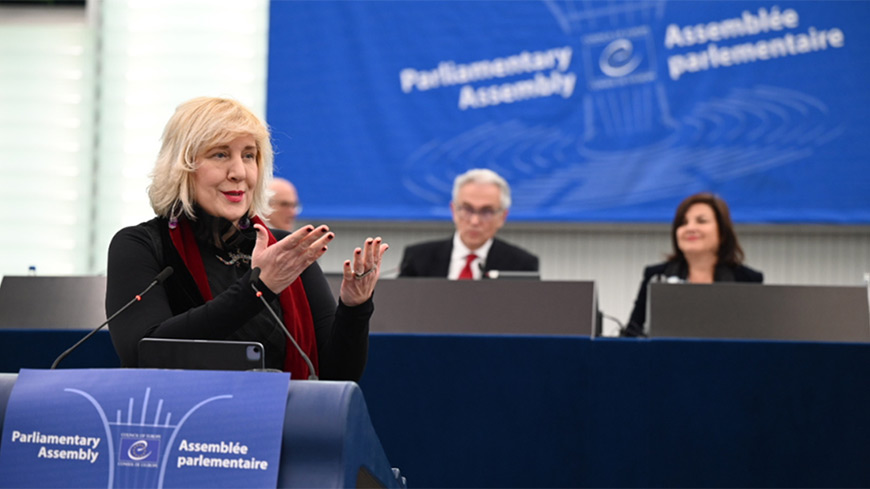
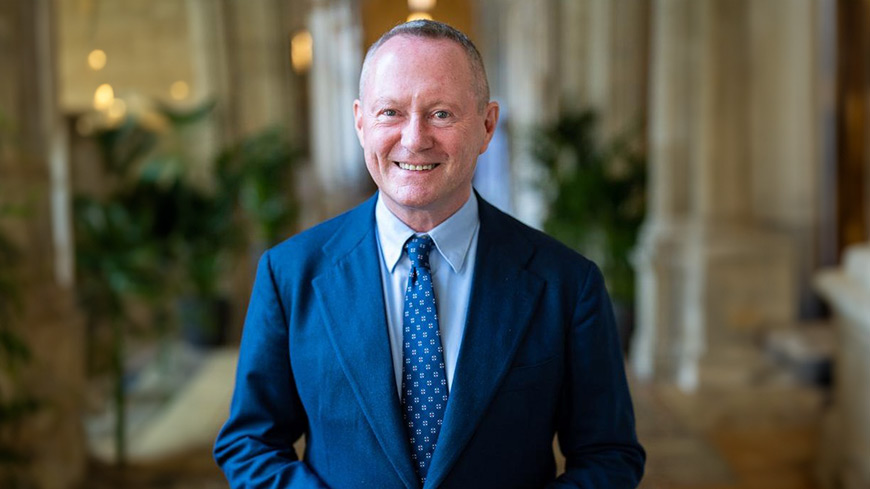
On 30 March 2024 Dunja Mijatović ended her term as Council of Europe Commissioner for Human Rights and the next day the new Commissioner, Michael O’Flaherty, started his work.

Dunja Mijatović ends her term as Council of Europe Commissioner for Human Rights

“… Over the past six years, I have witnessed the extraordinary commitment to human rights displayed by partners of my Office, and by ordinary citizens in the face of an ever-changing landscape of politics, technology and social issues. At the same time, I have seen the harm that the current challenges to human rights can do to our societies. The escalation of conflicts, most notably Russia’s full-scale invasion of Ukraine, has underlined the fragility of peace and the dire consequences of disregarding international law and human rights…

Throughout my tenure, the dedication of NGOs, journalists, activists and other partners has been a constant source of inspiration. Their unwavering commitment to the defence of human rights, often at great personal risk, has reinforced my belief in the power of collective action and the enduring relevance of our principles.

As my term ends, I am encouraged by the progress that has been made in the field of human rights, but mindful of the work that remains to be done. It is important to continue engaging on issues related to the environment and artificial intelligence…Finally, there is a crucial need to engage with and to enable the full participation of young people and their organisations in all future discussions. Governments should empower young people to make choices and meaningfully influence their future.

Michael O'Flaherty takes up office as Council of Europe Commissioner for Human Rights

The Council of Europe’s new Commissioner for Human Rights, Michael O’Flaherty, begins his six-year mandate today with a pledge to put human rights at the heart of member states’ agendas.

I intend to inject a human rights perspective into the greatest challenges facing our societies,” said O’Flaherty, noting that he intends to carry out his first visit as Commissioner to Ukraine. “I can think of nothing more urgent than addressing the human rights consequences of Russia’s full-scale invasion of Ukraine, which has caused terrible human suffering and destruction“.

The Commissioner also identified other areas where stronger human rights protection is urgently needed, including the climate crisis, the governance of artificial intelligence, freedom of expression, migration and the rise of hate speech, including antisemitism and anti-Muslim attacks.

A significant part of the Commissioner’s agenda will also be devoted to bringing the struggles of marginalised people and victims of discrimination to the forefront of human rights discussions. “In particular, Roma and Travellers face an intolerable situation that requires greater attention,” said the Commissioner.

Finally, the Commissioner highlighted his intention to focus on youth, socio-economic rights and human rights defenders, as well as to use his mandate to contribute to the implementation of judgments of the European Court of Human Rights.

I step into this new role with a sense of great responsibility, as well as deep appreciation and respect for the work of my predecessor, Dunja Mijatović. Human rights affect every aspect of our lives. At a time when they face multiple challenges, we must recommit ourselves to weaving them into the fabric of our societies. This will require a concerted effort and I intend to play my part to the best of my ability by accompanying and standing up for rights holders across the Member States.

An Irish human rights lawyer, O’Flaherty has served as Director of the EU Fundamental Rights Agency (2015-2023). https://www.pravda.com.ua/eng/news/2024/04/1/7449154/

https://www.coe.int/et/web/commissioner/-/dunja-mijatovi%C4%87-ends-her-term-as-council-of-europe-commissioner-for-human-rights

https://www.coe.int/hu/web/commissioner/-/michael-o-flaherty-takes-up-office-as-council-of-europe-commissioner-for-human-rights

Mary Lawlor’s new report focusses on Youth Human Rights Defenders

March 7, 2024

UN Report Unveils Strategies to Shield Child, Youth Human Rights Defenders

Emmanuel Abara Benson, on 6 March 2024, unveils in BNN a new UN report which highlights the challenges faced by young activists, advocating for global support and legal frameworks to safeguard their rights and efforts:

Amnesty International heralds a new UN report as a significant advancement for young activists worldwide, set to be introduced by UN Special Rapporteur Mary Lawlor during the 55th Session of the Human Rights Council on 12 March 2024. The document, titled “We are not just the future”: challenges faced by child and youth human rights defenders”, highlights the unique challenges faced by young activists, including oppression, age-based discrimination, and barriers to resources and legal aid.

The report by Mary Lawlor sheds light on the considerable obstacles child and youth defenders encounter, such as intimidation, threats, and attacks, both in physical and digital realms. Amnesty International’s Sara Vida Coumans emphasizes the overdue recognition of the distinct experiences and adversities young defenders face compared to their adult counterparts. The report also addresses the issue of “gatekeeping” by adult-led groups, which hampers the ability of young activists to access necessary resources and participate in decision-making processes.

Amnesty International has documented numerous instances of abuses against young human rights defenders. Examples include Fatima Movlamli from Azerbaijan and Mahmoud Hussein from Egypt, who faced intimidation and arbitrary detention, respectively, due to their activism. Moreover, the report mentions the plight of child climate defender Leonela Moncayo in Ecuador, who was intimidated with an explosive device outside her home, highlighting the risks young activists face. The organization calls for governments worldwide to heed the Special Rapporteur’s recommendations, particularly in providing legal aid and support for young defenders. See also: https://humanrightsdefenders.blog/2023/11/13/hrw-submission-to-special-rapporteur-focuses-on-child-and-youth-human-rights-defenders/

The document not only brings to the forefront the specific challenges faced by child and young human rights defenders but also underscores the importance of global support and legal frameworks to safeguard these individuals. By spotlighting the adverse impact of social media, the right to peaceful assembly, and the effects of climate change on young people, the report advocates for a more inclusive and supportive environment for young activists. Governments are urged to adopt the recommendations, recognizing the vital role of young defenders in advocating for human rights and democratic reforms.

This groundbreaking report marks a pivotal moment in the recognition and support of child and young human rights defenders. By highlighting the unique challenges they face and offering targeted strategies for protection, the UN and Amnesty International are paving the way for a more inclusive and equitable future for young activists. The global community’s response to these recommendations will be instrumental in ensuring that young voices are not only heard, but also protected in their brave efforts to defend human rights.

https://bnnbreaking.com/breaking-news/human/un-report-unveils-strategies-to-shield-child-youth-human-rights-defenders

https://www.irishexaminer.com/opinion/commentanalysis/arid-41349259.html

see also: https://www.coe.int/en/web/portal/-/child-human-rights-defenders-want-to-be-heard-by-their-governments-council-of-europe-study

https://rightlivelihood.org/news/joint-statement-condemns-global-persecution-of-youth-activists

Tribute to James Lawson of the Council of Europe

February 17, 2024

Bert Verstappen – retired from HURIDOCS – wrote the following tribute to a person who – from an intergovernmental position – contributed greatly to the development of the NGO network:

It is with deep sadness that HURIDOCS has to announce the unexpected passing away on 11 February of James Lawson. James had a leading function in the field of information management in the Council of Europe. In addition, he devoted a huge amount of time and energy to HURIDOCS.

James was a visionary who introduced new tools and techniques for human rights information handling to the HURIDOCS network. He was keen to share his enthusiasm for developments in the field of information management that could and should benefit human rights organisations. He was convinced that, in the age of the Internet, librarians continue to play an important role as information sharers.

A major initiative taken by James was the multilingual human rights search engine HuriSearch. He planned HuriSearch as from 1998. HuriSearch provided a singular point of access to information published on over 5’000 websites of human rights organisations worldwide. HuriSearch indexed and crawled about 8 to 10 million web pages. It was publicly available from 2003 until 2016.

James was an active and committed member of the HURIDOCS Continuation Committee – as its Board was called for many years. He served on the CC from 1992 to 2009. He was HURIDOCS Treasurer and as leader of the Task Force on Software Development oversaw the development of HURIDOCS’ tools and techniques.

James was also Coordinator and Chairperson of a large number of meetings of the European Co-ordination Committee on Human Rights Documentation https://www.ecchrd.org/. During these meetings, he introduced advances in technology such as the use of metadata and the eXtended Markup Language XML.

James also provided various trainings on human rights documentation on behalf of HURIDOCS. Among other activities, he trained NGOs preparing evidence for Truth Commission in South Africa and was the main resource person in a training for French-speaking African trainers in Senegal. He also held HURIDOCS trainings with local human rights organisations in Burkina Faso, the DR Congo, Georgia, Ghana, Haiti, Indonesia and other countries.

HURIDOCS thanks James for his engagement and expertise. We wish strength to Hanne and his daughters.

Finally recognition for Turkish human rights defender Osman Kavala

October 12, 2023
2023 Václav Havel Prize awarded to imprisoned Turkish human rights defender Osman Kavala

The eleventh Václav Havel Human Rights Prize has been awarded to imprisoned Turkish human rights defender, philanthropist and civil society activist Osman Kavala.

The 60,000-euro prize was presented at a special ceremony on the opening day of the autumn plenary session of the Parliamentary Assembly of the Council of Europe (PACE) in Strasbourg on 9 October 2023. For more on the award and its laureates, see https://www.trueheroesfilms.org/thedigest/awards/7A8B4A4A-0521-AA58-2BF0-DD1B71A25C8D

Mr Kavala, a supporter of numerous civil society organisations in Türkiye for many years, has been in prison continuously since 2017 following his arrest for his alleged links to the Gezi Park protests.

In a 2019 ruling, the European Court of Human Rights ordered his immediate release, finding his detention violated his rights and pursued an ulterior purpose, “namely to reduce him to silence as a human rights defender”, and could dissuade other human rights defenders. In 2022 the Court’s Grand Chamber confirmed that Türkiye has failed to fulfil its obligations under the European Convention on Human Rights. [see: https://humanrightsdefenders.blog/2022/07/27/kavala-ruling-of-european-court-of-human-rights-infringement-procedure-against-turkey/]

In a letter written from prison, read out by his wife Ayşe, Mr Kavala said he was honoured by the decision, and dedicated the Prize to his fellow citizens unlawfully kept in prison. He said the award reminded him of the words of Václav Havel, writing to his wife Olga from prison in 1980: “The most important thing of all is not to lose hope. This does not mean closing one’s eyes to the horrors of the world. In fact, only those who have not lost faith and hope can see the horrors of the world with genuine clarity.

Responding to the awarding of the 2023 Václav Havel Prize to Turkish prisoner of conscience, Osman Kavala, by the Council of Europe’s Parliamentary Assembly, Amnesty International’s Deputy Regional Director for Europe, Dinushika Dissanayake, said:

While we celebrate the fact that Osman Kavala has been recognised with this top human rights award, the fact that he cannot be in Strasbourg to collect it in person is heartbreaking. Instead, having already been in jail for almost six years, he is languishing behind bars in Türkiye on a politically-motivated life sentence without the possibility of parole.

Rather predictably: in a statement posted on X, formerly known as Twitter, Justice Minister Yılmaz Tunç said it was unacceptable for the CoE to award a “so-called” human rights prize to a convict, whose verdict of conviction was approved by one of Türkiye’s top courts.

A group of nine nongovernmental organizations including Human Rights Watch and Amnesty International said the prosecution of rights defender and businessman Osman Kavala and four codefendants in connection with mass protests a decade ago was unfair and essentially a political show trial from the beginning, calling for an urgent international response.

[https://www.dailysabah.com/politics/diplomacy/turkiye-slams-coe-for-awarding-convict-with-human-rights-prize]

https://www.coe.int/en/web/portal/-/2023-v%C3%A1clav-havel-prize-awarded-to-imprisoned-turkish-human-rights-defender-osman-kavala

What will happen to pending cases against Russia in the European Court of Human Rights?

August 24, 2022

By Kanstantsin Dzehtsiarou, of the University of Liverpool wrote 16 August 2022 a piece: stating that “the Range of Solutions to the Russian Cases Pending before the European Court of Human Rights [are]: Between ‘Business as Usual’ and ‘Denial of Justice’

Exactly in a month time, on 16 September 2022, Russia will no longer be a party to the European Convention on Human Rights (ECHR or Convention). See also: https://humanrightsdefenders.blog/2022/03/11/russia-refuses-to-further-participate-in-the-council-of-europe/. The European Court of Human Rights (ECtHR, Court) will have no jurisdiction over human rights violations that will happen after that. It does not mean that the ECtHR will stop accepting applications against Russia immediately on 16 September 2022 as often victims of human rights violations have to go through national legal remedies and this can take months or even years. It will be mostly for the Court to decide how to treat the applications against Russia both pending now and those arriving after 16 September 2022. The Court already had at least five months to clarify this, but no publicly available decision has been taken yet and it will perhaps be a last-minute compromise between judges. The reason for this delay is that this question is complex in terms of its consequences for the Court, for the victims of human rights violations and for the Council of Europe as a whole.

As of 30 June 2022, there were 17,550 pending applications from Russia. Although the vast majority of these cases are most likely repetitive or inadmissible, there are some complex and high-profile cases including over a dozen of inter-state applications. So, what should the Court ‘do’ with the pending applications? The ECtHR has a few plausible solutions to this challenging problem:

1. ‘Business as usual’

The Court can continue dealing with all pending Russian cases. ..However, dealing with more important meritorious applications will be much more difficult within the ‘business as usual’ model for the following reasons: first, it is clear that the Russian authorities will not collaborate with the Court. ….

There will be no sitting judge from Russia and it is highly unlikely that anyone from the list of ad hoc judges will be willing to sit. So, the Court will have to decide cases without the Russian judge and without the input from the respondent state. A one-of departure from the rule enshrined in Article 24(4) is not perhaps catastrophic but a systematic bypassing of this norm might undermine the legitimacy of the Court’s processes.

The second reason why the ‘business as usual’ model is suboptimal is that it will take a lot of resources from the Court in the circumstances when the budget of the organisation will be significantly reduced by the departure of Russia, who has been a major contributor to the budget of the Council of Europe. The resources spent on the cases from Russia will be arguably taken from other cases in relation to situations where the Court can make a significant and meaningful impact. And this leads me to the final and perhaps the most important reason. The Russian authorities will not implement any of the judgments that entered into force after 16 March 2022. The argument that execution of these judgments can be used as a condition for the return of Russia into the organisation is not particularly convincing as there is no indication that Russia is going to come back any time soon. Moreover, there are plenty of unenforced cases at the moment and the currently available unexecuted judgments pending before the Committee of Ministers can make a solid basis for a conditional return of Russia to the Council of Europe.

Finally, I have to mention that the victim-centric approach would perhaps support the ‘business as usual’ model as in this case the ECtHR will at least confirm that human rights violations have taken place. Having said that, this acknowledgement will not lead to any tangible changes: the applicants will not even receive the monetary just satisfaction from the respondent state. This might increase the feeling of frustration and hopelessness rather than provide any satisfaction.

2. ‘Pick and choose’

Another possible solution to the Russian docket of cases at the ECtHR can be a ‘pick and choose’ model. This way, the Court will select a number of leading cases which would perhaps include inter-state cases, sensitive political cases and the cases exemplifying the structural legal problems in Russia and deliver judgments in these cases.

Within this model the Court can use the so-called Burmych scenario. The judgment in Burmych v Ukraine was a follow-up judgment to the pilot case of Ivanov v Ukraine. In this case the Court ruled that non-execution of the final national judgments is a violation of Article 6 of the ECHR and that the delay in execution should be covered by an appropriate compensation. In Burmych the Court decided that there is no point in keeping producing judgments in clone cases and transferred all applications dealing with the same issue to the Committee of Ministers. Applying this approach to the pending Russian cases, the Court can pick the key complaints on broadly defined themes, then attach similar applications to this leading case and then transfer all of them to the Committee of Ministers without giving separate judgments in each individual case. One of the drawbacks of this approach is that it will cement the questionable principle applied in Burmych as a modus operandi of the Court.

This model would highlight the key problematic areas and give some satisfaction to some victims. It would also be a less resource-consuming than the ‘business as usual’ model but this approach would not be able to solve other problems highlighted in the previous paragraph such as lack of Russian engagement and probably total short-term ineffectiveness of such judgments. It also creates a new challenge: the Court can be accused of a selection bias. The ECtHR will perhaps have to justify why some cases are selected while some others are not.

3. ‘Total freeze’

Total freeze is one of the quicker and more radical solutions available to the ECtHR. The Court can suspend the adjudication of all applications against Russia until the situation changes. The President of the ECtHR has already briefly suspended examination of Russian cases before this suspension was lifted by the Plenary of the Court. This means that suspension is a possible avenue for the Court. This suspension can take at least two forms – either a total freeze of all pending applications or a rejection of all clearly inadmissible applications and then freezing of all meritorious ones. Both of these solutions would save a lot of resources for the Court, it will remove the need for a ‘deemed to fail’ collaboration with Russia and will not require the Court to select the ‘lucky’ applications to deal with. However, no victim will get even moral satisfaction from the fact that the ECtHR found their rights violated but one can argue that this moral satisfaction is not enough for an operation of a judicial organisation. The ECtHR is not an archive that systematises the human rights violations in Russia. It is a judicial institution. The legitimacy of the Court depends on the effective implementation of its judgments and no implementation can be expected from the judgments against Russia.

4. ‘Strike out’

The clearest and the most radical solution would be striking out all the applications against Russia pending before the ECtHR. Pursuant to Article 37(1)c ECHR, the ECtHR can strike out any application for any reason if it is no longer justified to continue the examination of the application. The Convention provides very wide discretion to the Court here. The ECtHR can decide that in the current situation the delivery of judgments will make no impact and therefore all of the applications should be excluded from the list of pending cases. However, this option is not very likely. It was just decided by the ECtHR that the Convention is applicable to Russia for 6 months after Russia ceased to be a member of the Council of Europe. This decision was not the only plausible interpretation of Article 58 ECHR that regulates the denunciation of the Convention. This would have been irrational if immediately after taking this decision, the Court disposed all applications, including of those which were submitted in relation to the violations that happened between 16 March and 16 September 2022. It is also unlikely that the Court would do it for political reasons – it can be seen as a complete denial of justice for a vast number of victims. So, this option is not plausible at least in the short run.

Conclusion

Neither ‘business as usual’ nor ‘strike out’ models are very plausible. It is more likely that the Court will chose some combination from the spectrum between the ‘pick and choose’ and ‘total freeze’ models. In making this decision, the Court will have to weigh the importance of symbolic judgments against Russia and the amount of resources and legitimacy that will be required to deliver these judgments. These resources might be needed in other areas and in relation to other situations.

https://www.echrblog.com/2022/08/the-range-of-solutions-to-russian-cases.html

and

https://www.echrblog.com/2022/09/russia-no-longer-party-to-echr-as-of.html