Germany and France honoured this year 15 people who have made outstanding contributions to the protection of human rights, campaigning for causes including women’s rights in Afghanistan, the freedom of the press in South Africa and children who are born as a result of rape in wartime.
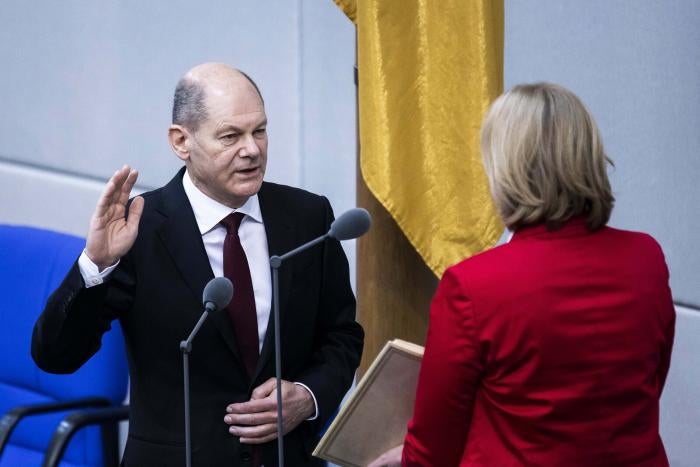
On 10 December, international Human Rights Day, Foreign Minister Annalena Baerbock and French Foreign Minister Jean‑Yves Le Drian presented fifteen people with the Franco-German Prize for Human Rights. This award recognises the efforts of all those who work tirelessly every day to advance the causes of human rights and the rule of law. It is presented decentralised by the French and German missions in various locations around the world.
Jake Epelle who works to combat the ongoing stigmatisation and discrimination faced by people with albinism in Nigeria.
Noelah Godfrey Msuya who promotes the rights of children and women in Tanzania.
Monika Borgmann who is a German-Lebanese documentary-maker.
Jacques Letang who is a judge and lawyer in Haiti.
Cristina Palabay from the Philippines who leads the national association Karapatan.
Alexandrine Victoire Saizonou who is an advocate for women’s and children’s rights in Benin.
Ajna Jusic from Bosnia discovered at the age of 15 that she was born as a result of rape during wartime, and since then she has advocated for others in the same situation.
Erika Lorena Aifán Dávila is a judge who has been the target of constant attacks from the authorities of Guatemala.
Nebahat Akkoc is the Managing Director of the NGO Kamer in Turkey.
The Venezuelan Education-Action Program on Human Rights or PROVEA.
Narges Mohammadi who is spokesperson and vice chairman of the Iranian organisation Defenders of Human Rights Center.
May Sabai Phyu is a Kachin activist from Myanmar/Burma.
Shaharzad Akbar is an Afghan human rights defender who campaigns in particular for the rights of women in Afghanistan.
Tabelo Timse is an investigative journalist and a member of an independent non‑profit media centre in South Africa.
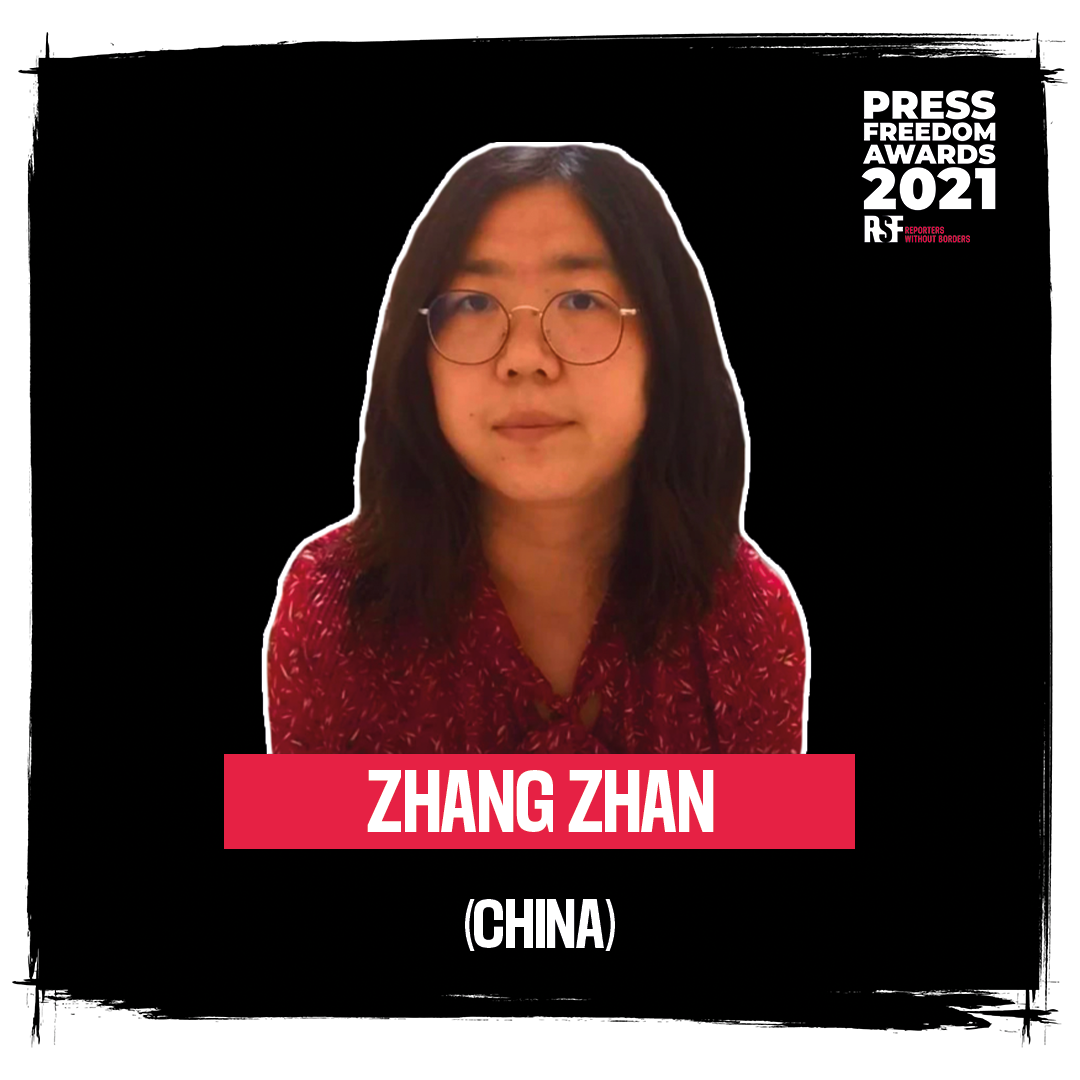
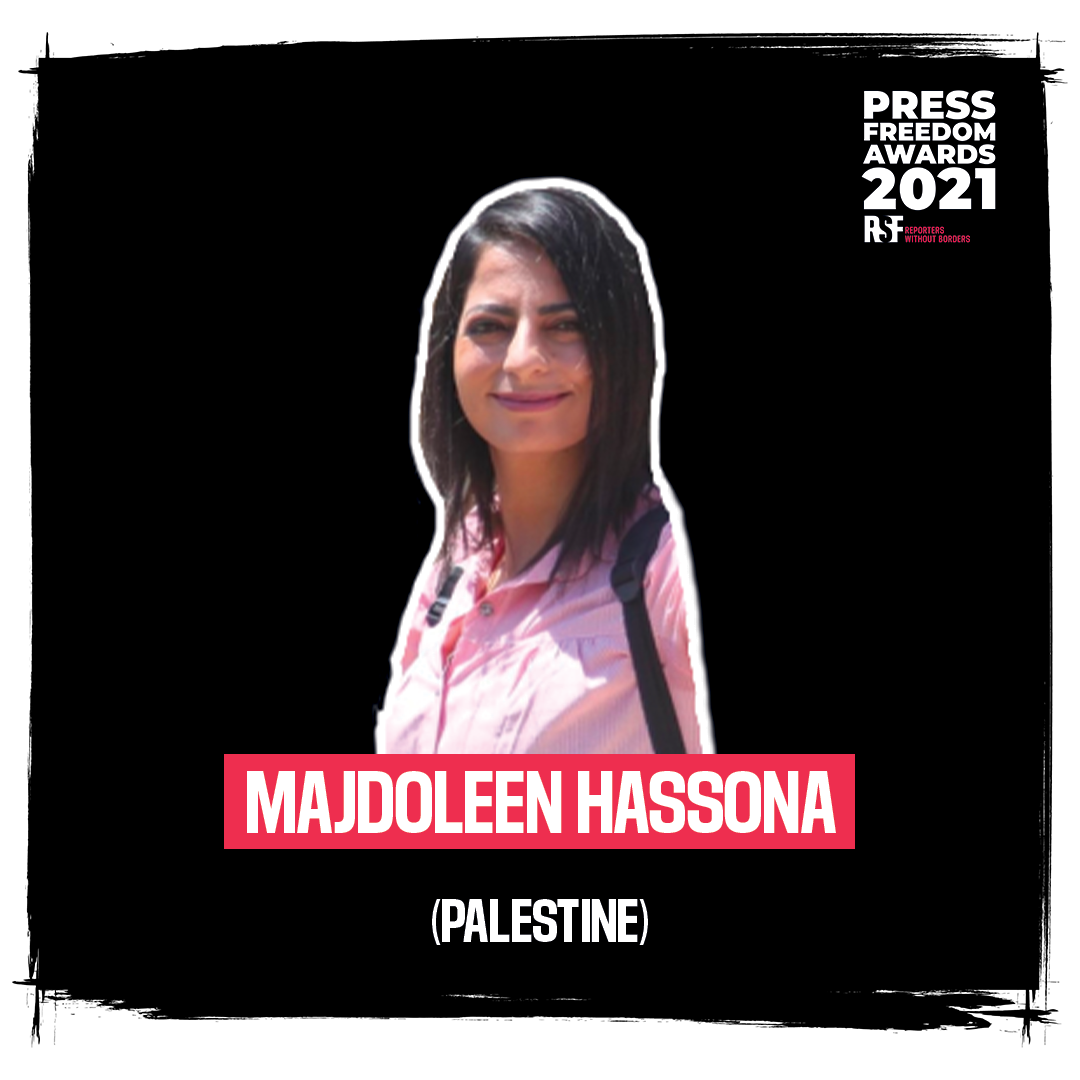
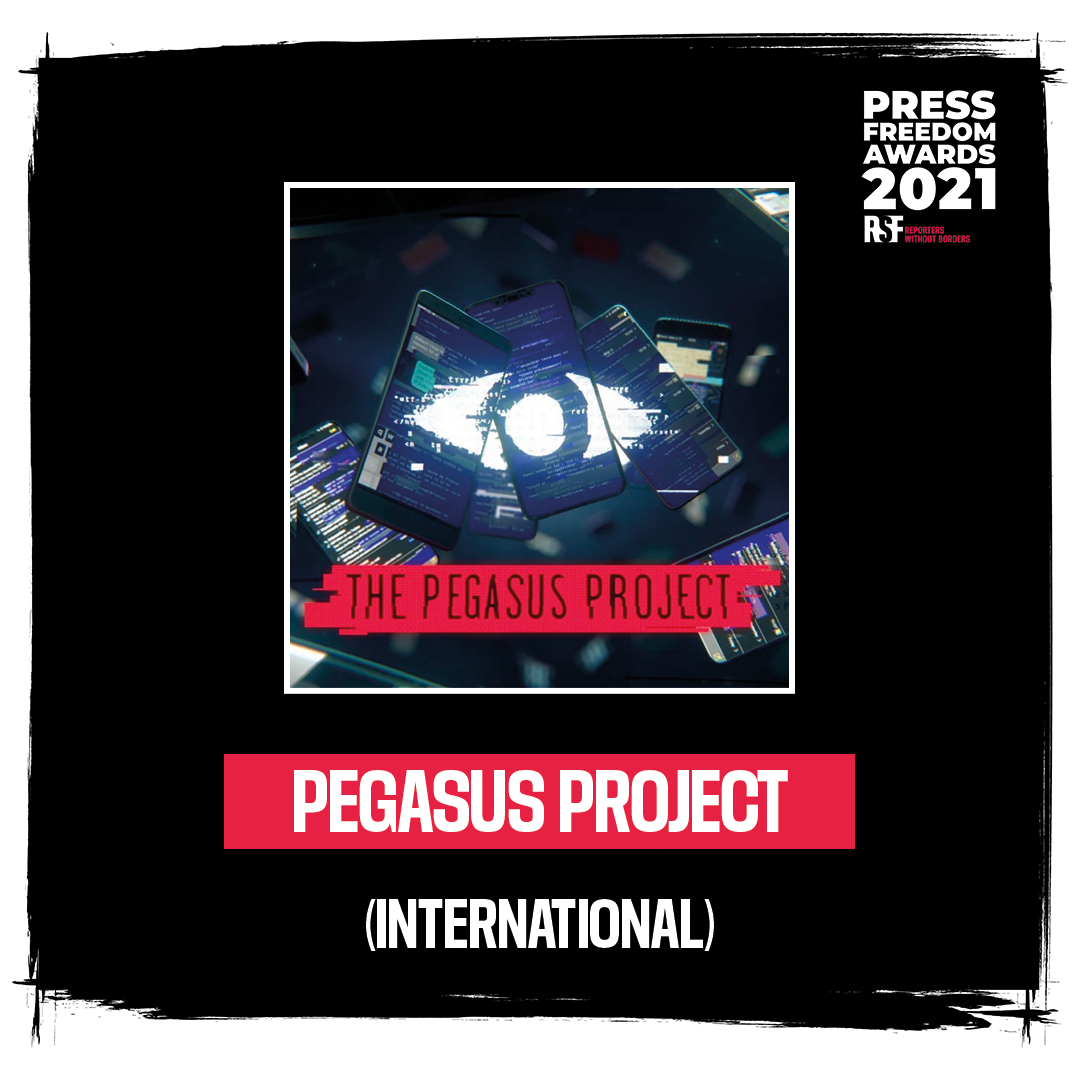
On 20 November 2021 Pacific Media Watch reported that the 2021 Reporters Without Borders (RSF) Press Freedom Awards have been given to Chinese journalist Zhang Zhan in the courage category, Palestinian journalist Majdoleen Hassona in the independence category, and the Pegasus Project in the impact category.
RSF president Pierre Haski announces the 29th RSF Press Freedom Awards in Paris. Video: RSF
RSF’s press freedom prizes are awarded every year to journalists or media that have made a notable contribution to the defence or promotion of freedom of the press in the world. This is the 29th year they have been awarded. The 2021 awards have been given in three categories — journalistic courage, impact and independence.
Courage Prize The 2021 Prize for Courage, which aims to support and salute journalists, media outlets or NGOs that have displayed courage in the practice, defence or promotion of journalism, has been awarded to Chinese journalist Zhang Zhan.
Despite constant threats, this lawyer-turned-journalist covered the covid-19 outbreak in the city of Wuhan in February 2020, live-streaming video reports on social media that showed the city’s streets and hospitals, and the families of the sick. Her reporting from the heart of the pandemic’s initial epicentre was one of the main sources of independent information about the health situation in Wuhan at the time.
After being arrested in May 2020 and held incommunicado for several months without any official reason being provided, Zhang Zhan was sentenced on 28 December 2020 to four years in prison for “picking quarrels and provoking trouble”. In protest against this injustice and the mistreatment to which she was subjected, she went on a hunger strike that resulted in her being shackled and force-fed. Her friends and family now fear for her life, and her health has worsened dramatically in recent weeks. See also: https://humanrightsdefenders.blog/2021/11/06/chinese-journalist-zhang-zhan-at-imminent-risk-of-death/
Independence Prize The 2021 Prize for Independence, which rewards journalists, media outlets or NGOs that have resisted financial, political, economic or religious pressure in a noteworthy manner, has been awarded to Palestinian journalist Majdoleen Hassona.
Majdoleen Hassona
Before joining the Turkish TV channel TRT and relocating to Istanbul, this Palestinian journalist was often harassed and prosecuted by both Israeli and Palestinian authorities for her critical reporting. While on a return visit to the West Bank in August 2019 with her fiancé (also a TRT journalist based in Turkey), she was stopped at an Israeli checkpoint and was told that she was subject to a ban on leaving the territory that had been issued by Israeli intelligence “for security reasons”. She has been stranded in the West Bank ever since but decided to resume reporting there and covered the anti-government protests in June 2021 following the death of the activist Nizar Banat.
Impact Prize The 2021 Prize for Impact, which rewards journalists, media outlets or NGOS that have contributed to clear improvements in journalistic freedom, independence and pluralism, or increased awareness of these issues, has been awarded to the Pegasus Project.
The Pegasus Project
The Pegasus Project is an investigation by an international consortium of more than 80 journalists from 17 media outlets* in 11 different countries that was coordinated by the NGO Forbidden Stories with technical support from experts at Amnesty International’s Security Lab. Based on a leak of more than 50,000 phone numbers targeted by Pegasus, spyware made by the Israeli company NSO Group, the Pegasus Project revealed that nearly 200 journalists were targeted for spying by 11 governments — both autocratic and democratic — which had acquired licences to use Pegasus. This investigation has made people aware of the extent of the surveillance to which journalists are exposed and has led many media outlets and RSF to file complaints and demand a moratorium on surveillance technology sales. See also: https://humanrightsdefenders.blog/2021/11/10/palestinian-ngos-dubbed-terrorist-were-hacked-with-pegasus-spyware/
“For defying censorship and alerting the world to the reality of the nascent pandemic, the laureate in the ‘courage’ category is now in prison and her state of health is extremely worrying,” said RSF secretary-general Christophe Deloire.
“For displaying a critical attitude and perseverance, the laureate in the ‘independence category has been unable to leave Israeli-controlled territory for the past two years. “For having revealed the scale of the surveillance to which journalists can be subjected, some of the journalists who are laureates in the ‘impact’ category are now being prosecuted by governments.
INTERPOL is going to have its General Assembly on the 23 – 24 November 2021 in Lyon. The election of both its President and a member of the Executive Committee look terrible. Already in 2017 there was a problem: see https://humanrightsdefenders.blog/2017/04/20/interpol-headed-by-chinese-police-official-human-rights-defenders-fearsome/. (The former chairman of Interpol Meng Hongwei was also a ministry of public security official, serving as vice-minister. However, Meng’s Interpol term ended prematurely in 2018 when he disappeared during a visit to China and was later jailed for 13 years on bribery charges, amid Xi Jinping’s anti-graft campaign targeting millions of officials.)
Several prominent members of the European Parliament (MEPs) have warned that the appointment of the Emirati official Major General Ahmed Nasser Al-Raisi to the position of president of Interpol would “undermine the mission and reputation” of the global police organisation. In a letter sent to the European Commission president, three MEPs urged European Union (EU) states to elect an Interpol chief that comes “from a country with an established criminal justice system and longstanding respect for human rights”.
The Gulf Center for Human Rights (GCHR), the French League for Human Rights and the International Federation for Human Rights are also concerned about the candidacy of Major General Ahmed Nasser Al-Raisi call to reject him.
Ahmed Al-Raisi has been Inspector General of the UAE’s Interior Ministry since 2015 and is also in charge of the UAE police force. Under his leadership, forces have carried out repeated and systematic arbitrary detentions and tortured prisoners of conscience and human rights defenders with complete impunity. One of the most emblematic cases concerns human rights defender Ahmed Mansour. Winner of the 2015 Martin Ennals Award and member of the GCHR steering committee, Ahmed Mansour has been imprisoned since March 2017 and sentenced to ten years’ imprisonment in 2018 for, according to the authorities, criticising the Emirati government and tarnishing his country’s image on social networks. Since 2017, he has been held in solitary confinement in Al-Sadr prison, in a 4m2 cell, without access to medical, hygiene, water or sanitary facilities. The inhumane conditions of Ahmed Mansour’s imprisonment have been the subject of several appeals without any favourable response from the Emirati authorities. [see: https://humanrightsdefenders.blog/tag/ahmed-mansoor/]
According to reports of several NGOs, torture is used systematically in detention centres in order to obtain confessions of guilt or testimonies against other detainees, particularly in the prisons of Al-Razeen, Al-Wathba and Al-Sadr. In addition, some prisons, such as Al-Awair prison and the Al-Barsha police detention centre, are overcrowded and unsanitary, making it extremely difficult to comply with social distancing and recommended hygiene practices in the context of the COVID-19 pandemic….In addition, prisoners are regularly denied medication and medical treatment for pre-existing health problems or illnesses developed during detention. Several UN experts have condemned these practices and expressed their concerns to the UAE authorities in recent years, but the authorities have not changed their practices.
Such inhumane treatment is recurrent in the UAE and is in flagrant contravention of international law and the Nelson Mandela Rules on the Treatment of Prisoners. While Major General Al-Raisi is, by virtue of his office, responsible for investigating complaints of abuse by the police and security forces in his country, none have been conclusively investigated. In the absence of any enforceable accountability mechanisms in the UAE, the GCHR has filed a complaint in France, against General Major Al-Raisi for acts of torture. Unfortunately, Interpol did not listen: https://www.businessinsider.com/interpol-president-uae-official-accused-of-torture-elected-2021-11
Another problematic candidate is Hu Binchen, the deputy director-general of the Chinese Ministry of international cooperation department, who is one of three candidates vying for two seats as Asia delegates on the committee.
The 13-member executive committee oversees the work of Interpol’s general secretariat and helps set future policy. Interpol controls a number of databases containing identifying details of people and property, which assist in global policing. It also operates the system of red notices, which are requests “to locate and provisionally arrest an individual pending extradition”.
However, there are long-running concerns over governments or authorities misusing the system to track down dissidents. While there are clear rules against the use of red notices on refugees, high-profile cases have shown countries are repeatedly able to obtain red notices, against Interpol policy.
Activists and advocacy groups, as well as 50 members of an international cross-party group of legislators, the Inter-parliamentary Alliance on China, have lodged their objections at Hu’s potential election to the committee, noting alleged attempts by China to use the red notice system to target exiled Uyghur activists.
“By electing Hu Binchen to the executive committee, the general assembly would be giving a green light to the PRC government to continue their misuse of Interpol and would place the tens of thousands of Hong Kong, Uyghur, Tibetan, Taiwanese and Chinese dissidents living abroad at even graver risk,” said the letter from the Alliance, citing the July detention of Uyghur activist Idris Hassan in Morocco.
“Allowing Interpol to be used as a vehicle for the PRC government’s repressive policies does great harm to its international standing.”
The human rights group Safeguard Defenders said the Chinese ministry’s international cooperation department, in which Hu is a senior official, oversaw operations named Sky Net and Fox Hunt, chasing down fugitives overseas. It alleged “teams were sent by the ministry “to intimidate and harass ethnic Chinese to force them to return to China ‘voluntarily’”. In a report also released on Monday, Safeguard Defenders said there had been a tenfold increase in the issuance of Chinese red notices between 2000 and 2020.
A later development is that 259 organizations, call on INTERPOL to immediately ban the Myanmar military junta from representing Myanmar as a member of INTERPOL. They demand that the military junta is excluded from the upcoming 89th INTERPOL General Assembly and all benefits and future cooperation that membership entails. [see: https://www.forum-asia.org/?p=36143]
AI has launched the world’s biggest letter writing campaign to help 10 human rights defenders around the world facing.
Millions of letters, emails and texts will be sent to support people who have been jailed, attacked or disappeared
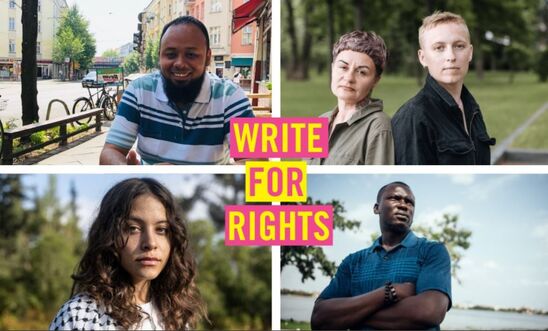
Amnesty International has launched its flagship annual letter-writing campaign, Write for Rights to support 10 activists from around the world who have been attacked, jailed, harassed or disappeared for standing up for their rights.
This year, Write for Rights – which is funded by players of the People’s Postcode Lottery – will be supporting ten individuals, including:
Imoleayo Adeyeun Michael from Nigeria, who faces years behind bars for joining the #EndSARS protests against the notorious Special Anti-Robbery Squad last year;
Janna Jihad, a 15-year-old journalist from Palestine, who faces harassment and death threats for reporting on the racist brutality her community experiences;
Mohamed Baker, an Egyptian human rights lawyer denied a trial and put behind bars for his work supporting people who have been imprisoned unjustly; and
Ciham Ali Ahmed, a US-Eritrean national, who was arrested nine years ago at the Sudanese border when she was trying to flee Eritrea aged 15 and has not been seen since.
Sacha Deshmukh, CEO of Amnesty UK, said:
“These individuals have been thrown behind bars, attacked, harassed or disappeared just for standing up for their rights. By coming together, people around the world have the power to raise their profile and increase their chances of protection or release.
“Sending a letter or email might seem like a small act, but when sent in their thousands they can have a huge impact. People in power are forced to listen.
Amnesty International’s Write for Rights campaign: Write for Rights goes back to the very roots of Amnesty International, which was founded in 1961, with Amnesty’s early campaigners writing letters of support to those affected by human rights abuses, as well as letters of concern to governments around the world.
More than 360,000 actions were taken for Algerian journalist Khaled Drareni, who was imprisoned for his reporting on the Hirak protest movement. He was provisionally released in February 2021.
Over 300,000 messages were sent to and on behalf of Paing Phyo Min, a satirical poet and student leader jailed for criticising the military in Myanmar. He was freed early in April 2021.
More than 777,000 actions were taken for Saudi women’s rights campaigner Nassima al-Sada. As a result, a G20 summit hosted by Saudi Arabia was overshadowed by international calls to free Nassima and other women human rights defenders. Nassima has since been conditionally released.
On 4 November 2021 the Observatory for the Protection of Human Rights Defenders, a partnership of the World Organisation Against Torture (OMCT) and FIDH, has received new information and requests your urgent intervention in the following situation in China.
New information:
The Observatory has been informed by the Network of Chinese Human Rights Defenders (CHRD) about the imminent risk of death of freelance journalist Zhang Zhan, who has been detained since May 2020 as a reprisal for her coverage of the Covid-19 pandemic from February 2020 until her arrest. Ms. Zhang is a former lawyer whose licence was suspended in retaliation for her activism and a well-known and outspoken journalist on the situation of human rights in China. See also: https://humanrightsdefenders.blog/2021/01/06/china-eu-deal-what-about-human-rights/
According to the relatives of Zhang Zhan, the journalists’ life is at imminent risk of death as a result of the partial hunger strike she started in June 2020 to protest her arbitrary detention and later her sentencing. The mother of Zhang Zhan was allowed to have a videocall with her daughter on October 28, 2021, after which she reported that the journalist weights less than 40 kg, is unable to walk unassisted and cannot raise her head without assistance. Her health is extremely poor, as she suffers from severe malnutrition, a gastric ulcer and swollen legs and feet. During her detention, she has been restrained and force-fed via a nasal tube.
The relatives of Zhang Zhan have been consistently denied their right to visit the journalist and only been allowed to communicate with her by video calls on two occasions, on October 28 and February 2021, and by a phone call on August 2021. Moreover, Zhang Zhan’s mother requested the Chinese security police the permission to visit the journalist in prison to persuade her to abandon the hunger strike. At the time of publication of this Urgent Appeal, she had not received a reply.
The Observatory recalls that Zhang Zhan was hospitalised in a prison hospital between July 21 and August 11, 2021 due to her deteriorating health conditions. During her hospitalisation, she was tied to a hospital bed and force-fed by prison authorities. On August 11, she was transferred back to the Shanghai Women’s Prison, where she remained detained at the time of this Urgent Appeal.
The Observatory further recalls that on May 14, 2020, Zhang Zhan went missing in Wuhan, Hubei Province, one day after releasing a video that criticised the government’s measures to contain the virus, claiming the authorities were being negligent. Zhang Zhan had travelled to Wuhan from her home in Shanghai in early February 2020 to report from the epicenter of the Covid-19 pandemic. She reported numerous stories, including the detention of other independent reporters and harassment of families of victims seeking accountability, via her WeChat, Twitter, and YouTube accounts.
After seven months of pre-trial detention, on December 28, 2020, the Shanghai Pudong People’s Court found Zhang Zhan guilty of “picking quarrels and provoking trouble” (Article 293 of China’s Criminal Law) and sentenced her to four years in prison. The court rejected the application filed by Zhang Zhan’s lawyers to request bail, live streaming of the trial, and a time extension of the proceedings. Their requests to have the defense witnesses appear in court to present exculpatory evidence was also rejected by the court. Zhang Zhan attended her trial in a wheelchair because of her poor health.
The Observatory is deeply concerned about the health conditions and risk of death of Zhang Zhan and urges the Chinese authorities to immediately and unconditionally release her and grant her immediate access to adequate and comprehensive medical treatment.
Nearly 60 percent of the world’s population (4.66 billion people) uses the internet. It’s our source of instant information, entertainment, news, and social interactions.
But where in the world can citizens enjoy equal and open internet access – if anywhere?
In this exploratory study, our researchers have conducted a country-by-country comparison to see which countries impose the harshest internet restrictions and where citizens can enjoy the most online freedom. This includes restrictions or bans for torrenting, pornography, social media, and VPNs, and restrictions or heavy censorship of political media. This year, we have also added the restriction of messaging/VoIP apps.
Although the usual culprits take the top spots, a few seemingly free countries rank surprisingly high. With ongoing restrictions and pending laws, our online freedom is at more risk than ever.
We scored each country on six criteria. Each of these is worth two points aside from messaging/VoIP apps which is worth one (this is due to many countries banning or restricting certain apps but allowing ones run by the government/telecoms providers within the country). The country receives one point if the content—torrents, pornography, news media, social media, VPNs, messaging/VoIP apps—is restricted but accessible, and two points if it is banned entirely. The higher the score, the more censorship. https://datawrapper.dwcdn.net/IBnNS/3/
The worst countries for internet censorship
North Korea and China (11/11) – No map of online censorship would be complete without these two at the top of the list. There isn’t anything either of them doesn’t heavily censor thanks to their iron grip over the entire internet. Users are unable to use western social media, watch porn, or use torrents or VPNs*. And all of the political media published in the country is heavily censored and influenced by the government. Both also shut down messaging apps from abroad, forcing residents to use ones that have been made (and are likely controlled) within the country, e.g. WeChat in China. Not only does WeChat have no form of end-to-end encryption, the app also has backdoors that enable third parties to access messages.
Iran (10/11): Iran blocks VPNs (only government-approved ones are permitted, which renders them almost useless) but doesn’t completely ban torrenting. Pornography is also banned and social media is under increasing restrictions. Twitter, Facebook, and YouTube are all blocked with increasing pressures to block other popular social media sites. Many messaging apps are also banned with authorities pushing domestic apps and services as an alternative. Political media is heavily censored.
Belarus, Qatar, Syria, Thailand, Turkmenistan, and the UAE (8/11): Turkmenistan, Belarus, and the UAE all featured in our “worst countries” breakdown in 2020. But this year they are joined by Qatar, Syria, and Thailand. All of these countries ban pornography, have heavily censored political media, restrict social media (bans have also been seen in Turkmenistan), and restrict the use of VPNs. Thailand saw the biggest increase in censorship, including the introduction of an online porn ban which saw 190 adult websites being taken down. This included Pornhub (which featured as one of the top 20 most visited websites in the country in 2019).
Freedom on the Net 2021 finds that while some democratic governments have made good-faith attempts to regulate the technology industry, state intervention in the digital sphere worldwide has contributed to the 11th consecutive year of global decline in internet freedom.
Governments around the world are increasingly asserting their authority over technology platforms, forcing businesses to comply with censorship and surveillance and contributing to an 11th consecutive year of global decline in internet freedom, according to Freedom on the Net 2021, the annual country-by-country assessment of internet freedom released today by Freedom House.
Global norms shifted dramatically toward greater state intervention in the digital sphere over the past year. Of the 70 states covered by Freedom on the Net 2021, 48 pursued legal or administrative action against technology companies. Some measures reflected legitimate attempts to mitigate online harms, rein in misuse of data, or end manipulative market practices. Many governments, however, proposed new policies that obliged businesses to remove content and share personal data with authorities, at great cost to free expression, privacy, and public accountability.
This change in the balance of power between companies and states has come amid a historic crackdown on freedom of expression online. In 56 countries, officials arrested or convicted people for their online speech. Governments suspended internet access in at least 20 countries, and 21 states blocked access to social media platforms, most often during times of political turmoil such as protests and elections. Authorities in at least 45 countries are suspected of obtaining sophisticated spyware or data-extraction technology from private vendors.
“The rights of internet users around the world, especially the rights to free expression and privacy, are being massively violated as a result of recent state actions,” said Michael J. Abramowitz, president of Freedom House. “Instead of using regulation to curb the immense power of tech companies, many governments are wielding it for their own repressive purposes.”
The decision by several platforms to deactivate the accounts of outgoing US president Donald Trump—in the wake of the January 6 assault on the Capitol—intensified concerns about the arbitrary power of a few firms to shape political debate, as well as their responsibility to stem offline violence. The move sparked a plethora of new regulatory and legislative proposals, including bad-faith attempts to prevent companies from moderating the accounts of politicians and state-run media. Tech companies faced high-profile showdowns with illiberal and authoritarian leaders in India, Nigeria, Russia, and Turkey that will have global implications for the future of free expression online.
“In these high-stakes battles between governments and tech companies, human rights risk becoming the main casualties,” said Adrian Shahbaz, director for technology and democracy at Freedom House. “Given the examples to date, you can hardly blame people for being skeptical that government regulation will lead to greater protection of their rights online. Regulations should ensure that power does not accumulate in the hands of a few dominant actors, whether in government or the private sector.”
Internet freedom plummeted by 14 points in Myanmar—the largest annual decline ever recorded on Freedom on the Net’s 100-point scale—after the military refused to accept the results of the November 2020 general elections and launched a deadly coup in February 2021. Electoral disputes also led to major internet freedom declines in Belarus, where authoritarian incumbent Alyaksandr Lukashenka claimed victory in a fraudulent presidential election in August 2020, and Uganda, where authorities shut off the internet and blocked social media platforms during marred general elections in January 2021. In addition, officials in both Myanmar and Belarus sought to silence independent online media by shutting down news outlets and harassing, assaulting, and torturing online journalists.
“Governments everywhere are invoking a vague need to retake control of the internet—whether from foreign powers, multinational corporations, or even civil society,” said Shahbaz. “In the absence of a shared vision for a free and open internet, many states are imposing restrictions on the free flow of information across borders, denying people access to life-changing tools based solely on their location. This fragmentation is diminishing the emancipatory power of the internet.”
“The daunting complexity of internet regulation makes it all the more important for democracies to take the lead and set a high bar by introducing regulatory approaches that protect human rights online and preserve a free and open internet,” said Allie Funk, senior research analyst for technology and democracy at Freedom House. “The laissez-faire approach to the tech industry spurred some forms of innovation, but it has also created opportunities for authoritarian manipulation, data exploitation, and widespread malfeasance. Democratic governments should pursue well-crafted regulations that tackle these problems while protecting people’s rights to express themselves, share information across borders, and hold the powerful to account.”
KEY FINDINGS:
Global internet freedom declined for the 11th consecutive year. The greatest deteriorations were documented in Myanmar, Belarus, and Uganda, where state forces cracked down amid electoral and constitutional crises.
Governments clashed with technology companies on users’ rights. Authorities in at least 48 countries pursued new rules for tech companies on content, data, and competition over the past year. With a few positive exceptions, the push to regulate the tech industry, which stems in some cases from genuine problems like online harassment and manipulative market practices, is being exploited to subdue free expression and gain greater access to private data.
Free expression online is under unprecedented strain. More governments arrested users for nonviolent political, social, or religious speech than ever before. Officials suspended internet access in at least 20 countries, and 21 states blocked access to social media platforms. Authorities in at least 45 countries are suspected of obtaining sophisticated spyware or data-extraction technology from private vendors.
China ranks as the worst environment for internet freedom for the seventh year in a row. Chinese authorities imposed draconian prison terms for online dissent, independent reporting, and mundane daily communications. The COVID-19 pandemic remains one of the most heavily censored topics. Officials also cracked down on the country’s tech giants, citing their abuses related to competition and data protection, though the campaign further concentrated power in the hands of the authoritarian state.
The United States’ score declined for the fifth consecutive year. False, misleading, and manipulated information continued to proliferate online, even affecting public acceptance of the 2020 presidential election results. The new administration took promising steps to enforce stronger protections for internet users.
State intervention must protect human rights online and preserve an open internet. The emancipatory power of the internet depends on its egalitarian nature. To counter digital authoritarianism, democracies should ensure that regulations enable users to express themselves freely, share information across borders, and hold the powerful to account.
Freedom on the Net 2021 assesses internet freedom in 70 countries, accounting for 88 percent of internet users worldwide. The report focused on developments that occurred between June 2020 and May 2021. Detailed country reports, data on 21 internet freedom indicators, and policy recommendations can be found at freedomonthenet.org.
Freedom on the Net 2021: The Global Drive to Control Big Tech
In the high-stakes battle between states and technology companies, the rights of internet users have become the main casualties, according to Freedom on the Net 2021, the annual country-by-country assessment of internet freedom released by Freedom House. Read the Report
On 29 September, the Assistant Secretary General Ilze Brands Kehris for Human Rights will present the Secretary General’s annual report on Cooperation with the United Nations, its representatives and mechanisms in the field of human rights (also known as ‘the Reprisals Report’) to the Council in her capacity as UN senior official on reprisals. The presentation of the report will be followed by a dedicated interactive dialogue, as mandated by the September 2017 resolution on reprisals. ISHR remains deeply concerned about reprisals against civil society actors who engage or seek to engage with UN bodies mechanisms. We continue to call for all States and the Council to do more to address the situation. The dedicated dialogue provides a key opportunity for States to raise concerns about specific cases of reprisals, and demand that Governments provide an update on any investigation or action taken toward accountability. An increasing number of States have raised concerns in recent sessions about individual cases of reprisals, including in Egypt, Nicaragua, Cuba, Saudi Arabia, Malaysia, Bahrain, Yemen, Burundi, China and Venezuela, Egypt, Burundi, Lao and China,
During the 48th session, Ghana, Fiji, Hungary, Ireland and Uruguay will present a draft resolution on cooperation with the UN. The draft resolution aims to strengthen the responses by the UN and States to put an end to acts of intimidation and reprisals. ISHR urges all delegations to support the adoption of the draft resolution and resist any efforts to undermine and weaken it.
ISHR recently launched a study analysing 709 reprisals cases and situations documented by the UN Secretary-General between 2010 and 2020. The study examines trends and patterns in the kinds of cases documented by the UNSG, how these cases have been followed up on over time, and whether reprisal victims consider the UN’s response effective. Among other things, the study found that nearly half the countries serving on the Council have been cited for perpetrating reprisals. The study found that public advocacy and statements by high level actors condemning reprisals can be one of the most effective tools to prevent and promote accountability for reprisals, particularly when public pressure is sustained over time. The study also found that, overall, the HRC Presidency appears to have been conspicuously inactive on intimidation and reprisals, despite the overall growing numbers of cases that are reported by the UNSG – including in relation to retaliation against individuals or groups in connection with their engagement with the HRC – and despite the Presidency’s legal obligation to address such violations. The study found that the HRC Presidency took publicly reported action in only 6 percent of cases or situations where individuals or organisations had engaged with the HRC. Not only is this a particularly poor record in its own right, it also compares badly with other UN actors. [see also: https://humanrightsdefenders.blog/2021/05/06/un-action-on-reprisals-towards-greater-impact/]
In line with previous calls, ISHR expects the President of the Human Rights Council to publicly identify and denounce specific instances of reprisals by issuing formal statements, conducting press-briefings, corresponding directly with the State concerned, publicly releasing such correspondence with States involved, and insisting on undertakings from the State concerned to investigate, hold the perpetrators accountable and report back to the Council on action taken.
Environmental Justice
It’s high time the Council responds at this session to the repeated calls by diverse States and civil society to recognize the right of all to a safe, clean, healthy and sustainable environment and establish a new mandate for a Special Rapporteur on human rights and climate change. ISHR joins a broad civil society coalition in calling on all States to seize this historic opportunity to support the core-group of the resolution on human rights and environment (Costa Rica, Maldives, Morocco, Slovenia, Switzerland) as they work towards UN recognition of the right to environment so that everyone in the world, wherever they live, and without discrimination, can live in a safe, clean and sustainable environment. Furthermore, ISHR also joins a broad civil society coalition in calling on States to establish a new Special Rapporteur on climate change at this session. This new mandate is essential to strengthen a human rights-based approach to climate change, engage in country visits, undertake normative work and capacity-building, and further address the human rights impacts of climate responses, in order to support the most vulnerable. [see also the recent Global witness report: https://humanrightsdefenders.blog/2021/09/13/global-witness-2020-the-worst-year-on-record-for-environmental-human-rights-defenders/]
Other thematic reports
At this 48th session, the Council will discuss a range of civil, political, economic, social and cultural rights and issues through dedicated debates, including interactive dialogues with the:
Special Rapporteur on the human rights to safe drinking water and sanitation
Special Rapporteur on the negative impact of unilateral coercive measures on the enjoyment of human rights
Special Rapporteur on truth, justice, reparation and guarantees of non-recurrence
Special Rapporteur on contemporary forms of slavery, including its causes and consequences
Working Group on Arbitrary Detention
Working Group on Enforced or Involuntary Disappearances
Special Rapporteur on the implications for human rights of the environmentally sound management and disposal of hazardous substances and wastes
The Special Rapporteur on contemporary forms of racism, racial discrimination, xenophobia and related intolerance
In addition, the Council will hold dedicated debates on the rights of specific groups including with the:
High Commissioner on the current state of play of the mainstreaming of the human rights of women and girls in conflict and post-conflict situations
Special Rapporteur on the rights of indigenous peoples and the Expert Mechanism on the Rights of Indigenous Peoples
Working Group of Experts on People of African Descent
Country-specific developments
Afghanistan
ISHR has joined 50 civil society organisations to urge UN Member States to ensure the adoption of a robust resolution to establish a Fact-Finding Mission or similar independent investigative mechanism on Afghanistan as a matter of priority at the upcoming 48th regular session of the HRC. We expressed profound regret at the failure of the recent HRC special session on Afghanistan to deliver a credible response to the escalating human rights crisis gripping the country, falling short of the consistent calls of the Afghanistan Independent Human Rights Commission (AIHRC), the UN High Commissioner for Human Rights, Special Procedures and civil society organisations, and does not live up to the mandate of the HRC to effectively address situations of violations of human rights, including gross and systematic violations. The Council must establish a Fact-Finding Mission, or similar independent investigative mechanism, with a gender-responsive and multi-year mandate and resources to monitor and regularly report on, and to collect evidence of, human rights violations and abuses committed across the country by all parties.
China
It has now been three years since High Commissioner Bachelet announced concerns about the treatment of Uyghurs and other Turkic Muslims – including mass arbitrary detention, surveillance and discrimination – in the Xinjiang Uyghur Autonomous Region of China. During the intervening three years, further substantial and incontrovertible evidence has been presented indicating crimes against humanity in the region. ISHR joins a 300+ strong coalition of global civil society that continues to call for accountability for these and other violations, including in Tibet and Hong Kong, by the Chinese authorities. At this session, ISHR highlights that arbitrary detention is – as has been noted by the Special Procedures – a systemic issue in China. Chinese authorities are long overdue in taking any meaningful action in response to the experts’ concerns, such as ceasing the abuse of ‘residential surveillance in a designated location’, or RSDL. ISHR reiterates its calls from the 46th and 47th sessions for a clearly articulated plan from OHCHR to ensure public monitoring and reporting of the situation, in line with their mandate and with full engagement of civil society, regardless of the outcome of long-stalled negotiations for High Commissioner access to the country. This would be a critical first step for future, more concrete actions that would respond to demands of victims, their families and communities, and others defending human rights in the People’s Republic of China.
Burundi
We request the Council to continue its scrutiny and pursue its work towards justice and accountability in Burundi. The Council should adopt a resolution that acknowledges that despite some improvements over the past year, the human rights situation in Burundi has not changed in a substantial or sustainable way, as all the structural issues identified by the Commission of Inquiry on Burundi (CoI) and other human rights actors have identified since 2015 remain in place. The Council should adopt an approach that focuses on continued independent documentation on the situation of human rights in Burundi which should be carried out by the CoI, or a similarly independent mechanism or team of experts, who are solely focused on Burundi. The Council’s approach should also ensure that there is follow up to the work and recommendations of the CoI, in particular, on justice and accountability. See joint letter released ahead of the UN Human Rights Council’s 48th session.
Egypt
Despite Egypt’s assurances during the UPR Working Group in 2019 that reprisals are unacceptable, since 2017, Egypt has been consistently cited in the UN Secretary General’s annual reprisals reports. The Assistant Secretary-General raised the patterns of intimidation and reprisal in the country in the 2020 reprisals report, as well as UN Special Procedures documenting violations including detention, torture and ill-treatment of defenders. In her latest communication to the Government, the Special Rapporteur on human rights defenders highlighted the arbitrary detention of 12 defenders, including three targeted for their engagement with the UN: Mohamed Al-Baqer, human rights lawyer and Director of the Adalah Centre for Rights and Freedoms, arbitrarily detained since 29 September 2019; Ibrahim Metwally, coordinator for the Association of the Families of the Disappeared in Egypt, arbitrarily detained since 10 September 2017; and Ramy Kamel, Copitic rights activist, arbitrarily detained since 23 November 2019. Both States and the HRC Presidency should publicly follow up on these cases. Furthermore, in light of Egypt’s failure to address concerns expressed by States, the High Commissioner and Special Procedures, ISHR reiterates our joint call with over 100 NGOs on the Council to establish a monitoring and reporting mechanism on Egypt and will continue to do so until there is meaningful and sustained improvement in the country’s human rights situation.
Nicaragua
The human rights crisis in Nicaragua has steadily deteriorated since May 2021. Given the reported lack of implementation of resolution 46/2 and the absence of meaningful engagement with the UN and regional mechanisms by the Government, stepping up collective pressure has become vital. We warmly welcome the joint statement delivered by Costa Rica on behalf of a cross-regional group of 59 States on 21 June 2021. This is a positive first step in escalating multilateral pressure. Further collective action should build on this initiative and seek to demonstrate global, cross-regional concern for the human rights situation in the country. In her oral update, the High Commissioner stressed ‘as set out in [the Council’s] latest resolution, I call on this Council to urgently consider all measures within its power to strengthen the promotion and protection of human rights in Nicaragua. This includes accountability for the serious violations committed since April 2018.’ We call on all States to support a joint statement at the 48th session of the Human Rights Council, urging the Government to implement priority recommendations with a view to revert course on the ongoing human rights crisis, and indicating clear intention to escalate action should the Nicaraguan Government not take meaningful action.
Saudi Arabia
While many of the WHRDs mentioned in previous joint statements at the Council have been released from detention, severe restrictions have been imposed including travel bans, or making public statements of any kind. Most of the defenders have no social media presence. Furthermore, COVID-19 restrictions and the G20 Summit in November 2020 coincided with a slow down in prosecutions of those expressing peaceful opinions and a decline in the use of the death penalty. However, throughout 2021 the pace of violations has resumed. This has included fresh new waves of arrests of bloggers and ordinary citizens, often followed by periods of enforced disappearance, lengthy prison terms issued against human rights defenders and prisoners of conscience, and abuse in prison, including deliberate medical neglect. In addition, despite announcing the halt of the death penalty against minors, the Saudi government recently executed someone who may have been 17 at the time of the alleged offense, and the number of executions in 2021 is already more than double the total figure for 2020. Saudi Arabia has refused to address the repeated calls by UN Special Procedures and over 40 States at the Council in March 2019, September 2019 and September 2020, further demonstrating its lack of political will to genuinely improve the human rights situation and to engage constructively with the Council. ISHR reiterates its call on the Council to establish a monitoring and reporting mechanism on the human rights situation in Saudi Arabia.
Venezuela
With the environment becoming all the more hostile for civil society organisations in Venezuela, the Council will once again focus attention on the human rights situation in the country at the upcoming session. On 24 September, the Independent International Fact-Finding Mission will provide its second report to the Council building on its findings of likely crimes against humanity committed in the country. ISHR looks forward to making an oral statement during the dialogue with the Mission. In addition, the High Commissioner will provide an oral update on the situation in the country and the work of her office in-country, on 13 September. The Special Rapporteur on Unilateral Coercive Measures will present her report following her in-person visit to the country in February 2021. Finally, it’s expected that the report of the Secretary General on reprisals will include cases related to Venezuela. During all these opportunities to engage, States should remind Venezuela of the need to implement UN recommendations; engage with UN human rights mechanisms, including the Mission; and organise visits for Special Rapporteurs already identified for prioritisation by OHCHR.
Yemen
ISHR joined over 60 civil society organisations to use the upcoming session of the HRC to establish an international criminally-focused investigation body for Yemen, and simultaneously ensure the continuity of the Group of Eminent Experts on Yemen (GEE) through an ongoing or multi-year mandate. In their last report, “A Pandemic of Impunity in a Tortured Land”, the UN Group of Eminent International and Regional Experts on Yemen (GEE) underscored Yemen’s “acute accountability gap”, concluding that the international community “can and should” do more to “help bridge” this gap in Yemen. They recommended that the international community take measures to support criminal accountability for those responsible for serious violations of international humanitarian law and egregious human rights abuses. In particular, they supported the “establishment of a criminally focused investigation body” (similar to the mechanisms established for Syria and Myanmar) and “stressed the need to realize victims’ rights to an effective remedy (including reparations)”. Such a mechanism would facilitate and expedite fair and independent criminal proceedings, in accordance with international law standards, and lay the groundwork for effective redress, including reparations for victims.
Other country situations:
The High Commissioner will provide an oral update to the Council on 13 September 2021. The Council will consider updates, reports and is expected to consider resolutions addressing a range of country situations, in some instances involving the renewal of the relevant expert mandates. These include:
Interactive Dialogue on the High Commissioner’s written update on Myanmar, including of Rohingya Muslims and other minorities, an interactive dialogue on the report of on the Independent Investigative Mechanism, and an Interactive Dialogue with the Special Rapporteur
Oral update by the High Commissioner and enhanced interactive dialogue on the Tigray region of Ethiopia
Enhanced Interactive Dialogue with the Commission on Human Rights in South Sudan
Interactive Dialogue with the Commission of Inquiry on Syria and oral update by OHCHR on the extent of civilian casualties
Oral update by OHCHR and interactive dialogue on Belarus
Oral update by the High Commissioner on the progress made in the implementation of the Council’s 30th Special Session resolution on the Occupied Palestinian Territory, including East Jerusalem, and in Israel, and presentation of the High Commissiner’s report on allocation of water resources in Occupied Palestinian Territory, including East Jerusalem
Interactive Dialogue with the High Commissioner on Ukraine
Enhanced Interactive Dialogue with the High Commissioner on the Democratic Republic of the Congo and on the final report of the team of international experts on the situation in Kasai
Enhanced Interactive Dialogue on the oral update of the High Commissioner on South Sudan
Interactive Dialogue with the Special Rapporteur on Cambodia and presentation of the Secretary-General’s report
Enhanced Interactive Dialogue on the report of the High Commissioner on Sudan
Interactive Dialogue with the Independent Expert on Somalia
Interactive Dialogue with the Independent Expert on the Central African Republic
Interactive Dialogue with the Fact-finding mission on Libya
Presentation of the High Commissioner’s report on cooperation with Georgia
Oral update by the High Commissioner on the Philippines
#HRC48 | Council programme, appointments and resolutions
During the organisational meeting for the 48th session held on 30 August the President of the Human Rights Council presented the programme of work. It includes six panel discussions. States also announced at least 20 proposed resolutions. Read here the 87 reports presented this session.
Appointment of mandate holders
The Special Rapporteur in the field of cultural rights;
a member of the Working Group on the issue of human rights and transnational corporations and other business enterprises from Latin American and Caribbean States;
a member of the Working Group of Experts on People of African Descent, also from Latin American and Caribbean States (an unforeseen vacancy that has arisen due to the resignation of a current member).
Resolutions to be presented to the Council’s 48th session
At the organisational meeting on 30 August the following resolutions inter alia were announced (States or groups leading the resolution in brackets):
Human rights situation in Burundi (EU)
Human rights and environment (Costa Rica, Maldives, Morocco, Slovenia, Switzerland)
Cooperation with the United Nations, its representatives and mechanisms in the field of human rights (Fiji, Ghana, Hungary, Ireland, Uruguay)
Human rights situation in Yemen (Belgium, Canada, Ireland, Luxembourg, Netherlands)
Elimination of child, early and forced marriage (Argentina, Canada Italy, Honduras, Montenegro, Poland, Sierra Leone, Switzerland, UK, Uruguay, Zambia, Netherlands)
Technical assistance and capacity-building in the field of human rights in the Democratic Republic of the Congo (African Group)
Technical assistance and capacity-building to improve human rights in Libya (African Group)
From rhetoric to reality: a global call for concrete action against racism, racial discrimination, xenophobia and related intolerance (African Group)
Human rights and indigenous peoples (Mexico, Guatemala)
Human rights situation in Syria (France, Germany, Italy, Jordan, Kuwait, Netherlands, Qatar, Turkey, UK, USA)
Advisory services and technical assistance for Cambodia – mandate renewal (Japan)
Enhancement of technical cooperation and capacity-building in the field of human rights (Thailand, Brazil, Honduras, Indonesia, Morocco, Norway, Qatar, Singapore, Turkey)
Technical assistance and capacity building to Yemen (Arab Group)
Equal participation in political and public affairs (Czech Republic, Botswana, indonesia, Peru, Netherlands)
Right of privacy in the digital age (Germany, Brazil, Liechtenstein, Austria, Mexico)
The question of the death penalty (Belgium, Benin, Costa Rica, France, Mexico, Mongolia, Moldova, Switzerland)
Adoption of Universal Periodic Review (UPR) reports
During this session, the Council will adopt the UPR working group reports on Myanmar, Namibia, the Niger, Mozambique, Estonia, Belgium, Paraguay, Denmark, Somalia, Palau, Solomon Islands, Seychelles, Latvia, Singapore and Sierra Leone.
Panel discussions
During each Council session, panel discussions are held to provide member States and NGOs with opportunities to hear from subject-matter experts and raise questions. Six panel discussions are scheduled for this upcoming session:
Biennial panel discussion on the issue of unilateral coercive measures and human rights
Annual discussion on the integration of a gender perspective throughout the work of the Human Rights Council and that of its mechanisms
Annual half-day panel discussion on the rights of indigenous peoples on the theme “Situation of human rights of indigenous peoples facing the COVID-19 pandemic, with a special focus on the right to participation” (accessible to persons with disabilities)
Half-day panel discussion on deepening inequalities exacerbated by the COVID-19 pandemic and their implications for the realization of human rights (accessible to persons with disabilities)
High-level panel discussion on the theme “The tenth anniversary of the United Nations Declaration on Human Rights Education and Training: good practices, challenges and the way forward” (accessible to persons with disabilities
Panel discussion on the promotion and protection of human rights in the context of peaceful protests, with a particular focus on achievements and contemporary challenges (accessible to persons with disabilities)
Finbarr Bermingham in the South China Morning Post of 19 August 2021 tells the harrowing story of Liu Bing who narrowly escaped imminent deportation, for now.
Liu Bing was active in dissident groups in China for almost a decade until he fled the country in May 2019. He was set to be deported next week. Photo: Twitter
A Chinese human rights activist facing imminent deportation from Germany to China has won a stay, after authorities granted him an appeal against a rejected application for political asylum. Liu Bing was set to be deported to China next Thursday, where he claimed that he would “definitely face long-term detention without trial” for taking part in political protests before he fled the country.
But lawyers who recently began working on his behalf secured an adjournment in his exit on Wednesday, meaning Liu will be free to leave the detention centre where he is being held in the North Rhine-Westphalia region on Tuesday, while his appeal is heard.
Reached by phone in his single room at the detention centre, where he is equipped with a refrigerator, television and cooker, Liu confirmed he took part in protests in China, including those commemorating the Tiananmen Square crackdown in 1989.
“If I am sent back to China, I will definitely face long-term detention without trial, because this kind of thing is very common in China. They don’t need the police, and I don’t need any court decision, they can treat a person at will. I will be detained,” he said.
Liu said he is in a “terrified state”, and that his “family members [in China] may not understand or support my participation in political activities”.
Liu was active in dissident groups in China for almost a decade, including the Open Constitution Institute, a protest movement calling for the rule of law in China. He fled China after being pictured taking part in a meeting with other political activists in Xiamen in May 2019.
It has been reported that other dissidents involved in the Xiamen meeting – including Ding Jiaxi, Xu Zhiyong and Dai Zhenya – were arrested in the subsequent months.
After leaving China, Liu first went to Thailand, then Serbia, before finally arriving in Germany, where he was initially held in a refugee camp in Frankfurt, before being released to begin an application for political asylum. After his application was rejected, he fled once more to the Netherlands, where he again tried to gain political asylum. However, he was arrested in June for breaching the EU’s Dublin Regulation, which states that if a person’s asylum application is rejected in one EU country, they cannot apply in another, and was sent back to Germany where he has remained in detention since.
Campaigners working with Liu have said that his lack of understanding of the German legal system and language meant he did not initially realise that an appeal was possible – nor was he aware of a process by which an asylum seeker could request the process be restarted. Both clauses have now been triggered.
“For the first case, he didn’t have a lawyer, he didn’t ask for one. He’s from China, where many people don’t have a strong concept of the legal system or the rule of law,” said a spokesperson for the International Society for Human Rights, which is working with Liu.
His case has been promoted by a number of high-profile German politicians, including MEP Reinhard Buetikofer, who took to Twitter to say: “Germany must stop deportation of Chinese activist Liu Bing.”
William Nee, research and advocacy coordinator for the Chinese Human Rights Defenders, an NGO, said it would be a “tragedy” for Liu to be deported.
“He faces an almost certain fate of immediate detention, followed by torturous interrogations and a sham trial. The German authorities must put a stop to this right now,” Nee said. A spokeswoman for the German Federal Office for Migration and Refugees said that “for privacy and data protection reasons, we do not comment on individual cases within the asylum procedure in general”.
Data from the UN High Commissioner for Refugees showed that between 2012 – when Xi Jinping became the general secretary of the Communist Party – and 2020, the number of asylum seekers from China rose by 602 per cent, from 15,362 to 107,864.
Zack Beauchamp in VOX of 28 July 2021 makes a strong but perhaps controversial plea that “In the fight for democracy’s future, Indian and American politics is more important than anything China is doing“:
Donald Trump and Narendra Modi.
One of the emerging tenets of the Biden presidency is that the United States and China are locked in ideological conflict over the fate of democracy.
In March, during his first press conference as president, he declared that “this is a battle between the utility of democracies in the 21st century and autocracies.” In April, during his first address to a joint session of Congress, he labeled this struggle “the central challenge of the age” — and that China’s Xi Jinping is “deadly earnest about becoming the most significant, consequential nation in the world.”
More recently, in last week’s CNN town hall, he warned that Xi “truly believes that the 21st century will be determined by oligarchs, [that] democracies cannot function in the 21st century. The argument is, because things are moving so rapidly, so, so rapidly that you can’t pull together a nation that is divided to get a consensus on acting quickly.”
Inasmuch as there is a Biden doctrine, the notion that the US needs to protect democracy from China’s authoritarian model is at the center of it. “Biden’s administration [is] framing the contest as a confrontation of values, with America and its democratic allies standing against the model of authoritarian repression that China seeks to impose on the rest of the world,” Yaroslav Trofimov writes in the Wall Street Journal.
Biden’s thinking captures an important insight: that the struggle over democracy’s fate will be one of the defining conflicts of the 21st century. But his analysis is crucially flawed in one respect: China is not an especially important reason why democracy is currently under threat — and centering it is not only wrong, but potentially dangerous.
In countries where democracy is at real risk of collapse or even outright defeated — places like India, Brazil, Hungary, Israel, and, yes, the United States — the real drivers of democratic collapse are domestic. Far-right parties are taking advantage of ethno-religious divides and public distrust in the political establishment to win electorally — and then twist the rules to entrench their own hold on power. Leaders of these factions, like former US President Donald Trump and Indian Prime Minister Narendra Modi, aid and abet each other’s anti-democratic politics.
More traditional authoritarian states, even powerful ones like China or Russia, have thus far played at best marginal roles in this struggle.
“Much of the recent global democratic backsliding has little to do with China,” Thomas Carothers and Frances Brown, two leading experts on democracy, write in a recent Foreign Affairs essay. “An overriding focus on countering China and Russia risks crowding out policies to address the many other factors fueling democracy’s global decline.”
This misdiagnosis has real policy stakes. Leaning into competition with China could lead the US to excuse anti-democratic behavior by important partners, like Modi or the Philippines’ Rodrigo Duterte, in a manner reminiscent of US relations with anti-communist dictators during the Cold War. Moreover, too much emphasis on competition with China could distract from the place where Biden has the most power to affect democracy’s fate — the home front, an area in which voting rights advocates increasingly see him as indefensibly complacent.
There are real problems associated with China’s rise. Its increasing military belligerence, predatory economic practices, and horrific human rights abuses in places like Xinjiang are all very serious concerns. But the fact that China is the source of many real issues doesn’t mean it’s the source of democratic erosion worldwide — and positioning it as such will do little to advance the democratic cause.
Democracies are rotting from within, not without
In his public rhetoric, Biden often argues that the US needs to prove that democracy “works” — that it can “get something done,” as he said last week — in order to outcompete the Chinese model.
While he hasn’t spelled out the nature of this competition all that precisely, the concern seems to center on Chinese policy success: that its rapid economic growth and authoritarian ability to make swift policy changes will inspire political copycats unless democracies prove that they can also deliver real benefits for their citizens.
“I believe we are in the midst of an historic and fundamental debate about the future direction of our world,” the president wrote in a March letter outlining his national security strategy. “There are those who argue that, given all the challenges we face, autocracy is the best way forward. And there are those who understand that democracy is essential to meeting all the challenges of our changing world.”
But at this point, the fear of Chinese political competition is mostly hypothetical. While the Chinese government and state media frequently tout the superiority of its political model to American-style democracy, there’s little evidence that these efforts are all that influential globally — and certainly not in the countries where democracy is most at risk.
A look back at the Soviet Union, the last major challenge to the hegemony of liberal democracy, is telling. ln ideological terms, there’s no comparison: Soviet communism was a far more powerful model than Chinese authoritarian state capitalism is today.
Xi Jinping.
Marxist ideals inspired revolutionary Communist movements and governments around the globe, successfully toppling Western-backed governments in countries ranging from Cuba to Vietnam to China itself. By contrast, there are vanishingly few foreign governments or even political parties today openly vowing to emulate modern China. While the Soviets had the Iron Curtain in Europe, modern China’s most notable client state is North Korea — perhaps the most isolated and mistrusted government on the planet.
In the countries that observers worry most about — established democratic states experiencing “backsliding” toward authoritarianism — Chinese influence is minimal at best.
In backsliding democracies, authoritarian-inclined leaders win and hold power through the electoral system for domestic reasons. Corruption scandals in India and Hungary, violent crime in the Philippines, a racist backlash against America’s first Black president: These are some of the key factors in the rise of authoritarian populists, and they weren’t created or even significantly promoted by China.
Elected authoritarians still bill themselves as defenders of democracy while in power — even after they start undermining the electoral system with tactics like extreme gerrymandering and takeovers of state election agencies. Their political appeal isn’t grounded in an overt rejection of democracy in favor of a Chinese model, but rather a claim to be taking democracy back from corrupt elites in the name of the “true” people, typically defined in ethno-nationalist terms.
The ideology driving modern democratic decline is vastly different from the sort that China promotes at home and through official state media. It represents a home-grown challenge inside the democratic world, rather than an externally stoked, Cold War-style threat.
That’s not to say China does nothing to undermine democracy outside its borders. It has, for example, exported surveillance technology and provided training in “cybersecurity” for foreign officials that amount to teaching them tools for controlling public opinion — underscoring its role as a global pioneer in using technology to repress dissent.
Yet even in this area, China’s influence can easily be overstated. Backsliding countries typically do not ban websites outright or arrest online dissidents in the way China does. Instead, they rely on spreading misinformation and other more subtle uses of state power. When they do use more traditional authoritarian tools, they often don’t need China’s help in doing so — as shown by recent reporting on Israel’s NSO Group, a company with close links to the Israeli state that sold spy software to India and Hungary (whose governments allegedly used it to surveil journalists and opposition figures).
In his recent book The Rise of Digital Repression, Carnegie Endowment scholar Steven Feldstein attempts to systematically document the use of digital tools and tactics for undermining democracy around the world. He found that while such practices were indeed becoming more widespread, this is largely due to domestic factors in authoritarian and backsliding countries rather than Chinese influence.
“China really wasn’t pushing this technology any more so than other countries were pushing advanced technology or censorship technologies,” he told me in an interview earlier this year. “What I saw — when I spoke on the ground to intelligence officials, government officials, and others — was that there were many other factors at play that were much more determinative in terms of whether they would choose to purchase a surveillance system or use it than just the fact that China was trying to market it.”
The problem with blaming China for democracy’s crisis
Biden and his team recognize that many of the challenges to democracy have domestic roots. But in casting the rise of anti-democratic populism as part of a grander ideological struggle against an authoritarian Chinese model, they conflate two distinct phenomena — and risk making some significant policy errors.
Again, an analogy to the Cold War is helpful here. One of the most grievous errors of America’s containment policy was its repeated willingness to align itself with anti-communist dictators. The perceived need to stop the expansion of Soviet influence consistently trumped America’s commitment to democracy — with horrific consequences for the people of Iran, Argentina, Indonesia, and Bangladesh (to name just a handful of examples from a very long list).
The more China is treated like the new Soviet Union — the principal ideological threat to democracy whose influence must be curtailed — the more likely the US is to repeat that mistake.
Take India, for example. In the past six months, Biden has courted Modi’s government as a potential counterweight to China. “There are few relationships in the world that are more vital than one between the U.S. and India. We are the world’s two leading democracies,” Secretary of State Antony Blinken said in a July 28 press conference in New Delhi.
“There has long been a bipartisan consensus in Washington that India is a critical ally in its attempt to check Chinese influence in Asia,” the Indian intellectual Pankaj Mishra wrote in a June Bloomberg column. “In overlooking the Modi government’s excesses, Biden probably counts on support from a US foreign policy establishment invested more in realpolitik than human rights.”
If you take the notion that democracy’s crisis is emerging from within seriously, then it follows that very best thing that Biden could do for democracy’s global future has nothing to do with China or even foreign policy. It’s arresting creeping authoritarianism at home.
Cliff Albright, co-founder of Black Voters Matter, and Rep. Hank Johnson (D-GA) are arrested during a protest to support voting rights outside of Hart Senate Office Building on Thursday, July 22, 2021.
Biden has acknowledged this at times, writing in his March letter that his global strategy “begins with the revitalization of our most fundamental advantage: our democracy.” And yet that urgency hasn’t translated into action — legislation necessary to safeguard American democracy from the GOP’s increasingly anti-democratic politics appears stalled out. Biden, for his part, has refused to publicly endorse more aggressive action to break the logjam — like abolishing the filibuster for voting rights bills.
The New York Times recently reported that “in private calls with voting rights groups and civil rights leaders, White House officials and close allies of the president have expressed confidence that it is possible to ‘out-organize voter suppression’” — an implausible claim that reflects an administration that, according to activists, has “largely accepted the Republican restrictions as baked in and is now dedicating more of its effort to juicing Democratic turnout.”
Shoring up American democracy after the recent attacks it has suffered should be the top priority of any US government concerned with democracy’s global fate. But for all of Biden’s lofty language about out-competing China and winning the future for democracy, there’s a striking lack of urgency when it comes to the perhaps the most important backsliding country — his own.
In this sense, China has very little influence over the future of democracy globally. The key battles are happening not in the South China Sea or the Taiwan Strait, but in the legislatures of New Delhi and Washington. If there really is to be a grand struggle for democracy’s survival in the 21st century, it needs to start there.