Posts Tagged ‘China’

50th session Human Rights Council: issues directly affecting Human Rights Defenders

June 22, 2022

A bit belatedly this overview for the 50th session:

The 50th session of the UN Human Rights Council, from 13 June to 8 July 2022, will consider issues including sexual orientation and gender identity, violence and discrimination against women and girls, poverty, peaceful assembly and association, and freedom of expression, among others. It will also present an opportunity to address grave human rights situations including in Afghanistan, Belarus, China, Eritrea, Israel and OPT, Russia, Sudan, Syria and Venezuela, among many others. With “HRC50 | Key issues on agenda of June 2022 session” the ISHR provided again its indispensable guide. Here’s an overview of some of the key issues on the agenda that are the most relevant to HRDs [see also: https://humanrightsdefenders.blog/2022/02/21/guide-to-49th-session-of-human-rights-council-with-human-rights-defenders-focus/ and https://humanrightsdefenders.blog/2022/04/15/results-49th-session-human-rights-council-as-seen-by-ngos/

Thematic areas of interest

Here are some highlights of the session’s thematic discussions

Business and human rights

Despite their vital work to protect the environment and combat climate change, Indigenous peoples as well as land and environmental defenders continue to be attacked. New data shows an alarming pattern of violence and harassment as a precursor to lethal attacks against defenders. 

In 2020, Global Witness registered the killings of 137 land and environmental defenders in just five of the most dangerous countries for them: Colombia, Guatemala, Kenya, Mexico and the Philippines. However, a new dataset from the ALLIED Data Working Group, a coalition in which ISHR takes part, focused on these countries has for the first time documented what is often hidden – the non-lethal attacks, including threats, harassment, smear campaigns and stigmatisation that are a precursor to the shocking number of deaths we see each year.

The findings highlight the urgent need for States to monitor, collect data, report on the situation of these defenders, and address the root causes of attacks against them. ISHR urges all States to make a commitment to the systematic monitoring of attacks on indigenous, land and environmental defenders in their countries, and to take stronger action, together with civil society and relevant UN Special Procedures, to address the root causes of attacks in the debate with the Working Group due to take place on 21 June 2022. 

Reprisals

Reports of cases of intimidation and reprisal against those cooperating or seeking to cooperate with the UN not only continue, but grow. Intimidation and reprisals violate the rights of the individuals concerned, they constitute violations of international human rights law, and they undermine the UN human rights system.

The UN has taken action towards addressing this critical issue, including:

  • Requesting that the Secretary General prepare an annual report on cases and trends of reprisals;
  • Establishing a dedicated dialogue under item 5 to take place every September;
  • Affirmation by the Council of the particular responsibilities of its Members, President and Vice-Presidents to investigate and promote accountability for reprisals and intimidation; and
  • The appointment of the UN Assistant Secretary General on Human Rights as the Senior Official on addressing reprisals.

Despite this, ISHR remains deeply concerned about reprisals against civil society actors who try to engage with UN mechanisms, and consistent in its calls for all States and the Council to do more to address the situation.

During the 48th session, the Council adopted a resolution on reprisals. The text was adopted by consensus for the first time since 2009 and invites the UN Secretary General to submit his annual report on reprisals and intimidation to the UN General Assembly. Once again the resolution listed key trends, including that acts of intimidation and reprisals can signal patterns, increasing self-censorship, and the use of national security arguments and counter-terrorism strategies by States as justification for blocking access to the UN. The resolution also acknowledged the specific risks to individuals in vulnerable situations or belonging to marginalised groups, and called on the UN to implement gender-responsive policies to end reprisals. The Council called on States to combat impunity by conducting prompt, impartial and independent investigations and ensuring accountability for all acts of intimidation or reprisal, both online and offline, by condemning all such acts publicly, providing access to effective remedies for victims, and preventing any recurrence.

Item 5 of the Human Rights Council’s agenda provides a key opportunity for States to raise concerns about specific cases of reprisals, and for governments involved in existing cases to provide an update to the Council on any investigation or action taken toward accountability. The President should also update the Council on actions taken by the President and Bureau to follow up on cases and promote accountability under this item.

Due to the lack of a general debate under item 5 at HRC 50, ISHR encourages States to raise concerns about specific cases of reprisals during the interactive dialogues on the relevant countries on the agenda at this session or in the context of thematic interactive dialogues where relevant.

During the organisational meeting held on 30 May, the President of the Council stressed the importance of ensuring the safety of those participating in the Council’s work, and the obligation of States to prevent intimidation or reprisals.

In line with previous calls, ISHR expects the President of the Human Rights Council to publicly identify and denounce specific instances of reprisals by issuing formal statements, conducting press-briefings, corresponding directly with the State concerned, publicly releasing such correspondence with States involved, and insisting on undertakings from the State concerned to investigate, hold perpetrators accountable and report back to the Council on action taken.

Sexual orientation and gender identity

The mandate of the Independent Expert on violence and discrimination on the basis of sexual orientation and gender identity is up for renewal for the second time at this session. We will be following this closely and call on all States to support the mandate and contribute to the Council’s efforts to combat violence and discrimination on the basis of sexual orientation and gender identity.

Other thematic reports

At this 50th session, the Council will discuss a range of civil, political, economic, social and cultural rights through dedicated debates with the mandate holders and the High Commissioner, including interactive dialogues with:

  • The Special rapporteur on the rights to freedom of peaceful assembly and of association
  • The Independent Expert on protection against violence and discrimination based on sexual orientation and gender identity
  • The Special Rapporteur on the right of everyone to the enjoyment of the highest attainable standard of physical and mental health
  • The Special Rapporteur on the promotion and protection of the right to freedom of opinion and expression
  • The Special Rapporteur on the right to education
  • The Independent Expert on human rights and international solidarity
  • The Special Rapporteur on extrajudicial, summary of arbitrary executions
  • The Special Rapporteur on extreme poverty and human rights
  • The Special Rapporteur on promotion and protection of human rights in the context of climate change
  • The Working Group on the issue of human rights and transnational corporations and other business enterprises
  • The Special Rapporteur on contemporary forms of racism, racial discrimination, xenophobia and related intolerance
  • The High Commissioner on State responses to pandemics 

In addition, the Council will hold dedicated debates on the rights of specific groups including;

  • The Special Rapporteur on the rights of internally displaced persons
  • The Working Group on discrimination against women and girls
  • The Special Rapporteur on violence against women and girls, its causes and consequences
  • The Special Rapporteur on the human rights of migrants
  • The Special Rapporteur on trafficking in persons, especially women and children
  • The Special Rapporteur on the elimination of discrimination against persons affected by leprosy and their family members
  • The Special Rapporteur on independence of judges and lawyers

Country-specific developments

Afghanistan

Together with WHRDs from the country and civil society organisations from all regions, ISHR calls on States to lead and support an Urgent Debate at HRC50 on women’s rights in Afghanistan.

Since August 2021, when the Taliban took control of the country, there has been an enormous deterioration in the recognition and protection of the rights of women and girls in Afghanistan, including with respect to the rights to non-discrimination, education, work, public participation, health, and sexual and reproductive health. The Taliban has also imposed sweeping restrictions on the rights to freedom of expression, association, assembly and movement for women and girls. Afghanistan is now the only country in the world to expressly prohibit girls’ education.

The world’s worst women’s rights crisis demands a response and it would be unacceptable for the June session of the HRC, traditionally the session focused on gender-related issues, to pass without some meaningful action on the issue. I

The Council will hold an interactive dialogue with the High Commissioner on the update on Afghanistan on 15 June 2022. 

China 

The High Commissioner’s visit to China failed to adequately address widespread and systematic violations in the country, express solidarity with victims and defenders, or pave the way for meaningful monitoring of China’s human rights crisis across the Uyghur and Tibetan regions, Hong Kong and mainland China. The High Commissioner’s end of mission statement failed to address strong, specific concerns or make substantive, concrete recommendations to the governmen. The broad concerns issued in a light language do not match the scope and gravity of human rights violations across the country that have been thoroughly documented by UN experts and civil society and that could amount to crimes against humanity and genocide.

States should call on the High Commissioner to immediately publish her OHCHR report on the Uyghur region, with clear, compelling recommendations to the government, and present her findings in a briefing to the Human Rights Council. The High Commissioner should also ensure that the established annual meeting and working group for dialogue with the authorities are of public nature, include specific substantive recommendations to the government, and involve substantial consultation with a diverse set of independent civil society groups. China should also follow suit on promises for subsequent visits by the OHCHR by granting prompt unfettered access to Hong Kong and the Tibetan region. See also: https://humanrightsdefenders.blog/2022/06/09/disappointment-with-un-high-commissioners-visit-to-xinjiang-boils-over/

Burundi

The Commission of Inquiry on Burundi (CoI) concluded its work at the 48th HRC session in October 2021 while a new resolution establishing a mandate of UN Special Rapporteur on Burundi was adopted, resolution 48/16. The resolution tasks the mandate with monitoring the human rights situation in the country, making recommendations for its imp­ro­ve­ment, and re­por­ting to the Human Rights Council. During the 50th HRC session, the newly nominated Special Rapporteur on Burundi will present their first oral update on 29 June 2022.

Egypt

Notwithstanding the launch of a national human rights strategy, the fundamental purpose of which is to deflect international scrutiny rather than advance human rights, there has been no significant improvement in the human rights situation in Egypt since the joint statement delivered by States in March 2021 at HRC46. Emblematic recent examples include: Ayman Hadhoud’s death in the custody of Egyptian security forces following his enforced disappearance over two months ago and the execution of seven people in Egypt on 8 and 10 March 2022 following trials in which the defendants were forcibly disappeared, tortured, and denied their right to a lawyer.

In response to the Egyptian President’s announcement of “reactivating the work of the Presidential Pardon Committee” on 26 April 2022, Egyptian human rights organisations submitted a proposal for a fair and transparent process to release political prisoners in Egypt. Yet, recent harsh sentences in unfair trials against peaceful critics demonstrate further the lack of political will of the Egyptian authorities to address the crisis of arbitrary detention in Egypt. ISHR joined more than 100 NGOs from around the world in urging the HRC to create a monitoring and reporting mechanism on the ever-deteriorating human rights situation in Egypt. 

Israel and oPT

This session, the COI on the oPt and Israel established in 2021 will present its first report to the HRC. Civil society from around the world had welcomed the historic resolution establishing the standing Commission of Inquiry to address Israel’s latest and ongoing violations against the Palestinian people on both sides of the Green Line, while also addressing the root causes of Israel’s settler colonialism and apartheid. The interactive dialogue with the CoI comes in the context of mounting recognition of Israel’s establishment and maintenance of an apartheid regime by Israel over the Palestinian people as a whole. During HRC49, the SR on the oPT called on the international community to accept and adopt his findings as well as the “findings by Palestinian, Israeli and international human rights organisations that apartheid is being practised by Israel in the occupied Palestinian territory and beyond.” In its 2019 concluding observations, the Committee on the Elimination of Racial Discrimination found that Israel’s policies violated Article 3 of ICERD pertaining to segregation and apartheid on both sides of the Green Line. In 2022, the Human Rights Committee concluding observations on Israel emphasized the “pre-existing systematic and structural discrimination against non-Jews”.

While some States continue to seek to undermine the mandate of the CoI and effective accountability mechanisms to put an end to Israel’s apartheid regime, CSOs support the CoI’s methodological approach to fulfill its vital mandate. We call on States to engage with the substance of the mandate of the CoI during the interactive dialogue, express support for this important accountability mechanism and ensure it has sufficient resources to discharge its mandate.

Russia 

Together with a coalition of international and regional NGOs, as well as numerous Russian civil society organisations, ISHR urges the Council to establish an independent international monitoring and reporting mechanism on Russia. In the context of the systematic repression of civil society organisations, severe restrictions on press freedoms and independent media, severe restrictions and criminalisation of many forms of free expression, association, assembly and peaceful protest, and the propagation of huge volumes of misinformation, a Special Rapporteur is necessary to ensure that the international community receives vital information about the human rights situation on the ground. 

Sudan

The Council will hold a debate with the High Commissioner and Expert on Sudan on 15 June 2022.

The Sudanese Women Rights Action documented from March to April 2022 the violations against women protesters, including arrests, injuries, and sexual violence. Their report also highlighted the economic and humanitarian situation in conflict areas and in the country in general. The report shows that “the coup leaders are using increasing violence against women protesters, including arrests, fabricated charges, direct lethal violence in protests, and sexual violence. The civic space is shrinking across Sudan, where human rights groups and WHRDs are not able to work freely and safely. Surveillance on internet, communication, movement, and offices of many groups led them to work from underground. The economic conditions and the fragile political situation is increasing women insecurity, as the peace process failed to end violence conflict areas. Women in Sudan are living in constant fear of violence with growing threats of the collapse of the state.”

In light of this context, ISHR urges all States to support the adoption of a resolution that ensures continued attention to Sudan’s human rights situation through enhanced interactive dia­logues at the Council’s 52nd and 53rd regular sessions. While the Expert’s mandate is ongoing, a resolution is required for the Council to hold public de­bates and continue to formally discuss the situation. A resolution at the Council’s 50th session would ope­ra­tio­nalise resolution S-32/1, which in its operative paragraph 19 called upon “the High Commis­sioner and the designated Expert to monitor human rights violations and abu­ses and to continue to bring information thereon to the attention of the Human Rights Council, and to advise on the further steps that may be needed if the situation continues to deteriorate.”

Venezuela

On 29 June, the Council will hold an interactive dialogue with the High Commissioner on her report on the situation of human rights in Venezuela. The Council requested her to provide in this report a detailed assessment of the implementation of the recommendations made in her previous reports. Implementation of recommendations and improvements in the human rights situation on the ground remains a critical question as HRC mandates for OHCHR and the international investigative body for Venezuela expire in September. Venezuelan civil society groups continue to show evidence of a lack of any substantive human rights reform in the country, of a lack of meaningful cooperation by the State and – in fact – of regression in key areas such as judicial independence and civic space. ISHR urges States at the upcoming session to express support for the work of OHCHR in the country, and encourage the Office to speak clearly to realities on the ground. In addition, States should signal their support for the continuance of the work of the HRC’s fact-finding mission to the country through an extension of the Mission’s mandate at HRC51. 

The adoption of the report of the third cycle UPR on Venezuela will also take place on the 29 June or 1 July.  

Other country situations

The Council will hold an interactive dialogue on the High Commissioner’s annual report on 14 June 2022. The Council will hold debates on and is expected to consider resolutions addressing a range of country situations, in some instances involving the renewal of the relevant expert mandates. These include:

  • Interactive Dialogue with the Special Rapporteur on Eritrea
  • Interactive Dialogues with the High Commissioner and Special Rapporteur on Myanmar
  • Interactive Dialogue with the High Commissioner on Nicaragua
  • Interactive Dialogues with the High Commissioner on Ukraine
  • Interactive Dialogue with the Commission of Inquiry on Syria
  • Interactive Dialogue with the International commission of Human Rights Experts on Ethiopia 
  • Interactive Dialogue with the Special Rapporteur on Belarus
  • Interactive Dialogue with the Independent Fact-Finding Mission on Libya
  • Interactive Dialogue with the Independent Expert on Central African Republic 

Council programme, appointments and resolutions

The President of the Human Rights Council will propose candidates for the following mandates: 

  1. Special Rapporteur on freedom of religion or belief
  2. Special Rapporteur on the right to education
  3. Special Rapporteur on the situation of human rights in the Democratic People’s Republic of Korea
  4. Working Group on the issue of human rights and transnational corporations and other business enterprises, member from African States
  5. Expert Mechanism on the Right to Development, member from Latin American and Caribbean States
  6. Special Rapporteur on torture and other cruel, inhuman or degrading treatment or punishment
  7. Working Group on Enforced or Involuntary Disappearances, member from Eastern European States
  8. Working Group on the issue of human rights and transnational corporations and other business enterprises, member from Western European and other States

Resolutions to be presented to the Council’s 50th session

At the organizational meeting on 30 May the following resolutions were announced (States leading the resolution in brackets):

  1. Elimination of discrimination against women (Mexico), mandate renewal 
  2. Freedom of expression (Brazil, Canada, Fiji, Sweden, Namibia, Netherlands) 
  3. Elimination of female genital mutilation (Africa Group)
  4. Rights to freedom of peaceful assembly and of association (Czech Republic, Indonesia, Lithuania, Maldives, Mexico), mandate renewal 
  5. Human rights situation in Sudan (United Kingdom, Germany, Norway, United States)
  6. Human rights situation in Syria (Germany, France, Italy, Jordan, Kuwait, Netherlands, Qatar, Turkey, United States, United Kingdom)
  7. Mandate of the Independent Expert on protection against violence and discrimination based on sexual orientation and gender identity  (Argentina, Brazil, Chile, Colombia, Costa Rica, Mexico, Uruguay), mandate renewal 
  8. Casualty recording and the promotion and protection of human rights (Liechtenstein, Croatia, Costa Rica, Sierra Leone) 
  9. Human rights and climate change (Bangladesh, Philippines, Viet Nam)
  10. Access to medicines and vaccines in the context of the right of everyone to the enjoyment of the highest attainable standard of physical and mental health (Brazil, China, Egypt, India, Indonesia, Senegal, South Africa, Thailand)
  11. Enhancement of international cooperation in the field of human rights (NAM)
  12. Independence and impartiality of the judiciary, jurors and assessors, and the independence of lawyers (Hungary, Australia, Botswana, Maldives, Mexico, Thailand)
  13. Human rights and the regulation of civilian acquisition, possession and use of firearms (Ecuador, Peru)
  14. Human rights in Belarus, mandate renewal (European Union)
  15. Human rights in Eritrea, mandate renewal (European Union) 
  16. The promotion and protection of human rights in the context of peaceful protest (Switzerland, Costa Rica)
  17. Situation of human rights of Rohingya Muslims and other minorities in Myanmar (OIC) 
  18. Accelerating efforts to eliminate all forms of violence against women (Canada), mandate renewal 
  19. Mandate of the Special Rapporteur on the human rights of internally displaced persons (Austria, Honduras, Uganda), mandate renewal
  20. Human rights and international solidarity (Cuba)
  21. Social Forum (Cuba)

Read the calendar here

Adoption of Universal Periodic Review (UPR) reports

During this session, the Council will adopt the UPR working group reports on Myanmar, Togo, Syrian Arab Republic, Iceland, Venezuela, Zimbabwe, Lithuania, Uganda, Timor-Leste, Republic of Moldova, South Sudan, Haiti and Sudan.

Panel discussions

During each Council session, panel discussions are held to provide member States and NGOs with opportunities to hear from subject-matter experts and raise questions. Seven panel discussions are scheduled for this upcoming session:

  1. Panel discussion on the root causes of human rights violations and abuses against Rohingya Muslims and other minorities in Myanmar 
  2. Panel discussion on menstrual hygiene management, human rights and gender equality
  3. Panel discussion on good governance in the promotion and protection of human rights during and after the COVID-19 pandemic
  4. Annual full-day discussion on the human rights of women
  5. Panel discussion on the adverse impact of climate change on the full and effective enjoyment of human rights by people in vulnerable situations
  6. High-level panel discussion on countering the negative impact of disinformation on the enjoyment and realization of human rights
  7. Annual thematic panel discussion on technical cooperation and capacity-building

Stay up-to-date: Follow @ISHRglobal and #HRC50 on Twitter, and look out for its Human Rights Council Monitor. During the session, follow the live-updated programme of work on Sched. 

https://ishr.ch/latest-updates/hrc50-key-issues-on-agenda-of-june-2022-session/
Disappointment with UN High Commissioner’s visit to Xinjiang boils over

June 9, 2022

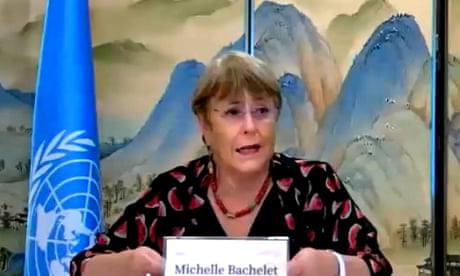
Many have been the reactions to the UN High Commissioner’s visit to China, some even expressing doubt BEFORE the visit took place [see: https://www.aljazeera.com/news/2022/5/24/what-will-the-un-human-rights-commissioner-see-in-xinjiang and https://www.hrw.org/news/2022/05/20/un-rights-chiefs-credibility-stake-china-visit]. The open referred to in the Guardian of 9 June 2022 was signed by academics in wake of Michelle Bachelet’s China visit and demands release of UN report on human rights abuses.

Agnes Callamard, the secretary general of Amnesty International, said on 28 June that Bachelet should condemn human rights violations in Xinjiang, and call on China to release people arbitrarily detained and end systematic attacks on ethnic minorities in the region. “The high commissioner’s visit has been characterized by photo opportunities with senior government officials and manipulation of her statements by Chinese state media, leaving an impression that she has walked straight into a highly predictable propaganda exercise for the Chinese government,“.

Dozens of scholars have accused the UN human rights chief of having ignored or contradicted academic findings on abuses in Xinjiang with her statements on the region. In an open letter published this week, 39 academics from across Europe, the US and Australia called on Michelle Bachelet to release a long-awaited UN report on human rights abuses in China.

The letter, published online, included some academics with whom Bachelet had consulted prior to her visit to Xinjiang. The letter’s signatories expressed gratitude for this, but said they were “deeply disturbed” by her official statement, delivered at a press conference in Guangzhou at the end of her six-day tour. They said her statement “ignored and even contradicted the academic findings that our colleagues, including two signatories to this letter, provided”.

UN High Commissioner for Human Rights visits China.

It is rare that an academic field arrives at the level of consensus that specialists in the study of Xinjiang have reached,” the letter said. “While we disagree on some questions of why Beijing is enacting its atrocities in Xinjiang, we are unanimous in our understanding of what it is that the Chinese state is doing on the ground.”.

Rights organisations and several governments have labelled the campaign a genocide or crime against humanity. Beijing denies all allegations of mistreatment and says its policies are to counter terrorism and religious extremism.

At the end of her visit Bachelet said she had urged the Chinese government to review its counter-terrorism policies in Xinjiang and appealed for information about missing Uyghurs. She was quickly criticised by some rights groups for giving few details or condemnation of China while readily giving long unrelated statements about US issues in response to questions from Chinese state media.

The academics’ letter is among growing criticism of Bachelet for not speaking out more forcefully against Chinese abuses after her visit, as well as a continued failure to release the UN report, which is believed to have been completed in late 2021. On Wednesday dozens of rights groups, predominately national and local chapters of organisations associated with Uyghur and Tibetan campaigns, demanded her resignation. See: http://www.phayul.com/2022/06/09/47195/

The 230 organisations accused Bachelet of having “whitewashed the Chinese government’s human rights atrocities” and having “legitimised Beijing’s attempt to cover up its crimes by using the Chinese government’s false ‘counter-terrorism’ framing”.

“The failed visit by the high commissioner has not only worsened the human rights crisis of those living under the Chinese government’s rule, but also severely compromised the integrity of the Office of the High Commissioner for Human Rights in promoting and protecting human rights globally,” the statement said.

They also decried that she had repeatedly referred to the detention camps in Xinjiang by the Chinese government’s preferred term: “vocational education and training centres”.

All this led to speculation that Mrs Bachelet’s decision not to seek a second term was related to the critcism [see: https://www.theguardian.com/world/2022/jun/13/un-human-rights-chief-michelle-bachelet-no-second-term-china]

https://www.theguardian.com/world/2022/jun/09/fury-at-un-human-rights-chief-over-whitewash-of-uyghur-repression

https://www.ohchr.org/en/statements/2022/05/statement-un-high-commissioner-human-rights-michelle-bachelet-after-official

https://www.npr.org/2022/05/29/1101969720/un-human-rights-chief-asks-china-to-rethink-uyghur-policies?t=1654771491735

International NGO opens office in Taiwan

May 17, 2022

On 16 May 2022 Safeguard Defenders announced the opening of its first Asian office in Taiwan’s capital, Taipei.

With our focus on the decline in human rights in China and other authoritarian states in the region, Taiwan was an obvious choice because of its open society and geographic proximity. Only recently emerging from its own authoritarian past, this progressive democracy has now become a popular base for civil society and media, particularly as Hong Kong’s human rights situation rapidly deteriorates under Beijing’s control.”

The story behind Safeguard Defenders goes back to 2009, the year when a small NGO called China Action was founded in Beijing by human rights activists Peter Dahlin from Sweden and Michael Caster from the U.S. and a small group of Chinese rights lawyers and other human rights defenders (HRD). ,,China Action was shuttered in 2016 after Chinese authorities targeted it in a major crackdown and when many of its staff and partners were detained, disappeared or imprisoned, including Peter. The foundation for Safeguard Defenders was laid in 2016, and was publicly launched in 2017. The organisation has inherited the mission of China Action, but with an expanded scope to support the survival and effectiveness of civil society and HRDs in some of Asia’s most hostile environments, including China.

Safeguard Defenders has been researching developing rule of law issues including arbitrary detention, the black jail systems of RSDL and Liuzhi, forced confessions, transnational repression including global harassment and kidnappings, and the CCP’s secret police institution, the National Supervisory Commission. See e,g, : https://humanrightsdefenders.blog/2022/01/18/china-goes-after-dissidents-abroad/

Coming in the next few months, Safeguard Defenders will have several key and ground-breaking reports on China on issues including the practice of sending political prisoners to psychiatric hospitals, the latest violations of human rights in the name of Covid, and how Beijing has weaponized exit bans. It will also be launching a brand new website. Follow on Twitter. 

China’s reaction will not be nice…

https://safeguarddefenders.com/en/blog/safeguard-defenders-opens-taiwan-office

https://focustaiwan.tw/politics/202205170025

NGOs condemn arbitrary arrest of pro-democracy activists in Hong Kong

May 15, 2022

NOGs (such as Human Rights Watch and the Human Rights Foundation) have condemned the arrest of Cardinal Joseph Zen, as well as the lawyer Joseph Zen, the singer Denise Ho and the scholar Hui Po-Keung, for having maintained contacts with foreign forces in Hong Kong.

HRW Senior China researcher Maya Wang, said that “the arrest of a 90-year-old cardinal is the latest example of the city’s human rights freefall in recent years.

The four, along with former lawmaker Cyd Ho, who is already in jail, were part of the 612 Humanitarian Aid Fund, which provided medical, legal and psychological help to protesters arrested during the 2019 pro-democracy protests in Hong Kong. Kong.

Denise Ho, Margaret Ng, and others affiliated with Stand News, an independent pro-democracy online publication, were previously arrested by national security police in December 2021 under allegations of publishing “seditious” and “inflammatory” materials. Denise Ho formerly served on the board of Stand News, but stepped down in November 2021. Meanwhile, the 612 Humanitarian Support Fund ceased operations in October 2021 after national security police and Chinese state-backed media requested information on its beneficiaries and donors.

Maya Wang has specified that Hong Kong has “long been a regional leader in openness and respect for the rule of law, but now competes for the first places in Asia for repression and political prisoners.”

The people of Hong Kong have been unequivocal in their demand for human rights, and governments around the world should be unequivocal in their response to that call,” concluded the HRW researcher.

https://mailchi.mp/hrf.org/hong-kong-hrf-condemns-arbitrary-arrest-of-denise-ho-and-colleagues?e=f80cec329e

Lee Ming-che free and back in Taiwan

May 10, 2022

HUIZHONG WU for Associated Press on 10 May 2022 reports that a Taiwanese human rights activist, who served five years in jail in China, said that international pressure and the tireless advocacy by his wife worked to ensure his safe return to Taiwan. “I know that my life’s safety and security was defended by many people, thanks to everyone, I have never felt abandoned or alone,” Lee Ming-che said at a press conference Tuesday in his first public appearance since being released from prison.Lee Ming-che was arrested by Chinese authorities in 2017 and charged with subversion of state power. His arrest was China’s first criminal prosecution of a non-profit worker since Beijing passed a law tightening controls over foreign non-governmental organizations in 2016.

See also: https://humanrightsdefenders.blog/2019/01/04/china-and-its-willingness-to-detain-anyone-anytime-should-generate-more-reaction/

His arrest marked a turning point as China showed that it would not hesitate to prosecute Taiwanese individuals for political activism, regardless of the harm it would bring to cross-Strait relations.

Lee had given online lectures on Taiwan’s democratization and managed a fund for families of political prisoners in China that some friends had set up.

I did what I could do, using my credit card to buy some books,” he said, which he would send to friends in China. He would also give donations to the families of political prisoners. “This is not to interfere with the country’s internal affairs. All of this was simply a way of humanitarian caring.”Lee is the son of parents who were both born in China and had come to Taiwan with the ruling Nationalist Party. He had always thought of himself as a Chinese person growing up. That changed in high school with a history teacher who taught the students to learn about local history.

While Lee was able to come home, another prisoner, Lee Meng-chu, remains trapped in China. Lee Meng-chu has been accused of being a spy by Chinese authorities and is now serving the two years as part of his sentence which deprived him of “political rights.” Meng-chu had been in Hong Kong in 2019, during the massive anti-government protests that rocked the city, according to the semi-official Central News Agency. He disappeared after crossing the border into Shenzhen.

It’s uncertain how many Taiwanese are being held in Chinese prisons, as many families have chosen to remain quiet in the hopes of getting their loved ones’ release. This stands in contrast with Lee, the human rights activist’s case. In the last five years, Lee’s wife, Ching-yu worked with local nonprofit organizations to raise awareness about her husband’s case. .. That continued effort, both said, paid off. “International support can truly have a concrete change on the treatment of a political prisoner in China,” said Lee Ching-yu.

https://buffalonews.com/news/national/govt-and-politics/taiwan-activist-released-from-china-says-global-help-worked/article_159bb09e-b8f7-53fb-a959-2f96714c4e24.html

Press Freedom Awards in Hong Kong cancelled

April 29, 2022

Oiwan Lam on 26 April 2022 reported that Hong Kong’s Foreign Correspondents’ Club has canceled its Human Rights Awards for fear of “legal risks”

Image created by Oiwan Lam.

The Foreign Correspondents’ Club, Hong Kong (FCC HK), a press freedom watchdog, announced they would cancel their 2022 Human Rights Press Awards (HRPA) on April 25.  Eight members of the Club’s Press Freedom Committee have resigned in protest over the decision. 

Many foreign correspondents were shocked by the decision. Launched in 1995,  the HRPA has been one of the most important platforms to celebrate and honour human rights journalism from around Asia. The Club normally announces the winners on May 3, World Press Freedom Day.

Hong Kong Free Press (HKFP) quoted sources from FCC HK that the cancellation was related to the legal risks in presenting awards to the now-defunct Stand News. Two former senior staff members of the independent news outlet have been charged with conspiring to publish “seditious publications” pending trial. 

Stand News was forced to shut down last December after security police raided its office. The police authorities accused the news site of publishing “seditious materials” with the intent to cause hatred towards the government and the judiciary. 

An FCC member told the HKFP that Stand News would receive four awards and five merits in this year’s award, but “certain items” would pose a legal risk. 

In a letter to the Club’s members, the president of FCC HK Keith Richburg said the decision was made in the organization’s board meeting on April 23:

Over the last two years, journalists in Hong Kong have been operating under new “red lines” on what is and is not permissible, but there remain significant areas of uncertainty and we do not wish unintentionally to violate the law. This is the context in which we decided to suspend the Awards.

The letter also says that “recent developments might also require changes to our [FCC HK’s] approach” in the promotion of press freedom.

As the city’s incoming Chief Executive John Lee has vowed to apply the “strictest measures” to clamp down on “anyone who tries to use journalistic work as a shield to engage in crimes endangering national security” in response to the crackdown on Apple Daily, FCC HK’s anticipation of legal risks is valid.

Yet, as a press freedom watchdog, many see the choice to ax the awards as an act of self-censorship antithetical to the organization’s purpose, as independent journalist Ilaria Maria Sala wrote on Twitter:

Eight members of the Club’s press freedom committee have resigned in protest over the decision. Shibani Mahtani, Washington Post’s Southeast Asia and Hong Kong Bureau Chief, is one of the resignees. As one of the winners of the Human Rights Press Awards in 2020, Shibani Mahtani expressed her regrets about the decision and explained, in a Twitter thread, the significance of the annual occasion in Asia: See also: https://humanrightsdefenders.blog/2016/12/01/rsfs-press-freedom-prize-2016-goes-to-the-64-tianwang-website-in-china/

For more on the real, unannounced winners: https://hongkongfp.com/2022/04/27/in-full-winners-of-the-axed-fcc-human-rights-press-awards-revealed/

see also for future editions:

https://www.scmp.com/news/hong-kong/politics/article/3176537/american-university-taking-over-hong-kong-press-groups

US State Department’s report 2021 is out

April 14, 2022

On 12 April, 2022, the annual Country Reports on Human Rights Practices was made public. The Human Rights Reports 2021 cover internationally recognized individual, civil, political, and worker rights, as set forth in the Universal Declaration of Human Rights and other international agreements. The U.S. Department of State submits reports on all countries receiving assistance and all United Nations member states to the U.S. Congress in accordance with the Foreign Assistance Act of 1961 and the Trade Act of 1974. For nearly five decades, the United States has issued the Country Reports on Human Rights Practices, – in 2021, covering 198 countries and territories.  The preface states that: “The Biden Administration has put human rights at the center of U.S. domestic and foreign policy.  We have also recognized our nation has not always succeeded in protecting the dignity and rights of all Americans, despite the proclamations of freedom, equality, and justice in our founding documents.  It is through the continued U.S. commitment to advance human rights, both domestically and internationally, that we best honor the generations of Americans who are Black, Brown, or other people of color, indigenous peoples, persons with disabilities, LGBTQI+ persons, immigrants, women and girls, and other historically marginalized groups whose advocacy for their rights and for others has pushed America toward a “more perfect union.

President Biden has called the defense of democracy and human rights the defining challenge of our time.  By convening the first Summit for Democracy in December 2021 – bringing together representatives from 100 governments as well as civil society and the private sector – he sparked global attention and vigor toward democratic renewal and respect for human rights.  Participating governments made significant commitments to revitalize democracy at home and abroad at the first Summit on which we expect meaningful progress during the current Year of Action and before the time of a second Summit.

The reports paint a clear picture of where human rights and democracy are under threat.  They highlight where governments have unjustly jailed, tortured, or even killed political opponents, activists, human rights defenders, or journalists, including in Russia, the People’s Republic of China, the Democratic People’s Republic of Korea, Nicaragua, and Syria.  They document abuses of peaceful protestors demanding democracy and fundamental freedoms in countries such as Burma, Belarus, Cuba, Hong Kong, and Sudan.  They highlight worrying cases of transnational repression – where governments reach across borders to harass, intimidate, or murder dissidents and their loved ones – as exemplified in the dangerous forced diversion by Belarus of an international commercial flight for the sole purpose of arresting a critical independent journalist.

But they also contain signs of progress and glimmers of hope, as the indomitable will to live freely can never be extinguished.  In Iraq, people cast their votes to shape the future of their country in more credible and transparent parliamentary elections than in 2018.  In Botswana, a court advanced the human rights of LGBTQI+ persons by upholding the decriminalization of same-sex relations.  In Turkmenistan, all imprisoned Jehovah’s Witnesses conscientious objectors to military service were pardoned, a win for freedom of religion or belief.  The stability, security, and health of any country depends on the ability of its people to freely exercise their human rights – to feel safe and included in their communities while expressing their views or gender, loving who they love, organizing with their coworkers, peacefully assembling, living by their conscience, and using their voices and reporting from independent media to hold governments accountable.  There is much progress to be made, here in the United States and globally.  But I know that by working together in the Year of Action and using resources like the Country Reports on Human Rights Practices, we can come closer to building a world where respect for human rights is truly universal.

In a reaction on the report human rights activists focused on China said theat they want the State Department to reboot the report’s format to address documentation blind spots and connect it to policy and initiatives to stop the violations and provide accountability for victims.

“It’s a descriptive, objective document but largely of human rights developments that had been already extensively reported by the media, by NGOs, and by human rights bodies within the UN and in many cases at greater detail and length. … It is essentially a recap,” said Sharon Hom, executive director of the New York City-based nonprofit Human Rights in China. “Since it appears to take quite a bit of resources to produce each year, I’d say that going forward, they reference and aggregate some of the developments within three very important, bigger trends like digital authoritarianism, [foreign] influence operations, and [China’s] growing extraterritorial reach.” [from https://www.politico.com/news/2022/04/13/china-activists-state-dept-human-rights-00024876]

https://www.state.gov/reports/2021-country-reports-on-human-rights-practices/embed/#?secret=ICAePzAuB5#?secret=IVCGC9q7rK

Chinese approach to international human rights

April 4, 2022

China appears regularly in this blog, usually in a less than flattering role. For some recent examples, see: https://humanrightsdefenders.blog/tag/china/. So, it could be useful to see the official ‘view’ from a country that is so sensitive on the issue of human rights [see also: https://humanrightsdefenders.blog/2012/12/06/china-and-its-amazing-sensitivity-on-human-rights-defenders/]. You will not see a reference to the Russian invasion of Ukraine, of course:

On 28 February, 2022 the Chinese foreign Minister urged “sound development of global human rights” Wang issued his call at the high-level segment of the 49th session of the United Nations Human Rights Council, which he attended via video link.

Chinese State Councillor and Foreign Minister Wang Yi delivered a speech calling on the international community to uphold equity and justice to promote the sound development of the global human rights cause.

He said that ensuring the full enjoyment of human rights by all is an unremitting pursuit of humanity, while protecting human rights is the shared cause of all countries.

China believes that all parties should act as true practitioners of human rights, staunch guardians of people’s interests, positive contributors to common development, and firm defenders of equity and justice, said Wang.

Wang noted that respecting and protecting human rights is the unremitting pursuit of the Communist Party of China (CPC), and China will continue to steadfastly pursue a human rights development path that meets the trend of the times and suits its national conditions.

We will continue to uphold a human rights philosophy that puts people front and center, develop the whole-process people’s democracy, promote common prosperity for all, and safeguard the human rights of the Chinese people at a higher level,” said Wang.

China will continue to take an active part in UN human rights endeavours by making China’s voice heard and contributing China’s part to this worthy cause, he added.

Wang refuted false information about the affairs of China’s Xinjiang and Hong Kong, saying they had been hyped up with ulterior motives, and adding that China is ready to engage in human rights exchanges and cooperation with all countries on the basis of equality and mutual respect.

We do not accept self-styled ‘lecturers’ on human rights and reject stoking bloc confrontation in the name of human rights,” said the foreign minister.

http://www.china.org.cn/china/node_7076505.htm

EU – China Summit on 1 April should not be a joke

March 30, 2022

European Union leaders should announce specific policy responses to the Chinese government’s atrocity crimes, Human Rights Watch said today, 30 March 2022. A virtual summit between the EU and China is scheduled for April 1, 2022.

The summit takes place at a time of heightened tensions between the EU and the Chinese government, which retaliated against Lithuania for its relations with Taiwan, baselessly sanctioned EU bodies and European research institutions, and has not condemned Russian war crimes in Ukraine. The Chinese government’s disregard for international human rights norms mirrors its domestic track record of grave abuses without accountability.

The EU’s foreign policy chief has pointed with alarm to the Chinese government’s ‘revisionist campaign’ against universal human rights and institutions,” said Sophie Richardson, China director at Human Rights Watch. “Brussels should revise its approach to match the magnitude of that threat.”

In a March 18 joint letter from 10 nongovernmental organizations to Ursula von der Leyen, president of the European Commission, and Charles Michel, president of the European Council, Human Rights Watch cited Chinese authorities’ deepening assault on human rights, including crimes against humanity targeting Uyghurs and other Turkic communities in Xinjiang, and heightened repression in Tibet and Hong Kong. Human rights defenders across the country – including the citizen journalist Zhang Zhan, the Uyghur intellectual and Sakharov Prize laureate Ilham Tohti, the Swedish publisher Gui Minhai, and many others – remain arbitrarily detained. {see https://www.trueheroesfilms.org/thedigest/laureates/37AE7DC4-16DB-51E9-4CF8-AB0828AEF491, and https://humanrightsdefenders.blog/2020/02/25/gui-minhai-10-years-jail-sentence-in-china/

While the EU has taken important steps in reaction to these developments, including some targeted sanctions and strong condemnations of Beijing’s abuses at the United Nations, these efforts lack the consequences to bring significant change. The rights groups urged Michel and von der Leyen to use their time with the Chinese leaders to announce further steps to counter Beijing’s abuses, and cautioned them against calling for yet another round of the bilateral human rights dialogue, which after 37 rounds has proven unable to secure concrete progress.

Stronger, better coordinated action is also supported by the European Parliament, which has remained a staunch critic of the Chinese government’s crackdown and has repeatedly denounced its abuses. Beijing responded by sanctioning several members of the European Parliament. In response, the European Parliament froze consideration of a bilateral trade deal and called for a new, and more assertive, EU strategy on China, including further targeted sanctions and closer coordination with like-minded partners. [see: https://humanrightsdefenders.blog/2021/05/21/china-eu-investment-deal-off-the-rail/]

Presidents Michel and von der Leyen should go beyond words of condemnation at the summit if they want to deter Chinese government violations now and in the future,” said Claudio Francavilla, EU advocate at Human Rights Watch. “Bolder steps are needed to counter Beijing’s crimes against humanity and anti-rights agenda, and EU leaders should announce their determination to pursue them.”

https://www.hrw.org/news/2022/03/18/joint-ngo-letter-ahead-eu-china-summit

https://www.hrw.org/news/2022/03/30/eu-no-business-usual-china-summit

China now badgers Ireland about its human rights stand

February 24, 2022
Dolkun Isa, President of the World Uyghur Congress, was labelled a "terrorist" by the Chinese Embassy in Ireland on Monday. Photo: REUTERS/Denis Balibouse.

Dolkun Isa, President of the World Uyghur Congress, was labelled a “terrorist” by the Chinese Embassy in Ireland on Monday. Photo: REUTERS/Denis Balibouse.

Eoghan Moloney in the Irish Independent of 22 February 2022 describes another case of undue pressure by the Chinese authorities on a nation that differs from their view on human rights. For other such behaviour, see my earlier post;

  • Ireland has been urged to “respect China’s sovereignty” and to “stop interfering in China’s internal affairs” after an Uyghur leader attended a meeting in the Department of Foreign Affairs on Monday.

Dolkun Isa, President of the World Uyghur Congress (WUC), urged Ireland to “take action on Uyghur genocide” when he met with UN Special Rapporteur on Human Rights Defenders Mary Lawlor and with officials from the Department of Foreign Affairs.

In response, the Chinese Embassy in Dublin said they “strongly condemn the anti-China separatist activities of the so-called ‘World Uyghur Congress’ in Ireland, and firmly oppose Irish government officials’ meeting with Dolkun Isa”.

The Embassy also accused “a few” Irish politicians of spreading “lies on Xinjiang and support for terrorist and separatist activities” and jumping “on the bandwagon of dirty political farce against China”.

The Chinese Embassy labelled the WUC as an “extremist organisation” and said its leader Dolkun Isa is a “terrorist” who is suspected of “organising and committing a series of violent terrorist activities and serious crimes in China”.

“The issues concerning Xinjiang are not about human rights, nationality or religion, but about fighting terrorism, separatism and religious extremism. The so-called “genocide”, “cultural extermination” or “forced labour” in Xinjiang, which are based on flat lies and disinformation, are political manipulations with hidden motives,” a statement from the Chinese Embassy said.

“We urge the Irish side to respect China’s sovereignty and territorial integrity, and stop interfering in China’s internal affairs under the guise of “human rights”. For those Irish politicians who have jumped on the bandwagon of dirty political farce against China, we urge them to stop parroting disinformation,” the statement continued.

https://www.independent.ie/world-news/asia-pacific/china-warns-ireland-to-stop-interfering-as-leader-of-persecuted-uyghurs-attends-meeting-with-irish-officials-in-dublin-41370665.html