Posts Tagged ‘China’

Canada’s Hogue report – missed opportunity to tackle transnational repression

February 19, 2025

Emile Dirks, Noura Aljizawi, Siena Anstis and Ron Deibert wrote in the The Globe and Mail of 10 February 2025 about the problem of transnational repression.

The final report of the public inquiry into foreign interference (the Hogue Commission) offers a measure of reassurance to Canadians; there is no evidence that Canadian MPs worked with foreign states to undermine the 2019 or 2021 federal elections. Justice Marie-Josée Hogue’s findings, however, are cold comfort to people at risk. While the commission’s work has ended, distant autocrats continue to target Canadians and Canadian residents with transnational repression, the most coercive form of foreign interference.

Commissioner Justice Marie-Josee Hogue Patrick Doyle/Reuters

Through digital harassment, assault and even assassination, authoritarians reach across borders to silence their foes abroad. Victims include activists, human-rights defenders, exiled critics and asylum seekers tied by citizenship or ancestry to repressive states like China, Russia, India or Saudi Arabia. For authoritarians, these people are not citizens, but disloyal subjects to silence.

The danger that transnational repression poses is not new. A 2020 report by the Canadian Coalition on Human Rights in China demanded the Canadian government address threats against pro-democracy activists, while a 2022 report by the Citizen Lab highlighted the lack of support to victims of digital transnational repression. Prior to the 2024 election, the Biden-Harris administration adopted a whole-of-government approach to ensure government agencies like the State Department, Department of Homeland Security, Department of Justice, and the FBI worked together to provide recommendations to victims on how to better protect themselves.

Researchers and civil society have long worried that Canadian authorities are overlooking transnational repression as a unique challenge that requires tailored responses. Considering the seriousness of the threat and the stark absence of action by the government, many researchers anticipated the commission’s final report would explore transnational repression as a distinct form of foreign interference. Yet, while Justice Hogue wrote that “it would be challenging to overstate the seriousness of transnational repression,” she ultimately reasoned the issue lay outside her mandate.

This was a mistake. The final report was a missed opportunity to fully explore the corrosive impact of transnational repression on Canadian democracy. A recent report by the Citizen Lab highlights the profound toll transnational repression takes on vulnerable people, especially women, in Canada and beyond. Intimidation, surveillance and physical attacks prevent victims from participating fully in civic life and create a climate of persistent fear.

Transnational repression harms victims in more subtle ways, too. Our research shows that the mere threat of an online or offline attack is enough to frighten many diaspora members into silence. Victims become wary of participating in social media or even using digital devices. They report being afraid to engage with members of their communities, leaving them increasingly isolated. It has an insidious, chilling effect on targeted communities.

Unfortunately, the future looks bleak. Democratic backsliding in the United States threatens to deprive Canada of an ally in the fight and reverse whatever measures U.S. agencies might have taken on the issue. Our research shows that suspicion of law enforcement discourages victims from contacting authorities. Proposed moves by the Trump administration – including halting asylum hearings, ending resettlement programs, and sending “criminal” migrants to Guantanamo Bay – will further erode victims’ confidence in the U.S.’s willingness to protect them.

Big Tech is also worsening the problem. Across social-media platforms, state-backed harassment of vulnerable diaspora members is rife. Elon Musk’s X tolerates and even promotes hate-mongering accounts, while Mark Zuckerberg’s announcement that Meta will stop using “politically biased” fact-checkers signals a worrying disinterest in robust content moderation. We should expect a tsunami of digital transnational repression targeting vulnerable Canadians now that tech CEOs are loosening the restraints.

Canada cannot rely on outside leadership or corporate actors to tackle this problem. What is needed is a commission on transnational repression. On Jan. 24, the British parliament’s Joint Committee on Human Rights launched such an inquiry. Once our House of Commons sits again we can follow our British counterparts and resume the Subcommittee on International Human Rights’s work on transnational repression. The new Parliament should launch a multiparty inquiry into the crisis, with a mandate to examine repression outside of federal elections. Crucially, it must earn the trust of victims, something the Hogue Commission lacked. The Uyghur Rights Advocacy Project and the Canadian Friends of Hong Kong both pulled out of the inquiry, citing the participation of three legislators with alleged links to the Chinese government.

This is not a partisan issue. Whoever wins the next federal election will have a duty to contend with the continuing threat transnational repression poses to Canada. With global authoritarianism on the rise, the problem is only likely to worsen in the years to come.

see also: https://humanrightsdefenders.blog/2024/03/19/transnational-repression-human-rights-watch-and-other-reports/

https://www.theglobeandmail.com/opinion/article-the-final-hogue-report-was-a-missed-opportunity-to-tackle/

Joint civil society statement on the fifth anniversary of the “Xiamen gathering” crackdown

February 11, 2025

On the fifth anniversary of the “Xiamen Gathering” crackdown, 34 civil society organisations (on 10 February 2025) across the world reaffirm their solidarity with Chinese human rights defenders and lawyers persecuted for advocating for human rights:

26 December 2024 marked the fifth anniversary of the crackdown on the “Xiamen gathering”, a private gathering that about 20 Chinese human rights defenders and lawyers convened in Xiamen, China in December 2019 to discuss the situation of human rights and civil society in China. In the weeks after, Chinese authorities interrogated, harassed, detained and imprisoned every participant who was not able to leave China then and subjected almost all of them, including some families and friends, to travel bans, up to the present day, under the pretext of national security.

Among those detained were legal scholar Xu Zhiyong and human rights lawyer Ding Jiaxi. Both are leading human rights defenders who spearheaded the “New Citizens’ Movement”, empowering citizens as rights-bearers to advocate for a more equal, rights-respecting and free society, and to combat corruption, wealth inequality and discrimination in access to education. In 2014, Xu and Ding were both sentenced to four years and three and a half years in prison, respectively, for participating in the New Citizens’ Movement and charged with “gathering a crowd to disturb public order”.

From 26 December 2019, and over the weeks that followed, the Chinese authorities forcibly disappeared both under Residential Surveillance at a Designated Location (RSDL), a criminal procedure allowing secret detention for up to six months without access to legal counsel or family. RSDL is considered by UN Special Procedures experts to constitute secret detention and a form of enforced disappearance, and may amount to torture or other ill-treatment. While held under RSDL, both men were subjected to torture and other ill-treatment, before being charged with the national security crime of “subversion of State power”. They were subsequently convicted in a secret trial and handed severe prison sentences of 14 and 12 years, respectively, in April 2023. Despite multiple calls from the UN High Commissioner for Human Rights Volker Türk and from UN Special Procedures’ experts as recently as November 2024, China has failed to address these grave violations.

These cases are emblematic of a broader and alarming trend of persecution  of human rights defenders and lawyers in China. Authorities systematically employ RSDL, harsh national security charges, torture and other ill-treatment, prolonged detention, travel bans and harassment to silence dissent and dismantle independent civil society. The use of vague charges such as “subversion of State power” or “picking quarrels and provoking trouble” has become a routine tactic to criminalise human rights work, despite UN human rights experts’ repeated call for them to be repealed. Victims often face prolonged pre-trial detention, lack of due process, restricted access to lawyer and adequate healthcare, and torture or other ill-treatment aimed at extracting forced ‘confessions’.

This systematic repression is further reflected in the cases of human rights lawyers Xie Yang and Lu Siwei, feminist activist Huang Xueqin, labour activist Wang Jianbing, and citizen journalist Zhang Zhan, all of whom are currently subjected to arbitrary detention or imprisonment  . UN Special Procedures’ experts have recently described these cases as part of “recurring patterns of repression, including incommunicado detention and enforced disappearance aimed at […] silencing human rights defenders and dissenting or opposing views critical of the Government”.

As we commemorate the fifth anniversary of the crackdown, we, organisations and activists from all over the world, continue to stand in solidarity with all human rights defenders and lawyers in China who courageously advocate for justice despite knowing the risks of doing so.

We urge the Chinese government to:

  1. Immediately and unconditionally release all human rights defenders and lawyers arbitrarily detained or imprisoned for their human rights work, including Xu Zhiyong and Ding Jiaxi;
  2. End the systematic crackdown on civil society, including harassment, unjustified detention, enforced disappearance, and imprisonment of human rights defenders and lawyers;
  3. Amend laws and regulations, including national security legislation, the Criminal Law and the Criminal Procedure Law, to bring them fully in line with international human rights standards;
  4. Rescind the travel bans imposed on the gathering participants as well as their friends and families immediately.

Signatories:

  1. Alliance for Citizens Rights
  2. Amnesty International 
  3. Asian Lawyers Network (ALN) (Japan)
  4. CIVICUS: World Alliance for Citizen Participation
  5. Free Tibet (United Kingdom)
  6. Human Rights in China
  7. India Tibet Friendship Society Nagpur Maharashtra (India)
  8. International Bar Association’s Human Rights Institute (IBAHRI)
  9. International Campaign for Tibet
  10. International Federation for Human Rights (FIDH), within the framework of the Observatory for the Protection of Human Rights Defenders
  11. International Service for Human Rights (ISHR) 
  12. International Tibet Network
  13. Judicial Reform Foundation (Taiwan) 
  14. Lawyers for Lawyers (Netherlands)
  15. LUNGTA – Active for Tibet (Belgium)
  16. PEN America (United States)
  17. Safeguard Defenders (Spain) 
  18. Swiss Tibetan Friendship Association (Switzerland)
  19. Taiwan Association for Human Rights (Taiwan)
  20. The 29 Principles (United Kingdom)
  21. The Network of Chinese Human Rights Defenders 
  22. The Rights Practice (United Kingdom)
  23. Tibet Justice Center (United States)
  24. Tibet Solidarity (United Kingdom)
  25. Voluntary Tibet Advocacy Group (V-TAG) (Netherlands)
  26. World Organisation Against Torture (OMCT), within the framework of the Observatory for the Protection of Human Rights Defenders
  27. Acción Solidaria (Venezuela)
  28. Amnistía Internacional Chile (Chile)
  29. CADAL (Argentina)
  30. Centro de Derechos Humanos Fray Francisco de Vitoria OP, A.C. (Mexico)
  31. CONTIOCAP – Coordinadora Nacional de Defensa de Territorios Indígenas Originarios Campesinos y Áreas Protegidas en Bolivia (Bolivia)
  32. Movimiento Autónomo de Mujeres (Nicaragua)
  33. Red Nacional de Organismos Civiles de Derechos Humanos Todos los Derechos para todas, todos y todes (Mexico)
  34. Voces de Tíbet (Mexico)

https://ishr.ch/latest-updates/joint-civil-society-statement-on-the-fifth-anniversary-of-the-xiamen-gathering-crackdown

https://safeguarddefenders.com/en/blog/fifth-anniversary-xiamen-gathering-crackdown

The Human Rights Foundation shows the documentary “Dissidents” on 2 February

January 29, 2025
A screening of the feature documentary “Dissidents” will take place on Sunday, Feb. 2, 2025, at 2:00 p.m. EST. The event location is Firehouse Cinema, 87 Lafayette Street, New York. “Dissidents” tells the story of three Chinese dissidents who continue to fight for democracy against the Chinese Communist Party (CCP) through art, protest, and grassroots organizing despite being exiled from their own home and despite the CCP’s transnational attempts to threaten them with violence, criminal charges, and arson. The film features Juntao Wang, a primary organizer of the 1989 Tiananmen Square protests; Weiming Chen, a human rights artist whose sculpture criticizing Xi Jinping was burnt down; and asylum seeker Chunyan Wang, who was arrested for attempting to deliver a petition letter to Chinese vice premiers during the US-China trade talks.
VIEW THE TRAILER
After the film, there will be a panel discussion featuring: Yaqiu Wang, research director for China, Hong Kong, and Taiwan at Freedom House Joey Siu, Hong Kong activist and executive council member at the World Liberty Congress Weiming Chen, human rights artist known for the Liberty Sculpture Park in CaliforniaYi Chen, director of “Dissidents” at C35 FilmsPema Doma, Executive Director, Students For a Free Tibet
The event is free and open to the public, but registration is required. Please be sure to RSVP on Eventbrite as soon as possible, as reservations are granted on a first come, first serve basis.
RSVP HERE

https://mailchi.mp/hrf.org/call-for-applications-hrf-uyghur-workshop-9101325?e=f80cec329e

Yu Wensheng’s appeal rejected by Chinese court

January 8, 2025

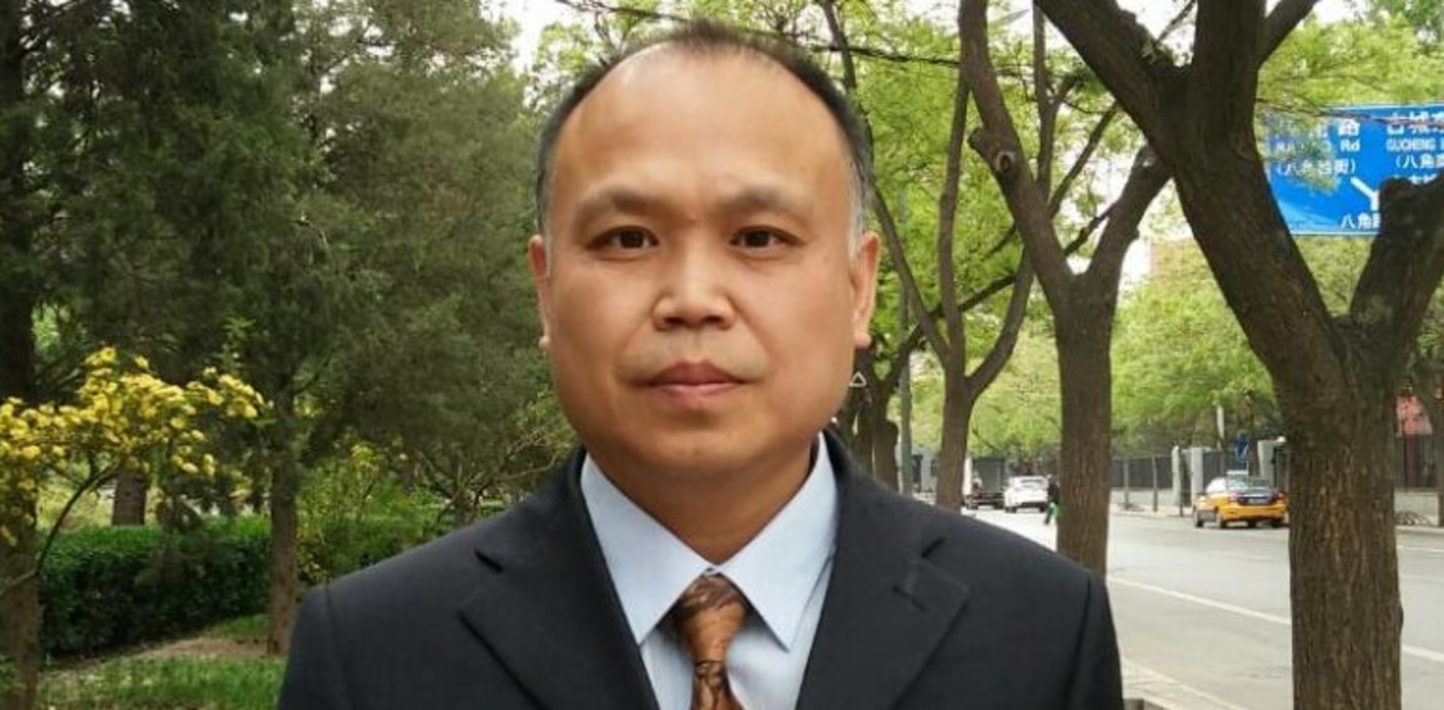
Responding to the rejection of Chinese human rights lawyer see also:s appeal against his three-year prison sentence for “inciting subversion of state power”, Amnesty International’s Interim Regional Deputy Director for Research Kate Schuetze said on 6 January, 2025: “The charges against Yu Wensheng and his wife, activist Xu Yan – who was convicted of the same offence – are entirely baseless. They reveal the authorities’ inability to provide any legitimate justification for their imprisonment.

“The Chinese government has used Yu’s online comments and his numerous international human rights awards as an excuse to label him a threat to national security. But all this really demonstrates is Beijing’s deep fear of human rights defenders who dare to dissent.

“Yu Wensheng and Xu Yan have been imprisoned solely for exercising their right to freedom of expression and they must be released immediately and unconditionally.”

Yu Wensheng is the winner of the 2021 Martin Ennals Award. [https://www.trueheroesfilms.org/thedigest/laureates/69fc7057-b583-40c3-b6fa-b8603531248e]

See also: https://humanrightsdefenders.blog/tag/yu-wensheng/

NGOs say that Chinese Government manipulates human rights (UPR) review

July 31, 2024

4 July 202: China’s government accepted – wholly or partially – 298 of the 428 (70%) recommendations the country received from UN member states during its fourth UPR on 23 January 2024. This represents a 12% drop in the proportion of recommendations the government accepted compared to the previous UPR in 2018.

In a worrying sign of the government’s outright refusal to heed the mounting international concern over key human rights issues, of the 130 recommendations Beijing did not accept, an unprecedented number – 98 – were categorised as “rejected” and 32 were “noted.

China’s government used the United Nations (UN)-backed review of its human rights record to rebuff international concern over serious abuses, issue blanket denials, and make blatantly false statements, the International Federation for Human Rights (FIDH), Human Rights in China (HRIC), the International Campaign for Tibet (ICT), the Taiwan Association for Human Rights (TAHR), and the Database Center for North Korean Human Rights (NKDB) said after the adoption of the outcome of China’s Universal Periodic Review (UPR) in Geneva, Switzerland.

Despite well-documented evidence to the contrary, the government claimed that many of the recommendations it accepted were being implemented or had already been implemented. Such was the case regarding the accepted recommendations related to human rights in Hong Kong, Tibet, and Xinjiang, and the situation of human rights defenders, lawyers, civil society, media, and journalists. The government also made the false claim that it protected “freedom of speech, association and assembly” and “the lawful rights of all citizens as equals“.

FIDH, HRIC, ICT, TAHR, and NKDB urge China’s government to reverse course and use the fourth UPR to address the concerns voiced by numerous UN member states without delay by implementing all the recommendations that are consistent with its obligations under international human rights law.

Below is an analysis of the government’s response to the UPR recommendations on selected human rights issues.

Human rights situation in Hong Kong, Tibet, and Xinjiang

The government received 57 recommendations on human right issues in Hong Kong, Tibet, and Xinjiang and accepted only 19 (33%) of them. With regard to Hong Kong, the rejected recommendations were overwhelmingly related to the National Security Law and its negative impacts. Rejected recommendations concerning the situation of the Uyghurs in Xinjiang included those that called for the implementation of the 2022 UN Office of the High Commissioner for Human Rights (OHCHR) assessment on Xinjiang which China’s government called “illegal“. China rejected 70% of the unprecedented number of Tibet-specific recommendations it received – notably the ones calling for an end of the boarding school system for Tibetan children – often claiming they were based on “false information” despite many verified reports, including by UN experts. Other recommendations concerning the respect of cultural and religious rights in Tibet were listed as “accepted and already implemented” in a blunt misrepresentation of the reality on the ground. Many of the recommendations received by China’s government concerning the situation in Tibet echoed those contained in the joint submission made by FIDH and the International Campaign for Tibet (ICT) for China’s fourth UPR.

Human rights defenders, lawyers, and civil society

The government accepted only 10 of the 25 recommendations it received on human rights defenders, lawyers, and civil society. It rejected recommendations that called on China’s authorities to end the harassment and arbitrary detention of human rights defenders and lawyers and to cease the restrictions on civil society. A submission by HRIC highlights how online rights and internet freedoms in Hong Kong have significantly deteriorated in the post-COVID era, especially after the promulgation of the National Security Law, and that women have been disproportionately affected, as evidenced by the online gender-based violence they experienced.

Media and journalists

The government rejected 10 of the 14 recommendations it received concerning the protection of media and journalists, claiming the authorities protect the right to freedom of speech.

Death penalty

The government rejected all 20 recommendations it received concerning the death penalty. It stated that the death penalty “should be retained with its application strictly and prudently limited” – a statement that clashes with the reality of a country that has consistently ranked as the world’s most prolific executioner.

https://www.fidh.org/en/region/asia/china/china-government-manipulates-human-rights-review

https://www.msn.com/en-xl/news/other/ngos-slam-china-for-rejecting-upr-recommendations-at-unhrc-s-56th-session/ar-BB1pu4Wz

JOINT NGO LETTER asks to suspend EU-CHINA HUMAN RIGHTS DIALOGUE 2024

June 17, 2024

On 12 June 2024, a group of important NGOs addressed the following letter to Josep Borrell, EU High Representative for Foreign Affairs:

We, the undersigned civil society organisations, are writing to reiterate our request for the European Union to suspend its human rights dialogue with China, and to consider other, more impactful measures at the EU’s disposal to address the Chinese government’s assault on human rights at home and abroad.

While appreciative of the open and frank discussion and engagement with the EEAS in preparation of each round of human rights dialogue with China, we regret that the EU continues this exercise despite its amply proven ineffectiveness over 38 rounds. While the EU raises concerns during these dialogues, it knows that the Chinese government will not acknowledge abuses, will not undertake any effort to secure accountability, and will not be persuaded to undertake any policy or legislative action to comply with China’s international human rights obligations. The EU’s reluctance to establish any measurable benchmark of progress, or even to establish clearly defined objectives beyond having a dialogue, exacerbates the ineffectiveness of this exercise.

This year’s human rights dialogue would also entail EU officials sitting down with authorities in Beijing to “engage… through dialogue and cooperation” on human rights, days after the 35th anniversary of the Tiananmen massacre.

Since Xi Jinping came to power in 2013, the Chinese government has intensified its crackdown on dissent, harassing and imprisoning human rights defenders and activists including the Swedish bookseller Gui Minhai, the Uyghur economist and Sakharov Prize laureate Ilham Tohti [7 human rights awards, see: https://www.trueheroesfilms.org/thedigest/laureates/37AE7DC4-16DB-51E9-4CF8-AB0828AEF491], the Hong-Kong barrister and human rights activist Chow Hang-tung and human rights lawyers Yu Wensheng and his wife Xu Yan, who were arrested a little over a year ago on their way to meet with the EU delegation [see: https://www.trueheroesfilms.org/thedigest/laureates/69fc7057-b583-40c3-b6fa-b8603531248e and https://humanrightsdefenders.blog/2023/07/12/new-wave-of-repression-against-human-rights-lawyers-unleashed-in-china/]. The Chinese government has committed egregious violations against Uyghur and other Turkic communities in Xinjiang/The Uyghur Region, which a report of the UN High Commissioner for Human Rights in August 2022 stated “may constitute international crimes, in particular crimes against humanity.” Beijing has also intensified its repression in Tibet, while in Hong Kong the creation of a new national security architecture at Beijing’s behest has severely restricted the rights and freedoms long enjoyed by Hong Kong’s people.

Beijing’s foreign policy has also been increasingly detrimental to human rights, both in the region and beyond. The Chinese government continues to support highly abusive governments, to challenge international efforts to secure accountability for grave abuses, and to intensify efforts to undermine the international human rights system and rewrite its norms. The Chinese government has also engaged in increasingly brazen transnational repression – abuses committed outside its borders – including in EU countries.

The EU has already suspended human rights dialogues with highly repressive countries such as Russia, Syria, Belarus, and Myanmar, among others, in light of the nature, scale and pervasiveness of their authorities’ human rights abuses and violations of international law. The Chinese government has committed serious crimes amounting to crimes against humanity. It has long been evident that the human rights dialogue is not an appropriate nor an effective tool to address them. There is no reason to expect the 39th round will prove more beneficial to the rights of people in China than the previous 38. The EU and its member states should pursue different, more effective actions to press the Chinese government to end its crimes against humanity and other serious violations – and to hold accountable those responsible for failing to do so.

We have long been suggesting alternative action, latest in this February 2023 letter. We stand ready to discuss these and other options with you any time.

Signatories:
Amnesty International
Front Line Defenders
Human Rights Watch
International Service for Human Rights
World Uyghur Congress

https://www.frontlinedefenders.org/en/statement-report/joint-public-civil-society-letter-eu-china-human-rights-dialogue-2024

and see https://www.ucanews.com/news/jailing-of-chinese-metoo-journalist-upsets-rights-groups/105431

https://www.aol.com/news/eu-urges-china-stop-human-145953152.html

https://www.reuters.com/world/china/eu-urges-china-stop-human-rights-crackdown-2024-06-17/

Q&A: Transnational Repression

June 14, 2024

On 12 June 2024, Human Rights Watch published a useful, short “questions-and-answers” document which outlines key questions on the global trend of transnational repression. 

Illustration of a map being used to bind someone's mouth
© 2024 Brian Stauffer for Human Rights Watch
  1. What is transnational repression?
  2. What tactics are used?
  3. Is transnational repression a new phenomenon?  
  4. Where is transnational repression happening? 
  5. Do only “repressive” states commit transnational repression?
  6. Are steps being taken to recognize and address transnational repression? 
  7. What should be done? 

What is transnational repression?

The term “transnational repression” is increasingly used to refer to state actors reaching beyond their borders to suppress or stifle dissent by targeting human rights defenders, journalists, government critics and opposition activists, academics and others, in violation of their human rights. Particularly vulnerable are nationals or former nationals, members of diaspora communities and those living in exile. Many are asylum seekers or refugees in their place of exile, while others may be at risk of extradition or forced return. Back home, a person’s family members and friends may also be targeted, by way of retribution and with the aim of silencing a relative in exile or forcing their return.

Transnational repression can have far-reaching consequences, including a chilling effect on the rights to freedom of expression and association. While there is no formal legal definition, the framing of transnational repression, which encompasses a wide range of rights abuses, allows us to better understand it and propose victim-centered responses.

What tactics are used?

Documented tactics of transnational repression include killings, abductions, enforced disappearances, unlawful removals, online harassment, the use of digital surveillance including spyware, targeting of relatives, and the abuse of consular services.  Interpol’s Red Notice system has also been used as a tool of transnational repression, to facilitate unlawful extraditions. Interpol has made advances in improving its vetting systems, yet governments continue to abuse the Red Notice system by publishing unlawful notices seeking citizens who have fled abroad on spurious charges. This leaves targets vulnerable to arrest and return to their country of origin to be mistreated, even after they have fled to seek safety abroad.

Is transnational repression a new phenomenon?

No, the practice of governments violating human rights beyond their borders is not new. Civil society organizations have been documenting such abuses for decades. What is new, however, is the growing recognition of transnational repression as more than a collection of grave incidents, but also as an increasing phenomenon of global concern, requiring global responses. What is also new is the increasing access to and use of sophisticated technology to harass, threaten, surveil and track people no matter where they are. This makes the reach of transnational repression even more pervasive. 

Where is transnational repression happening? 

Transnational repression is a global phenomenon. Cases have been documented in countries and regions around the world. The use of technology such as spyware increases the reach of transnational repression, essentially turning an infected device, such as a mobile phone, into a portable surveillance tool, allowing targeted individuals to be spied on and tracked around the world. 

Do only “repressive” states commit transnational repression?

While many authoritarian states resort to repressive tactics beyond their own borders, any government that seeks to silence dissent by targeting critics abroad is committing transnational repression. Democratic governments have also contributed to cases of transnational repression, for example through the provision of spyware, collaborating with repressive governments to deny visas or facilitate returns, or relying upon flawed Interpol Red Notices that expose targeted individuals to risk.

Are steps being taken to recognize and address transnational repression? 

Increasingly, human rights organizations, UN experts and states are documenting and taking steps to address transnational repression.

For example, Freedom House has published several reports on transnational repression and maintains an online resource documenting incidents globally. Human Rights Watch has published reports, including one outlining cases of transnational repression globally and another focusing on Southeast Asia. Amnesty International has published a report on transnational repression in Europe. Many other nongovernmental organizations are increasingly producing research and reports on the issue. In her report on journalists in exile, the UN Special Rapporteur on freedom of expression dedicated a chapter to transnational repression. The UN High Commissioner for Human Rights used the term in a June 2024 statement.

Certain governments are increasingly aware of the harms posed by transnational repression. Some are passing legislation to address the problem, while others are signing joint statements or raising transnational repression in international forums. However, government responses are often piecemeal, and a more cohesive and coordinated approach is needed. 

What should be done? 

Governments should speak out and condemn all cases of transnational repression, including by their friends and allies. They should take tangible steps to address transnational repression, including by adopting rights-respecting legal frameworks and policies to address it. Governments should put victims at the forefront of their response to these forms of repression. They should be particularly mindful of the risks and fears experienced by refugee and asylum communities. They should investigate and appropriately prosecute those responsible. Interpol should continue to improve vetting process by subjecting governments with a poor human rights record to more scrutiny when they submit Red Notices. Interpol should be transparent on which governments are continually abusing the Red Notice system, and limit their access to the database.  

At the international level, more can be done to integrate transnational repression within existing human rights reporting, and to mandate dedicated reporting on cases of transnational repression, trends, and steps needed to address it.

see also: https://humanrightsdefenders.blog/2024/03/19/transnational-repression-human-rights-watch-and-other-reports/

https://www.hrw.org/news/2024/06/12/qa-transnational-repression

Human Rights Defenders issues at the 56th session of the UN Human Rights Council

June 12, 2024

The UN Human Rights Council will hold its 56th regular session at Palais des Nations in Geneva from 18 June and 12 July 2024. And as always the excellent Alert of the International Service for Human Rights permits me to hightlight what concerns HRDs most. To stay up-to-date you can follow @ISHRglobal and #HRC56 on X, and look out for the Human Rights Council Monitor.

Civil Society Access and Participation The UN is facing a severe liquidity crisis due to member states not paying their membership dues in full and on time. This shortfall is impacting victims and survivors of human rights violations. The crisis risks being used to impose restrictions on civil society participation, although online and hybrid modalities offer cost-effective and environmentally friendly solutions. Over 100 human rights organisations have called on all states to promptly pay their dues to address the liquidity crisis. Additionally, this session States have the opportunity to continue to build on the good practices adopted in the past years and allow for a broader, more inclusive, effective and climate-friendly human rights system, including by providing remote access to informal consultations on HRC resolutions that can greatly benefit from the analysis and lived experiences of human rights defenders.

Thematic issues Issues on the agenda At this 56th session, the Council will discuss a range of civil, political, economic, social and cultural rights through dedicated debates with the mandate holders and the High Commissioner, including with the Special Rapporteur on extrajudicial, summary or arbitrary executions, the Special Rapporteur on the right to freedom of expression, the Special Rapporteur on the rights to freedom of peaceful assembly and of association, the Special Rapporteur on promotion and protection of human rights in the context of climate change, the Special Rapporteur on contemporary forms of racism, racial discrimination, xenophobia and related intolerance In addition, the Council will hold dedicated debates on the rights of specific groups including with: The Independent Expert on protection against violence and discrimination based on sexual orientation and gender identity, the Special Rapporteur on the rights of Internally Displaced Persons, the Special Rapporteur on violence against women and girls, the Special Rapporteur on independence of judges and lawyers

The Council will also hold debates on interrelation of human rights and thematic issues including with: The High Commissioner on new and emerging technologies.

The new incoming Independent Expert on violence and discrimination on the basis of sexual orientation and gender identity, Graeme Reid, will present his first report focusing on freedom of expression, assembly and association.

Environment and Climate Justice The Special Rapporteur on Internally Displaced Persons will present her report on planned relocations of people in the context of the adverse effects of climate change and disasters. This report is building up on previous reports by other mandates and will also look at laws and policies at the national, regional, and international levels. The newly appointed Special Rapporteur on Climate Change will also present her first report looking at the upcoming priorities and some reflections of the progress achieved on some issues in the last 5 years. The report will also provide a snapshot of some other key topics and the impacts on some particular groups. The Special Rapporteur will also present two country visits reports: Honduras and the Philippines. There is currently a call for inputs for her upcoming General Assembly report on access to information on climate change and human rights. The Working Group on Business and Human Rights will present its report on investors, Environmental, Social, and Governance (ESG) approaches and human rights. The report will raise awareness of the responsibilities of investors and will clarify responsibilities on how to align their ESG approaches to human rights. On Thursday 20 June, the President of the Human Rights Council is organising a high-level informal Presidential discussion on ‘The important link between climate change, food security and health security’. The discussion should address the important role of environmental human right defenders in promoting and securing the full realisation of the right to a clean, healthy and sustainable environment; and recognition of the obligation of States to prevent, protect and promote their work in an enabling environment.

International Solidarity Civil society and international experts have continued to raise grave concern at the attacks on fundamental freedoms when advocating for the human rights of Palestinians by authorities in Western countries, including in universities. The High Commissioner deplored the ‘sharp rise in hatred globally – including anti-Semitism and Islamophobia’. In her report to the Council, the Independent Expert on International Solidarity called on States to ‘eliminate the criminalization of international solidarity expressions and symbols and calls for accountability for violations of public international law norms, such as calls for peace, self-determination or decolonization and the ending of apartheid or genocide […] stressing that States ‘should not conflate them with ‘manifest support of terrorism’ or antisemitism in relevant legislation or regulations’. The Special Rapporteur on racism also raised concern at ‘accusations of antisemitism on the basis of legitimate criticism of treatment of Palestinians by Israel’ in her report following her visit to the United States.

The Special Rapporteur on Education, following her visit to the United States, stressed that the International Holocaust Remembrance Alliance (IHRA) definition conflating criticism of Israel with antisemitism is being used to crackdown against pro-Palestinian protesters, including individuals who ‘self-identify as belonging to the Jewish community or represent Jewish student associations’. The Rapporteur addressed violations against students following the organisation of ‘mass encampments at nearly 40 universities in more than 25 states across the country’, including the detention of more than 2000 individuals, raids by fully armed police on university campuses requested by educational institutions to ‘disperse demonstrators and dismantle encampments’.   During the session, and especially in the ID with the experts on International Solidarity, Education, Freedom of Expression, Freedom of Assembly and Association, we urge States to call for an end to the repression and criminalisation of groups and individuals advocating for the human rights of the Palestinian people, including through the instrumentalization of anti-Semitism (IHRA definition) and anti-terrorism policies, including in universities, and especially in the West (including in Austria, France, Germany,  Italy, United States, United Kingdom).

Reprisals
HRC56 is a key opportunity for States to raise concerns about specific cases of reprisals and demand that governments provide an update on any investigation or action taken toward accountability. This month ISHR launched a new campaign regarding cases. ISHR urges States to raise these cases in their statements:

Cao Shunli was a prominent Chinese human rights defender, who sought to share information on the human rights situation in China with the United Nations in Geneva. Cao was arbitrarily detained and died in prison 10 years ago. [for more saee: https://humanrightsdefenders.blog/tag/cao-shunli/]

Abdulhadi Al-Khawaja is a Bahraini-Danish advocate known for his unwavering commitment to freedom and democracy. In April 2011 during the Bahrain chapter of what is known as the ‘Arab Spring’ uprisings, while he was leading peaceful demonstrations, Abdulhadi was violently arrested. He went missing for two months and, in June 2011, after a military trial, he was condemned to life-imprisonment on terrorism-related charges, despite grave concerns from the international community about unfair trials. [s`eae also: https://humanrightsdefenders.blog/2022/11/29/mea-laureate-abdulhadi-al-khawaja-facing-new-charges-for-protesting-injustice-in-jau-prison/ and https://www.trueheroesfilms.org/thedigest/laureates/4d45e316-c636-4d02-852d-7bfc2b08b78d]

Pham Doan Trang is an author, blogger, journalist and pro-democracy activist from Viet Nam. Trang was prosecuted for her articles and reports on the human rights situation in Viet Nam, including an analysis of a 2016 report on the Formosa Ha Tinh Steel Plant environmental disaster that was shared with the United Nations. See also: https://www.trueheroesfilms.org/thedigest/laureates/fe8bf320-1d78-11e8-aacf-35c4dd34b7ba and https://humanrightsdefenders.blog/tag/pham-doan-trang/].

Khurram Parvez and Irfan Mehraj are two Kashmiri human rights defenders. They have conducted ground-breaking and extensive human rights documentation in the Indian-administered Jammu and Kashmir, including through their work within the Jammu Kashmir Coalition of Civil Society (JKCCS). In 2016, Indian authorities arrested Khurram a day after he was barred from traveling to Geneva to attend the 33rd session of the Human Rights Council. See also: https://www.trueheroesfilms.org/thedigest/laureates/81468931-79AA-24FF-58F7-10351638AFE3 and https://humanrightsdefenders.blog/tag/khurram-parvez/. Meanwhile, on 20 March 2023, Irfan was summoned for questioning and arbitrarily detained by the NIA in Srinagar also under provisions of the UAPA and other laws. The NIA targeted Irfan for being ‘a close associate of Khurram Parvez.’ Both Khurram and Irfan are presently in pre-trial detention in the maximum-security Rohini prison in New Delhi, India.

See also: https://menarights.org/en/articles/egypt-un-experts-call-government-stop-targeting-and-retaliating-against-human-rights

Country-specific issues on the agenda

The Council will consider updates, reports on and is expected to consider resolutions addressing a range of country situations, in some instances involving the renewal of the relevant expert mandates. These include: Interactive Dialogues with the High Commissioner and the Special Rapporteur on Myanmar Enhanced Interactive Dialogue with the Special Rapporteur on Afghanistan Interactive Dialogue with the Independent international fact-finding mission for the Sudan Interactive Dialogue with the Commission of Inquiry on the Occupied Palestinian Territory and Israel Interactive Dialogue with the Special Rapporteur on Eritrea Interactive Dialogue with the Special Rapporteur on Belarus Interactive Dialogue with the Commission of Inquiry on Syria Interactive Dialogue with the Special Rapporteur on Burundi Interactive Dialogue with the High Commissioner on Venezuela Interactive Dialogue with the High Commissioner on Libya Interactive Dialogue with the Independent Expert on Central African Republic Interactive Dialogue with the High Commissioner on Ukraine and interim report of SG on Crimea Interactive Dialogue with the High Commissioner on Colombia

Afghanistan On 18 June, Richard Bennett, Special Rapporteur on Afghanistan will present his most recent report on the ‘phenomenon of an institutionalized system of discrimination, segregation, disrespect for human dignity and exclusion of women and girls’ (HRC res. 54/1). The report provides a multidimensional understanding of the design, commission and impact of the harms resulting from the Taliban’s institutionalized system of gender-based oppression. We welcome the Special Rapporteur’s view expressed in the report that the framing of gender apartheid most fully encapsulates the institutionalized and ideological nature of the abuses in the country. We note that the report of the Working Group on Discrimination Against Women to be presented at this session also noted the pattern of large-scale systematic violations of women’s and girls’ fundamental rights in Afghanistan ‘constitutes an institutionalized framework of apartheid based on gender and merits an unequivocal response.’ ISHR considers that the pursuit of justice for Afghan women and girls demands a multifaceted approach harnessing the strengths of various accountability mechanisms, including the establishment of an accountability mechanism for crimes against humanity; with strategic coordination exerting heightened pressure on the Taliban. See also: https://www.afintl.com/en/202406121393

Sudan On 18 June, the Fact-Finding Mission on Sudan will provide its first oral update to the HRC. Since the conflict erupted between the Sudanese Armed Forces and the Rapid Support Forces (RSF) on 15 April 2023, more than 30 thousand people have been killed while 10 million and a half have been displaced, a majority of which are women and children. Half of the population is now on the verge of famine, and 2.5 million could die of starvation by September. The continued fighting in El Fashir portends a repeated massacre and ethnic cleansing of the Masalit in El Geneina last year. In Aljazeera at least one hundred people were killed by RSF on 5 June, the area is facing grave human rights violations since last December.  Meanwhile, the attacks on women’s rights groups and local response initiatives continue unabated.bHumanitarian responders get arbitrarily arrested, and smeared as traitors by the warring parties, some sentenced for up to 2 years and even killed. States should call for an immediate ceasefire, protection of civilians and adherence to international law by all parties in the conflict. 

Occupied Palestinian Territory and Israel On 19 June, the Independent International Commission of Inquiry on the Occupied Palestinian Territory, including East Jerusalem, and Israel will present its report addressing the 7 October attacks by Palestinian armed groups and the commencement of Israel’s war on Gaza.

Venezuela The High Commissioner will present his report on 3 July with his Office staff still operating from Panama. The Maduro government has still not permitted the return of the Office on the terms of its original mandate. With Presidential elections to be held on 28 July, concerns increase about the safety of human rights defenders and opposition figures. Uncertainty has recently been increased by the re-introduction (and then rapid postponement of adoption) of the NGO Law. HRDs Javier Tarazona and Rocío San Miguel remain wholly unjustifiably detained. States must engage actively in the dialogue with the High Commissioner to make clear their support of the essential work of human rights defenders and of the UN’s essential, multifaceted regime scrutinising the human rights situation in the country. Situations of concern that are not on the Council’s agenda

Algeria The sustained repression against the pro-democracy movement and human rights defenders in Algeria was addressed in the end-of-session statements of the Special Rapporteur on freedom of association and assembly as well as the Special Rapporteur on human rights defenders who conducted official visits to Algeria in 2023. These were the first visits since 2016 by UN mandate holders to the country. The Special Rapporteur on Freedom of Assembly and Association addressed the ‘criminalisation of civil society work‘, and the ‘suspension or dissolution of political parties and associations, including prominent human rights advocacy organisations’ (including RAJ and LADDH), as well as ‘overly restrictive laws and regulations’ hindering their work.


Bahrain Thirty-three civil society organisations reiterated that thirteen years since Bahrain’s popular uprising, systemic injustice has intensified and political repression targeting dissidents, human rights defenders, clerics and independent civil society has effectively shut any space for the peaceful exercise of the right to freedom of expression or peaceful activism in the country. Despite the recent royal pardon issued on 8 April 2024, which included the release of more than 650 political prisoners, marking a change in State policy from previous royal pardons, the pardon excluded many individuals who played significant roles in the 2011 pro-democracy uprising, with an estimated 550 political prisoners remaining behind bars. HRC56 provides an important opportunity to address these developments in States’ national and joint statements, including during the Interactive Dialogues with the Special Rapporteurs and Independent Expert on Health, Freedom of Expression, Peaceful Assembly and Association, Independence of Judges and Lawyers and International Solidarity. We urge States to call for the release of all those arbitrarily, including human rights defenders and opposition activists Abdulhadi Al-Khawaja, Abduljalil Al-Singace, Hassan Mushaima and Sheikh Ali Salman as well as death row inmates Mohammed Ramadhan and Husain Moosa, who have now spent over a decade unlawfully detained following torture and unfair trials and remain at immanent risk of execution.

China The adoption on 4 July of the outcome of China’s fourth UPR review, which exposed strong international condemnation over grave abuses in January, is a key opportunity for States to urge China to fully implement recommendations emanating from existing findings by UN bodies. Any rejection by the Chinese government of UPR recommendations referring to UN expert mechanisms or to constructive cooperation with the UN system should be promptly condemned. Ahead of the second anniversary of the publication of the damning OHCHR Xinjiang report, and its authoritative findings of possible crimes against humanity in the Uyghur region, States should request updates on the implementation of the report’s recommendations. To uphold the integrity of its mandate and put an end to China’s exceptionalism, the HRC must also establish a monitoring and reporting mechanism on the country, as repeatedly called for by over 40 UN experts and hundreds of human rights groups globally. States should further urge the UN High Commissioner to strengthen follow-up action on his Office’s Xinjiang report, including through public calls for implementation, through translation of the report, and through an assessment of its implementation. States should raise serious concerns at the repression of peaceful protests by over 100 Tibetans who opposed a hydropower project in Derge County, affecting villages and monasteries. States should unequivocally call out the adoption of yet-another national security law further criminalising dissent and human rights promotion in Hong Kong, considered a ‘regressive step’ by High Commissioner Türk. States should echo the latter’s call to ‘release immediately and unconditionally all those arbitrarily arrested and detained under these laws.’ States should further ask for the prompt release of human rights defenders arbitrarily detained or disappeared, including feminist activist Huang Xueqin, human rights lawyers Ding Jiaxi, Yu Wensheng and his wife Xu Yan, legal scholar Xu Zhiyong, Uyghur doctor Gulshan Abbas, Hong Kong lawyer Chow Hang-tung, and Tibetan climate activist A-nya Sengdra.

Occupied Western Sahara ISHR is concerned over the situation of Saharawi human rights defenders, including lawyer M`hamed Hali, who has been arbitrarily deprived of his right to practice in the Moroccan judicial system due to opinions expressed in support of the right to self-determination for the people of Western Sahara. His hearing is scheduled on 27 June in front of Morocco´s highest court. We urge States to address  the crackdown on Sahrawi civil society including: during the Interactive Dialogues with the Special Rapporteurs on Freedom of Expression, Peaceful Assembly and Association, to call on Morocco to immediately put an end to ‘the systematic and relentless targeting of human rights defenders in retaliation for exercising their rights to freedom of association and expression to promote human rights in Western Sahara’; during the Interactive Dialogue with the Special Rapporteur on the Independence of Judges and Lawyers to call on Morocco to reinstate M’hamed Hali’s right to practice as a lawyer, stressing that this case sets a dangerous precedent for the independence of lawyers; and during the Interactive Dialogue with the Independent Expert on International Solidarity  to reiterate the recommendation of the expert that ‘States should eliminate the criminalization of international solidarity expressions and symbols and calls for accountability for violations of public international law norms, such as calls for peace, self-determination or decolonization […]’ in the case of Western Sahara.  

Saudi Arabia On 4 July, the Council will consider Saudi Arabia’s fourth UPR outcome, as the authorities announce whether they have accepted or rejected recommendations issued by States in January. The recommendations address widespread and systematic rights violations in the Kingdom, and have the potential to bring about significant change. They include, but are not limited to: calls for the release of prisoners of conscience, many of whom are serving decades-long prison sentences for peacefully exercising their basic rights, and the repealing of travel bans imposed on human rights defenders following their release; the abolition of the death penalty for child defendants, with several young men at imminent risk of execution for alleged crimes committed as minors; and a raft of legislative measures, including ratifying key international human rights treaties and revising repressive laws. States should use this key opportunity to urge Saudi Arabia to accept them in good faith, and crucially implement them.

Tunisia In May 2024, Tunisian authorities waged an unprecedented crackdown against Black migrants and refugees, and civil society organisations defending their rights. On 6 May, in the opening address to a National Security Council meeting, Tunisian President Kais Saied reiterated discriminatory and hateful remarks against Sub-Saharan migrants and refugees while inciting against civil society organisations, describing them as ‘traitors and [foreign] agents’ and ‘rabid trumpets driven by foreign wages’, because of their receipt of foreign funding and their ‘insulting’ of the state. The president questioned the sheltering of asylum seekers and refugees by the Tunisian Council for Refugees (CTR) – a nongovernmental organization, partner of the UNHCR, which supports the registration of asylum claims – and described asylum seekers and refugees residing in Tunisia as illegal. President Saied suggested that CSOs should only work with the state and under its instructions. Since 3 May, Tunisian authorities have arrested and opened investigations against the heads or members of at least six organisations working on migrant and refugee rights and against racial discrimination, including the CTR. Five people, including WHRD Saadia Mosbah, President of Mnemty, have remained in pre-trial detention, under unfounded accusations of financial crimes. On 14 May, the Prime Minister announced that a new association law is being finalized, which would replace Decree-Law 88, an internationally lauded legislation that that safeguards Tunisia’s right to the freedom of association. During the interactive dialogues with the Special Rapporteurs on Freedom of Assembly and Association, and Freedom of Expression, we urge States to call on Tunisia to put an end to the crackdown on civil society, immediately release all those arbitrarily detained, including individuals providing support or advocating for the rights of migrants and refugees, and to firmly condemn the escalating smear campaign and stigmatisation of human rights and humanitarian organisations receiving foreign funding and working with migrants and refugees, supported by the president’s speeches, often making use of discriminatory and racist language against Black migrants and Black people.

Adoption of Universal Periodic Review (UPR) reports During this session, the Council will adopt the UPR working group reports on Belize, Central African Republic, Chad, China, Congo, Jordan, Malaysia, Malta, Mauritius, Mexico, Monaco, Nigeria, Saudi Arabia, Senegal. ISHR supports human rights defenders in their interaction with the UPR. This session of the Council will provide an opportunity for Chad, China, Congo, Mauritius, Nigeria to accept recommendations made in relation to human rights defenders, as proposed in ISHR’s briefing papers.

Side events

19 June at 13:00 (room XXV): ISHR will hold a side event to launch the Declaration +25: A supplement to the UN Declaration on human rights defenders. See https://humanrightsdefenders.blog/2024/06/08/launch-of-the-hrd-declaration25/.

Open Society Institute will hold a side event on human rights in Afghanistan 19 June at 15:00:

American Civil Liberties Union will hold a side event on human rights in the United States of America

On 25 June at 16:00: Center for Justice and International Law will hold a side event on human rights in Guatemala

26 June at 14:00: Amnesty International will hold a side event on the protection of freedom of expression and assembly

On 27 June at 14:00: International Bar Association will hold a side event on gender apartheid: Case studies

On 3 July at 12:00: Friedrich Ebert Stiftung will hold a side event on climate change and human mobility

On 3 July at 17:00: Third World Network will hold a side event on business accountability in the context of armed conflict

On 4 July at 15:00: Earthjustice will hold a side event on Protection of Environmental Human Rights Defenders #HRC55:

Alert to the Human Rights Council’s 56th session

35th anniversary of Tiananmen Square: 14 still in prison

June 4, 2024

While China is systematically erasing the memory of the brutal repression of student protests on 4 June 1989, 14 prominent participants of that movement are still behind bars, rearrested for their struggle for democracy. Chinese Human Rights Defenders issued an appeal for their release.

Chinese Human Rights Defenders (CHRD), an international NGO supporting Chinese dissidents, issued an appeal last week to mark the 35th anniversary of the Tiananmen Square massacre. [see also: https://humanrightsdefenders.blog/2014/06/13/25-years-tiananmen-celebrated-with-over-100-detentions/]

For 35 years, all top Chinese leaders, from Li Peng to Xi Jinping, have been fixated on erasing memories of June 4 by persecuting those who peacefully seek accountability,” reads the CHRD statement. “Everyone who cares about justice should call on Beijing to immediately and unconditionally release these and all other prisoners of conscience in China.”

The appeal includes a list of 27 people who, for various reasons, are still in prison in relation to the Tiananmen Square movement. “[F]ar from being complete, [. . .] it is a window to the severity, scale, and persistence of reprisals by the Chinese government over the past 35 years,” the statement reads. In particular, 14 names belong to people who participated directly in the events of 35 years ago and are currently in prison after they were rearrested for promoting democracy in China.

Zhou Guoqiang (周国强) was imprisoned for organising a strike in support of student protests in Beijing in 1989, and served four years in a re-education camp. He was arrested again for online comments in October 2023. His current whereabouts and charges remain unknown.

Guangdong activist Guo Feixiong (郭飞雄), who took part in the 1989 movement as a student in Shanghai, has been serving a six-year sentence since 2015 for his human rights activism.

Another university student from that time, Chen Shuqing (陈树庆) from Hangzhou, has been serving a 10-and-a-half-year sentence since 2016 for pro-democracy activism.

Lü Gengsong (吕耿松), a teacher fired in 1993 for supporting the pro-democracy movement, has been serving an 11-year sentence since 2016 for his pro-democracy work.

Beijing-based lawyer Xia Lin (夏霖) has been serving an 11-year sentence since 2016 for his professional work as a lawyer; he participated in the 1989 movement as a student at the Southwest Institute of Political Science and Law in Chongqing.

Xinjiang activist Zhao Haitong (赵海通) has been serving a 14-year sentence since 2014 for his activities as a human rights defender. He, too, had been imprisoned in the aftermath of the 1989 massacre.

Xu Na (许那), artist, poet, and a Falun Gong follower, took part in the hunger strike in Tiananmen Square. She was arrested in 2020 and sentenced to eight years in prison for “using an evil cult to disrupt law enforcement.”

Sichuan activist Chen Yunfei (陈云飞) served a four-year sentence from 2015 to 2019, in part for organising a commemoration for the victims of 4 June. He had participated in the 1989 movement as a student at the China Agricultural University in Beijing.

Another member of the student movements at the time, Xu Guang (徐光), was arrested in 2022 and is serving a four-year sentence on charges of “picking quarrels and provoking trouble” in Hangzhou, Zhejiang province.

Huang Xiaomin (黄晓敏), who was arrested in Sichuan province in 2021, suffered th same fate, and was sentenced to four years, while Cao Peizhi (曹培植) was arrested in 2022 and sentenced to 2.2 years in Henan province.

Zhang Zhongshun (张忠顺), another student who participated in the 1989 protests, was reported to police in 2007 for talking to his students about the events of 4 June. He was jailed for three years and is now in jail for continuing to support activism and faces charges of subversion in Shandong province.

Wang Yifei (王一飞) disappeared into police custody after he was detained in 2021. Before his arrest in 2018, he had been demanding justice for the victims of 1989 for several years.

Shi Tingfu (史庭福), already convicted of organiing a public vigil in Nanjing in 2017 and giving a speech in memory of the victims of Tiananmen, was rearrested in January 2024 and is awaiting trial on several charges, including “spreading false information, and inciting terrorism and extremism in the Xinjiang Uyghur Autonomous Region.”

The other 13 names belong to people who were not directly involved in the events of 1989 in Beijing, but fought in mainland China and Hong Kong to keep alive the memory of what happened.

This second list includes Tong Hao (仝浩), a young doctor born in 1987, who was jailed for 1.5 years for publishing a post on 4 June 2020. He was arrested in August 2023 and has been in police custody in Jiangsu province ever since.

Some of the jailed are dissidents in Hong Kong, like Lee Cheuk-yan, Albert Ho, and Chow Hang-tung; the latter, a lawyer, was recently issued a new arrest warrant in prison together with seven other people (including her mother) for commemorating the Tainanmen massacre online.

As Chinese Human Rights Defenders note, three witnesses to events in Tianamen Square have died in prison in the past 35 years. The most prominent is Nobel Peace Prize laureate Liu Xiaobo (刘晓波), who died in July 2017 from liver cancer in police custody while serving an 11-year sentence since 2009 for his role as a leader in the Charter 08 campaign. A university lecturer in 1989, he was jailed for 18 months for taking part in the 1989 movement.

Jiangsu writer Yang Tongyan (杨同彦) died a few months after Liu, in November 2017, from a brain tumor. He was serving a 12-year sentence imposed in 2006 for his political activism. He had already spent 10 years in prison for taking part in the 1989 movement.

Last but not least, we must remember labour activist Li Wangyang (李旺阳), who died under suspicious circumstances on 6 June 2012 while in a hospital guarded by police in Shaoyang, Hunan province. Li, leader of the 1989 pro-democracy movement, was sentenced to a total of 23 years in prison. Chinese authorities claimed he committed suicide by hanging himself in his hospital room, a claim his family has disputed since Li was blind and deaf from torture and would not have been physically able to hang himself. Against the wishes of Li’s family, Hunan authorities conducted their own autopsy and then cremated the body.

https://www.asianews.it/news-en/Still-in-prison-35-years-after-Tiananmen-Square-60873.html

https://www.usnews.com/opinion/articles/2024-06-04/china-is-erasing-the-memory-of-the-tiananmen-massacre-we-cant-let-them

Václav Havel International Prize for Creative Dissent 2024 goes to: Iranian hip-hop artist, Uyghur poet and Venezuelan pianist

May 25, 2024

Iranian hip-hop artist Toomaj Salehi, Uyghur poet and activist Tahir Hamut Izgil, and Venezuelan pianist and recording artist Gabriela Montero.

On 22 May 2024) The Human Rights Foundation announced the recipients of the 2024 Václav Havel International Prize for Creative Dissent: Iranian hip-hop artist Toomaj Salehi, Uyghur poet and activist Tahir Hamut Izgil, and Venezuelan pianist and recording artist Gabriela Montero.

“Their work stands as a testament to extraordinary bravery and ingenuity,” HRF Founder Thor Halvorssen said. This year’s laureates will be recognized during a ceremony on Tuesday, June 4, at the 2024 Oslo Freedom Forum (OFF) in Oslo, Norway. Montero will be performing the European and Scandinavian premiere of “Canaima: A Quintet for Piano and Strings” at the Oslo Konserthus.
The Havel Prize ceremony will also be broadcast live at oslofreedomforum.com.

Toomaj Salehi is an Iranian hip-hop artist known for lyrics protesting the Iranian regime and calling for human rights. In September 2022, at the height of the nationwide “Women, Life, Freedom” protests, Salehi released several songs supporting women’s rights. One song, “Divination,” with the lyrics, “Someone’s crime was that her hair was flowing in the wind. Someone’s crime is that he or she was brave and…outspoken,” grew in popularity and was sung throughout the protests. Salehi was first arrested in October 2022 and was released on bail in November 2023 after the Iranian Supreme Court overturned his charges of “corruption on Earth,” “propaganda against the system,” “collaboration with a hostile government,” “inciting people to murder and riot,” and “insulting the leadership.” On November 27, 2023, he posted a YouTube video describing the torture and forced confession he experienced during his detention. Three days later, armed plain-clothes agents abducted Salehi. He was subsequently charged in two trials. On April 24, the Isfahan Revolutionary Court sentenced him to death.

Tahir Hamut Izgil is a prominent Uyghur poet, filmmaker, and activist. He is known for his avant-garde poetry, written in Uyghur and influenced by Uyghur life. Originally from Kashgar, Izgil led the 1989 student movement at the Central Nationalities Institute in Beijing. In the late 1990s, he was arrested on charges related to the possession of sensitive literature, leading to a three-year sentence in forced labor camps. He is among the few Uyghur intellectuals who successfully escaped the region in 2017.Izgil’s new memoir, “Waiting to Be Arrested at Night: A Uyghur Poet’s Memoir of China’s Genocide,” documents his journey living in and escaping the Uyghur Region, sharing a rare testimony of the Uyghur genocide with the broader world. His book has been listed as one of the “50 notable works of nonfiction” by The Washington Post and as one of the “10 0 Must-Read Books of 2023” by Time Magazine

Gabriela Montero is a Grammy Award-winning Venezuelan pianist and recording artist. Celebrated for her exceptional musicality and ability to improvise, Montero has garnered critical acclaim and a devoted following on the world stage. Montero’s recent highlights include her first orchestral composition, “Ex Patria,” a tone poem that grew from the human rights struggle in Montero’s native Venezuela. The piece powerfully illustrates and protests Venezuela’s descent into lawlessness, corruption, and violence, winning her first Latin Grammy® for Best Classical Album.Montero is a committed human rights advocate, using her gifts of composition and improvisation as tools of creative dissent. In 2015, she was named an Honorary Consul by Amnesty International. Montero was awarded the 2012 Rockefeller Award for her contribution to the arts and was a featured performer at Barack Obama’s 2008 Presidential Inauguration. [see also: https://humanrightsdefenders.blog/2018/10/15/venezuelan-pianist-gabriela-montero-wins-the-2018-beethoven-prize/]

For more on this Havel Prize and its laureates, see: https://www.trueheroesfilms.org/thedigest/awards/438F3F5D-2CC8-914C-E104-CE20A25F0726

https://mailchi.mp/hrf.org/announcing-the-2024-havel-prize-laureates?e=f80cec329e