On 17 September 2025 Global Witness published its annual report , documenting killings and long-term disappearances of land and environmental defenders. 2024 shows continuing bad news.
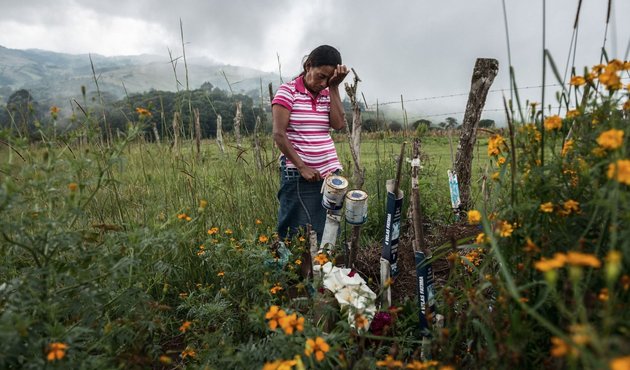
Julia Francisco Martínez stands at the graveside of her husband Juan, a Honduran Indigenous defender who was found murdered in 2015. Giles Clarke / Global Witness
Every year, Global Witness works with partners to gather evidence, verify and document every time a land and environmental defender is killed or disappeared. Our methodology follows robust criteria, yet undocumented cases pose challenges when it comes to analysing data
Global Witness documents killings and long-term disappearances of land and environmental defenders globally. In partnership with over 30 local, national and regional organisations in more than 20 countries, we produce an annual report containing these figures, and we have done so since 2012.
Our methodology involves a year-long process of cross-referencing data from different sources to ensure its credibility. Over 2,200 killings or long-term disappearances of defenders appear in our database since 2012 – with 146 cases documented in 2024.
Every year, we maintain a database to keep a record of these crimes and create a comprehensive global picture of the systematic violence defenders face.
The data provides a snapshot of the underlying drivers behind reprisals and indicates how some defenders and their communities face increased risks. Exposing these trends is the first of many steps to ensure that defenders and their communities are protected and can exercise their rights without fearing for their lives.
Killings and disappearances documented between 2012 and 2024
2,253 defenders have been killed or disappeared since 2012 Global Witness
146 of these attacks occurred in 2024 Global Witness
The accompanying press release goes into considerable detail on the methodology used.
The Trump administration’s omission of key sections and manipulation of certain countries’ rights abuses degrade and politicize the 2025 US State Department human rights report, Human Rights Watch, Amnesty International, Human Rights First and many other NGOs concluded .
On August 12, 2025, the State Department released its “Country Reports on Human Rights Practices” covering the year 2024. The report omits several categories of rights violations that were standard in past editions, including women, LGBT people, persons with disabilities, corruption in government, and freedom of peaceful assembly. The administration has also grossly mischaracterized the human rights records of abusive governments with which it has or is currently seeking friendly relations.
By undermining the credibility of the report, the administration puts human rights defenders at risk, weakens protections for asylum seekers, and undercuts the global fight against authoritarianism.
This year’s human rights report may strictly keep with the minimum statutory requirements but does not acknowledge the reality of widespread human rights violations against whole groups of people in many locations. As a result, Congress now lacks a widely trusted, comprehensive tool from its own government to appropriately oversee US foreign policy and commit resources. Many of the sections and rights abuses that the report omits are extremely important to understanding the trends and developments of human rights globally, Human Rights Watch said.
On Israel, the State Department disregards the Israeli authorities’ mass forced displacement of Palestinians in Gaza, their use of starvation as a weapon of war, and their deliberate deprivation of water, electricity, medical aid, and other goods necessary for civilians’ survival, actions that amount to war crimes, crimes against humanity, and acts of genocide. The State Department also fails to mention vast damage and destruction to Gaza’s essential infrastructure and the majority of homes, schools, universities, and hospitals.
The report is dishonest about abuses in some third countries to which the US is deporting people, stating that the US found “no credible reports of significant human rights abuses” in El Salvador, although they cite “reports” of extrajudicial executions, enforced disappearance, and mistreatment by police. The administration has transferred to El Salvador’s prisons, despite evidence of torture and other abuses.
The State Department glosses over the Hungarian government’s escalating efforts to undermine democratic institutions and the rule of law, including severe curbs on civil society and independent media, and abuses against LGBT people and migrants. It also fails to acknowledge that Russian authorities have widely used politically motivated imprisonment as a tool in their crackdown on dissent, and its prosecutions of individuals for “extremism” for their alleged affiliation with the LGBT movement.
The year 2024 witnessed a deteriorating political and human rights climate, with the war in Sudan, police violence in Kenya, ethnic conflict in Ethiopia and political instability in the Sahel intensifying threats against human rights defenders (HRDs). Despite the risks, the East and Horn of Africa Human Rights Defenders Project (DefendDefenders) and the Pan African Human Rights Defenders Network (AfricanDefenders) remained steadfast in providing HRDs with essential protection support, supported amplifying of their voices, and enhancing their capacity to navigate the environments.
Our protection efforts were central to our work as HRDs faced heightened threats. DefendDefenders provided a total of 643 protection grants (493 emergency grants and 150 direct assists under the Ubuntu Hub Cities Initiative). AfricanDefenders strengthened partnerships with the Elisabeth-Selbert-Initiative, the Shelter Cities Initiative, and the University of Pretoria’s Centre for Human Rights to facilitate the relocation and protection of HRDs at risk.
On the advocacy front, we remained committed to ensuring that HRDs had a voice at regional, and international levels. At the UN Human Rights Council, we advocated for the renewal of critical mandates, including the UN Commission on Human Rights in South Sudan and the Special Rapporteur on Eritrea. Additionally, we launched the report Is the Tide Turning? which analyses African states’ voting patterns on human rights resolutions to inform and shape future advocacy strategies.
At ACHPR, we facilitated HRDs’ participation in the 79th and 81st ordinary sessions, organized side events, and engaged with civil society organisations. Our involvement in the African Electoral Justice Network underscored our commitment to promoting fair and transparent electoral processes. Additionally, we facilitated a benchmarking trip for ACHPR Commissioners to the Inter-American Commission on Human Rights, fostering inter-regional collaboration on human rights protection. We conducted solidarity missions to Kenya and Senegal, standing with indigenous women HRDs, grassroots defenders, and civil society leaders. We also co-hosted a global consultation with outgoing and incoming UN Special Rapporteurs on Freedom of Peaceful Assembly and Association, addressing emerging threats to civic space and climate justice activism.
We strengthened national HRD coalitions across the East and Horn of Africa, reinforcing networks for collective advocacy and protection. Our 7th Focal Point Meeting brought together members of the East and Horn of Africa Human Rights Defenders Network to assess civic space trends, evaluate our 2021-2025 Action Plan, and strategise for the 2026-2030 period. As part of this gathering, we also convened an inter-mechanism dialogue between HRDs, the Chairperson of the ACHPR, and the Chairperson of the UN Working Group on Enforced Disappearances to enhance HRDs engagement with the special mechanisms.
To sustain HRDs’ resilience, we prioritised capacity-building, equipping them with tools to navigate an increasingly hostile environment. Over the year, we trained 990 HRDs through more than 62 workshops on physical security, digital security, wellbeing, monitoring and documentation, Kobo Toolbox, and resource mobilisation. The year concluded with the launch of our annual thematic report, Rocky Ground and Shifting Sands: Human Rights Defenders Working in the Context of Elections in East Africa, offering insights into the challenges HRDs face in electoral contexts in Burundi, South Sudan, Tanzania, and Uganda.
In 2024, HURIDOCS continued strengthening partnerships, evolving tools, and expanding its reach.
“I see our contribution not just as code, but as something living—like the root bridges of Northeast India, grown with care and shaped by community. This is how I envision HURIDOCS: building human rights infrastructure that is resilient, collaborative, and deeply rooted in justice.” — Danna Ingleton, HURIDOCS Executive Director
Supporting the global community
This year, HURIDOCS partnered with 73 organisations across 38 countries, helping develop documentation strategies, launch new platforms, and provide targeted support. This means 73 documentation projects were reimagined and refined through bespoke customisation through our flagship tool, Uwazi. From databases mapping attacks on environmental defenders to resources preserving collective memory, our work continues to be shaped by those on the frontlines of human rights struggles.
Uwazi: Built with and for civil society
In 2024, our open-source platform, Uwazi, continued to grow with new machine learning tools for translation and metadata extraction, tighter security, and full integration with the Tella mobile app, making it more responsive, secure, and aligned with the needs of human rights defenders worldwide.
Convening global conversations
In 2024, HURIDOCS engaged in key global events, including a side event at the 56th Human Rights Council, the Geneva Human Rights Platform, the first Google Impact Summit, and a Human Rights Day webinar highlighting four global initiatives powered by Uwazi.
Through these events, we advanced vital discussions on the ethical use of AI, digital monitoring technologies, and the future of technology infrastructure in support of human rights.
Navigating fundraising challenges while building resilience and sustainability
HURIDOCS continued to navigate a complex funding landscape in 2024, strengthening our financial foundations to ensure long-term resilience.
We remain committed to aligning our resource strategies with our mission, providing steadfast support, insight, and partnership to those advancing human rights globally
Strengthening our foundations
2024 marked the second year of Danna Ingleton’s leadership as Executive Director. It was a year of growth and transition, including the appointment of Grace Kwak Danciu as Chair of the HURIDOCS Board, and a heartfelt farewell to Lisa Reinsberg, whose contributions shaped the organisation for more than five years.
To ensure the long-term sustainability of our mission, we launched a new Development and Communications team under the leadership of Yolanda Booyzen. We also welcomed new staff across programmes, tech, and product, each one contributing to a stronger, more agile HURIDOCS.
As our team grows and our documentation tools evolve, we strive to build a fit-for-purpose civil society equipped to achieve justice, accountability, and the protection of human rights.
Looking ahead, we hold hope that the years to come will bring renewed compassion as we work towards a world where human rights are upheld for all.
‘In 2024, we have witnessed extraordinary levels of hostility towards democracy, from rampant disinformation and information manipulation by foreign actors, to the silencing of media and human rights defenders, and a strong pushback against gender equality and diversity, undoing years of progress in many countries across the globe. Today, only 29% of the world’s population live in liberal democracies. At the heart of these challenges lies peace. Peace is not simply the absence of war. It is the active cultivation of justice, the protection of the most vulnerable, the realisation of all human rights and the commitment to dialogue and reconciliation.’ – High Representative, Kaja Kallas
The publication of the EU’s Annual Human Rights Report takes place in the context of multiple and cascading crises, including war on the European continent and the resurgence of conflict in many other areas of the world. These developments underscore the strong links between peace, human rights and democracy. Climate change, digital transformation, and rising inequalities add to the growing human rights challenges worldwide.
The report follows the structure of the EU’s Action Plan on Human Rights and Democracy, particularly the EU’s work on protecting and empowering individuals, building resilient, inclusive and democratic societies, promoting a global system for human rights and democracy, harnessing opportunities and addressing challenges, and ensuring that the EU delivers by working with our partners.
The EU continues to support the strengthening of inclusive, representative and accountable institutions, and promoted a collaborative approach to democracy through the Team Europe Democracy initiative. The fight against information manipulation and interference also continues to be a priority through initiatives such as EUvsDisinfo. Over the past year, the European Endowment for Democracy has kept up its work on fostering democracy and working with free media and civil society in challenging circumstances in Belarus, and Ukraine among others. The EU has carried on supporting and empowering people on the frontlines of human rights advocacy.
While the global outlook is challenging, the EU is steadfastly pursuing deeper international cooperation and stronger early warning and prevention mechanisms. Efforts to ensure accountability for violations and abuses of human rights continue to be a key priority. Together with its partners, the EU is determined to protect the multilateral human rights system and uphold the central role of human rights and democracy in fostering peace, security and sustainable development.
Resilience of Human Rights Defenders a Source of Hope Amid Global Rollback on Rights – At least 324 defenders killed in 32 countries for their peaceful work in 2024
On 6 May 2025 Front Line Defenders Global Analysis 2024/25 was published giving a detailed panorama of the violations against HRDs at risk in 105 countries in all regions. Despite an increasingly hostile world with expanded threats to their work, human rights defenders (HRDs) everywhere demonstrated a remarkable level of resilience and determination as they resisted a global rollback on human rights, Front Line Defenders said as it launched its flagship report.
The report also reveals statistics gathered and verified by the HRD Memorial – which Front Line Defenders coordinates – documenting the killings of at least 324 HRDs in 32 countries in 2024. HRDs working on land rights, citizen’s rights and Indigenous peoples’ rights each made up almost a fifth of the total, and the countries with the highest number of killings documented were Colombia (157), Mexico (32), Guatemala (29), Palestine (22) and Brazil (15). (See pp. 6-13 for complete data.)
“Year on year, hundreds of human rights defenders pay the ultimate price when they are killed for their work, having a devastating impact on their families and communities. It is a grim reflection of the immense danger faced by those who work peacefully to defend human rights,” said Alan Glasgow, Executive Director of Front Line Defenders.“Other threats and risks are manifold. Front Line Defenders’ analysis shows that women’s rights defenders globally and HRDs working in situations of conflict were among those most targeted for their work. It is a remarkable sign of these defenders’ courage that they continue their struggle despite such immense danger. They are the best among us, who fervently believe a better world is worth fighting for.”
Arbitrary arrest/detention was the most commonly reported violation against HRDs around the world, followed by threats/other harassment, legal action, death threats and surveillance. Women HRDs reported slightly higher levels of threats/other harassment compared to their male counterparts, while trans and non gender-conforming HRDs reported this as the most common violation they faced overall.
Criminalisation of HRDs remained rife with 107 charges filed in 75 cases. The most commonly cited charges were linked to defamation (23.4%); national security (19.6%); other criminal charges (12.1%); public order offences (11.2%); and terrorism-related charges (11.2%). In every region, governments and non-state actors turned to the judicial system to disrupt, stymie, stigmatise, bankrupt and imprison HRDs, regardless of the human rights they were defending. Counter-terrorism legislation and “Foreign Agent” laws were among those weaponised for use against HRDs.
According to Front Line Defenders data, defenders working on women’s rights were among the most targeted globally in 2024, ranking in the top three for all regions except one. This trend played out in numerous ways, with women human rights defenders (WHRDs) subjected to smear campaigns, criminalisation, arbitrary arrest and detention, as well as targeted with threats – including threats of sexual and gender-based violence.
WHRDs played key roles in protest movements seeking more just societies – for example in Bangladesh – faced stark discrimination in countries like Afghanistan and Iran, and shouldered heavy burdens in conflict and crisis situations, ranging from Gaza to Colombia, DRC, Myanmar, Sudan and Ukraine.
Dr. Mahrang Baloch, an outspoken WHRD from Pakistan’s Balochistan region, faced ongoing risks throughout the year, including travel bans, smear campaigns and arbitrary detention. At the time of publication she remains jailed in Quetta after being arbitrarily arrested for leading a peaceful protest. In a foreword provided to Front Line Defenders, she described why HRDs persist in their struggle:
“We must continue to resist. Because human rights defenders are the ones standing on the frontlines, risking everything so that others may find their missing loved ones, so that everyone can go to school, so that the silenced can speak, so that women raped in refugee camps can find justice, so that those fighting alone in their homes, their villages, their cities can know they are not alone. We must stand with them, and we must stand together. Not for a nation. Not for a religion. Not for a race. But for humanity. Because if we do not, who will?”
Humanists International announced on 24 June 2024 that it has awarded grants to 13 projects worldwide. This initiative, awarding a total of £36,300 through the 2024 Grants Program, provides financial support to bolster humanist endeavors and empower organizations working to advance humanist values across the globe.
The grant program in 2024 was made possible thanks to a very generous legacy gift left to the organization by the late Professor Dabir Tehrani, who was a long-standing supporter of Humanists International.
The call for applications, opened from April to May, attracted a wide range of proposals. Selected projects, kicking off this month, will continue until January 2025. Grants were awarded exclusively to Members and Associates of Humanists International, focusing on five key areas:
Development Grants: Supporting the growth and sustainability of humanist organizations, particularly in developing countries.
Digital Humanism Grants: Encouraging projects that utilize technology to promote humanist values online.
Humanist Ceremonies Grants: Building capacity for humanist celebrants to offer alternative ceremonies like weddings and funerals.
Regional Networking Meetings Grants: Facilitating gatherings and collaboration between humanist organizations within specific regions.
Young Humanist Grants: Empowering young people to become active participants in the humanist movement.
For members interested in applying for future grants, Humanists International also offers the year-round Cafe Humaniste Grant. This program supports small, in-person, or online gatherings where members can discuss any topic related to humanism.
Dooyum Dominic Ingye, Project Head at Advocacy for Alleged Witches, one of the grant recipients, said:
“We are truly honored and grateful that the Advocacy for Alleged Witches (AFAW) has been selected to receive the Humanists International Development Grant for our project. This funding will make a significant difference in our ability to advocate for justice, provide legal aid, and empower alleged witches to stand up against the discrimination and violence they face.”
Javan Lev Poblador, Membership Development Officer of Humanists International, commented:
“We are delighted to support these 13 projects making a tangible difference in local and international communities by promoting humanism. These grants will equip our Members and Associates with vital resources to grow and extend their impact.”
On 27 June 2024 the Global Centre for the Responsibility to Protect published a summary of the UN Secretary-General’s 16th report on the Responsibility to Protect (R2P), entitled “Responsibility to Protect: The commitment to prevent and protect populations from atrocity crimes.” Within the report the Secretary-General issues a stark warning about worrying global trends, including increasing violations and abuses of International Humanitarian Law (IHL) and International Human Rights Law (IHRL), and articulates challenges that UN member states and the international community have faced in upholding R2P over the past two decades. The Secretary-General asserts, however, that there are still opportunities to shift the current course of events through a more nuanced and strategic approach to prevention and protection by actors across all levels.
KEY POINTS
The Global Centre for the Responsibility to Protect would like to highlight the following key points from the report:
SECTION II. GLOBAL PATTERNS IN THE ONGOING COMMISSION OF ATROCITIES
As requested by many member states during the 2023 UN General Assembly debate on R2P, the Secretary-General takes stock of current global trends with regard to the risk of and commission of mass atrocity crimes. This section highlights the dire trends across three main areas: violations of IHL in the context of growing violent conflict worldwide, violations of and failures to institutionalize protections for human rights and factors that create enabling environments for perpetrators to commit atrocity crimes.
Patterns of violations of international humanitarian law
In recent years the world has experienced a dramatic rise in violent armed conflicts. Throughout many of these crises, parties to the conflict have increasingly employed methods and means of warfare with complete disregard for human life and in flagrant violation of international law and various treaty obligations. The IHL principles of distinction, proportionality, necessity and precaution are routinely violated by both state and non-state actors. There has also been an escalating pattern in the indiscriminate use of explosive weapons in populated areas, as well as targeted attacks on civilian infrastructure and cultural heritage. Drawing upon the Secretary-General’s annual reports on other related issue areas – including the Protection of Civilians, Children and Armed Conflict and Conflict Related Sexual Violence – the section highlights further worrying trends in violations against civilian populations, as well as the targeting of civilians on the basis of their religion, ethnicity, nationality, race, descent, gender and other identity factors. The Secretary-General further notes the man-made humanitarian consequences of these conflicts, including the global forced displacement crisis and the record number of people facing acute food insecurity.
Acts that violate IHL may also constitute war crimes and may amount to crimes against humanity, ethnic cleansing or genocide. Depriving civilians of objects indispensable to their survival, including through blocking access to humanitarian aid, may amount to war crimes.
Patterns of violations and abuses of human rights
The Secretary-General recalls that throughout history, atrocity crimes have often been precipitated by serious violations and abuses of human rights by state and non-state actors. Many human rights violations and abuses may themselves constitute or amount to an atrocity crime if certain thresholds or conditions are met.
The report notes that in many situations, violations and abuses of human rights have risen alongside democratic backsliding and patterns of targeted attacks by governments against actual and/or perceived dissenting voices. As some governments have stripped societies of human rights protections, they have also increased attacks on political opponents, human rights defenders and civil society, the media and other critical voices, sometimes through arbitrary detention, torture, enforced disappearances, extrajudicial killings and other violations in a manner that may amount to crimes against humanity. The Secretary-General particularly highlighted the regression in women’s and girl’s rights.
Environments conducive to atrocity crimes
Atrocity crimes do not occur in a vacuum; they are often preceded by structural, societal and political factors that create an enabling environment for their commission. Some factors may facilitate crimes by creating the means, motives and opportunities for perpetrators to act or may inhibit their mitigation. While cautioning that the list is not exhaustive, the Secretary-General highlights trends related to several key enablers of atrocity crimes, including the continuation and expansion of discriminatory policies and practices targeting populations on the basis of identity – such as threats and attacks against indigenous populations – unconstitutional changes of government, shrinking of civic space, the spread of non-state armed groups, the role of new and emerging digital technologies in proliferating hate speech and capacity for mass surveillance and the impacts of climate change.
The report notes how each of these factors may impact societal resilience to atrocity crimes, particularly when combined with established trends in violations of IHL and IHRL. For example, in countries experiencing democratic backsliding and shrinking civic space, there are often corresponding human rights issues, including arbitrary deprivation of life and liberty, removal of due process guarantees and reversal of women’s rights, among others. Similarly, as the presence and capacity of non-state armed groups has expanded, their ability to perpetrate crimes against humanity and war crimes targeting populations has also increased. Moreover, efforts to regain territorial control and combat such groups have exacerbated fragile security situations and state actors themselves have perpetrated potential atrocity crimes in the name of counterterrorism.
SECTION III. ADVANCES AND CHALLENGES IN PREVENTING ATROCITY CRIMES AND PROTECTING POPULATIONS
This section focuses on advancements in prevention, protection and justice and accountability processes since the inception of R2P. It also reflects upon the numerous normative, conceptual and operational challenges that need to be confronted to improve the prevention of atrocity crimes and the protection of populations.
Advances in prevention and protection
The report acknowledges the progress made in understanding the processes that lead to atrocity crimes and in conceptually understanding early warning signs for atrocities, noting in particular the UN’s Framework of Analysis for Atrocity Crimes, previous Secretary-General’s reports and work within the UN Peacebuilding Commission. Efforts have also been made by states, as well as networks, such as the Global Action Against Mass Atrocity Crimes and the Global Network of R2P Focal Points, to expand early warning expertise and capacities for response.
The Secretary-General notes the expansion of international investigative bodies and mechanisms mandated to assist in the collection, consolidation and preservation of evidence of potential atrocity crimes, as well as the monitoring and advocacy on country situations by the UN High Commissioner for Human Rights. In this regard, the report acknowledges how some of these bodies have utilized the Framework of Analysis for Atrocity Crimes in their assessments of situations with ongoing crimes or potential atrocity risks.
The section also acknowledges the progress made in transitional justice and memorialization as methods for dealing with the past and promoting truth, justice and non-recurrence. Moreover, the Secretary-General notes how national courts, international criminal courts and tribunals and the International Court of Justice have all played critical roles in holding perpetrators accountable for atrocity crimes.
Further challenges in prevention and protection
The advances highlighted by the Secretary-General demonstrate the depth of relevant information on risks, the existing potential to prevent their occurrence and the available institutional capacity to protect vulnerable populations and hold perpetrators of atrocity crimes accountable. They also expose the failure of the international community to prevent and protect populations from atrocity crimes. The report articulates four key challenges that contribute to the failure to realize the promise of R2P.
First, the international community has not capitalized on opportunities to start prevention initiatives before risk factors emerge. States and regional and international bodies need to more consistently take preemptive steps, such as instituting policies, systematic research, practices and structures that identify risk indicators and inform policy makers to enable societal resilience to atrocity crimes, including through the development of measures, laws and initiatives that protect the rights of all populations, prevent their marginalization and inhibit the development of the drivers of direct violence.
Second, improved understanding of the risk factors and gathering of early warning has not always translated into assessments and timely decision making. Due to the exceptional nature of atrocity crimes, patterns that lead to their commission are often not acknowledged or the potential trajectory of early warning information is not adequately anticipated, resulting in a lack of timely decision making.
Third, due to the lack of timely preventive action, discussions on response often occur when options are more limited and when decision-makers across all levels are more polarized.
Fourth, even when the risks are understood or clearly articulated, priority is not sufficiently given to develop adequate and appropriate measures to protect affected populations amidst other considerations decision-makers face in a particular situation. Moreover, the Secretary-General emphasizes the need to ensure that the knowledge and expertise of affected communities are centered in policy, practice and understanding.
SECTION IV. UNDERSTANDING EFFECTIVE PREVENTION AND PROTECTION
To address the challenges put forward in Section III, the Secretary-General highlights several aspects of prevention and protection that states and other actors should consider in order to bolster efforts to limit the occurrence and impact of atrocity crimes.
Prevention as a continuous process
The best way to disrupt the actions that lead to atrocity crimes is to approach prevention and protection as part of a continuous, permanent process. This includes not only a response to imminent and emerging risks, but also instituting policies, practices and structures that build long-term societal resilience to atrocity crimes. In this sense, the early prevention of atrocities is not significantly distinct from practices that support good governance: ensuring respect for the rule of law, supporting a competent and independent judiciary, protecting human rights, enabling civil society and the media to operate without interference or fear of reprisals and creating a political culture that favors tolerance and diversity. These are steps that governments can take to build the institutional architecture to prevent the drivers of atrocities from emerging.
Embodying prevention as a continuous process also includes consistent monitoring and assessment of risks amidst societal transformation and, when necessary, instituting necessary reforms to confront those risks.
A unique framework for atrocity crimes prevention
The Secretary-General invokes the atrocity prevention lens as a strong framework for enabling actors to better understand and more adequately respond to the drivers of crimes. Application of this lens includes identifying factors and indicators and assessing dynamics as they pertain to the risk and potential commission of atrocity crimes, guiding the necessary action at the domestic, regional and international level to prevent their perpetration and to effectively protect populations. This lens compels actors to reframe analysis and intelligence-gathering in order to recognize patterns of behavior and dynamics that may enable or precede atrocity crimes. The atrocity prevention lens also assists in identifying specific vulnerabilities of certain populations – including ethnic and religious minorities, women, populations with distinct sexual orientations and gender identities, children, disabled populations and others – and detects factors that may put them at particular risk to atrocity crimes.
The atrocity prevention lens may also represent an added value for existing conflict prevention, conflict resolution and protection agendas as it compels decision-makers to devise political strategies to counter threats and to avoid solutions that may exacerbate societal cleavages, structural exclusion or violence among groups. As it provides a more tailored understanding of the broader political landscape and how it relates to the threat to populations at risk, stakeholders can better understand what factors in the political process may act as triggers for wider violence or atrocities and what actions by state and non-state actors may exacerbate vulnerabilities faced by certain populations or regions of the country.
Prevention and protection: a cooperative effort
The report emphasizes that effective protection is only possible when informed by preventive assessments. The best outcomes will be reached when prevention and protection are implemented together.
Multiple forms of protection in action
When populations need protection, there are a variety of effective and complementary international instruments that can be utilized. Diverse entities within the UN, national governments and regional bodies, as well as independent human rights institutions, human rights defenders, civil society, and independent media, can all play a critical role in documenting and drawing attention to violations and abuses of human rights, threats to the physical integrity of populations and patterns in attacks.
Legal protection At the heart of prevention and protection of atrocity crimes lies the legal guarantee of protection provided by states through constitutional and legislative policies, as well as through compliance with international protection instruments, including the Convention on the Prevention and Punishment of the Crime of Genocide, the Convention against Torture and Other Cruel, Inhuman or Degrading Treatment or Punishment, the International Covenant on Civil and Political Rights, the International Covenant on Economic, Social and Cultural Rights and other rights-based instruments. Domestic legal frameworks should be designed in a manner that protects all populations by ensuring equal access to public services and full human right protections. The UN and other states parties to various conventions can also provide legal protection by reminding states of their obligations to populations under the respective conventions and, when necessary and permitted by the relevant treaty body, issue formal complaints about non-compliance.
Preventive diplomacy, good offices and mediation Preventive diplomacy and mediation aimed at reducing tensions, averting violent escalations and negotiating among parties to conflicts or disputes is a necessary component of ensuring the long-term success of protection efforts. Negotiations among trusted leaders have prompted conflicting parties to step back from violent rhetoric and escalatory action, make political commitments to halt abuses and rethink the tactics utilized in protected civilian spaces. Domestic actors, such as local community and religious leaders, civil society activists and women’s and youth groups, also play a crucial role in de-escalating situations and in engendering dialogue between warring parties or groups.
Physical protection The Secretary-General notes that a security sector that is community-based and respects international norms and standards on prevention is one of the most important actors in ensuring physical protection of all populations from atrocity crimes. This is particularly the case if the security sector is equipped with knowledge of the atrocity prevention lens and an understanding of the unique vulnerabilities of populations they may be protecting. When necessary, the UN Security Council may authorize regional or international forces to provide physical protection. However, the Secretary-General cautions that states should consider the use of force as a last resort because military action may have a devastating impact on populations.
Humanitarian aid and humanitarian protection Many of the situations where atrocity crimes are ongoing have resulted in dire man-made humanitarian emergencies as populations flee en-masse and, in some cases, civilian infrastructure is attacked and humanitarian aid blocked. It is essential that humanitarian actors be provided access to all populations, including those in conflict areas, and that there be accountability for any actor who blocks or diverts aid. The Secretary-General further notes that there is growing recognition of the importance of developing a long-term, comprehensive plan and integrated framework to bridge the divide between humanitarian relief, development assistance and peacebuilding.
SECTION V. UPHOLDING THE RESPONSIBILITY TO PROTECT: CONCLUSION AND THE WAY FORWARD
The Secretary-General concludes by reminding states that next year will mark 20 years since the adoption of R2P at the 2005 World Summit and emphasizing the need to produce more tangible results in preventing atrocities and protecting populations. The Secretary-General further encourages states, regional bodies and UN entities to assess and further develop their capacities to prevent mass atrocities.





 Hans Thoolen on Human Rights Defenders and their awards