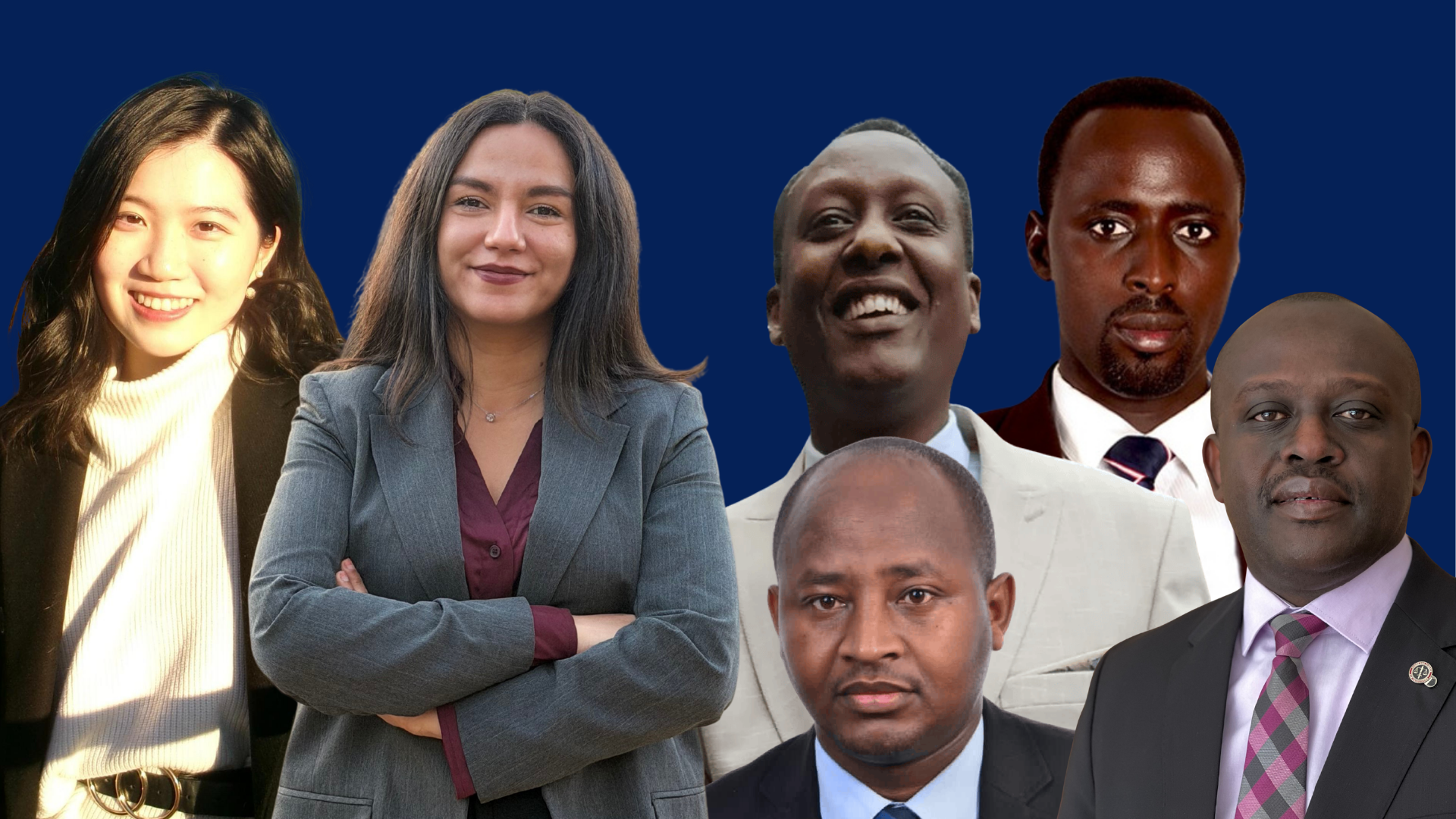
UN human rights experts have urged Thailand to halt the possible extradition of Chinese journalist Bai Zhaodong, warning he could face persecution, torture and other serious rights violations if returned.
United Nations human rights experts have called on Thailand to prevent the possible extradition of Chinese journalist and human rights defender Bai Zhaodong to China, warning that his return could expose him to persecution, torture and other serious human rights abuses.
In a press release, the experts urged Thai authorities to uphold the principle of non-refoulement, which bars countries from transferring individuals to places where they face a genuine risk of persecution or other serious harm.
Bai left China in 2023 after allegedly facing persecution over his human rights activities and was subsequently recognised as an asylum seeker. The UN experts said he has been held in Thai immigration detention since January 21, 2026, despite having completed a two-month prison sentence imposed in March for immigration-related offences.
The experts noted that Bai’s planned resettlement to a safe third country was reportedly blocked on two separate occasions. They also expressed concern that Chinese authorities have formally requested his extradition.
”Immigration status alone cannot justify prolonged deprivation of liberty. Human rights defenders seeking international protection must not be returned to countries where they are at risk of facing persecution, torture or other irreparable harm,” the experts said.
The statement also highlighted concerns over Thailand’s recently approved draft regulations introducing a unified and expedited deportation process for foreign nationals. The Thai Cabinet approved the framework on July 14, 2026.
The Special Rapporteur on the situation of human rights defenders invites States, national human rights institutions, civil society organizations, human rights defenders, medical and mental health professionals, academics, United Nations entities, regional organizations, donors, and other relevant stakeholders to provide inputs for an upcoming thematic report to the 64th session of the Human Rights Council on the mental health and psychosocial well-being of human rights defenders. [https://humanrightsdefenders.blog/2026/03/10/andrea-bolanos-vargas-next-special-rapporteur-on-human-rights-defenders/]
Human rights defenders play a vital role in promoting and protecting human rights, fundamental freedoms, democratic values, environmental protection, and social justice. In carrying out their work, defenders are frequently exposed to a range of pressures and risks, including threats, harassment, intimidation, surveillance, criminalization, arbitrary detention, reprisals, online abuse, displacement, and violence. These experiences may have significant consequences for their mental health and psychosocial well-being.
The report aims to examine the challenges faced by human rights defenders in maintaining their mental health and well-being, identify barriers to accessing adequate support, and highlight promising practices and measures that can help create enabling environments in which defenders can safely and sustainably carry out their work.
The Special Rapporteur welcomes contributions from all regions and encourages submissions reflecting the experiences of defenders working in diverse contexts, including women human rights defenders, Indigenous defenders, environmental and land rights defenders, LGBTIQ+ defenders, journalists, lawyers, trade unionists, youth defenders, defenders with disabilities, and defenders operating in situations of conflict, occupation, humanitarian crises, or authoritarian settings.
A detailed outline is to be found in the document.
On 30 July 2026 UN High Commissioner for Human Rights Volker Türk denounced the crackdown on dissent in Uganda, alongside a gradual erosion of the rule of law, increased military involvement in civilian institutions, and shrinking civic space – all of which are creating a climate of fear throughout the country.
“I am appalled that the authorities are increasingly targeting any form of dissent, and deepening restrictions on the fundamental freedoms of all those living in Uganda,” said Türk. “Those who dare to speak out are silenced.”
Since the general elections on 15 January 2026, repression has increased against all those perceived to oppose the Government. According to information received by the UN Human Rights Office, since the elections, at least 50 opposition leaders and supporters, five human rights defenders and five journalists have been subjected to human rights violations. These include instances of enforced disappearance, torture and ill-treatment, and arbitrary arrest or detention based on legal provisions which do not comply with international human rights law.
In addition, 10 leading civil society organisations have been suspended since January 2026, while others have been closely scrutinised and, at times, subjected to harassment.
The Office has also received information about increased military involvement in functions ordinarily carried out by civilian institutions. Some media outlets have been forced to close temporarily.
In May 2026, the Protection of Sovereignty Act was enacted, imposing extensive restrictions on international funding and foreign engagement with civil society organisations. The legislation includes severe penalties, including prison sentences of up to 10 years for violations.
“The actions of the authorities are creating a climate of fear that is increasing self-censorship, further stifling public debate and deepening polarisation,” said Türk.
“I call on the Government to abide by its obligations under international human rights law, the African Charter and the Ugandan Constitution to ensure a vibrant civil society where everyone can freely express their views and participate in public affairs,” he added.
The UN Human Rights Chief urged the Government to uphold the separation of powers and the rule of law, including by preventing military interference in civil institutions..
Khurram Parvez, coordinator of the Jammu Kashmir Coalition of Civil Society (JKCCS) and Chair of the Asian Federation Against Involuntary Disappearances (AFAD), has spent decades documenting human rights violations in Indian-administered Kashmir, including enforced disappearances, torture and extrajudicial killings. Irfan Mehraj, a journalist and human rights defender associated with JKCCS, has similarly contributed to documenting and reporting on human rights concerns in the region.
Both human rights defenders have faced prosecution under spurious allegations related to terrorism and secessionism that human rights organisations have consistently characterised as politically motivated and unsupported by credible evidence. The charges against both defenders remain in place, and the conditions attached to Khurram Parvez’s release continue to impose severe restrictions on his rights and freedoms. The international community, including the UN human rights system, must remain closely engaged until all charges are dropped and any restrictions on their work and freedom come to an end.
22 July 2022: The case in which Khurram Parvez, a prominent Kashmiri human rights defender, and Irfan Mehraj, a Kashmiri journalist and human rights defender – both associated with the Jammu Kashmir Coalition of Civil Society (JKCCS) – have been granted bail involves trumped-up charges of “funding terror activities” and “propagation of secessionist agenda” in retaliation for their widely respected and recognised human rights documentation and accountability work through JKCCS. On 18 July 2026, a New Delhi District Court held the bail hearing in this case.
In June 2023, the UN Working Group on Arbitrary Detention (UNWGAD), in its Opinion No. 8/2023, determined that Khurram Parvez’s detention was arbitrary and called on the Indian authorities to immediately and unconditionally release him.
Although the conditional release of the two defenders comes as a relief, after a prolonged period of arbitrary pre-trial detention, the harassment through legal means against them continues, in a context of longstanding and ongoing grave violations of human rights and fundamental freedoms in Jammu and Kashmir.
The Observatory calls on the Indian authorities to drop all charges against Khurram and Irfan, as they are part of politically motivated proceedings aimed at discrediting their legitimate work and the JKCCS.
On 17 July 2026 UN experts expressed concern over the arrest and detention of five Indigenous human rights defenders in Assam, warning that the charges against them could undermine the legitimate work of those defending Indigenous Peoples’ rights in the context of business activities.
“We are deeply concerned by reports that Indigenous human rights defenders have been deprived of their liberty in connection with their peaceful advocacy on behalf of Indigenous communities’ lands and rights,” the experts said. “Such arrests and prosecutions can have a chilling effect on civic space and discourage others from speaking out against abuses.”
Assam Police reportedly arrested Pranab Doley, Rajib Pegu, Brijit Kutum, Amit Nag and Bhaskar Saikia in connection with protests on 29 June 2026 concerning the planned construction of a luxury tourism project in Inglay Pathar, near Kaziranga National Park. The project is reportedly linked to an agreement between the Assam Government and Juniper Hotels, and associated with the Hyatt group.
In its recent report, the UN Working Group on Business and Human Rights noted that threats, arrests, surveillance, retaliation and legal harassment can undermine the safety and ability of Indigenous Peoples and Indigenous human rights defenders to participate freely in processes concerning business activities.
“States must ensure human rights defenders are able to exercise their right to protect, defend and promote human rights and carry out their work safely and without fear of intimidation, reprisals or criminalisation,” the experts said.
They expressed concern regarding reports that the local police responsible for these arrests have previously been associated with allegations of torture and other forms of ill-treatment, and urged authorities to ensure that all detained human rights defenders are treated with dignity and that their rights are fully protected.
The experts called for the immediate release of the detained defenders if their detention is linked solely to the peaceful exercise of their rights, urged authorities to ensure any criminal proceedings fully comply with international human rights standards, and called on authorities to suspend any land acquisition or development until affected Indigenous communities have been meaningfully consulted and their free, prior and informed consent has been obtained.
Claudia Fuentes Julio has been appointed Assistant Secretary-General for Human Rights at the United Nations. She shares her vision, priorities and personal journey into the field of human rights.
A former diplomat from Chile with more than two decades of experience in international relations, multilateral diplomacy and human rights, Fuentes Julio brings to the position a deep commitment to advancing human rights and strengthening cooperation among States, civil society and other actors to this end.
The Assistant Secretary-General is the head of the UN Human Rights Office in New York, advising and representing the UN High Commissioner Volker Türk at the UN Headquarters. As such, strengthening the cooperation between the UN Human Rights Office and the wider UN system is also one of her top priorities.
Fuentes Julio succeeds Ilze Brands Kehris of Latvia.
Women human rights and environmental defenders face escalating repression simply because of their gender and need stronger international protections to continue their work, Right Livelihood Laureates warned at a United Nations side event last week.
The event, organised by Right Livelihood as part of the Women Laureates Hub and Exile Project programmes during the 62nd session of the UN Human Rights Council, brought together Laureates and international experts to examine the specific threats and challenges faced by women activists solely because of their gender.
“Gender apartheid” in Afghanistan
“Human rights defenders in general are the core or the most important element of a democratic society,” said Dr Sima Samar, a 2012 Laureate and former Minister for Women’s Affairs of Afghanistan. “Among them, women human rights defenders are the main ingredient of democracy. We cannot say that ‘There’s democracy, but women should be at home,’ like the Taliban does in Afghanistan.” In her country, a total of 160 laws, decrees and orders have been passed to suppress women’s rights. Those include a ban on women working outside the home and on girls receiving an education beyond 6th grade.
“It is a crime against humanity – that is why we call it gender apartheid,” Samar said, calling for the codification of gender apartheid in the Convention on Crimes Against Humanity. She also warned that some European countries are beginning to normalise the Taliban’s restrictions by framing them as cultural or religious practices. “It’s not our religion, it’s not our culture,” Samar said. “Please, do not use the excuse of respecting the culture and religion in Afghanistan.”
Women environmental defenders also face heightened risks compared to their male counterparts, warned Diana Nabiruma, Programmes and Communications Manager at 2022 Laureate organisation Africa Institute for Energy Governance (AFIEGO).
“In Uganda today, unfortunately, what we see is that laws are used to repress not only environmental and human rights defenders but women in particular,” Nabiruma said. Uganda currently has five laws restricting civic freedoms and activist work, including a recently passed law on foreign funding.
Nabiruma has observed stark differences in how men and women environmental defenders are treated, especially by authorities. “Women do not speak up; women are more repressed than men are,” she said. “When they protest, they are asked, ‘Who will marry you? You’re a terrible person!’ There’s a lot of anti-gender rhetoric, which forces women to become silenced, so they don’t demand their rights to be protected.”
A “problem for democracy,” not just for women
Eva Zillen, Senior Adviser at the Kvinna till Kvinna Foundation, a Swedish organisation that received the 2002 Right Livelihood Award, said that their 2026 report on the situation of women and queer rights activists in conflict-affected countries confirmed many of the trends her fellow Laureates were witnessing on the ground. One striking finding: for the first time since 2008, fewer activists reported feeling threatened. This isn’t progress, the organisation said, just an indication that digital hate speech has become so normalised that it’s no longer recognised as a threat. “A lot of activists are withdrawing: self-silencing has become a form of self-protection, and they are leaving social media,” Zillen said. “This is not a problem for the women’s movement; this is a problem for democracy.”
The report identified governments and state authorities as the leading source of threats against women human rights defenders, alongside traditional and community leaders, religious actors and anti-gender movements. “These four are working together, and they are using the anti-gender narrative,” Zillen said. “It has to do with gaining power or sustaining power, and this is a narrative that has proven to be very successful.”
Olivia Ekobe, Human Rights Officer at the World Organisation Against Torture (OMCT), said her organisation documented over 60 cases of women human rights defenders facing risks last year alone, underscoring the need for gender-sensitive monitoring.
Ekobe outlined three recommendations: civil society organisations must increase visibility around the criminalisation of women human rights defenders and the protections available to them; states must end this criminalisation and adopt adequate legal frameworks; and donors must increase funding for women-led local organisations. “We have a responsibility to help create an environment where women HRDs can carry out their work without fear,” she added.
The side event was held as the culmination of a week-long workshop in Geneva for women Right Livelihood Laureates and fellows of the Exile Project, a programme in collaboration with the Global Campus of Human Rights.
The recommendations include practical actions that states can take to protect women human rights defenders and provide guidance on how to engage with other states on the matter.
Human rights defenders who engage with the United Nations are increasingly facing reprisals through transnational repression, as States seek to silence criticism beyond their borders.
ISHR calls on States to raise cases of transnational repression as reprisals against human rights defenders who engaged with the United Nations. Here is the message it will send and it calls on anybody to sign up:
Excellency,
In the past, you showed your support in preventing reprisals against those who engage with the United Nations by co-sponsoring the resolution on reprisals and/or publicly naming cases of reprisals against human rights defenders.
The following human rights defenders have dedicated themselves to promoting and safeguarding human rights in their respective countries, including through engagement with the United Nations. Yet, instead of being protected, they are facing reprisals and transnational repression linked to their cooperation with UN human rights mechanisms.
Through threats, criminalisation, surveillance, attacks on family members, professional sanctions, asset seizures and other forms of intimidation, these defenders continue to face consequences for engaging with the United Nations, even while living in exile.
I urge your delegation to raise the following cases during the Human Rights Council and the General Assembly’s Third Committee and publicly condemn all acts of reprisals and transnational repression against individuals who cooperate with the UN.
Basma Mostafa (Egypt) is an investigative journalist and human rights defender who fled Egypt in 2020 after reporting on enforced disappearances, torture and extrajudicial killings. Despite living in exile in Europe, she continues to face threats, harassment, surveillance and intimidation linked to her human rights work and engagement with UN human rights mechanisms. Her case was included in the UN Secretary-General’s reprisals report.
Anna Kwok (Hong Kong) was the Executive Director of the Hong Kong Democracy Council. In connection with her international human rights advocacy and engagement with UN mechanisms, Hong Kong authorities issued an arrest warrant against her, revoked her passport and offered a reward for information leading to her arrest. Her case was included in the Secretary-General’s reprisals report, and reprisals have also extended to her family members.
Armel Niyongere, Dieudonné Bashirahishize, Vital Nshimirimana and Lambert Nigarura (Burundi) are human rights lawyers who were forced into exile after cooperating with the UN Committee against Torture. Despite living in Belgium, they remain subject to the consequences of reprisals, including life sentences handed down in absentia and the freezing of their assets in Burundi. In 2025, the Committee against Torture found that Burundi had violated the Convention against Torture by retaliating against them for engaging with the UN.
These cases underscore the urgent need for States to address transnational repression as a growing threat to the integrity of the UN human rights system and the safety of those who engage with it.
I call on your delegation to publicly raise these cases during the Human Rights Council and the General Assembly’s Third Committee, condemn all acts of reprisals and transnational repression against those who cooperate with the United Nations, and urge the governments concerned to end these violations.
Human rights defenders must be able to engage with the United Nations freely, safely and without fear of retaliation, whether at home or abroad.
Yours sincerely,
your full name will go here
New/Mode and International Service for Human Rights should email me with exciting updates about this campaign and others. This campaign is hosted by the International Service for Human Rights. The protection of your privacy is important to ISHR. On this page, you will find our most up-to-date Privacy Policy.
On 19 June 2026, a large group of UN Special Rapporteurs and experts made an important point about the ongoing ‘peace negations”. While welcomingt he signing of a 14-point Memorandum of Understanding between the United States and Iran they warned that any agreement that fails to address the human rights situation in Iran will be fundamentally incomplete.
In an earlier post I tried to list a large number of links about the situation of human rights defenders in Iran [see: https://humanrightsdefenders.blog/2026/01/29/iran-enough-attention/?] and my concern about what may happen to HRDs now that the regime will be able to turn their wrath and focus on them is unabated.
“The Memorandum focuses almost entirely on military withdrawal, the reopening of the Strait of Hormuz, nuclear commitments, sanctions relief and a $300 billion reconstruction fund . The Iranian people — who have suffered enormously from both external military aggression and internal repression – are barely visible in this framework,” the experts said.
The war has exacted a devastating toll in Iran and in the wider region. Thousands of civilians have been killed in airstrikes striking schools, hospitals, religious and cultural sites and residential areas, with millions internally displaced. The strikes have further worsened an already fragile humanitarian situation, including for the millions of Afghan refugees living in Iran. The conflict has also caused environmental damage to infrastructure, air, water sources, agricultural land as well as increased climate impacts.
“Since the war began in late February, Iranian authorities have moved aggressively against dissent. Thousands have been detained, with many reportedly tortured, forcibly disappeared, subjected to mock executions or forced to confess on camera. At least 156 individuals have been executed since the war began,” they said.
At least 42 individuals were executed on espionage and national security-related charges – many following proceedings in which confessions were reportedly obtained under torture and access to legal counsel denied. Authorities have also seized the assets of at least 1,500 citizens, including hundreds of Iranians living abroad, as a tool of punishment and transnational repression. Bahá’ís, Kurds and Baluch Iranians have been particularly at risk. A recent amnesty announced by the Supreme Leader explicitly excluded those convicted of security-related offences, meaning many protest detainees remain imprisoned.
“The human cost has been compounded by severe economic harm in Iran, as well as in the region and globally,” the experts said.
Three months of near-total internet shutdown – one of the longest ever recorded – severed businesses, livelihoods and families from the outside world. While connectivity has now largely returned, Iranians continue to face heavy filtering, hampering recovery in a country already pushed into deep economic precarity before the war began. Unemployment has increased drastically, monthly food inflation has reached 115%, and widespread delays in wage payments have left daily workers particularly exposed.
The experts hope that the $300 billion reconstruction fund envisaged under the Memorandum, once its implementation mechanism is finalised, will genuinely benefit the Iranian people enduring this economic hardship.
“A deal that serves geopolitical interests while leaving the Iranian people behind is not a peace agreement worthy of the name,” the experts warned. “The reopening the Strait of Hormuz merely restores what existed before this war began. The bar must be far higher than a return to the status quo. The voices of Iranians – millions of whom took to the streets demanding fundamental change – must be heard in any negotiation that claims to secure their future.”
The experts called on all States, including mediating States, to use their influence to ensure that any final deal – negotiated over the next 60 days – incorporates accountability, redress and reparations for victims, as well as concrete, verifiable commitments on a moratorium on executions, the release of arbitrarily detained persons, the disclosure of the fate and whereabouts of forcibly disappeared persons, restoration of open internet access, and the protection of civic space.
The experts cautioned that the end of hostilities must not be mistaken for the restoration of rights. “For the Iranian people, that work is yet to begin.”
Every 10 hours, a human rights defender, journalist or trade unionist is killed or disappeared. Every hour, a child dies in armed conflict. One in five people have experienced discrimination in the past year. These stark figures emerge from new data released by UN Human Rights. The human rights indicators offer a global snapshot of the state of human rights under four key Sustainable Development Goal (SDG) indicators linked to SDG16 and SDG10.
“Behind every data point is a real life lived — or lost,” said UN High Commissioner for Human Rights Volker Türk. “These new global human rights data show that discrimination, violence and exclusion are systemic and continue to affect those already at the margins.”
Violence against human rights defenders has reached record levels, with at least 5,995 killed since 2015. Discrimination remains widespread and deeply structured, with persons with disabilities facing a high burden at nearly one in three affected, alongside elevated gender-based discrimination against and, for the first time analyzed by our Office, sexual and gender minorities reporting two to three times higher rates than the general population.
Civilian deaths in armed conflict, while declining by 23 per cent in 2025 from an unprecedented peak in 2024, remain catastrophic. Despite these alarming trends, progress in data collection is expanding: discrimination data are now available in 124 countries, up from 15 in 2015, and with a growing range of population groups and grounds of discrimination covered. However, progress in establishing national human rights institutions that comply fully with international standards has stalled, with no overall increase in 2025, signalling that visibility and accountability mechanisms have not kept pace with the scale of the crisis.