Archive for the 'organisations' Category

Disappointment with UN High Commissioner’s visit to Xinjiang boils over

June 9, 2022

Many have been the reactions to the UN High Commissioner’s visit to China, some even expressing doubt BEFORE the visit took place [see: https://www.aljazeera.com/news/2022/5/24/what-will-the-un-human-rights-commissioner-see-in-xinjiang and https://www.hrw.org/news/2022/05/20/un-rights-chiefs-credibility-stake-china-visit]. The open referred to in the Guardian of 9 June 2022 was signed by academics in wake of Michelle Bachelet’s China visit and demands release of UN report on human rights abuses.

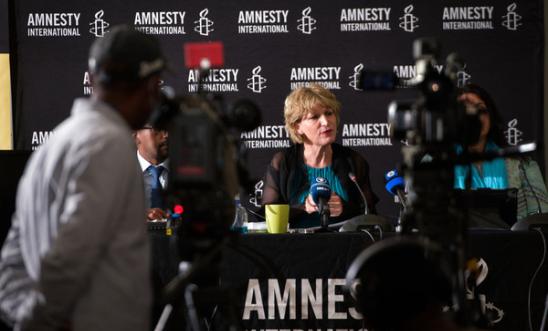
Agnes Callamard, the secretary general of Amnesty International, said on 28 June that Bachelet should condemn human rights violations in Xinjiang, and call on China to release people arbitrarily detained and end systematic attacks on ethnic minorities in the region. “The high commissioner’s visit has been characterized by photo opportunities with senior government officials and manipulation of her statements by Chinese state media, leaving an impression that she has walked straight into a highly predictable propaganda exercise for the Chinese government,“.

Dozens of scholars have accused the UN human rights chief of having ignored or contradicted academic findings on abuses in Xinjiang with her statements on the region. In an open letter published this week, 39 academics from across Europe, the US and Australia called on Michelle Bachelet to release a long-awaited UN report on human rights abuses in China.

The letter, published online, included some academics with whom Bachelet had consulted prior to her visit to Xinjiang. The letter’s signatories expressed gratitude for this, but said they were “deeply disturbed” by her official statement, delivered at a press conference in Guangzhou at the end of her six-day tour. They said her statement “ignored and even contradicted the academic findings that our colleagues, including two signatories to this letter, provided”.
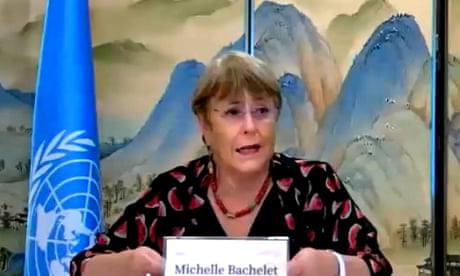
UN High Commissioner for Human Rights visits China.

It is rare that an academic field arrives at the level of consensus that specialists in the study of Xinjiang have reached,” the letter said. “While we disagree on some questions of why Beijing is enacting its atrocities in Xinjiang, we are unanimous in our understanding of what it is that the Chinese state is doing on the ground.”.

Rights organisations and several governments have labelled the campaign a genocide or crime against humanity. Beijing denies all allegations of mistreatment and says its policies are to counter terrorism and religious extremism.

At the end of her visit Bachelet said she had urged the Chinese government to review its counter-terrorism policies in Xinjiang and appealed for information about missing Uyghurs. She was quickly criticised by some rights groups for giving few details or condemnation of China while readily giving long unrelated statements about US issues in response to questions from Chinese state media.

The academics’ letter is among growing criticism of Bachelet for not speaking out more forcefully against Chinese abuses after her visit, as well as a continued failure to release the UN report, which is believed to have been completed in late 2021. On Wednesday dozens of rights groups, predominately national and local chapters of organisations associated with Uyghur and Tibetan campaigns, demanded her resignation. See: http://www.phayul.com/2022/06/09/47195/

The 230 organisations accused Bachelet of having “whitewashed the Chinese government’s human rights atrocities” and having “legitimised Beijing’s attempt to cover up its crimes by using the Chinese government’s false ‘counter-terrorism’ framing”.

“The failed visit by the high commissioner has not only worsened the human rights crisis of those living under the Chinese government’s rule, but also severely compromised the integrity of the Office of the High Commissioner for Human Rights in promoting and protecting human rights globally,” the statement said.

They also decried that she had repeatedly referred to the detention camps in Xinjiang by the Chinese government’s preferred term: “vocational education and training centres”.

All this led to speculation that Mrs Bachelet’s decision not to seek a second term was related to the critcism [see: https://www.theguardian.com/world/2022/jun/13/un-human-rights-chief-michelle-bachelet-no-second-term-china]
https://www.theguardian.com/world/2022/jun/09/fury-at-un-human-rights-chief-over-whitewash-of-uyghur-repression

https://www.ohchr.org/en/statements/2022/05/statement-un-high-commissioner-human-rights-michelle-bachelet-after-official

https://www.npr.org/2022/05/29/1101969720/un-human-rights-chief-asks-china-to-rethink-uyghur-policies?t=1654771491735

Emirates’ claim to improve its legal system are nonsense

June 7, 2022

Human Rights Watch on 5 June 2022 published a detailed piece showing that wide-ranging legal changes introduced by the United Arab Emirates (UAE) in late 2021 fail to address the long-standing and systematic restrictions on citizens’ and residents’ civil and political rights. The new laws maintain previous provisions and include new ones that pose grave threats to fundamental human rights.

As reported by the state news agency WAM in November, the legal changes include amendments to over 40 laws including on crime and punishment, cybercrimes, and drugs, aiming “to strengthen economic, investment and commercial opportunities, in addition to maximizing social stability, security and ensuring the rights of both individuals and institutions.” While the changes allow for a moderate broadening of personal freedoms, the new legal framework retains severe restrictions on the rights to free expression, association, and assembly.

While the UAE government and its state-controlled media outlets trumpeted these new legislative changes as a massive step forward for economic and social freedoms, they will further entrench government-imposed repression,” said Michael Page, deputy Middle East director at Human Rights Watch. “The UAE government has chosen to squander an opportunity to improve freedoms across the board and instead has doubled down on repression.”

Human Rights Watch conducted a comprehensive legal analysis of two of the new laws, the crime and punishment law and the cybercrimes law, to identify any changes related to the rights to free expression and free assembly. Both laws went into effect in January 2022.

The laws continue to prohibit criticism of rulers and speech that is deemed to create or encourage social unrest, imposing severe penalties for vaguely defined charges. They maintain provisions that criminalize defamation and both verbal and written insults, whether published or made in private, as prosecutable offences. New provisions criminalize “false” and “misleading” information, sharing information with foreign groups or countries, and “offending foreign states.” Protests and demonstrations would still be prohibited.

UAE authorities have also spied on international journalists, activists, and even world leaders using sophisticated Israeli and EU-produced spyware, or with the help of former US intelligence officials. Some of those whose communications and devices were targeted by the government surveillance and who are residents of the UAE, were subsequently arrested and abused in detention. Among them is the prominent Emirati human rights activist Ahmed Mansoor [see: https://humanrightsdefenders.blog/2016/08/29/apple-tackles-iphone-one-tap-spyware-flaws-after-mea-laureate-discovers-hacking-attempt/]. A UAE court sentenced Mansoor to 10 years in prison in May 2018 following a grossly unfair trial, partly based on private email exchanges and WhatsApp conversations. See also: https://humanrightsdefenders.blog/2019/11/05/massive-call-in-support-of-ahmed-mansoor-at-his-50th-birthday-how-can-emirates-remain-deaf/ and https://www.trueheroesfilms.org/thedigest/laureates/074ACCD4-A327-4A21-B056-440C4C378A1A

The UAE authorities should take immediate steps to bring the penal code and cybercrime law into line with international and regional standards on free speech and individual freedoms, Human Rights Watch said. The UAE has not ratified the ICCPR, article 19 of which outlines the right to freedom of opinion and expression. But it is a state party to the Arab Charter on Human Rights. Article 32 of the Arab Charter ensures the right to information, freedom of opinion and freedom of expression, and article 24 guarantees the right to freedom of political activity, the right to form and join associations, and the right to freedom of assembly and association.

The UAE cannot market itself as a reformist and tolerant state while introducing new laws that increase its already alarming levels of repression and censorship,” Page said….

The piece further provides a detailed analysis of penal and Cybercrimes Law.

https://www.hrw.org/news/2022/06/05/uae-sweeping-legal-reforms-deepen-repression

Many NGOs join to demand release of human rights defenders in Algeria

May 23, 2022

38 NGOs, including HRW and AI, ask Algeria to end the repression of human rights and the “immediate” release of detainees. They have launched a campaign calling on Algeria to end the repression of Human Rights and demand the immediate release of people detained in the country for exercising their freedom of expression. “The campaign calls on all relevant individuals, organizations and parties to contribute to collectively demanding an end to the criminalization of the exercise of fundamental freedoms in Algeria using the label At least 300 people have been arrested since the beginning of 2022, and until April 17, in the country for exercising their right to free expression, peaceful assembly or association, according to human rights defender Zaki Hannache. “The arrests and sentences of peaceful activists, independent trade unionists, journalists and human rights defenders have not decreased, even after the protest movement was closed,” they said in a statement. The organizations have given the example of the hunger strike of the Algerian activist, Hadi Lassouli, to protest against his arbitrary imprisonment, as well as the case of Hakim Debazi, who died in custody on April 24 after being placed in preventive detention on April 22. February for social media posts. “Those suspected of criminal responsibility for serious human rights violations must be brought to justice in trials with due guarantees, and the authorities must provide victims with access to justice and effective reparations,” they have requested. This awareness campaign will be carried out until the anniversary of the death of Kamel Eddine Fejar, a human rights defender who died in custody on May 28, 2019 after a 50-day hunger strike. The United Nations High Commissioner for Human Rights, Michelle Bachelet, was “concerned” last March at the increase in fundamental restrictions in the country, including an increase in arrests and detentions of human rights defenders, as well as members of civil society and political opponents. “I call on the government to change course and take all necessary measures to guarantee the rights of its people to freedom of expression, association and peaceful assembly,” she said in a statement from the UN High Commissioner for Human Rights.

https://www.indonewyork.com/breaking/38-ngos-including-hrw-and-ai-ask-algeria-to-end-the-repression-of-human-h30616.html

Davos’ annual meeting starts on 22 May under human rights cloud

May 22, 2022
Agnès Callamard at a press conference

Agnès Callamard at a press conference © Amnesty International

Ahead of the World Economic Forum’s annual meeting in Davos that starts today, Sunday 22 May 2022, Agnès Callamard, Amnesty International’s Secretary General, said: 

This year’s Davos conference takes place amid a gathering storm of human rights crises. Russia’s mounting war crimes in Ukraine, the terrifying rollback on abortion rights in the US, the still-neglected climate emergency, the ongoing failure to secure universal vaccine access – these are just a few examples of what happens when human rights are sacrificed for power and profit.  

“Many of the political and business leaders attending Davos are directly responsible for these catastrophes, whether through their explicit pursuit of anti-human rights agendas or through their contemptible inaction and failure to implement solutions.  

“The Davos guestlist includes some of the richest and most powerful people in the world, and they have a moral obligation to put respect for human rights at the top of the agenda. They must use their vast wealth and influence to change the status quo and end the rampant inequality which has been the root cause of so much recent suffering.

The World Economic Forum’s annual meeting will take place in Davos, Switzerland, between 22 and 26 May.

https://www.amnesty.org.uk/press-releases/global-rich-and-powerful-meet-davos-amid-gathering-storm-human-rights-crises

Polish Border NGO Granica receives 2022 Zabel award

May 20, 2022

Human Rights First announced that it will present Grupa Granica with the William D. Zabel Human Rights Award 2022 in recognition of its commitment to human rights at the Poland-Belarus border.

For more about this award and its laureates, see: https://www.trueheroesfilms.org/thedigest/awards/984CA015-FE02-4992-8AED-4EB1AEC7D0EE

Grupa Granica are front-line human rights defenders working at a flashpoint for human rights and freedom of migration,” said Michael Breen, president and CEO of Human Rights First. “We hope that Human Rights First’s presentation of the William D. Zabel Award provides additional recognition to the importance of their work and helps to stem this humanitarian and geopolitical crisis.

Formed in 2021 in response to the humanitarian crisis at the Polish-Belarusian border, Grupa Granica is an informal network of Polish NGOs, activists, and inhabitants of the border region that provides humanitarian, medical, and legal aid to migrants stranded in the forests there.  They monitor the situation on the ground, provide assistance to people searching for missing family members, document human rights violations and educate Polish society on the situation at the border.

Our network was formed in August last year in response to the humanitarian crisis at the Polish-Belarusian border. It consists of local inhabitants, activists, NGO staff, doctors, lawyers, interpreters, psychologists, public figures and many others working hand in hand to save the lives of migrants stranded at the border,” says Marta Górczyńska of Grupa Granica.  “This prestigious award sends a clear message to the public that despite the recent attempts by the Polish authorities, providing humanitarian aid and defending human rights must never be criminalized. We hope it will also make it more difficult for the international community to turn a blind eye to the violations at the border.”

The 2022 award will be officially presented to Grupa Granica on June 8. 

For last year’s, see: https://humanrightsdefenders.blog/2021/05/27/william-zabel-human-rights-award-2021-to-philippines-ngo-karapatan/

https://www.humanrightsfirst.org/press-release/human-rights-first-present-poland-s-grupa-granica-2022-william-d-zabel-human-rights

Better “business and human rights” starts with better understanding

May 17, 2022

Andrés Zaragoza in Open Global Rights of 16 May 2022 hits the nail by arguing that “If we want to constructively engage companies, business associations or investors on human rights issues, we must recognize who our interlocutor is.

..Building trust and a common narrative to engage in a constructive conversation is extremely difficult. Some would argue that a trusting relationship between civil society and private companies is not only impossible but also not desirable; that good faith is nowhere to be found in business sectors where human rights abuses can and do take place.

It has already been 10 years since the adoption of the UN Guiding Principles on Business and Human Rights…..The enactment of legislation at the regional and national levels requiring companies to carry out human rights due diligence, such as the newly proposed EU Directive on Corporate Sustainability Due Diligence, as well as negotiations on a binding international treaty on business and human rights, creates a window of opportunity for NGOs to be creative, ambitious, and innovative in testing new advocacy strategies to change corporate conduct and advance human rights.

Despite an understandably dogged legacy of mistrust between civil society and corporations, there is a momentum for human rights organizations to engage productively with businesses, responsible investors, and other private actors that hold increasing market power, leverage, and are subject to new human rights legislation. As we write, global corporations are becoming increasingly relevant actors in international conflicts. In other words, businesses could become powerful allies in advancing human rights’ agendas with governments or in regards to public opinion.  

It’s no mystery that businesses and civil society speak different languages and engage from radically distinct perspectives when referring to human rights issues.

It is true that corporate activism is on the rise, with some companies supporting important causes and campaigns such as LGBTQ+ rights, anti-racism, equality, and non-discrimination. However, companies are not founded for promoting and protecting human rights, even if we may wish it otherwise. Instead, corporations see human rights issues through the lens of their productive and business models. This does not mean that workers or companies do not care about human rights. They do care, especially in certain sectors and business cultures. 

As civil society, we need to identify and understand how to best engage our strategic targets and audiences. If we want to constructively engage companies, business associations or investors on human rights issues, we must recognize who our interlocutor is. Businesses’ core activity is the starting point to analyse any human rights issue: their business, people, customers, and supply chain

Businesses tend to focus on risk identification and mitigation. There is growing recognition that human rights defenders can play a vital role in sounding the alarm on problems within an organization’s operations or supply chain. Generally, ‘UN speak’ does not work with businesses. Civil society should avoid jargon when engaging with business circles. Business representatives seek examples and clarity on which human rights issues are of concern and how they are relevant to their operations. See also: https://humanrightsdefenders.blog/2019/01/21/davos-businesses-need-strong-human-rights-defenders/

Civil society should not automatically feel good about the fact that a company has a person with “human rights” written in their title. Unfortunately, this often means that a position was created for compliance or reputational management purposes, to deal discreetly with human rights issues, or engage (read: manage) civil society relations. By contrast, companies that take human rights seriously embed the topic across functions and departments, working towards including human rights within the company’s ethos. 

To achieve change, civil society should make every effort to better understand the complexity of a particular company, its economic sector, activity, internal governance, corporate values, and culture. Each company has its own systems and structure, progressing through their human rights journey differently. 

On a micro level, the individual background, connections, and motivations of the human rights personnel within the company have great bearing on how issues are pushed through a company. At the systemic level, NGOs must understand the functioning of international business, economics, investment and trade.  

Lessons learnt and scars taken 

..Civil society should understand and use the market. As companies need to comply with human rights and sustainability regulations, NGOs and defenders can become key in risk assessment or due diligence processes, influencing directly the behavior of companies. We need to know the “enemy” and know ourselves. As civil society, we should build our technical capacity to understand and leverage international business, economics, investment and trade. We will not change business dynamics if we do not understand them.

See also: https://humanrightsdefenders.blog/2022/02/18/business-network-on-civic-freedoms-and-human-rights-defenders-launches-new-website/

https://www.openglobalrights.org/what-it-takes-to-bridge-the-divide-between-the-business-sector-and-human-rights/

Ronaldo vs Messi in sports washing: 1 – 0

May 16, 2022
Lionel Messi. Editorial credit: Asatur Yesayants / Shutterstock.com

In January 2021 I happily reported that Ronaldo rejected an offer of reportedly €6m per year to feature in commercial campaigns and visit the country. I added that Lionel Messi also received an offer from Saudi Arabia, but like his great rival didn’t accept.

According to 5Pillars (RMS) this turned out to be premature. The Argentina and Paris Saint Germain football superstar Lionel Messi was unveiled as the new tourism ambassador for Saudi Arabia. Messi visited Jeddah’s historic area on Tuesday to showcase the country’s ambitions to boost its tourism industry. Messi landed in the Kingdom on 9 May, Monday night and was welcomed by Tourism Minister Ahmed Al-Khateeb.

I am happy to welcome Lionel,” said Al Khateeb. “We are delighted to have him explore the treasure of the Red Sea, the Jeddah station and our ancient history. This is not his first visit to the Kingdom and it will not be his last.” He was then hosted and accompanied by Princess Haifa Al-Saud, assistant minister of tourism….

The player himself posted an image of himself in Saudi Arabia on Instagram. “Discovering the Red Sea in Saudi. #VisitSaudi” wrote Messi.

But Amnesty International said: “Saudi Arabia’s General Entertainment Authority may well have plans to attempt to rebrand the Kingdom’s reputation, but we should not forget the cruelty that continues in the country.

Saudi Arabia is currently jailing and torturing dissidents and human rights defenders, is heavily involved in the indiscriminate bombing of hospitals and homes in Yemen, and the spectre of Jamal Khashoggi’s gruesome murder hangs over the entire Saudi government.

Countries like Saudi Arabia are well aware of the ‘sport swashing’ value of hosting major international entertainment and sporting events.” For some of my earlier posts on sports washing, see: https://humanrightsdefenders.blog/tag/sports-washing/

BUT THEN on 4 January 2023, the Guardian reported that:

Cristiano Ronaldo’s praise for Saudi Arabia – calling his new hosts an “amazing country” – on arrival at his new club Al Nassr has prompted Amnesty International to call on the former Manchester United player to use his celebrity to highlight the kingdom’s “appalling” human rights record. The 37-year-old arrived in Saudi Arabia on Tuesday after signing a deal reportedly worth £177m a year until 2025, making him the highest-paid footballer in history.

Ronaldo said: “I had many opportunities … many clubs tried to sign me but I gave my word to this club to develop not only the football but other parts of this amazing country. I want to give a different vision of this club and country. This is why I took this opportunity.”Cristiano Ronaldo receives rapturous welcome from Al Nassr fans – video

Amnesty’s Middle East researcher Dana Ahmed said: “Cristiano Ronaldo shouldn’t allow his fame and celebrity status to become a tool of Saudi sportswashing – he should use his time at Al Nassr to speak out about the myriad human rights issues in the country.”

https://www.theguardian.com/football/2023/jan/04/amnesty-international-christian-ronaldo-human-rights-saudi-arabia

NGOs condemn arbitrary arrest of pro-democracy activists in Hong Kong

May 15, 2022

NOGs (such as Human Rights Watch and the Human Rights Foundation) have condemned the arrest of Cardinal Joseph Zen, as well as the lawyer Joseph Zen, the singer Denise Ho and the scholar Hui Po-Keung, for having maintained contacts with foreign forces in Hong Kong.

HRW Senior China researcher Maya Wang, said that “the arrest of a 90-year-old cardinal is the latest example of the city’s human rights freefall in recent years.

The four, along with former lawmaker Cyd Ho, who is already in jail, were part of the 612 Humanitarian Aid Fund, which provided medical, legal and psychological help to protesters arrested during the 2019 pro-democracy protests in Hong Kong. Kong.

Denise Ho, Margaret Ng, and others affiliated with Stand News, an independent pro-democracy online publication, were previously arrested by national security police in December 2021 under allegations of publishing “seditious” and “inflammatory” materials. Denise Ho formerly served on the board of Stand News, but stepped down in November 2021. Meanwhile, the 612 Humanitarian Support Fund ceased operations in October 2021 after national security police and Chinese state-backed media requested information on its beneficiaries and donors.

Maya Wang has specified that Hong Kong has “long been a regional leader in openness and respect for the rule of law, but now competes for the first places in Asia for repression and political prisoners.”

The people of Hong Kong have been unequivocal in their demand for human rights, and governments around the world should be unequivocal in their response to that call,” concluded the HRW researcher.

https://mailchi.mp/hrf.org/hong-kong-hrf-condemns-arbitrary-arrest-of-denise-ho-and-colleagues?e=f80cec329e

Historic vote: Russia also out of ECOSOC NGO Committee

May 13, 2022

On Wednesday, 13 April, members of the United Nations Economic and Social Council (ECOSOC) elected 19 members to the UN Committee on NGOs, a body frequently criticised for restricting civil society participation at the UN. See my earlier posts on this topic: https://humanrightsdefenders.blog/tag/ngo-committee/

Members of the United Nations Economic and Social Council (ECOSOC) voted to elect 19 members for the next 4 year term (2022-2025) of the ECOSOC Committee on NGOs. The 19 members of the Committee, elected from five regional groups, are the gatekeepers for civil society at the UN as they decide which NGOs receive UN accreditation participation rights.

In the election, the Eastern European States was the only regional group which presented a competitive slate, as three candidates, Armenia, Georgia and Russia, contested for the two available seats. Armenia, Georgia and Russia received 47, 44 and 15 votes respectively. As a result, Russia,  a member of the Committee since its establishment in 1947, has been voted out. This result comes one week after a historic resolution of the UN General Assembly to suspend Russia’s Human Rights Council membership. https://humanrightsdefenders.blog/2022/04/08/suspension-of-membership-un-human-rights-council-finally-operationalised/

Despite Russia’s departure, the incoming NGO Committee still includes members with deeply problematic records on safeguarding human rights and civil society participation. According to the CIVICUS Monitor, 60% of the incoming members are currently characterised as being ‘closed’ or ‘repressed’ civic spaces. This includes all members for the Asia-Pacific region. Civic space is ‘obstructed’ or ‘narrowed’ within the remaining 40%.

Members of the NGO Committee are the primary decision makers on which NGOs can access UN bodies and processes,” said Maithili Pai, Programme Officer and ISHR focal point for civil society access and participation. “States must fulfil their fundamental mandate under ECOSOC Resolution 1996/31 by acknowledging the breadth of NGO expertise and their capacity to support the work of the UN, and ensuring just, balanced, effective and genuine involvement of NGOs around the world.” she added.

ISHR is aware of 352 currently deferred organisations seeking UN accreditation, at least 40 which have faced over four years of deferrals, and one that has been deferred for 14 years. In response, ISHR sought to campaign for states to engage in competitive and meaningful elections that could produce positive outcomes for civil society. We urge incoming members of the Committee to open the doors of the UN to civil society groups from around the world.

https://ishr.ch/latest-updates/ecosoc-committee-on-ngos-elections-russia-voted-out-for-first-time-in-75-years/

Sedition law suspended by India’s Supreme Court

May 12, 2022

Having posted before about this nefarious law [see also: https://humanrightsdefenders.blog/2021/06/16/delhi-high-court-re-establishes-that-criticism-is-not-sedition/], it is good news that on 11 May 2022 India’s Supreme Court suspended this law which activists say is often used by Prime Minister Narendra Modi’s government to target free speech and dissent.

Mr Modi’s critics say that the law, which was once used by Britain to target independence hero Mahatma Gandhi, has been abused by his government against many journalists, activists, and students. Section 124A of the Indian penal code gives wide-ranging powers to the police to arrest people, who can even face life imprisonment, for an act or speech that “brings or attempts to bring into hatred or contempt, or excites or attempts to excite disaffection towards the government”.

India’s official crime data says 236 people faced sedition charges between 2018 and 2020. India sparked global outrage last year after 22-year-old climate change activist Disha Ravi was arrested for sedition for allegedly creating a “toolkit” to aid anti-government farmer protests.

See also:

The rigours of Section 124A (are) not in tune with the current social milieu, and was intended for a time when this country was under the colonial regime,” India’s chief justice N V Ramana, part of a three-judge bench hearing a petition against the law, said. Mr Ramana asked the government not to file any new sedition cases and pause ongoing sedition investigations.

All pending trials, appeals and proceedings” under sedition, the court said, “be kept in abeyance” until the “re-examination of the provision is complete“.

The government had said Monday that it had decided to “re-examine and reconsider” the law but it remained in force. The top court also urged people jailed for sedition to approach local courts for bail.

Amnesty International welcomed the Supreme Court’s order “For far too long, authorities have misused the sedition law to harass, intimidate, and persecute human rights defenders, activists, journalists, students, filmmakers, singers, actors, and writers for peacefully exercising their right to freedom of expression,” Aakar Patel, Chair of Amnesty International India’s Board, said. “Sedition has been used as a tool of political repression by successive governmens”i

Nagpur-based lawyer Nihalsingh Rathod, who represents many accused in the Elgar Parishad case said the legislature should have re-examined the relevance of sedition a long time ago. The Supreme Court’s interim order was an important step in rights jurisprudence, he said.

“It won’t bring complete respite as no state invokes an isolated provision. In present cases too they invoke many provisions, including UAPA. But still, it brings hope that the process of looking at sedition and jurisprudence around it is being re-examined. It offers some hope that sedition law will undergo some churn that has never happened,” he said…

https://www.sbs.com.au/news/article/indias-top-court-suspends-use-of-controversial-sedition-law/wy0racqs4
https://economictimes.indiatimes.com/news/india/sedition-law-lawyers-and-free-speech-activists-welcome-sc-order/articleshow/91500777.cms?utm_source=contentofinterest&utm_medium=text&utm_campaign=cppst