Camila Zuluaga is an international advocacy lawyer at the Colombian Commission of Jurists (CCJ). She spoke to ISHR about her hopes for Colombia, which she hopes to make a safer country for human rights defenders. Camila was also one of the participants to ISHR’s flagship training course, the Human Rights Defender Advocacy Programme (HRDAP).
On 18 July 2023 Front Line Defenders reported that on 4 July, a court of appeal in Algiers confirmed the three-year prison sentence of human rights defenders Slimane Bouhafs and Kamira Nait Sid, in addition to confirming the fine of DZD 100,000 (approx. EUR 660). The charges against both human rights defenders include “belonging to a terrorist organisation”; “receiving funds from abroad for the purpose of political propaganda”; “hate speech and discrimination”; “use of technology to spread false information”; and “conspiracy”, among others.
Slimane Bouhafs is a human rights defender advocating for freedom of expression and democracy in Algeria through social media. He is the Chairman of the St. Augustine Coordination of Christians in Algeria which defends minority rights and freedom of religion in the country. Kamira Nait Sid is a woman human rights defender and co-president of the World Amazigh Congress (WAC), an international NGO defending the rights of the Amazigh people. The mission of the WAC is to ensure the defence and promotion of political, economic, social, cultural, historical and civil rights of the Amazigh people.
The human rights defender Slimane Bouhafs, who was granted refugee status in Tunisia before being illegally transferred back to Algeria, received the same three-year prison sentence as the one previously handed down at the first instance. Meanwhile, the woman human rights defender Kamira Nait Sid received a three-year prison sentence, which was a two-year reduction of the original sentence handed down by the court of first instance.
Both Slimane Bouhafs and Kamira Nait Sid reject and deny all the charges against them and maintain that they have been targeted because of their peaceful human rights work and advocacy for freedom of expression and belief. The defence counsel, which represented both human rights defenders, reportedly emphasised the lack of due process and fair trial guarantees during the trial and the appeal processes, including a lack of evidence supporting the charges.
In December 2022, Slimane Bouhafs and Kamira Nait Sid were sentenced to three and five years respectively by the court of first instance mainly on the basis of an alleged association with the Movement for the Autonomy of Kabylie (MAK), classified as a terrorist group by the Algerian authorities. The human rights defenders continue to deny any involvement with the MAK group.
The two human rights defenders have been arbitrarily detained since the summer of 2021. On 25 August 2021, the human rights defender Slimane Bouhafs was abducted, subjected to ill-treatment and forcibly returned to Algeria from Tunisia, where he had been granted refugee status, in a gross violation of international law. On 24 August 2021, the woman human rights defender Kamira Nait Sid was also abducted by Algerian security forces from her home in Draa-Ben-Kheddaas in northern Algeria and detained at an unknown location. On 1 September 2021, the two human rights defenders appeared before an investigating judge in an Algerian court to be charged with several terrorism-related accusations based on an alleged connection with the MAK.
Front Line Defenders condemns the confirmation of the sentence of human rights defenders Slimane Bouhafs and Kamira Nait Sid and calls on the authorities of Algeria to immediately release them and quash their conviction as it believes that it is solely motivated by their legitimate and peaceful work in the defence of human rights. It urges the authorities to guarantee the physical and psychological security and integrity of the human rights defenders while in detention.
Front Line Defenders also calls on the authorities to cease targeting all human rights defenders in Algeria and guarantee in all circumstances that they are able to carry out their legitimate human rights activities without fear of reprisals and free of all restrictions including judicial harassment.
On 1 July 2023, woman human rights defender and author Viktoria Amelina died in hospital in Dnipro, Ukraine after sustaining fatal injuries during the Russian missile attack on Kramatorsk, Ukraine on 27 June 2023. PEN Ukraine reported the death of the woman human rights defender on 3 July 2023 with the consent of her relatives. Viktoria is survived by her husband and 10-year old son.
Viktoria Amelina was a woman human rights defender and writer. In June 2022, after the beginning of Russia’s full-scale invasion of Ukraine on 24 February 2022, she joined the Ukrainian human rights organisation Truth Hounds to document war crimes. She had been documenting apparent Russian war crimes in the liberated territories of eastern, southern and northern Ukraine, and particularly the village of Kapytolivka in Kharkiv region. During one of her missions, Viktoria Amelina discovered a diary of Volodymyr Vakulenko, a Ukrainian writer who was abducted and killedby the Russian military. She was also working on a non-fiction project “War and Justice Diary: Looking at Women Looking at War”, a research project about the Ukrainian women human rights defenders documenting and investigating war crimes committed by the Russian military. Before joining Truth Hounds, Viktoria Amelina actively campaigned for the liberation of Oleh Sentsov, a Ukrainian film director from Crimea who was a political prisoner of the Russian authorities from 2014 to 2019.
Viktoria Amelina won the Joseph Conrad Literature Prize for her prose works, including the novels Dom’s Dream Kingdom and Fall Syndrome, and was a finalist for the European Union Prize for Literature. In 2021, she founded the New York book festival in the Donetsk region of Ukraine, where New York refers to a village in Donetsk that is very close to the military frontline.
On 27 June 2023, the woman human rights defender Viktoria Amelina was in Kramatorsk, in the Donetsk region of Ukraine, accompanying a delegation of Colombian writers and journalists who represented #AguantaUcrania, a group that raises awareness about Russia’s full-scale invasion of Ukraine in Latin America. Before coming to Kramatorsk, the group took part in a prominent Ukraninan literary fair “Book Arsenal.” They all arrived to Kramatorsk to document the situation in Ukrainian cities in the Donetsk region to support the visibility work of #AguantaUcrania.
On the evening of 27 June 2023, the group was having dinner in the Ria Lounge restaurant in Kramatorsk, when a Russian missile hit the building in which the restaurant was located. This missile killed 13 civilians and injured a further 60. As a result of the missile strike, Viktoria Amelina suffered a severe head injury and was hospitalised in Kramatorsk, before being transferred to the hospital in Dnipro. The woman human rights defender died in the hospital in Dnipro three days later, on 1 June 2023.
Truth Hounds and PEN Ukraine reported that, in the aftermath of the attack, Russian state propaganda media falsely claimed that the target of the missile was the temporary headquarters of one of the Ukrainian Armed Forces brigades. In reality, the Ria Lounge restaurant in Kramatorsk was one of the most popular restaurants in the city and was frequented by Ukrainian and international human rights and civil society actors, humanitarian volunteers, and media and film crews. Truth Hounds and PEN Ukraine’s report stated that there were no military objectives that the Russian military could have have been targetting with a missile attack that day. Together, the human rights organisations made a public statement concerning the strike, stating that the precision of the Iskander missiles leads them to believe that the missile strike was an attack against the civilian population.
In light of the death of the woman human rights defender Viktoria Amelina, Front Line Defenders once again reiterates its grave concern about the killings of Ukrainian human rights defenders, civil society activists, humanitarian volunteers and other community leaders as a result of Russia’s full-scale invasion in Ukraine. According to Front Line Defenders’ HRD Memorial, at least 50 human rights defenders were killed in Ukraine in 2022, including humanitarian actors and human rights journalists, as a result of the activities of the Russian military forces.
Front Line Defenders strongly condemns the killing of the woman human rights defender Viktoria Amelina and urges the authorities of the Russian Federation to cease targeting civilian objects in accordance with Russia’s international humanitarian and human rights law obligations, recalling that the deliberate targeting of civilians is prohibited under the Fourth Geneva Convention. The attack on the Ria Lounge restaurant may qualify as a war crime pursuant to Article 8(2)(b)(ii) of the Rome Statute of the International Criminal Court (ICC) – “intentionally directing attacks against civilian objects.” Alternatively, such an attack may be qualified under Article 8(2)(b)(i) – “intentionally directing attacks against the civilian population”; or Article 8(2)(b)(iii) – “intentionally directing attacks against personnel, installations, material, units or vehicles involved in a humanitarian assistance […] mission.” Front Line Defenders calls for an impartial and independent investigation into the killing of human rights defender Viktoria Amelina while she was on mission conducting her human rights work. All those involved in the commission of this crime must be brought to justice.
We welcome the resolution put forward by the OIC to ensure the full implementation of the United Nations database of businesses facilitating Israeli settlements in the Occupied Palestinian Territory as well as the recent publication of the partial update to the database issued by the Office of the High Commissioner for Human Rights on 30 June 2023. The effectiveness and credibility of the HRC and OHCHR has suffered considerably from the chronic under-implementation of the database by this Council. The resolution put forward at the 53rd session represents an important step forward, and it is crucial that future updates are conducted annually, regularly, including both the addition and removal of businesses from the database, as appropriate, to ensure accurate and comprehensive information for all stakeholders involved. We regret that some States failed to vote in favor of the resolution to ensure the full implementation of the database. We believe this failure constitutes a dangerous example of double standards and urge States who abstained or voted against the resolution to begin to approach this issue in line with international human rights standards and their duties as UN member States.
We welcome the fact that the resolution on civil society space addressed the limitations to civil society access and participation in decision-making processes, including at the UN, and called on States to “enable and institutionalize meaningful online participation in hybrid meetings” and to establish “a transparent, fair and gender-responsive accreditation processes”. We welcome that the resolution acknowledges the significant role played by civil society in the promotion and protection of human rights, including with regard to monitoring, documenting and raising awareness about human rights violations and abuses, but we regret that the role of civil society in the prevention of human rights violations, as well as the Council’s prevention mandate, was not highlighted. We also welcome that the resolution emphasizes undue restrictions of civic space, including on funding of civil society actors, nonetheless we express concern that it does not address the misuse of restrictive laws in a more comprehensive manner. We appreciate the call upon States to establish or enhance information-gathering and monitoring mechanisms, including by benefiting from data collected by civil society, for the collection, analysis and reporting of data on threats, attacks or violence against civil society, and the request to the High Commissioner to prepare a report identifying challenges and best practices in regularly assessing civic space trends drawing on the views of civil society, amongst others. This may lead, in the longer term, to the development of a collective methodology including indicators and benchmarks that will permit the effective and systematic monitoring of civic space developments on the international level. We also call on States to prevent the deterioration and closure of civic space and provide support to build civil society resilience.
We welcome the focus of the resolution on human rights of migrants on human rights violations in transit. However, the resolution fails to answer the call from over 220 CSOs for the Council to establish an investigative mechanism on deaths, torture and other grave human rights violations at and around international borders. The focus on monitoring in the intersessional panel requested must be used as a stepping stone towards a response from the Council that matches the severity of the situation. The 53rd session opened as yet another horrific incident unfolded with hundreds presumed dead at sea. The normalisation of deaths caused by border management policies and practices, as well as criminal networks, must end. It is unclear what scale of atrocity will prompt this body to act.
We welcome the adoption of resolutions on child and early forcedmarriage and on violence against women and girls, despite hostile amendments contravening international human rights law, UN technical guidance and WHO Guidelines. The resolution on child and early forcedmarriage on the theme of forced marriage, identifies root causes of forced marriage and calls for practical guidelines to be developed by the OHCHR which can help States work to prevent and eliminate forced marriage, centering the autonomy of women and girls. The resolution on violence against women and girls looks at systemic violence against women and girls in criminal detention systems. The resolution centers the respect, protection and fulfillment of human rights for women and girls in criminal detention, in addition to the Bangkok and Mandela Rules.
We welcome the adoption of the resolution on ‘the impact of arms transfer on human rights‘. Ensuring arms related risks to human rights continues to be part of the Council’s work is critical – both those acquired by civilians and those transferred. We look forward to the stocktaking intersessional workshop on the role of States and the private sector in preventing, addressing and mitigating negative human rights impacts of arms transfers.
We welcome the resolution on new and emerging digital technologies, which reinforces the need to respect, protect and promote human rights throughout the lifecycle of artificial intelligence systems. The resolution mandates an enhanced role of the OHCHR in providing its expertise on the human rights implications of these technologies, including artificial intelligence, to other UN bodies, mechanisms, and processes. We believe that bolstering this existing expertise is vital in ensuring a consistent human rights-first approach to the growing number of UN initiatives relevant to this topic. We also particularly welcome that the resolution stresses that certain applications of artificial intelligence “present an unacceptable risk to human rights”. We now call on States to put this language into practice and ban those technologies that cannot be operated in compliance with international human rights law.
We welcome the adoption of the resolution extending the mandate of the UN Special Rapporteur on Independence of Judges and Lawyers for three years.
We regret the adoption of a new resolution on countering religious hatred constituting incitement to discrimination hostility or violence. While we are dismayed over the rise of hate against persons on the basis of their religion or belief worldwide, this resolution ultimately aims to protect not individuals but rather religious books and symbols that do not enjoy protection under international human rights law. We note that prohibitions on the defamation of religions fuel division and religious intolerance by shutting down interfaith dialogue, and can facilitate human rights violations against religious minorities. While the burning of holy books is considered disrespectful and offensive by many, this is not an act of incitement in and of itself, and such acts should only be challenged through open space for dialogue, debate, and dissent. By evoking language on the defamation of religions, this resolution puts over a decade of progress in jeopardy and risks undermining the consensual, positive action plan to combat religious intolerance achieved in landmark Resolution 16/18 in 2011.
We regret that the resolution on the contribution of development to the enjoyment of human rights weakens the interdependence of human rights and sustainable development. We reiterate deep concerns at the long-term goal of this initiative, in light of the penholder’s remarks during negotiations that the ‘contribution of development to human rights’ is a methodology ‘conflicting with’ human rights-based approaches to development (HRBA) widely-endorsed by the Secretary-General, UN agencies and States. We regret the inclusion of undefined domestic concepts such as ‘better life’, ‘high-quality development’ and ‘people-centred approach to development’, and the failure to consider middle-ground proposals to reallocate resources to meet the OHCHR’s needs for additional capacity on HRBA to development. We lament that the penholder disregarded strong concerns shared across all regions, including from developing countries as reflected in the abstentions of Costa Rica, Chile, Georgia, India and Paraguay, despite commitments to seek consensus and engage constructively.
We welcome the adoption of the resolution on Belarus, which re-mandates the Special Rapporteur for a further year. The Special Rapporteur on Belarus remains critical to civil society, whose options for seeking redress for human rights violations at an international level were further reduced recently when Belarus withdrew from the First Optional Protocol of the ICCPR.
We welcome the adoption of the resolution presented by Colombia seeking to enhance technical cooperation to implement the recommendations made by the Commission for the Clarification of Truth, Coexistence and Non-Repetition in the country – a resolution looking towards a future of peace.. The text highlights the OHCHR report’s findings that violence disproportionately affects, inter alia, human rights defenders, Indigenous Peoples, people of African descent, peasant leaders, women and girls, as well as persons on the basis of their sexual orientation or gender identity. We regret however that Pakistan, on behalf of the OIC except Albania, tabled an amendment to remove the reference to ‘sexual orientation and gender identity’, and in doing so did not respect Colombia’s decision to acknowledge the vulnerability of populations inside its own territory, and meant that a vote was called on the resolution.
This year’s strengthened resolution on Eritrea is in line with civil society’s ask to substantively address violations Eritrean authorities commit at home and abroad and to move beyond merely procedural resolutions that extend the Special Rapporteur’s mandate. We encourage States to go even further next year and to reinstate fully substantive resolutions on Eritrea’s human rights situation, as was the rule before 2019.
We welcome the adoption of the Item 10 resolution on Ukraine, maintaining the Council’s regular dialogues with the High Commissioner on the human rights situation in Ukraine. The work of the OHCHR in Ukraine is critical, complementary to the work of the International Commission of Inquiry on Ukraine, and it is important that HRC is kept abreast of this work.
While we believe the resolution on Rohingya and other minorities in Myanmar is an important step to maintain the situation of Rohingya and other minorities in Myanmar high on the agenda of the Council, we regret that the resolution failed to reflect the reality of the situation on the ground in Myanmar especially following the 1 February 2021 military coup. It calls for immediate commencement of repatriation of Rohingya refugees in direct contrast to conclusions and recommendations of the Special Rapporteur, the High Commissioner as well as Rohingya themselves that conditions for safe, voluntary, dignified and sustainable return for Rohingya do not exist in Myanmar, and that their return under the current circumstances could lead to the recurrence of violence that led to their displacement.
The holding of a Special Session on Sudan on 11 May 2023, does not preclude, but rather should be seen as the start of a process toward, stronger resolutions. Civil society will continue to push for the establishment of an investigative mechanism, which is the least the Council can do for the victims and survivors of the conflict and violations and abuses committed in the country in the last three decades. We highlight the need for a holistic, comprehensive response by the international community. In this regard, the Final Communiqué of the First Meeting of the IGAD Quartet Group of Countries for the Resolution of the Situation in the Republic of Sudan resolved to request that “the East Africa Standby Force (EASF) summit … convene in order to consider the possible deployment of the EASF for the protection of civilians and guarantee humanitarian access” and committed “to work closely with the international community to put in place a robust monitoring and accountability mechanism that will be instrumental in bringing perpetrators to justice.”
We deplore the sustained failure of this Council to respond meaningfully to the human rights situation in China, gradually undermining its credibility and ability to scrutinise countries on the basis of objective, impartial UN documentation, including the OHCHR Xinjiang report. We further regret the failure of the joint UN Office on Genocide Prevention and the Responsibility to Protect to act in line with its mandate on the CERD’s historic referral of the situation in Xinjiang, weakening the UN’s genocide-prevention architecture. The CESCR, the CEDAW, the CERD, the OHCHR, the ILO, as well as Special Procedures through three joint statements, nearly 30 press releases and 100 letters to the government since 2018, have provided more than sufficient evidence pointing to systematic and widespread human rights violations. So long as the Council is not able to take principled action on the basis of objective criteria, other powerful perpetrators will feel empowered to continue committing atrocity crimes, relying on the Council’s silence. We reiterate our pressing call for all Council Members to support the adoption of a resolution establishing a UN mandate to monitor and report on the human rights situation in China.
We regret that the Council failed to adequately respond to the situation in Egypt. Since the joint statement delivered by States in March 2021 at the Council , there has been no significant improvement in the human rights situation in Egypt despite the launching of the national human rights strategy and the national dialogue. The Egyptian government has failed to address, adequately or at all, the repeated serious concerns expressed by several UN Special Procedures over the broad and expansive definition of “terrorism”, which enables the conflation of civil disobedience and peaceful criticism with “terrorism”. The Human Rights Committee raised its concerns “that these laws are used, in combination with restrictive legislation on fundamental freedoms, to silence actual or perceived critics of the Government, including peaceful protesters, lawyers, journalists, political opponents and human rights defenders”. Egyptian and international civil society organisations have been calling on the Council to establish a monitoring and reporting mechanism on the human rights situation in Egypt, applying objective criteria and in light of the Egyptian government’s absolute lack of genuine will to acknowledge, let alone address, the country’s deep-rooted human rights crisis.
We regret the Council’s repeated failure to address the situation in India including to exercise its prevention mandate in relation to the potential escalation of violence against religious minorities and Dalits and Adivasis into mass atrocity crimes with unchecked hate speech and incitement to violence by Hindu nationalist leaders, the most recent illustration of which is the ongoing communal violence in the Northeastern state of Manipur. We remind the Council that this is happening in the context of systematic rollback of fundamental freedoms, the rule of law and independent institutions as well as the ongoing criminalisation, harassment and intimidation of human rights defenders, activists, journalists, and dissidents, and targeting of civil society organisations using national security and counter-terrorism infrastructure. Silence of the Council further enables impunity and makes the international community complicit.
We regret that the Council failed to adequately respond to the situation in Saudi Arabia. In light of the ongoing diplomatic rehabilitation of crown prince and de facto ruler Mohammed bin Salman, the Saudi authorities’ brazen repression continues to intensify, as ALQST has documented. Some notable recent trends include, but are not limited to: the further harsh sentencing of activists for peaceful social media use, such as women activists Salma al-Shehab (27 years), Fatima al-Shawarbi (30 years and six months) and Sukaynah al-Aithan (40 years); the ongoing detention of prisoners of conscience beyond the expiry of their sentences, some of whom continue to be held incommunicado such as human rights defenders Mohammed al-Qahtani and Essa al-Nukheifi, and; regressive developments in relation to the death penalty, including a wave of new death sentences passed and a surge in executions (47 individuals were executed from March-May 2023), raising concerns for those currently on death row, including several young men at risk for crimes they allegedly committed as minors. We call on the Council to respond to the calls of NGOs from around the world to create a monitoring and reporting mechanism on the ever-deteriorating human rights situation in Saudi Arabia.
We regret that the Council failed to exercise its prevention mandate and address the deteriorating human rights situation in Tunisia. Civil society organizations, the High Commissioner and UN Special Procedures all have raised alarm at the escalating pattern of human rights violations and the rapidly worsening situation in Tunisia following President Kais Saied’s power grab on 25 July 2021 leading to the erosion of the rule of law, attacks on the independence of the judiciary, reprisals against independent judges and lawyers and judges associations, a crackdown on peaceful political opposition and abusive use of “counter-terrorism” law in politicized prosecutions, as well as attacks on freedom of expression and threats to freedom of association. A wave of arrests that started in February 2022 continued to include at least 40 members of peaceful political opposition. On 21 February 2023, President Saied made inflammatory comments that triggered a wave of anti-Black violence and persecution – including assaults and summary evictions – against Black African foreign nationals, including migrants, asylum seekers and refugees. Between February and early March 2023, police indiscriminately arrested at least 850 Black African foreign nationals, apparently based on racial profiling. Since July 2, 2023 Tunisian security forces collectively expelled several hundreds of Black African migrants and asylum-seekers to the Tunisian-Libyan borders without any due process, along with reports of beatings and sexual assaults. The High Commissioner has addressed the deteriorating situation in the three latest global updates to the HRC. Special Procedures issued at least 8 communications in less than one year addressing attacks against the independence of the judiciary, as well as attacks against freedom of expression and assembly. Despite the fact that in 2011 Tunisia extended a standing invitation to all UN Special Procedures, and received 16 visits by UN Special Procedures since, Tunisia’s recent postponement of the visit of the Special Rapporteur on the independence of judges and lawyers, is another sign of Tunisia disengaging from international human rights mechanisms and declining levels of cooperation.
Signatories: International Service for Human Rights (ISHR), Cairo Institute for Human Rights Studies, Asian Forum for Human Rights and Development (FORUM-ASIA), International Bar Association’s Human Rights Institute (IBAHRI), International Federation for Human Rights (FIDH), Commonwealth Human Rights Initiative, Center for Reproductive Rights, DefendDefenders (East and Horn of Africa Human Rights Defenders Project), Gulf Centre for Human Rights.
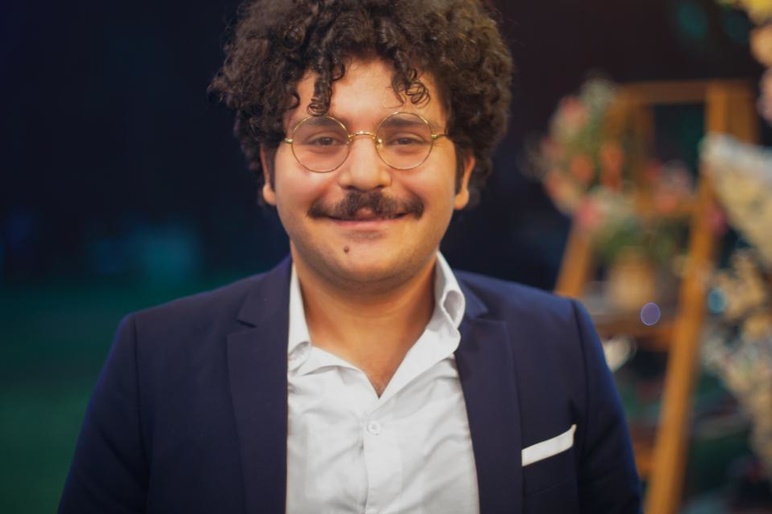
A large group of civil society organizations, condemn the three-year prison sentence handed down to human rights researcher at the Egyptian Initiative for Personal Rights (EIPR) and academic Patrick George Zaki for his writings highlighting the hardship and discrimination faced by Coptic Christians in Egypt, such as himself.
On July 18, 2023, following a trial rife with due process violations, an Egyptian emergency state security court handed down a three-year prison sentence to Patrick on trumped up charges of spreading false news. Patrick, who was a graduate student at the University of Bologna at the time, was arrested by Egyptian authorities on February 7, 2020, while at the Cairo Airport during a visit home to see his family. In custody, he was held incommunicado for a 24-hour period; he was beaten, stripped, electrocuted, verbally abused, and threatened. He was initially accused of joining a terrorist organization and spreading false news. In September 2021, lawyers learned that he had been referred to emergency state security court on false news charges for a 2019 article that he authored for independent digital media outlet Daraj on his experience as a Coptic Christian religious minority, titled, “Displacement, Killing & Harassment: A Week in the Diaries of Egypt’s Copts.” On December 7, 2021, following 22 months behind bars, he was ordered released from detention pending trial, and placed on travel ban. His trial continued until the July 2023 verdict, following which he was taken back into custody today.
Verdicts handed down by an emergency court are not subject to legal appeal, only to ratification by the President. The President also has the authority to commute the sentence or to quash the verdict. Furthermore, under Circular No. 10 of 2017 governing emergency state security courts, “If the accused is brought to trial while not in custody and sentenced to a prison penalty, he must be released immediately without executing the penalty pending the decision of the ratifying authority.” Per this provision, Patrick must legally be free while the President considers ratification; for Egyptian authorities to have taken him into custody constitutes a clear violation of this circular.
The targeting, arrest, prosecution, and sentencing of Patrick Zaki for writing about his experiences as a Coptic Christian is an egregious measure by Egyptian authorities that is indicative of a larger failure by the state to protect religious minorities. Instead, the authorities target Copts for merely expressing themselves and bringing attention to the discrimination they regularly endure. This sentence occurs in violation of Egypt’s domestic laws and international legal commitments, and sends a clear message that the Egyptian government is not serious about implementing its national human rights strategy or carrying out a meaningful national dialogue. At a time during which Egyptian authorities should be addressing the dire economic crisis, this step raises severe questions on the trajectory of the country.
The undersigned civil society organizations, call on Egyptian President Abdel Fattah El-Sisi not to ratify the verdict handed down to Patrick Zaki and instead to quash it in its entirety. We call on Egyptian authorities to immediately release Patrick Zaki from custody, to drop all charges and close all cases brought against him in their entirety, and to lift the travel ban brought against him. We urge all of Egypt’s international, multilateral, and government partners to press the Egyptian government to immediately release Patrick and cease persecuting him for his legally protected speech and vital human rights work.
The human rights situation in Belarus is catastrophic, and only getting worse, the United Nations special rapporteur on the country said on 4 July 2023, according to AFP.
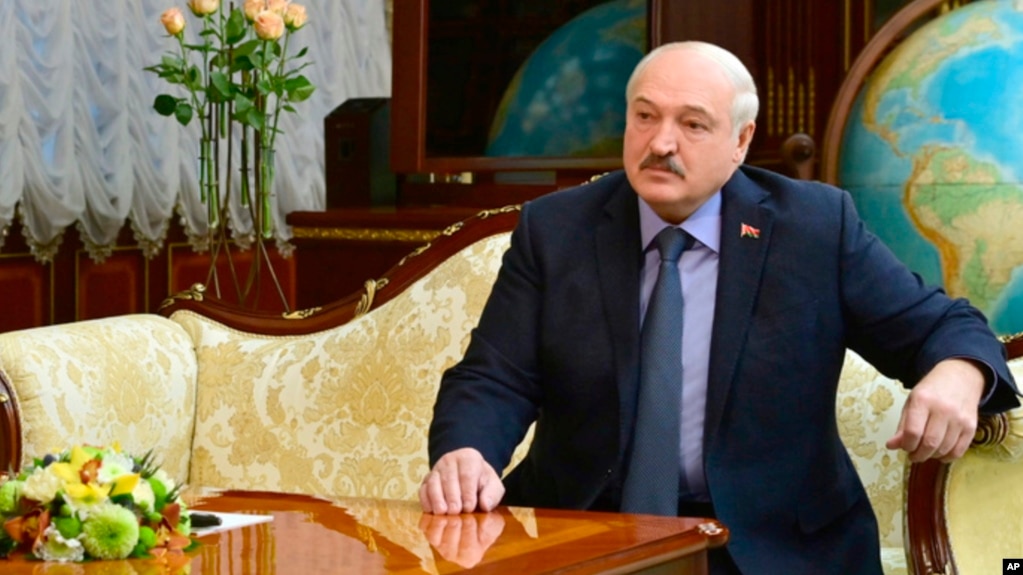
Belarusian leader Alexander Lukashenko’s regime in Minsk is deliberately purging civil society of its last dissenting voices, Anais Marin told the U.N. Human Rights Council.
“The situation remains catastrophic. Unfortunately, it keeps on worsening,” said the special rapporteur on the human rights situation in Belarus. “The Belarusian government amended an already restrictive legislation aimed at dismantling civic freedoms, leading to a surge in politically motivated prosecutions and sentencing.
“The lack of accountability for human rights violations fosters a climate of fear among victims and their families,” Marin said. Marin has been in post for five years and reminded the council that she alerted them two years ago to the “totalitarian turn” taken by Minsk, evidenced by the “disregard for human life and dignity” during the crackdown on peaceful protesters in 2020. In her annual report, the French political scientist said more than 1,500 individuals were still being detained on politically motivated charges, with a daily average of 17 arbitrary arrests since 2020.
“I have good reasons to believe that prison conditions are deliberately made harsher for those sentenced on politically motivated grounds, by placing them in punishment cells for petty infraction to prison rules,” said Marin.
“No one has been held accountable in Belarus for arbitrarily detaining tens of thousands of peaceful protesters in 2020, nor for the violence or torture many of them have been subjected to.
“This general impunity, and the climate of fear resulting from ongoing repression, have compelled hundreds of thousands of Belarusians into exile.
Human rights defenders face ongoing persecution, she said, with more than 1,600 “undesirable organizations forcibly dissolved, including all remaining independent trade unions.
“This illustrates a deliberate state policy of purging civic space of its last dissenting elements,” she said.
Marin said independent media outlets had been labelled as “extremist organizations,” while academic freedom is “systematically attacked.”
“Ideological control and disciplinary measures restrict freedom of opinion and their expression,” she said.
Primary and secondary education is also subject to “ideological control,” with children “discouraged from expressing their own opinions” and facing “threats and consequences” for holding dissenting views.
Consequences for speaking out
As for the Russian invasion of Ukraine, individuals face challenges when trying to speak out against it or question Belarus’s role in facilitating the 2022 invasion.
“Anti-war actions led to numerous detentions and arrests, some on charges of planning terrorist attacks — a crime which can now be punished by death,” she said.
Belarus was immediately offered the Human Rights Council floor to respond to Marin’s comments but was not present.
On 11 July HRW underlined this with the case of Belarusian lawyer Yulia Yurhilevich and journalist Pavel Mazheika who ace up to seven years in prison
In a joint statement published today, over 60 human rights organisations {such as the ISHR}, bar associations, scholars and Chinese human rights activists in exile urge global attention to the Chinese government’s new wave of repression against human rights lawyers unfolding over the past three months.
Human rights lawyers are a cornerstone of China’s human rights movement. From Uyghurs, Tibetans and Hong Kongers, to religious minorities, LGBTQI and feminist advocates, journalists, and political dissidents: human rights lawyers defend the full spectrum of civil society. They accompany and empower the most vulnerable against land evictions, discrimination, health scandals, or extra-legal detention. They embody the promise of rule of law and hold the government accountable to its commitments under China’s constitution, laws, and the international human rights treaties it has ratified. They ensure that no one is left behind.
As a result of this work, for many years and particularly since the round-up of over 300 human rights lawyers and legal assistants in the days following July 9, 2015 – an episode known as the 709 crackdown -, this profession has been ‘effectively criminalised in China,’ according to UN experts.
China’s abuse of national security to target lawyers has been growingly mimicked in Hong Kong, where Chow Hang-tung and Albert Ho are awaiting trial under the territory’s overbroad National Security Law.
Beyond arrests, authorities are also increasingly using travel bans and enforced disappearances – including through a criminal procedure known as ‘Residential Surveillance at a Designated Location’ (RSDL) – to intimidate and silence human rights lawyers. Lawyer Li Heping and his family were intercepted at Chengdu airport in June this year, while lawyer Tang Jitian was detained for 398 days for attempting to attend a Human Rights Day celebration in December 2021. For RSDL, see: https://humanrightsdefenders.blog/tag/residential-surveillance-at-a-designated-location-rsdl/
Released lawyers increasingly face disbarment, while their relatives, including underage children, are subjected to unrelenting harassment from the authorities. In recent months, Beijing-based lawyer Wang Quanzhang and his family have been forced to move 13 times, reporting constant threats and repeated cuts to their gas and electricity supply.
‘Human rights lawyers are one of the last avenues left to Chinese citizens seeking justice for the trampling of their most basic rights. Without sustained global pressure, the government will ramp up its campaign to imprison, disbar or silence these critical advocates for a more equal, just and rights-respecting China.‘
Raphael Viana David, ISHR’s China Programme Manager
Detained human rights lawyers are constantly subject to physical and psychological torture and ill-treatment in pre-trial detention and prison. They are routinely denied contact with their relatives and access to medical care, despite critical health issues. The government impedes family-appointed lawyers from accessing court documents and representing victims, instead imposing government-appointed lawyers whose identities are not disclosed or refuse to communicate with relatives. Detained lawyers are often convicted during sham closed-door trials, without notification to families nor disclosure of court verdicts for prolonged periods.
My husband Ding Jiaxi and his colleagues always fought for what’s right, despite knowing they risked being disappeared, tortured, disbarred. Their bravery is only equalled by their moral commitment to defending the rights of the most vulnerable, enshrined in China’s constitution and international treaties. Their sacrifice cannot be in vain: governments should stand with China’s human rights lawyers.
Sophie Luo Shengchun, human rights activist and wife of Ding Jiaxi
The UN Working Group on Arbitrary Detention has determined that China has a ‘systemic problem with arbitrary detention which amounts to a serious violation of international law.’
Against this new wave of repression, which has been known as the ‘709 crackdown 2.0’, the 63 signatories call on the international community to urge the Chinese government to:
Put an end to its crackdown on human rights lawyers and defenders;
Immediately and unconditionally release all those arbitrarily detained;
Amend laws and regulations, including national security legislation, its Criminal Law and Criminal Procedure Law, to bring them into full compliance with international human rights standards; and meaningfully cooperate with the United Nations human rights bodies to that end.
On 11 July 2023 EFE reported that Vietnam had released Vietnamese-Australian activist Chau Van Kham, sentenced in 2019 to 12 years in prison for extremism over his ties to the Viet Tan pro-democratic party.
Australian Prime Minister Anthony Albanese said he “very much welcomes the release of Chau,” in remarks Monday from Berlin, through Australian public broadcaster ABC.
Chau’s lawyer Dan Nguyen said in a statement through Amnesty International Australia that the activist, who returned Monday night to Australia, is with his wife and two sons. He also thanked the government’s, organizations and individuals’ efforts that fought for his release.
This was due to Chau, 73, being linked to pro-democratic group Viet Tan, considered an extremist entity in the country but a human rights organization in Australia.
Deputy Australian Prime Minister Richard Marles said Chau was released on “humanitarian” reasons and “in the spirit of friendship which exists between Australia and Vietnam,” according to ABC.
Chau is one of “more than 150 political activists in Vietnam who have been detained for peaceful acts in favor of freedom of expression,” Human Rights Watch Asia Human Rights Director Elaine Pearson said in a statement.
Pearson spoke of journalist Dang Dihn Bach and activists Mai Phan Loi, Dang Dinh Bach, and Hoang Thi Minh Hong among them and urged Australia to continue advocating for their release.
The exact number of political prisoners in Vietnam is unknown, as numbers provided by different human rights organizations have discrepancies.
While Human Rights Watch says the total exceeds 150, Amnesty International said there were 128 political prisoners in the country last year. Dissident organization Defend the Defenders raised the number to more than 250.
Rights defenders are sure of Chechen law enforcers’ involvement in attack on Milashina says Roman Kuzhev, СK correspondent
The attack on the journalist Elena Milashina and the advocate Alexander Nemov has to do with Milashina’s publications in which she wrote about human rights violations in Chechnya, human rights defenders have noted.
The “Caucasian Knot” reported that on July 4, Elena Milashina, a journalist of the “Novaya Gazeta” outlet, and Alexander Nemov, an advocate for Zarema Musaeva, were attacked in Chechnya. They were beaten up by masked gunmen when they were on the way from the airport to Grozny, where the verdict in the case of Zarema Musaeva was to be announced. The head of Chechnya, Ramzan Kadyrov, has promised to “sort things out”; and Akhmed Dudaev, the head of the Chechen Press Ministry, have pointed out that “the style of Western intelligence services” is seen in the attack.
Svetlana Gannushkina, the head of the “Civic Assistance” Committee, is sure that the attack had to do with Milashina’s human rights activities. “They were waiting for her there to beat her for her so much writing on human rights issues, conducts inquiries and shows the real Chechnya,” Ms Gannushkina has stated.
According to her version, the attackers are definitely law enforcers. Gannushkina* has also added that the attackers would not be identified and punished. Oyub Titiev, a human rights defender, is also sure that Milashina was the attackers’ target. “Only law enforcers can beat a woman so openly and with such cruelty,” he has stated.
Ruslan Kutaev, the president of the Assembly of Caucasian Nations, is sure that Milashina would have been attacked at any moment while in Grozny.
A criminal case on the attack on Milashina and Nemov can be initiated under several articles, said Galina Tarasova, a lawyer. According to her story, the case should have been transferred to the central office of the Investigating Committee of the Russian Federation (ICRF).
This article was originally published on the Russian page of 24/7 Internet agency ‘Caucasian Knot’ on July 5, 2023 at 08:07 pm MSK. https://eng.kavkaz-uzel.eu/articles/62817
I still stubbornly refuse to die The sad thing is that They don’t know how to kill me because I love so much The sound of growing grass
OMCT published this impressive story in calling for the immediate release of G. N. Saibaba:
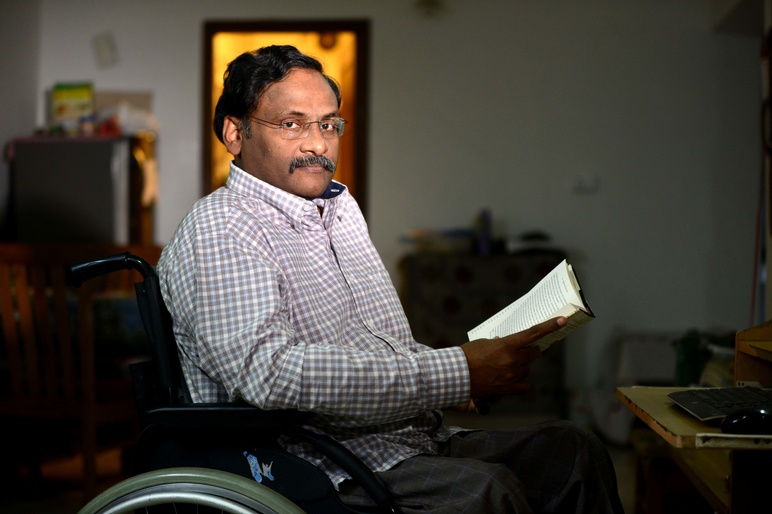
These are the defiant words of Gokarakonda Naga “G. N.” Saibaba, written from his cell in Nagpur Central Jail in the Indian state of Maharashtra. A wheel-chair using, human rights activist and former university lecturer of English, Sai has endured years of cruel, inhumane solitary confinement. Still, his irrepressible resilience shines through. And Sai’s poetry fills a recently published anthology. But he did not write it in verse. In order to evade the prison’s punishing censors, and to disguise his messages of equality, positivity and love, Sai penned letters to friends and his partner of 30 years. These were transcribed, and became his book entitled, Why Do You Fear My Way So Much?
Prison conditions
Now, G. N. Saibaba is much less able to write. Since his erroneous conviction for terrorism-related crimes in 2017, and a sentence of life imprisonment, Sai’s health has progressively deteriorated. Suffering from a heart condition, a brain cyst, a lump in the abdomen and breathing difficulties, his multiple medical conditions require specialised treatment only available in New Delhi. And his disability as a result of childhood polio has been compounded by untreated nerve damage in his left arm, that has spread to his right, leaving him with no strength in his upper limbs. Sai needs support to perform any simple human function like sitting up, eating, drinking or using the toilet, a task which has been assigned to two fellow detainees. His dependency has been underlined by the constant monitoring of his cell. It was only recently – after Sai went on another hunger strike – that the prison authorities agreed to change the direction of CCTV cameras, giving him some semblance of privacy. Before that, his bed and toilet were recorded 24/7. This was a small victory. Despite repeated advocacy by the UN and human rights groups on G. N. Saibaba’s behalf, he is forced to inhabit a small, egg-shaped cell exposed to extreme weather conditions and with little space to move, particularly for someone in a wheelchair as Sai. Given his disability, some commentators believe the conditions of his detention may amount to torture.
Arrest in Delhi
It was 9th May 2014, and G. N. Saibaba was returning home for lunch from his lecturing duties at Delhi University. Without warning, a van jack-knifed in front of the car he was travelling in, forcing it to stop. Sai’s driver was pulled roughly from the vehicle, and replaced by a man in civilian clothing. Two others flanked their captive in the back. G N Saibaba was driven directly to the airport. He was never shown an arrest warrant, and nobody informed Sai’s relatives about his arrest. He was put on a plane to Nagpur, Maharashtra. On arrival, he was transported in an anti-landmine vehicle, in a convoy of commandos armed with automatic weapons. The military clearly wanted to send a message they had detained a hard-core terrorist – not a committed campaigner who has fought most of his life against discrimination and caste-based oppression, and for the rights of women and indigenous Indians.
Activism
G. N. Saibaba grew up in a small, rural community in southern India. Disabled by polio as a young child, he understood early on how unfairness and prejudice are perpetrated. Excelling in school, Sai went on to university where he became involved in student politics. His appointment as a professor of English did not dilute his outspoken criticisms of injustice.
In particular, he became a leading detractor of what became known as ‘Operation Green Hunt’ – a military campaign in central India, home to a large population of several indigenous communities (known as Adivasis), to eliminate Maoists, also called Naxals. Central India has witnessed numerous people’s movements opposing forceful occupation of indigenous land, and the exploitation of ancient forests and rich mineral resources. This military campaign against Naxals was used to quash such movements, leading to numerous human rights violations against civilians.
Conflict in this region dates back to the 1960s. ‘Operation Green Hunt’ began in 2009 – an all-out, on-going offensive by the Indian armed forces to rid the area of Naxals. G. N. Saibaba led the Forum Against War on the People – a solidarity organisation, and an attempt to shine a light on human rights abuses in the region. These atrocities – committed for the most part by the military and paramilitaries – have been well documented. They include extrajudicial killings, multiple rapes, and the deeply disturbing desecration of civilian corpses. It has been estimated more than 2,000 people have lost their lives since 2009.
Conviction
G. N. Saibaba’s advocacy certainly gave pause for thought to national and transnational mining corporations thinking about investing in the region. So, it was inevitable perhaps he would become a target. His persecution began under the Congress government – his Delhi home was raided more than once – and then continued under the BJP, and the prime ministership of Narendra Modi.
At G. N. Saibaba’s trial in 2017, with the courthouse fortified by hundreds of police officers to reinforce the impression of a dangerous extremist, he was tried under India’s anti-terror legislation – the Unlawful Activities (Prevention) Act. With five others, Sai was convicted of alleged links to the banned Maoist organisation.
Judicial rollercoaster
In October this year, the Nagpur Bench of the Bombay High Court ruled G. N. Saibaba’s initial trial had been flawed. The case against him was discharged. The elation he, his family and supporters felt quickly turned to disbelief. The government – infuriated, no doubt by the court’s decision to release an ‘urban Naxal’, a term regularly used to stigmatise human rights defenders – applied for a special sitting of the Supreme Court. The very next day, on a non-working day the special bench of the Supreme Court suspended the decision of the Bombay High Court. This leaves G N Saibaba still in that heavily monitored isolation cell, struggling to negotiate its curved walls in his wheelchair.
Above all, love
G. N. Saibaba’s hope of liberty has once more been dashed. Even so, his spirit is strong. The untreated infections in his hands, and the pain he experiences, means Sai cannot write more than two or three pages a month. But letters from home, especially from his partner, help sustain him.
I defeat the purpose of the solitary confinement by drowning myself in your letters of love.

 Hans Thoolen on Human Rights Defenders and their awards