A sad day for Honduras and all human rights defenders: today, 3 March 2016, Berta Cáceres was murdered by as yet unknown assailants who broke into her home in the city of La Esperanza in the early hours of the morning. One week prior to her assassination, the defender had denounced the killing of 4 leaders of her community as well as threats against her and other human rights defenders, at a press conference.
Berta Cáceres was one of the most prominent human rights defenders in Honduras and a Lenca indigenous woman who, for the past 20 years, had been defending the territory and rights of the Lenca people. In 1993, she co-founded the Consejo Civico de Organizaciones Populares e Indígenas de Honduras – COPINH (http://www.copinh.org/)(Civic Council of Popular and Indigenous Organisations of Honduras), which led fierce campaigns against illegal logging and mega-projects for their detrimental effects on the rights of indigenous peoples in the country. She faced off – and often won – against illegal loggers, plantation owners, multinational corporations, and dam projects that would cut off food and water supplies to indigenous communities. (e.g. https://thoolen.wordpress.com/2014/01/28/berta-caceres-in-honduras-continues-to-be-harassed-in-spite-of-court-order).
The human rights defender was a finalist for the 2014 Front Line Defenders Award [https://www.frontlinedefenders.org/es/programme/fld-award] and in 2015 she received the Goldman Environmental Prize. She had been a beneficiary of precautionary measures granted by the Inter-American Commission on Human Rights (IACHR) since 2009. Her harassment was followed closely by Front Line and others.
Other human rights defenders (including members of COPINH) have been targeted in the past. The killing of human rights defenders and impunity for the perpetrators have been documented by many organizations. In this blog alone:
On 2 March 2016) South Korea’s legislature passed the North Korean Human Rights Act. The new law mandates the promotion of freedom in North Korea by funding North Korean defector and and refugee organizations, creating a North Korean human rights foundation, and establishing an archive of human rights violations perpetrated against the North Korean people by the Kim regime. The US-based Human Rights Foundation welcomed the Act as the NGO has advocated for such an action and in 2015 established the Global Coalition for the North Korean Human Rights Act.
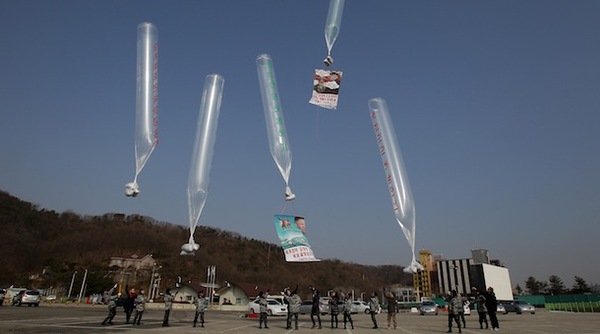
“This is an astonishing moment. The Republic of Korea has taken its head out of the sand and has finally confronted the cruelty and horror of the North Korean dictatorship. It is a victory for all who support human rights and human dignity,” said HRF chairman Garry Kasparov.“We in the Global Coalition are delighted that the South Korean government will—for the first time ever—finance the defector organizations that send films, e-books, radio broadcasts, and educational materials to the North Korean people.”
The North Korean Human Rights Act also establishes a public campaign to raise awareness about North Korea’s human rights violations and takes steps to ensure that South Korean humanitarian aid is not misused by the Kim regime. The goal of establishing the human rights archive, inspired by the post-war German model, is to monitor and document the crimes of the North Korean dictatorship. It is vital to note that no such archive or record has ever existed in South Korea.
The law’s passage comes at a time when the rest of the world unanimously agrees on the extent and gravity of the crimes of the North Korean dictatorship. Earlier today, the U.N. Security Council voted 15-0 to toughen sanctions on the regime. “People inside the North will know about the law’s enactment and it will put considerable pressure on the political elite in Pyongyang,” said South Korean politician Kim Moon-soo, who first drafted the law in 2005.
For more information contact: Noemi Gonzalo-Bilbao, (212) 246-8486, noemi@hrf.org
On 2 March 2016 the ISHR published a profile of human rights defender Park Lae-goon who promotes freedom of assembly and association while combating against State impunity. With 28 years of experience, he has been detained multiple times for participating in demonstrations demanding justice. Mr Park has become a symbolic figure fighting for victims of State violence in South Korea. In my next post I will devote attention to the new South Korean Act on Human Rights which aims more on North Korea. Read the rest of this entry »
On Monday 7 March 2016, from 13h30-15h00 in Room XVIII, Palais des Nations, Geneva, there will be a side event:Protection needs of human rights defenders working on economic, social and cultural rights: Challenges and good practice. (see my previous post: https://thoolen.wordpress.com/2016/02/29/regional-update-for-asia/)
The current and previous Special Rapporteurs on the situation of human rights defenders have emphasised the specific risks that defenders working on economic, social and cultural rights face. Whether they are activists fighting corruption or promoting transparency, working on land and environment rights, or defending their right to housing, ESC-rights defenders are among the most isolated and stigmatised defenders. This side event hopes to shed light on the risks faced by economic, social and cultural rights defenders, and draw on the report of the Special Rapporteur presented to the 31st session of the Human Rights Council to present good practices in furthering their protection.
panelists:
• Michel Forst, Special Rapporteur on the situation of human rights defenders
• Navi Pillay, former High Commissioner for Human Rights
• Allo Awol, human rights defender from Eritrea
• Arutchelvan Subramaniams, human rights defender from Malaysia
• Pedro Tzicá, human rights defender from Guatemala
Moderator: Ms Catarina de Albuquerque, Executive Chair of Sanitation and Water for All (SWA) and former UN Special Rapporteur on the right to safe drinking water and sanitation.
Interpretation in English and Spanish will be provided. The event will be webcast live at www.ishr.ch/webcasts
A regional update on Asia is based on a submission to United Nations’ Human Rights Council by the Asian Legal Resource Centre (15 February) and a report of the Regional Consultation of Citizens’ Voices held in Kathmandu (25/26 February) held under the aegis of South Asians for Human Rights (SAHR).
The Asian Legal Resource Centre directs the attention of the Human Rights Council to the critical situation of human rights defenders in China, Bangladesh, and Thailand, who are facing dire threats to their person and profession: Read the rest of this entry »
The criminalization of human rights defenders in the context of the extraction of natural resources and megaprojects is becoming a very worrisome phenomenon in Latin America, denounces the Observatory in a report published today in Mexico. Entitled “The criminalization of human rights defenders in the context of industrial projects: a regional phenomenon in Latin America”, this document points to the role of businesses, civil servants, public prosecutors, judges, and the State. The report issued by OMCT and FIDH (in the context of their Observatory for Human Rights Defenders) on 25 February 2016 describes the specific cases of human rights defenders criminalized in eight Latin American countries (Brazil, Colombia, Ecuador, Guatemala, Honduras, Mexico, Nicaragua and Peru).
The UN Human Rights Council will hold its 31st regular session at Palais des Nations in Geneva from 29 February to 24 March 2016(it also marks the 10th anniversary of the Human Rights Council). The International Service for Human Rights (see link at the bottom of the post) has published an Alert full of details, but I highlight here the elements that concern human rights defenders most directly:
Human rights defenders: The Special Rapporteur on the situation of human rights defenders, Michel Forst, will present his annual report to the Council on 3 March. The report focuses on good practices to promote and protect the rights of human rights defenders. Presentation of the report will be followed by a dialogue. Of significance this session is a substantive resolution that will be presented by Norway on the situation of human rights defenders. The resolution at this session of the Council follows on the heels of the resolution on human rights defenders presented at the General Assembly in November 2015. The General Assembly resolution included a number of new, important and substantive provisions, including on the vital role of advocacy and the work of defenders in contributing to sustainable development and the realisation of economic, social and cultural rights, and the responsibilities of business enterprises with respect to engaging, consulting and protecting defenders. [see also: https://thoolen.wordpress.com/2015/12/18/un-general-assembly-adopts-resolution-on-human-rights-defenders-with-increased-majority/] This latest resolution provides an opportunity to recognise the critically important work of economic, social and cultural rights defenders, and the cross-cutting challenges they face, including restrictions not only on their rights to health, food, housing, social security and work, but also on their rights to freedom of expression, association, assembly and life itself. Economic, social and cultural rights activists have been identified by current and previous Special Rapporteurs on the situation of human rights defenders as among the most isolated and stigmatised defenders. It is integral that the resolution recognises the role of both State and non-State actors in the protection of human rights defenders, and enjoys broad State support for strong language demanding their protection. (On 7 March, ISHR will facilitate a side event on this topic which will be the subject of a separate post) Read the rest of this entry »
The Permanent Mission of the Netherlands in Geneva, THE Port Association (https://twitter.com/theportatcern) and Impact Hub Geneva will host their hackathon in the field of human rights, on the 26/27 February 2016. The Human Rights DiploHack event will bring together diplomats and human rights experts with tech developers, designers, innovators and entrepreneurs from all over Europe and beyond, to experiment and innovate on projects that directly impact people’s lives. From the multidisciplinary expertise of the participants, teams will be formed to work on two challenges presented by the Office of the High Commissioner for Human Rights (OHCHR):
“How can Human Right Defenders collect and transport evidence in a safe way?”, and
“Does a photo or video tell the ‘truth?”.
[as a first contribution I refer to the video as evidence instructions posted by Witness on 18 February 2016
The result will be presented at the Palais des Nations, on 29 February during a side event open to the public on the occasion of the Human Rights Council (for accreditation to this side event, non-UN-badge holders are invited to contact the organizers before 24 February). True Heroes Films (THF) will be filming the event and will produce a short film to be shown at the side event.
The Amnesty International Report 2015/16 documents the state of human rights in 160 countries and territories during 2015.
This year it expresses doubt as to the question whether the UN is still ‘fit of purpose‘.
The 2015/16 report also specifically refers to human rights defenders by saying that it also “celebrates those who stand up for human rights across the world, often in difficult and dangerous circumstances“. Salil Shetty , the Secretary General says: “The signs of hope that we saw in 2015 were the result of the ongoing advocacy, organizing, dissent and activism of civil society, social movements and human rights defenders. These outcomes were not borne of the benevolence of states. Governments must allow the space and freedom for human rights defenders and activists to carry out their essential work”
The report gives three examples from the past year:
the presence of human rights and accountability elements in the UN Sustainable Development Goals;
action in May to prevent forced evictions on the Regional Mombasa Port Access Road project in Kenya; and
the release of Filep Karma, a Papuan prisoner of conscience, as a result of 65,000 messages written on his behalf by supporters from around the world.
Amnesty International calls upon states to ensure that the resolution adopted in November by the UN General Assembly to protect the rights of human rights defenders is implemented, including the naming and shaming of states that fail to uphold these rights.


 On Monday 7 March 2016, from 13h30-15h00 in Room XVIII, Palais des Nations,
  launches its new