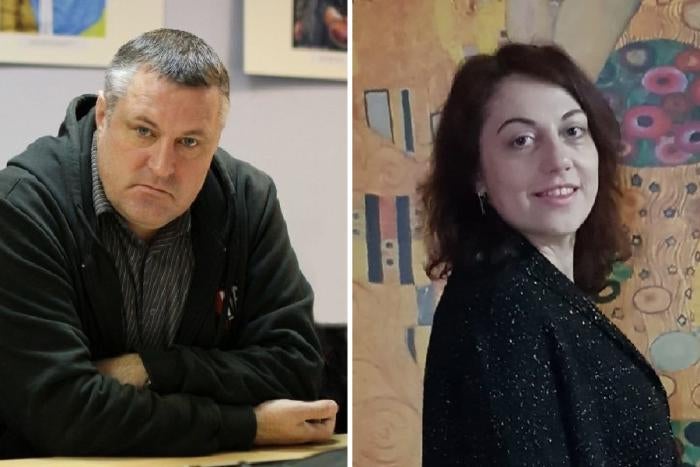
On 14 December 2021 a Statement “Bangladesh: Stop Harassment of Human Rights Defenders” was published by Forum Asia, FIDH and other NGOs: “Bangladesh authorities must end the harassment of Adilur Rahman Khan and ASM Nasiruddin Elan, respectively Secretary and Director of the human rights group Odhikar, who have been targeted through the misuse of the criminal justice system”, eleven rights groups said.

On December 15, 2021, the Cyber Tribunal of Dhaka will continue the examination of prosecution witnesses in the case brought against Adilur Rahman Khan, also a member of OMCT General Assembly and FIDH Secretary-General, and ASM Nasiruddin Elan, for charges brought against them in Case No. 1 of 2013 under the notorious Section 57 of the Information and Communication Technology (ICT) Act, 2006 (amended in 2009), in relation to a fact-finding report issued by Odhikar on the killing of at least 61 people by security forces and law-enforcement agencies in May 2013. Khan and Elan face up to ten years in prison. See also; https://www.trueheroesfilms.org/thedigest/laureates/88F17E2F-F919-580F-2FDA-59B8E24ACBF6
“The government should stop using vague laws to silence human rights defenders and start holding perpetrators of abuses to account, ” said Kerry Kennedy, President of Robert F. Kennedy Human Rights. “Odhikar’s findings not only should have led to investigations and reforms, but also should have been welcomed by the government as an opportunity to strengthen their commitment to upholding human rights.”
Following Odhikar’s 2013 report, Khan and Elan were arbitrarily detained for respectively 62 and 25 days until they were both released on bail. On February 14, 2021, the Appellate Division of the Supreme Court of Bangladesh rejected Odhikar’s appeal to quash the case on its legal merits. On September 12, 2021, the Cyber Tribunal of Dhaka resumed the trial in the case against the two while their review petition is still pending hearing before the Appellate Division of the Supreme Court, contravening the right to a fair trial. On October 5, November 9, and November 24, 2021, the Cyber Tribunal of Dhaka started to examine prosecution witnesses in the case.
We express our deepest concern over the ongoing harassment of Adilur Rahman Khan and ASM Nasiruddin Elan, which is manifestly a form of reprisals against Odhikar for their legitimate human rights work, including for cooperating with UN human rights mechanisms in documenting enforced disappearances, extra-judicial executions and torture in Bangladesh.
It is further a matter of great concern that since 2013, attacks, unlawful surveillance, smear campaigns and harassment against Odhikar and its staff and management have been incessant. Odhikar is also facing serious difficulties to conduct its work due to violations of the right to freedom of association, since its registration has not been renewed by the NGO Affairs Bureau of the Government of Bangladesh and is still pending since 2015. Moreover, all of its bank accounts have been frozen and the organization has been forbidden from receiving funding from foreign or international sources, impacting its operations considerably.
The trial against Khan and Elan resumes in a context where human rights in Bangladesh are under attack from all sides. Human rights violations committed by security forces, including enforced disappearances, extrajudicial executions, and torture remain pervasive throughout the country, with absolute impunity. Authorities regularly crackdown on human rights defenders and journalists who speak out against these violations, including through the use of the Digital Security Act – 2018, the Special Powers Act – 1974, and other draconian laws. See also: https://humanrightsdefenders.blog/2014/12/02/adilur-rahman-khan-speaks-out-against-torture/
Cases such as these question the Bangladeshi government’s commitment to protecting human rights. The international community, including the United Nations and the diplomatic corps in Bangladesh, should monitor the case against Adilur Rahman Khan and ASM Nasiruddin Elan and take a clear stand to ensure that the government of Bangladesh respects the rights of the two defenders to a fair and public trial and, more generally, guarantees the right to defend human rights and puts an end to all acts of harassment against all human rights defenders in Bangladesh.
Our organisations call on the authorities of Bangladesh to immediately and unconditionally drop all charges against Adilur Rahman Khan and ASM Nasiruddin Elan, and to ensure in all circumstances that human rights defenders in Bangladesh are able to carry out their legitimate activities without any hindrance and fear of reprisals.
“This trial is in reality an indictment of the authorities and a crucial test case for the country’s judiciary to be closely watched by the international community,” said Gerald Staberock, OMCT Secretary General, speaking on behalf of the Observatory. “The true culprits are those responsible for extra-judicial killings not those who report on it. Prosecuting human rights activists will not stifle dissent but will isolate Bangladesh from the international community.”
The NGOs:
Amnesty International
Anti-Death Penalty Asia Network (ADPAN),
Asian Human Rights Commission (AHRC),
Asian Network for Free Elections
Capital Punishment Justice Project (CPJP)
CIVICUS: World Alliance for Citizen Participation,
Eleos Justice, Monash University, Associate Professor
FIDH, within the framework of the Observatory for the Protection of Human Rights Defenders, i
FORUM-ASIA
Robert F. Kennedy Human Rights
World Organisation Against Torture (OMCT), within the framework of the Observatory for the Protection of Human Rights Defenders
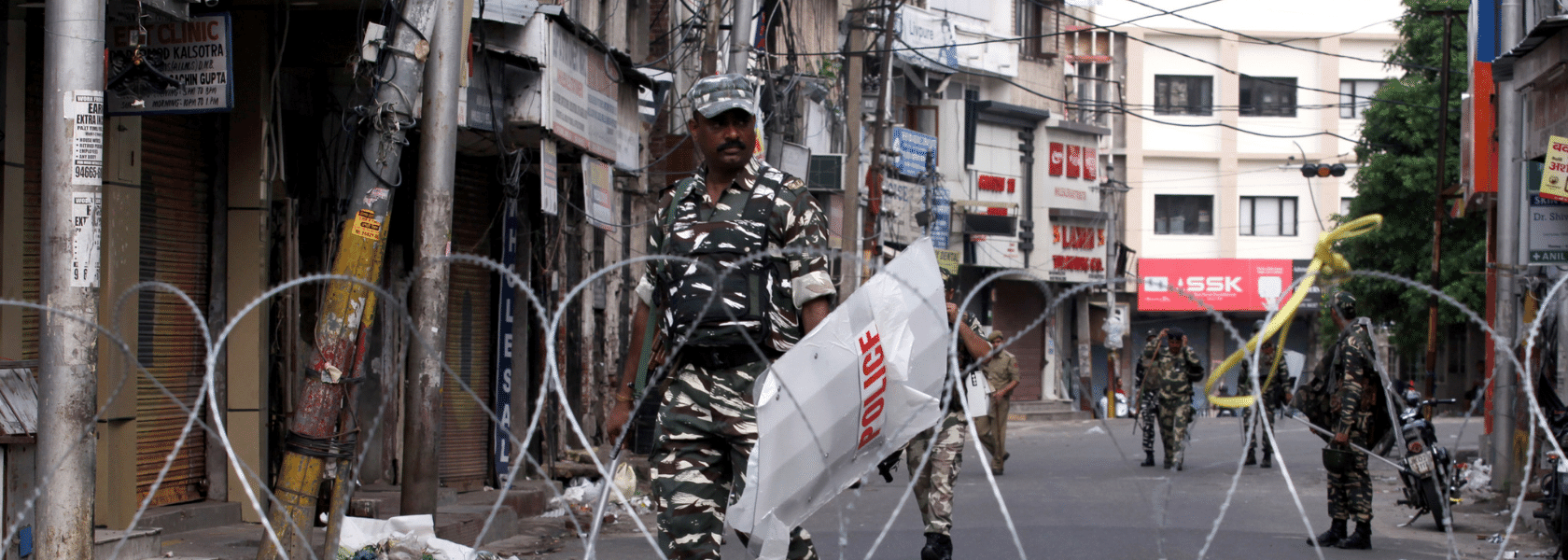



...After more than 70 years of terror, killings, torture, and disappearances, the international community must renew its efforts to end the conflict in Kashmir. In 2018 and 2019, the Office of the United Nations High Commissioner for Human Rights released reports that documented a wide range of abuses – including kidnappings, the killing of civilians, and sexual violence – perpetrated by both sides in the conflict. The UN needs to take the lead in stopping Kashmir’s torment. ……The conflict has consumed resources that should have been used for development; instead, they were channeled to arms purchases or a regional race to develop weapons of mass destruction. Everyone, regardless of age, religion, or ethnicity, has suffered, whether as a result of displacement, family separation, loss of property, the death or disappearance of friends and close relatives, grinding poverty, or simply the prospect of a future as bleak and constricted as the present.The international community has, at times, attempted to mediate between India and Pakistan. The UN has adopted resolutions demanding a referendum on Kashmir’s future status. But, even though it has long been evident that there is no military solution to the conflict – temporary ceasefire initiatives have never resulted in a lasting agreement – India to this day has resisted a plebiscite. In 2003, Pakistan’s then-president, Pervez Musharraf, formulated a four-step approach to a political solution. Without insisting on a referendum, India and Pakistan would begin a dialogue; recognize Kashmir as the main source of bilateral hostility; identify and eliminate what was unacceptable to each side; and strive for a solution acceptable to both countries – and especially to the people of Kashmir. Subsequently, a ceasefire was declared, and high-level meetings took place, but, following a terrorist attack, India terminated the talks. In 2012, Pakistani President Asif Ali Zardari and Indian Prime Minister Manmohan Singh tried unsuccessfully to revive the process.