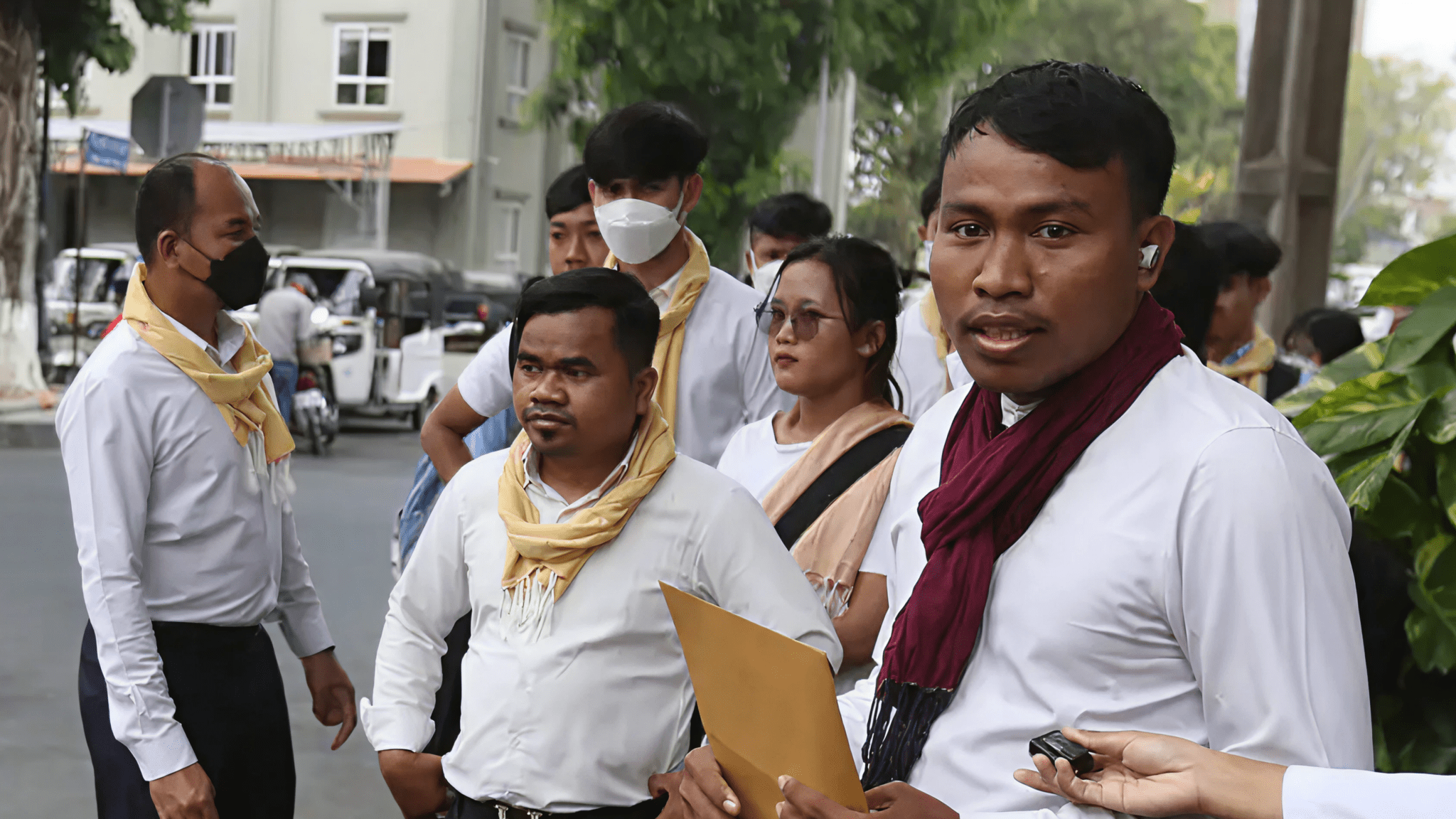
On 23 March 2026 the Human Rights Foundation welcomed the opinion issued by the UN Working Group on Arbitrary Detention (WGAD) finding that Cambodia’s detention of activist Koet Saray violates international human rights law, following an HRF submission.
Mr. Koet Saray is a human rights defender and former president of the Khmer Student Intellectual League Association (KSILA), a group dedicated to promoting human rights, democracy, development, and environmental protection that has now ceased operations after the regime targeted more of its members. He was arrested on April 5, 2024, after posting photos on social media from a meeting with Preah Vihear Province villagers who had been forcibly evicted from their homes to make way for a rubber plantation. Mr. Koet Saray advocated for the villagers on social media and through interviews given to media outlets about the evictions.
Cambodia charged Mr. Koet Saray with “incitement” under Articles 494 and 495 of the Criminal Code, controversial provisions that the WGAD described as so vague and overbroad as to invite abuse and misuse and as incompatible with international legal principles. He was also charged under Article 88, Cambodia’s recidivism provision, due to prior fabricated incitement charges for participating in a peaceful protest in 2020. He was held in pretrial detention for six months before being tried in a one‑day, closed‑court proceeding, and he was convicted and sentenced to four years in prison on Nov. 6, 2024.
“The Working Group’s opinion confirms that Cambodia weaponized vague criminal statutes to silence a peaceful human rights defender,” said HRF International Legal Associate Kaitie Holland. “Cambodia clearly violated Mr. Koet Saray’s rights to the freedoms of expression, peaceful assembly, and association. We commend the Working Group for its thorough legal analysis recognizing the pattern of abuse against Mr. Koet Saray and calling out his illegal pre‑trial detention, the use of overbroad incitement provisions against him, and the denial of a fair trial.”
HRF joins the WGAD’s call for the immediate release of Mr. Koet Saray and for a full, independent investigation into the circumstances of his arrest, trial, and imprisonment. HRF urges the international community to hold Cambodia accountable for the detention of Mr. Koet Saray and other activists who are arbitrarily imprisoned under the country’s abusive incitement laws.
Doja Cat would be headlining a concert organized by Global Citizen in partnership with the regime of Rwanda’s warmongering dictator Paul Kagame, just two weeks after the US imposed sanctions on Rwanda’s army and senior Rwandan officials for their continued fuelling of a bloody war and humanitarian catastrophe in eastern DRC, in violation of a peace agreement brokered in December 2025.
Doja Cat’s appearance would offer Kagame an opportunity to grandstand and project a deceptive image of unity, progress and normalcy. It would be the perfect distraction from the sanctions, the prisons filled with Rwandan dissidents like opposition leader Victoire Ingabire, or Rwanda’s role in causing tremendous human suffering in DRC through its deployment of troops and support for the M23 militia — which is linked to massacres and rapes, forced recruitment and exploitation of civilians, and the use of child soldiers.
Doja Cat would follow John Legend, who headlined the 2025 #MoveAfrika Kigali concert amid public outcry. Legend performed after Nigerian Grammy-winning artist Tems canceled her concert over concerns after Rwandan troops and M23 seized eastern DRC’s two largest cities and imposed a reign of terror, exploitation, and plunder of strategic minerals.
Doja Cat has previously used her platform to advocate for vulnerable populations and has encouraged her audience to support civilians, women, and children fleeing violence, including in DRC. High-profile cultural events risk being used by Kagame’s regime to project an image of openness and legitimacy while political freedoms remain tightly restricted. In our letter, we urge Doja Cat to reconsider performing and to avoid allowing her platform to be used to legitimize a dictatorship which persecutes artists, crushes dissent, and continues to cause grave human suffering beyond its borders.
The event “Tackling the protection gap: Host States’ responsibility to prevent and respond to transnational repression” will bring together defenders and UN experts to discuss the international human rights law obligations of States in respect of transnational repression against individuals and groups within their territory, as well as the strengthening of international standards, and gaps arising from shortcomings in their implementation domestically.
Location: Geneva, Switzerland. Date: 09 March 2026. Palais des Nations, Room VIII. Time: 2:00PM – 3:00PM CET and livestreamed on ISHR’s YouTube channel.!
Research from international organisations, NGOs and academics shows that transnational repression (TNR) – acts by States and their proxies to deter, silence or punish dissent, criticism or advocacy outside their territory – is affecting a growing array of individuals and groups worldwide.[1] With the emergence of new surveillance and communication technologies, many actors have found new avenues to silence and punish critics and opponents. The most common targets have been exiled human rights defenders and political activists, but today broader groups such as journalists, lawyers, artists, academics and ordinary members of diaspora communities are frequently targeted. See e.g.
The immediate effect of TNR is the violation of, or constraint on the exercise of, fundamental human rights. States have obligations towards those subject to such violations taking effect within their territory. These obligations have long been recognised, but have not yet been the subject of focused discussion in relation to TNR, leaving the scope and nature of the duties of host States unclear.
This event will bring together defenders and UN experts to discuss the international human rights law obligations of States in respect of transnational repression against individuals and groups within their territory, as well as the strengthening of international standards, and gaps arising from shortcomings in their implementation domestically.
Speakers:
Sayed Ahmed al-Wadaei, Director of Advocacy, Bahrain Institute for Rights and Democracy (BIRD)
Birgit Kainz-Labbe, Coordinator of Civic Space Unit, Office of the UN High Commissioner for Human Rights
Ben Saul, UN Special Rapporteur on counter-terrorism and human rights
Hélène Tigroudja, Human Rights Committee, Vice-Chair
Moderator: Raphael Viana David, International Service for Human Rights
This event is organised by ISHR and co-hosted with Human Rights Watch, Human Rights House Foundation and the International Federation for Human Rights (FIDH).
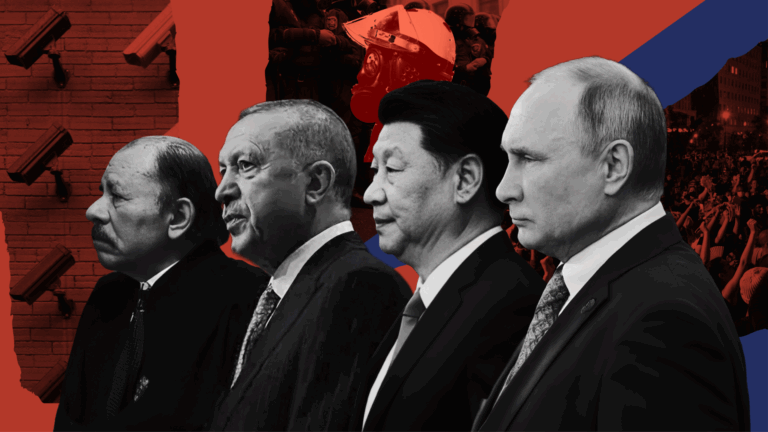
On 26 February 2026 the Human Rights Foundation (HRF) launched its research project, the Tyranny Tracker, a qualitative index that classifies the world’s countries and territories as democratic, hybrid authoritarian, or fully authoritarian. This political regime assessment tool is now available to the public at a moment when tyranny is on the rise worldwide.
According to HRF’s Tyranny Tracker, 75% of the world’s population lives under authoritarianism despite representing only 92 countries, or less than half of all countries in the world — a number that is partly explained by the hybrid authoritarian regimes of India, Indonesia, Pakistan, and the Philippines, and by the fully authoritarian regimes of China, Ethiopia, Nigeria, Russia, and Vietnam, which rule over some of the world’s most populous countries. The Tyranny Tracker classifies countries using a methodology consisting of 45 indicators categorized into three thematic pillars: electoral competition, freedom of dissent, and institutional accountability. The methodology is informed by academic literature and HRF’s 20 years of experience advocating on behalf of dissidents from countries ruled by authoritarian regimes. The research draws on a range of sources, including media, data collected by HRF’s in-house research team, an extensive human rights network, and expert advice. Published today in the Journal of Democracy, a piece from HRF’s lead researchers Javier El-Hage, Malaak Jamal, and Alvaro Piaggio, explores what sets the Tyranny Tracker apart from other indexes, and how readers can use the tool to inform their work.
“The Tyranny Tracker is a culmination of years of HRF’s internal research to identify patterns of authoritarianism worldwide and decide which regimes to prioritize as targets of our advocacy work,” said Malaak Jamal, HRF’s director of policy and research. The Tyranny Tracker uses three classifications for the governments ruling countries around the world: Democratic governments are characterized by largely free and fair elections, freedom to criticize the government, and an independent judiciary capable of being an effective check on government abuse. While many of these governments currently face real challenges in resisting the autocratic tendencies of democratically elected leaders emboldened by increased political polarization globally, they continue to maintain the mechanisms of self-correction that allow democracies to survive and evolve, as opposing political parties regularly and peacefully transfer power. Hybrid authoritarian regimes are typically the result of the severe erosion of institutions by an initially democratically elected government, and represent a step in the process of authoritarian consolidation. While these authoritarian regimes maintain a façade of democracy through regular elections, their autocratic actions heavily skew elections in favor of the incumbent to the point that an opposition victory and peaceful transfer of power are highly unlikely. Fully authoritarian regimes systematically stifle meaningful electoral competition and the basic freedom to dissent, all the while tightly controlling a judicial branch, which lacks any ability to serve as a check on government abuse. These authoritarian regimes regularly rig elections (when they hold them at all), shut down critical media outlets and organizations, and target political opponents and dissenters with arrests and killings, making the chance of a nonviolent transition to democracy as a result of elections little more than a theoretical possibility.
“HRF’s new tool aims to contribute to the healthy competition and complementarity among existing democracy indexes by great institutions, such as Freedom House, V-Dem, International IDEA, or the Economist Intelligence Unit, that already do a great job documenting the situation of authoritarianism worldwide in a quantitative way. The Tyranny Tracker, on its part, is methodologically different as it follows a simple yet structurally cohesive and qualitative analysis process, carried out by HRF’s regional policy and advocacy researchers and experts, resulting in limited yet materially significant differences in country classifications,” said Javier El-Hage, HRF’s chief legal and policy officer.
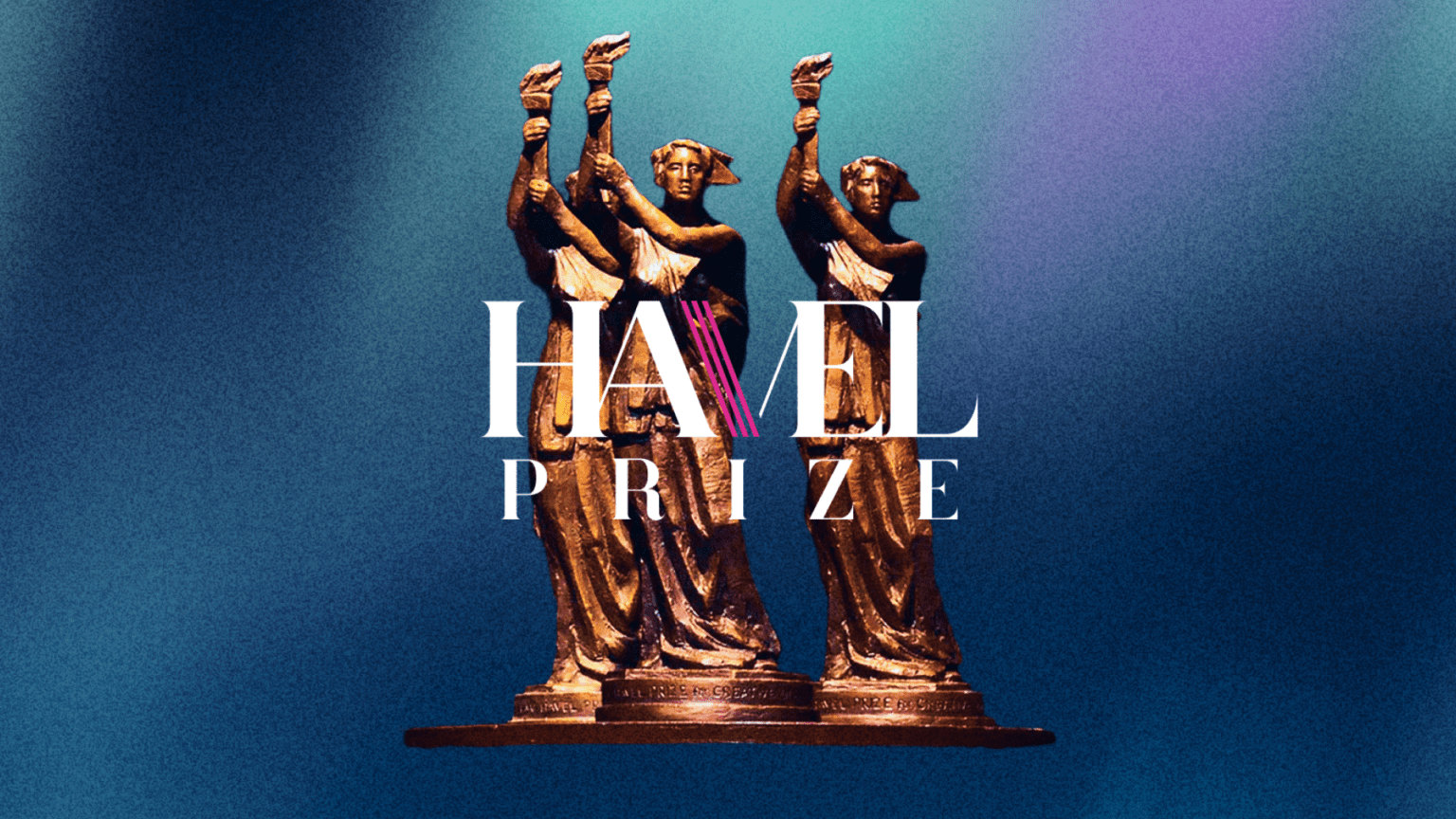
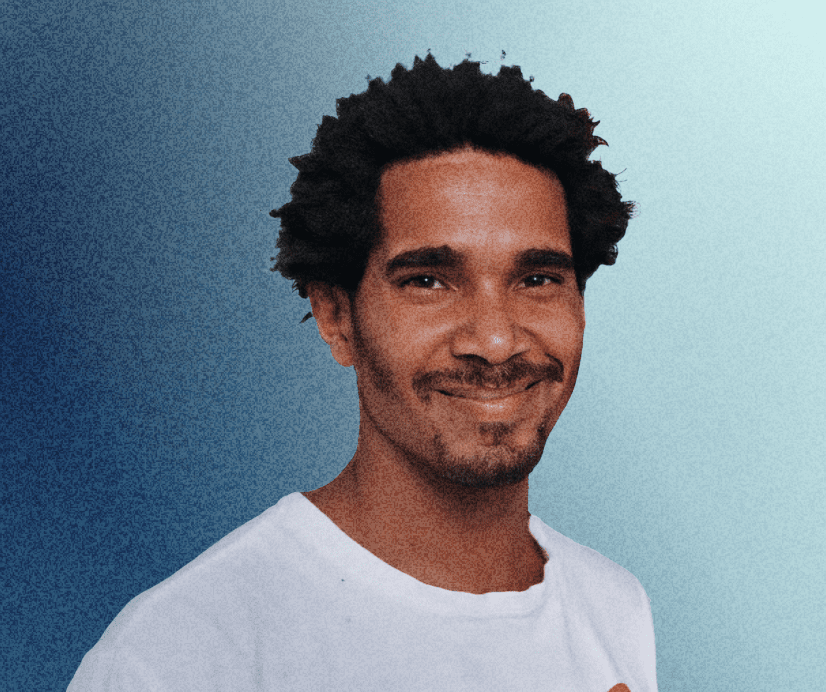
On 1 May 2025 the Human Rights Foundation announced the recipients of the 2025 Václav Havel International Prize for Creative Dissent: Cuban artist and pro-democracy activist Luis Manuel Otero Alcántara, Syrian activist and artist Azza Abo Rebieh, and Russian artist, poet, and musician Sasha Skochilenko.
He gained international attention for his performance art and peaceful protests, including hunger strikes and symbolic acts of resistance. He was arrested during Cuba’s historic 2021 protests and sentenced to five years in prison following a closed trial. In 2022, following a submission by HRF, the United Nations Working Group on Arbitrary Detention declared his imprisonment to be arbitrary and urged the Cuban regime to release him immediately. He is being held in Guanajay maximum-security prison.
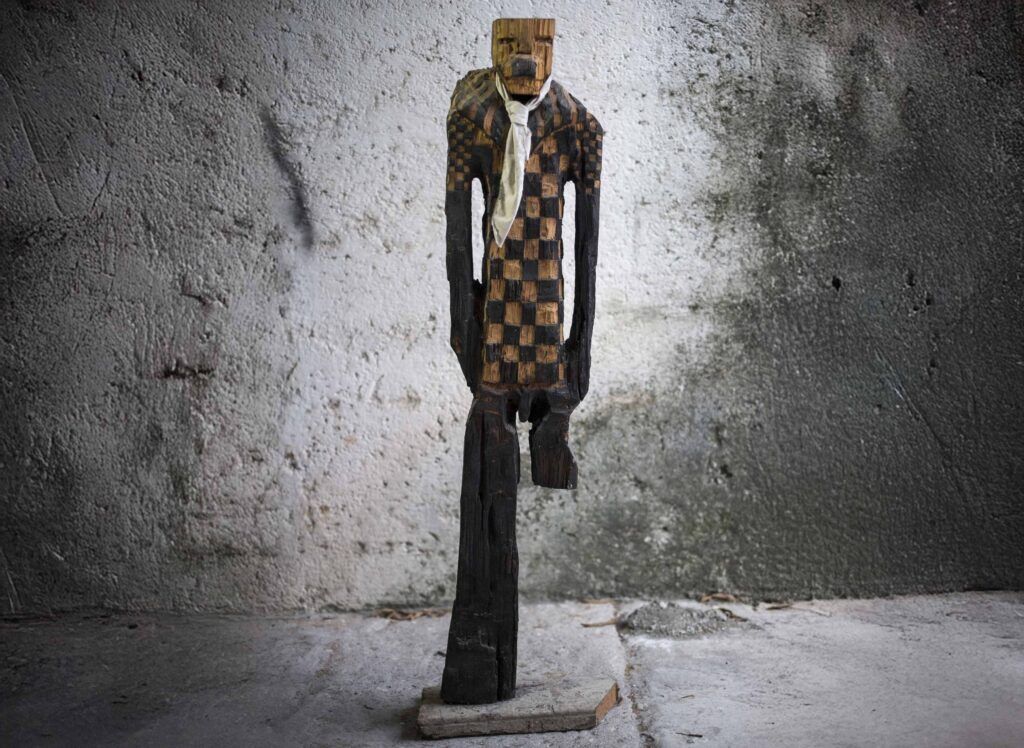
Luis Manuel Otero Alcántara, “Los Heroes no Pesan.” Courtesy of the artist.
AZZA ABO REBIEH
Azza Abo Rebieh is a Syrian artist born in Hama in 1980. During the Syrian revolution, she created graffiti, led workshops with women, and organized puppet theater for children in rural villages. In 2015, she was detained by the regime of Bashar al-Assad.
Art became her solace during her imprisonment in Adra prison, where she shared a cell with 30 women, many of whom were illiterate. Azza drew her cellmates, dignifying them through reminders and glimpses of themselves through sketches. Following her release, her prison drawings were exhibited at the Drawing Center in New York. Her work explores memory, resistance, and survival and is held in collections including the British Museum and Institut du Monde Arabe.
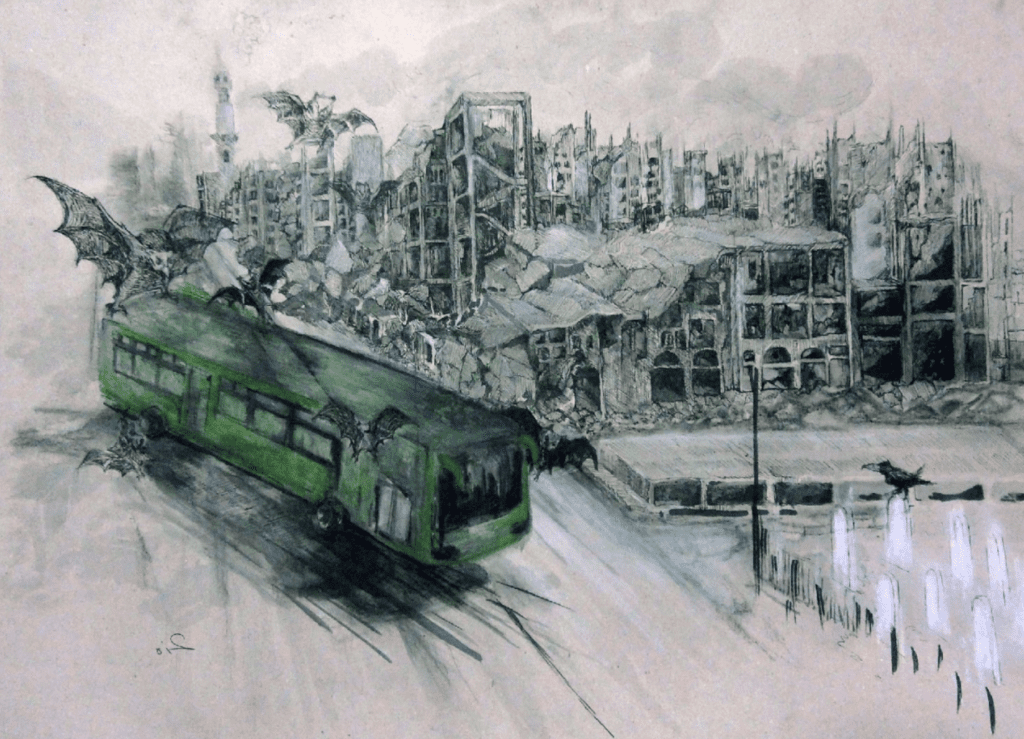
Azza Abo Rebieh, “Hindmosts.” Courtesy of the artist.
SASHA SKOCHILENKO
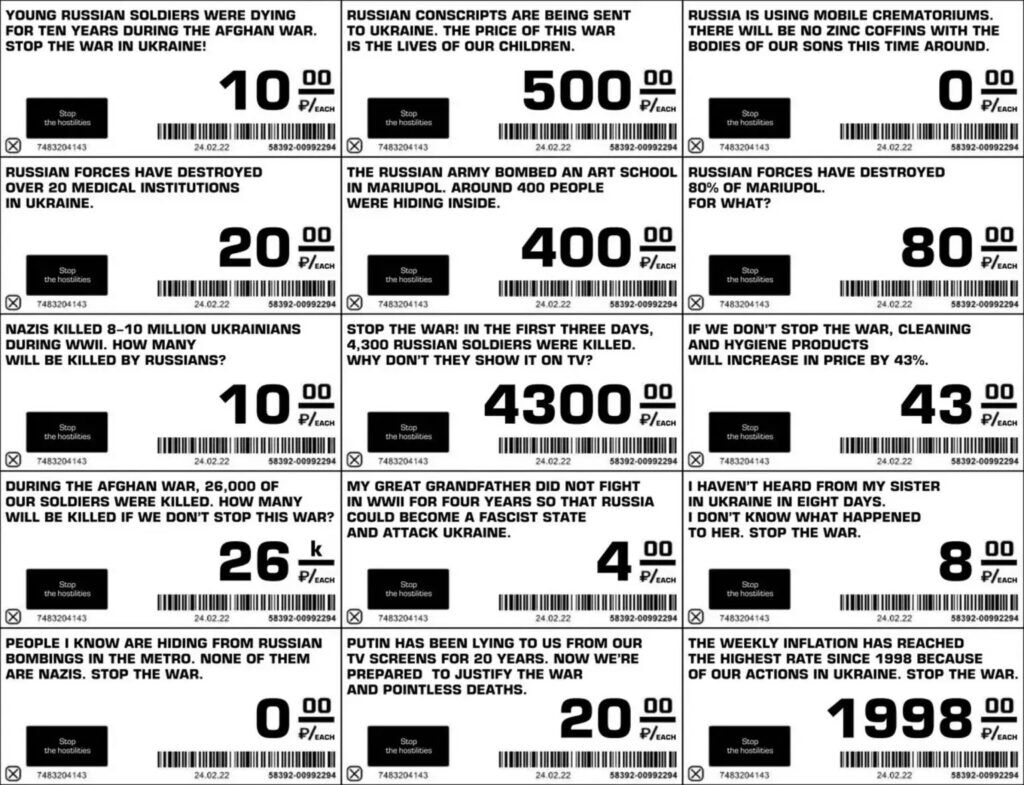
Sasha Skochilenko is a Russian artist, musician, poet, and former political prisoner. She was arrested in 2022 for distributing anti-war messages and sentenced in 2023 to seven years in prison under Russia’s so-called “fake news” law.
Skochilenko was released in 2024 as part of the Ankara prisoner exchange between the United States and Russia. She lives in Germany, where she continues her artistic work, participating in exhibitions in Paris, Amsterdam, and London to showcase the drawings she created in prison. Beyond activism, she’s the author of “Book About Depression,” which played a significant role in destigmatizing mental health issues in Russia.
Sasha Skochilenko replaced pricing labels with anti-war messages (seen here in English translation).
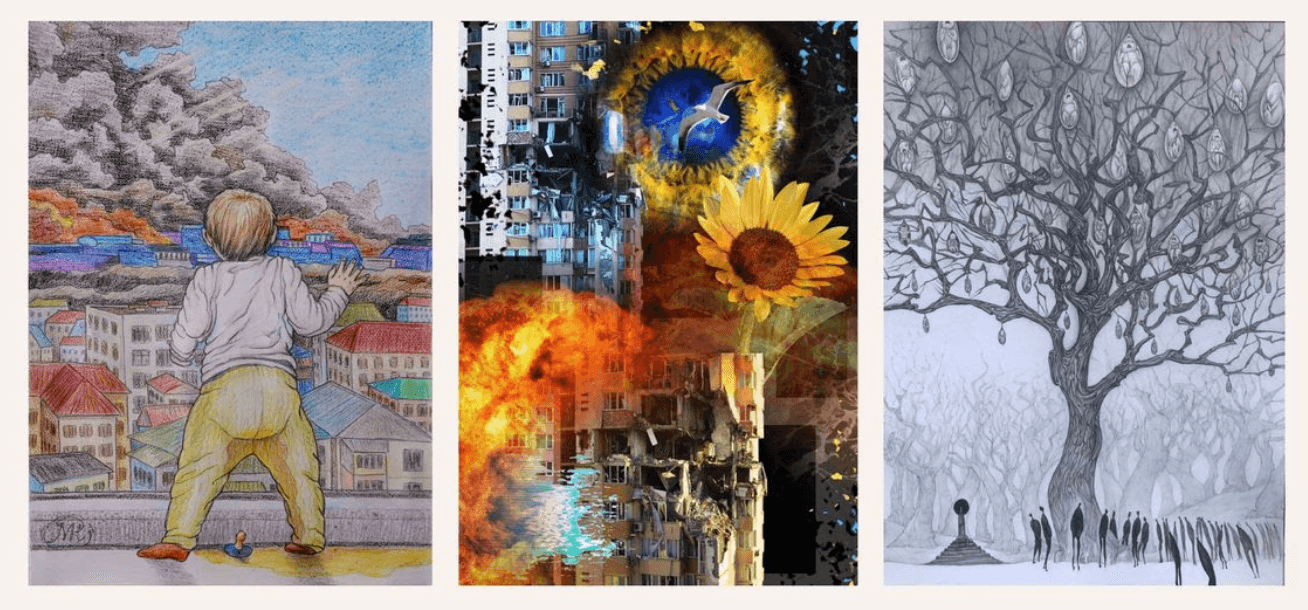
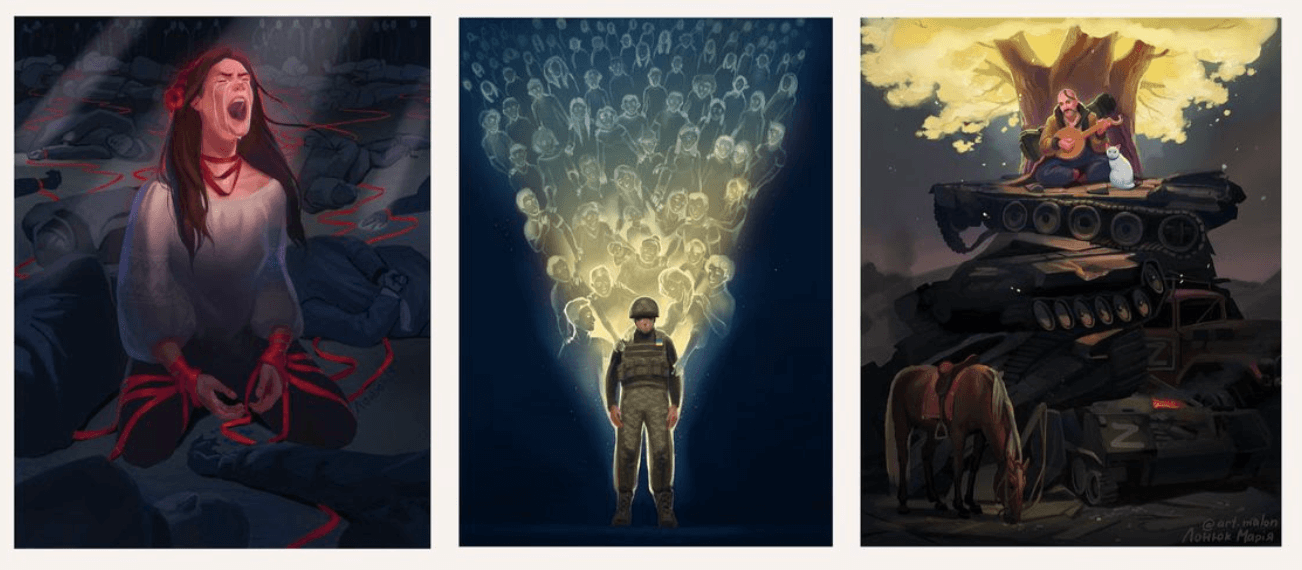
The Human Rights Foundation announced as recipients of the 2023 Václav Havel International Prize for Creative Dissent: Nicaraguan political cartoonist Pedro X. Molina; Ugandan novelist Kakwenza Rukirabashaija; and the third prize to be shared by four Ukrainian artists: the late conductor Yuriy Kerpatenko; the “Art Residency in Occupation” project; the illustrator Mariia Loniuk; and the “Stand Up for Ukraine” performance project.
“In the face of oppression and stifling silence, this year’s laureates have chosen to speak the unspoken, echoing Václav Havel’s creativity and courageous spirit,” said HRF Chief Executive Officer Thor Halvorssen.
This year’s laureates will be recognized during a ceremony on Wednesday, June 14, at the 2023 Oslo Freedom Forum (OFF) in Oslo, Norway. The Havel Prize ceremony will also be broadcast live at oslofreedomforum.com.
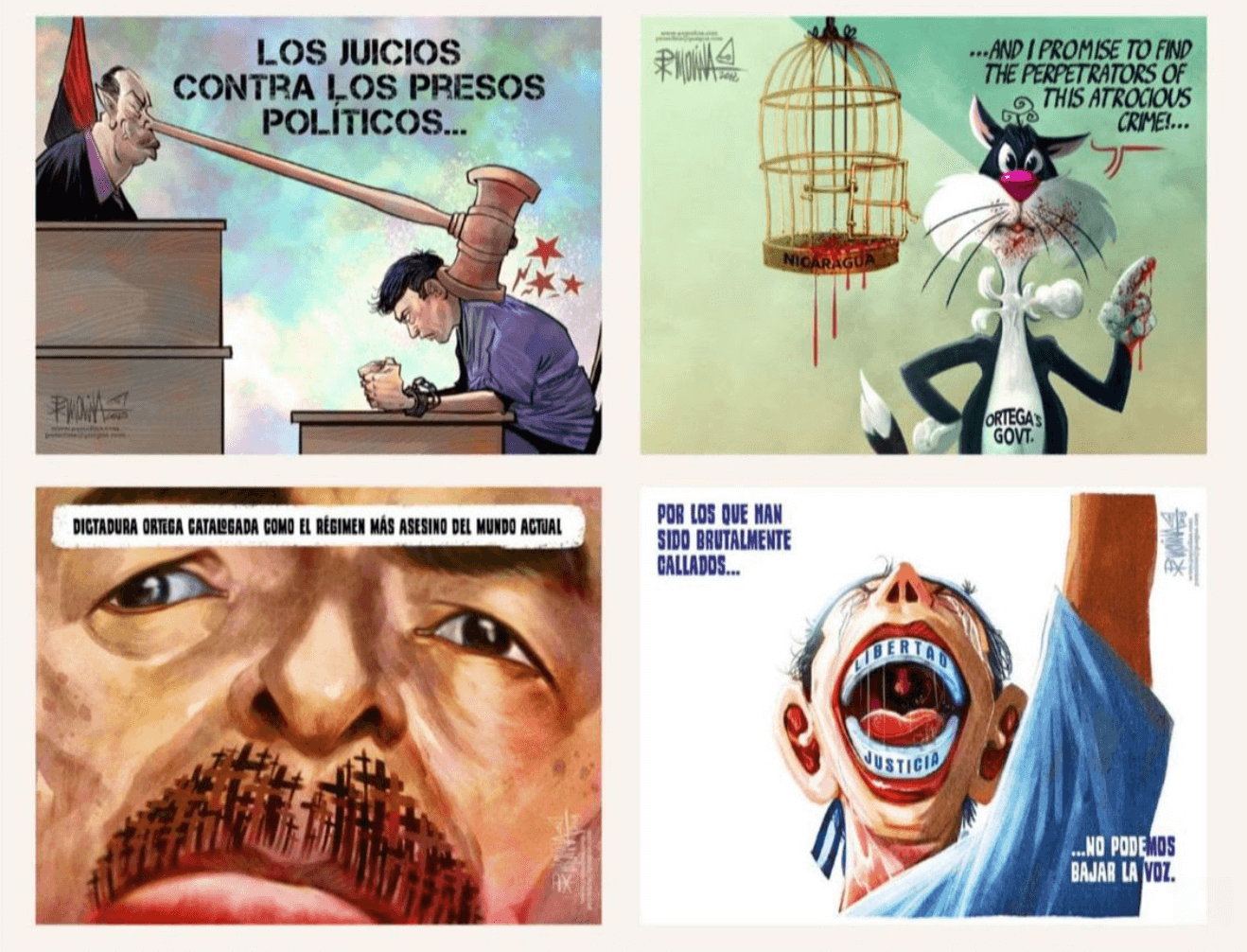
Pedro X Molina is a Nicaraguan political cartoonist who was forced into exile on Christmas Day 2018 after Nicaraguan dictator Daniel Ortega’s political police killed a journalist, jailed two others, and ransacked the offices of El Confidencial — the digital newspaper that featured Molina’s biting caricatures of Ortega and his tyranny. Molina published his first two cartoons in Barricada in 1995, later becoming a cartoonist for the digital outlet El Confidencial. In 2019, he received the Maria Moors Cabot Prize, awarded by Columbia University. The same year he was recognized by Americas Quarterly as one of its Top 5 Latin American political humorists.
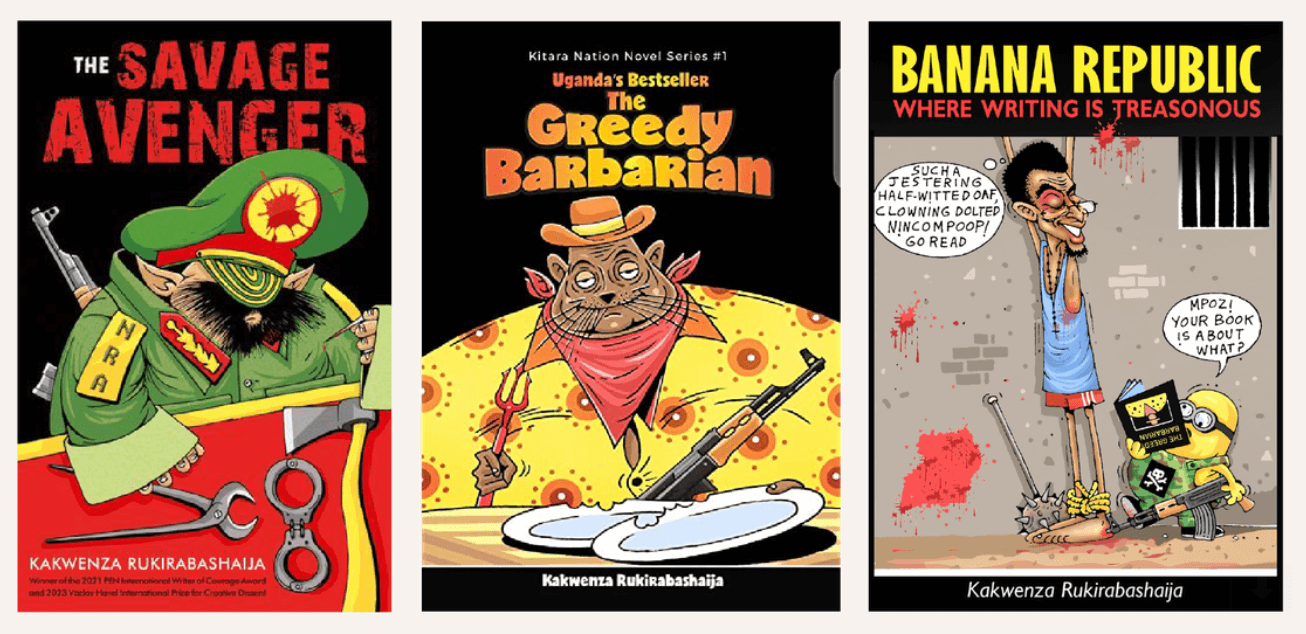
Kakwenza Rukirabashaija is a prominent Ugandan novelist recognized by English PEN in 2021 as a Writer of Courage and a fierce critic of the dictatorship of Yoweri Museveni. He has shown exceptional courage and defiance despite being imprisoned and tortured three times since 2020 for his irreverent writing and books, including “The Greedy Barbarian,” a satirical political fiction novel about corruption and dictatorship in a fictitious African country, and “Banana Republic: Where Writing is Treasonous,” an account of the torture he was subjected to while in detention in 2020 for the publication of his first book. In late December 2021, Rukirabashaija was kidnapped from his home and taken to an army base, where he was illegally detained for one month because of his tweets criticizing Museveni and his son. Rukirabashaija was so severely tortured that he was released only on medical grounds. He was charged with “offensive communication” under Uganda’s repressive Computer Misuse Act. In February 2022, Rukirabashaija managed to flee to Germany for medical treatment, and he vowed to return to Uganda to face trial after his medical treatment.
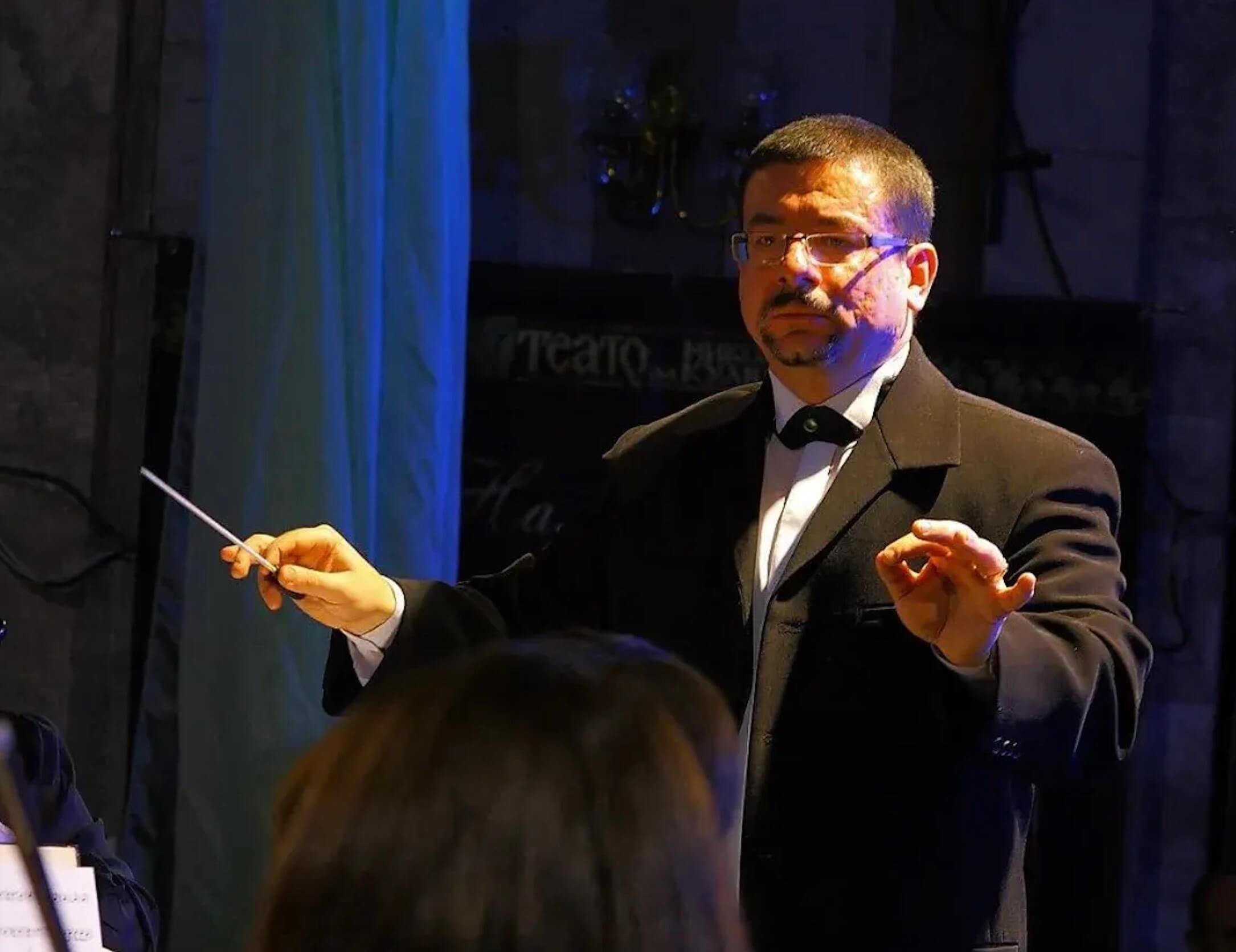
Kerpatenko was a renowned Ukrainian musician and principal conductor of the Kherson Regional Philharmonic. In October 2022, Russian troops assassinated Kerpatenko in his home at point-blank range after he refused to conduct a concert under the rule of Russian invading forces in Kherson, Ukraine. The concert was meant to portray an “improvement of peaceful life” in the occupied city, but Kerpatenko “categorically refused to cooperate with the occupants,” the Ukrainian Ministry of Culture and Information Policy later confirmed. Kerpatenko led his hometown’s orchestra for more than 20 years before he was murdered. The Havel Prize will be presented posthumously to Kerpatenko for his courageous stance against the Russian forces’ repeated attempts at “artwashing” their illegal occupation of Ukraine.
Art Residency in Occupation is an underground art society created by curator Yuliia Manukian. During the occupation of Kherson, Ukraine, six resident artists secretly met in a basement studio at the initiative of Manukian to produce works that showcase the death and destruction in the southern city of Kherson, offering viewers an opportunity to understand the scope of the war. Through this residency, Manukian sought to provide shelter for artists and gave them the opportunity to tell stories of war through the language of art. While written journalism can distance an outsider from the reality of current life in Ukraine, Manukian believes that the group’s collection of drawings, paintings, photographs, diary entries, and videos convey the raw truth.
The Havel Prize will be presented to Manukian on behalf of the collective of artists who bravely united in wartime to create dozens of works that creatively document the horrors endured by millions of Ukrainians living under the Russian invasion.
Manukian is a curator, art critic, and journalist based in Odessa, Ukraine. She was shortlisted in the British Journalism Awards’ foreign affairs category for her vital, courageous, and deeply moving Kherson diaries for The Observer.
Mariia Loniuk is a Ukrainian freelance artist specializing in digital art. Since Vladimir Putin’s 2022 invasion of Ukraine, Loniuk has created vivid and touching illustrations about the war, conveying the feelings and images Ukrainians face. Her drawings capture the devastation of cities, homes, and human lives, the ubiquity of death and suffering, and the war’s destruction. Despite this, her illustrations also highlight the tremendous bravery and determination of the Ukrainian army and the courage and solidarity of the Ukrainian people as they defend their freedom.
Stand Up for Ukraine is a project that brings people together through the universal language of music, reminding us that art has the ability to transcend boundaries, challenge oppressive ideologies, and ignite a collective spirit of solidarity. The performance project, curated by Neringa Rekašiūtė, Eglė Plytnikaitė, and Elvina Nevardauskaitė, seeks to spark hope and empowerment and encourage people to stand united against a totalitarian regime that undermines human dignity. It consists of a live performance where the 22-year-old Ukrainian singer, Elizaveta Izmalkova, is joined by passersby singing along to the folk song, “Chervona Kalyna” — a symbol of Ukrainian resilience and freedom. Stand Up For Ukraine took the internet by storm, capturing the attention of more than five million viewers worldwide. The project serves as a call to action, urging people to set aside differences and come together in support of Ukraine.
Izmalkova is a 22-year-old Ukrainian singer based in Vilnius, Lithuania. She was born in the city of Pervomaisk in the Luhansk region. In her lifetime, Izmalkova’s family home in Ukraine was destroyed twice by Russian forces, first when Russia invaded Ukraine in 2014 and once again in early 2023.
From June 13-15, 2023 the 15th edition of the Oslo Freedom Forum will take place at the Oslo Konserthus in Oslo, Norway. You can learn about the struggle for freedom directly from dissidents and human rights defenders on the frontlines. The theme of this year’s Oslo Freedom Forum (OFF) is: Celebrating Solidarity. This theme honors the unity, mentorship, and community that HRF and our global community — from frontline dissidents to journalists, philanthropists, and technologists — have fostered in the last 15 years. It recognizes that only together can we defeat tyranny.
Meet HRF Freedom Fellow Volya Vysotskaia, a Belarusian human rights activist who exposes repression and torture by state officials.
Vysotskaia is currently part of the 2022 Freedom Fellowship, a programme of the Human Rights Foundation, a one-year program that provides hands-on, expert mentorship across seven critical areas: leadership, movement-building, organizing, fundraising, media, mental health, and digital security.
On September 27, the Investigative Committee of the Republic of Belarus announced that five people would be tried in absentia — Vysotskaia is one of them. She has since been denied information about the trial, and her request to appear virtually was rejected. Should she return to Belarus, a country where torture and inhuman treatment is routine, officials will likely detain her.
Learn more about Vysotskaia’s case.
Q: Can you tell us about your activism protecting democracy in Belarus?
A: From August 2020 to October 2021, I was an editor of the Telegram channel, the “Black Book of Belarus.” Our work “de-anonymized” or identified law enforcement officers and other government authorities who committed human rights violations, hiding behind their high-power statuses. We published the pictures and personal data of riot police officers, prosecutors, judges, and other officials to hold them accountable for their repression of Belarusian citizens demanding democracy and freedom.
Q: What led to the criminalization of the Black Book of Belarus’ editors and readers?
A: In October 2020, a special service agent infiltrated our team and leaked information about members. Previously, he was part of the special operation that hijacked a Ryanair flight in May 2021 to imprison Sofia Sapega, another team member. After we uncovered the agent, my team and I were chased down in Vilnius, and dozens of people in the Telegram group were also imprisoned.
Q: What is unique about your criminal case?
A: The case brought against my four colleagues and me is the first trial in absentia in the country’s history. We have been accused of “exasperation of enmity” and “social disagreement,” as well as illegal actions relating to private life and personal data. The Belarusian KGB has also added us to the list of individuals engaging in “extremist activities.” Belarusian courts recognize almost all civil society organizations as extremists, but we will be the first to be tried and sentenced without the opportunity to defend ourselves.
Belarusian authorities are undoubtedly denying us the right to a fair trial. Notably, I was denied access to information about my criminal case, and I never met the lawyer assigned to me, nor did the lawyer ever respond to my calls.
Q: What is the scope of legal harassment against Belarusian pro-democracy activists in exile?
A: The Lukashenko government changed the criminal procedural law back in July and invented a special proceeding for trying in absentia those who are engaged in “anti-state activities,” and living in exile. The addendum of this new procedural law provides that defendants are no longer aware of the content of their cases. It is sufficient for the legislative body to post this information on official websites, which clearly violates Article 14 of the International Covenant on Civil and Political Rights (ICCPR).
Q: What should the international community learn from your case?
A: The violations of the right to a fair trial, among other rights, didn’t start in Belarus with our case. It just brings back the attention of the international community to the fact that the repressions in Belarus haven’t stopped. They continue every day. The power, the judicial system, and the independence of Belarus with Lukashenko are fake. The regime represses and scares the Belarusians inside the country, and while the international community doesn’t react to the severe violations of human rights, the regime spreads its attention to those living in exile. Because silence allows them to do that.
The international community has to learn that there have to be efficient mechanisms for bringing perpetrators to trial until they destroy whole nations, as well as to guarantee the defense for the victims of violations. International justice can’t be built on the international ignorance of injustice. Being concerned doesn’t stop dictators.Repression in Belarus. HRF condemns the actions of Alexander Lukashenko’s regime and stands with Volya and all Belarusians who speak truth to power, even when their lives are at risk
The Freedom Fellowship is a one-year program that gives human rights advocates, social entrepreneurs, and nonprofit leaders from challenging political environments the opportunity to increase the impact of their work. Through mentorship and hands-on training sessions, fellows develop critical skills and join a growing community of human rights activists.
THE STORY WON’T DIE is an inspiring, timely look at a young generation of Syrian artists who use their work to protest and process what is currently the world’s largest and longest ongoing displacement of people since World War II. The film is produced by Sundance Award-winning producer Odessa Rae (Navalny). Rapper Abu Hajar, together with other celebrated creative personalities of the Syrian uprising, including post-rock musician Anas Maghrebi, members of the first all female Syrian rock band Bahila Hijazi and Lynn Mayya, breakdancer Bboy Shadow, choreographer Medhat Aldaabal, and visual artists Tammam Azzam, Omar Imam and Diala Brisly, use their art to rise in revolution and endure in exile in this new documentary reflecting on a battle for peace, justice, and freedom of expression. It is an uplifting and humanizing look at what it means to be a refugee in today’s world, and offers inspiring and hopeful vantages on a creative response to the chaos of war.
The Human Rights Foundation organised the New York Premiere of THE STORY WON’T DIE on Friday, June 17 at Cinema Village. The screening was followed by a Q&A with award-winning filmmaker David Henry Gerson and the film’s co-producer Abdalaziz Alhamza.

 Hans Thoolen on Human Rights Defenders and their awards