Posted on 6 January 2025 – Closing date 15 January 2025
The International Federation for Human Rights (FIDH) is an international non-governmental organisation (NGO) composed of nearly 200 national human rights organisations from more than 115 countries. FIDH is a nonpartisan, non-sectarian, apolitical, and not for profit organisation. Since 1922, FIDH has been defending all human rights – civil, political, economic, social, and cultural – as set out in the Universal Declaration of Human Rights.
FIDH are now recruiting : A Delegate to the United Nations (F∕M) – Indefinite-term contract based in FIDH Geneva office
The FIDH’s Delegation in Geneva
Represents FIDH before Geneva-based international organizations and institutions, the Office of the United Nations High Commissioner for Human Rights (OHCHR); in particular, the UN Human Rights Council (HRC) and the UN Human Rights Treaty Bodies;
Organizes the participation of FIDH’s member and partner organizations in the work of UN human rights bodies and mechanisms (support and assistance with regard to the submission of “parallel” or “alternative” reports, lobbying and advocacy, communication, etc.): mainly the UN Human Rights Council (including the Universal Periodic Review (UPR) mechanism), treaty monitoring bodies, and special procedures;
Prepares and implements the interventions of lobbying and advocacy at the Human Rights Council, and defines advocacy strategies;Feeds UN human rights protection bodies and mechanisms, in particular UN special procedures and OHCHR’s sections and branches, based on information from FIDH member and partner organizations and develops the strategic analysis of institutional developments and advocacy opportunities;
Relays and reports on activities and events to FIDH’s International Secretariat based in Paris.
Direct superviser : The representative, Head of the FIDH Delegation to the United Nations in Geneva
Applicants should send their CV and a brief cover letter (in English) by email recrutement@fidh.org quoting reference FIDH DELEGATE in the subject line.
August 14, 2024:The recent summons by the Athens Magistrate marks a new development in Mr Dimitras’ long history of judicial harassment, this time also prospecting the criminal prosecution of his wife, constituting a major violation of their right to defend human rights as well as of the recently adopted European Union (EU) anti-SLAPP Directive. The Observatory for the Protection of Human Rights Defenders (FIDH-OMCT) urges the Greek authorities to put an immediate end to this practice of harassment and to ensure that all human rights defenders in the country can carry out their legitimate activities without hindrance or fear of reprisals.
Panayote Dimitras is a Greek migrants’ rights defender and Spokesperson of the Greek Helsinki Monitor (GHM) who, over the past ten years, has faced continuous episodes of judicial harassment as well as vicious smear campaigns deliberately aimed at discrediting him and his work. In the latest development, Mr Dimitras and his wife – Nafsika Papanikolatou – were summoned on May 31, 2024, by an Athens Magistrate carrying out a preliminary criminal investigation into alleged breach of trust and money laundering (in violation of paragraph 1 of Article 390 of the Greek Criminal Code and paragraphs 1 b) and 1 c) of Article 39 of Law 4557/2018, respectively), following the opening of a criminal case by the Athens First Instance Prosecutor. Mr Dimitras and Ms Papanikolatou replied to the summons and their file is in the hands of the Athens First Instance Prosecutor since then.
Exactly one year earlier, on May 31, 2023, the Greek Anti-Money Laundering Authority had already ordered the freezing of Mr Dimitras’ and Ms Papanikolatou’s personal account, pending an investigation into alleged misuse of donations to the Communication and Political Research Society (ETEPE) – a non-profit research organisation co-founded in 1990 by Mr Dimitras that manages human rights NGOs like GHM and Minority Rights Group – Greece (MRG-G). The same day the order was issued, Greek media published apparently leaked and inaccurate information about the case, reporting that all Mr Dimitras’ personal assets as well as those of the NGOs headed by him had been frozen, and that the alleged money laundering concerned funding received mainly from the EU “to support human rights causes” that “was used for other purposes than those claimed.” In fact, only a joint personal account of Mr Dimitras and Ms Papanikolatou had been frozen, and Mr Dimitras was accused of misusing, between 2010 and 2015, private donations to ETEPE amounting to 178.666,80 Euros and not EU funding.
Mr Dimitras and Ms Papanikolatou received the official notification from the Anti-Money Laundering Authority only one month and a half after the decision to freeze their personal account was taken, thereby delaying their right to access a remedy. The account freeze was initially ordered for nine months and then renewed for another nine months in February 2024. At the time of publication of this statement, the freeze is still effective notwithstanding Mr Dimitras’ and Ms Papanikolatou’s repeated requests to terminate it.
In another court case, the Three-Member Misdemeanours Court of Athens acquitted, in April 2024, Panayote Dimitras after five years of judicial harassment. Mr Dimitras was prosecuted under criminal charges of “false accusation” and “aggravated defamation” (Articles 229 and 363 of the Criminal Code of Greece, respectively) for having denounced racist comments from a public official, Christos Kalyviotis, who in return filed a complaint against Mr Dimitras for defamation.
The Observatory recalled, already at that time, that the procedure initiated by Mr Kalyviotis was only one of many abusive cases brought against Mr Dimitras over the past few years and constitutive of strategic lawsuits against public participation (SLAPPs), abusive civil proceedings aimed at criminalising human rights defenders and journalists.
Notably, since November 2022 a criminal case is ongoing against Panayote Dimitras at the Kos Court of First Instance in which he is accused of “forming or joining for profit and by profession a criminal organisation with the purpose of facilitating the entry and stay of third country nationals into Greek territory” under several articles of Law 4251/2014 (Immigration and Social Integration Code), for having provided humanitarian assistance to asylum-seekers. On January 23, 2023, preventive measures were imposed pending trial. Mr Dimitras was banned from carrying out activities with the GHM, a measure which was subsequently lifted. He was also banned from leaving the country, subjected to the obligation to report to the police station of his place of residence every 15 days, and required to pay a bail of 10,000 Euros.
More than one-and-a-half year later, these last three measures are still in place, with the consequence that Mr Dimitras cannot travel abroad for GHM human rights activities. In August 2023, he requested that the travel ban be lifted so that he could attend international meetings, and to be allowed temporarily to report to the police station in Kelafonia, where he has a summer home. Both requests were rejected by the First Instance Court of Kos. The European Parliament expressed concern about these measures in its resolution of February 7, 2024, on the rule of law and media freedom in Greece (2024/2502(RSP)). The responses provided by the Supreme Court and the Greek government to the resolution are of particular concern and seem to constitute both smear campaigns against Mr Dimitras as well as violations to his right to a fair trial, as it was falsely claimed that he had been arrested and that he had contacted a human smuggler.
The Observatory recalls that the anti-SLAPP Directive adopted by the European Parliament entered into force on May 6, 2024. The Observatory encourages the Greek authorities to bring into force the laws, regulations and administrative provisions necessary to comply with this Directive and to ensure its effective implementation to protect human rights defenders from abusive proceedings.
The Observatory expresses concern about the continued judicial harassment against Mr Dimitras and its recent enlargement towards his wife. The Observatory urges the Greek authorities to put an immediate end to all acts of harassment against Panayote Dimitras and Nafsika Papanikolatou and to allow their free exercise of the right to defend human rights.
4 July 202: China’s government accepted – wholly or partially – 298 of the 428 (70%) recommendations the country received from UN member states during its fourth UPR on 23 January 2024. This represents a 12% drop in the proportion of recommendations the government accepted compared to the previous UPR in 2018.
In a worrying sign of the government’s outright refusal to heed the mounting international concern over key human rights issues, of the 130 recommendations Beijing did not accept, an unprecedented number – 98 – were categorised as “rejected” and 32 were “noted.
China’s government used the United Nations (UN)-backed review of its human rights record to rebuff international concern over serious abuses, issue blanket denials, and make blatantly false statements, the International Federation for Human Rights (FIDH), Human Rights in China (HRIC), the International Campaign for Tibet (ICT), the Taiwan Association for Human Rights (TAHR), and the Database Center for North Korean Human Rights (NKDB) said after the adoption of the outcome of China’s Universal Periodic Review (UPR) in Geneva, Switzerland.
Despite well-documented evidence to the contrary, the government claimed that many of the recommendations it accepted were being implemented or had already been implemented. Such was the case regarding the accepted recommendations related to human rights in Hong Kong, Tibet, and Xinjiang, and the situation of human rights defenders, lawyers, civil society, media, and journalists. The government also made the false claim that it protected “freedom of speech, association and assembly” and “the lawful rights of all citizens as equals“.
FIDH, HRIC, ICT, TAHR, and NKDB urge China’s government to reverse course and use the fourth UPR to address the concerns voiced by numerous UN member states without delay by implementing all the recommendations that are consistent with its obligations under international human rights law.
Below is an analysis of the government’s response to the UPR recommendations on selected human rights issues.
Human rights situation in Hong Kong, Tibet, and Xinjiang
The government received 57 recommendations on human right issues in Hong Kong, Tibet, and Xinjiang and accepted only 19 (33%) of them. With regard to Hong Kong, the rejected recommendations were overwhelmingly related to the National Security Law and its negative impacts. Rejected recommendations concerning the situation of the Uyghurs in Xinjiang included those that called for the implementation of the 2022 UN Office of the High Commissioner for Human Rights (OHCHR) assessment on Xinjiang which China’s government called “illegal“. China rejected 70% of the unprecedented number of Tibet-specific recommendations it received – notably the ones calling for an end of the boarding school system for Tibetan children – often claiming they were based on “false information” despite many verified reports, including by UN experts. Other recommendations concerning the respect of cultural and religious rights in Tibet were listed as “accepted and already implemented” in a blunt misrepresentation of the reality on the ground. Many of the recommendations received by China’s government concerning the situation in Tibet echoed those contained in the joint submission made by FIDH and the International Campaign for Tibet (ICT) for China’s fourth UPR.
Human rights defenders, lawyers, and civil society
The government accepted only 10 of the 25 recommendations it received on human rights defenders, lawyers, and civil society. It rejected recommendations that called on China’s authorities to end the harassment and arbitrary detention of human rights defenders and lawyers and to cease the restrictions on civil society. A submission by HRIC highlights how online rights and internet freedoms in Hong Kong have significantly deteriorated in the post-COVID era, especially after the promulgation of the National Security Law, and that women have been disproportionately affected, as evidenced by the online gender-based violence they experienced.
Media and journalists
The government rejected 10 of the 14 recommendations it received concerning the protection of media and journalists, claiming the authorities protect the right to freedom of speech.
Death penalty
The government rejected all 20 recommendations it received concerning the death penalty. It stated that the death penalty “should be retained with its application strictly and prudently limited” – a statement that clashes with the reality of a country that has consistently ranked as the world’s most prolific executioner.
Global Voices has released a special coverage called Empowering voices: Women in politics, which explores the state of women’s political participation around the world.
Human Rights First referred to a new report reveals that WHRDs face increasing harassment and threats from a global movement against gender equality and LGBTQI+ rights. The Kvinna till Kvinna Foundation, a leading feminist women’s rights organization, released Hope and Resistance Go Together: The State of Women Human Rights Defenders 2023, a report that found discouraging growth in harassment of WHRDs. The foundation surveyed 458 women’s and queer rights activists and interviewed 25 activists representing WHRDs from 67 countries affected by violence or conflict.
They found that 75% reported facing harassment for their activism, a 15% increase from two years ago, and 25% of respondents have received death threats. Most harassment comes from government authorities, but increased harassment from far-right groups and anti-gender equality actors is also driving these startling statistics. Human Rights Defenders (HRDs) across the world face resistance and violence. In 2022, at least 401 HRDs were killed for their peaceful work. But some of the obstacles facing WHRDs are distinct. https://humanrightsfirst.org/library/recognizing-women-human-rights-defenders-on-international-womens-day/
Human Rights Watch on 7 March carried a piece by Macarena Sáez who says inter alia:
On this International Women’s Day, we march for the one in three women who experience physical or sexual violence in their lifetime. We cheer for countries like Argentina, Colombia, and Ireland that value our autonomy to choose to be pregnant and have legalized access to safe abortion, while protesting that abortion is still or again illegal in many places, including US states like Alabama and Texas. At the same time, we march to honor the women who marched before us, like the Mexican women who organized the first feminist congress in 1916 to push for family law reforms and their right to vote, and the Nigerians who waged their “Women’s War” against colonization and patriarchal laws in 1929. Their struggles sadly mirror the reality of many women around the world today – especially women who belong to historically marginalized groups – who continue to rally against violence and abuse.
Fearing the power of women’s solidarity and collective actions, governments have stifled women’s speech through restrictions on movement, censorship, smear campaigns, and criminal prosecutions. In highly repressive contexts, like Afghanistan and Iran, women suffer arbitrary detention, and even enforced disappearance and torture, for their activism. Meanwhile, social media companies have not done enough to protect women from online violence, chilling women’s freedom of expression on and offline. These barriers make it hard for women’s equality to become reality. Gender justice requires an enabling environment in which women can express themselves, speak and spread their political views, and participate in political and public life. Instead of repressing or tolerating the repression of women, governments should recognize our collective actions – and consequent power – and enshrine our rights in laws, policies, and practice. [https://www.hrw.org/news/2024/03/07/womens-voices-have-power-drive-change]
On 8 March 8, 2024 Almyra Luna Kamilla and Rosalind Ratana opined in IMHO on “Navigating the storms of repression: The resilience of young women rights defenders in Asia”
In recent years, Asia has been witnessing rising authoritarianism and shrinking civic space. Among those in the frontlines of resistance are young women human rights defenders. As we celebrate International Women’s Day, let us demand for an enabling world where women human rights defenders can continue their noble pursuits without fear of reprisals.
In Thailand, the royal defamation law is being excessively used to silence criticisms against the monarchy. Meanwhile in Sri Lanka, economic and political mismanagement has sparked peaceful protests that are met with violence and intimidation. The fate of Asia’s political climate hangs by a thread as elections are held across many countries, including Bangladesh, Indonesia, India, South Korea, and Pakistan. Now more than ever, governments across the region are finding ways to solidify their power, putting an even tighter grip on civil society to the detriment of democracy and people’s fundamental rights and freedoms.
Despite such challenges, many are courageously speaking out and taking collective action to reclaim power for the people. This includes young women human rights defenders – or Youth WHRDs – who are claiming space to call out human rights violations and to demand accountability from oppressive governments. [https://www.rappler.com/voices/imho/young-women-rights-defenders-asia/]
The Alliance for Human Rights in Afghanistan(a coalition of 9 major NGOs) urgently appealed to the international community to significantly bolster its support and actively safeguard the human rights of Afghan women and girls, including Afghan women human rights defenders who face persecution for their peaceful campaigns for rights and basic freedoms.
In 2023, the Taliban further intensified its oppressive policies toward women, girls, the LGBTIQ+ community, and religious minorities. Afghan women and girls have seen their rights and prospects increasingly curtailed, from greater enforcement of restrictions on education – including a ban on girls attending secondary schools and universities – to intensifying exclusion of women from political and public life. Women have been banned from a growing list of forms of paid employment, and economic barriers, such as the ban on women registering organisations and undergoing vocational training, have contributed to a sharp decline in women’s participation in the labour market, impeding their right to make a living. This exacerbates financial insecurity, widens gender disparities, and further confines women to the private sphere. Lesbian, bisexual, and transgender women face severe threats, including torture, sexual violence, forced marriage, and death. Victims of gender violence, including those who identify as such, lack minimal legal and practical support. Obstacles to healthcare and education have exacerbated poverty and vulnerability among women and girls. In 2023, new discriminatory restrictions imposed by the Taliban included the closure of all beauty salons, blocking women from overseas travel for study, mandating female health workers in some areas to have a male chaperone while travelling or at work, and prohibiting women from entering a famous national park.
The oppressive environment extends to female activists, NGO leaders and journalists. Notable cases include the arrests of women’s rights activists Neda Parwani and Zholia Parsi, the enforced disappearance and subsequent discovery of Manizha Seddiqi in Taliban custody to date, the arrest of Matiullah Wesa, founder of an NGO advocating for girls’ education rights, and the arbitrary detainment of Ahmad Fahim Azimi and Seddiqullah Afghan—both dedicated girls’ education activists, among many others. Journalists reporting on the Taliban, facing arrests and threats, equally illustrate the difficulties encountered by the media, particularly women, when covering crimes against women or advocating for women’s rights. Collectively, these cases underscore the near-total denial of freedom of expression, gender equality, or any other internationally recognized right in Afghanistan under the Taliban.
Amid this growing oppression, segregation and fear, Afghan women human rights defenders have urged the international community to exert greater pressure on the Taliban. They call on international bodies to involve Afghan women in all negotiations with the Taliban and to facilitate direct meetings between women and the de facto authorities to address their concerns. Afghan women have also stressed the importance of advocacy for women’s rights by external actors based on the voices and realities of women inside Afghanistan. They call for coordinated efforts between organisations inside and outside the country to defend the rights of Afghan women and girls.
The UN Special Rapporteur on the situation of human rights in Afghanistan, Richard Bennett, called on the Taliban to release women human rights defenders as the world marks International Women’s Day.
I reiterate my appeal to the Taliban to respect all the human rights of women and girls in Afghanistan, including to education, work, freedom of movement and expression, and their cultural rights, and I urge the meaningful and equal participation of Afghan women and girls in all aspects of public life. I call on the Taliban to immediately and unconditionally release all those who have been arbitrarily detained for defending human rights, especially the rights of women and girls.”
On International Women’s Day, the a group of NGOs (ALQST for Human Rights, Amnesty International, CIVICUS, European Saudi Organization for Human Rights (ESOHR), Front Line Defenders, Gulf Centre for Human Rights (GCHR), HuMENA for Human Rights and Civic Engagement, International Service for Human Rights (ISHR),MENA Rights Group, Salam for Democracy and Human Rights) renewed their call on Saudi Arabian authorities to release all women human rights defenders (WHRDs), women’s rights activists and their supporters who are detained in contravention of international human rights standards. The organisations further call on Saudi authorities to lift travel bans imposed on WHRDs and their relatives, and to abolish the male guardianship system. [https://ishr.ch/latest-updates/civil-society-reiterates-their-call-on-saudi-authorities-to-release-jailed-womens-rights-activists/]
The President of Georgia awarded severl with mesla of honor: co-founder of “Safari” organization Babutsa Pataraia, human rights defender Ana Arganashvili, founders of “National Network for Protection from Violence”: Eliso Amirejibi and Nato Shavlakadze and founder of “Vedzeb” organization Tamar Museridze.
On 14 February 2024, eight organisations, including FIDH and OMCT within the framework of the Observatory for the Protection of Human Rights Defenders, expressed their grave concern over the closure of civic space, attacks on freedom of expression, rising militarisation and continuous disruption and shutdown of communication that threatens the work and safety of Women Human Rights Defenders (WHRDs) and Women’s Rights Groups in Sudan:
February 14, 2024. We the undersigned groups and organisations would like to express our grave concern and raise the alarm over ongoing reports about the closure of the civic space, attacks on freedom of expression, rising militarisation and continuous disruption and shutdown of communication that threatens the work and safety of Women Human Rights Defenders (WHRDs) and Women’s Rights Groups in Sudan.
Shutdown of Communications
On February 7th, 2024, Sudan witnessed a complete communications shutdown. Reasons behind this shutdown remain unknown in the absence of official statements from operating companies and the warring parties. This shutdown followed two days of the extensive interruption of communications at the end of January 2024. The interruption of communications and frequent shutdowns have life threatening implications and put the safety and security of WHRDs at risk. Without access to communications, WHRDs struggle to document and report on the mounting atrocities on the ground. The interruption of internet networks has also impeded women groups’ access to the mobile banking apps that facilitate money transfers to operate or secure protection for WHRDs at risk. The #KeepItOn coalition — a global network of over 300 human rights organisations from 105 countries working to end internet shutdowns — has raised concerns that “amid the ongoing brutal violence in Sudan, the continued weaponisation of internet shutdowns is a flagrant violation of international law.”
Attack on Wad Madani
Since the attack on Wad Madani, the capital of the central Al Jazirah state, in mid-December 2023, Women’s Rights groups and WHRDs have lost the resources collected since the start of the war. Dozens of WHRDs and Women’s Rights Groups were forcibly displaced for the second time, driven from the city that had been the humanitarian response hub for local and international NGOs. As WHRDs were forced to flee again, they faced enormous challenges searching for safe locations across states and neighbouring countries. Dozens of WHRDs were harassed, detained, summoned and threatened by both warring parties during the last few weeks.
Targeting of Activists
The Sudanese Armed Forces (SAF) launched an intensified attack on human rights defenders, humanitarian workers and volunteers, journalists, and peace activists in the last few months in the areas under their control. Aid groups and first responders faced rising restrictions of movement and supplies.
Rapid Support Forces (RSF) continued to arrest civilians, loot both public and private properties and perpetrate systemic sexual violence across the areas under their control. WHRDs and Women’s Rights Groups struggle to operate in these areas as the risks of sexual violence are growing.
At least five WHRDs and women first responders have been detained, summoned, harassed or threatened in the last few weeks. The attacks were reported in areas controlled by both warring parties. Since the war erupted, four WHRDs have been killed, two of whom were journalists. At least 11 women health workers were killed as well.
Closure of Civic Space and Restrictions on Freedom of Expression
In January 2024, Sudanese authorities in the relatively safer states in Northern and Eastern Sudan, including local governors, issued decrees to dissolve neighbourhood resistance committees. These grassroot groups were mobilizing and organising communities since the emergence of the protests movement in 2018. The governors of five states also banned publication of information and imposed heavy penalties on publishing information on social media or other newspapers regarding the security situation in their states. Journalists and activists were detained in three states and two women journalists were summoned and threatened by local authorities following these decrees. In the Blue Nile state, Red Sea and other states, meetings and other forms of peaceful civic activities are either banned or not authorized. Women’s Rights groups and other NGOs operating in these states are working in hostile and increasingly challenging environments. Civic space in Sudan is closed, with an increasing militarisation of the state and local communities.
Rising Militarisation
During the last three months, Sudanese authorities launched a mobilisation campaign to arm civilians in various states under SAF control. This campaign’s leaders attacked and threatened activists who criticized the armament of civilians, including women, girls and boys. Voices of peace activists are considered treasonous by SAF supporters. The widespread arms in the hands of civilians has led to unprecedented threats to women and peace and security, including gender-based violence (GBV) in the areas outside of the fighting zones.
We the undersigned groups call on:
The warring parties:
An immediate ceasefire and the prompt creation of safe corridors for humanitarian aid organisations and groups, and to guarantee the safety of their operations;
An immediate restoration of telecommunications across the country;
Cease attacks on health facilities, medical supplies, and health workers, and uphold obligations under international humanitarian law;
The international community:
States and international human rights, peace-building and feminist groups and organisations to work together to create an immediate long-term protection program for WHRDs (and their families) that addresses relocation needs (in several locations if needed), provides psychological support for post-traumatic stress caused by war and conflict, including due to GBV, and equips WHRDs’ with all the necessary means to continue their work in the defense of human rights;
States to provide support for the FFM and other international mechanisms mandated to document human rights violations in Sudan, including by ensuring that these entities have the necessary resources to carry out their work effectively;
States to support local initiatives providing humanitarian support to local communities as well as support services to victims, and to support civil society’s documentation and reporting efforts so that the evidence obtained can be used for future judicial proceedings, including for those related to SGBV crimes.
The international community to establish a mechanism for the disclosure of the whereabouts of the disappeared and the release of detainees, and to urgently address the issue of enforced disappearances and grave violations in detention centers, including GBV;
The international community to reinforce and protect medical staff in accordance with international humanitarian law;
The Fact Finding Mission (FFM) recently established by the UN Human Rights Council, to ensure accountability is pursued for GBV crimes committed by warring parties, to regularly and meaningfully engage with civil society in this process, and to ensure effective protection of witnesses and victims;
All other UN human rights mechanisms, including UN Special Procedures, to support the FFM’s work and to investigate GBV as a weapon of war, to call for the release of detainees and for the disclosure of the whereabouts of the disappeared, and to demand an investigation into violations in detention, including GBV;
Responding to the indictment of two prominent human rights defenders, Fatia Maulidiyanti and Haris Azhar, Amnesty International Indonesia’s Executive Director Usman Hamid said on 13 November 2023:
“This disgraceful indictment will have a destructive effect on the work of human rights defenders in Indonesia. Instead of protecting the right to freedom of expression, the Indonesian authorities are obliterating civic space. These alarming indictments illustrate the increasing oppression faced by activists who express dissenting opinions. We urge the Indonesian authorities to immediately release Fatia Maulidiyanti and Haris Azhar. The right to freedom of expression must be respected and guaranteed.” See also: https://humanrightsdefenders.blog/2021/10/15/indonesia-human-rights-defenders-under-pressure/
The prosecutor demanded that Fatia should be imprisoned for three years and six months, and Haris for four years. They were deemed guilty after being sued by the Coordinating Minister for Maritime Affairs and Investment, Luhut Binsar Pandjaitan. The minister filed a defamation case against Fatia and Haris in September 2021. Both were charged by the police on 17 March 2022 with defamation under Article 27 section (3) of the Electronic Information and Transactions (EIT) Law. Amnesty International Indonesia has voiced concerns related to problematic provisions in Indonesian EIT Law, including this provision.
The police investigation relates to a YouTube video of a conversation between the two human rights defenders where they discussed the findings of a report on the alleged involvement of several military figures in the mining industry.
Amnesty International Indonesia has recorded that at least 1,021 human rights defenders were prosecuted, arrested, attacked and intimidated by various actors from January 2019 to December 2022. Meanwhile, there are at least 332 people that have been charged under the EIT Law, most of them accused of defamation, between January 2019 and May 2022.
In a letter addressed to the Sub-Committee on Accreditation (SCA) of the Global Alliance of National Human Rights Institutions (GANHRI), civil society organisations, including the FIDH and the World Organisation Against Torture (OMCT), warn that Bahrain and Egypt do not comply with the Paris Principles, failing to respect the very pillars of these principles: pluralism, independence and effectiveness.
The undersigned civil society organisations believe that the two countries’ NHRIs have failed to comply with the Paris Principles and to implement recommendations outlined by the SCA’s previous reports in 2016 and 2018, respectively.
The Paris Principles define the minimal standards that NHRIs must abide by “in order to be considered credible and to operate effectively.” The pillars of these principles are pluralism, independence and effectiveness. NHRIs must be independent from the government, represent and cooperate with civil society, and effectively promote human rights by monitoring violations and addressing them. Based on civil society reports, the Bahraini and Egyptian NHRIs fall short of these standards.
In Bahrain, all the current members of the National Institution for Human Rights (NIHR) were appointed by King Hamad through a royal decree issued on 9 May 2021, and there is no democratic or independant mechanism through which these selections are made. The current Chairman of the NIHR, Ali al-Derazi, was reportedly implicated in abuses against migrant workers. Furthermore, the Vice-Chairperson of the NIHR, Mr. Khaled Abdulaziz Alshaer had previously called on those who criticised the Bahraini government to receive the death penalty.
In August 2022, the UN Committee on Economic, Social and Cultural Rights concluded that “[the NIHR] has not yet attained the independence required to perform its functions.” Previously in 2018, the UN Human Rights Committee had expressed similar concern and “[regretted] the lack of information on the complaints [the NIHR] has received and the investigations it has carried out in response to those complaints.”
In addition, Bahrain’s NIHR fails to address and outright denies the human rights abuses committed by the authorities, including arbitrary detention, ill-treatment and medical negligence in various detention facilities. This contradicts the UN Working Group on Arbitrary Detention’s findings regarding Abduljalil al-Singace, Abdulhadi al-Khawaja and Naji Fateel, three Bahraini human rights defenders who were arbitrarily detained, tortured, medically neglected and subjected to sham trials. [see also: https://humanrightsdefenders.blog/tag/bahrain/]
As for the Egyptian National Council for Human Rights (NCHR), it also lacks independence from the government. In 2021, new members of the NCHR were appointed for four years. The Chair, Ms. Moushira Khattab, and the Vice-President, Mr. Mahmoud Karem Mahmoud are both former Egyptian officials and diplomats. In both 2014 and 2018, Mahmoud was the coordinator of al-Sisi’s presidential campaign, which clearly demonstrates the NCHR’s close relationship with the executive.
In March 2023, the UN Human Rights Committee had echoed these concerns over the “lack of safeguards to ensure [the NCHR’s] full independence and effectiveness”, as well as over “the lack of information provided on the effective implementation of its recommendations.”
The NCHR has left hundreds of complaints unanswered and blatantly denies that certain human rights abuses are being committed. In 2020, the Council stated that findings of the UN Committee against Torture, according to which torture was “systematic” in Egypt, were a “politicized categorization” seeking to “undermine the efforts of the government”. The NCHR has also remained silent on prominent human rights issues such as the practice of enforced disappearance or the dire conditions of detention. In July 2023, the Council’s president compared a new correctional facility in Wadi al-Natroun to a “5-star hotel”. We believe that the Egyptian NCHR is far from acting as a NHRI with “A” status, which it has worryingly been granted since 2006 by the SCA. [see also: https://humanrightsdefenders.blog/tag/egypt/]
In light of the above, it is clear that the NHRIs of Bahrain and Egypt have consistently failed to comply with the Paris Principles and to implement the SCA’s recommendations.
We urge you to consider the aforementioned shortcomings of Bahrain and Egypt’s NHRIs when reviewing them during your upcoming session, and to not grant them status “A”.
Signatories:
Bahrain Institute for Rights and Democracy (BIRD)
CIVICUS
Democracy for the Arab World Now (DAWN)
Egyptian Commission for Rights and Freedoms
Egyptian Front for Human Rights (EFHR)
El Nadeem against Violence and Torture
Human Rights Foundation (HRF)
HuMENA for Human Rights and Civic Engagement
International Federation for Human Rights (FIDH) – within the framework of the Observatory for the Protection of Human Rights Defenders
International Service for Human Rights (ISHR)
Law and Democracy Support Foundation (LDSF)
MENA Rights Group
Rights Realization Centre (UK)
Salam for Democracy and Human Rights (SALAM DHR)
The #FreeAlKhawaja Campaign
The Freedom Initiative (FI)
World Organisation Against Torture (OMCT) – within the framework of the Observatory for the Protection of Human Rights Defenders
The New York Times of 22 September 2023 and other outlets report on the increasing crackdown on dissent: Huang Xueqin, the journalist who gave #MeToo Victims a voice, and Wang Jianbing, a labor activist, have been accused of inciting subversion.
The Chinese journalist Huang Xueqin in Singapore in 2017. She has been in detention in China for two years.Credit…#FreeXueBing, via Associated Press
On 22 September saw the start of their trial after two years of arbitrary detention. A large number of civil society organisations, including the FIDH and the World Organisation Against Torture (OMCT) expressed their deep concern about their conditions of detention and called for their immediate and unconditional release.
Huang Xueqin, an independent journalist who was once a prominent voice in China’s #MeToo movement, and her friend Wang Jianbing, the activist, were taken away by the police in September 2021 and later charged with inciting subversion of state power. Their trial was held at the Guangzhou Intermediate People’s Court in southern China.
Little is known about the government’s case, but the vaguely worded offence with which the two were charged has long been seen as a tool for muzzling dissent. Since China’s top leader, Xi Jinping, came to power in 2012, the ruling Communist Party has sought to essentially silence people who have fought for free speech and political rights. A steady stream of activists, lawyers, tycoons and intellectuals have been put on trial and sentenced.
In Ms. Huang and Mr. Wang’s cases, the authorities questioned dozens of their friends in the months after their detentions and pressured them to sign testimonies against the two, according to Chinese Human Rights Defenders, an advocacy group that is in close contact with many activists.
In the meantime the Washington Post of 22 September reports that Rahile Dawut, a prominent Uyghur academic who disappeared six years ago at the height of the Chinese government’s crackdown in Xinjiang, has been given a life sentence in prison, according to a human rights group that has worked for years to locate her..
Dui Hua, a California-based group that advocates for political prisoners in China, said in a statement Thursday that the 57-year-old professor — who was convicted in 2018 on charges of endangering state security by promoting “splittism” — had lost an appeal of her sentence in the Xinjiang Uyghur Autonomous Region High People’s Court.
At a regular press briefing, Ministry of Foreign Affairs spokesperson Mao Ning said she was “unaware” of Dawut’s case. “What I can tell you is that China is a law-based country and handles relevant cases in strict accordance with the law.”
“The sentencing of Professor Rahile Dawut to life in prison is a cruel tragedy, a great loss for the Uyghur people, and for all who treasure academic freedom,” said John Kamm, executive director of the Dui Hua Foundation.
The closure of the human rights group is seen as part of the Kremlin’s campaign to crack down on liberal-leaning organizations that challenge official narratives, including those about Moscow’s military campaign in Ukraine.
Moscow City Court said in a statement that it had decided to liquidate the Sakharov Center at the request of the Justice Ministry for illegally hosting conferences and exhibitions.
Since its creation in 1996, the group has hosted hundreds of debates, exhibitions and other events. In 2015, thousands of people gathered there to pay their last respects to opposition politician Boris Nemtsov, who was murdered near the Kremlin walls.
Authorities declared the group a “foreign agent” in 2014 and this year ordered the eviction of the center from its premises.=
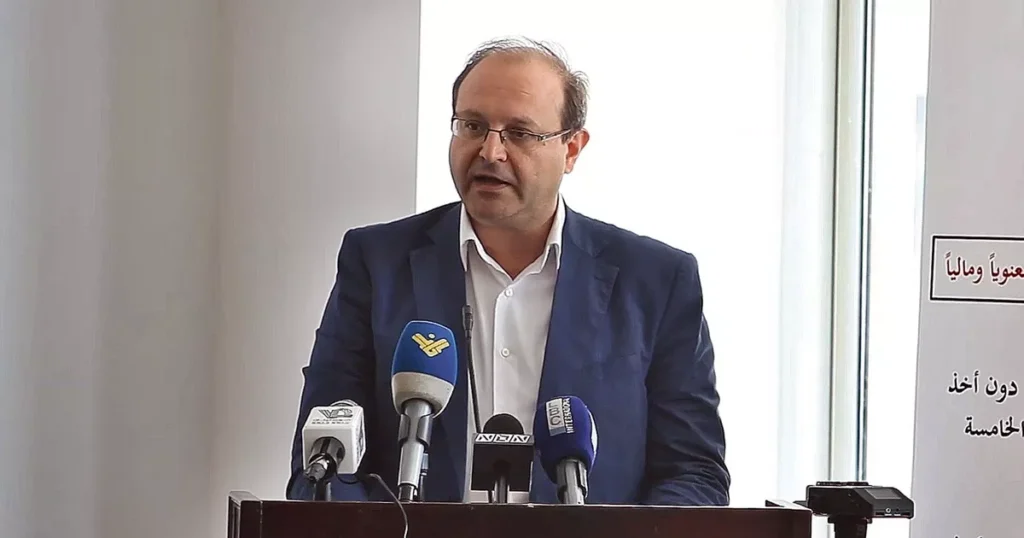
On Thursday 20 April, the Lebanese lawyer, human rights defender and director of the NGO Legal Agenda Nizar Saghiyé was summoned to appear before the Beirut Bar Council. The summons followed Mr Saghiyé’s criticism of an amendment to the Code of Ethics of the Beirut Bar Association which prevents lawyers from speaking publicly in the media without prior authorisation from the President of the Bar Association.
EuroMed Rights, Front Line Defenders, the International Federation for Human Rights (FIDH) and the World Organisation Against Torture (OMCT), both within the framework of the Observatory for the Protection of Human Rights Defenders, express their support for Mr Nizar Saghiyé and strongly condemns this summons. Requiring lawyers to obtain prior authorisation from the President of their Bar Association before making any media statements curtails their freedom of expression.
The modification of the Code of Ethics published by the Beirut Bar Association on 3 March 2023, interferes with Article 19 of the International Covenant on Civil and Political Rights, which was ratified by Lebanon in 1972. In addition to the ICCPR, the UN Basic Principles on the Role of Lawyers makes clear that whilst states bear the primary obligation to protect lawyers, they share this with the bar associations (Principle 25). In addition, Principle 23 states that “Lawyers like other citizens are entitled to freedom of expression, belief, association and assembly. In particular, they shall have the right to take part in public discussion of matters concerning the law, the administration of justice and the promotion and protection of human rights and to join or form local, national or international organizations and attend their meetings, without suffering professional restrictions by reason of their lawful action or their membership in a lawful organization. In exercising these rights, lawyers shall always conduct themselves in accordance with the law and the recognized standards and ethics of the legal profession.“
Currently, the Lebanese government is debating a new media law behind closed doors and there has been an increase in the number of arrests of journalists. Recently the President of the Lebanese Bar Association recently denounced the “chaos and confusion” allegedly created by the proliferation of websites and social networking platforms. This latest summons is a worrying development in an already troubling trend towards limiting freedom of expression of Nizar Saghiyé, the Bar’s lawyers, amongst others.
![[OPINION] Navigating the storms of repression: The resilience of young women rights defenders in Asia](https://www.rappler.com/tachyon/2024/03/women-rights-defenders-asia-mar-7-2024.jpg)

 Hans Thoolen on Human Rights Defenders and their awards