The EU Reporterof 19 June 2020 comes with the good news that on 18 June, the Court of Justice of the European Union (CJEU) recognized that Hungary’s 2017 law “on the Transparency of Organisations Supported from Abroad” (i.e. receiving foreign funds) unduly restricts the freedom of movement of capitals within the European Union (EU) and amounts to unjustified interference with fundamental rights, including respect for private and family life, protection of personal data and freedom of association, as well citizens’ right to participate in public life. [see https://humanrightsdefenders.blog/2018/02/20/250-ngos-address-letter-to-hungarian-parliament-regarding-restriction-on-the-work-of-human-rights-defenders/]
The Observatory for the Protection of Human Rights Defenders (FIDH-OMCT) welcomes this decision and hopes it will put an end to the Hungarian government’s constant attempts to delegitimise civil society organisations and impede their work.
“This decision is more than welcome! It strongly asserts that stigmatizing and intimidating NGOs receiving funding from abroad and obstructing their work is not accepted in the European Union,” said Marta Pardavi, Co-Chair of the Hungarian Helsinki Committee (HHC), member organisation of FIDH and of OMCT’s SOS-Torture Network. “Today’s ruling is a victory not only for Hungarian civil society organisations, who have campaigned fiercely against this law since its adoption, but for European civil society as a whole. It is a clear reaffirmation of the fundamental role played by civil society in a democratic State founded on the rule of law.”
“Hungary should now withdraw this anti-NGO law and conform with the CJEU’s decision,” added OMCT Secretary General Gerald Staberock.
Courtesy of Reliefweb of 15 Jun 2020, here the introduction to the EU’s annual report on human rights
1. INTRODUCTION
The 2019 EU annual report on human rights and democracy in the world marks the final phase of implementation of the EU Action Plan on Human Rights and Democracy (2015-2019) 1 . It presents the progress achieved to date, by means of a comprehensive set of actions taken by the European External Action Service (EEAS), the European Commission and EU delegations and offices around the world. In 2019, the EU demonstrated once again that it is a reliable, cooperative and principled global player, working for a better world where all human rights are fully protected and respected.
However, in many parts of the world, challenges remain. Human rights defenders (HRDs), journalists and media workers are under threat and attack because of their daily work, civic and democratic space continues to be restricted, women’s and girls’ human rights are being violated, and vulnerable groups are often left behind and exposed to further discrimination and inequality.
Against this background, the international community celebrated in 2019 the 10th anniversary of the Charter of Fundamental Rights, the 30th anniversary of the UN Convention on the Rights of the Child, the 70th anniversary of the Council of Europe and the 100th anniversary of the International Labour Organisation. These anniversaries gave great impetus to the EU’s continuous efforts to translate its legal and policy frameworks on human rights into reality. The EU worked with all partners to turn challenges into opportunities for all human beings, at any time, in any place.
The 21st EU-NGO Forum on Human Rights, held in Brussels on 3-4 December, put the human rights and environment nexus in the spotlight as an emerging challenge and gained unprecedented traction. On 9 December 2019, the Foreign Affairs Council agreed on the political appropriateness of establishing an EU global human rights sanctions regime to tackle serious human rights violations worldwide committed by state and non-state actors.
In 2019, the first ever EU guidelines focusing on economic, social and cultural rights were adopted: the EU Human Rights Guidelines on safe drinking water and sanitation. These guidelines opened new horizons in promoting the indivisibility of civil, political, economic, social and cultural rights. The Council also adopted Guidelines on non-discrimination in external action and revised Guidelines on EU policy towards third countries on torture and other cruel, inhuman or degrading treatment or punishment. Moreover, the Council conclusions on Democracy adopted in October provided a comprehensive framework to advance democratic governance.
This report focuses on thematic issues, using a number of country-specific examples, and aims to be a practical tool for all stakeholders. Reporting on human rights and democracy at country level can be found on the EEAS2 and EU delegations’ webpages.
On 2 June 2020 many media (here Natasha Kuma) wrote about the ‘hot potatoe’ in the social media debate about which posts are harmful and should be deleted or given a warning. Interesting to note that the European Commission supported the unprecedented decision of Twitter to mark the message of the President Trump about the situation in Minneapolis as violating the rules of the company about the glorification of violence.
The EU Commissioner Thierry Breton said: “we welcome the contribution of Twitter, directed to the social network of respected European approach”. Breton also wrote: “Recent events in the United States show that we need to find the right answers to difficult questions. What should be the role of digital platforms in terms of preventing the flow of misinformation during the election, or the crisis in health care? How to prevent the spread of hate speech on the Internet?” Vice-President of the European Commission Faith Jourova in turn, said that politicians should respond to criticism with facts, not resorting to threats and attacks.
Some employees of Facebook staged a virtual protest against the decision of Mark Zuckerberg not to take any action on the statements of Trum,. The leaders of the three American civil rights groups after a conversation with Zuckerberg and COO Sheryl Sandberg, released a joint statement in which they say that human rights defenders were not satisfied with the explanation of Mark Zuckerberg position: “He (Zuckerberg) refuses to acknowledge that Facebook is promoting trump’s call for violence against the protesters. Mark sets a very dangerous precedent.”
————-
Earlier – on 14 May 2020 – David Cohen wrote about Facebook having outlined learnings and steps it has taken as a result of its Human Rights Impact Assessments in Cambodia, Indonesia, Sri Lanka
Facebook shared results from a human rights impact assessments it commissioned in 2018 to evaluate the role of its services in Cambodia, Indonesia and Sri Lanka.
Director of human rights Miranda Sissons and product policy manager, human rights Alex Warofka said in a Newsroom post, “Freedom of expression is a foundational human right that allows for the free flow of information. We’re reminded how vital this is, in particular, as the world grapples with Covid-19, and accurate and authoritative information is more important than ever. Human rights defenders know this and fight for these freedoms every day. For Facebook, which stands for giving people voice, these rights are core to why we exist.”
Sissons and Warofka said that since this research was conducted, Facebook took steps to formalize an approach to determine which countries require more investment, including increased staffing, product changes and further research.
Facebook worked with BSR on the assessment of its role in Cambodia, and with Article One for Indonesia and Sri Lanka.
Recommendations that were similar across all three reports:
Improving corporate accountability around human rights.
Updating community standards and improving enforcement.
Investing in changes to platform architecture to promote authoritative information and reduce the spread of abusive content.
Improving reporting mechanisms and response times.
Engaging more regularly and substantively with civil society organizations.
Increasing transparency so that people better understand Facebook’s approach to content, misinformation and News Feed ranking.
Continuing human rights due diligence.
…Key updates to the social network’s community standards included a policy to remove verified misinformation that contributes to the risk of imminent physical harm, as well as protections for vulnerable groups (veiled women, LGBTQ+ individuals, human rights activists) who would run the risk of offline harm if they were “outed.”
Engagement with civil society organizations was formalized, and local fact-checking partnerships were bolstered in Indonesia and Sri Lanka.
Sissons and Warofka concluded, “As we work to protect human rights and mitigate the adverse impacts of our platform, we have sought to communicate more transparently and build trust with rights holders. We also aim to use our presence in places like Sri Lanka, Indonesia and Cambodia to advance human rights, as outlined in the United Nations Guiding Principles on Business and Human Rights and in Article One and BSR’s assessments. In particular, we are deeply troubled by the arrests of people who have used Facebook to engage in peaceful political expression, and we will continue to advocate for freedom of expression and stronger protections of user data.”
But it is not all roses for Twitter either: On 11 May 2020 Frances Eve (deputy director of research at Chinese Human Rights Defenders) wrote about Twitter becoming the “Chinese Government’s Double Weapon: Punishing Dissent and Propagating Disinformation”.
She relates the story of former journalist Zhang Jialong whose “criminal activity,” according to the prosecutor’s charge sheet, is that “from 2016 onwards, the defendant Zhang Jialong used his phone and computer…. many times to log onto the overseas platform ‘Twitter,’ and through the account ‘张贾龙@zhangjialong’ repeatedly used the platform to post and retweet a great amount of false information that defamed the image of the [Chinese Communist] Party, the state, and the government.”…..
Human rights defenders like Zhang are increasingly being accused of using Twitter, alongside Chinese social media platforms like Weibo, WeChat, and QQ, to commit the “crime” of “slandering” the Chinese Communist Party or the government by expressing their opinions. As many Chinese human rights activists have increasingly tried to express themselves uncensored on Twitter, police have stepped up its monitoring of the platform. Thirty minutes after activist Deng Chuanbin sent a tweet on May 16, 2019 that referenced the 30th anniversary of the Tiananmen Massacre, Sichuan police were outside his apartment building. He has been in pre-trial detention ever since, accused of “picking quarrels and provoking trouble.”
…..While the Chinese government systematically denies Chinese people their right to express themselves freely on the Internet, … the government has aggressively used blocked western social media platforms like Twitter to promote its propaganda and launch disinformation campaigns overseas…
Zhang Jialong’s last tweet was an announcement of the birth of his daughter on June 8, 2019. He should be free and be able to watch her grow up. She deserves to grow up in a country where her father isn’t jailed for his speech.
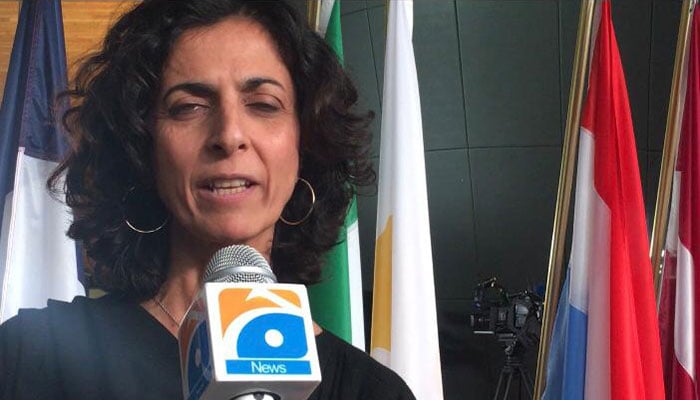
Maria Arena is the chairperson of the Subcommittee of Human Rights of the European Parliament member of Socialist and Democrats parliamentary group. Photo: Reporter
20 May 2020 the chairperson of the Subcommittee of Human Rights of the European Parliament sent a letter to Indian Home Minister Amit Shah, condemning the arrest of human rights defenders under the Unlawful Activities (Prevention) Act.
In her letter, Maria Arena said the European body has been closely following the arrests of human rights defenders Anand Teltumbde and Gautam Navlakha by the National Investigative Agency in India.
Academic and Dalit author Teltumbde and human rights defender Navlakha had surrendered to the police last month after exhausting their possible legal remedies.
Nine other defenders have been in jail since 2018 in the Bhima Koregaon case, where the charges relate to caste violence around an Ambedkarite event and an alleged Maoist plot to foment armed revolution and possibly assassinate Prime Minister Narendra Modi.
In 2018, the United Nations’ Office of the High Commissioner for Human Rights had issued a statement against terror charges being invoked against the activists.
“It is particularly alarming to note that human rights defenders cannot conduct advocacy activities, notably in favor of India’s poorest and most marginalised communities, without becoming subject to intimidation and harassment,” Arena said in her letter.
“Equally worrying is the fact that terrorism charges, including under the Unlawful Activities Prevention Act (UAPA) have been used to silence them,” she noted pointing out that by United Nations Special Procedures, this clearly represents a violation of international human rights standards.
“This is notably the case for human rights activists such as Safoora Zargar, Gulfisha Fatima, Khalid Saifi, Meeran Haider, Shifa-Ur-Rehman, Dr Kafeel Khan, Asif Iqbal and Sharjeel Imam, who were recently arrested by the police,” the letter noted.
Against this background, there are also increased fears that the legislation might confer discretionary powers upon state agencies. India, she said, should do much more to ensure a safe and conducive environment for civil society working in the country and consider enacting a law on the protection and promotion of human rights defenders.
In a similar vein, ProtectDefenders on May 26 2020 reports “Increasing attacks against human rights defenders in India and Guatemala”. …..
Over the past month, ProtectDefenders.eu has received a considerable and growing number of reports regarding attacks, threats, and alerts affecting human rights defenders in India. This information alerts to the numerous acts of police and judicial harassment in the repression of legitimate activities in favor of human rights. Among other incidents, police harassment and arbitrary detention of human rights defenders were reported in Manipur State, in relation to statements made to criticise the management of the current COVID-19 pandemic by local authorities.
Moreover, the Paris-based International Federation for Human Rights has written to Prime Minister Narendra Modi and home minister Amit Shah terming the detentions of several Indian human rights activists ‘arbitrary’. It says the activists have been arrested for “their participation in peaceful protests against the Citizenship Amendment Act 2019 (CAA)” in the last few months.
The letter highlights the cases of Devangana Kalita and Natasha Narwal, student activists who have been associated with the anti-CAA protests in Delhi and were arrested recently by the Delhi police.
I did several posts on the policy response of NGOs and the UN on human rights in the times of the corona virus pandemic [https://humanrightsdefenders.blog/tag/covid-19/]. Other intergovernmental bodies have of course also staked out their position. Here the EU through its High Representative, Josep Borrell:
… Respect for all human rights must remain at the heart of fighting the pandemic and supporting the global recovery.
The pandemic and its socio-economic consequences are having a disproportionate impact on the rights of women, children and elderly persons, and on all persons in vulnerable situations, including refugees, migrants, internally displaced persons, and are deepening pre-existing inequalities. Response measures should take account of the needs of those that are most at risk of marginalisation, stigmatisation, xenophobia and racism and other forms of discrimination. Prevention of, and protection from, all forms of sexual and gender-based violence, including through appropriate redress mechanism, and continued access to all essential health services, are particularly important in a time of confinement. All measures and actions taken in response should be inclusive and gender-responsive and ensure the women’s full and effective participation in decision-making processes and in all stages of response and recovery. The heavy impact of the crisis on economic and social rights also needs to be addressed.
The European Union reaffirms the need to pay special attention to the growing impact of the pandemic on all human rights, democracy and the rule of law. In emergency circumstances, international human rights law allows states to limit certain human rights provided that the measures are necessary, proportionate, temporary in nature, and non-discriminatory. The coronavirus pandemic should not be used as a pretext to limit democratic and civic space, the respect of the rule of law and of international commitments, nor to curtail freedom of expression, freedom of the press and access to information online and offline. The measures should not be used to restrict the work of human rights defenders, journalists, media workers and civil society organisations. Digital technologies that have the potential to help contain the pandemic should be used in full respect of human rights including the right to privacy.
Protecting the right of everyone to the highest attainable standard of health requires access to reliable information. People must be empowered to protect their own health and those of others. Misleading or false information can put lives in danger. It is therefore crucial to resolutely counter disinformation with transparent, timely and fact-based communication and thus reinforce the resilience of societies.
The European Union recognises that the role of civil society and human rights defenders is more important than ever to encourage solidarity, support those who are most in need, and defend human rights, fundamental freedoms and democratic space, and to promote accountability.
This is a time for solidarity and global cooperation through multilateral efforts. The European Union reaffirms its commitment to contribute to the global response to the pandemics. The European Union will promote coordination in all relevant multilateral fora, including working with the UN, WHO, the Council of Europe, the OSCE and other regional organisations. Measures taken at the national level are also of particular importance. The European Union supports the important role of the UN system in mobilising and coordinating the global response to the pandemic with human rights at the forefront. We strongly support the UN Secretary General’s call for an immediate global ceasefire, as well as the call to end gender-based violence, and the work of the High Commissioner for Human Rights and her Office……..
Maria Arena and Pier Antonio Panzeri – a MEP and former MEP – write in an opinion piece in the EU Observer of 13 April 2020 that “Covid-19 is a gift for authoritarians and dictators“.
…..However, even in this emergency, it is necessary to maintain a very high level of attention to what is happening to democracy in this historical phase. The fight against the pandemic cannot be used as a pretext for a global attack on human rights and democracy, as is unfortunately happening in several parts of the world. We are not ‘diverting attention’. Quite the opposite. While we are doing everything we can to stop the contagion and start thinking about how to get out of the pandemic socially and economically, we also need to assess the risks for democracy and human rights at a global scale. It is essential to take care ‘now’ also of democracy and rights, because ‘later’ there is a real risk of regression, and without them our future can only be darker.
Second, many countries, on the pretext of Covid-19, are quietly taking advantage of the lack of world public opinion reaction to restrict the space and quality of democracy and eliminate opponents and human rights defenders.….
Finally, refugees in camps, detainees in every country in the world, homeless people, who have the right to be protected and safeguarded as far as possible against the epidemic, must not be forgotten in the emergency. In this context, Europe cannot waive its leading role in the protection of human rights.
We therefore welcome the joint proposal presented last Wednesday, 25 March, by the EU High Representative for Foreign Affairs and the European Commission to the European Council to adopt a decision on the “EU Plan on Human Rights and Democracy 2020-2024“. This includes, inter alia, strengthening the EU’s leadership in promoting and protecting human rights and democracy around the world, and identifying priorities for action, maximising the EU’s role on the world stage by expanding the “human rights toolbox”. [see: https://humanrightsdefenders.blog/2020/03/27/new-eu-action-plan-for-human-rights-and-democracy-2020-2024/]
An important move was the proposal that issues relating to the EU’s human rights policy in the world should no longer be subject to unanimity but to qualified majority voting, in order to avoid vetoes and denials by countries now in dangerous drift.
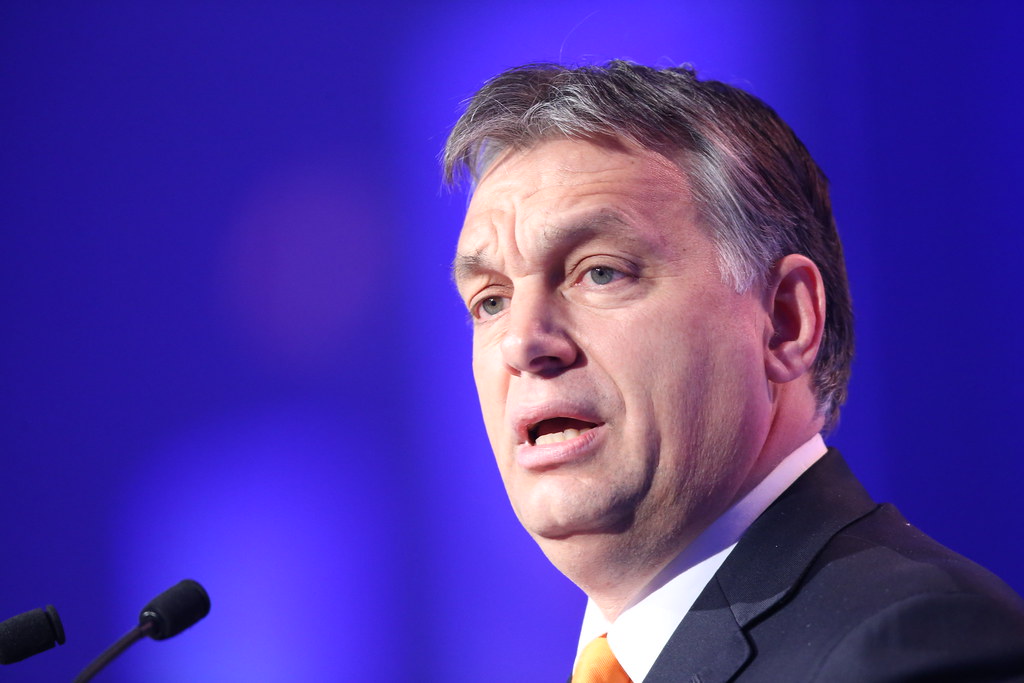
Hungary has defied calls by human rights defenders to respect human rights standards in tackling the COVID-19 outbreak. Monday 30 March 2020, Hungary’s parliament passed a controversial Law on Protection against the Coronavirus, allowing Prime Minister Viktor Orban to rule by decree for an indefinite period [!], and to jail anybody deemed to be publishing ‘fake news’ by up to five years. In the days prior, Civil Rights Defenders condemned the bill on the grounds that it is an attack on the rule of law and democracy, and presents numerous threats to human rights in the country (see https://crd.org/2020/03/24/hungary-state-of-emergency-is-no-excuse-for-undermining-rule-of-law/).
In one of its first moves, the government tabled a bill outlawing legal gender recognition which is a serious and permanent attack on the rights of Trans people. The following day, on Tuesday, it hinted it would use emergency powers to push educational reform by perusing an appalling new curriculum that will rewrite history books by promoting national pride, and making anti-Semitic authors compulsory reading. Coupled with the restrictions on media freedoms, the freedom of expression and the indefinite emergency rule, these measures are a clear overreach of emergency powers and a grave threat to democracy.
20 EU Member States have reacted in a joint-statement that they are “deeply concerned about the risk of violations of the principles of rule of law, democracy and fundamental rights arising from the adoption of certain emergency measures”. However, the statement’s authors did not call out countries by name, thus creating a loophole for Hungary to shamelessly became a signatory itself [SIC and SICK].
Since the adoption of the EU strategic framework on human rights and democracy in 2012, the EU has adopted two EU Action Plans (2012-2014 and 2015-2019). The new proposal follows up on this, setting out the priorities for the period of 2020-2024.
This Action Plan identifies priorities around five mutually reinforcing lines of action:
Protecting and empowering individuals;
Building resilient, inclusive and democratic societies;
Promoting a global system for human rights and democracy;
New technologies: harnessing opportunities and addressing challenges;
Delivering by working together.
What is new in this Action Plan?
The new Action Plan builds on the previous action plans and continues to focus on some long-standing priorities, such as supporting human rights defenders and the fight against death penalty. More importance is given to empower people and defeat discrimination on all grounds. It also addresses more prominently the accountability gap, the erosion of rule of law and access to justice. This Action Plan takes account of today’s world new challenges and therefore focuses in particular on:
environmental challenges and climate change;
leveraging the benefits of digital technologies and minimising the risks of misuse in line with EU’s commitment to lead the transition to a new digital world;
stepping up economic, social and cultural rights;
more emphasis on democracy, including on the misuse of online technologies and shrinking civic and political space;
a stronger focus on human rights defenders;
strategic communication and public diplomacy.
How will the Action Plan be implemented?
The objectives under the Action Plan will be implemented at country, regional and multilateral level, taking account of local circumstances and specificities. The EU will leverage the broad range of policies, tools and political and financial instruments at its disposal to implement it, such as:
political, human rights and sectoral policy dialogues;
EU trade policies, including the EU’s generalised scheme of preferences;
thematic and geographical instruments under the 2021-2027 multiannual financial framework;
actions in multilateral and regional human rights fora;
communication activities and awareness‑raising campaigns;
dialogue with civil society, human rights organisations and the business sector.
The EU Action Plan provides guidance to over 140 EU Delegations and Offices as well as Member States embassies for targeted initiatives and actions at country level all over the world.
How will the Commission and the High Representative follow up on and monitor the implementation of this Action Plan?
Actions apply to all regions in the world taking into consideration local needs and specificities. The EU’s 142 Delegations and Offices will take a lead in reflecting the priority actions in initiatives at the country level including through the adoption of tailored-made strategies at a local level. The EU will also engage with different stakeholders on the overall implementation, and organise an annual meeting with civil society. The public EU annual report on Human rights and democracy in the worldis another effective tool to monitor the progress made in a transparent manner. A mid-term review of the implementation is foreseen.
What has the EU achieved on human rights and democracy worldwide so far?
Since 2015, more than 30 000 human rights defenders were protected by the EU via the dedicated mechanism ProtectDefenders.eu. In 2019 alone, the EU raised Human Rights Defenders cases in dialogues and consultations with over 40 countries.
The EU advocated for abolition of death penalty.
Between January 2015 and October 2019, the EU supported over 3 350 actions relevant to children’s rights in 148 third countries and territories. For example, under the global programme on Female Genital Mutilation (€11 million), 16 countries adopted action plans and 12 established national budget lines to put an end to Female Genital Mutilation.
In 2014-2019, the EU supported democracy in more than 70 partner countries with €400 million aiming at, for instance, contributing to the organisation of elections and supporting oversight bodies, independent media, parliaments and political parties to play their essential role in democratic societies. 98 EU Election Observation Missionswere deployed worldwide.
The General System of Preference contributed to the implementation of human rights and labour Conventions, including through monitoring missions in 11 countries in the last year. For example, this contributed to a reduction of child labour to 1% in Sri Lanka through pioneering ‘Child Labour Free Zones’.
Joint Proposal
…Article 22 of the Treaty on the European Union offers the European Council the possibility to adopt a unanimous Decision setting out the EU’s strategic interests and objectives in specific areas of the Common Foreign and Security Policy (CFSP). Once the European Council sets the strategic objectives, the Council would then be able to adopt by qualified majority (QMV) decisions implementing the European Council’s strategic decisions.
Why is this proposed now? In 2018, the Commission has proposed to move from unanimity to QMV in certain areas of the CFSP. The Von Der Leyen Commission recognises that to be a global leader, the Union needs to take decisions in a faster and more effective way and overcome unanimity constraints that hamper our foreign policy, as set out in the High Representative/Vice-President’s mission letter. The Joint Proposal adopted by the College today offers such a possibility, by proposing to take decision related to the implementation of the Action Plan by QMV.
The European Union launched a call for nominations for the “Samir Kassir Award for Freedom of the Press” at the Delegation of the European Union to Lebanon. During the press conference, Ambassador Ralph Tarraf reaffirmed the European Union’s commitment to pursue Samir Kassir’s struggle for free speech and an independent free press. [for more on this and many other awards relating to freedom of the press, see: http://www.trueheroesfilms.org/thedigest/awards/samir-kassir-award-for-freedom-of-the-press]
The contest is open to candidates from North Africa, the Middle East, and the Gulf until 1 April, 2020, and three awards will be granted for: the best opinion article, investigative article, and audiovisual news report. The contributions must be centered on subjects relating to rule of law, human rights, good governance, fight against corruption, freedom of expression, democratic development and citizen participation. The jury will be composed of seven voting members from Arab and European media and one observer representing the European Union. The names of the jury members will be communicated during the prize-awarding ceremony, which will take place on 2 June 2020 in Beirut, marking the 15th memorial of Samir Kassir’s assassination.
Cuban human rights defenders who participated to the project of presenting a report on EU’s agreement with Cuba. [Civil Rights Defenders]
The EU needs to change strategy if it wishes to stand for democracy in Cuba by opening up to independent civil society, write Anders L. Petersson and Erik Jennische (of the NGO Civil Rights Defenders) on 4 February 2020. On Saturday 1 February. five Cuban democracy activists were stopped at the airport in Havana as they were on their way to Brussels to speak at the European Parliament today. They were banned from leaving the country by the Cuban authorities. Instead, the seminar at the European Parliament was held with Cuban activists based outside the country, and five empty chairs – a vivid reminder of the current strategy’s shortcomings. [Instituto Patmos has shown that at least 226 activists were banned from travelling abroad during 2019]. The five democracy activists were supposed to present their ideas on what the EU could do to promote respect for human rights and democratisation in the country. Their proposals form part of a report by Civil Rights Defenders – a total 30 letters from Cuban democracy activists and organisations – as a contribution to the EU’s policy development.
Although the EU and Cuba in their Agreement recall “their commitment to the recognised principles of democracy”, Civil Rights Defenders regrets that the EU remained silent on the sham elections and the transfer of power that followed. Apparently, it was all acceptable under the new Agreement…..When Federica Mogherini visited Cuba for the last time as High Representative for Foreign Affairs in September 2019, she rather perplexingly concluded that “after completing its generational transition and adopting a new Constitution, Cuba now faces major challenges in carrying out its economic modernization”.
….Reflecting on the stories of harassed and imprisoned activists in Cuba, we cannot afford to make such surrender again. The EU needs to change strategy if it wishes to stand for democracy in Cuba. It needs to build a formal and open dialogue with Cuba’s independent civil society. Since the negotiations began on the Agreement in the spring of 2014, the EU has not invited civil society to a single formal discussion on the content of the Agreement or its implementation. When the EU and Cuba held its human rights dialogue in October 2019, the Cuban government took the liberty to decide which European and Cuban organisations could participate. The papers in the report of CRD hold a great number of proposals and ideas – the two core messages being:
That both European and Cuban civil societies need to be recognised as formal partners to the EU in its relations to Cuba.
That the EU needs to speak out on the absence of democracy in Cuba and denounce all human rights violations.
The EU can never contribute to positive change in Cuba via a dialogue with the Cuban government. The only way is to give legitimacy and support to the civil society that openly and peacefully supports democratisation. It is time for the EU to include civil society in its relations with Cuba.
One of the award-winning Cuban dissident who was detained this week announced that he has been released without charge but barred from a planned trip to Europe for a meeting on human rights. Guillermo Farinas, a 58-year-old psychologist, is a leading voice in the opposition to Cuba’s communist government and won the European Parliament’s Sakharov human rights prize in 2010. Farinas was arrested Tuesday in the central city of Santa Clara, where he lives, as he planned to go to the Spanish Embassy in Havana to pick up travel documents. He had been due to take part in a meeting of the human rights commission of the European Parliament. “The main reason for my arrest was to keep me from traveling to Europe,” Farinas told AFP.



 Hans Thoolen on Human Rights Defenders and their awards