Lotte Leicht ,director of Human Rights Watch’s Brussels office, wrote about “Five Names to Listen for at the EU-China Summit”. She writes that “under President Xi Jinping, whose senior officials arrive in Brussels this week for the European Union-China Summit, courageous human rights defenders, lawyers and academics in China have sustained an extraordinary body blow.”
The EU has pledged to “throw its full weight behind advocates of liberty, democracy and human rights” and to “raise human rights issues” including “at the highest level.” If that’s the case, the summit is an ideal opportunity for the EU’s highest officials to explicitly call for these people’s release. After all, the EU’s human rights pledges will only be meaningful if applied in real situations, with determination and conviction. The EU has acknowledged that human rights improvements in China are key to the future of their bilateral relationship, and calling for the freedom of those unjustly imprisoned is an obvious place to start. That the summit falls just ahead of the anniversary of the 1989 Tiananmen Massacre – an event that galvanized China’s contemporary human rights community – places a responsibility on EU leaders to call for accountability from Beijing.
ProtectDefenders.eu is the EU Human Rights Defenders mechanism, established to protect Human Rights Defenders (HRDs) at high risk and facing the most difficult situations worldwide. The mechanism is implemented by a Consortium of 12 international NGOs with the support of the European Commission. The EU HRD mechanism began its operations on 1st October 2015 for a duration of 36 months. ProtectDefenders.eu is seeking to recruit an experienced manager (Head of Secretariat – HoS) to run the Secretariat of the mechanism in Brussels and to ensure coordination of the project implementation and all related financial and narrative reporting.
The mission of ProtectDefenders.eu is to:
operate a permanent and rapid response mechanism to provide emergency support and material assistance to human rights defenders in danger;
manage a support programme of temporary relocation for human rights defenders at risk to relocate inside their country, within their region or abroad in case of urgent threat;
support and coordinate an exchange platform for organisations and stakeholders working on temporary relocation for human rights defenders including through the EU Temporary Relocation Platform;
provide training, support and capacity-building to human rights defenders and local organizations;
monitor the situation of human rights defenders and advocate for a protection agenda for Human Rights Defenders at local, regional and international level;
promote coordination between organizations dedicated to support for human rights defenders, EU institutions and other relevant actors.
On 30 March ProtectDefenders.eu, the European Union Human Rights Defenders mechanism implemented by international civil society, launched its Index of attacks and threats against Human Rights Defenders, featuring a monitoring of alerts concerning violations perpetrated against individuals promoting Human Rights around the globe. The Index of attacks and threats against Human Rights Defenders is available on: ProtectDefenders.eu website.
It could be a most useful tool as quite a few key information providers coöperate (but not AI, HRW?). However, to be really useful as a single stop for this kind of information it is paramount that the site is as complete as possible (otherwise one would still have to go back to the websites of the individual organizations cooperating in the project). This is apparently not yet the case (or maybe definitions still differ from NGO to NGO). Front Linee.g. in its 2017 report (covering 2016) states that 281 HRDs were killed around the world [https://hrdmemorial.org/front-line-defenders-017-annual-report-highlights-killing-of-281-hrds-in-2016/], while a search on the new site shows only 39 killed in 2016 [https://protectdefenders.eu/en/stats.php?yearFilter=2016®ionFilter=&countryFilter=#mf]. That is 242 killings missing (without checking the annual reports of other cooperating partners) ! This issue is important as the announcement claims that the site wants to become “a source of reliable and updated information that should allow the identification of worrying trends and encourage the coordination of adequate responses by decision-makers and authorities to counter the violations faced by defenders”. Read the rest of this entry »
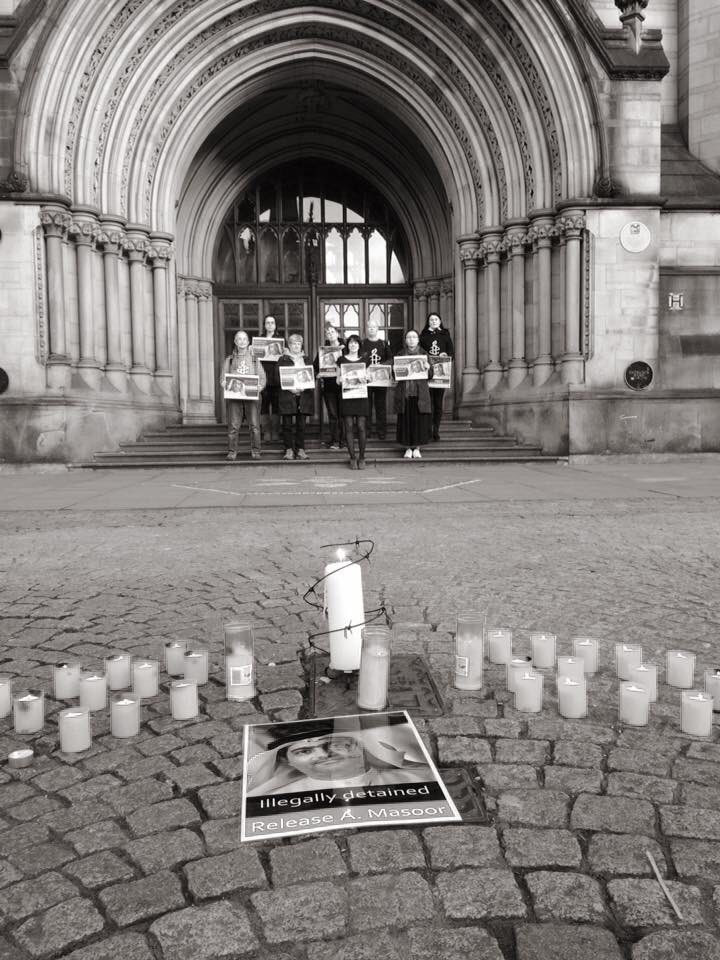
In view of the link between Manchester and UAE airlines (Emirates and Ethiad) it is specially interesting to note that AI Manchester has joined the campaign to free Ahmed Mansoor:
Interesting example of how governments (here the EU) can work together to protect human rights defenders in a specific country (here Uganda). Since a few years there is an annual EU HRD Award to recognise and honour the achievements of an individual Human Rights Defender active in Uganda.
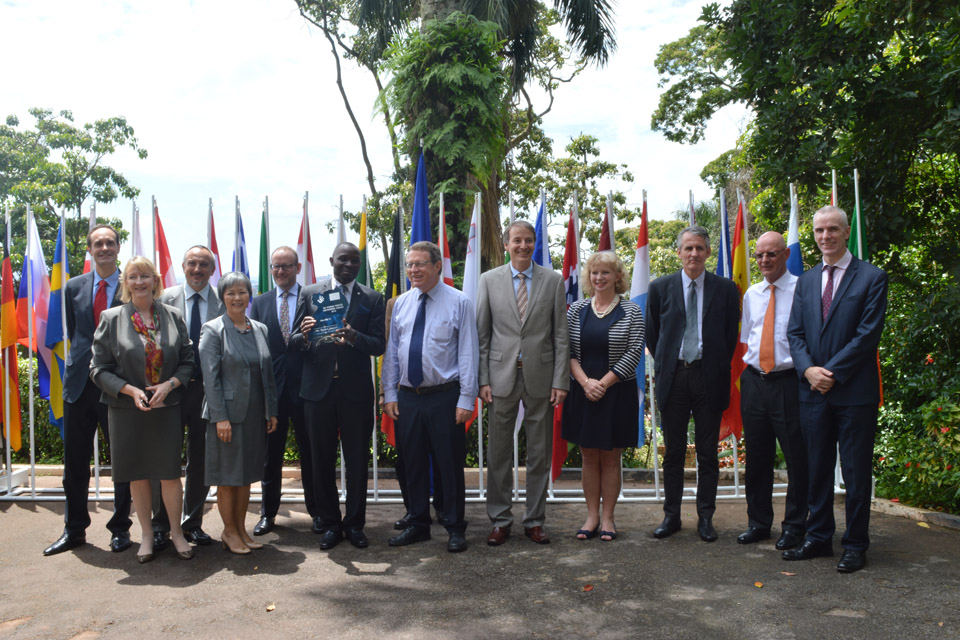
EU Heads of mission with the 2016 EU Human Rights Defender Award recipient, Robert Sempala in May 2016.
Now the British High Commission in Kampala, together with other European Union member states represented in Uganda, is inviting nominations for the 2017 EU Human Rights Defenders Award. The broad range of activities carried out by HRDs can include the following:
documenting human rights violations;
seeking remedies for victims of human rights violations through the provision of legal, psychological, medical or other support;
combating the culture of impunity which can hide systematic and repeated breaches of human rights and fundamental freedoms;
mainstreaming a human rights culture, and transmitting information about HRDs at the national, regional and international levels;
advocacy for the respect of human rights.
Nominations should be sent by e-mail to: Kampala.Reception@fco.gov.uk. Nominations should be a maximum of one page in length, and should use the following nomination form (MS Word Document, 51.5KB). The deadline for nominations is 14 April 2017. The winner will be announced on 25 May 2017 at a ceremony hosted by the Embassy of the Kingdom of the Netherlands in Uganda.
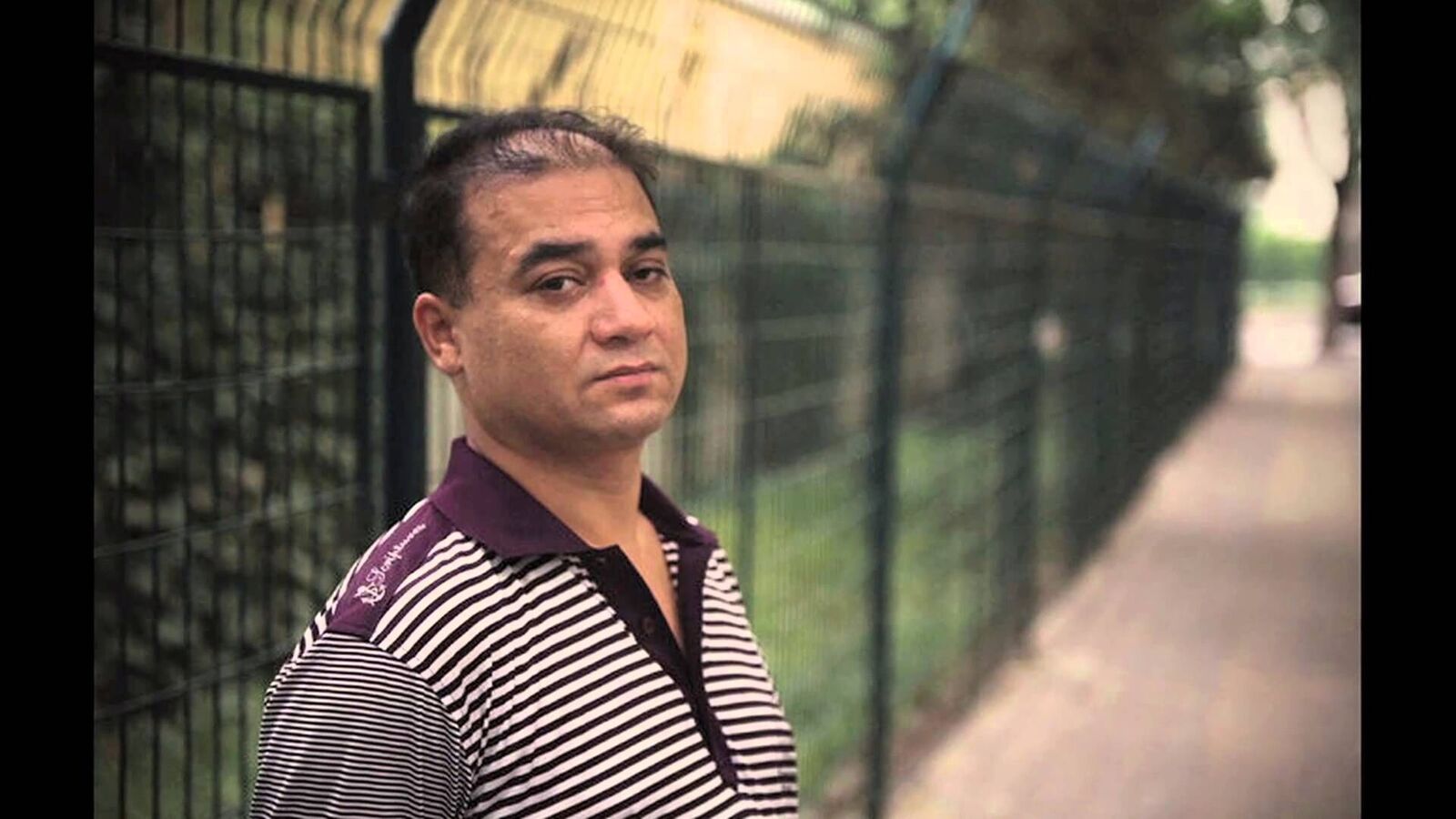
Just now, on 15 December 2016, the European Parliament adopted an urgent and substantive resolution on breaches of human rights, democracy, and rule of law in China. The resolution condemns in particular exactions committed in East Turkestan and Tibet against the Uyghur and Tibetan populations respectively and addresses the cases of the imprisonment of economics professor Ilham Tohti (MEA Laureate 2016) and the dismantling of Larung Gar, the largest Buddhist institute in the world. The EU demands Tohti’s immediate and unconditional release, recalling his scholarly work on Uyghur-Han relations. [https://humanrightsdefenders.blog/2016/10/11/hot-news-ilham-tohti-chinas-mandela-wins-2016-martin-ennals-awad/]
Civis Mundi published a list of free on-line courses on human rights. I list there the 5 that are (also) in English, without knowing much about the quality: Read the rest of this entry »
On 29 November 2016 ‘ProtectDefenders.eu’ – the EU Human Rights Defenders mechanism implemented by International Civil Society – concluded its first annual meeting of beneficiaries: human rights defenders at risk from all regions of the world who have benefited from the project gathered today in Brussels. The meeting aimed at reflecting on this first year of coordinated work to support defenders worldwide and at highlighting the worrying global phenomenon of criminalisation of human rights defenders.[see: https://thoolen.wordpress.com/2015/12/04/international-cooperative-consortium-protect-the-defenders-launched-on-2-december/]
To conclude the meeting, the twelve partner organisations of ProtectDefenders.eu have issued a public statement urging all national authorities to “publicly recognise the crucial role played by human rights defenders and protect them in all circumstances from any form of judicial harassment“. As stressed by Antoine Madelin, FIDH Director for International Advocacy and Chair of the Board of ProtectDefenders.eu, “Human Rights Defenders are the pillars of democracy and of the rule of law but are too often subjected to unfair criminal prosecution, in an effort to undermine their work in the defence of human rights.”
Since the launch of the project in October 2015, ProtectDefenders.eu has witnessed an increased criminalisation of defenders worldwide in reprisal to the conduct of legitimate human rights activities.
ProtectDefenders.eu held its meeting in Brussels under the motto “Defenders are not criminals” and brought together dozens of human rights defenders at risk supported by the EU mechanism during its first year of implementation, together with prominent representatives of NGOs, European institutions and Representatives of International and Regional Protection Mechanisms, including the United Nations Special Rapporteur on the situation of human rights defenders, Michel Forst. Participating defenders, coming from more than 20 countries such as Burundi, Honduras, Egypt, Bangladesh or the Russian Federation, shared their experiences of resilience in often dangerous and challenging situations and debated on the most effective strategies to counter criminalisation and pursue their work.
This meeting has also emphasised the main achievements and highlights of the first year of ProtectDefenders.eu. In the first twelve months, the EU Mechanism has provided more than 330 emergency grants to defenders at high risk, facilitating a rapid response to their legal, medical, security or emergency relocation needs in pressing circumstances. At the same time, ProtectDefenders.eu has successfully started and run a temporary relocation programme, disbursing more than 700,000 € in support of 74 temporary relocations in favour of 150 individuals, with the collaboration of host institutions worldwide and in the framework of the EU Temporary Relocation Platform.
The Project has also provided institutional and operational support to grassroots organisations, allocating more than 300,000 € through 32 grants. 1,300 defenders worldwide were trained to improve their security and protection in difficult contexts.
Finally, ProtectDefenders.eu has expanded its advocacy and outreach dimension, by conducting fact-finding missions and monitoring trials against defenders particularly in difficult countries, as well as carrying out initiatives to assist and connect isolated and vulnerable defenders throughout the world. ProtectDefenders.eu has coordinated more than 430 urgent alerts aimed at mobilizing the attention of concerned authorities, public and media on behalf of defenders at risk.
Human Rights defenders who attended the meeting positively assessed the first year of implementation of ProtectDefenders.eu. The twelve partners praised the EU strong support through the EIDHR of a project as ambitious and comprehensive as ProtectDefenders.eu. As pointed out by Andrew Anderson, Executive Director of Front Line Defenders and member of the Board of ProtectDefenders.eu, in the closing speech, “human rights defenders in danger around the world do benefit from this strong coordination between international civil society organizations and the institutions of the European Union.”
[ProtectDefenders.eu, the European Union Human Rights Defenders mechanism, delivers emergency help and temporary relocation grants for activists at risk, who face threats due to their work and are in need of urgent support. It also provides training and capacity-building for human rights organisations. ProtectDefenders carries out monitoring, advocacy and lobbying to raise awareness about the situation of human rights defenders and their need for protection]
On 7 November 2016, the BBC, Reuters and other media reported that labour rights defender Andy Hall has left Thailand after a three-and-a-half year legal battle with a pineapple processing company accused, in a report he contributed to, of abusing its workforce. The dismissal of one set of charges against the British activist was confirmed by Thailand’s Supreme Court last week. But he was convicted in September on two other counts under sweeping criminal defamation and computer crimes laws and was given a three-year suspended prison sentence. He also faces civil complaints by the pineapple company, Natural Fruit, which is demanding around $12m in damages.
But it was mostly the prospect of further criminal charges over another group of workers he is supporting that persuaded Mr Hall that he should leave Thailand and not returner the time being. He and the 14 migrant workers from Myanmar – who have alleged abusive treatment at the hands of a farm which supplied the big Thai poultry processor, Betagro, with chickens – recently had defamation lawsuits filed against them. [see also: https://thoolen.wordpress.com/tag/andy-hall/]
Before he left Thailand Mr Hall told the BBC that he felt that the prospect of having to contest continuous lawsuits filed against him would make it impossible for him to defend migrant workers’ rights effectively. The situation for human rights defenders, he said in a statement made as he prepared to depart, has rapidly deteriorated in Thailand, with significantly increased risks.
The challenge confronting Mr Hall is one faced by many Thai activists as well. Defamation is a criminal charge that can carry a two-year prison sentence, often used alongside the even tougher Computer Crimes Act, which mandates a sentence of up to five years in prison.
Two years ago, the editors of a small newsletter, Phuketwan, were prosecuted by the Thai navy for an article in which they quoted a Reuters news agency report alleging Thai military involvement in human trafficking. They were finally acquitted last year, but the effort of defending themselves contributed to the newsletter being shut down.
In June this year three prominent human rights defenders were prosecuted under the same two laws by a unit of the Thai military over a report they took part in which alleged the use of torture against military detainees in southern Thailand.
On Thursday 3 November, the U.N. Human Rights office in Bangkok issued a statement praising the Supreme Court’s decision. But it also called on the Thai government “to drop charges against all human rights defenders who have been charged with criminal offenses for reporting human rights violations in accordance with its obligations under international human rights law.“
On 6 October EU Trade Commissioner Cecilie Malmström had strongly backed the British labour rights activist who helped expose labour abuses in Thailand, for which he received a three-year suspended jail sentence. Andy Hall met Malmström in Strasbourg, where MEPs also passed a strong resolution condemning Hall’s treatment under the military junta now running the country.