Archive for the 'AI' Category

Three human rights defenders on why they refuse to be silent in older age

May 21, 2024

This week (20 May 2024), as the United Nations moves towards an international convention on the rights of older persons, Amnesty International is launching a new campaign: Age Loud! We demand a world where human rights last a lifetime, and where older voices are no longer ignored. [https://www.amnesty.org/en/latest/campaigns/2024/05/three-activists-on-why-they-refuse-to-be-silent-in-older-age/]

AI asked three older activists to reflect on their experiences, the changes they are campaigning for, and how being an older person gives them unique perspective and motivation.

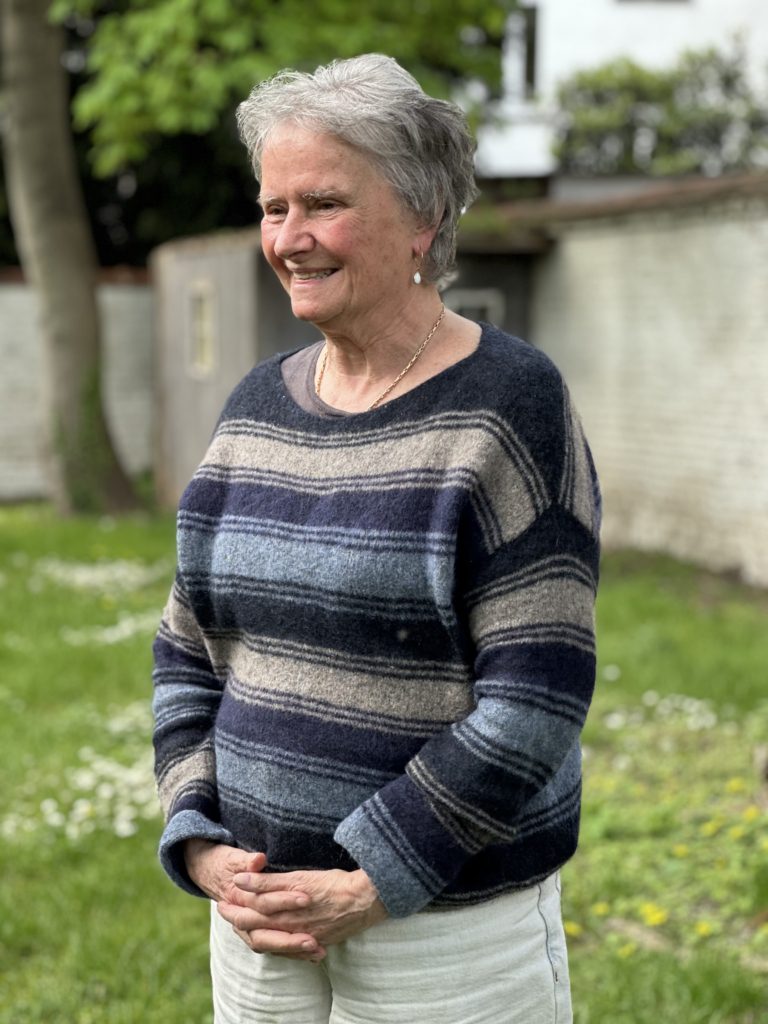
Cecile de Ryckel, 78, Belgium

Cecile is a lifelong activist working on anti-racism and climate change.

Why did you become an activist?

After a homelessness crisis amongst migrants in Belgium in 2015, my husband and I hosted two people from Ethiopia who the authorities had left to sleep in a city park. They told us that in Ethiopia they were small-scale farmers and grew food for their families. However, it was raining less frequently, and growing food was becoming more difficult. That was when I realized that climate change was one of the most important issues in the world today, and that it would have far-reaching consequences. Soon after that I participated in a citizens assembly discussing how best to address climate change and reduce carbon emissions. We learned how to mobilize people and change behaviours. I joined an advocacy collective, Grandparents for the Climate, and started working actively on the issue.

We have a responsibility to future generations to address this challenge today. It already has wide-ranging impacts on people of all ages. I remember when I was a child that we would joke that an older person was someone who “wouldn’t make it through the winter”, but today due to rising temperatures we sadly have to ask whether some older people can “make it through the summer”.

I recently saw how a group of older women won a landmark court case that the Swiss government’s weak climate change policy had violated their rights. This will help advance the cause greatly, for people of all ages.

Amina Musa, 72, Nigeria

Amina is an activist on behalf of victims of the armed conflict in north-east Nigeria and their families, including those who have been unlawfully killed or detained.

Why did you become an activist?

I became an activist nine years ago when Boko Haram forced us to leave our homes, and we found ourselves living in camps controlled by the Nigerian government. The military made baseless accusations that our sons were associated with Boko Haram. Our sons were blindfolded and arrested and held in dehumanizing conditions. I had no choice but to start campaigning for their release. As mothers, we came together and started a movement to seek justice. We are demanding that all those detained unlawfully be released immediately and that the government investigate the gross violations we have experienced. Some of our sons have been in detention for more than 10 years. We have had enough, we want justice.

I tell other older people that they should continue with their activism and bear with the challenges, and that our activism can also inspire younger people. I know it is not easy, but these causes are important. Age should not and will not deter us from making our society free from injustice.

Juan Jacobo Hernández, 82, Mexico

Juan is an activist on social issues and LGBTQ+ liberation.

Why did you become an activist?

In the 1960s, I was part of Mexican student movements. Then Stonewall happened: I had a boyfriend at the time who lived in New York, and he told me that I had to come and see it for myself. I witnessed the first LGBTQ+ rebellion: the first time gay men, trans people, lesbians were standing up and confronting the police. Coming back to Mexico, we started the Frente de Liberación Homosexual (Gay Liberation Front). I had learned a lot about how to make protests visible and how to make our voices heard. Finally, there was a space where we could be active, where we could do something. When I started my activism, we didn’t use the term “human rights” – but that’s what it has always been about. We held large demonstrations against political repression, for the abolition of the death penalty, and to fight restrictions on social protest. Persecution by the government was very real and close to us at the time – gay men and trans women were persecuted, raided by the police, extorted and beaten up.

Whenever we were out in the street, we felt that something bad could happen. We were struggling for our lives, for our security, for our right to be in the street without being beaten up, robbed or killed.

My whole life, I have never stopped being an activist. The AIDS epidemic collapsed the first phase of gay liberation. So many activists died and [as I grew older], I recognised the need to transmit my experience, knowledge and values [to the younger generation]. Since 1981 I’ve been part of Collective Sol, where we work to build and strengthen the capacity of small, grassroots organizations that are working on the most pressing LGBTQ+ issues they see today.

My life as an activist means I can look back and say I have witnessed three great moments in LGBTQ+ liberation. The first was when we formed political organizations, coming out of the shadows and breaking the silence. The second was the HIV/AIDS epidemic, the way it created a connection between LGBTQ+ liberation and people living with HIV, irrespective of whether they were LGBTQ+. This connection was powerful and drove the movement forward.

Amnesty’s annual State of the World’s Human Rights report 2023 is out

April 25, 2024
  • Powerful governments cast humanity into an era devoid of effective international rule of law, with civilians in conflicts paying the highest price
  • Rapidly changing artificial intelligence is left to create fertile ground for racism, discrimination and division in landmark year for public elections
  • Standing against these abuses, people the world over mobilized in unprecedented numbers, demanding human rights protection and respect for our common humanity

The world is reaping a harvest of terrifying consequences from escalating conflict and the near breakdown of international law, said Amnesty International as it launched its annual The State of the World’s Human Rights report, delivering an assessment of human rights in 155 countries.

Amnesty International also warned that the breakdown of the rule of law is likely to accelerate with rapid advancement in artificial intelligence (AI) which, coupled with the dominance of Big Tech, risks a “supercharging” of human rights violations if regulation continues to lag behind advances.

Amnesty International’s report paints a dismal picture of alarming human rights repression and prolific international rule-breaking, all in the midst of deepening global inequality, superpowers vying for supremacy and an escalating climate crisis,” said Amnesty International’s Secretary General, Agnès Callamard. 

“Israel’s flagrant disregard for international law is compounded by the failures of its allies to stop the indescribable civilian bloodshed meted out in Gaza. Many of those allies were the very architects of that post-World War Two system of law. Alongside Russia’s ongoing aggression against Ukraine, the growing number of armed conflicts, and massive human rights violations witnessed, for example, in Sudan, Ethiopia and Myanmar – the global rule-based order is at risk of decimation.”

Lawlessness, discrimination and impunity in conflicts and elsewhere have been enabled by unchecked use of new and familiar technologies which are now routinely weaponized by military, political and corporate actors. Big Tech’s platforms have stoked conflict. Spyware and mass surveillance tools are used to encroach on fundamental rights and freedoms, while governments are deploying automated tools targeting the most marginalized groups in society.

“In an increasingly precarious world, unregulated proliferation and deployment of technologies such as generative AI, facial recognition and spyware are poised to be a pernicious foe – scaling up and supercharging violations of international law and human rights to exceptional levels,” said Agnès Callamard.

“During a landmark year of elections and in the face of the increasingly powerful anti-regulation lobby driven and financed by Big Tech actors, these rogue and unregulated technological advances pose an enormous threat to us all. They can be weaponized to discriminate, disinform and divide.”

Read more about Amnesty researchers’ biggest human rights concerns for 2023/24.

Amnesty International’s report paints a dismal picture of alarming human rights repression and prolific international rule-breaking, all in the midst of deepening global inequality, superpowers vying for supremacy and an escalating climate crisis. Amnesty International’s Secretary General, Agnès Callamard

India – not satisfied with its ranking – planning to develop own democracy index

April 2, 2024

The New Indian Express of 22 March 2024 reports (based on Al Jazeera) that Prime Minister Narendra Modi government has approached a major Indian think tank to develop its own democracy ratings index that could help it counter recent downgrades in rankings issued by international groups that New Delhi fears could affect the country’s credit rating. The Observer Research Foundation (ORF), which works closely with the Indian government on multiple initiatives, is preparing the ratings framework,

On June 2023, The Guardian reported that the Indian government has been secretly working to keep its reputation as the “world’s largest democracy” alive after being called out by researchers for serious democratic backsliding under the nationalist rule of the Narendra Modi government, according to internal reports seen by The Guardian.

Despite publicly dismissing several global rankings that suggest the country is on a dangerous downward trajectory, officials from government ministries have been quietly assigned to monitor India’s performance, minutes from meetings show, The Guardian said. Al Jazeera revealed that the Observer Research Foundation (ORF), which works closely with the Indian government on multiple initiatives, is preparing the ratings framework. The new rankings system could be released soon, an official was quoted as saying.

Global human rights NGO Amnesty International has continued to highlight the erosion of civil rights and religious freedom under the Narendra Modi regime.

Amnesty in its India 2022 report noted that arbitrary arrests, prolonged detentions, unlawful attacks and killings, internet shutdowns and intimidation using digital technologies, including unlawful surveillance as major concerns faced by minority groups, human rights defenders, dissenters and critics of the Union government. [see also: https://www.amnesty.org/en/latest/news/2024/03/india-crackdown-on-opposition-reaches-a-crisis-point-ahead-of-national-elections/]

Similarly, Human Rights Watch has also continued to highlight the crackdown on civil society and media under the Modi government citing persecution of activists, journalists, protesters and critics on fabricated counterterrorism and hate speech laws. The vilification of Muslims and other minorities by some BJP leaders and police inaction against government supporters who commit violence are also among HRW’s concerns in India.

Notably, the ‘Democracy Index’, prepared by The Economist Group’s Economist Intelligence Unit, had downgraded India to a “flawed democracy” in its 2022 report due to the serious backsliding of democratic freedom under the Modi government.

Similarly, the US-based non-profit organization Freedom House had lowered India’s standing from a free democracy to a “partly free” democracy in its global freedom and internet freedom ratings, while V-Dem Institute, a Sweden-based independent research institute, had classified India as an “electoral autocracy”, as part of its 2022 Democracy report. for more on ranking, see: https://humanrightsdefenders.blog/tag/ranking/

https://www.newindianexpress.com/nation/2024/Mar/22/centre-planning-its-own-democracy-index-amid-global-rankings-downgrade

Egyptian NGOs demand apology after closure of 13-year case over lack of evidence

April 1, 2024

Hossam Bahgat is demanding an apology and remedy after a travel ban and freeze on his assets was reversed on 20 March 2024 (AFP/Mada Masr/file photo)

On 22 March 2024 MEE reported on a very interesting development in Egypt, where dozens of rights defenders have been affected by travel bans and asset freezes for over decade in a ‘politically motivated’ case [see also: https://humanrightsdefenders.blog/tag/hossam-bahgat/].

Egypt has announced the closure of a 13-year landmark case in which human rights defenders were accused of receiving illicit foreign funding – but those affected by the allegations are demanding justice. An investigative judge on Wednesday declared the closure of case 173/2011, known in the media as the “foreign funding case”, due to what he described as “insufficient evidence”.

The case has been widely denounced as a politically-motivated attack on Egypt’s civil society.  Judge Ahmed Abdel Aziz Qatlan’s decision marks the end of a probe against 85 organisations. It also means an end to asset freezes and travel bans imposed on members of these organisations, he added.

Before the decision on Wednesday, accusations against most of the organisations implicated had already been dropped and this week’s decision only affects five organisations. 

These were the Egyptian Initiative for Personal Rights (EIPR); the Arabic Network for Human Rights Information (ANHRI); the Arab Penal Reform Organisation; the Cairo Institute For Human Rights Studies; and Al-Nadeem Center for  Rehabilitation of Victims of Violence.

Rights groups and human rights defenders have called for an apology and compensation for the defendants. Hussein Baoumi, foreign policy advocacy officer at Amnesty International, who had previously monitored the case as Amnesty’s Egypt researcher, said the closure of the case is a welcome step but is “long overdue”.

“The government must issue a public apology and compensate the human rights defenders for years of smearing and punitive measures, merely because they defended the rights of millions of people,” he told Middle East Eye.

Baoumi expressed cautious optimism about the government’s respect for the court decision. “It is too early to say if this marks a serious shift in the government’s crackdown on civil society,” he said. “Closing case 173 must be followed by lifting all travel bans and asset freezes against human rights defenders, all those arbitrarily detained must be released and the NGO law must be amended to bring it in line with Egypt’s obligations.”

Hossam Bahgat, director of the EIPR, has been under a travel ban and barred from accessing his bank account for eight years. Following the closure of the case, he said he felt “vindicated but not relieved”.

He demanded “an official and public apology and restitution for the psychological and material damage resulting from this bogus case”. Gamal Eid, the founder of the ANHRI, welcomed the decision to lift his travel ban but said he still hopes for “the return of all the innocent and oppressed people to their families and loved ones”, referring to the estimated 65,000 political prisoners still languishing in Egyptian jails.

The Cairo Institute for Human Rights (CIHRs) said on Friday: “The decision does not remedy the injustices suffered by the dozens of human rights defenders targeted by the case over the course of the previous decade. Egyptian authorities must issue a formal apology to the victims of this persecution and compensate them for the losses and hardship they have been forced to endure.

Bahey eldin Hassan, CIHRs director, has been sentenced to 18 years in jail in absentia and his sentence remains in effect, the group said.  Hassan and dozens of other human rights defenders are currently living in exile because they fear arrest if they return to Egypt.

CIHR also called on Egypt to put an end to its ongoing crackdown on civil society and human rights defenders, including Ibrahim Metwally, Ezzat Ghoneim, and Hoda Abdelmoniem, who are still behind bars in connection with their work.

CIHR is calling for a review of Egypt’s counter-terrorism legislation and penal code to safeguard the freedom of human rights defenders to carry out their jobs without fear of reprisals. 

“Only through a comprehensive review of repressive Egyptian legislation, the releasing of the tens of thousands of peaceful political prisoners, and a genuine opening of public space, can Egyptian authorities demonstrate genuine political will to reform,” it said.

https://eipr.org/en/press/2024/11/eipr-executive-director%E2%80%99s-asset-freeze-lifted-after-eight-years-without-trial

https://www.middleeasteye.net/news/egypt-ngos-demand-apology-after-closure-13-year-case-over-lack-evidence

Mary Lawlor’s new report focusses on Youth Human Rights Defenders

March 7, 2024

UN Report Unveils Strategies to Shield Child, Youth Human Rights Defenders

Emmanuel Abara Benson, on 6 March 2024, unveils in BNN a new UN report which highlights the challenges faced by young activists, advocating for global support and legal frameworks to safeguard their rights and efforts:

Amnesty International heralds a new UN report as a significant advancement for young activists worldwide, set to be introduced by UN Special Rapporteur Mary Lawlor during the 55th Session of the Human Rights Council on 12 March 2024. The document, titled “We are not just the future”: challenges faced by child and youth human rights defenders”, highlights the unique challenges faced by young activists, including oppression, age-based discrimination, and barriers to resources and legal aid.

The report by Mary Lawlor sheds light on the considerable obstacles child and youth defenders encounter, such as intimidation, threats, and attacks, both in physical and digital realms. Amnesty International’s Sara Vida Coumans emphasizes the overdue recognition of the distinct experiences and adversities young defenders face compared to their adult counterparts. The report also addresses the issue of “gatekeeping” by adult-led groups, which hampers the ability of young activists to access necessary resources and participate in decision-making processes.

Amnesty International has documented numerous instances of abuses against young human rights defenders. Examples include Fatima Movlamli from Azerbaijan and Mahmoud Hussein from Egypt, who faced intimidation and arbitrary detention, respectively, due to their activism. Moreover, the report mentions the plight of child climate defender Leonela Moncayo in Ecuador, who was intimidated with an explosive device outside her home, highlighting the risks young activists face. The organization calls for governments worldwide to heed the Special Rapporteur’s recommendations, particularly in providing legal aid and support for young defenders. See also: https://humanrightsdefenders.blog/2023/11/13/hrw-submission-to-special-rapporteur-focuses-on-child-and-youth-human-rights-defenders/

The document not only brings to the forefront the specific challenges faced by child and young human rights defenders but also underscores the importance of global support and legal frameworks to safeguard these individuals. By spotlighting the adverse impact of social media, the right to peaceful assembly, and the effects of climate change on young people, the report advocates for a more inclusive and supportive environment for young activists. Governments are urged to adopt the recommendations, recognizing the vital role of young defenders in advocating for human rights and democratic reforms.

This groundbreaking report marks a pivotal moment in the recognition and support of child and young human rights defenders. By highlighting the unique challenges they face and offering targeted strategies for protection, the UN and Amnesty International are paving the way for a more inclusive and equitable future for young activists. The global community’s response to these recommendations will be instrumental in ensuring that young voices are not only heard, but also protected in their brave efforts to defend human rights.

https://bnnbreaking.com/breaking-news/human/un-report-unveils-strategies-to-shield-child-youth-human-rights-defenders

https://www.irishexaminer.com/opinion/commentanalysis/arid-41349259.html

see also: https://www.coe.int/en/web/portal/-/child-human-rights-defenders-want-to-be-heard-by-their-governments-council-of-europe-study

https://rightlivelihood.org/news/joint-statement-condemns-global-persecution-of-youth-activists

NGOs support proposed US Law to Protect Human Rights Defenders

February 3, 2024
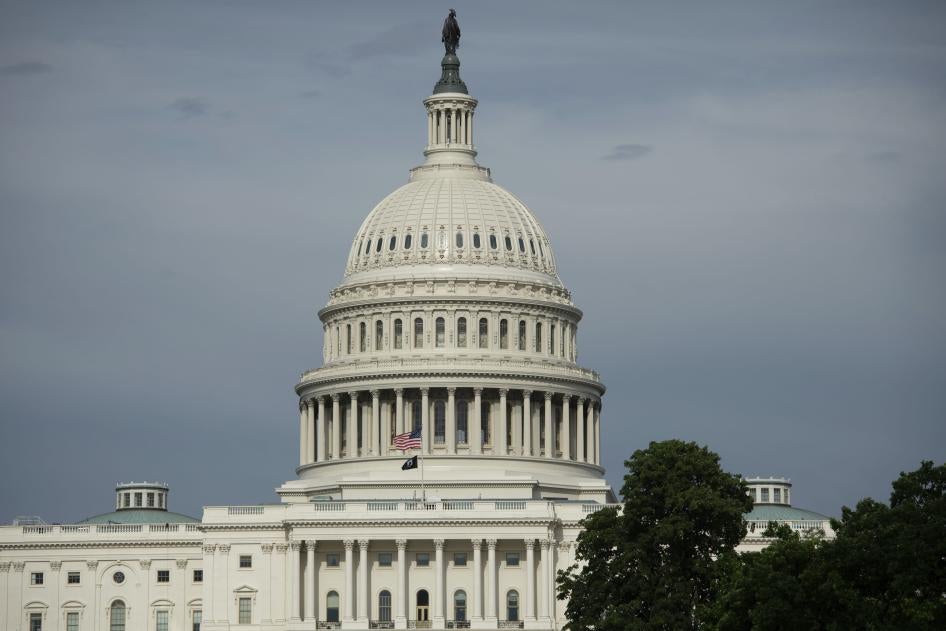
A view of the U.S. Capitol Building in Washington, D.C., on May 28, 2020.

On 31 January 2024 several NGOs – including HRW and AI -came out in support of a bill in the US Senate. Senator Ben Cardin introduced the Human Rights Defenders Protection Act of 2024, which aims to protect individuals abroad “who face reprisals for defending human rights and democracy.” The law, if enacted, would strengthen the US government’s ability to “prevent, mitigate, and respond” to such cases.

Senator Cardin said this legislation “will help elevate, guide, and enhance US efforts to support these courageous individuals globally at a time when their efforts are more important than ever.”  

HRW said: The bill would integrate support for rights defenders into various US policies and programs and encourage engagement with the private sector. It aims to improve assistance for rights defenders living in exile from their home countries and strengthen US tools to hold perpetrators of rights abuses accountable. Human Rights Watch has long documented the risks, threats, and attacks that rights defenders across the globe face. In Rwanda, for example, the government for many years has targeted with impunity rights defenders at home and extended its repression beyond its borders to silence Rwandan critics living abroad. Last December, the Emirati government brought new charges under its counterterrorism law against 87 activists and dissidents, including imprisoned rights defender Ahmed Mansoor.

The proposed legislation would create a new US visa for rights defenders who face a “credible fear of an urgent threat,” allowing those who qualify to reach safety before they are detained or harmed. It would also increase the number of US government personnel dedicated to democracy and human rights issues in the federal government and at embassies in countries with a high risk of rights abuses. 

Andrew Fandino, Advocacy Director for the Individuals at Risk Program at Amnesty International USA. stated: “The Human Rights Defenders Protection Act of 2024 is a critical piece of legislation that will help strengthen and improve the U.S. government’s ability to support human rights defenders around the world,” ..“With over 401 human rights defenders killed globally in 2022 alone, now more than ever, human rights defenders need this additional support and protection.”

If passed, the legislation would require the US government to establish a “Global Strategy for Human Rights Defenders.” The strategy would survey current tools and resources to support human rights, identify how the government would prioritize and bolster protections for rights defenders, and establish specific goals for implementing the legislation’s policy objectives. This would link to the existing EU Guidelines on Human Rights Defenders (2008), and the OSCE Guidelines on the Protection of Human Rights Defenders (2014) and those of a small group of European countries.

https://www.amnestyusa.org/press-releases/amnesty-international-usa-supports-legislation-that-ensures-u-s-support-and-protections-for-human-rights-defenders-around-the-world

https://www.hrw.org/news/2024/01/31/proposed-us-law-would-protect-human-rights-defenders

https://www.foreign.senate.gov/press/dem/release/chair-cardin-speaks-in-support-of-courageous-human-rights-defenders-around-the-world

Alex, a Romanian activist, works at the intersection of human rights, technology and public policy.

January 24, 2024
Amnesty International Logotype

On 22 January 2024, Amnesty International published an interesting piece by Alex, a 31-year-old Romanian activist working at the intersection of human rights, technology and public policy.

Seeking to use her experience and knowledge of tech for political change, Alex applied and was accepted onto the Digital Forensics Fellowship led by the Security Lab at Amnesty Tech. The Digital Forensics Fellowship (DFF) is an opportunity for human rights defenders (HRDs) working at the nexus of human rights and technology and expand their learning.

Here, Alex shares her activism journey and insight into how like-minded human rights defenders can join the fight against spyware:

In the summer of 2022, I watched a recording of Claudio Guarnieri, former Head of the Amnesty Tech Security Lab, presenting about Security Without Borders at the 2016 Chaos Communication Congress. After following the investigations of the Pegasus Project and other projects centring on spyware being used on journalists and human rights defenders, his call to action at the end — “Find a cause and assist others” — resonated with me long after I watched the talk.

Becoming a tech activist

A few days later, Amnesty Tech announced the launch of the Digital Forensics Fellowship (DFF). It was serendipity, and I didn’t question it. At that point, I had already pushed myself to seek out a more political, more involved way to share my knowledge. Not tech for the sake of tech, but tech activism to ensure political change.

Portrait of a young woman with dark hair looking downwards in a thoughtful manner
Alex is a 31-year-old Romanian activist, working at the intersection of human rights, technology and public policy.

I followed an atypical path for a technologist. Prior to university, I dreamt of being a published fiction author, only to switch to studying industrial automation in college. I spent five years as a developer in the IT industry and two as Chief Technology Officer for an NGO, where I finally found myself using my tech knowledge to support journalists and activists.

My approach to technology, like my approach to art, is informed by political struggles, as well as the questioning of how one can lead a good life. My advocacy for digital rights follows this thread. For me, technology is merely one of many tools at the disposal of humanity, and it should never be a barrier to decent living, nor an oppressive tool for anyone.

Technology is merely one of many tools at the disposal of humanity. It should never be a barrier to decent living, nor an oppressive tool for anyone.

The opportunity offered by the DFF matched my interests and the direction I wanted to take my activism. During the year-long training programme from 2022-2023, the things I learned turned out to be valuable for my advocacy work.

In 2022, the Child Sexual Abuse Regulation was proposed in the EU. I focused on conducting advocacy to make it as clear as possible that losing encrypted communication would make life decidedly worse for everyone in the EU. We ran a campaign to raise awareness of the importance of end-to-end encryption for journalists, activists and people in general. Our communication unfolded under the banner of “you don’t realize how precious encryption is until you’ve lost it”. Apti.ro, the Romanian non-profit organisation that I work with, also participated in the EU-wide campaign, as part of the EDRi coalition. To add fuel to the fire, spyware scandals erupted across the EU. My home country, Romania, borders countries where spyware has been proven to have been used to invade the personal lives of journalists, political opponents of the government and human rights defenders.

The meaning of being a Fellow

The Security Lab provided us with theoretical and practical sessions on digital forensics, while the cohort was a safe, vibrant space to discuss challenges we were facing. We debugged together and discussed awful surveillance technology at length, contributing our own local perspective.

The importance of building cross-border networks of cooperation and solidarity became clear to me during the DFF. I heard stories of struggles from people involved in large and small organizations alike. I am convinced our struggles are intertwined, and we should join forces whenever possible.

Now when I’m working with other activists, I try not to talk of “forensics”. Instead, I talk about keeping ourselves safe, and our conversations private. Often, discussions we have as activists are about caring for a particular part of our lives – our safety when protesting, our confidentiality when organizing, our privacy when convening online. Our devices and data are part of this process, as is our physical body. At the end of the day, digital forensics are just another form of caring for ourselves.

I try to shape discussions about people’s devices similarly to how doctors discuss the symptoms of an illness. The person whose device is at the centre of the discussion is the best judge of the symptoms, and it’s important to never minimize their apprehension. It’s also important to go through the steps of the forensics in a way that allows them to understand what is happening and what the purpose of the procedure is.

I never use a one-size-fits-all approach because the situation of the person who owns a device informs the ways it might be targeted or infected.

The human approach to technology

My work is human-centred and technology-focused and requires care and concentration to achieve meaningful results. For activists interested in working on digital forensics, start by digging deep into the threats you see in your local context. If numerous phishing campaigns are unfolding, dig into network forensics and map out the owners of the domains and the infrastructure.

Secondly, get to know the person you are working with. If they are interested in secure communications, help them gain a better understanding of mobile network-based attacks, as well as suggesting instant messaging apps that preserve the privacy and the security of their users. In time, they will be able to spot “empty words” used to market messaging apps that are not end-to-end encrypted.

Finally, to stay true to the part of me that loves a well-told story, read not only reports of ongoing spyware campaigns, but narrative explorations from people involved. “Pegasus: The Story of the World’s Most Dangerous Spyware” by Laurent Richard and Sandrine Rigaud is a good example that documents both the human and the technical aspects. The Shoot the Messenger podcast, by PRX and Exile Content Studio, is also great as it focuses on Pegasus, starting from the brutal murder of Jamal Khashoggi to the recent infection of the device of journalist and founder of Meduza, Galina Timchenko.

We must continue to do this research, however difficult it may be, and to tell the stories of those impacted by these invasive espionage tactics. Without this work we wouldn’t be making the political progress we’ve seen to stem the development and use of this atrocious technology.

https://www.amnesty.org/en/search/Alex/

5 Podcasts by Human Rights Defenders

January 16, 2024

On 15 January 2024, Amnesty International announced that five courageous human rights defenders from around the world have shared their hard-hitting stories on its new podcast: ‘On the Side of Humanity. How human rights defenders fight for our present and future’.

The three-part series was released to mark the 25th anniversary of the UN Declaration on Human Rights Defenders. The documentary explores how the human rights movement has evolved since the adoption of the watershed declaration.

In the podcast, Amnesty International’s Tatyana Movshevich discovers the story behind the declaration and meets brave activists from Chile, the USA, Nepal, Ireland and Ghana, all of whom have been fighting for the rights of marginalized people — and risking their lives in the process.

“Every day, human rights defenders are risking their lives, sometimes at a significant personal cost. They experience violence and discrimination simply for defending the rights of others,” said Tatyana Movshevich, Amnesty International’s Campaigner.

“For this podcast I have interviewed five incredible human rights defenders and it was inspiring to hear about their work, but also distressing to realise the enormous dangers they are facing. During our interview, Anas Aremeyaw Anas, a journalist from Ghana, told me a chilling story of how his investigation into killings linked to ritual magic in Malawi had gone terribly wrong. And it was not the only time when Anas found himself in mortal danger because of his human rights work. Far from it.”

Every day, human rights defenders are risking their lives, sometimes at a significant personal cost.Tatyana Movshevich, Amnesty International’s Campaigner

Others featured in the podcast include Lorena Donaire, a water defender from Chile whose life was turned upside down as she was tackling the catastrophic results of a mega-drought; Monica Simpson, a queer activist and artist from the USA and Durga Sob, a Dalit woman and Nepalese feminist activist, who have both been confronting long-ignored issues of racism and caste-based discrimination; and Sean Binder, a migrant rights defender from Ireland whose freedom was compromised while he was volunteering on an idyllic Greek island. [see lso: https://humanrightsdefenders.blog/2021/11/17/greeces-mistaken-deterrence-migrants-and-aid-workers-facing-heavy-prison-sentences/]

International experts that took part in the series include Mary Lawlor, the UN Special Rapporteur on the situation of Human Rights Defenders, and Hina Jilani, women rights activist and co-founder of Pakistan’s first all-women law firm.

The podcast is out now and available to stream on Spotify, Apple, Google and Deezer.

https://www.amnesty.org/en/latest/news/

Virginia Laparra, former impunity prosecutor in Guatemala, released

January 4, 2024

Following the decision of a judge in Guatemala City to authorize the immediate release of Virginia Laparra, former prosecutor of the Special Prosecutor’s Office against Impunity (FECI) on Tuesday, 3 January, Ana Piquer, Americas director at Amnesty International, said: 

Virginia Laparra should never have spent a day in jail. It’s great news that she can be reunited with her loved ones after nearly two years as a prisoner of conscience. Her release is a first step towards ending the terrible human rights violations she has faced in retaliation for her outstanding work as an anti-corruption prosecutor.” 

“We lament, however, that Virginia Laparra remains convicted of a crime she did not commit and faces another unfounded trial, due to the regrettable use of criminalization against dozens of people who, like her, have led the fight against impunity. Amnesty International reiterates its call for the Guatemalan authorities to put an immediate end to the misuse of the criminal justice system to harass, intimidate and punish judges, prosecutors, human rights defenders and journalists”.

On 28 November 2022, Amnesty International named the former prosecutor as a prisoner of conscience, having found that her detention was solely due to her human rights work as head of FECI in Quetzaltenango, and requested her immediate and unconditional release. In May 2023, the United Nations Working Group on Arbitrary Detention declared that the detention of the former anti-corruption prosecutor was arbitrary and requested her immediate release. At the same time, the international mobilization of thousands of human rights activists on the case has not ceased. 

“Amnesty International underscores the importance of international pressure in cases such as those of Virginia Laparra. Our movement in the Americas and around the world has not rested in demanding the release of the former prosecutor,” said Ana Piquer.

The unfounded criminal prosecution against Virginia Laparra took place in a context of attacks against dozens of people for their role in the investigation of high-profile cases of large-scale corruption and human rights violations. In 2022, there were 3,754 attacks against human rights defenders and at least 73 judicial workers, journalists and activists had to go into exile, according to data from Guatemala’s Human Rights Defenders Protection Unit (UDEFEGUA).

see also: https://humanrightsdefenders.blog/2023/05/10/guatemalan-lawyer-claudia-gonzalez-orellana-laureate-lawyers-for-lawyers-award-2023-ceremony-on-line-11-may/

https://www.amnesty.org/en/latest/news/

Jaw-dropping contempt for human rights by the Emirates

December 13, 2023

On 12 December 2023 Amnesty International UK issued a press release about a mass prosecution of human rights activists during COP28 by the UAE. Ahmed Mansoor, subject of an Amnesty UK protest during a Man City game last month, is among those facing new trumped-up terrorism charges. [see: https://www.trueheroesfilms.org/thedigest/laureates/074ACCD4-A327-4A21-B056-440C4C378A1A]

Responding to news that the Emirati authorities have begun a mass prosecution on trumped-up terrorism charges of more than 80 Emirati human rights activists – including renowned currently-jailed Emirati human rights activists who have already spent a decade behind bars – Aya Majzoub, Amnesty International’s Middle East and North Africa Deputy Director, said:

“To begin hearings in a new sham mass trial in the midst of what it billed as ‘the most inclusive COP ever’, is a jaw-dropping show of contempt for human rights by the Emirati authorities. The timing appears to be deliberately intended to send a clear message to the world that it will not tolerate the slightest peaceful dissent and that the authorities have no intention of reforming the country’s dire rights record. COP28 has already laid bare the barriers of fear and legalised repression that smother dissent in the UAE.

The UAE must immediately release all arbitrarily-detained prisoners, drop charges against them and end their ruthless assault on human rights and freedoms.” 

The new mass trial – first reported by the Emirates Detainees Advocacy Centre and confirmed to Amnesty by exiled Emirati activists – is a joint prosecution of more than 80 defendants, including victims of a past mass trial such as Mohamed al-Siddiq, father of the late exiled Emirati human rights defender Alaa al-Siddiq, prisoners of conscience such as Khalid al-Nuaimi, Hadef al-Owais, Nasser bin Ghaith and Sultan al-Qasimi, and longstanding human rights defenders such as Mohamed al-Roken and Ahmed Mansoor (see below). 

Fresh charges against Ahmed Mansoor

Last month, Amnesty UK campaigners flew a protest plane over Manchester City FC’s Etihad Stadium carrying a large banner saying “UAE – Free Ahmed Mansoor”. Mansoor is a blogger, poet and leading Emirati human rights activist who has been in jail and kept in solitary confinement in the UAE since 2017 as a direct result of his campaigning activity. In 2017, Mansoor was convicted on charges which included “insulting the status and prestige of the UAE and its symbols”, “publishing false information to damage the UAE’s reputation abroad” and “portraying the UAE as a lawless land”. The following year, Mansoor was sentenced to ten years’ imprisonment, with the sentencing court also ordering that he be placed under surveillance for three years after release. His conviction and sentence were upheld by the country’s supreme court on 31 December 2018.

https://www.amnesty.org.uk/press-releases/uae-authorities-launch-mass-prosecution-human-rights-activists-during-cop28

https://www.hrw.org/news/2023/12/14/uae-prominent-critics-face-new-charges

https://www.devdiscourse.com/article/law-order/2746918-un-expert-condemns-uaes-fresh-trials-against-human-rights-defenders-during-cop28

https://monitor.civicus.org/explore/over-60-activists-hit-with-new-fabricated-charges-while-cop28-was-in-progress/

In early 2024 confirmed: https://www.washingtonpost.com/world/2024/01/06/uae-mass-trial-muslim-brotherhood-detained-activists/daff80e4-ac6e-11ee-bc8c-7319480da4f9_story.html

https://www.sfchronicle.com/news/world/article/united-arab-emirates-acknowledges-mass-trial-of-18592850.php