Archive for the 'human rights' Category

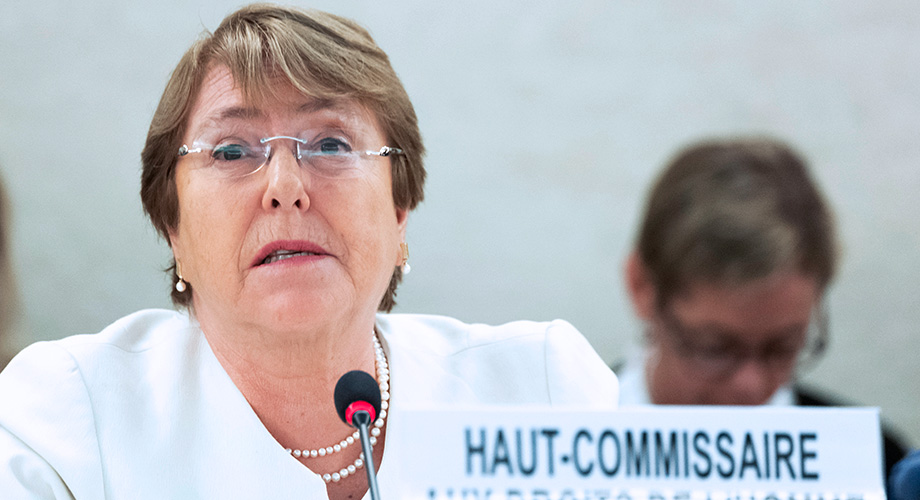
UN High Commissioner for Human Rights Bachelet calls for restraint in governments’ COVID emergency powers

April 29, 2020

UN rights chief calls for restraint in governments’ COVID-19 emergency powers

photo credit: UN

During the ongoing pandemic, the exercise of emergency powers has been used as an excuse for unlawful detention, restriction of movement and suppression of press freedoms, according to Bachelet. The International Press Institute (IPI), a press freedoms watchdog, reports that many nations have silenced journalists under the pretext of stifling “fake news.” The IPI maintains a list of international media freedom violations occurring as a result of emergency powers abuses.

In Cambodia the application of emergency powers in response to the COVID-19 pandemic have resulted in the unlawful detention of those who disobey the emergency measures for up to 10 years in a move Amnesty International called “a naked power grab which seeks to manipulate the COVID-19 crisis in order to severely undercut human rights.” Further human rights abuses are reported from El Salvador, where grocery shoppers were unlawfully detained when President Nayib Bukele defied a Supreme Court order in their defense. In Central Asia, Amnesty International reports massive expansion of police powers through emergency powers granted during the pandemic.

To guide responsible enacting of emergency powers, the UN has released a new set of policy guidelines that advise states to follow principles such as legality, proportionality and non-discrimination during “humane application of emergency powers,” pursuant to the International Covenant on Human Rights. See also: https://humanrightsdefenders.blog/2020/04/14/un-guidelines-for-use-of-emergency-powers-in-time-of-covid-19-pandemic/.

Given the exceptional nature of the crisis, it is clear States need additional powers to cope,” Bachelet’s statement concluded. “However, if the rule of law is not upheld, then the public health emergency risks becoming a human rights disaster, with negative effects that will long outlast the pandemic itself.”


Azerbaijan: finally full acquittal of Ilqar Mammadov and Rasul Jafarov

April 26, 2020
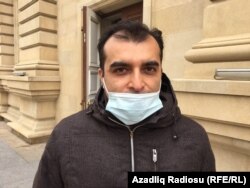
Ilqar Mammadov speaks to reporters on April 23 in Baku.
Rasul Jafarov
Rasul Jafarov

This judgement, which overturns their previous convictions, is a welcome step that finally fully implements the respective decisions of the European Court of Human Rights. The European Union expects Azerbaijan to live up to its international commitments and to continue to implement the remaining decisions of the European Court of Human Rights,” the EU statement said.​ Mammadov, who served more than five years of a seven-year prison term, fought for his full acquittal since his early release in August 2018.​ He was detained in February 2013 and charged with helping stoke unrest in the town of Ismayilli, northwest of Baku. He was sentenced to seven years in jail in March 2014. Mammadov and his supporters insisted the case against him was politically motivated.​

Jafarov was arrested in August 2014 and in April 2015 he was sentenced to 6 1/2 years in prison after a court in Baku found him guilty of tax evasion, illegal entrepreneurship, and abuse of office. He denied the charges, saying they were politically motivated. ​ Jafarov was granted early release in March 2016 and worked on his full acquittal since then.​ [https://humanrightsdefenders.blog/2016/03/18/azerbaijan-pardon-jafarov-ismayilova-aliyev/]

https://www.rferl.org/a/us-eu-welcome-full-acquittal-of-azerbaijani-politician-rights-defender/30575138.html

Hull and Oxford University honour UN Special Rapporteur Professor Subedi

April 24, 2020

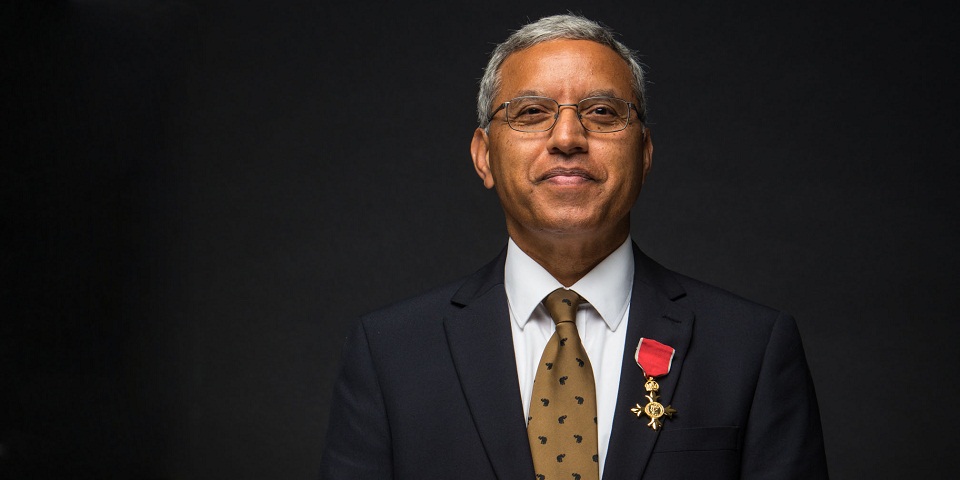
The University of Hull in the UK has awarded the degree of Doctor of Laws (LLD), honoris causa, to Professor Surya P. Subedi, QC, OBE, DCL in recognition of his accomplishments in the field of international law and human rights, the university said in a press statement. Professor Subedi had obtained an LLM with Distinction and a prize for best LLM student of the year in 1988 at Hull. Commenting on the award of such a high accolade by Hull, he said he was honored by the recognition of his accomplishments by his alma mater.

The 62-year-old professor was graduated from the Tribhuvan University, Nepal. Upon completion of his LLM, Professor Subedi won an FCO scholarship to study for a DPhil (PhD) in Law at the University of Oxford and obtained his degree with a prize in 1993. Last year, Oxford awarded him the highest degree – the Doctor of Civil Law in recognition of his contribution to international law and human rights.

This year the University of Oxford has established two awards in the name of Professor Surya Prasad SubediThe first prize named Dr Surya Subedi Award in Human Rights Law will be given to the outstanding performer in the Human Rights Law (Bachelor’s degree) and the second award named the Dr Surya Subedi Award for the D Phil in Law will be given for the doctoral thesis adjudged the best in the Faculty of Law. Prof Subedi expressed his happiness over the establishment of two awards by one of the world’s distinguished universities in his recognition. .

https://www.nepal24hours.com/oxford-university-establishes-two-awards-in-honour-of-prof-subedi/

https://myrepublica.nagariknetwork.com/news/hull-university-awards-doctor-of-laws-to-uk-based-nepali-professor-subedi/

https://en.wikipedia.org/wiki/Surya_Subedi

Front Line Defenders publishes its Annual Report for 2019

April 22, 2020

Front Line Defenders just published ‘Dispatches 2019′  its annual magazine showcasing the work the organisation is doing to support human rights defenders. Together with Global Analysis 2019 (on which I reported already: https://humanrightsdefenders.blog/2020/01/14/front-line-defenders-global-analysis-2019-is-out-304-hrds-killed/), it offers a valuable reminder of the courage of human rights defenders in driving positive social change around the world and maintaining hope in the face of enormous adversity:

Over the last year, Front Line Defenders has continued to expand its support to human rights defenders most at risk. In 2019, FLD provided rapid and practical support to 2,307 human rights defenders and 366 organisations in 117 countries. Through the Protection Grants programme alone, FLD provided direct support through 626 grants totalling over euro 1.5 million to HRDs facing urgent threats, an increase of 17% compared to 2018.

As highlighted in its 2019-2022 Strategic Plan <https://www.frontlinedefenders.org/en/strategic-plan>, it is an organisational priority to support most-marginalised HRDs, including women human rights defenders, LGBTI rights defenders and defenders working on land, environment and indigenous peoples’ rights. Some examples of that commitment in 2019 include the provision of an unprecedented number of protection grants to environmental rights defenders (+51%), the presentation of the Front Line Defenders Annual Award to five LGBTI+ Rights Defenders, the beginning of a new learning and consultation process focused on defamation facing women human rights defenders at risk, and the publication (with Irish writing centre Fighting Words) of the anthology Yes, We Still Drink Coffee, Stories of Women Human Rights Defenders.

A highlight of 2019 was the biennial Dublin Platform <https://www.frontlinedefenders.org/en/2019-dublin-platform> , bringing together 114 HRDs at risk and over 100 other international stakeholders. We hope that the encouragement and support shared by so many brave HRDs from around the world during the Platform can help sustain and energize them for the challenging months ahead.….As the COVID-19 crisis further develops and impacts on human rights defenders (https://www.frontlinedefenders.org/en/statement-report/defending-rights-during-pandemic-impact-covid-19-safety-and-work-human-rights)  and those they work for, Front Line Defenders has been taking necessary measures to ensure that our support to HRDs at risk can be maintained. See also: https://humanrightsdefenders.blog/2020/04/10/policy-response-from-human-rights-ngos-to-covid-19-front-line-tips-for-human-rights-defenders-working-from-home/….And to continue providing a platform for HRD voices, even when convening is not possible, FLD has re-launched its podcast series “Rights on the Line” <https://open.spotify.com/show/2v4KDqlWf0I2uFNninRl6A>  – new episodes will be launched each week.

——-

https://www.frontlinedefenders.org/en/resource-publication/dispatches-2019

Amnesty accuses Facebook of complicity in Vietnamese censorship

April 22, 2020

On 21 April, Reuters reported that Facebook has begun to significantly step up its censorship of “anti-state” posts in the country. This follows pressure from the authorities, including what the company suspects were deliberate restrictions placed on its local servers by state-owned telecommunications companies that caused Facebook to become unusable for periods of time. The next day Amnesty International demanded that Facebook reverses immediately its decision.  “The revelation that Facebook is caving to Viet Nam’s far-reaching demands for censorship is a devastating turning point for freedom of expression in Viet Nam and beyond,” said William Nee, Business and Human Rights Advisor at Amnesty International. “The Vietnamese authorities’ ruthless suppression of freedom of expression is nothing new, but Facebook’s shift in policy makes them complicit.

Facebook must base its content regulation on international human rights standards for freedom of expression, not on the arbitrary whims of a rights-abusing government. Facebook has a responsibility to respect freedom of expression by refusing to cooperate with these indefensible takedown requests.” The Vietnamese authorities have a long track record of characterizing legitimate criticism as “anti-state” and prosecuting human rights defenders for “conducting propaganda against the state.” The authorities have been actively suppressing online speech amid the COVID-19 pandemic and escalating repressive tactics in recent weeks.  “It is shocking that the Vietnamese authorities are further restricting its peoples’ access to information in the midst of a pandemic. The Vietnamese authorities are notorious for harassing peaceful critics and whistleblowers. This move will keep the world even more in the dark about what is really happening in Viet Nam,” said William Nee.

Facebook’s decision follows years of efforts by Vietnamese authorities to profoundly undermine freedom of expression online, during which they prosecuted an increasing number of peaceful government critics for their online activity and introduced a repressive cybersecurity law that requires technology companies to hand over potentially vast amounts of data, including personal information, and to censor users’ posts. “Facebook’s compliance with these demands sets a dangerous precedent. Governments around the world will see this as an open invitation to enlist Facebook in the service of state censorship. It does all tech firms a terrible disservice by making them vulnerable to the same type of pressure and harassment from repressive governments,” said William Nee…

In a report published last year, Amnesty International found that around 10% of Viet Nam’s prisoners of conscience – individuals jailed solely for peacefully exercising their human rights – were jailed in relation to their Facebook activity. In January 2020, the Vietnamese authorities launched an unprecedented crackdown on social media, including Facebook and YouTube, in an attempt to silence public discussion of a high-profile land dispute in the village of Dong Tam, which has attracted persistent allegations of corruption and led to deadly clashes between security forces and villagers.  The crackdown has only intensified since the onset of COVID-19. Between January and mid-March, a total of 654 people were summoned to police stations across Viet Nam to attend “working sessions” with police related to their Facebook posts connected to the virus, among whom 146 were subjected to financial fines and the rest were forced to delete their posts. On 15 April, authorities introduced a sweeping new decree, 15/2020, which imposes new penalties on alleged social media content which falls foul of vague and arbitrary restrictions. The decree further empowers the government to force tech companies to comply with arbitrary censorship and surveillance measures.

See also: https://humanrightsdefenders.blog/2020/02/10/28-ngos-ask-eu-parliament-to-reject-cooperation-deal-with-vietnam-on-11-february/

Re Facebook and content moderation see also the Economist piece of 1 February 2020: https://www.economist.com/business/2020/01/30/facebook-unveils-details-of-its-content-oversight-board

https://www.amnesty.org/en/latest/news/2020/04/viet-nam-facebook-cease-complicity-government-censorship/

Again no winner for Mo Ibrahim Prize in Africa

April 22, 2020

The Mo Ibrahim Foundation on Thursday announced that there is no winner of the 2019 Ibrahim Prize for Achievement in African Leadership. This decision was made following deliberations by the independent Prize Committee. Announcing the decision, Prize Committee Chair Festus Mogae commented: “The Ibrahim Prize recognises truly exceptional leadership in Africa, celebrating role models for the continent. It is awarded to individuals who have, through the outstanding governance of their country, brought peace, stability and prosperity to their people. Based on these rigorous criteria, the Prize Committee could not award the Prize in 2019.

Former Liberian President Ellen Johnson-Sirleaf was the last winner in 2017 [see: https://humanrightsdefenders.blog/2018/02/12/mo-ibrahim-prize-2017-to-ellen-johnson-sirleaf/]. In fact the award has not been given in most years since its cereation 2007.

Commenting on the decision, Mo Ibrahim, Chairman of the Mo Ibrahim Foundation said: “Africa is facing some of the toughest challenges in the world – ranging from those connected to population growth, and economic development, to environmental impact. We need leaders who can govern democratically and translate these challenges into opportunities. With two-thirds of our citizens now living in better-governed countries than ten years ago, we are making progress. I am optimistic that we will have the opportunity to award this Prize to a worthy candidate soon.”

The Ibrahim Prize aims to celebrate leaders who, during their time in office, have developed their countries, strengthened democracy and human rights for the shared benefit of their people, and advanced sustainable development.
The candidates for the Ibrahim Prize are former African executive Heads of State or Government who have left their office during the last three calendar years, having been democratically elected and served their constitutionally mandated term. For more on the Mo Ibrahim Prize, see: http://www.trueheroesfilms.org/thedigest/awards/ibrahim-prize-for-achievement-in-african-leadership

While the Ibrahim Prize claims to be the largest annually awarded prize in the world (with US$5 million over ten years), this is mostly theoretical since some 75 million USD have not been disbursed since its inception.

https://thenewdawnliberia.com/mo-ibrahim-foundation-says-no-winner-for-2019/

Norwegian Human Rights Fund Annual report 2019

April 21, 2020

From the Preface written John Peder Egenæs and Sandra Petersen of the Norwegian Human Rights Fund (NHRF):

…..2019 will stand out as an important year for the Norwegian Human Rights Fund (NHRF) in terms of growth and development. … We believe that the seeds of change planted by grantees every day will result in a robust and forceful defense for future generations. As this annual report demonstrates, our grantees and local human rights defenders are continuing to stand up and fight for a future of equality and dignity for all. For some, their work centers on ensuring that vulnerable workers have safe and dignified work environments, for others it’s providing psychosocial support for families of the disappeared and seeking justice for victims of torture and others are leading movements for gender equality. Establishing links, coordinating and collaborating on the local and national levels to create better working conditions for civil society and human rights defenders are crucial to strengthening the work and moving it forward. For this work, we support grantees who build networks and equip and empower defenders with the tools and skills needed for their work; who advocate for positive laws or the prevention of restrictive laws to protect or enable a thriving civil society; and others who provide relief, support and legal representation for human rights activists in cases of arbitrary arrests, detention or when they’re facing threats. Our grantees’ work is interlinked and reinforcing; success in one struggle impacts and can lead to success in another. Their work is driven by the needs on the ground and thus it comes in many forms, but the efforts to contribute to make positive and structural changes and the realization of human rights are shared by all. In 2019, the Norwegian government led an adoption of a new resolution on environmental human rights defenders – a critically important response during one of the most dangerous and even deadly points in recent history for human rights defenders, especially those who fight for natural resources, the rights of indigenous peoples and against environmentally detrimental megaprojects. …… Working together with our partners, we are able to see the reality of the dire situation for people on the front lines working for change, which leads us to seek to increase our support to and solidarity with their work. During 2019, the NHRF created strategic partnerships that increased the financial base for the years to come. We know this will be indispensable for local and front-line human rights defenders and for investing in the realization of human rights for the most vulnerable and marginalized. With these increased resources and with support from our partners, we will continue to invest and sow seeds that we believe will lead to long-term positive change…


Click to access NHRF-AR-2019-OL-20April-compressed-file.pdf

New tool in higher education: worldwide Academic Freedom Index (AFi)

April 17, 2020
On 26 March 2010 the Global Public Policy Institute and Scholars at Risk introduced the Academic Freedom Index (AFi), a new time series and near-global dataset on several dimensions of academic freedom. It calls on decision-makers in higher education and foreign policy, university administrations, research funding organizations, advocacy groups, and parliaments to use AFi data to better protect and promote academic freedom. It also includes recommendations for scholars and students.

The AFi aims to inform stakeholders, provide monitoring yardsticks, alter incentive structures, challenge university rankings, facilitate research, and ultimately promote academic freedom. It is the result of a collaborative effort between researchers at Friedrich-Alexander-Universität Erlangen-Nürnberg (FAU) and the V-Dem Institute, the Scholars at Risk Network, and the Global Public Policy Institute. AFi scores are based on expert assessments by 1,810 scholars around the world which are integrated in a Bayesian measurement model.

The data is publicly available on V‑Dem’s website. V-Dem also provides an online tool that can be used to analyze any of the indicators.

The full report as well as a working paper are available for download.

See also, from 2015: https://humanrightsdefenders.blog/2015/06/23/scholars-at-risk-publishes-first-academic-freedom-monitoring-report-free2think/

Free Universities: Putting the Academic Freedom Index Into Action

Joint NGO statement on civil and political rights at First Virtual Informal Dialogue with the UN High Commissioner for Human Rights on COVID-19

April 15, 2020

In the context of policy response by Human Rights NGOs to COVID-19 this joint statement should not be missing: On 9 April 2020 Reliefweb published the Joint NGO statement on civil and political rights at First Virtual Informal Dialogue with the UN High Commissioner for Human Rights on COVID-19

This joint statement on the protection of civil and political rights in the context of the COVID-19 crisis was delivered on behalf of 33 non-governmental organizations (NGOs) during the first virtual informal briefing with the UN High Commissioner for Human Rights on 9 April 2020. It was delivered in conjunction with a separate joint statement on economic, social and cultural rights (IOR 40/2124/2020).

See also: https://humanrightsdefenders.blog/2020/04/14/un-guidelines-for-use-of-emergency-powers-in-time-of-covid-19-pandemic/

Policy response by Human Rights NGOs to COVID-19: WOLA

April 14, 2020

In the midst of the COVID-19 crisis, many human rights organisations have been formulating a policy response. While I cannot be complete or undertake comparisons, I am giving some examples in the course of these weeks. Here the one by WOLA (the Washington Office on Latin America), as published in Reliefweb of 13 April 2020.

In the midst of the rapidly spreading COVID-19 pandemic in Latin America, saving lives and reducing community transmission of the disease should be the number one priority of governments, international organizations, the business community, and civil society groups. Addressing the virus will require decisive public health interventions grounded in the best available public health recommendations. At the same time, the pandemic is having serious consequences for democracy, equality, and human rights in Latin America. Actions that are taken by governments today will have long-term impact.

Over the years, WOLA has worked with civil society partners in the aftermath of disasters, both natural and man-made. Though this pandemic is unprecedented, the lessons we’ve drawn from those experiences are clear: we cannot wait until the pandemic passes to investigate challenges to human rights, raise questions, and hold governments accountable. Some public health interventions will include infringements on key rights, like restrictions on freedom of movement and assembly. Those should be time-limited and legally grounded restrictions. Other interventions will require significant investment in health care, social safety nets, and community support and action. These should be transparent, equitable, and accountable.

While acting promptly and decisively, governments across the Americas need to protect key values like democracy and human rights.Upholding these values is critical to establishing the public trust and the social cooperation that will be required to combat this public health emergency and to move forward in the future. Otherwise, the fight against COVID-19 will not only lead to ineffective public health responses, but could further fuel anti-democratic and authoritarian tendencies in the region.

Some challenges that WOLA will be monitoring in the Americas include:

Reinforcement of authoritarian tendencies

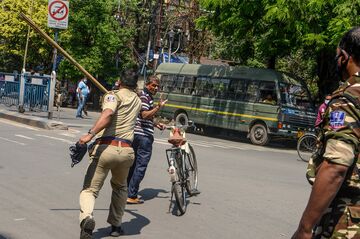
Many governments have appropriately invoked emergency powers to respond to the crisis—but their implementation has not been without concern. In El Salvador, over 1,200 people have been detained in “containment centers” for violating curfew orders, provoking debate among legal experts about the legality of such measures (the country’s Supreme Court ruled on April 8 that curfew violations do not justify arbitrary detentions by the police and military). In Honduras, the president issued a decree temporarily restricting freedom of speech rights as guaranteed in the nation’s constitution, asserting this was necessary to combat the spread of misinformation related to the pandemic; the move received strong criticism from the Inter-American Commission on Human Rights and the United Nations. In Venezuela, the de facto Maduro government has sought to silence criticism of its response to the pandemic, harassing and detaining journalists who question official statistics.

Emergency powers need to be clearly limited; the role of legislatures and judiciaries in overseeing and reviewing the exercise of executive power should not be indefinitely suspended. These powers and roles are easy to ratchet up and hard to ratchet back down. It’s been a difficult struggle for governments and societies in the hemisphere to overcome the legacy of Cold War-era military dictatorships; backsliding needs to be avoided.

Military engagement in civilian governance

In some countries, militaries will necessarily play an important role in responding to public health emergencies given their resources, surge capacity, off-the-shelf plans, logistical capabilities, and medical facilities…….In a region still struggling to overcome a history of military dictatorships, any deployment in the current crisis must have a clear end date so that the military’s presence on the street does not become “normalized.”Whatever supporting role the armed forces may play in responding to the pandemic, the military should remain under firm civilian control.

….public health responses that need military involvement must not result in a retreat of democratic progress made over the last few decades in the region.Corruption

……The fight against corruption is a key part of restoring—or establishing—functioning democracies. In Latin America, we’ve seen a major attack on entrenched corruption in the last few years, from Peru to Mexico, and in reaction we’ve seen corrupt actors fighting to preserve their privileges and impunity in countries like Guatemala and Honduras.The need for transparency

Both to provide effective guidance to the public and to assure accountability, governments need to provide clear, consistent, and accurate information based on the best available science from health professionals about the virus and its spread. Authorities also need to be transparent about how public funds are being spent to address the crisis. Additionally, once states impose restrictions on the freedom of movement and assembly, leaders should be clear about what criteria they are using to justify implementing—and eventually lifting—these restrictions. As was highlighted in the IACHR’s resolutionon the pandemic and human rights in the Americas, governments must also refrain from restricting the work and movement of journalists and human rights defenders to provide information and document abuses that may occur in the governments’ response to COVID-19.

The spread of disinformation related to the pandemic is a particularly serious concern. Contrary to other presidents in the region, the presidents of Brazil and Nicaragua have sought to downplay the crisis and even encourage social interaction, while Mexico’s president was slow to act to promote social distancing. The situation in Brazil is particularly worrisome, with President Jair Bolsonaro disregarding all expert medical advice and defying measures taken by governors across the country, as cases of COVID-19 continue to rise at an alarming rate. These actions, which contradict public health experts’ advice, present the population with damaging mixed messages about how they should respond as concerned citizens, which will worsen and prolong the severity of the pandemic….

Restrictive measures will disproportionately affect low-income workers and those in the ****informal sectors **of the economy,** which accounts for over 50 percent of employment in Latin America. Many of these measures will especially impact women, who make up a large share of the informal sector in Latin America. Governments will need to implement income supplements, food security, and strong social safety net measures to protect this population. These measures must take into account gender disparities, and the particular risks that women face; there are already reports from across the region of increases in domestic and gender based violence.

Without increased support, poverty and inequality will increase, along with political discontent and instability. Communities in Colombia, Honduras, and Bolivia have all protested in recent weeks—“the government locks us up, hunger is going to kill us,” read one protest sign in Bolivia, reported El País. In Colombia, where some 40 percent of the workforce consists of informal workers, communities across the country have taken to hanging red flags outside their homes to indicate that they are hungry.

Protecting those in the most vulnerable situations

Governments will need to prioritize protections for historically underserved populations, who traditionally have poor access to health services and live in overcrowded and unhygienic conditions. Specifically, governments will need to ensure protections for:

Migrants and asylum seekers

Many countries have closed their borders and are limiting entries to their own citizens and legal residents. Others are taking more extreme measures and closing their borders completely. These measures will limit movement and the ability of individuals fleeing violence and persecution to seek protection abroad. The United States, for instance, has used public health as a pretext for ending the right to asylum at the border. In the last two weeks, U.S. border agents have expelled more than 6,000 migrants, including asylum seekers, without giving them a chance to seek protection.

Similarly, countries like Brazil, Colombia, and Ecuador have imposed new restrictions making it difficult for Venezuelan migrants, who are fleeing dire circumstances, to gain entry and access services. Many are choosing to return home despite the humanitarian emergency in Venezuela; some of these migrants are now being confined in overcrowded “quarantine zones” with reportedly poor sanitary conditions near the border.

As governments in the region limit public services, asylum seekers waiting for a resolution of their cases will confront an even longer **period of uncertainty.** For undocumented migrants who are apprehended and detained in countries such as Mexico, they may be held in detention centers with a history of overcrowding and poor hygiene. Anti-immigrant sentiment is likely to increase in this context.

Incarcerated individuals

There are an estimated 1.6 million people behind bars in Latin America, many of whom are in pretrial detention. With prisons and detention facilities already overloaded and ill-equipped to control contagion or address COVID-19 illness, governments should urgently take measures to **ease prison congestion,** such as releasing those who are older and have underlying health issues, mothers and pregnant women, those in pretrial detention, LGTBQ+ individuals, and those who have completed much of their sentence. Moreover, governments must and refrain from measures that would result in even more people being confined in such facilities, including those detained for violating stay-at-home orders.

Afro-descendants, Indigenous, and other groups

Progress on public health requires understanding that we are all in this together. Placing blame on specific groups or excluding them from access to health care and other necessities can be a dangerous temptation for leaders seeking scapegoats or those who seek to deflect blame from their own failures. Limiting access to health care or other protections to certain categories of people is a violation of fundamental rights and will only serve to exacerbate the current crisis….

Restrictive measures as a pretext for political repression

Governments may be tempted to use restrictive measures imposed for public health reasons as a tool to repress political opponents. Even where restrictions are initially conceived in good faith, certain sectors of the population may be targeted for more aggressive controls, policing, and disproportionate punishments….Increasingly empowered nationalist leaders may face the temptation to undermine or defund international systems and conventions, processes of conflict resolution, and human rights. But now more than ever, there is a need for international cooperation during a pandemic. This is a time to strengthen institutions that promote peaceful, negotiated solutions—not only to deal with the health crisis but also to other arenas of political conflict.

…..

We will be investigating and analyzing trends. We will be making recommendations to policy makers. We will be working with partners and civil society activists throughout the region who are facing new challenges to basic freedoms. As we recognize the absolute centrality of taking strong and decisive measures to protect the health of the public, we will redouble our efforts to stand for human rights and democracy during this crisis and beyond.
View original

https://reliefweb.int/report/world/monitoring-anti-democratic-trends-and-human-rights-abuses-age-covid-19