Archive for the 'human rights' Category

Human Rights Defenders in Europe fear George Soros retreat

September 1, 2023

Philip Oltermann on 19 August 2023 reports that ΗRDs fear the billionaire’s legacy will be lost as his Open Society Foundations curbs its activities across the EU

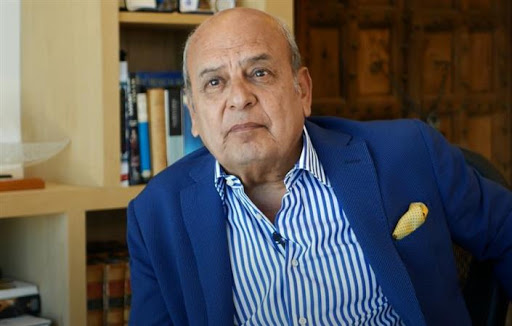
Soros survived the Nazi occupation of his native Hungary, made a fortune on Wall Street and became one of the most steadfast backers of democracy and human rights in the eastern bloc. But human rights activists and independent media fear the legacy of billionaire philanthropist George Soros, 93, could be about to be undone in his homelands, as his donor network announced it will curb its activities across the EU from 2024.

Several beneficiaries of Soros’s Open Society Foundations (OSF), chaired since the start of this year by his son Alex, told the Observer they would struggle without its support amid an authoritarian rollback.

When the Open Society Foundations left Budapest under severe political pressure in 2018, they said they would lose their physical presence but not their focus on the region,” said Márta Pardavi, co-chair of the Hungarian Helsinki Committee, a Budapest human rights NGO supported by the foundations. But she added: “Has there really been such a positive shift in Europe over the last five years that that promise has become less relevant?”

In a July email to staff, the OSF management announced a “radical redesign to help us deliver more effectively on our mission”. “Ultimately, the new approved strategic direction provides for withdrawal and termination of large parts of our current work within the European Union, shifting our focus and allocation of resources to other parts of the world,” it said.

While 40% of the charity’s global staff will be laid off, cuts will be severest in Europe, with the 180 headcount at its Berlin headquarters cut by 80%. Staff remaining in the German capital will mainly administer the foundation’s funds in Switzerland.

Its Brussels offices will be downsized, while a branch in Barcelona will be closed by the end of the year. Of an erstwhile seven branches in the post-Soviet area only three remain in Kyrgyzstan, Ukraine and Moldova.

Many European NGOs, think tanks and research groups working on issues ranging from media freedom and migrants’ rights to state surveillance and digital regulation rely on the foundations, which spent $1.5bn on philanthropic causes in 2021.

As traditional European media outlets have struggled to live up to their role amid a drop in advertising revenue, OSF has stepped in to support independent news projects including the Organized Crime and Corruption Reporting Project (OCCRP), London-based Bureau of Investigative Journalism and Forbidden Stories, an encrypted online platform that allows threatened journalists to securely upload their work and be continued by others.

Alex Soros, who grew up and was educated in the US, said: “The Open Society Foundations is changing the way we work, but my family and OSF have long supported, and remain steadfastly committed to the European project.”

The foundations say they will continue support for European Roma communities. Even critical employees expressed confidence the foundations could commit more to longer-term projects, just fewer of them.

Yet while a profound change to the structure of the organisation has long been signalled by Soros senior, the decision to achieve this via drastically reducing its headcount seems to have only emerged has been a priority under its new board of directors. Once jokingly referred to by employees as Soros’s “reading group”, the board has been slimmed down to a tighter unit dominated by family members since the baton was passed to Soros junior.

“The OSF is one of the few bodies that hand out unrestricted core funding,” said one grantee, who asked to remain anonymous amid uncertainty over the foundation’s future strategy. “It’s what keeps the light on for human rights defenders in Europe.”

Berlin has been the hub of the foundations’ European operations after the 2018 closure of the Budapest branch under pressure from the government of strongman Viktor Orbán, once a recipient of Soros’s support.

Last week the Hungarian prime minister’s political director Balázs Orbán (no relation) posted a message on social network X, formerly known as Twitter, in which he called the Open Society Foundation “the Soros empire”. “We only truly believe that the occupying troops are leaving the continent when the last Soros soldier has left Europe and Hungary,” he said.

“If you invest in democracy, you can never expect it to yield quick returns,” Márta Pardavi said. “The need for democracy-building never really goes away. And I think George Soros knew that.”

https://www.theguardian.com/business/2023/aug/19/george-soross-retreat-from-europe-could-turn-off-the-lights-for-human-rights

Documentary “Silence of Reason” wins human rights award at Sarajevo Film Festival 2023

August 29, 2023

For the Hollywood Reporter, Eliza Whitfield on 19 August 2023 gives the result of the Sarajevo Film Festival 2023:

……Macedonian filmmaker Kumjana Novakova won the human rights award, given to the film in the Sarajevo competition that best addresses human rights issues, for her documentary Silence of Reason, which used the archives of the international court of human rights in the Hague to explore how violence against women was used as a weapon of war in the Bosnian War.

Nvoakova took part in the public discussion held in Sarajevo on Thursday into the artistic and media representations of violence against women. The discussion was held on a day of national mourning across Bosnia and Herzegovina called in response to a shocking triple-murder suicide in the northeastern Bosnian town of Gradacac last week, in which a man live-streamed the murder of his ex-wife. The Sarajevo festival suspended its regular programming, with the public discussion as the only event of the day.

As part of the festival, a public discussion was held in Sarajevo to examine the artistic and media representations of violence against women. The discussion took place on a day of national mourning in response to a tragic triple-murder suicide in the town of Gradacac. The Sarajevo festival suspended its regular programming to prioritize this important conversation.

About the ‘Stand As My Witness’ campaign which advocates on behalf of imprisoned Human Rights Defenders Around the World

August 12, 2023

Photo by Markus Spiske on Unsplash

On 4 August 2023, Jaxx Artz in Global Citizen explains the Stand As My Witness’ campaign:

Stand As My Witness was created in response to a growing trend in which civil society actors were arrested for their human rights work. Formerly known as Civil Society Behind Bars, the initiative is one of CIVICUS’ most effective strategies when it comes to sounding the alarm about the plights faced by HRDs around the world. According to the global alliance, hostile government actors and authoritarian regimes often use flawed legal processes with little oversight in order to prosecute activists. “[There are targeted attacks] against people uncovering high-level corruption, exposing very serious human rights violations, calling for accountability, and seeking to drive change in their societies,” Mandeep Tiwana, chief programs officer at CIVICUS, told Global Citizen.

As part of the campaign’s goal to spread awareness about some of the world’s imprisoned activists, CIVICUS profiles a handful of detained HRDs on their website. In actuality, these names and cases represent just a small percentage of people who are currently in prison because of their activism, and whom CIVICUS is trying to get released.

Abdulhadi al-Khawaja, founder and president of the Bahrain Center for Human Rights, who was forcibly arrested by Bahraini authorities. [see: https://humanrightsdefenders.blog/tag/abdulhadi-alkhawaja/ and https://www.trueheroesfilms.org/thedigest/laureates/4d45e316-c636-4d02-852d-7bfc2b08b78d]

As the global conditions for civic society worsen — with only 3.2% of the world’s population living in countries where civic space is considered open, according to the international global alliance CIVICUS — human rights defenders (HRDs) like al-Khawaja increasingly face the risk of government retaliation. 

The detention of HRDs is often arbitrary and a form of reprisal for the work [they] do,” David Kode, advocacy and campaigns lead at CIVICUS, told Global Citizen. “Take al-Khawaja, for example, who has been in prison since 2011 and is serving a life sentence. Despite many advocacy efforts, the Bahraini authorities seem to be bent on ‘punishing’ him and his family for calling for democratic reforms more than a decade ago.

Made up of civil society organizations and activists across more than 175 countries, CIVICUS has been campaigning on behalf of HRDs since its founding in 1993. As part of their work, the Stand As My Witness campaign — launched over 10 years ago — has sought to encourage investigations into unlawful imprisonments and bring global attention to cases like al-Khawaja’s.

Belarus has been restricting civic space and activists for years, with attacks increasing since the 2022 elections. [see also; https://humanrightsdefenders.blog/tag/belarus/]

How Are Human Rights Defenders Being Targeted?

CIVICUS has found that the tactics used to target HRDs are eerily similar across national borders and, over the years, the trends have only become more apparent and concerning.

“[The imprisonment of HRDS] is often preceded by stigmatization about their work, which includes branding activists as security risks. We saw this happen a lot after the [Arab Spring] in the Middle East and North Africa in 2011,” Tiwana said. “A lot of authoritarian regimes became fearful of people organizing and coming out into the streets to engage in civil society.”

To limit public support of pro-democracy movements and ostracize activists from society, government officials may twist the narrative surrounding an HRD’s arrest and accuse them of being spies for other nations. They may also invoke counter-terrorism or security legislation to pressure judges and quickly detain organizers or protestors without arrest warrants.

Take Khurram Parvez, an HRD from Northern India who was arrested in 2021 on charges of conspiracy and terrorism, for example. Parvez’s work documenting human rights violations — which include instances of disappearance, torture, and unlawful killing — in the Jammu and Kashmir region of India caught the attention of Indian authorities who wanted to silence his advocacy work.

See: https://www.trueheroesfilms.org/thedigest/laureates/81468931-79AA-24FF-58F7-10351638AFE3 and https://humanrightsdefenders.blog/tag/khurram-parvez/

CIVICUS currently advocates on behalf of Parvez through various strategies, such as raising concerns about his detention with the UN, holding meetings with diplomats in India, and encouraging the Human Rights Council in Geneva to put pressure on Indian officials to release him.

“We continue to raise concerns about his detention on social media, telling his story as a human rights defender and highlighting the gaps left by his detention in relation to the amazing work he does promoting human rights in Kashmir and supporting those who are forcibly disappeared in Asia,” Kode told Global Citizen. 

The private sector also plays an increasing role in silencing HRDs. Businesses may file strategic lawsuits against public participation (fittingly known as SLAPPs) against activists when their human rights work interferes with corporate profits or interests. [see: https://humanrightsdefenders.blog/tag/strategic-lawsuits-against-public-participation-slapps/]

In recent years, environmental activists and Indigenous land defenders have faced the brunt of the attacks as corporations file lawsuit after lawsuit restricting the right to protest, leading many activists to face house arrest, financial ruin, or imprisonment.

How Does Stand As My Witness Help Imprisoned HRDs?

Despite the myriad challenges that HRDs and civil society organizations face in their day-to-day work, CIVICUS’ Stand As My Witness campaign has been able to raise the profile of many activists who have been unjustly imprisoned.

Loujain al-Hathloul, for instance, is an HRD from Saudi Arabia who is well known for leading the campaign to legalize a woman’s right to drive. While in prison for nearly three years, al-Hathloul was subjected to severe torture from Saudi Arabian authorities, including electric shocks, flogging, and sexual assault, and denied regular access to see her family while in prison. See: https://www.trueheroesfilms.org/thedigest/laureates/1a6d84c0-b494-11ea-b00d-9db077762c6c

CIVICUS and other human rights organizations were able to mount an international campaign to bring attention to the years-long persecution faced by al-Hathloul and other women activists. The hashtag #FreeLoujain popped up across social media platforms, with global citizens around the world speaking up to urge Saudi Arabian authorities to release al-Hathloul.

While a national court initially sentenced al-Hathloul to five years and eight months for “conspiring against the kingdom,” she was released after 1,004 days. According to Tiwana, international pressure played a significant role in her release.

How Can Global Citizens Take Action?

The Stand As My Witness campaign relies on advocacy efforts from every part of civil society — when Global Citizens take action, for example, their voices can put an immense amount of pressure on world leaders.

“Hostile governments may have [HRDs] locked up for years, and it takes a concerted effort from relevant agencies, state actors, non-state actors, organizations, civil society, the media, and others to put enough pressure that leads to their release,” Tiwana said. “But justice often moves very slowly.”

One of the biggest challenges CIVICUS experiences with the Stand As My Witness campaign is engaging people during the life cycle of a case, which can often last several years. To fight against indifference, CIVICUS encourages Global Citizens everywhere to pay attention to the humanity of each activist who has dedicated their lives to the realization and protection of human rights.

You can get involved with the Stand As My Witness campaign by engaging with CIVICUS on social media, writing letters to government officials, and sharing information about HRDs who are not currently represented on CIVICUS’ interactive map. 

You can also demand that governments release HRDs from unjust imprisonment by taking action with Global Citizen on civic space issues.

https://www.globalcitizen.org/en/content/stand-as-my-witness/

Report of the High Representative of the EU: 2022 annual report on human rights

August 11, 2023

2023 will see the 75th anniversary of the Universal Declaration of Human Rights and 30 years since the adoption of the Vienna Declaration and Programme of Action as well as the 25th Anniversary of the UN Declaration on human rights defenders [see also: https://humanrightsdefenders.blog/2023/06/20/side-event-on-the-25th-anniversary-of-the-un-declaration-on-human-rights-defenders/].

These anniversaries come at a challenging moment says the EU in publishing the 2022 edition of its Annual Report on Human Rights and Democracy in the World. (see: https://humanrightsdefenders.blog/2022/04/20/eus-report-on-human-rights-2021/).

What is special is that the report is not a country overview but thematic, including this paragraph on HRDs:

Assistance to human rights defenders through both political and
financial means is one of the flagship EU human rights activities,
having a direct impact on individuals, groups and organisations
defending human rights.
In 2022, human rights defenders continued to face threats and
attacks such as killings, arbitrary detention, smear campaigns or
judicial harassment. They are also increasingly victims of illegal
online surveillance, transnational repression or criminalisation due
to ill-motivated “foreign agent” or counterterrorism laws.
To counter this trend, the EU raised specific cases of human rights
defenders at risk in all its human rights dialogues, subcommittee
meetings and consultations (e.g. dialogue with Colombia or India).
The protection of human rights defenders was also discussed in EU-
supported civil society seminars preceding human rights dialogues
(e.g. EU-Brazil and EU-Mexico seminars). The EU also continued to
make its voice heard with public statements and declarations to
support human rights defenders at risk (for instance on cases in Iran,
Russia, or Mexico). Global support for human rights defenders was
voiced by The High Representative on the occasion of the World NGO
Day in February 2022 and during the 24th EU-NGO Forum on Human
Rights in December 2022.
EU Delegations and Member States’ embassies engaged and met
with human rights defenders, monitored trials, and visited human
rights defenders in detention. Annual meetings between EU
diplomats and human rights defenders have become an established
practice in non-EU countries, increasing the visibility of human rights
defenders where appropriate and allowing for in-depth analysis of
the challenges they face. Some EU Delegations provided awards to
Human Rights Defenders (for instance in Uganda).
The support and protection of human rights defenders is also
a priority for the EUSR for Human Rights. Throughout 2022,
the EUSR continued to raise individual cases of human rights
defenders, particularly those in long-term detention, and to meet
with human rights defenders, both in Brussels and during country
visits. He availed of every opportunity to express support and
solidarity directly to the defenders themselves or their families. He
raised specific cases during visits to several countries, including
India, Uganda, Pakistan, Egypt and Colombia and in other bilateral
contacts, notably with Cuba and Brazil. He also participated in a
number of high profile events aimed at raising awareness and
visibility around their work and the need for their protection, such
as the ProtectDefenders.eu beneficiary meeting in September, or
the Front Line Defenders Dublin Platform in October. The EUSR was
very active on individual cases on social media, notably regarding
Belarus. He also highlighted the situation of Palestinian prisoners on
hunger-strike and their deteriorating health conditions.
The EU remained active in multilateral fora in particular in the
United Nations Human Rights Council and the United Nations
General Assembly. The EU actively collaborated with the UN Special
Rapporteur on the situation of human rights defenders, regularly
exchanging information on cases and thematic priorities. The EU
advocated for the recognition of human rights defenders in several
UN General Assembly resolutions. At the Human Rights Council, the
EU highlighted the critical role that human rights defenders play
in the protection and promotion of human rights and spoke out in
their defence inter alia during the interactive dialogues with several
Special Procedures.””Assistance to human rights defenders through both political and
financial means is one of the flagship EU human rights activities,
having a direct impact on individuals, groups and organisations
defending human rights.
In 2022, human rights defenders continued to face threats and
attacks such as killings, arbitrary detention, smear campaigns or
judicial harassment. They are also increasingly victims of illegal
online surveillance, transnational repression or criminalisation due
to ill-motivated “foreign agent” or counterterrorism laws.
To counter this trend, the EU raised specific cases of human rights
defenders at risk in all its human rights dialogues, subcommittee
meetings and consultations (e.g. dialogue with Colombia or India).
The protection of human rights defenders was also discussed in EU-
supported civil society seminars preceding human rights dialogues
(e.g. EU-Brazil and EU-Mexico seminars). The EU also continued to
make its voice heard with public statements and declarations to
support human rights defenders at risk (for instance on cases in Iran,
Russia, or Mexico). Global support for human rights defenders was
voiced by The High Representative on the occasion of the World NGO
Day in February 2022 and during the 24th EU-NGO Forum on Human
Rights in December 2022.
EU Delegations and Member States’ embassies engaged and met
with human rights defenders, monitored trials, and visited human
rights defenders in detention. Annual meetings between EU
diplomats and human rights defenders have become an established
practice in non-EU countries, increasing the visibility of human rights
defenders where appropriate and allowing for in-depth analysis of
the challenges they face. Some EU Delegations provided awards to
Human Rights Defenders (for instance in Uganda).
The support and protection of human rights defenders is also
a priority for the EUSR for Human Rights. Throughout 2022,
the EUSR continued to raise individual cases of human rights
defenders, particularly those in long-term detention, and to meet
with human rights defenders, both in Brussels and during country
visits. He availed of every opportunity to express support and
solidarity directly to the defenders themselves or their families. He
raised specific cases during visits to several countries, including
India, Uganda, Pakistan, Egypt and Colombia and in other bilateral
contacts, notably with Cuba and Brazil. He also participated in a
number of high profile events aimed at raising awareness and
visibility around their work and the need for their protection, such
as the ProtectDefenders.eu beneficiary meeting in September, or
the Front Line Defenders Dublin Platform in October. The EUSR was
very active on individual cases on social media, notably regarding
Belarus. He also highlighted the situation of Palestinian prisoners on
hunger-strike and their deteriorating health conditions.
The EU remained active in multilateral fora in particular in the
United Nations Human Rights Council and the United Nations
General Assembly. The EU actively collaborated with the UN Special
Rapporteur on the situation of human rights defenders, regularly
exchanging information on cases and thematic priorities. The EU
advocated for the recognition of human rights defenders in several
UN General Assembly resolutions. At the Human Rights Council, the
EU highlighted the critical role that human rights defenders play
in the protection and promotion of human rights and spoke out in
their defence inter alia during the interactive dialogues with several
Special Procedures.

Other sections specially relevant for HRDs include:

The death penalty…………………………………………………………………………………………….page.21
Torture and other cruel, inhuman or degrading treatment or
punishment……………………………………………………………………………………………………………. 24
Freedom of religion or belief ………………………………………………………………………..33
Human rights of persons belonging to minorities………………………………. 38
Gender equality ………………………………………………………………………………………………..40
LGBTI ……………………………………………………………………………………………………………………..50
Migration and mobility – migrants, refugees and asylum seekers ..59
Empowering women ……………………………………………………………………………………….62
Rights of indigenous peoples …………………………………………………………….. 75
Freedom of expression ………………………………………………………………………..78
Safety and protection of journalists…………………………………………………. 80
Countering disinformation, hate speech, extremist and terrorist
content………………………………………………………………………………………………………. 81
Academic freedom and protection of the academic community at
risk…………………………………………………………………………………………………………….. 84
Labour rights ……………………………………………………………………………………………………… 90

Support to Human Rights Defenders in the Digital Sphere ……………..175

Winners of 2023 UN Human Rights Prize Announced

July 22, 2023
Julienne Lusenge, one of the 2023 UN Human Rights Prize winners speaking at the General Assembly high-level dialogue on “Building Sustainable Peace for All” earlier this year.

Julienne Lusenge, one of the 2023 UN Human Rights Prize winners, speaking at the General Assembly high-level dialogue on “Building Sustainable Peace for All” earlier this year. UN Photo/Manuel Elías

On 20 July 2023 the President of the General Assembly Csaba Kőrösi announced the winners of the United Nations Prize in the Field of Human Rights for 2023. 

For more on this prize which is awarded every five see: https://trueheroesfilms.org/thedigest/awards/74A3B502-F3DF-4DDB-8D6F-672C03B4A008

This year’s winners were the Human Rights Center “Viasna”, based in Belarus, Julienne Lusenge from the Democratic Republic of the Congo [see also: https://humanrightsdefenders.blog/2021/10/11/congolese-julienne-lusenge-wins-1-million-2021-aurora-prize/], Amman Center for Human Rights Studies from Jordan, Julio Pereyra from Uruguay and the Global Coalition of civil society organizations, Indigenous Peoples, social movements and local communities.

The recipients of the Prize were chosen by a Special Committee from more than 400 nominations received from Member States, the UN system, and civil society. 

The Committee is chaired by the President of the General Assembly, and its members include the President of the Economic and Social Council, the President of the Human Rights Council, the Chair of the Commission on the Status of Women, and the Chair of the Advisory Committee of the Human Rights Council

The Office of the UN High Commissioner for Human Rights (OHCHR) provided support to the special committee.  The award ceremony for the 2023 Prize will take place at UN Headquarters in New York in December 2023, as part of activities to commemorate Human Rights Day. 

The members of the Special Committee also acknowledged the important role played by human rights defenders and activists, praising them for their courage and dedication while strongly condemning any attempts to “silence and intimidate” them.

They expressed solidarity with those who are detained in retaliation for their work in defending human rights and pursuing the implementation of all the provisions of the Universal Declaration of Human Rights, marking it’s 75th birthday this year.

https://news.un.org/en/story/2023/07/1138957

https://www.ohchr.org/en/about-us/what-we-do/un-human-rights-prize/2023-recipients

Ukrainian woman human rights defender and writer Viktoria Amelina killed in Russian missile strike on Kramatorsk

July 20, 2023

On 1 July 2023, woman human rights defender and author Viktoria Amelina died in hospital in Dnipro, Ukraine after sustaining fatal injuries during the Russian missile attack on Kramatorsk, Ukraine on 27 June 2023. PEN Ukraine reported the death of the woman human rights defender on 3 July 2023 with the consent of her relatives. Viktoria is survived by her husband and 10-year old son.

Viktoria Amelina was a woman human rights defender and writer. In June 2022, after the beginning of Russia’s full-scale invasion of Ukraine on 24 February 2022, she joined the Ukrainian human rights organisation Truth Hounds to document war crimes. She had been documenting apparent Russian war crimes in the liberated territories of eastern, southern and northern Ukraine, and particularly the village of Kapytolivka in Kharkiv region. During one of her missions, Viktoria Amelina discovered a diary of Volodymyr Vakulenko, a Ukrainian writer who was abducted and killed by the Russian military. She was also working on a non-fiction project “War and Justice Diary: Looking at Women Looking at War”, a research project about the Ukrainian women human rights defenders documenting and investigating war crimes committed by the Russian military. Before joining Truth Hounds, Viktoria Amelina actively campaigned for the liberation of Oleh Sentsov, a Ukrainian film director from Crimea who was a political prisoner of the Russian authorities from 2014 to 2019.

Viktoria Amelina won the Joseph Conrad Literature Prize for her prose works, including the novels Dom’s Dream Kingdom and Fall Syndrome, and was a finalist for the European Union Prize for Literature. In 2021, she founded the New York book festival in the Donetsk region of Ukraine, where New York refers to a village in Donetsk that is very close to the military frontline.

On 27 June 2023, the woman human rights defender Viktoria Amelina was in Kramatorsk, in the Donetsk region of Ukraine, accompanying a delegation of Colombian writers and journalists who represented #AguantaUcrania, a group that raises awareness about Russia’s full-scale invasion of Ukraine in Latin America. Before coming to Kramatorsk, the group took part in a prominent Ukraninan literary fair “Book Arsenal.” They all arrived to Kramatorsk to document the situation in Ukrainian cities in the Donetsk region to support the visibility work of #AguantaUcrania.

On the evening of 27 June 2023, the group was having dinner in the Ria Lounge restaurant in Kramatorsk, when a Russian missile hit the building in which the restaurant was located. This missile killed 13 civilians and injured a further 60. As a result of the missile strike, Viktoria Amelina suffered a severe head injury and was hospitalised in Kramatorsk, before being transferred to the hospital in Dnipro. The woman human rights defender died in the hospital in Dnipro three days later, on 1 June 2023.

Truth Hounds and PEN Ukraine reported that, in the aftermath of the attack, Russian state propaganda media falsely claimed that the target of the missile was the temporary headquarters of one of the Ukrainian Armed Forces brigades. In reality, the Ria Lounge restaurant in Kramatorsk was one of the most popular restaurants in the city and was frequented by Ukrainian and international human rights and civil society actors, humanitarian volunteers, and media and film crews. Truth Hounds and PEN Ukraine’s report stated that there were no military objectives that the Russian military could have have been targetting with a missile attack that day. Together, the human rights organisations made a public statement concerning the strike, stating that the precision of the Iskander missiles leads them to believe that the missile strike was an attack against the civilian population.

In light of the death of the woman human rights defender Viktoria Amelina, Front Line Defenders once again reiterates its grave concern about the killings of Ukrainian human rights defenders, civil society activists, humanitarian volunteers and other community leaders as a result of Russia’s full-scale invasion in Ukraine. According to Front Line Defenders’ HRD Memorial, at least 50 human rights defenders were killed in Ukraine in 2022, including humanitarian actors and human rights journalists, as a result of the activities of the Russian military forces.

Front Line Defenders strongly condemns the killing of the woman human rights defender Viktoria Amelina and urges the authorities of the Russian Federation to cease targeting civilian objects in accordance with Russia’s international humanitarian and human rights law obligations, recalling that the deliberate targeting of civilians is prohibited under the Fourth Geneva Convention. The attack on the Ria Lounge restaurant may qualify as a war crime pursuant to Article 8(2)(b)(ii) of the Rome Statute of the International Criminal Court (ICC) – “intentionally directing attacks against civilian objects.” Alternatively, such an attack may be qualified under Article 8(2)(b)(i) – “intentionally directing attacks against the civilian population”; or Article 8(2)(b)(iii) – “intentionally directing attacks against personnel, installations, material, units or vehicles involved in a humanitarian assistance […] mission.” Front Line Defenders calls for an impartial and independent investigation into the killing of human rights defender Viktoria Amelina while she was on mission conducting her human rights work. All those involved in the commission of this crime must be brought to justice.

https://www.frontlinedefenders.org/en/statement-report/ukrainian-woman-human-rights-defender-and-writer-viktoria-amelina-killed-russian

13-year old HRD from Colombia cares for climate

July 19, 2023

Francisco Vera, is 13 years old and he has been advocating for human rights and climate justice since he was 9 years old.

HRDs from Hong Kong fear arrest warrants and bounty

July 19, 2023

On 13 July 2023 the ITUC has protested to the Hong Kong authorities, the ILO and the UN over its deep concern about the escalation in the climate of fear, intimidation, arrests, arbitrary prosecutions, threats for the exercise of trade union rights and civil liberties in Hong Kong.

In particular, the disproportionate and unwarranted extra-territorial application of the National Security Law to target trade unionists, human rights defenders and pro-democracy advocates by the Authorities of the Hong Kong Special Administrative Region (HKSAR) undermines its commitment to fulfil their international obligations.

The ITUC has called on the HKSAR Chief Executive Officer to respect and fully implement the conclusions and recommendations of ILO supervisory bodies and UN Human Rights bodies, in law and practice, including those regarding the National Security Law.

And he has been urged to release all those arrested and imprisoned for allegations related to the exercise of civil liberties including freedom of assembly, expression, press and association and those participating in pro-democracy activities.

On 4 July 2023, the HKSAR authorities announced, under the National Security Law, the issuance of arrest warrants against eight human rights defenders and pro-democracy advocates and placed a bounty of HK$ one million on each of their heads.

ITUC Acting General Secretary Luc Triangle said: “We unequivocally deplore the HKSAR authorities’ criminalisation and securitisation of trade union and democracy-promoting activities. We consider it particularly egregious, especially given the risks to life and safety faced by trade unionists, human rights defenders and pro-democracy advocates around the world for their legitimate activities, that the HKSAR authorities approved and announced a bounty on the heads of these eight people for exercising their civil liberties or trade union rights.

“As a special administrative region of a member State of the ILO, China, the HKSAR is also obliged to respect and promote the fundamental principles and rights at work including freedom of association and treat with the utmost regard, the authoritative guidance of the ILO’s supervisory bodies.”

The ITUC letter of protest sets out the recent findings of the ILO and other UN bodies on the abuse of workers’ and trade union rights by the HKSAR. It says that seeking to apply the National Security Law in an extraterritorial manner and placing a bounty on the heads of pro-democracy advocates and human rights defenders for alleged crimes related to the exercise of civil liberties and trade union rights is an overreach and certainly not proportionate – its coercive and chilling effective is wide ranging. With the use of the National Security Law in this disproportionate and arbitrary manner, the HKSAR authorities are violating their obligations under the Constitution of the ILO and Convention 87.

https://www.ituc-csi.org/hong-kong-bounty-enhttps://www.ituc-csi.org/hong-kong-bounty-en

Vietnam Frees Australian democracy activist Chau Van Kham

July 12, 2023

On 11 July 2023 EFE reported that Vietnam had released Vietnamese-Australian activist Chau Van Kham, sentenced in 2019 to 12 years in prison for extremism over his ties to the Viet Tan pro-democratic party.

Australian Prime Minister Anthony Albanese said he “very much welcomes the release of Chau,” in remarks Monday from Berlin, through Australian public broadcaster ABC.

Chau’s lawyer Dan Nguyen said in a statement through Amnesty International Australia that the activist, who returned Monday night to Australia, is with his wife and two sons. He also thanked the government’s, organizations and individuals’ efforts that fought for his release.

Chau was arrested in Ho Chi Minh City in January 2019 after being accused of entering the country with a false document and sentenced in an express trial to 12 years in prison for extremism charges 10 months later. See: https://humanrightsdefenders.blog/2020/06/08/chau-van-kham-australian-human-rights-defender-disappeared-inside-vietnams-prison-system/

This was due to Chau, 73, being linked to pro-democratic group Viet Tan, considered an extremist entity in the country but a human rights organization in Australia.

Deputy Australian Prime Minister Richard Marles said Chau was released on “humanitarian” reasons and “in the spirit of friendship which exists between Australia and Vietnam,” according to ABC.

Chau is one of “more than 150 political activists in Vietnam who have been detained for peaceful acts in favor of freedom of expression,” Human Rights Watch Asia Human Rights Director Elaine Pearson said in a statement.

Pearson spoke of journalist Dang Dihn Bach and activists Mai Phan Loi, Dang Dinh Bach, and Hoang Thi Minh Hong among them and urged Australia to continue advocating for their release.

The exact number of political prisoners in Vietnam is unknown, as numbers provided by different human rights organizations have discrepancies.

While Human Rights Watch says the total exceeds 150, Amnesty International said there were 128 political prisoners in the country last year. Dissident organization Defend the Defenders raised the number to more than 250.

https://www.abc.net.au/news/2023-07-26/dan-phuong-nguyen-chau-van-kham-human-rights-vietnam-730/102646526

Journalist Elena Milashina and lawyer Alexander Nemov severely attacked in Chechnya

July 10, 2023

Rights defenders are sure of Chechen law enforcers’ involvement in attack on Milashina says Roman Kuzhev, СK correspondent

The attack on the journalist Elena Milashina and the advocate Alexander Nemov has to do with Milashina’s publications in which she wrote about human rights violations in Chechnya, human rights defenders have noted.

The “Caucasian Knot” reported that on July 4, Elena Milashina, a journalist of the “Novaya Gazeta” outlet, and Alexander Nemov, an advocate for Zarema Musaeva, were attacked in Chechnya. They were beaten up by masked gunmen when they were on the way from the airport to Grozny, where the verdict in the case of Zarema Musaeva was to be announced. The head of Chechnya, Ramzan Kadyrov, has promised to “sort things out”; and Akhmed Dudaev, the head of the Chechen Press Ministry, have pointed out that “the style of Western intelligence services” is seen in the attack.

Svetlana Gannushkina, the head of the “Civic Assistance” Committee, is sure that the attack had to do with Milashina’s human rights activities. “They were waiting for her there to beat her for her so much writing on human rights issues, conducts inquiries and shows the real Chechnya,” Ms Gannushkina has stated.

According to her version, the attackers are definitely law enforcers. Gannushkina* has also added that the attackers would not be identified and punished. Oyub Titiev, a human rights defender, is also sure that Milashina was the attackers’ target. “Only law enforcers can beat a woman so openly and with such cruelty,” he has stated.

Ruslan Kutaev, the president of the Assembly of Caucasian Nations, is sure that Milashina would have been attacked at any moment while in Grozny.

A criminal case on the attack on Milashina and Nemov can be initiated under several articles, said Galina Tarasova, a lawyer. According to her story, the case should have been transferred to the central office of the Investigating Committee of the Russian Federation (ICRF).

This article was originally published on the Russian page of 24/7 Internet agency ‘Caucasian Knot’ on July 5, 2023 at 08:07 pm MSK. https://eng.kavkaz-uzel.eu/articles/62817

Many other human rights groups reported on this:

https://www.frontlinedefenders.org/en/case/human-rights-defenders-aleksandr-nemov-and-elena-milashina-attacked-and-severely-beaten-0

https://www.democracynow.org/2023/7/6/elena_milashina_attack

https://www.hrw.org/news/2023/07/04/journalist-and-human-rights-lawyer-viciously-attacked-chechnya

https://www.ohchr.org/en/press-releases/2023/07/russia-un-experts-dismayed-violent-attack-against-journalist-yelena