On 8 September 2014 the new UN High Commissioner for Human Rights, Zeid Ra’ad Al Hussein, addressed for the first time the Human Rights Council, and many will have been listening for clues about where he stands on key issues, how ‘activist’ he is likely to be etc. As the speech was rather long and covered a huge variety of issues, it is not easy to draw any conclusions yet. The fist half addressed issues of war and violence and in particular the humanitarian crises of today.
The role of the individual is beautifully worded: “courage is the first human virtue, revered the world over, the very virtue we value the most as human beings. The courageous individual is not he or she who wields great political power or points a gun at those who do not – that is not courage. The courageous individual is he or she who has nothing to wield but common sense, reason and the law, and is prepared to forfeit future, family, friends and even life in defence of others, or to end injustice. In its most magnificent form, the courageous individual undertakes this exertion, without ever threatening or taking the life of someone else, and certainly not someone defenceless.”..”the Takfiris [IS] who recently murdered James Foley and hundreds of other defenceless victims in Iraq and Syria – do they believe they are acting courageously? “…
“Navi Pillay was one of the greatest senior officials the UN has ever had, and one of the most able, formidable High Commissioners for Human Rights. That she could annoy many Governments – and she did – was clear; but she believed deeply and movingly in the centrality of victims, and of those who are discriminated against. They needed her vocal chords, her lungs and her pen, and she made everyone listen. I pledge to continue along the same path: to be as firm, yet always fair; critical of states when necessary, and full of praise when they deserve it.”
“A ministerial-level meeting will be held in New York on 25 September, on the need for a code of conduct to be adopted by the permanent members of the UN Security Council regarding use of veto, in situations where atrocities are ongoing and where those facts are well founded. This is not a call to have the UN Charter rewritten, but a call for the permanent members to exercise a moratorium in very specific circumstances involving atrocity crimes. I applaud the Government of France for taking the lead over this, and thank it for inviting me to participate on the 25th. When the veto is exercised for the sole purpose of blocking action by the Security Council, with no alternative course of action offered, and when people are suffering so grievously – that is also a form of cruelty.”
After briefly describing his priorities:
halt the increasingly conjoined conflicts in Iraq and Syria. In particular, dedicated efforts are urgently needed to protect religious and ethnic groups, children – who are at risk of forcible recruitment and sexual violence – and women, who have been the targets of severe restrictions.
ensure accountability and stop impunity
to take a step back and look at how and why these crises erupted,
the UN High Commissioner touched on a number of current situations and mentioned the importance of the different mechanisms and bodies. Finally he came to the civil society with the following words:
“But the work done by OHCHR, by the Special Procedures, by Treaty Bodies, this Council itself, and indeed, by Member States, could never be achieved without the greater efforts of civil society actors. We need their continuing support and contributions to realise progress. I encourage the Council to strengthen its constructive engagement with civil society actors, and to ensure that their voices can be raised safely and without reprisals. Freedoms of expression, association and peaceful assembly are rights that enable people to share ideas, form new thinking, and join together with others to claim their rights. It is through the exercise of these public freedoms that we make informed, considered and intelligent decisions about our development. To restrict them undermines progress. We must acknowledge the value of civic contribution, build the capacity of marginalised voices, ensure a place at the table for civil society actors, and safeguard their activities – including the activities of those who cooperate with this Council, its Special Procedures and Commissions of Inquiry. I take this opportunity to echo the Secretary-General’s condemnation of acts of reprisal against individuals by reason of their engagement with the United Nations.”
At the end of this speech, he paid significant attention to the issue of migration: “The treatment of non-nationals must observe the minimum standards set by international law. Human rights are not reserved for citizens only, or for people with visas. They are the inalienable rights of every individual, regardless of his or her location and migration status. A tendency to promote law enforcement and security paradigms at the expense of human rights frameworks dehumanises irregular migrants, enabling a climate of violence against them and further depriving them of the full protection of the law.”
The International Campaign for Human Rights in Iran reports on 5 September that the Lawyers’ Court denied the Tehran Prosecutor’s Office request for the suspension of Sotoudeh’s license to practice, and stated in a ruling that, “In the opinion of the Lawyer’s Court, Ms. Sotoudeh’s temporary suspension was unwarranted and will be overruled”. According to this ruling Ms. Sotoudeh can continue her profession as a lawyer says her husband Reza Khandan on Facebook.
[Prominent lawyer and human rights defender Nasrin Sotoudeh – final nominee of the MEA in 2012 and winner of the Sakharov prize- was arrested on September 4, 2010. A lower court sentenced her to 11 years in prison, a 20-year ban on her legal practice, and a 20-year ban on foreign travel, on charges of “acting against national security,” “propaganda against the state,” and “membership in the Human Rights Defenders Center.” An appeals court reduced her sentence to six years in prison and a 10-year ban on her legal practice. After almost three years in prison, Nasrin Sotoudeh was released on September 18, 2013. Upon release, Nasrin Sotoudeh objected to the ruling by the Tehran Revolutionary Court to suspend her license to practice law, asserting the Court’s lack of jurisdiction over this matter. She subsequently renewed her license and announced that she would continue her legal practice. However, judges have refused to allow her to appear in court to represent her clients.]
On 5 September 2014) the Human Rights Foundation issued a statement condemning the arbitrary arrests of two outstanding human rights defenders: Maryam al-Khawaja, co-director of the Gulf Center for Human Rights (GCHR), and Pierre Claver Mbonimpa, president of the Association for the Protection of Human Rights and Detained Persons (APRODH), and calls on the governments of Bahrain and Burundi to release them immediately.Al-Khawaja was detained last week by Bahraini authorities as she arrived to the island kingdom to visit her father, Abdulhadi al-Khawaja, a political prisoner currently on hunger strike.see: https://thoolen.wordpress.com/2014/09/01/human-rights-defender-maryam-al-khawaja-stopped-at-bahrain-airport-may-appear-in-court-tomorrow/Mbonimpa – 2007 Laureate of the MEA – was jailed in May as part of a pre-election crackdown after criticizing Burundi’s ruling party on a radio program. see: https://thoolen.wordpress.com/2014/05/16/alert-mea-laureate-2007-pierre-claver-mbonimpa-arrested-in-burundi/
To see and hear the HRDs speak at the the 2011 and 2010 Oslo Freedom Forums, click the link below:
Pan-African Human Rights Defenders Network (PAHRD–Net) has opened a call for nominations for the 2nd Edition of its human rights defenders awards. The awards will honor exceptional individuals who peacefully promote and protect universally recognized rights as stated in the Universal Declaration of Human Rights and the African Charter on Human and Peoples’ Rights. Altogether six awards will be presented, one overall award and five sub-regional awards:
– Pan-African Human Rights Defenders Award
– East and Horn of Africa Human Rights Defenders Award
– West Africa Human Rights Defenders Award
– Southern Africa Human Rights Defenders Award
– Central Africa Human Rights Defenders Award
– Northern Africa Human Rights Defenders Award
Both individuals and organizations are eligible for the award. Nominations should be received not later than 20 September 2014.
Please use the following forms [CONTROL/CLICK] : English | French
Submissions can be made in Arabic, French, English or Portuguese. Return your nomination to hrdawards@defenddefenders.org.
Awards include support to the human rights work of the winning individual or organisation. The winners will be selected by an independent jury and the awards will be presented to the winners at the occasion of the Ordinary Session of the Africa Commission on Human and People’s Rights
Two British human rights workers investigating the plight of migrant labourers constructing facilities for Qatar’s 2022 World Cup have disappeared and are feared to be held incommunicado by the Gulf state’s security forces reports the Independent. Krishna Upadhyaya and Ghimire Gundev vanished on Sunday 31 August after sending texts to colleagues saying they were being followed by plain clothes police officers and feared they arrest as they tried to leave Qatar on flights that day. The two men, who are of Nepalese extraction and both carry British passports, had been in the Qatari capital Doha to record interviews with Nepali labourers and investigate conditions in accommodation camps. They were working in cooperation with Nepalese diplomats in the city.
The Global Network for Rights and Development (GNRD), employing the men, said it believed its employees were being held by the Qatari police and were at risk of maltreatment or torture: “We are deeply concerned that our employees, both British citizens, may have been subjected to enforced disappearance and are currently at risk of torture.”
[Qatar has been strongly criticised for the working conditions of its 1.4m migrant labourers as it races to spend £123bn on new infrastructure ahead of the 2022 World Cup. More than 400 Nepalese, the vast majority of them in Qatar to work on construction projects, died in the Gulf state between January 2012 and this May – a death rate of one worker per day. Qatar has insisted that none of the deaths occurred on World Cup sites. Qatar has been criticised for routinely holding detainees incommunicado for weeks or months at a time. Amnesty International has described the tactic as “standard practice” and said it can be followed by lengthy further detention without charge or trial.]
Yvette Alberdingk Thijm, the Executive Director of WITNESS, posted an important piece in the Huffington Post of 2 September on how to make sure that the increase in human rights videos uploaded to Witness (and the same for other NGOs) make a real difference. After citing several examples of such footage of violence, conflict, and human rights abuses, she reflects as follows: “When I watch these videos with such potential to transform human rights advocacy, I am concerned about the gaps and the lost opportunities: the videos that cannot be authenticated; the stories that will be denied or thrown out of court — or worse, will never reach their intended audience; a survivor’s account lost in a visual sea of citizen media. Mostly, I worry about the safety of the person who filmed, about her privacy and security.”
…….
“When WITNESS was created, we talked about the power of video to “open the eyes of the world to human rights violations.” Today, our collective eyes have been opened to many of the conflicts and abuses that are going on around us. This creates, for all of us, a responsibility to engage. I am deeply convinced that citizen documentation has the power to transform human rights advocacy, change behaviors, and increase accountability. But let’s make sure that all of us filming have the right tools and capabilities, and that we apply and share the lessons we are learning from citizen witnesses around the world, so that more people filming truly equals more rights.”
today (1 September 2014) expressed fears for leading human rights defender Maryam Al Khawaja, who landed at Bahrain airport last night on a visit home and has been held by Bahraini authorities. Reports state that al Khawaja, a Danish citizen, was immediately detained and will be held at the airport until tomorrow. “Bahrain is consistently revealing itself as a place where voices on human rights are not welcome,” said Human Rights First’s Brian Dooley. “In the last two months, a U.S. diplomat, a member of Congress, and the NGO Human Rights First have either been kicked out of or not allowed into the country. Now Maryam has been taken into custody and will appear in court tomorrow after trying to visit her family, including her father who is on hunger strike in prison there. Lets hope the United States, United Kingdom, and other governments will respond to whats happening to her with more than just an awkward silence.”
For more information please contact Brenda Bowser Soder at bowsersoderb[at]humanrightsfirst.org.
While the statement does not contain any really new position I recommend to read it because it is a good indication of how Austria has moved to join the small group of countries that makes Human Rights Defenders a central piece in their approach: Read the rest of this entry »
On 21 August I reported on the travails of an Egyptian family of human rights defenders [https://thoolen.wordpress.com/2014/08/21/an-exceptional-egyptian-family-of-human-rights-defenders/], a week later Mona Seif’s father has died. Ahmed Seif Al Islamwas a veteran Egyptian lawyer, activist and former political prisoner. Arrested and tortured by State Security Investigations officers in 1983 for his political activity, he served five years in prison. Founder of the Hisham Mubarak Law Centre, which since 2008 has been providing legal assistance to protesters. The Hisham Mubarak Law Centre (HMLC ) monitored state violence during the 2011 protests, and became a gathering place for human rights activists during the revolution. Ahmed Seif was arrested by Military Intelligence with his staff at the height of the protests.
Seif, a human rights lawyer, was on the legal defense team in numerous high-profile trials of human rights, labor, and more broadly political activists in the Hosni Mubarak years, but he was above all an activist himself. The was more often than not the coordinating center for planning peaceful demonstrations and then, invariably, for deploying lawyers to various detention centers in response to the usual mass arrests that followed such events.In a conversation I had with Seif several years ago, in February 2007, he told me how he became engaged in human rights activism and lawyering:
In this new video produced by ISHR and True Heroes Films [THF] you hear about 4 cases (from Russia, China, Sri Lanka and DRC) of reprisals against human rights defenders who have bravely engaged at the UN. It would seem that the political costs of silencing and intimidating HRDs is not high enough for certain States to desist from this terrible practice. [for more posts on reprisals: https://thoolen.wordpress.com/tag/reprisals/]
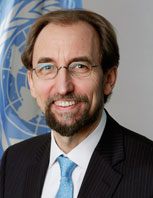 On 8 September 2014 the new UN High Commissioner for Human Rights, Zeid Ra’ad Al Hussein, addressed for the first time the Human Rights Council, and many will have been listening for clues about where he stands on key issues, how ‘activist’ he is likely to be etc. As the speech was rather long and covered a huge variety of issues, it is not easy to draw any conclusions yet. The fist half addressed issues of war and violence and in particular the humanitarian crises of today.



 Hans Thoolen on Human Rights Defenders and their awards