Archive for the 'human rights' Category
October 11, 2014
October is awards season, so you should know that the 2014 Andrei Sakharov Freedom Award recognizes 98 political prisoners in Azerbaijan. [Note : there is also the European Parliament’s Sakharov Prize – of more info please go to: http://www.trueheroesfilms.org/thedigest/awards]
The Norwegian Helsinki Committee’s Secretary General, Bjørn Engesland, announced the award in Oslo on 6 October, noting the sad fact that Azerbaijan’s political prisoners “are too numerous to all be mentioned here.” The Committee has documented 98 political prisoners, among them 13 journalists and bloggers. In addition, the prisoners include 10 human rights defenders and civil society activists, nine youth activists, a prominent opposition leader, “and many other opposing voices and religious activists.” The Committee noted that Azerbaijan assumed the Presidency of the Council of Europe’s Committee of Ministers this year.“Just weeks after Azerbaijan took over the chairmanship in May 2014, a new wave of detention of activists started. In what appears as a sign of contempt against the Council of Europe institutions, this wave in particular hit human rights defenders who have worked hard with the Council for the recognition and release of Azerbaijani political prisoners.
via Sakharov Prize Goes to Azeri Political Prisoners.
Posted in awards, human rights, Human Rights Defenders | Leave a Comment »
Tags: Andrei Sakharov Freedom Award, Azerbaijan, Azeri, bloggers, Council of Europe, digest of human rights awards, freedom of expression, Human Rights Defenders, journalists, Norwegian Helsinki Committee, Oslo, political prisoners, Sakharov Prize
October 11, 2014
You will have learned this already from the main news media, but to bee complete in the area of human rights awards: On Friday 10 October the Nobel Peace Prize 2014 was awarded to India‘s Kailash Satyarthi and Pakistan‘s Malala Yousafzai for their struggles against the violations of the rights of children. As the chairman of the Norwegian Nobel Committee, said, “Children must go to school, not be financially exploited.”

Malala Yousafzai came to global attention after she was shot in the head by the Taliban — two years ago Thursday — for her efforts to promote education for girls in Pakistan. Since then, after surgery, she has won several high level human rights awards and now the Peace Prize. [https://thoolen.wordpress.com/2013/10/10/malala-collects-another-award-sacharov-instead-of-snowden/]
Satyarthi, age 60, has shown great personal courage in heading peaceful demonstrations focusing on the grave exploitation of children for financial gain, the committee said. Satyarthi told reporters that the award was about many more people than him — and that credit should go to all those “sacrificing their time and their lives for the cause of child rights” and fighting child slavery.
The peace aspect of the Prize is double this year: Read the rest of this entry »
Posted in awards, human rights, Human Rights Defenders | 2 Comments »
Tags: 2014, awards, digest of human rights awards, hindu, human rights awards, Human Rights Defenders, India, Kailash Satyarthi, Malala Yousafzai, Muslim, Nobel Peace Prize, Pakistan, peace prize, right to education, rights of children, THF
October 10, 2014
The ceremony of the Martin Ennals Award 2014 is over (7 October 2014). It was again very impressive to hear and see 3 courageous Human Rights Defenders being honored. Some 450 people (my estimate) gave standing ovations to the 3 nominees whose work was shown in impressive films produced for the occasion. The film portraits are already available on the website: http://www.martinennalsaward.org where there is also a short summary of the whole evening.

Martin Ennals Award for Human Rights Defenders
Especially the film on Chinese HRD Cao Shunli is a masterpiece given that the film makers had almost no images to work with due to the modesty of the human rights defender as well as her untimely death in detention only 2 days after her nomination in March 2014.
The internet has buzzed with congratulations and encouragements to the other two nominees, Adilur from Bangladesh and Alejandra Ancheita from Mexico. The latter became ultimately the Laureate [see https://thoolen.wordpress.com/2014/10/07/breaking-news-alejandra-ancheita-is-the-2014-mea-laureate/#more-5648 ].
One of the nicest surprises was the address by Zeid Ra’ad Al Hussein, the United Nations High Commissioner for Human Rights at one of his first public appearances outside the UN. 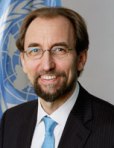 The High Commissioner gave a moving and almost poetic description of the sorry state of affairs left to human rights defenders to correct: He said inter alia: Read the rest of this entry »
Posted in awards, films, human rights, Human Rights Defenders, MEA, UN | 2 Comments »
Tags: Adilur Rahman Khan, Alejandra Ancheita, awards, Bangladesh, Cao Shunli, China, film, film portraits, Geneva, human rights award, Human Rights Defenders, human rights films, Martin Ennals Award for Human Rights Defenders, MEA, MEA ceremony, Mexico, speech, UN High Commissioner for Human Rights, Ville de Geneve, Zeid Ra'ad Al Hussein
October 7, 2014
 The Martin Ennals Foundation just announced in Geneva – during a ceremony broadcast live on the internet – that the MEA Laureate of 2014 is Alejandra Ancheita from Mexico. She was selected by a Jury representing the broad international Human Rights movement (see below).
Alejandra Ancheita is the founding Director of ProDESC. For over 15 years she has worked with migrants, workers, and indigenous communities to protect their land and labour rights vis-a-vis transnational mining and energy companies. These disputes have included violent attacks on those she is trying to protect. She is also one of the pioneers in seeking accountability for transnational companies in Mexican courts when local communities’ rights are not taken into account. In Mexico, there is a clear pattern of attacks, threats, criminalization, and murders of human rights defenders. Ms Ancheita and ProDESC have been subjected to surveillance, a defamation campaign in the national media, and a break in at their offices. Read the rest of this entry »
Posted in awards, human rights, Human Rights Defenders, MEA | Leave a Comment »
Tags: Adilur Rahman Khan, Alejandra Ancheita, awards, Bangladesh, Cao Shunli, China, City of Geneva, human rights award, Human Rights Defenders, MEA, MEA final nominee 2014, MEA laureate 2014, Mexico, Micheline Calmy Rey, ProDESC, Sandrine Salerno, woman human rights defender
October 3, 2014
“Prevention of mass atrocity crimes:Achievements, current trends and challenges” is the topic on which Adama Dieng, United Nations Special Adviser on the Prevention of Genocide ( former Registrar of the Rwanda Tribunal and former Secretary General of the International Commission of Jurists) will speak on Friday, 10 October 2014, from 10h30 to 11h45, in Bundesgasse 28, Room BGA 12, Bern, Switzerland.
There are only a limited number of seats available, so please book your seat by e-mail to nathan.broquet[at]eda.admin.ch before Wednesday 8 October 2014.
Posted in human rights | Leave a Comment »
Tags: Adama Dieng, Bern, genocide, ICJ, International Commission of Jurists, international crimes, lecture, mass atrocities, Ministry of Foreign Affairs, prevention, Rwanda, Switzerland, United Nations Special Adviser
October 1, 2014
If there was any doubt that the Chinese regime fears contamination from Hong Kong, today’s (1 October) report by the NGO China Human Rights Defenders [CHRD] makes clear that any expressions of support are dealt with harshly. Authorities are reported to have detained a dozen activists across China and threatened several others who expressed support for Hong Kong’s pro-democracy protests in recent days….They include activist Wang Long, who was detained by police in the southern boomtown of Shenzhen on Monday for “creating a disturbance” after he posted messages about the protests online, CHRD said. The 25-year-old Wang made headlines last month with his decision to sue a state-owned telecom operator for denying him access to US search engine Google. Another activist, Shanghai-based Shen Yanqiu, posted online photos of herself with a shaved head in support for the Hong Kong protesters on Sunday, CHRD said. She was detained on Tuesday and is “being held in an unknown location”, according to the group. A group of “up to 20 citizens” were seized by police on Tuesday in the southern metropolis of Guangzhou, near Hong Kong, after gathering in a city park to voice support the pro-democracy camp, according to CHRD. At least two activists – Huang Minpeng and Liu Hui – were detained by police and “denied food” while in custody before they were released in the afternoon, the group said. Other areas where activists have reportedly been detained or threatened include Beijing, the southwestern mega-city of Chongqing and central China’s Jiangxi province. (AFP/nd)
via China detains activists for supporting Hong Kong protests: Rights group – Channel NewsAsia.
Posted in human rights, Human Rights Defenders | Leave a Comment »
Tags: AFP, China, China Human Rights Defenders, crackdown, detention, freedom of expression, Guangzhou, Hong Kong, Huang Minpeng, Human Rights Defenders, Liu Hui, NGO China Human Rights Defenders, protests, Shen Yanqiu, Wang Long
October 1, 2014
The Euro-Mediterranean Foundation of Support to Human Rights Defenders (EMHRF) today released its 2013 Annual Report detailing its activities in support of individuals, groups and NGOs who are defending human rights in a wide variety of distinctly challenging contexts across the Arab region. In 2013, when access to internal and external funding sources in the region remained limited and difficult, the Foundation faced the dual challenges of protecting defenders in increasingly repressive and violent environments and of consolidating positive civil society dynamics in countries where tentative steps were taken toward democratisation.
In countries such as Syria, Libya, Algeria and Egypt, Read the rest of this entry »
Posted in EMHRN, human rights, Human Rights Defenders | Leave a Comment »
Tags: annual report 2013, Arab region, Arab spring, Civil society, EMHRF, Euro-Mediterranean Foundation, Euro-Mediterranean Foundation of Support to Human Rights Defenders, Euro-Mediterranean Human Rights Network, freedom of association, Human Rights Defenders, international protection, Middle East
October 1, 2014
In a Q&A released on 29 September, Human Rights Watch addresses some of the recurring criticisms of the Human Rights Act and the European Convention.
The Q&A responds to the criticism that human rights make it difficult to deport foreigners who have committed serious criminal offences. In fact, the UK already has legal powers to deport foreigners convicted of a serious criminal offence, but human rights law prohibits the deportation of a person in the limited cases where they would face a real risk of death, torture, or ill-treatment in the country of destination or have no prospect of a fair trial. Courts can also block a deportation if there would be a serious adverse impact on the deportee’s family, but in reaching such decisions courts must weigh the potential harm to the individual, the individual’s family (who may be British citizens), and the impact on society if he or she were allowed to remain.
The Q&A also addresses the criticism that the Human Rights Act is undemocratic. If a domestic court finds a UK law to be inconsistent with the Human Rights Act, it cannot strike down that law. It can only note that incompatibility and it is then for parliament to decide whether and how to change the law, in comparison to many other democratic countries where courts can strike down laws. As a last resort, people who invoke those rights unsuccessfully before UK judges can still seek to take their case to the court in Strasbourg, an arrangement approved by British governments for many decades.
The European Convention and the rulings of the European Court of Human Rights are binding on governments across the 47 countries that are part of the Council of Europe. The European Court has played a key role in protecting the rights of 800 million people across the Council of Europe region. Its rulings have been instrumental ending torture in police custody, ensuring victims of abuses by state authorities have access to justice and allowing people to express themselves freely. In many countries the court offers the only meaningful chance for justice for those whose rights are abused.
Reaffirming human rights at home is essential for any UK government that seeks to promote respect for human rights around the world. If the UK is to have any credibility on human rights in its foreign policy, it should strengthen, not weaken, its own human rights protections, Human Rights Watch said.
Attacks in the UK on the European Court of Human Rights undermine those efforts and provide succor to abusive governments in the Council of Europe that would prefer to ignore the European Court. The only European country currently not a member of the Council of Europe is Belarus. The only country to have withdrawn from the ECHR was Greece in 1969, while it was under a military dictatorship.
“The UK’s withdrawal from the European Convention would be welcomed by abusive governments everywhere,” Leghtas said. “But it would gravely weaken an institution that has done so much to safeguard and advance basic freedoms across Europe and it would destroy the credibility of the UK when discussing human rights internationally.”
UK: Parties Should Commit to Rights | Human Rights Watch.
Posted in HRW, human rights | 1 Comment »
Tags: anti-terrorist laws, binding international law, complaint procedure, deportation, Europe, European Convention, European Convention on Human Rights, HRW, Human Rights Act (UK), Human Rights Watch, Izza Leghtas, political debate, UK, withdrawal
October 1, 2014
Under the title “India dissociates itself from UN Human Rights Council resolution favouring pluralistic civil society“, Counterview of 30 September 2014, expresses its disappointment with the position taken by India (and other States such as South Africa) who one would normally expect to come out in support of a vibrant civil society, including specifically human rights defenders. They did not call for a vote – so the resolution passed – but expressed strong opposition. This is in line with earlier behaviour in the Council [see: https://thoolen.wordpress.com/2014/04/12/india-and-south-africa-forsaking-their-human-rights-credentials/]. Here some extracts: Read the rest of this entry »
Posted in human rights, Human Rights Council, Human Rights Defenders, UN | Leave a Comment »
Tags: Article 19, Civil society, Human Rights Council, Human Rights Defenders, India, NGOs, South Africa, UN, UN Human Rights Council, UN Resolution, vibrant civil society
September 30, 2014
Yesterday, 29 September 2014, human rights defender Pierre Claver Mbonimpa was conditionally released from prison on grounds of ill health in Burundi. [He was arrested on 16 Mat this year: https://thoolen.wordpress.com/2014/05/16/alert-mea-laureate-2007-pierre-claver-mbonimpa-arrested-in-burundi/]
Pierre Claver Mbonimpa is the President of the Burundi Association for the Promotion of Human Rights and of Detained Persons (Association Burundaise pour la Promotion des Droits Humains et des Personnes Détenues – APRODH), one of the most active human rights organisations in Burundi. For several years, the human rights defender has documented torture and the poor conditions of detention in prisons, and has campaigned against extra-judicial killings in the country. Pierre Claver Mbonimpa was the MEA Laureate in 2007.

MEA Laureate Mbonimpa, Burundi
Only two weeks ago the High Court of Bujumbura had still rejected a request by his defense lawyers for his provisional release due to serious illness. However, the court had ordered the establishment of a medical commission to assess the health of the human rights defender (see http://www.frontlinedefenders.org/node/27199> . As conditions of his release, Pierre Claver Mbonimpa is not permitted to travel beyond the borders of Bujumbura city, nor is he permitted to be in the proximity of the airport, train station or ports without judicial authorisation. Moreover, the human rights defender must appear before the judge when required.
On 18 September the European Parliament adopted a resolution which condemned Mbonimpa’s detention and deemed it “representative of the mounting risks facing human rights defenders” in Burundi. The resolution also called on the EU High Representative and the 28 EU Member States to ensure “a clear and principled EU policy vis a vis Burundi that addresses the on-going serious human rights violations” in the country. http://www.hrw.org/news/2014/09/19/dispatches-european-parliament-stands-mbonimpa-burundi
To read more about the case of Pierre Claver Mbonimpa: http://www.frontlinedefenders.org/PierreClaverMbonimpa
Posted in Front Line, HRW, human rights, Human Rights Defenders | 1 Comment »
Tags: APRODH, Burundi, European Parliament, Front Line (NGO), Human rights defender, Human Rights Defenders, illegal detention, Mbonimpa, MEA, MEA Laureate 2007, medical, Pierre Claver Mbonimpa, release


 Hans Thoolen on Human Rights Defenders and their awards