In 2012 – in the run up to the London Olympics – the Playfair 2012 Campaign (supported by War on Want and others) highlighted the appalling experiences of workers making Adidas official Olympic and Team GB goods in China, Sri Lanka and the Philippines. “Around the world 775,000 workers, mainly women, in 1,200 factories across 65 countries make Adidas products. Almost all of the jobs are outsourced to factories in poorer countries, yet through Adidas’ buying practices the company has enormous influence over their working conditions, and ultimately their lives. In the run up the London 2012 Olympics research has exposed the harsh reality of life for these workers.” The campaign demanded Adidas to end worker exploitation. playfair2012.org
In a report of 11 March 2015 on Labor Rights Abuses in Cambodia’s Garment Industry Human Rights Watch noted that brands can do more and said “For example, Adidas wrote to Human Rights Watch that it first started privately disclosing its supplier list to academics and nongovernmental organizations (NGOs) in 2001 and moved to a public disclosure system in 2007.”
In an article in Open Democracy of 17 June 2015 Mauricio Lazala and Joe Bardwell under the title: “What human rights?” Why some companies speak out while others don’t.” state that: “More recently, civil society has called on FIFA sponsors to respond to human rights concerns at construction sites for the Qatar 2022 World Cup. So far, Adidas, Coca-Cola and Visa have issued statements supporting workers’ rights in the country”
In an article published on 16 November 2015, ISHR Director Phil Lynch explored the role, responsibility and interest of business when it comes to supporting human rights defenders and protecting civil society space. He mentions Adidas in the following context: The fourth and final category of actions, perhaps the most important but also the least common, involves business actively advocating and seeking remedy for human rights defenders and against laws and policies which restrict them. Such action could be private, as I understand to be the predominant approach of Adidas. It could also be public, such as the open letters and press statements issued by Tiffany & Co and others for the release of Angolan defender and journalist Rafael Marques
On 31 December 2015, the Business and Human Rights Resource Centre listed in its “KnowTheChain” (a ranking of 20 apparel and footwear companies on efforts to address forced labour in the supply chain) Germany-based Adidas as number one out of 20.
On 21 June 2016 Adidas published its policy on HRDs: “The Adidas Group and Human Rights Defenders“. As there is such a dearth of corporate policies specifically on human rights defenders, here follows the key part in quote:
The threats faced by human rights defenders come in many forms – physical, psychological, economic, and social – and involve the interaction of many factors (poor governance, the absence of the rule of law, intolerance, tensions over development issues, etc.) and can be triggered by different actors, both private and State.
In his report to the General Assembly in 2015, the UN Special Rapporteur on the situation of human rights defenders recommended that both States and businesses should play an active role in supporting and promoting the role of HRDs working in their sectors. This should include, for example, speaking out when human right defenders are targeted for their corporate accountability work. Businesses must also cease and abstain from supporting any actions, directly or indirectly, which impinge upon defenders’ rights to freedom of expression, association and assembly.
The adidas Group has a longstanding policy of non-interference with the activities of human rights defenders, including those who actively campaign on issues that may be linked to our business operations. We expect our business partners to follow the same policy; they should not inhibit the lawful actions of a human rights defender or restrict their freedom of expression, freedom of association, or right to peaceful assembly.
We value the input and views of all stakeholders and we are willing, and open, to engage on any issue, be this related to our own operations or our supply chain. Often, our engagement with human rights defenders is constructive, especially where we identify areas of shared concern. For example, with respect to transparency and fair play in sports, or environmental sustainability, or the protection of worker rights in our global supply chain. In these instances, we may actively support the work of the HRD and derive shared value from our joint endeavours in, say, improving working conditions, safety, or the environment.
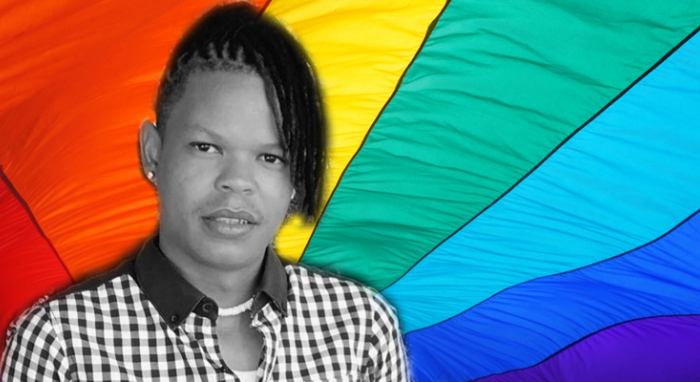
Jacobus was a human rights defender from Namibia who proudly defended and promoted the rights of of lesbian, gay, bisexual, trans and intersex people via Pan Africa ILGA. ISHR reported this in their ISHR Monitor of December 2016.
The Government of Argentina has awarded the Nigerian #BringBackOurGirls movement the International Human Rights Prize ‘Emilio F. Mignone’ for work in advocacy towards respect for human rights worldwide. A statement on Monday 5 December in Abuja by the BBOG spokesman, Sesugh Akume, said theaward ceremony would take place at the Ministry of Foreign Affairs in Buenos Aires. It added that the coalition would be represented at the event by two members of the Movement, Aisha Yesufu, who is the Chairperson of theStrategic Team, and Dr. Chinwe Madubuike.
The group stated “While in Argentina, they will as part of the award ceremonies, meet with the human rights group– Las Abuelas de Plaza de Mayo … …It is made up of grandmothers, mothers and other citizens who have since 1977 been advocating for the return of an estimated 500 children abducted or born in detention during the military era and illegally adopted, with their identities hidden.”
The statement noted that like the Grandmothers of Plaza de Mayo, which has advocated weekly in the last 39 years, the Chinwe Madubuike has been on a daily campaign since April 30, 2014 for the rescue of now 196 out of the 219 ChibokGirls abducted from their school on 14 April 2014 by Boko Haram.
This blog follows with special attention developments in the area of human rights awards. The announcement of a new award on 1 December 2016, the Franco-German Prize for Human Rights and the Rule of Law, came as a surprise. Some aspects remain unclear (is there a monetary component?; what will be the frequency?) but judging from the text of the press release as well as the choice of recipients of the inaugural prize, it is mostly an award for human rights defenders. Read the rest of this entry »
Civis Mundi published a list of free on-line courses on human rights. I list there the 5 that are (also) in English, without knowing much about the quality: Read the rest of this entry »
Justice and Peace NL with support from the City of the Hague and the Ministry of Foreign Affairs is organizing “The Hague Defenders Days” from 5 to 10 December 2016. A wide range of activities (debates, films and even a ball) are planned culminating in the ceremony of the Tulip Award on Human Rights Day 10 December. Most activities are open to the public (but not the Tulip ceremony):
Let’s celebrate the International Human Rights – and Human Rights Defenders Days in the city of peace and justice! Take the opportunity to learn from their experiences and share your own. Meet human rights defenders, debate about your rights, think out of the box and dance at the Human Rights Ball. Discover the defender or rebel in you! Download the flyer.
PROGRAMME
Portraits of Dutch and international human rights defenders by photographers Anette Brolenius and Daniella van Bergen.
On 29 November 2016 ‘ProtectDefenders.eu’ – the EU Human Rights Defenders mechanism implemented by International Civil Society – concluded its first annual meeting of beneficiaries: human rights defenders at risk from all regions of the world who have benefited from the project gathered today in Brussels. The meeting aimed at reflecting on this first year of coordinated work to support defenders worldwide and at highlighting the worrying global phenomenon of criminalisation of human rights defenders.[see: https://thoolen.wordpress.com/2015/12/04/international-cooperative-consortium-protect-the-defenders-launched-on-2-december/]
To conclude the meeting, the twelve partner organisations of ProtectDefenders.eu have issued a public statement urging all national authorities to “publicly recognise the crucial role played by human rights defenders and protect them in all circumstances from any form of judicial harassment“. As stressed by Antoine Madelin, FIDH Director for International Advocacy and Chair of the Board of ProtectDefenders.eu, “Human Rights Defenders are the pillars of democracy and of the rule of law but are too often subjected to unfair criminal prosecution, in an effort to undermine their work in the defence of human rights.”
Since the launch of the project in October 2015, ProtectDefenders.eu has witnessed an increased criminalisation of defenders worldwide in reprisal to the conduct of legitimate human rights activities.
ProtectDefenders.eu held its meeting in Brussels under the motto “Defenders are not criminals” and brought together dozens of human rights defenders at risk supported by the EU mechanism during its first year of implementation, together with prominent representatives of NGOs, European institutions and Representatives of International and Regional Protection Mechanisms, including the United Nations Special Rapporteur on the situation of human rights defenders, Michel Forst. Participating defenders, coming from more than 20 countries such as Burundi, Honduras, Egypt, Bangladesh or the Russian Federation, shared their experiences of resilience in often dangerous and challenging situations and debated on the most effective strategies to counter criminalisation and pursue their work.
This meeting has also emphasised the main achievements and highlights of the first year of ProtectDefenders.eu. In the first twelve months, the EU Mechanism has provided more than 330 emergency grants to defenders at high risk, facilitating a rapid response to their legal, medical, security or emergency relocation needs in pressing circumstances. At the same time, ProtectDefenders.eu has successfully started and run a temporary relocation programme, disbursing more than 700,000 € in support of 74 temporary relocations in favour of 150 individuals, with the collaboration of host institutions worldwide and in the framework of the EU Temporary Relocation Platform.
The Project has also provided institutional and operational support to grassroots organisations, allocating more than 300,000 € through 32 grants. 1,300 defenders worldwide were trained to improve their security and protection in difficult contexts.
Finally, ProtectDefenders.eu has expanded its advocacy and outreach dimension, by conducting fact-finding missions and monitoring trials against defenders particularly in difficult countries, as well as carrying out initiatives to assist and connect isolated and vulnerable defenders throughout the world. ProtectDefenders.eu has coordinated more than 430 urgent alerts aimed at mobilizing the attention of concerned authorities, public and media on behalf of defenders at risk.
Human Rights defenders who attended the meeting positively assessed the first year of implementation of ProtectDefenders.eu. The twelve partners praised the EU strong support through the EIDHR of a project as ambitious and comprehensive as ProtectDefenders.eu. As pointed out by Andrew Anderson, Executive Director of Front Line Defenders and member of the Board of ProtectDefenders.eu, in the closing speech, “human rights defenders in danger around the world do benefit from this strong coordination between international civil society organizations and the institutions of the European Union.”
[ProtectDefenders.eu, the European Union Human Rights Defenders mechanism, delivers emergency help and temporary relocation grants for activists at risk, who face threats due to their work and are in need of urgent support. It also provides training and capacity-building for human rights organisations. ProtectDefenders carries out monitoring, advocacy and lobbying to raise awareness about the situation of human rights defenders and their need for protection]
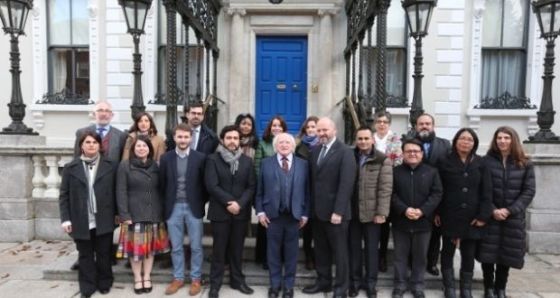
Irish President Michael D Higgins with international activists and NGO representatives in Dublin at the launch of the Human Rights Defenders Memorial. Photograph: Conor McCabe
Rachel Flaherty reports in the Irish Times of 24 November on the launch of an on-line Memorial o honour human rights defenders who have been killed The online memorial would be a tool to track investigations and advance the struggle for justice for human rights defenders. The Human Rights Defenders Memorial (HRD Memorial) has been set up by Dublin-based Front Line Defenders as an online international and interactive database. It will detail all the human rights defenders who have been murdered around the world since 1998. The Front Line Defenders organisation has estimated 3,500 have been murdered since then.
A coalition of 20 national and international human rights organisations jointly coordinated the project. Contributors included human rights groups from Colombia, Honduras and the Philippines, which Front Line Defenders said are ranked among three of the deadliest countries in the world for human rights defenders. The organisation said other countries included among the worst in terms of killing and physical attacks against human rights defenders included North Korea, China, Russia, Egypt, Saudi Arabia and Zimbabwe.
Andrew Anderson, executive director of Front Line Defenders, said the memorial sent a message the human rights community was stronger than any one person. “It will not be deterred, and its leaders will not be forgotten,” he said. “This is not random violence. This is the calculated elimination of those who speak out to defend the rights of the most vulnerable. Autocrats and powerful economic interests think that if they kill an activist, they kill a movement. The goal of the HRD Memorial is to prove them wrong.”
On 29 November 2006, Women Human Rights Defenders (WHRDs) from around the globe gathered in Colombo, Sri Lanka and declared this day as theirs. November 29th therefore became the International Women Human Rights Defenders Day, and is now celebrated all over the world in recognition of the courageous work that they do to defend their own and other women’s rights.
Fair Trials, a human rights organisation, has created a new animation showing what it would feel like to live in a world without fair trials. To accompany the animation, Fair Trials have set up a website: www.withoutfairtrials.org, which explains why fair trial rights are important, what they mean and the consequences if they are not respected. For example, the right to a fair trial encompasses the right to access a lawyer, the right to be presumed innocent until proved guilty if accused of a criminal offence and the right to be told the case against you in a language you understand.
The right applies whenever there is a determination of someone’s civil rights and obligations or any criminal charge against them. The animation looks at the importance of the right to a fair trial from the police station, to the courtroom and in prison. The animation highlights that around the world, fair trial rights are being denied to many people, everyday. For example, the website accompanying the animation says that in China, imprisoned human rights defenders are being denied access to lawyers and in Spain it is common for suspects not to be given information about the case against them until shortly before the trial starts.


 Hans Thoolen on Human Rights Defenders and their awards