Archive for the 'human rights' Category

Malaysia: Human rights defender Lena Hendry convicted for showing film on Sri Lanka

February 23, 2017

In 2013 I reported on human rights defender, Lena Hendry, in Malaysia who was charged with showing the film “No Fire Zone: The Killing Fields of Sri Lanka, a film on human rights violations in Sri Lanka.  [see: https://humanrightsdefenders.blog/2013/09/18/human-rights-worker-in-malaysia-to-appear-in-court-tomorrow-for-screening-the-film-no-fire-zone/#more-3469]. Now Front Line reports on 21 February 2017, that the human rights defender was convicted by the Magistrate’s Court in Kuala Lumpur [https://www.frontlinedefenders.org/en/profile/lena-hendry]. On 21 February 2017, Lena Hendry was found guilty by a magistrate’s court in Kuala Lumpur for screening “No Fire Zone: The Killing Fields of Sri Lanka” under Section 6 of the Film Censorship Act 2002. She is currently on bail and intends to appeal the court’s decision. Her sentencing is scheduled for 22 March 2017.

Lena Hendry is the former Programme Coordinator for Pusat KOMAS, a human rights organisation established in 1993 in Malaysia. This organisation works to empower indigenous peoples, poor people in urban areas, workers, and civil society organisations through the use of popular media. [On 10 March 2016, The Magistrates’ Court of Kuala Lumpur acquitted Lena Hendry of the charges but  on 21 September 2016, the High Court in Kuala Lumpur reversed Lena Hendry’s aquittal following an appeal issued by the prosecution.

Front Line Defenders condemns the conviction of Lena Hendry, as it believes that the charges brought against the human rights defender are directly linked to her legitimate and peaceful work in the defence of human rights, in particular in exposing human rights violations in Sri Lanka. Front Line Defenders urges the Malaysian government to repeal provisions of the Film Censorship Act 2002 that allow unnecessary and arbitrary government interference in the showing of films in Malaysia.


UN Special Rapporteur on Human Rights Defenders wraps up his first mandate

February 22, 2017

The UN Rapporteur on Human Rights Defenders, Michel Forst, has published his report (A/HRC/34/52) which covers the period of his first mandate:June 2014 and March 2017 [see also: https://humanrightsdefenders.blog/tag/mmichel-forst-2015-hrd-rapporteurichel-forst/  ].

In his report Michel Forst, provides a detailed summary of the activities he carried out during his first mandate, including statistics and trends based on the communications that he sent to States, his visits to a number of countries, the dialogues established with the authorities of various States, and the close cooperation developed with key stakeholders in the protection of human rights worldwide. The Special Rapporteur also presents the work in progress and the challenges and issues on which he plans to focus during his next mandate. The report includes suggestions for diversifying working methods, broadening the scope of cooperation with other key actors, and enhancing the visibility and accessibility of his mandate. Human rights defenders and the promotion of their work and their protection will remain at the core of the Special Rapporteur’s work.

After spending the past three years travelling around the world and documenting the situation of human rights defenders, the Special Rapporteur is more appalled than ever to see attacks against them multiplying everywhere, assailing bloggers, indigenous peoples, journalists, community leaders, whistle-blowers and community volunteers. Furthermore, the Special Rapporteur has become convinced that the incidents in question are not isolated acts but concerted attacks against those who try to embody the ideal of the Universal Declaration of Human Rights in a world free from fear and want. The Special Rapporteur is concerned by the lack of response to observations that have been made repeatedly since the establishment of the mandate.

We must be bolder and more creative in order to face up to threats that weigh heavily on civil society as a whole and on every individual fighting for fundamental rights and freedoms. The Special Rapporteur has also noted that intolerance thrives in part because people know little about their rights or the role of those who protect them. In that regard, it is more vital than ever to make the language of human rights accessible to all in order to ensure that civil society continues to enforce accountability.

As defenders face unprecedented attacks intended to undermine the legitimacy, credibility and sincerity of their commitment, it seems essential to quickly establish links between the specific actions undertaken by the Special Rapporteur and the pledges made at the United Nations when he was appointed in 2014. As populist, nationalist and fundamentalist movements of all kinds multiply, the Special Rapporteur remains convinced that more can be done under his mandate and that his office must continue to serve as a watchdog, a warning mechanism and a crucial resource for thousands of people. [Here he echoes sentiments expressed by others and referred to in this blog, see e.g. https://humanrightsdefenders.blog/2016/12/12/we-must-find-new-ways-to-protect-human-rights-defenders-and-to-counter-the-anti-human-rights-mood/ and the links to other such articles at the end of the post]

The report also identifies those areas in which, in view of the possible renewal of his mandate, the Special Rapporteur intends to become more involved so that his work remains relevant and responds as effectively as possible to defenders’ expectations.

I refer as source here not directly to the UN but draw attention to an excellent documentary service provided by RELIEFWEB:

Report of the Special Rapporteur on the situation of human rights defenders (A/HRC/34/52) – World | ReliefWeb

The Dictator Hunter works from home

February 21, 2017

This blog tries to stick as much as possible to the core issue of human rights defenders and leaves general activism (even when inspired by human rights concerns) to other blogs. Now I want to make an exception for a personal Call for Action issued on 12 February 2017 by my good friend and well-known human rights defender, Reed Brody [https://humanrightsdefenders.blog/tag/reed-brody/], who has earned his nickname The Dictator Hunter:

He passionately feels that we should all do more to stop Trump (and his admirers in Europe). Here the full text:

A letter from America to my friends abroad

Many of you are watching events in the United States and asking what is going on – and what you can do. 

Yes, this is the most dangerous moment for the US and for the world in my lifetime. A US president with total disregard for the foundations of a constitutional democracy – checks and balances, the independence of the judiciary, freedom of the press, the protection of minorities, reasoned debate – has near-complete control over the official levers of power: the executive branch (including the CIA, FBI, NSA), both houses of Congress, and perhaps soon the judiciary. 

On the other hand, I have never witnessed in my country the kind of mobilization we are seeing today. The nationwide Women’s Marches were the largest demonstrations in US history, but it was only the beginning. Each day brings new acts of resistance. When the “Muslim ban” was announced (a crude and cruel measure only designed to stoke fear and portray the president as the people’s protector), people spontaneously flooded the airports around the country, New York taxi drivers went on strike. When Uber tried to profit from the strike, 200,000 customers deleted their Uber accounts. Bodegas in New York closed to protest the ban. All around the country, citizens are packing elected officials’ town hall meetings, flooding Congress with petitions, postcards, and phone calls. The premier legal organization challenging Trump’s actions, the American Civil Liberties Union, raised $24 million in the days following the Ban. This week, 1,200 people crowded into my neighborhood synagogue to organize the next stages of the resistance in Brooklyn, and the same thing is happening all over the country. Everything is political. Sports. Oscars. Consumer choices. Companies are being forced to take stands, and many of them, particularly in high-tech and globalized industries, are opposing the president. 

It’s important to remember that WE are the majority. We are also the large majority in the places that matter most to the economy – New York, California, Washington DC, in almost all the nation’s cities.

This epic battle for the soul of my country is just beginning. The outcome is uncertain. The next terrorist attack, and the one after, will surely test us even more.

Ultimately it will be Americans who decide the fate of the US but there are many ways you can help.

-Protest, protest protest! People marched around the world marched with us on January 21, but it can’t stop there. The more organized protests at US embassies and symbols of US power the better. 

– Don’t give Trump the respect he doesn’t deserve. This week, the speaker of the House of Commons said that he would oppose having Trump address Parliament. Over 1.8 million Brits have signed a petition against any Trump visit. When Trump visits the UK, or anywhere, let him know how the people of the world feel. 

-Demand that your leaders stand up to Trump. Angela Merkel reminded Trump of the US’s obligations under the Refugee Convention. François Hollande has been outspoken. (Unlike Spain’s Rajoy who offered to be an “intermediary” for Trump in Europe and Latin America). 

-Like Canada’s Justin Trudeau, leaders should publicly welcome all people from all countries and specifically assure nationals of the 7 “banned” countries that they will be allowed in.

-Ask your country to rebuke Trump’s measures which violate international law such as the Muslim ban in international fora such as the UN Human Rights Council and the UN General Assembly. The ACLU and other groups are already challenging these actions before the Interamerican Commission on Human Rights.

-Remind non-US companies that they also have obligations, as US law professors did when they wrote to European air carriers https://www-cdn.law.stanford.edu/…/Stanford-Law-Professors-… to ensure the rights of travelers. 

-Academics, experts, companies and even countries can join litigation in the US with “amicus curaie,” or “friends of the court” briefs. The legal attack on the Muslim ban has been joined https://lawfareblog.com/litigation-documents-resources-rela… by hundreds of technology companies, professors, cities and states, but it would be important for foreign voices to be heard on this and (probably) forthcoming cases.

-Boycott Trump products. Like a third-word kleptocratic dictator (and I know a thing or two) Trump is openly mixing the public and the private. Hit him where it hurts – his brand, his ego and his pocketbook. Phone numbers of his hotels are here  https://twitter.com/billmckibb…/…/829412430157602816/photo/1 A list with retailers that do business with the Trump family and whose boycott is sought by #GrabYourWallet ( as in Grab her Pussy) here
https://grabyourwallet.org/Boycott%20These%20Companies.html

-Join the over 5 million people who have signed Avaaz’s Global Open Letter to Donald Trump. https://secure.avaaz.org/cam…/…/president_trump_letter_loc/…

-Watch the daily TV show Democracy Now on the internet – it’s where progressives in the US get their news and connect to all the struggles here and abroad. https://www.democracynow.org/

Even if you live abroad, you can join and give your support to the groups that are defending our liberties like the Center for Constitutional Rights, Planned Parenthood, Democracy Now, the ACLU. The Nation’s Katha Politt lists some groups here https://www.thenation.com/…/you-might-not-be-in-the-mood-t…/ Here is a longer list http://www.advocate.com/…/24-trump-fighting-charities-need-… – 

-If the travel ban, or some version of it, is reinstated, we will need volunteers and volunteer lawyers at airports around the world to help stranded travelers and to communicate with volunteers at US airports .

Trump (“Only America first”) doesn’t care about what the rest of the world thinks, but the US political and economic establishment on whose acquiescence he depends does care. Make clear that a racist islamophobic US government will not enjoy the same status and goodwill. 

Most important, don’t let what happened in the US happen in your country!! Trump “won” the US election (just as Brexit prevailed) by building the fear of foreigners and because too many people (white working class) did not see the political system as working for them. The Democratic Party essentially imposed a candidate who many saw as the embodiment of an out-of-touch elite. The same thing now threatens to happen in France, the Netherlands and elsewhere. Please don’t let it. We need you to make a better world together.

In Solidarity

Reed Brody
reedbrody@gmail.com
twitter @reedbrody
 

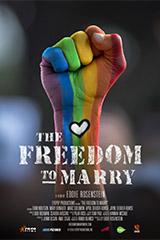
The Freedom to Marry – film shows human rights lawyers at work in the USA

February 21, 2017

freedom-to-marry-the-poster

This documentary provides an insight into marriage equality movement in the USATHE FREEDOM TO MARRY is an inspiring insiders’ look at the one the recent civil rights battles.

The historic Obergefell v. Hodges case represents the culmination of a decades-long struggle to guarantee the right of same-sex couples to marry. Among those leading the fight for justice is attorney and gay rights defender Evan Wolfson, who is considered by many the architect of LGBT marriage equality. Also profiled is human rights lawyer Mary Bonauto. In tracking the climactic countdown to the landmark Supreme Court decision, filmmaker Eddie Rosenstein manages to create a thrilling ambience.

THE FREEDOM TO MARRY was the Best Documentary and Best Editing winner at the Savannah Film Festival and recently picked up the Human Rights Prize at the Atlanta Jewish Film Festival 2017.


Source: The Freedom to Marry, a Film by Eddie Rosenstein

Nigeria: “Human rights activists of today are cowards, they are afraid to die for the course they are pursuing”

February 20, 2017

This rather shocking statement comes from Nigeria. Two newspapers sources (Vanguard.com and The Anchor on Line) report on events held to mark ’50 years activism’ by the Agbaakin Olubadan of Ibadanland, Oloye Rasheed Olalekan Alabi, where such hyperbolic language was employed. One was held on 21 January 2017 at the Nigeria Union of Journalists’ Press Centre, Ibadan. The other on 20 February in the Excellence Hotel, Lagos State. Other strong language was used there to make Nigerian youth more aware and committed…read of yourself…:

Agbaakin Olubadan, Oloye ‘Lekan Alabi Marks 50 Years of Human Rights Activism

Read the rest of this entry »

The Geneva Academy of International Humanitarian Law and Human Rights upgrades it armed conflict portal

February 18, 2017

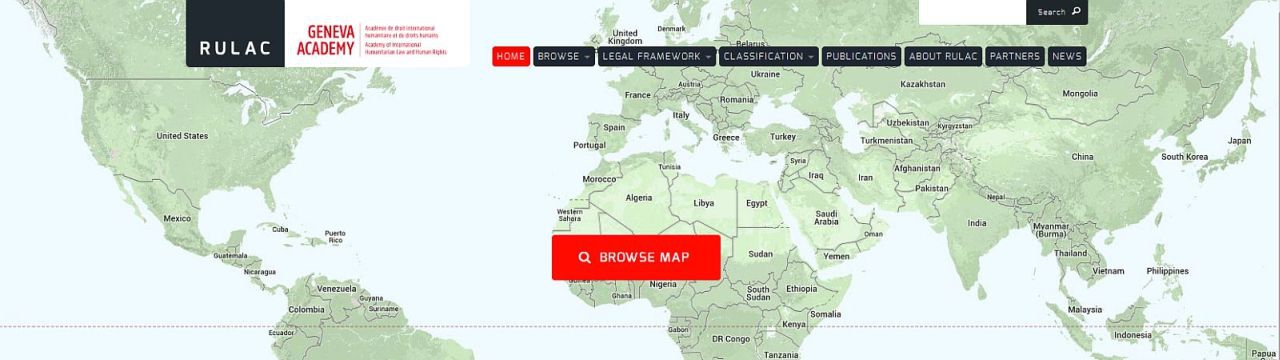
Homepage of the Rule of Law in Armed Conflict Portal

This version entails new and updated armed conflicts, as well as a map allowing visitors to search armed conflicts and parties to these conflicts via multiple filters. ‘The map offers visitors a more intuitive approach: they can visualize where conflicts take place and where parties to these conflicts are’ underlines Sandra Krähenmann, Research Fellow at the Geneva Academy. ‘We clearly see, via the map, that while most armed conflicts are taking place in the Middle East and on the African continent,, parties to these conflicts are from across the world’ she adds.

As a legal reference source for a broad audience, RULAC is regularly updated to integrate new armed conflicts and developments. Today, RULAC monitors more than 13 situations of armed conflicts: 2 military occupations, 2 situations of international armed conflicts and 9 situations of non-international armed conflicts. These conflicts are taking place in 9 countries: Central African Republic, Egypt, Iraq, Libya, South Sudan, Syria, Turkey, Ukraine and Yemen.

For each armed conflict, RULAC provides the factual and methodological basis for its classification, and identifies the parties and the applicable international law. The portal also includes sections on the definition and categories of armed conflict under IHL and the legal framework governing armed conflicts.

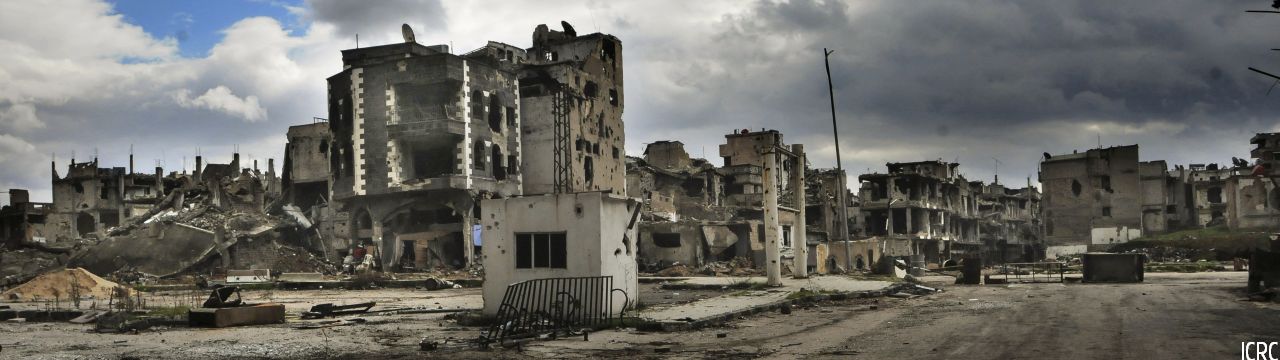
Armed Conflict in Syria

While there are many different definitions of armed conflict used for different purposes, the question whether a situation of armed violence amounts to an armed conflict under IHL has important consequences. States involved in armed conflicts have rights and duties that do not exist in times of peace. The classification of situations of armed violence is fraught with difficulties. Many states deny that they are involved in armed conflicts, arguing instead that they are engaged in counter-terrorism operations. Others apply IHL to situations that do not amount to an armed conflict. Moreover, contemporary armed conflicts are increasingly complex due to the multitude of state and non-state parties involved. Based on open source information, RULAC provides an independent and impartial assessment that identifies situations of armed conflict under IHL. It is intended to assist other actors that may want to classify situations of armed violence for their purposes. By making such information available to a broad, non-specialist audience, including by using visual tools, the RULAC project strives to promote a more coherent approach classifying conflicts, and, ultimately, to foster implementation of the applicable legal framework, a key element for accountability and the protection of victims.

Source: Detail – The Geneva Academy of International Humanitarian Law and Human Rights

HURIDOCS: finally new Director and now searching for other staff

February 16, 2017

On 15 February 2017, the chair of HURIDOCS, Gisella Reina announced the appointment of Friedhelm Weinberg as the new Executive Director. She added: “HURIDOCS has a young and energetic director that listens and leads. His experience with our global network, having worked in Asia, Africa and the Former Soviet Union region, gives him the firm understanding of what our community thinks and wants. Friedhelm has proven his capacity to strengthen and motivate our international and distributed team to be creative and effective.”

Friedhelm Weinberg first joined HURIDOCS in 2012. Over the years, he has taken on a variety of roles, including communications and project management and most recently as Deputy Director. Previously, he has worked as a journalist in his native Germany. [https://humanrightsdefenders.blog/2016/09/06/executive-director-of-huridocs-needs-to-have-the-following/]


huridocs-signature-logois also looking to fill two positions: Read the rest of this entry »

The Situation of Human Rights Defenders – Amnesty International’s Statement to the UN Human Rights Council 2017

February 15, 2017

The document “The Situation of Human Rights Defenders – Item 3: Amnesty International’s Written Statement to the 34th Session of the UN Human Rights Council (27 February- 24 March 2017)” could of course be obtained directly from AI. However, I do it via: http://www.refworld.org/docid/58a195034.html, in order to highlight this very useful service provided by the documentation service of the UN High Commissioner for Refugees (UNHCR) which regularly gives links to documentation concerning countries of origin of refugees. The entry will look like this:

Title The Situation of Human Rights Defenders – Item 3: Amnesty International’s Written Statement to the 34th Session of the UN Human Rights Council (27 February- 24 March 2017)
Publisher Amnesty International
Publication Date 13 February 2017
Topics Human rights activists | Human rights and fundamental freedoms
Reference IOR 40/5647/2017
Cite as Amnesty International, The Situation of Human Rights Defenders – Item 3: Amnesty International’s Written Statement to the 34th Session of the UN Human Rights Council (27 February- 24 March 2017), 13 February 2017, available at: http://www.refworld.org/docid/58a195034.html %5Baccessed 13 February 2017]
Disclaimer

In their submission AI states in part:

In 1998 the international community adopted, by consensus, the Declaration on the Right and Responsibility of Individuals, Groups and Organs of Society to Promote and Protect Universally Recognized Human Rights and Fundamental Freedoms thereby recognising the importance that civil society actors play in the defence of the values that underpin human rights. The Declaration stresses that we all have a role to fulfil as human rights defenders and urges States particularly to protect human rights defenders from harm as a consequence of their work.

However, almost two decades after that historical moment human rights defenders continue to be harassed, tortured, jailed and killed for speaking out against injustice. During the protests against the Dakota Access Pipeline in the USA last year, the security forces used excessive and unnecessary force when arresting members of the Standing Rock Sioux Tribe and other Indigenous communities who oppose its construction.

Over 3,500 human rights defenders have been killed since the Declaration was adopted in 1998 and according to recent figures released by Frontline Defenders, the number of killings in 2016 marked an increase in the number reported in the previous year.

These killings usually occur after threats and warnings. Berta Cáceres, the leading indigenous, environmental and women’s rights defender from Honduras was killed in March 2016 despite enjoying a high national and international profile. In the aftermath of her killing, Honduras was under increased pressure to protect its human rights defenders, nonetheless, in October 2016, José Ángel Flores and Silmer Dionisio George of the Unified Movement of the Aguán were murdered, and currently international organization Global Witness, along with Honduran organizations MILPAH, COPINH and CEHPRODEC are facing a smear campaign against them for their work defending land, territory and environmental rights.

Amnesty International also continues to receive reports of human rights defenders being subjected to unfounded criminal proceedings, arbitrary detention and judicial harassment, which prevents them from speaking up against injustice, delegitimizes their causes and creates a chilling effect on activities that promote human rights. Human rights defender Narges Mohammadi is serving 22 years’ imprisonment after being convicted of national security related charges in Iran. Her conviction stems from her peaceful human rights activities, including her work to end the death penalty and her 2014 meeting with the former European Union (EU) High Representative for Foreign Affairs and Security Policy.

In Egypt civil society has been subjected to an unprecedented crackdown. In 2016, the authorities intensified a criminal inquiry into NGOs’ registration and foreign funding that could lead to criminal prosecution and sentences reaching up to life imprisonment. The authorities have also subjected NGO personnel to interrogation, freezing of personal and organizational assets, preventing leading human rights defenders from foreign travel, arbitrary arrest and detention.

Amnesty International notes with concern that the organisations, networks and methods people rely on to stand up for their communities are also attacked. Unions are threatened. Lawyers and activists in China have been ill- treated and sometimes tortured in detention. In Pakistan, human rights defenders are labeled as ‘foreign-agents’. In Viet Nam, attacks against human rights defenders are common, and include beatings and daily harassment and surveillance.

In other parts of the world, newspapers are closed down. Social media are banned and digital conversations monitored. Taking to the streets to protest is impossible.

In Turkey, against the backdrop of the failed military coup in 2016, unfair criminal prosecutions under criminal defamation and counter-terrorism laws targeted political activists, journalists and other critics of public officials or government policy. Over 180 media outlets have been arbitrarily shut down and 80 journalists remain in pre-trial detention.

States also repeatedly interfere with human rights defenders’ ability to communicate safely and expose human rights violations to regional and international human rights mechanisms, including this Council and its mechanisms. Recently the Special Rapporteur on the situation on the situation of human rights defenders noted, with great concern, the number of human rights defenders that received social media threats simply for meeting with him on his visit to Mexico at the beginning of this year.

In Burundi in January 2017, the Bujumbura Court of Appeal ruled to disbar three lawyers and suspend another. Each had contributed to a civil society report to the UN Committee against Torture prior to its review of the country in July 2016. The permanent closure of five human rights organizations and the suspension of five others was ordered in October 2016 on the allegation that they tarnished the image of the country. One of the suspended organizations was later banned following publication of a controversial report.

……..Amnesty International urges the Human Rights Council to:

  1. Renew the mandate of the Special Rapporteur on the situation of human rights defenders and cooperate fully with it, including by encouraging swift and comprehensive responses to communications from the Special Rapporteur and acceptance of requests for country visits.
  2. Reaffirm that protecting human rights is necessary for individuals to live in dignity, and that deepening respect for these fundamental freedoms lays the foundation for stable, safe and just societies;
  3. Recognize the legitimacy of human rights defenders and applaud the role they play in the advancement of human rights, and urge States to facilitate and publicly support their work;
  4. Urge States to adopt and implement legislation which recognises and protects human rights defenders;
  5. Stress the urgent need for all States to establish national protection mechanisms for human rights defenders at risk;
  6. Urge States effectively to address threats, attacks, harassment and intimidation against human rights defenders, including, where applicable, by thoroughly, promptly and independently investigating human rights violations and abuses against them and bringing alleged perpetrators to justice in fair trials without recourse to the death penalty, and providing effective remedies and adequate reparations to the victims;
  7. Urge States to ensure that the criminal justice system or civil litigation is not misused to target nor harass human rights defenders;
  8. Refrain from bringing criminal charges or, other judicial proceedings or taking administrative measures against human rights defenders because of the peaceful exercise of their rights;
  9. Ensure that those who challenge injustice peacefully are not portrayed as threats to security, development or traditional values;
  10. Emphasize the fact that human rights defenders who work on gender equality, women’s rights or LGBTIQ rights face particular risk of being subjected to certain forms of violence and other violations that need to be particularly addressed;
  11. Pay particular attention to other groups who may be at risk, such as those who work for economic, social and cultural rights, defenders who work in the area of business and human rights; in an area exposed to internal conflict or a natural disaster; defenders living in isolated regions or conflict zones; and defenders working on past abuses, such as the families of victims of enforced disappearance;
  12. Condemn any acts of intimidation or reprisals against human rights defenders who cooperate or seek to cooperate with international human rights mechanism;
  13. Urge States to cooperate fully with the recently mandated Assistant Secretary-General for Human Rights to prevent, end and redress acts of reprisal and intimidation.

Source: Refworld | The Situation of Human Rights Defenders – Item 3: Amnesty International’s Written Statement to the 34th Session of the UN Human Rights Council (27 February- 24 March 2017)

International Film Festival and Forum on Human Rights: 10-19 March 2017 in Geneva

February 14, 2017

The International Film Festival and Forum on Human Rights (FIFDH) is an international event dedicated to film and human rights. For the past 15 years, the festival has taken place in the heart of Geneva, the human rights capital, parallel to the main session of the UN Human Rights Council in March. Each evening, the FIFDH provides high-level debates in which human rights violations are denounced and debated, wherever they occur, including those overlooked by the United Nations and not attract international attention. Diplomats, NGOs, victims, artists, philanthropists, activists, journalists, decision makers, and the general public are invited to debate their views in this unique setting. All the discussions are transmitted live online and have their own dedicated hashtags : you can submit questions and engage with the debate directly, wherever you are.

Prominent personalities who have participated in these debates include : Nobel Prize laureates Shirin Ebadi and Joseph Stiglitz, High Commissioners Navi Pillay and Zeid Ra’ad al Hussein, whistleblowers Edward Snowden, Julian Assange and Jesselyn Radack, doctor Denis Mukwege, activists Pussy Riot and the Yes Men, artists JR and Ai Weiwei, lawyers Fatou Bensouda, Carla del Ponte and Baltasar Garzon, diplomats Leila Shahid and Samantha Power, journalist Anna Politkovskaïa, as well as leading human rights thinkers Edgar Morin and Stéphane Hessel.


The FILM FESTIVAL runs two international competitions – fiction and documentary – offering a world class selection of films that challenge the ways in which we see the world, in the presence of filmmakers and artists turned protagonists. Two prestigious Juries award Le Grand Prix de Genève (10’000 €), Le Grand Prix Fiction (10’000 €) and the Prix Sergio Vieira de Mello (5000€).

The FIFDH reaches out to young people: more than half of its audience is younger than 35! We offer an ambitious and exciting programme of films and debates for school students. The Festival also schedules special screenings for students of the University of Geneva, the Graduate Institute and film schools, complete with workshops and dedicated Masterclasses.
Source: International Film Festival and Forum on Human Rights, Geneva

Trump Administration would like to delegate security checks to dictators?

February 11, 2017
Trump’s executive order may be stalled in the courts for the moment but at some point in time a more restrictive policy towards refugees will come into being. One feature that is worrisome is that the administration expects to make more use of vetting by the very governments the refugees are trying to flee: “we look at how well these various countries can vet people.”  That is what B. Shaw Drake of Human Rights First points out in his piece “Under Trump’s “Extreme Vetting,” Should Dictators Vet the Refugees they Create?“(10 February 2017):HRF logo

Read the rest of this entry »