Archive for the 'human rights' Category

FIFA expresses concern about Chechen human rights defender, but to whom?

May 24, 2018

In less than a month, millions of people will turn their eyes upon Russia as the 2018 Football World Cup kicks off. On 23 May 2018, the NGO Civil Rights Defenders published FIFA’s reply to an open letter it and and 13 other international and Russian human rights groups sent to FIFA, urging the association to start engaging with the Russian authorities on the human rights crisis in Chechnya, especially the case of Oyub Titiev [see also: https://humanrightsdefenders.blog/2018/01/15/chechen-human-rights-defender-oyub-titiev-arrested-on-trumped-up-charges/].
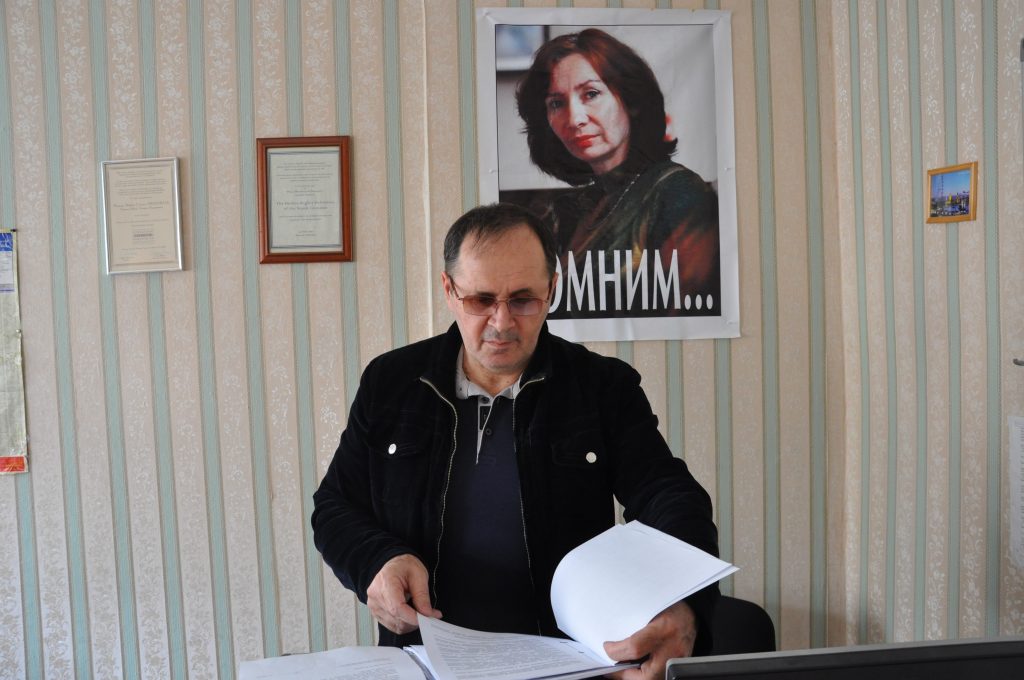
 

Oyub Titiev in Memorial’s local office in Grozny, Chechnya. In the background a portrait of his murdered colleague, Natalia Estemirova.

[In January 2018, Chechen authorities started a campaign against the leading Russian human rights organisation Memorial, by jailing prominent human rights defender and head of Memorial’s local office, Oyub Titiev, on fabricated charges. In February, it was announced that the capital of Chechnya, Grozny, was confirmed by FIFA as the team base for Egypt.]

Such engagement is consistent with FIFA’s responsibility to respect human rights under the UN Guiding Principles on Business and Human Rights,” the letter addressed to Mr. Infantino, President of FIFA, read. “It is also consistent with the commitment in article 3 of FIFA’s statutes to promote the protection of international human rights, and would demonstrate determination to implement its new Human Rights Policy”. [see also: https://humanrightsdefenders.blog/2017/02/02/fifa-governance-committee-starts-dealing-with-a-human-rights-policy/]

FIFA has now replied (follow link for full text) to the letter, thanking the rights groups for raising concern about the detention of Oyub Titiev: “… FIFA values the important work done by human rights defenders such as Mr. Titiev and yourselves and is, in accordance with paragraph 11 of its human rights policy, committed to respect and help protect the rights of everyone who is working to advance human rights in relation to FIFA’s activities.” 

This is quite a change from the traditional view that politics and sport have nothing to do with each other, but it does not say WHAT and with WHOM in Russia FIFA has taken up the case. That will probably remain confidential.
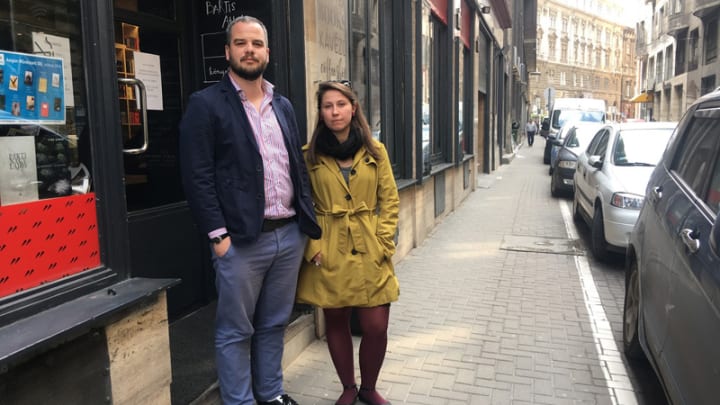
Excellent background piece to Hungary’s Stop-Soros mania

May 18, 2018

published a long, interesting article entitled “The Open Society Foundations — and their enemies“. It is very much linked to the anti-Soros drive earlier reported [https://humanrightsdefenders.blog/2018/05/09/urgently-seeking-professors-to-stop-the-anti-soros-bill-in-hungary/] but digs deeper and looks at the various dilemmas facing the Open Society Fund and similar donors in authoritarian/populist settings. The relocation of the Budapest office provides a timely backdrop.

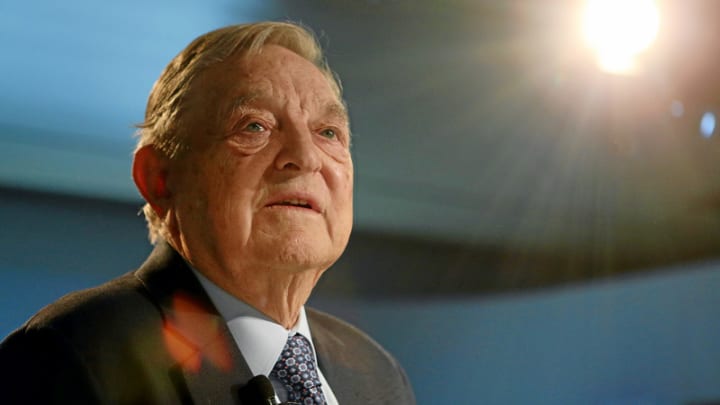
George Soros founded the Open Society Foundations. Photo by: Mirko Ries / World Economic Forum / CC BY-NC-SA

Here some interesting quotes but the whole article is worth reading:

The risk that Open Society weighs is not the potential for its activities to create controversy, but for that controversy to prevent the foundation from being able to carry out its activities. “We don’t exist to defend ourselves. We exist to make change out there,” .. “If we only existed to protect ourselves, then that would be their victory….That is a classical philanthropic reaction — let’s not go anywhere near that, because that’s controversial. If you do that, if you allow controversy … to stop you from doing things, then an authoritarian government or a reactionary player in society … have a very easy task.” — Jordi Vaquer, Open Society Foundations’ regional director for Europe

..Hungary’s Prime Minister Viktor Orban is not alone in flinging those accusations — Soros is a favorite boogeyman for pro-Brexit voters in the United Kingdom, populists across Eastern Europe, and even Republicans in the United States. But in Hungary, the anti-Soros campaign has moved to the very center of political life. Orban’s party and supporters invoke Soros’ name and image to paint an apocalyptic vision of what might happen if the Hungarian-American financier, his foundation, and the NGOs they support are allowed to carry out their alleged “globalist” agenda.

Devex spoke to Gabor Gyulai, director of the Refugee Programme at the Hungarian Helsinki Committee, and another NGO Power of Humanity.

“In countries where millions of people are actively working in solidarity with refugees, or with LGBTI people, or with victims of domestic violence, civil society organizations have something they can build on to shape a message that will attract broader support. In a society where the vast majority believes that what you are standing up for is not a valid cause, there is much less to build on, said Gyulai, an expert on refugee issues who is also working with the United Nations to build a global network of open access courses on asylum law. The problem gets even more difficult when the state is actively working to prevent that kind of coalition from forming.”  Less than a week after Devex met with him, Gyulai’s name appeared on the list of “Soros mercenaries.”

…..

The risk that Open Society weighs is not the potential for its activities to create controversy, but for that controversy to prevent the foundation from being able to carry out its activities. “We don’t exist to defend ourselves. We exist to make change out there,” Vaquer said. “If we only existed to protect ourselves, then that would be their victory….That is a classical philanthropic reaction — let’s not go anywhere near that, because that’s controversial. If you do that, if you allow controversy … to stop you from doing things, then an authoritarian government or a reactionary player in society … have a very easy task.” — Jordi Vaquer, Open Society Foundations’ regional director for Europe

….

Zoltan Mester (left) and Vilja Arato, employees of the With the Power of Humanity Foundation. Michael Igoe/Devex
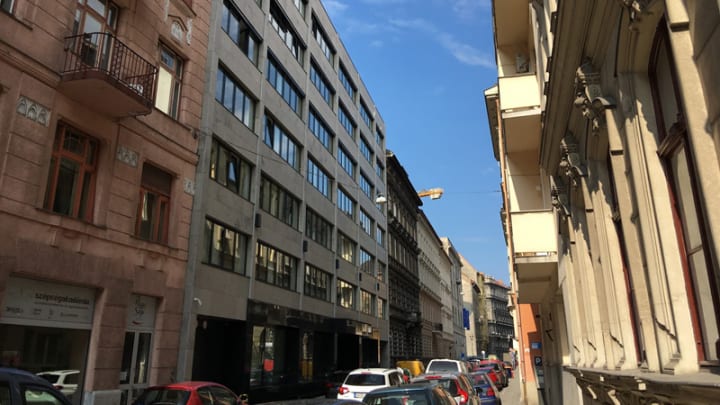
Among With the Power of Humanity’s staff, the debate over what is and is not an encroachment into party politics plays out constantly, Mester said. “Every day it’s a big fight … because especially in this time and especially in Hungary, everybody thinks that political is something bad … In Hungary if you say ‘political,’ you think about … party politicians.”…

“George Soros could have done many other things with his fortune, but that was the vision from the start — that those two were going to be the pillars of the ways in which he would then seek to define open society,” Vaquer said. “If you look at our budget 30 years later, that’s still what we are doing overwhelmingly. We’re still supporting civil society organizations and individuals. We haven’t changed that.”

The Open Society Foundations office in Budapest, Hungary. Devex/Michael Igoe

Faced with a constant barrage of accusations that they are part of George Soros’ secret plan to meddle in national politics, some of Open Society’s grantees find themselves responding to the obligatory questions that follow…..In accusing the foundation of orchestrating a global campaign to transform Europe and erode countries’ national sovereignty, OSF’s enemies ascribe much more power and reach to the organization than its employees and grantees would ever claim to have. It is tempting to do the same thing when asking if Open Society has been successful in achieving its goals. The declines in democratic freedom currently underway in many countries where Open Society operates might raise questions about whether the foundation and its benefactor have been operating with the right theory of change.

….

With the erosion of the values and norms it promotes, Open Society is not necessarily thinking differently about how the foundation measures its impact, but its leaders are coming to terms with a more realistic view of what is possible. “I think it has made us extremely aware of the limitations of what can be achieved with cross-border philanthropic activity,” Vaquer said. “It was perhaps a product of the exceptional time that was the 1990s that OSF had such a disproportionate impact on some places, in terms of being part of their political transformation, but that was probably exceptional.”

Igoe michael 1

[Michael Igoe is a Senior Reporter with Devex, based in Washington, D.C. He covers U.S. foreign aid, global health, climate change, and development finance. Prior to joining Devex, Michael researched water management and climate change adaptation in post-Soviet Central Asia, where he also wrote for EurasiaNet. Michael earned his bachelor’s degree from Bowdoin College, where he majored in Russian, and his master’s degree from the University of Montana, where he studied international conservation and development.]
….


Human rights defenders in Asia suffer reprisals says Gilmour

May 18, 2018

On 18 May 2018 several newspapers – such as The Guardian and Scoop (NZ) – carried a piece by Andrew Gilmour, UN Assistant Secretary-General for Human Rights based in New York, which describes with great frankness how human rights defenders in Asia are under attack. To quote liberally:

In February, hundreds of Filipino participants in the peace process, environmental activists and human rights defenders were labeled “terrorists” by their own government. The security of the individuals on this list is at stake, and some have fled the Philippines. The UN independent expert on the rights of indigenous peoples – Victoria Tauli-Corpuz – was on this list. This followed the vilification only months before of another UN independent expert – Agnès Callamard – who deals with extra-judicial executions. Philippine President Rodrigo Duterte declared that he wanted to slap her, and later announced that he would like to throw other UN human rights officials to the crocodiles. The national Commission on Human Rights in the Philippines was threatened with a zero budget and its former chair, Senator Leila de Lima, is in detention for her advocacy. [see also: https://humanrightsdefenders.blog/2018/03/10/there-seems-to-be-no-limit-to-what-duterte-is-willing-to-say-and-may-get-away-with/]

…..If governments in the region can target high profile human rights defenders and those associated with the UN with impunity, what is the message to others at community level who are not afforded the same visibility? ..

In the run up to the 2018 national elections in Cambodia, the Government has cracked down on the opposition, independent media and civil society. ..

In Myanmar, there were reports of violent reprisals by Tatmadaw, the armed forces, against civilians who met with Yanghee Lee, UN independent expert on Myanmar, following her visit to Rakhine State. …..

Bogus accusations of abetting terrorism are a common justification that we hear from governments to defend the targeting of the UN’s important civil society partners. We have countless cases of advocates charged with terrorism, blamed for cooperation with foreign entities, or accused of damaging the reputation or security of the state.

I recently met with a group of human rights defenders from across South-East and South Asia about their experiences, which in some cases have been made worse by speaking out or if they share information with the UN. The stories about these reprisals were common – they have been charged with defamation, blasphemy and disinformation. They are increasingly threatened and targeted for their work, indeed some have been labeled as terrorists. There were also accusations of activists being drug addicts or mentally unwell.

Some governments feel threatened by any dissent. They label human rights concerns as “illegal outside interference” in their internal affairs; or as an attempt to overthrow regimes; or as an attempt to impose alien “Western” values.

Opposition to economic development and investment projects seems to incite particular ire. Agribusiness, extractive industries, and large-scale energy initiatives, including those that involve indigenous peoples’ land, often bear the brunt of the backlash.

Women’s rights activists and advocates of the rights of lesbian, gay, bisexual, transgender and intersex persons seem to be particularly targeted. Many are ostracized by their communities, labelled as outcasts, or branded as immoral. Sexual violence is part of this backlash, including rape threats.

Those working for religious freedom have been called ‘anti-Islam’, they and their families threatened or harassed. When advocacy for religious tolerance intersects with that of women’s rights and sexual freedom, the stakes can be even higher.

……

We are taking these allegations seriously, and addressing particular incidents of reprisals with governments. Civil society has to be heard – for the sake of us all.


For more of my posts on reprisals: https://humanrightsdefenders.blog/tag/reprisals/

http://www.scoop.co.nz/stories/WO1805/S00115/human-rights-advocates-in-asia-under-attack.htm

https://www.theguardian.com/commentisfree/2018/may/18/imprisoned-threatened-silenced-human-rights-workers-across-asia-are-in-danger


Citizen Lab at big RIGHTSCON in Toronto

May 12, 2018
 RightsCon, held this year in Toronto from 16 – 18 May 2018, brings together an international audience to discusses all topics related to human rights in the digital age, such as surveillance, AI, censorship, access to the internet, etc. Citizen Lab researchers, fellows, and associates will be participating in panels and events throughout the week.Citizen Lab is the organization that helped Ahmed Mansoor with his iPone spyware in 2016: https://humanrightsdefenders.blog/2016/08/29/apple-tackles-iphone-one-tap-spyware-flaws-after-mea-laureate-discovers-hacking-attempt/.
 on 11 a run-down of topics and where you can find them:

Session name Citizen Lab participant(s) Date Time Room location
Artificial Intelligence: Lethal Autonomous Weapons Systems and Peace Time Threats Ron Deibert Wednesday, May 16 14:30 – 15:45 206B
Access My Info: Exposing Disconnects Between Data Protection in Theory and in Practice Masashi Crete-Nishihata, Chris Parsons, Bram Abramson Wednesday, May 16 16:00 – 17:00 200C
Do We Need Free Speech Legislation like We Need privacy Laws? Moses Karanja Wednesday, May 16 16:00 – 17:00 201A
Scrutinizing the Little Brothers: Corporate Surveillance and the Roles of the Citizen Consumer and Company Chris Parsons Wednesday, May 16 17:15 – 18:15 203B
Crypto Wars Revisited? Hosted by the Canadian Internet Policy and Public Interest Clinic & Citizen Lab Wednesday, May 16 17:15 – 18:15 206C
Who Did it? Why We Need an International Cyber Attribution Organization to Address Nation-State Attacks in Cyberspace Ron Deibert Thursday, May 17 12:00 – 13:15 200C
Access My Info: Running a Personal Data Access Campaign Andrew Hilts Thursday, May 17 14:30 – 15:45 200A
Disappearing Space, Disappearing Voices: How the Chinese Government & Big Tech are Silencing Tibetans Online Masashi Crete-Nishihata Thursday, May 17 16:00 – 17:00 203B
Understanding Freedom of Expression in Southeast Asia: Internet Freedom and Online Censorship Irene Poetranto Thursday, May 17 16:00 – 17:00 TBA
Coders Free Speech Rights in The Americas at Risk Sarah McKune Thursday, May 17 16:00-17:00 201C
Journalism Free Expression and Digital Security Masashi Crete-Nishihata Thursday, May 17 17:15 – 18:15 205A
Beyond Security Updates: Providing Relevant, Accessible, and Sustainable Digital Security Advice Online Christine Schoellhorn, John Scott-Railton Thursday, May 17 17:15 – 18:15 201C
The Surveillance Tool We Love to Carry: Cell Phones, Searches, and Privacy in the Evolving Legal Landscape Lex Gill, Jon Penney Thursday, May 17 17:15 – 18:15 204A
How to win the privacy/surveillance debate Jon Penney Thursday, May 17 17:15-18:15 206A
How does the Kremlin Manipulate the Russian IT Industry to Exert Control over the Internet Ksenia Ermoshina, Jakub Dalek Friday, May 18 9:00 – 10:15 203A
A Technologist, a Policy Wonk, and an Internet Advocate Walk into a Bar: Assessing how Internet Communities Build Bridges for Human Rights Moses Karanja, Masashi Crete-Nishihata Friday, May 18 10:30 – 11:45 200A
My First Transparency Report Bram Abramson, Chris Parsons Friday, May 18 10:30 – 11:45 206A
What have We Learnt about 5 Years of Internet Disruptions in Africa? Moses Karanja Friday, May 18 12:00 – 13:15 201A
Tech Against Terrorism – Respecting Human Rights in Tackling Terrorist Exploitation of the Internet Irene Poetranto Friday, May 18 12:00 – 13:15 201B
Frontiers of Feminist Issues Online: Understanding the Tensions and Opportunities at the Intersection of Innovations, Digital Rights, and Security Irene Poetranto Friday, May 18 14:30-15:45 203A
Have We Entered a Brave New World of Global Content Takedown Orders? Jon Penney Friday, May 18 16:00 – 17:00 206C
CLE: Ethical Duties in the Digital Age: Encryption Done Dirt Cheap Sarah McKune Friday, May 18 16:00-18:00 206A
Online Anonymity: Key Lessons & Emerging Threats Bram Abramson Friday, May 18 17:15 – 18:15 200A
Chilling Effects, Surveillance, and the Future of Automation and the Law Jon Penney Friday, May 18 17:15 – 18:15 TBA
Big Brother is Really Watching: Digital Surveillance & Gender-based Violence Irene Poetranto Friday, May 18 17:15 – 18:15 206D

For previous event see: https://citizenlab.ca/2016/02/citizenlab-partners-rightscon-2016/

Urgently seeking professors to stop the Anti-Soros bill in Hungary

May 9, 2018

On 9 May 2018, Hungary’s (remaining) civil society issued the Professors Solidarity Call below, signed by 77 professor until now and asking for more signatories. It concerns the so-called “Stop Soros” bill, to be voted by the Hungarian parliament very soon, which will have a devastating impact on both Hungarian civil society and the asylum seekers and refugees that are already in a dire state. That Victor Orban is behind an ‘anti-Soros bill’ is the more remarkable as he himself was the beneficiary of a Soros scholarship [in 1988 a dissident Hungarian university graduate wrote a letter to George Soros, a billionaire philanthropist, asking for help obtaining a scholarship to Oxford University. In the letter, which has recently resurfaced, the young Viktor Orban said he wanted to study the “rebirth of civil society”. He got the scholarship.– the Economist 7 April 2018].

(see also my earlier: https://humanrightsdefenders.blog/2018/02/20/250-ngos-address-letter-to-hungarian-parliament-regarding-restriction-on-the-work-of-human-rights-defenders/ and https://humanrightsdefenders.blog/2018/03/19/ahmed-h-personifies-the-real-danger-of-populist-anti-terror-measures/)

PROFESSORS’ SOLIDARITY DECLARATION AND CALL FOR ACTION IN DEFENCE OF THE HUNGARIAN HELSINKI COMMITTEE AND THE HUNGARIAN CIVIL SOCIETY

We, 77 university professors and academics from 28 countries around the world, express our solidarity with the Hungarian Helsinki Committee and the independent Hungarian civil society, which currently faces an imminent existential threat.

The so-called “Stop Soros” bill, to be voted by the Hungarian Parliament in mid-May 2018, will have a devastating impact on both Hungarian civil society and those vulnerable human beings that cannot count on anyone else’s support. The new legislation will allow the government to simply ban the activities of organizations assisting refugees and migrants in a fast and arbitrary process. Activities such as legal aid to asylum-seekers, reporting to the UN or the EU, holding university lectures about refugee law or recruiting volunteers will be rendered illegal, if these are performed by civil society actors who dare to criticise government practices. Practices, which are equally condemned by the EU and the international community.

The Hungarian Helsinki Committee (HHC) is an outstanding human rights organization, well-known and respected for its professionalism around the world, not only by civil society, but by academia, state authorities and the judiciary as well. The HHC has massively contributed to the promotion of refugee law education and legal clinics on various continents. We all personally know and highly respect their work. States should be proud of such NGOs, instead of aiming to silence them.

Strong and independent civil society organisations are as indispensable for democracy and the rule of law as strong and independent universities. If NGOs such as the Hungarian Helsinki Committee are threatened, democracy is threatened. If a prestigious organization, winner of various international human rights awards, can simply be banned from providing legal aid to refugees, if a globally reputed voice of human rights can be silenced with an administrative measure in an EU member state, then further dramatic anti-democracy measures are likely to follow. There is a real risk that the Hungarian example will be increasingly copied elsewhere, and soon it may be too late to stop the domino effect.

We call on our governments to express, without delay, their vivid discontent with Hungary’s legislation aiming at annihilating independent civil society. We call on universities around the world to do the same and actively demonstrate their solidarity with the Hungarian Helsinki Committee and the entire threatened Hungarian civil sector. We call on the European Union to prove to the world its credibility as a guardian and global promoter of fundamental rights, and immediately take action to prevent this flagrant human rights violation from happening on its own territory.

Signatures (in alphabetical order) at the end of the document: https://www.helsinki.hu/wp-content/uploads/Professors-solidarity-call-HHC-HU-NGOs-2018.pdf

https://www.economist.com/news/europe/21739968-election-april-8th-hungarys-prime-minister-looks-unbeatable-viktor-orban-set

New NGO launched: International Human Rights Council – Hong Kong (IHRC-HK) but lacks detail

May 8, 2018

On 8 May 2018 a new NGO was launched: the “International Human Rights Council – Hong Kong” (IHRC-HK) based in Hong Kong . The geographical gambit is not totally clear but the press release speaks of the “active participation of the dedicated human rights defenders from the various countries in Asia, specifically from the region of South Asia”, while a footnote states that the IHRC-HK is a “regional human rights” organisation.

Mr. Baseer Naveed, the executive director, while announcing the formation of the IHRC-HK, stated, that it is to “Articulate the voice of the victims, place it in their proper human and legal context, examine the justice delivery system with a view to its reform and the enforcement of the rule of law both for punitive and preventive action”. The IHRC-HK says it will focus on cases of individuals that are subjected to violations by the State and their functionaries exposing also the institutions of justice which have become the tools of injustice and repression. These can be followed by Urgent Responses, Statements, and Reports for sessions of the UN Human Rights Commission and different stakeholders. The purpose of Urgent Response is: To expose the authorities that have turned a blind eye to abuses, press for immediate legal action against perpetrators, redress to the victims and to mobilize civil society response by way of signatures.

The new NGO claims a very broad mission: “the strengthening of democracy and human rights, Constitutional Rights, Legal Empowerment, particularly among Women, Minorities and persons with Special Needs by campaigning for the establishment of the Rule of Law and the strengthening of the institutions of justice…..The IHRC-HK will work for justice, peace by promoting human dignity and equality within the community and in the State institutions. Wherever possible seek ways to promote Sustainable Development thereby guaranteeing the socio-economic rights of the people.

There is preciously little information on the new organisation’s effective capacity, from where it gets its funding and how it distinguishes itself from existing NGOs, such as the Asian Human Rights Commission or Forum-Asia. Time will tell.

http://ihrchk.org/2018/05/08/world-the-international-human-rights-council-hong-kong-ihrc-hk-launched/

World Press Freedom Day: a good time for honoring journalists

May 4, 2018

Yesterday, 3 May 2018, was World Press Freedom Day and many noteworthy activities took place. The Economist and many other newspapers of course paid attention with grisly statistics from the Committee to Protect Journalists and other sources. It was also a time to award courageous journalists and cartoonist; just to mention a few:

Musa Kart was announced as the 2018 laureate of the International Press Cartoon Prize by Cartooning for Peace.

The 2018 International Press Cartoon (or Drawing) Prize, presented biannually in Geneva, was awarded to the Turkish cartoonist who was recently sentenced to almost four years in prison for “aiding terrorism”. He is a 64-year-old artist working with the Turkish daily newspaper Cumhuriyet and was described as a “free spirit and a remarkable artist” by Swiss cartoonist Chappatte, a member of the jury.

It was also the day of the presentation of the first Ari Rath Prize for Critical Journalism (established to honour journalists who have rendered outstanding services to critical reporting on immigration, expulsion and asylum, committed to respect for human rights, in the spirit of the former editor-in-chief of the Jerusalem Post, who died in January 2017). Austrian journalist Alexandra Föderl-Schmid was the laureate.

Alexandra Föderl-Schmid who helped shape the daily newspaper “Der Standard” for almost three decades. / Picture: © Wikimedia Commons / Franz Johann Morgenbesser.

For more on the many human rights awards for the media and journalists see: http://trueheroesfilms.org/thedigest/

The Stockholm Center for Freedom (SCF) partnered with the London-based International Observatory of Human Rights (IOHR) to commemorate World Press Freedom Day in Stockholm with an event focused on Turkey, which leads the world in the highest number of journalists in jail. According to SCF data, 258 journalists and media workers were in jail as of today, with 59 of them already convicted on dubious charges of terrorism, defamation and coup plotting. In addition, 142 Turkish journalists who were forced to go into exile or still remain at large in Turkey are wanted for arrest by authorities.


Nine NGOs wrote on World Press Freedom Day a joint letter expressing deep concern over the continued arbitrary detention of Tashi Wangchuk, a Tibetan language advocate arrested in 2016 after giving an interview to the New York Times. Tashi Wangchuk has since been tried for “inciting separatism,” a politically motivated charge that violates his rights to freedom of expression and association. [Tashi Wangchuk began raising public concern for the lack of rightful Tibetan-language education …In late 2015, he spoke with the New York Times in an interview about his attempts to promote the teaching of Tibetan; he insisted the interview be on the record. A journalist from the New York Times also accompanied him to Beijing, where Tashi Wangchuk attempted to file a lawsuit to ensure local authorities guarantee the provision of Tibetan language education. The result was an article and video documentary featured in the New York Times in November 2015.

In his article, Tashi Wangchuk insisted that his language advocacy was peaceful and non-political. His attempts to persuade the Chinese government to guarantee Tibetan language instruction were conducted through official channels and he made it clear that he was not advocating Tibetan independence. Instead, his main focus was ending the destruction of Tibetan language and culture. Despite taking these precautions, Tashi Wangchuk was arrested on 27 January 2016, held in an unknown location and later stood trial in a closed session. See also:

https://humanrightsdefenders.blog/2018/03/07/china-and-the-un-human-rights-council-really-win-win/

 Tashi Wangchuk press freedom day ngos


And then there were many smaller events all around the globe that also deserves attention, such as Amnesty International Nepal voicing support to journalists as human rights defenders (such as Charan Kumar Prasai and Subodh Pyakurel and Rajan Prasad Kuikel).

———
https://www.economist.com/blogs/graphicdetail/2018/05/daily-chart-0 
http://www.myrepublica.com/news/41038/?categoryId=81
http://www.cartooningforpeace.org/en/
https://www.swissinfo.ch/eng/business/world-press-freedom-day_imprisoned-turkish-caricaturist-awarded-geneva-cartoon-prize/44092346


https://stockholmcf.org/scf-iohr-partner-to-celebrate-world-press-freedom-day-with-a-focus-on-turkey/
https://www.vindobona.org/article/presentation-of-the-first-ari-rath-prize-for-critical-journalism
https://www.hongkongfp.com/2018/05/03/world-press-freedom-day-xi-jinping-release-tibetan-tashi-wangchuk-charged-nytimes-report/

Barbara Bernath is the new SG of the Association for the Prevention of Torture (APT)

April 30, 2018

The Association for the Prevention of Torture (APT) has appointed Barbara Bernath as it’s new Secretary General, as of 1 July 2018. [see: https://humanrightsdefenders.blog/2017/12/15/mark-thompson-old-hand-in-apt-leaves-in-2018/] Ms. Bernath has extensive experience in torture prevention with the APT over the last twenty years, including as Chief of Operations since 2009. She has worked in all regions of the world and is very much appreciated by the broad variety of governmental and non-governmental partners of the APT.

“Barbara Bernath is the right person to implement APT’s Strategic Plan and pursue the Agenda for Change adopted by the Board. She is aware of the new challenges regarding the prevention of torture and will know which measures to take in the future to address them, taking into consideration the expectations from our partners in the field,” stated APT President, Martine Brunschwig Graf.

“We must propose concrete steps that can address the root causes of torture and ill-treatment, facilitate dialogue among all actors and accompany them in their national efforts towards societies free of torture.” said Barbara Bernath.

A Swiss/French national, Barbara Bernath holds a Master’s Degree in international law from the Geneva Graduate Institute of International and Development Studies (IHEID). Before joining the APT, she worked as a Delegate of the International Committee of the Red Cross and held several posts in the human rights field including with the Swiss Federal Department of Foreign Affairs. She speaks French, English, Spanish and German.

https://www.apt.ch/en/news_on_prevention/apt-appoints-new-secretary-general/

2018: Latin America still the graveyard for environmental human rights defenders

April 28, 2018

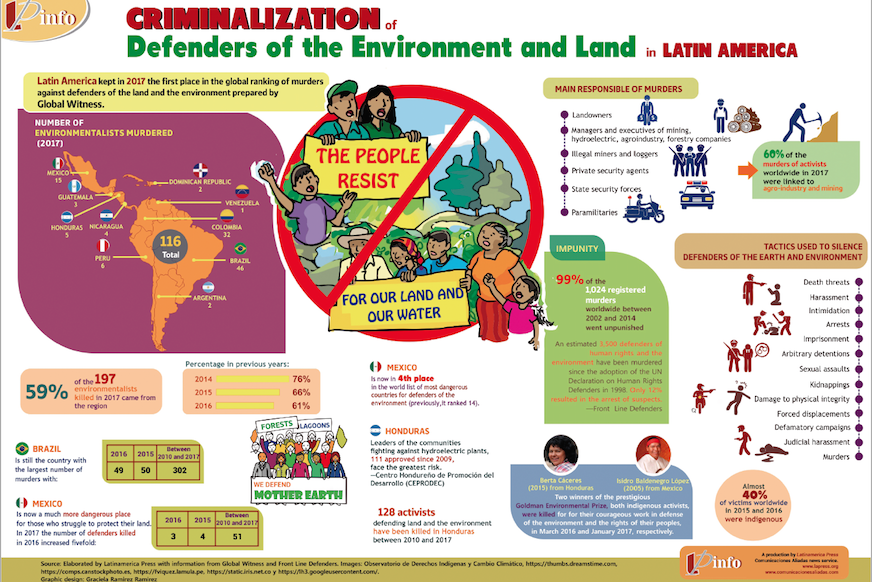
This blog has on several occasions drawn attention to reports that show that Latin America is among the deadliest places to be a human rights defender [e.g. https://humanrightsdefenders.blog/2016/01/06/latin-america-philippines-most-dangerous-places-for-human-rights-defenders/]. An infographic – published on 27 March 2018 by Latin America Press – summarises criminalization of land & environmental rights defenders in Latin America.

 
http://www.lapress.org/objetos/informe/48PI_criminalization-defenders-of-the-land.pdf
In 2016/17 an Amnesty International team took two trips to Peru and one to Paraguay and spoke with representatives of 10 human rights groups in Peru and 14 in Paraguay. AI concludes that environmental leaders are under constant threat. Authorities in Paraguay and Peru are unjustly criminalizing activists who speak out to protect their environment and land, an Amnesty International report released Thursday revealed. [see also: https://humanrightsdefenders.blog/2016/02/27/alarming-criminalisation-of-human-rights-defenders-in-latin-america/]

The report, A Recipe for Criminalization: Defenders of the Environment, Territory and Land in Peru and Paraguay, outlined the three “ingredients” both countries use to undermine the efforts of human rights defenders. First, they delegitimize activists through smear campaigns. Second, they apply laws and regulations that allow for forced evictions. And, third, they misuse the criminal justice system to prosecute activists for unfounded reasons.

Those who bravely stand up to defend their land and the environment are frequently targeted because of their work. These attacks have a devastating impact on their physical, mental and emotional wellbeing, as well as that of their families and communities,” Amnesty International Americas director Erika Guevara-Rosas said in a press release.

The report included examples of how these ingredients combine on the ground. For example, Amnesty International highlighted the case of community activists working to protect their home in Peru’s Cajamarca region from the gold and copper Conga mining project. On 26 April 2013, police arrested 16 protesters on trumped up charges of abduction and coercion. The state prosecutor sought 30-year prison sentences. But the evidence presented was secondhand and so spotty and contradictory that a court dismissed the case in 2017.

In Paraguay, the Tekoha Sauce community of the Avá Guaraní People was evicted from their ancestral lands by a court order following a dispute with local businessman German Hultz. The community was forced onto a nature reserve where they struggle to survive because hunting and fishing is not allowed. During the court proceedings leading up to the eviction, their opponents stigmatized the indigenous community by referring to them as a “gang of criminals.”

On 24 April 2018, Front Line reported that on 19 April 2018, Olivia Arévalo Lomas, a woman human rights defender and spiritual leader of the Shipibo-Konibo indigenous peoples, was killed by unknown assailants just a few feet from her home in the community of ‘Victoria Gracia’, in Peru. The defender was shot in the chest and died instantly. Her body was left on the street in full view of her local community (https://www.frontlinedefenders.org/en/profile/olivia-arevalo).  The killing of Olivia Arévalo Lomas comes after a spike in violence, threats and intimidation against members of FECONAU communities in Ucayalí, such as Santa Clara de Uchunya. In the past six months, several members of FECONAU have been subjects of attacks. A representative of FECONAU, Edinson Mahua, was shot at close range and narrowly escaped serious injury, while community leaders in Ucayalí have received anonymous death threats. 

In the meantime Colombia has seen a spike in assassinations of human rights defenders in 2018, according to study by Colombian NGO Somos DefensoresA total of 46 human rights leaders have been killed so far this year, up from 26 in the same period last year; paramilitary groups were responsible for three of the killings, four were murdered by guerrilla groups and another four were killed at the hands of security forces. The investigative body also recognized a total of 132 acts of aggression against public defenders so far this year. Of the registered acts, there were 12 attacks, 66 death threats and one case of forced disappearance. The provinces in which the aggression occurred were predominately in areas at the heart of the country’s conflict, with Cauca, Antioquia and Norte de Santander figuring heavily in the statistics.

The UN has said it is “extremely concerned” about the increase in violence surrounding social leaders while Inspector General Fernando Carrillo has “urged” authorities to “assume their commitments to defend the lives of social leaders.” While the government has attempted to reel in the varying armed criminal groups responsible for a lot of these acts — as seen with the 2016 peace deal with the FARC guerrilla organisation, and ongoing peace negotiations with the ELN rebel group — it has clearly failed to provide basic security, and protect human rights defenders, rural community leaders and other social activists.

—-

https://www.ecowatch.com/environmental-activists-amnesty-international-2563882266.html

https://reliefweb.int/report/peru/recipe-criminalization-defenders-environment-territory-and-land-peru-and-paraguay

https://colombiareports.com/killing-of-human-rights-leaders-in-colombia-more-than-doubles-study/

https://www.business-humanrights.org/en/latin-america-infographic-summarises-criminalization-of-land-environmental-rights-defenders-in-the-region

Bikes and digital power for human rights defenders in Africa

April 27, 2018
Africa remains a continent of contrasts, also with regard to human rights defenders. Just to illustrate:
(1) Bikes for human rights defenders: Girls Empowerment Network (GENET) in Malawi has donated 30 bicycles to child protection groups in Dowa district to assist in its ongoing girl child protection programs. Speaking in an interview with the Malawi News Agency Mana after giving out the support at Kayembe Primary school, GENET Programs Officer, Twambilile Kayuni said their organization thought of providing the support as one way of easing transportation challenges among girl child protection groups in the area. “As GENET, we thought it critical to ease the challenge of transport among our village child protection groups so that when any violence has happened to a child they should be able to rush to the scene and take action“. She added that the bicycles have been given to all schools in the area, human rights defenders, mother groups, Area Development Committees (ADCs) and chiefs in order to assist in their child protection duties in a more coordinated manner…Group Village Headwoman Siwinda said:”In my area many girls were being forced to marry but now with the coming of GENET through COMIC relief and OXFAM Malawi things have changed and as of now many girls have gone back to school,” said GVH Siwinda.