
On how to revigorate the human rights ides, see e.g.: https://humanrightsdefenders.blog/2019/05/30/positive-communication-is-the-only-way-forward-for-effective-human-rights-work/
share information on human rights defenders, with special focus on human rights awards and laureates
On how to revigorate the human rights ides, see e.g.: https://humanrightsdefenders.blog/2019/05/30/positive-communication-is-the-only-way-forward-for-effective-human-rights-work/
The House of Representatives in the Philippines on 2 June 2019 passed the proposed Human Rights Defenders Protection bill that should prevent human rights violations and abuses committed against HRDs. Surprsingly all 183 congressmen present at last night’s session voted for House Bill 9199, a consolidation of bills filed by Rep. Edcel Lagman (LP, Albay) and Makabayan Reps. Carlos Isagani Zarate, Antonio Tinio, Emmi de Jesus, Arlene Brosas, Ariel Casilao, and Sarah Jane Elago. A badly needed bill as the Philippines is one of the worst places for HRDs [see e.g.: https://humanrightsdefenders.blog/2018/11/08/and-in-the-philippines-the-killing-of-human-rights-defenders-also-continues-with-benjamin-ramos/]. As always the real question is what wil happen in practice.
The bill guarantees HRD rights and freedoms; mandates the State and public authorities to respect, protect, and fulfill these rights and freedoms; and imposes appropriate sanctions to counter impunity. Lagman said Karapatan Alliance for the Advancement of Human Rights recorded the killing of 697 human rights defenders in the country for the period 2001-2018 while Task Force Detainees of the Philippines documented 76 human rights violations affecting 333 HRDs from September 2013 to September 2016 alone.
IF signed into law, the bill will also create a Human Rights Defenders Protection Committee chaired by a commissioner of the Commission on Human Rights and six members who will be jointly nominated by concerned civil society organizations. HB 9199 is based on the United Nations Declaration on Human Rights Defenders and the Model National Law on the Recognition and Protection of Human Rights Defenders drafted by the International Service for Human Rights.
The bill grants the following rights and freedom to human rights defenders:
The bill penalizes those who will violate the rights and freedom. Human right defender’s obligations, meanwhile, include conducting investigation; adopting human rights based governance; strengthening protection program; promoting and facilitating human rights education, among others.
http://tempo.com.ph/2019/06/03/house-oks-human-rights-defenders-bill/
As many news outlets report today it is 30 years ago that China cracked down on Tiananmen Square. China tries mostly to forget about it and make others forget it about it too. Still, it recenty came out to defend it as the “correct policy”. “That incident was a political turbulence and the central government took measures to stop the turbulence which is a correct policy” Defence minister Wi Fenghe Wei told a regional security forum in Singapore. “The 30 years have proven that China has undergone major changes,” he said, adding that because of the government’s action at that time “China has enjoyed stability and development“. On the other hand Wu Qian, a spokesman for the defence ministry, decried the use of the word “suppression” to describe the crackdown.
But it does cover Chinese rock musician Li Zhi, who has been outspoken and sung songs about social issues including the Tiananmen Square crackdown, and has not been seen for three months. The South China Morning Post of 2 June has a detailed piece on what happened to this singer: His upcoming tour has been cancelled and his social media accounts taken down. Then his music was removed from all of China’s major streaming sites – as if his career had never existed at all. “Now this square is my grave,” Li sang. “Everything is just a dream.”
The disappearance of Li, the musician, has left fans searching for answers. On February 20, the official Weibo social media account for the 40-year-old’s concert tour posted a photograph of its team in front of a truck about to embark on scheduled performances in Sichuan province in China’s southwest. Just two days later, however, the account posted an image of a hand wearing what appeared to be a hospital wrist band and the words: “Very sorry.” The next post, published the same day, announced without explanation that the tour was cancelled and that ticket purchasers would shortly receive a refund. Fans flooded the comment section with wishes for a speedy recovery.
But the suggestion that a health issue was behind the cancellations was later thrown into doubt. A statement published in April by Sichuan’s culture department said it had “urgently halted” concert plans for a “well-known singer with improper conduct” who was previously slated for 23 performances – the same number of concerts which Li had scheduled in the province. It said 18,000 tickets were fully refunded.
..Li’s presence on the Chinese internet was completely erased. An April 21 central government directive ordered all websites to delete any audio or video content relating to five of Li’s songs, according to China Digital Times, an organisation that publishes leaked censorship instructions. The authenticity of the directive could not be independently verified.
“There’s pretty much a consensus” among those working in the industry that Li’s disappearance from public view is due to the sensitive anniversary, said a music industry professional who spoke on condition of anonymity because of fear of government retribution. “He did a number of songs that were considered politically risky, making references to June 4, 1989, and so he’s been out of the picture,” the industry professional said.
Li’s current whereabouts could not be confirmed. His company and record label did not respond to repeated interview requests. Li’s songs alluding to the Tiananmen Square protests – The Square, The Spring of 1990 and The Goddess, in honour of the Goddess of Democracy that students erected – were part of his earlier works. In recent years, the bespectacled singer has avoided making public political statements, focusing more on promoting his performances. In 2015, state-run China Daily newspaper published a profile of Li, describing him as a performer who easily sells out concerts. After years of working as an independent artist, he signed last autumn with Taihe Music Group, a major Chinese record label. Fans who knew Li as a largely apolitical entertainer expressed bewilderment online about his disappearance. Others made veiled references to China’s internet censorship. On Zhihu, a question-and-answer website similar to Quora, one user wrote that people posed questions every day about what might have happened to Li, but these posts always disappeared the next morning “as if nothing had happened at all”.
Another user said: “I don’t dare to say it, nor do I dare to ask.” A fan who has been sharing Li’s music on his personal account spoke on condition of anonymity because he feared his employers would punish him for discussing the subject. “Everyone knows the reason for Li Zhi’s disappearance,” the fan said. “But I’m sorry, I can’t tell you, because I follow China’s laws and also hope that Li Zhi can return.” Quoting one of Li’s lyrics, the fan added: “The world will be all right.” Fans continue to circulate videos of Li’s performances online. His complete discography has been uploaded onto file-sharing websites, with back-up links in case the original ones are shuttered. Some users shared tribute art, including a black T-shirt with the words “improper conduct”. A few years ago, in a performance in Taiwan, Li bounced around on stage, strumming his guitar and repeating a chorus in apparent tribute to the spirit of Chinese propaganda.
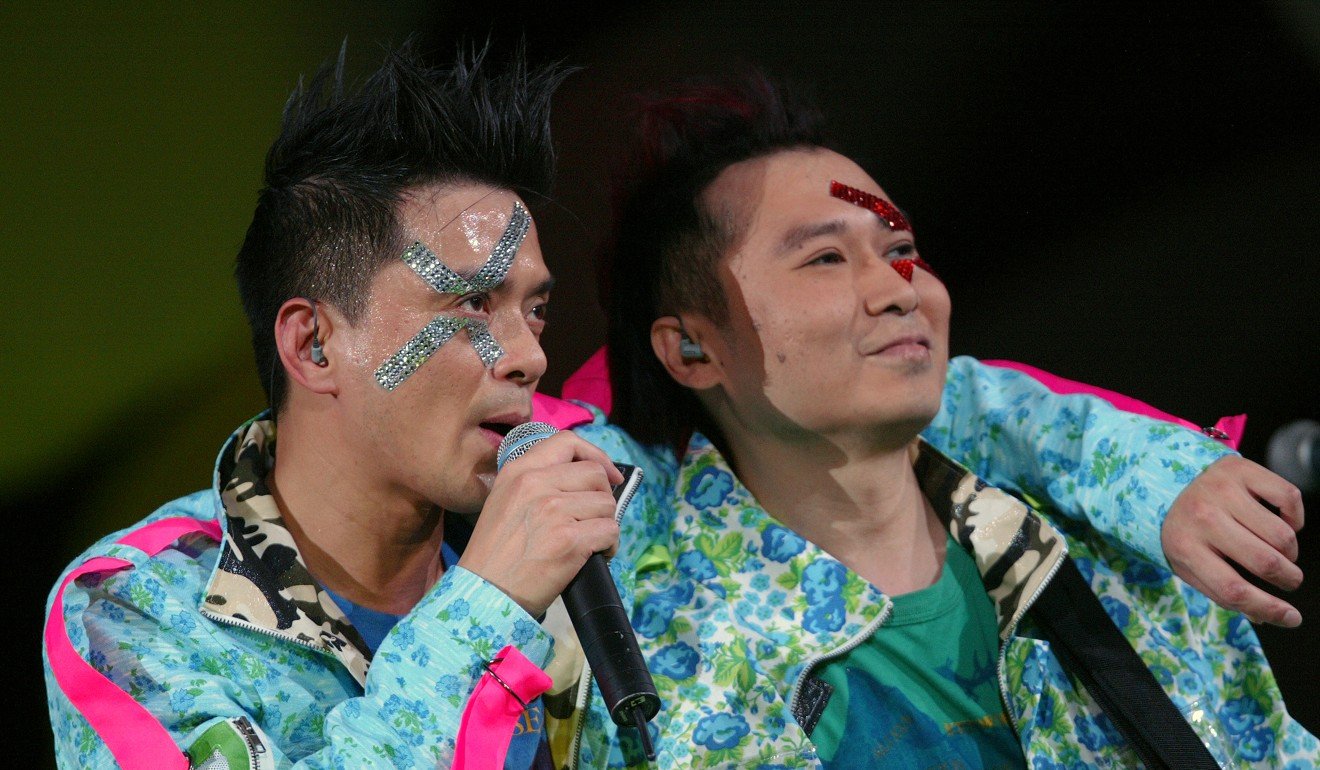
Foreign companies are not immune. Apple Music has removed from its Chinese streaming service a song by Hong Kong singer Jacky Cheung Hok-yau that references the Tiananmen crackdown. Tat Ming Pair, a Hong Kong duo, have been deleted entirely from the app. They released a song this month called Remembering is a Crime in memory of the protests.
Wikipedia also announced this month that the online encyclopaedia is no longer accessible in China. While the Chinese-language version has been blocked since 2015, most other languages could previously be viewed, Wikipedia said.
The Human Rights Foundation publised this video about China’s Million Person Muslim Prison Camps:
For the 25th anniversary see: https://humanrightsdefenders.blog/2014/06/13/25-years-tiananmen-celebrated-with-over-100-detentions/
https://uk.news.yahoo.com/china-says-tiananmen-square-crackdown-1989-correct-policy-093500064.html
“For a human rights movement dedicated to exposing abuses, positive communication does not come naturally. But to make the case for human rights, we need to promise a brighter future” says Thomas Coombes – head of brand and deputy director of communications at Amnesty International – in a piece in Open Global Rights of 19 February 2019. I have perhaps also contributed to the gloom with many posts about the decline of the international guman rights regime [with some more constructive posts e.g. https://humanrightsdefenders.blog/2018/12/26/barbara-von-ow-freytag-argues-well-for-a-new-communication-based-approach/ ]. I think rightly Thomas argues: “to break this cycle and sell hope to the media, we need two things: challenging ideas and surprising stories“. Please read the full (short) piece:

For a human rights movement dedicated to exposing abuses, positive communication does not come naturally. We in the human rights community are driven by a desire to make known the suffering and injustice we see in the world, yet what people need from us is not information about what is going wrong, but hope and a means of making it better.
To make the case for human rights, we need to promise a brighter future. At Amnesty International we have a saying: better to light a candle than curse the darkness. But in the human rights movement, we spend a lot more time cursing the darkness. We want to expose terrible suffering so that people are shocked into action. But when we only show the abuses, people start to believe that we live in a world of crisis with no alternative. They accept that reality, give up, or turn to people who preach division, fear and a false sense of safety.
While the human rights movement will always have to expose abuses, we also need to give people a chance to unite behind a cause, challenge governments to live by their values and build support for our way of seeing the world. Hope-based communication is simply a smart strategy for shifting public opinion not by saying what is popular, but by making popular what needs to be said.
Hope-Based Communication is about illustrating what we want to see, not just what other people are doing. Because the human mind adapts easily to bad news, every dose of shock that we administer to the global conscience inoculates people. Without a tangible, believable alternative vision of how things should be, we risk reinforcing current rights abuses as a regrettable but inevitable reality.
Constant stories of crisis create an alarming picture of the world in our minds. When news is all about negative, sensational and exceptional events, it skews our view of other people, cultivates distrust and blinds us to important but unsurprising developments, as Rob Wijnberg, has argued in his manifesto for constructive news outlet The Correspondent. To break this cycle and sell hope to the media, we need two things: challenging ideas and surprising stories.
The environmental movement has already made that first step from dire warnings to big ideas that convince people that another world is possible. For example, in This Changes Everything, Naomi Klein writes about how promises of a bright green future offered a way forward: “What this part of the world has clearly shown is that there is no more potent weapon in the battle against fossil fuels than the creation of real alternatives.”
The human rights movement must now do the same thing, and new research offers us a way to completely reframe the way we talk about human rights. For example, Amnesty International Australia now says “Bring them here” of refugees, rather than asking the government to stop treating them like criminals. Anat Shenker-Osorio’s linguistic analysis of how advocates in Australia, the UK and USA make the case for human rights shows that we talk about human rights as an object that is given to individuals, rather than a tool for people to improve their communities and live together. It encourages us to be more specific about power relations and use the language of journeys instead of war.
We want to take society on a journey to a better place, but when we lean heavily on the language of conflict: we fight, recruit, mobilise, resist, defend, protect and counter. We build coalitions. We wage campaigns. We seek to win battles. We ask people to take sides. This language is divisive—it won’t power a constructive, unifying movement. Instead, we need to talk about building, growing and sticking together.
Research from the Common Cause Foundation shows that altruism is as great a motivator to good causes as self-interest, if not more. Successful movements are propelled forward by enthusiasm and passion. While Donald Trump united his base with the simple red baseball cap, ordinary people demanding women’s rights queued for hours to buy “Together for Yes” buttons in Ireland and thronged the streets wearing green scarves in Argentina.
More and more research points to the fact that fear and pessimism triggers conservative and suspicious views, while, hope and optimism tend to more liberal views. Joyful, inspiring content like Planned Parenthood’s Unstoppable campaign serves not just to inspire, it creates political momentum. Anger mobilizes, hope organizes.
New approaches to stories about people seeking refuge highlight not what they flee but what they create in their new home, how the act of welcome transforms the host, or the power of friendships that face adversity and politics.
The stories we tell become our reality, so we need stories of humanity and compassion, reinforcing the idea that human rights are about people standing up for each other
How do we talk about hope and opportunity when human rights defenders are under attack and we need to defend ourselves, to fight back? How can we be positive when it is our duty to document despair?
Human rights defenders have “long been on the front line”, as Kathryn Sikkink argues in Dejusticia’s Playbook for Human Rights Actors. She warns that the frame of crisis and peril inadvertently harms perceptions of the movement’s effectiveness and legitimacy.
The most urgent challenge is to rebrand what it means to do human rights. The space that we most need to create for civil society is a conscious space apart from today’s struggles in which we allow ourselves to envisage bold possibilities of a better world. Human rights should take pride in being the “slow change” movement, that brings about generational attitudinal and societal progress, offering the path out of the darkest times.
Check out this virtual guide for how you can make a shift towards hope based communications in your human rights work.
There is still a place for anger and sadness, if we balance them with a sense of how we make things better. For no matter how dark the story, there is always some glimmer of hope. And it is our job to kindle that flame. The darker the crisis, the more people exhausted by fear and anger will turn to extreme options. So, we have to give people what every human needs: hope. After all, you light a candle when it gets dark. Hope, like a candle, shines brightest in the dark.
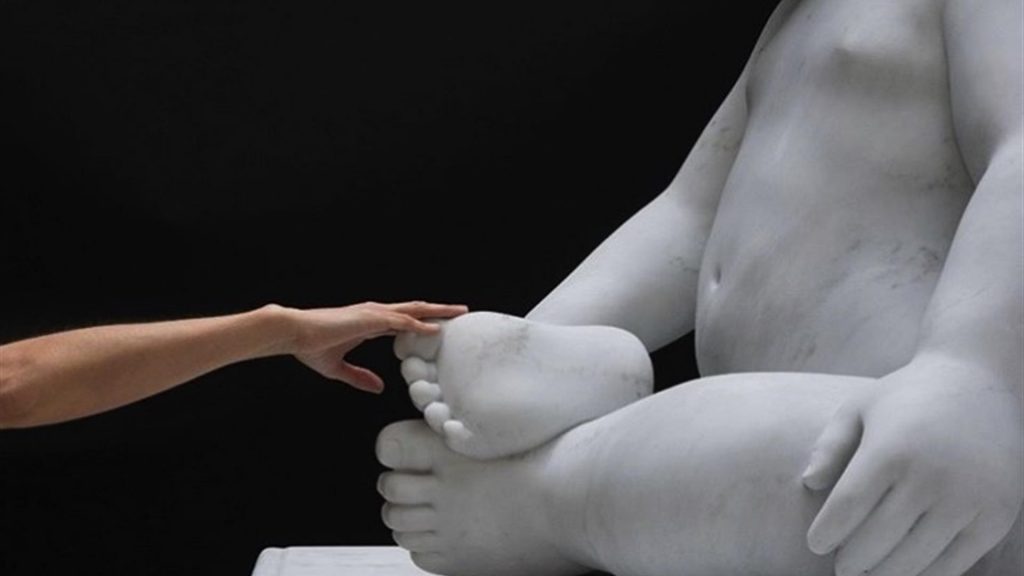
Coinciding with the 58th Venice Bienniale, Belgian artist Koen Vanmechelen has launched the evolving artwork Human Rights Pavilion. In 2021, he will present his completed Opus to the Venice Biennial authorities with a request for a recurring, international human rights pavilion. Koen Vanmechelen firmly believes that art has a role to play in the current debate about human rights, a controversial issue highlighted by globalisation. Are human rights culturally relative? Does the human rights project have limits? Is the existing Universal Declaration on Human Rights outdated and Western- centered, as some claim?
To answer these questions, together with international partners Global Campus of Human Rights, Fondazione Berengo and the MOUTH Foundation, the Belgian artist launches the Human Rights Pavilion. This ambitious project was initiated on the island of Murano, in parallel with the 58th Venice Biennial. Over the next two years, the evolving work will gain weight and momentum through the dialogues, travels, correspondence, explorations and creations of Vanmechelen during a world tour. The evolving pavilion-to-be should gain form through contact with people and organizations involved or interested in human rights. The focal point is Vanmechelen’s adage ‘the global only exists through the generosity of the local.’
Vanmechelen: ‘Through my longstanding work around children’s and nature rights, I learned that connecting to others is vital. Underlying the philosophy that unifies my work is ‘every organism needs another organism to survive.’ Survival depends on the survival of the other or SoTO. The Human Rights Pavilion comes together in three chapters: SoTO Dialogues, SoTO Environment and SoTO Legacy. Different partners are invited to contribute to both the artistic research and the development of the artwork, aiming to include as many disciplines, perspectives, and cultures in the creation. At the end of 2020, all inputs will be reworked into a unifying OPUS. This collective memory of our moment in time and space, will be presented to the UN High Commissioner for Human Rights, the European Commission and the President and Curator of the 59th Venice Biennale of Art. It will be accompanied by a call to establish a recurrent supra-national Human Rights Pavilion as part of the structure of the Venice Biennial.More Info: www.humanrightspavilion.com
 is currently seeking an individual demonstrating extensive events, communications and marketing experience to work as part of its Events and Promotions Team in the lead up to the 2019 Dublin Human Rights Festival and the 2019 Dublin Platform for Human Rights Defenders, and to provide maternity cover for the permanent post-holder.
Key tasks (July – October 2019, full-time);
Key tasks Maternity Cover (October 2019 – August 2020, part-time @ 4 days per week / 28 hours per week):
The successful candidate will be able to demonstrate inter alia:
The role will be based at the organisation’s headquarters in Blackrock, Dublin. Candidates must be legally entitled to work in Ireland at time of application. The salary will be equivalent to Clerical Officer Higher on the civil service scale (EUR 30,089 pro rata) This is a fixed-term contract for the period 22 July 2019 to 28 August 2020.
Applications comprising a cover letter (1 page) and CV (2 page max.) should be sent to Michelle Foley, International Events & Promotions Coordinator at recruit@frontlinedefenders.org by Friday, 21 June 2019. Please put the name of the role you are applying for in the subject title of the email.
Shortlisted applications should be available for interview in the week commencing the 1 July 2019, and the successful applicant will begin in the position on Monday, 22 July 2019.
For more info: https://www.frontlinedefenders.org/en/international-events-promotions-coordinator-part-maternity-cover-12-months
Many readers of this blog wil already follow ProtectDefenders.eu [see also: https://humanrightsdefenders.blog/2018/02/27/10611/]. Still, for those who don’t here follows a short overview taken from a 31 May 2019 communication which gives an impressive tally of the last three year:
Over the past three years, ProtectDefenders.eu – the EU Human Rights Defenders mechanism implemented by a Consortium of international civil society organisations, has emerged as a solid, successful and crucial tool for at-risk human rights defenders, and as an increasingly referenced instrument within the international human rights defenders community. As per the three-years report, ProtectDefenders.eu has stepped up the practical support available to HRDs at risk and local human rights NGOs, and mobilised resources in favour of at least 30,018 defenders in a timely and comprehensive manner.

In a context marked by the increasing demand for support from human rights defenders operating in the most difficult contexts, ProtectDefenders.eu…
ProtectDefenders.eu aims at reaching out to the less connected and particularly targeted defenders and these groups (such as Women Human Rights Defenders, LGBTI+ rights defenders, land and environment rights defenders, indigenous rights defenders, or defenders from remote areas) represent approximately 75% of the beneficiaries.
https://www.protectdefenders.eu/en/newsfeed.html#newsletter-article-288
On 24 May 2019 Open Democracy published another long piece on an inspiring human rights defender – in cooperation with the Fund for Global Human Rights. In “How international solidarity saved an activist’s life in Burundi” the story of Pierre-Claver Mbonimpa, the laureate of the Martin Ennals Award 2007. [http://www.martinennalsaward.org/hrd/pierre-claver-mbonimpa-2/]. The author was personally involved in the case and the piece is a good example of how international solidairy can save lives.
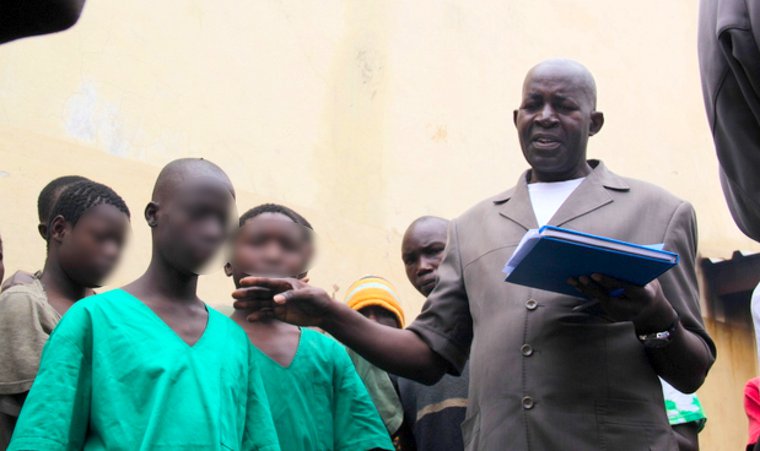
Pierre-Claver Mbonimpa remembers well what had happened. He had been in his car with his driver. “I saw behind us a motorcycle that was riding at a breakneck speed. The bike got to us at a fast pace. The man shot four bullets. The shooting was almost close-range. A bullet hit me on the neck and blood spurted.” Bleeding heavily, he was rushed to hospital in a critical condition. I went there to see what was happening: at the time I was still a journalist in Burundi before being myself forced into exile. The crowd was already at Bujumbura Central Polyclinic.
“Security guards sent by various embassies came to ensure my safety at the Polyclinic, because there was a rumour that I was going to be killed in my hospital bed,” says Pierre-Claver. “All the embassies worked in synergy for my evacuation. “Despite my weakness, my pain, I would like to say that I saw a great surge of solidarity at that moment,” says Pierre-Claver. “In my room I saw distinguished individuals such as diplomats of the African Union, those of the European Union and ambassadors.”
It was clear to his supporters that Pierre-Claver needed to leave the country immediately. Currently in Belgium as a refugee, [his daughter] Zygène Mbonimpa remembers with overwhelming emotion the support of The Fund for Global Human Rights: “Doctors quickly noticed that Mutama had been seriously affected. He needed care he could not find in Burundi. And then, we were afraid he would be finished off on his hospital bed. I wrote to Tony Tate [programme officer at the Fund] and his reaction was quick. He agreed to pay for flight tickets, and the organisation also contributed to the payment of hospitalisation costs in Burundi.”
Tate confirms Zygène’s account... I immediately sought approval from my directors and board members to make an emergency grant,” he says. “We were able to wire the money to APRODH’s account within 24 hours. After the money arrived, it became clear that Pierre-Claver would receive other money and assistance from other funders as well. The money The Fund provided was combined with others to pay for the travel costs of one of his family members to accompany him to Brussels.”
That financial support was critical. The Belgian embassy had agreed to give Pierre-Claver a visa, but the family had to find air fares in a very short time. “Without this support, we would have had a big problem to raise this money while Dad’s life was in a very critical condition,” says Zygène. Tate says he was pleased that the Fund was able to respond to the incident and ensure the safety of one of its long-time partners: “My hope was that the family would see that as an organisation, we stand by our grantees in good times and in bad,” he says. “As a human rights funder, we have an ethical responsibility to provide emergency funding when activists we support are in danger. Human rights work is inherently risky and those who support it must stand ready to respond quickly when defenders are in need.”
In Brussels, Pierre-Claver was quickly operated on. Doctors first fastened a metal frame on his head to hold his skull together. He spent 121 days in hospital, fed by serum and then a kind of porridge, as he could not open his mouth or chew food. He sat in an armchair, unable to lie down, and his weight went down from 82 kg to 54 kg. But his ordeal did not stop there. As they had missed him, those who wanted to kill him went after his family. First, his son-in-law, Pascal Nshirimana, was killed, and while he was still in the hospital, his son Weli, 24, was also killed. [see e.g.: https://humanrightsdefenders.blog/2015/11/12/mea-laureate-mbonimpa-has-message-of-hope-at-his-sons-funeral/]
Through all this, the now seventy-year-old activist has remained a man guided by peace and justice. We have never heard him speak of revenge…
Always on the phone, Pierre-Claver continues to encourage teams on the ground. He also travels very often in the sub-region. “It is important that the international community continues to support independent human rights organisations in Burundi,” he says, “because with the closure of UN organisations and the ban on international media including the BBC, there is a risk that human rights violations will be committed behind closed doors. Organisations such as APRODH still have focal points. But they need means to work.”
Pierre-Claver remains modest and accessible despite two honorary doctorates by major Belgian universities and several international awards. [see: https://humanrightsdefenders.blog/2017/10/17/mbonimpa-wins-also-the-2017-civil-courage-prize/]. Asked what he thinks of those who tried to kill him, he simply answers: “I forgave those who shot me and those who killed my son and my son-in-law. But I want justice. If the assassins were arrested, I would be happy to see justice doing its job. For my part, I will not ask for any compensation. What would they give me for the death of my child and my son-in-law?”
 Hans Thoolen on Human Rights Defenders and their awards