Archive for the 'human rights' Category

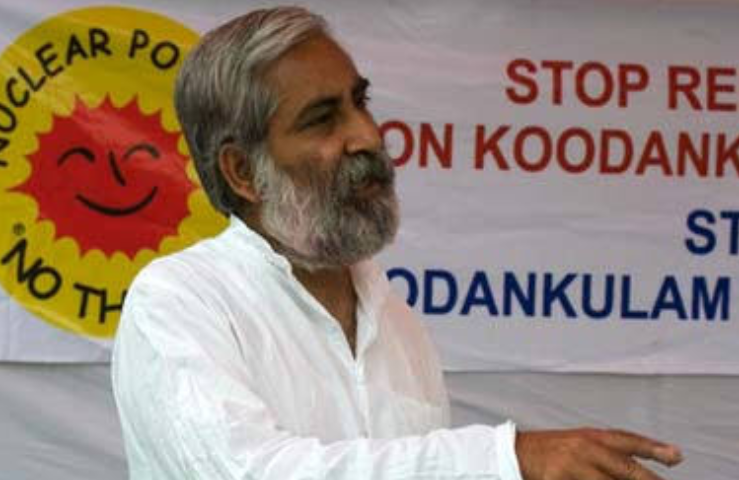
Former Magsaysay laureate Sandeep Pandey is in two minds about this award

August 5, 2019

Award a protection against autocratic tendencies, but Magsaysay is ‘not infallible” says Sandeep Pandey, a social activist and academic, a Magsasay recipient, who returned his award in 2002.

There could not have been a better choice than Ravish Kumar for this year’s Magsaysay Award. Ravish has demonstrated exemplary courage in questioning the sectarian, communal, jingoistic and irrational politics which has dominated the narrative in this country over the last five years when one by one most of the saner voices were made to disappear, some made compromises or simply surrendered and worst there were others who decided to collaborate with this insidious project of right wing fundamentalism. [see: https://humanrightsdefenders.blog/2019/08/03/magsaysay-awards-2019-honor-4-outstanding-asians/]
..
The Magsaysay Award will definitely bring more credibility to his work and hopefully some of the opposition from right wing forces, who are known to troll in an organised manner any sane voice in support of human rights, democracy, justice, communal harmony, peace and friendship, especially with Pakistan, and who’ve targeted Ravish in the past, will subside.
..
However, the aura of Magsaysay is quite exaggerated in India than other countries of Asia, and outside of Asia very few people have heard of it, probably because there are many well known Indians who have won it. Part of the reason for its popularity in India is that it and its winners feature prominently in most General Knowledge books which are used by students preparing for competitive examinations. But the Magsaysay Foundation itself is not infallible, unlike its reputation.

I went to Manila in 2002 to receive the Magsaysay Award as well as participate in a Peace conference organised at the University there in the wake of impending US attack on Iraq. It was a mere coincidence that both events were happening on same dates. There was a demonstration outside the US Embassy the day after the Award ceremony. The chairperson of the Foundation asked me not to participate in the demonstration as it could tarnish its image. ..
I argued that US was a bigger culprit in the game of warfare and I considered it part of my activism to oppose the US policy. Before landing in Manila I had little idea that the Foundation was completely US funded — by the Rockefeller and Ford Foundations. Obviously the Magsaysay Foundation was quite uncomfortable with my stand. The fears of Magsaysay Foundation came true. Even the Hindi Indian media back home covered the demonstration outside US Embassy in Manila highlighting my participation. An editorial in a Manila newspaper asked me to return the $50,000 Award money to the US Embassy before I returned to India if I was the principled man I wanted them to believe. I returned the cheque from the airport to the Magsaysay Foundation before embarking the plane out of Manila.
..
But the Award is prestigious and definitely is a protection against autocratic tendencies of the state and its cronies in India, especially for human rights defenders and upright journalists like Ravish Kumar. We hope that the right-wing fundamentalists will take his viewpoint more seriously and the media fraternity will start considering him as an ideal rather than an exception. He has now emerged as the hope for a free media in India and by extension a democratic polity. This is a victory of progressive forces, sanity and humanity and we must celebrate it. Most of all it is a victory for truth which has become a casualty in the era of post-truth. The post-truth has created only strife and conflicts. If we have to return to the human endeavour of making this world a better place for everybody, there is no option but to go back to recognizing truth as the most important values. In spite of Nathuram Godse having become a hero for a fringe group in this country, the universal ideal continues to be Mahatma Gandhi.

Uncalculated Risks: attacks on human rights defenders in name of development

July 30, 2019

The Campaign is made up of defenders and those who work with them on issues of development and human rights – community organizations, human rights and environmental groups, defender security organizations, transparency and accountability NGOs, and indigenous peoples and women’s networks. It is hosted by the Coalition for Human Rights in Development. You can find the Campaign Declaration and list of participant organizations here. In June, the Coalition for Human Rights in Development (CHRD) launched a landmark report with the Defenders in Development Campaign, exposing the risks of mega-infrastructure  and other ill-planned development projects on human rights defenders (HRDs). The report laid out 25 case studies demonstrating that HRDs are facing increasing threats and attacks in the context of their resistance to activities undertaken in the name of development, including harassment, physical violence, criminalisation, arbitrary detention and murder.

The Findings:

  • Threats and attacks against human rights defenders in the context of development activities are widespread.
  • Though they take many different forms, the threats and attacks often start with the labeling of communities, groups, and individuals as “anti-development.”
  • The imposition of development activities without the consent or meaningful consultation of local communities and marginalized groups is one of the key root causes of threats for defenders in development.
  • Development finance institutions have a duty to respect human rights and to ensure that their investments are not putting people at risk.
  • Yet too often, development interventions exacerbate risks for defenders due to lack of adequate attention to the rights and interests of local communities and marginalized populations, and to the contextual risks and power imbalances that may cause them to bear negative impacts or to be made vulnerable.
  • Early warning signs of potential threats to defenders are often missed or ignored.
  • DFIs have a wide range of resources and influence that can be utilized to change the risk equation for defenders under threat, but often fail to proactively develop this leverage or are reluctant to utilize the leverage they have.
  • DFIs often remain silent in the face of threats and attacks, or responses come too little, too late and defenders and communities are left without protection or remedy for harm.
  • Several DFIs are beginning to grapple with threats to defenders in development, but much more is needed.

Effectively addressing the shrinking space for participation in development processes and the growing threats to defenders will require not only a change in policy and practice, but a fundamental shift that places human rights and local communities at the center of how development is conceived and implemented.

Landmark report finds attacks on human rights defenders in name of ‘development’ on the rise

https://rightsindevelopment.org/uncalculatedrisks/

Call for Consultancy for Strategic Plan for AfricanDefenders

July 30, 2019

Call for Consultancy to develop a Strategic Plan for AfricanDefenders.

The scope is to develop Strategic Assessment report recommendations and a five years Strategic Framework for AfricanDefenders for the period of 2020 to 2025. The scope and focus of the assignment is to provide technical, strategic and facilitation support to enable the development of AfricanDefenders’ strategic plan. Develop an analysis framework and work plan to guide the assessment.

The Consultant will conduct a thorough but focused assessment of AfricanDefenders’s strengths and weaknesses, as well as external opportunities and threats, with a view to identifying appropriate strategic options for the 2020 to 2025 operational period. The assessment will include review of relevant documents, in particular the Kampala Plan of Action for Human Rights Defenders+10, the Paris Plan of Action, the Marrakesh Declaration on Human Rights Defenders and the Zanzibar 2019 Final Communique. In addition to existing project documents, strategic plans of key partner agencies, donor organizations, and related domestic and international reports.

The consultant will also develop the following:
1. Online/offline survey for AfricanDefenders members and stakeholders and beneficiaries;
2. Conduct individual interviews with key informants; and
3. Facilitate in-depth focus group/facilitated discussions using web-based technologies and/or teleconferencing.

The tasks under this assignment are to be undertaken in a maximum period of 30 working days. A draft as well as final strategy will be presented to the Steering Committee of the AfricanDefenders. The location of the assignment is flexible, but part of the work will be in Kampala, Uganda and most probably the validation in Banjul, The Gambia.

QUALIFICATIONS

The Consultant(s) is expected to:
• Have professional experience of work in the human rights sector in Africa.
• Be Fluent in spoken and written English and French.
• Knowledge in Arabic or Portuguese is a high added advantage.
• Be willing to travel to Kampala and other focal countries and be available to meet with partners.

The Consultant(s) are requested to submit a project proposal (outlining the tools, methods and sampling model to be used) and comprehensive indicative project budget as part of their motivation and application for consideration.

Submitting your application
Please send your application to jobs@defenddefenders.org with the subject line “AfricanDefenders Consultancy” by 30 August 2019. Your application should include your CV and past experience, budget, work-plan and 3 references for similar work undertaken. Do not send copies of certificates or degrees.

Call for Consultancy to develop a Strategic Plan for AfricanDefenders

How Twitter moved from Arab spring to Arab control

July 29, 2019
Social media platforms were essential in the Arab Spring, but governments soon learned how to counter dissent online”, writes
Twitter played an essential role during the Egyptian Revolution and was used to get info to an international audience [File: Steve Crisp/Reuters]

In a series of articles, Al Jazeera examines how Twitter in the Middle East has changed since the Arab Spring. Government talking points are being magnified through thousands of accounts during politically fraught times and silencing people on Twitter is only part of a large-scale effort by governments to stop human rights activists and opponents of the state from being heard. In the next part of this series, Al Jazeera will look at how Twitter bots influenced online conversation during the GCC crisis on both sides of the issue.

https://www.aljazeera.com/news/2019/07/exists-demobilise-opposition-twitter-fails-arabs-190716080010123.html

NHRF seeks a ‘theory of change’ consultant

July 29, 2019

The Norwegian Human Rights Fund (NHRF) recently went through the process of an external evaluation (November 2018) with a focus on the current strategy and its implementation. The findings of the evaluation were positive and we’re currently working on integrating the recommendations into our future work. The NHRF is seeking a consultant who can advise and support us through, to a limited extent, the development of our theory of change. The NHRF will begin a collaborative and holistic process that will include NHRF personnel (NHRF Secretariat and local consultants) and stakeholders (e.g. grantees and board members) to build a conscious theory of change that reflects the work of the Secretariat as a support mechanism and the work of our grantees on the ground.

The primary objective of the overall project is to develop a theory of change for the NHRF with longevity and adaptability in mind. The NHRF has developed an expansive and in-depth M&E framework that was just recently updated. ….The theory of change should be developed with the idea that it will be the core that our M&E framework and all other organizational development can stem from. As stated above, the overall project will be led by the NHRF’s LME officer, but will be advised by the selected consultant.

The consultant will be asked to advise on the following activities:

  • Early stage guidance and preparation for a theory of change retreat with the NHRF Secretariat and engagement via questionnaire and other methods with other stakeholders and NHRF personnel for collecting input and feedback throughout the development process.
  • Co-lead the NHRF Secretariat retreat in Oslo, Norway
  • Advise on the early drafts of the theory of change once all input, data, and feedback has been collected, interpreted, and translated into a draft

The NHRF is primarily seeking to be advised throughout this process, therefore it is expected that the consultancy will be no more than 5 working days of 7.5-8 hours.

Submissions

  • Candidate’s CV
  • Budget with daily rates based on a 7.5-8-hour workday and estimated flight costs for travel to Oslo in November based on consultant’s location
  • Brief (max 500 words) proposal that includes a timeline of the distribution of the 3 working days that will not be used for the NHRF Secretariat theory of change retreat.
  • 1-2 references (name, email, phone)

Deadline: Thursday, 1 August 2019

Send to: sarah.mcmains@nhrf.no and cc: info@nhrf.no Subject line: “Application – NHRF Theory of Change consultancy”

https://nhrf.no/article/2019/consultant-advisor-on-theory-of-change-development

CONSULTANCY VACANCY – Final evaluation of the EU Human Rights Defenders mechanism

July 25, 2019


announced on 23 July 2019 that it is looking for a consultancy team to conduct an external evaluation at the end of the first phase of the Project. This evaluation should focus on documenting the impact that the EU Human Rights Defenders mechanism has had on the situation of human rights defenders during 37 months of implementation and whether the Consortium has delivered in accordance with the Project proposal and main objective of the Project. The evaluation should focus in particular on the direct support to human rights defenders under components and should compare this with other programmes and the broader EU support to HRDs. It should also provide recommendations to improve the relevance and effectiveness of the EU Human Rights Defenders mechanism in its follow-up phase of implementation. See also: https://humanrightsdefenders.blog/2019/05/28/the-eu-human-rights-defenders-mechanism-a-short-overview/

The evaluation should concentrate as far as possible on the EU Human Rights Defenders mechanism in its entirety. It is not the intention to evaluate the performance of the individual ProtectDefenders.eu Partners, although comparisons of practices can be used when relevant in order to draw lessons learned and contribute to improve overall performance.

The terms of reference of this assignment are available here.

Applicants are requested to send their submissions to recruit@protectdefenders.eu, with the subject “Evaluation consultantby 16 August 2019.

Why Iceland led the UN resolution on the Philippines

July 22, 2019

Despite President Rodrigo Duterte’s threat to sever diplomatic ties, Iceland expressed hope the Philippines will cooperate with the United Nations Human Rights Council’s investigation into the human rights situation in the country, including the drug war. “Icelandic authorities sincerely hope that the Philippine authorities will engage the UN on this and the resolution,” Icelandic Ministry for Foreign Affairs said in a press statement. The resolution was backed by 18 out of 47 member-countries. [https://humanrightsdefenders.blog/2019/07/11/un-council-agrees-action-on-philippines-in-spite-of-vehement-objection/]

President Rodrigo Duterte blasted Iceland for failing to “understand” the Philippines. “Iceland, ano ang problema ng Iceland? Ice lang. (What’s the problem of Iceland? It has only ice.) That’s your problem you have too much ice and there is no clear day or night there,” Duterte said rather unsuitably but then added that – as a country that enjoyed low crime rates – Iceland was unable to comprehend the need for a bloody drug war in the Philippines.

But why did tiny Iceland, of all countries, file the resolution in the first place?’ Sofia Tomacruz in Rappler of 19 July 2019 tried to answer this:

When Iceland led the resolution at the UN Human Rights Council, it did so as a country that puts a high priority on human rights. As one of the most peaceful countries in the world, Iceland also leads by example when it comes to observing human rights. Iceland carried that responsibility when it became a member of the UN rights council last year, taking the place of the United States which left the rights body it called a “cesspool of political bias.” “For a small and peaceful country like Iceland, international law and the multilateral system is our sword, shield and shelter,” Iceland’s Ministry for Foreign Affairs said in statement to Rappler.

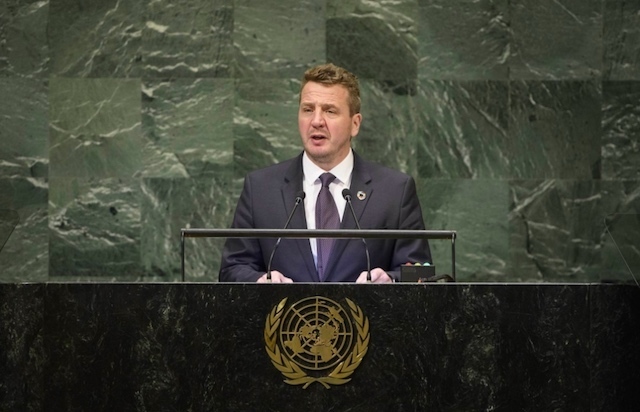
ICELAND'S FOREIGN MINISTER. Iceland's Foreign Minister Gudlaugur Thór Thórdarson at the United Nations. Photo from the Government of Iceland website

ICELAND’S FOREIGN MINISTER. Iceland’s Foreign Minister Gudlaugur Thór Thórdarson at the United Nations. Photo from the Government of Iceland website

In an interview with the Iceland Monitor, Iceland Foreign Minister Gudlaugur Thór Thórdarson said, “We are fortunate enough to enjoy human rights in Iceland, which we take for granted….It is our duty to contribute to the fight for improving the state of human rights affairs in the world.

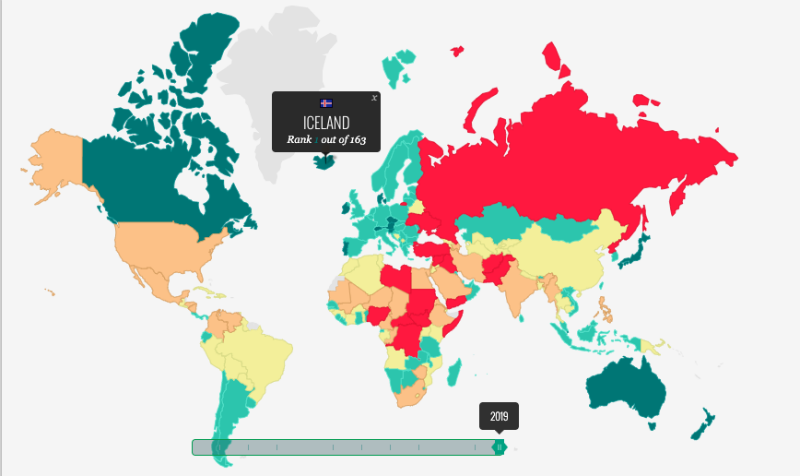
According to the Fund for Peace’s 2019 Fragile States Index, Iceland was considered among the most stable countries in the world, enjoying stable observance of human rights and the rule of law among other factors. The Philippines, meanwhile, was described as a state with “high warning” over eroding human rights and higher levels of crime and violence. Aside from this, the 2019 Global Peace Index ranked Iceland as the most peaceful country in the world, while the Philippines was 134th out of a total of 163 countries.

GLOBAL PEACE INDEX. Iceland is ranked as the most peaceful country in the world according to the 2019 Global Peace Index. Screenshot from Visions of Humanity.org

Iceland is ranked as the most peaceful country in the world according to the 2019 Global Peace Index. Screenshot from Visions of Humanity.org

For Human Rights Watch deputy director of Geneva Laila Matar, Iceland’s actions as a new member of the powerful rights body live up to its reputation as a country that champions human rights. “Iceland is a country that takes the Human Rights Council seriously and that takes their membership in the Human Rights Council seriously. The Human Rights Council is meant to ensure that gross violations of human rights are addressed,” Matar said in an interview with Rappler.

https://www.rappler.com/newsbreak/iq/235775-why-iceland-led-un-resolution-drug-war-killings-philippines

https://www.gmanetwork.com/news/news/nation/701688/iceland-hopes-phl-will-cooperate-with-un-probe-on-ejks-drug-war/story/

More on Neha Dixit, a winner of the 2019 Press Freedom Award

July 22, 2019

(Rajni George)

The Committee to Protect Journalists on 16 July gave one of its International Press Freedom Awards 2019 to Neha Dixit, an Indian freelance reporter, who has covered politics, gender, and social justice in print, TV, and online media for more than a decade. [see: https://humanrightsdefenders.blog/2019/07/17/international-press-freedom-awards-2019/]

She began her career at Tehelka magazine and then joined the special investigation team at India Today. In 2019, Dixit spent months investigating and reporting stories that shed a light on important issues in the country, including extrajudicial killings by police. She also reported on the illegal detention of citizens under draconian laws that appeared to be motivated by political interests. In January 2019, the Office of the United Nations High Commissioner for Human Rights sent a notice to the Indian government to express its concern about the detentions. In 2018, Dixit reported on the damage to the health of poor Indians who were being used as guinea pigs by pharmaceutical companies in illegal drug trials.

In 2016, she wrote a story for Outlook magazine that accused members of a right-wing nationalist group of trafficking more than 31 girls in Assam state to other parts of India in order to inculcate them with a nationalist ideology. After the story was published, members of the ruling party filed a criminal defamation suit against Dixit and Outlook, accusing both of violating Indian law. CPJ condemned the case, which continues today, and provided Dixit with support for its legal fees. CPJ’s research has found that section 153A of India’s colonial-era penal code, under which the suit was filed, has been used to silence journalists, writers, and academics in India. Dixit was also charged with “inciting communal hatred through writing,” for which she could face a five-year prison term.

After Dixit’s exposé on extrajudicial killings by the police, she said high-ranking police officials threatened her family’s safety if she continued to report on the issue. She is frequently harassed online as a result of her reporting, especially from alleged right-wing extremists. She has been threatened with physical attacks, rape, and death, and her personal information has been exposed online. She told CPJ in May 2019 that she faces up to 300 abusive messages a day.

Dixit’s work has been published in international outlets including The New York Times, Al-Jazeera, Caravan, and The Wire. She has received numerous awards, including the European Commission’s Lorenzo Natali Media Prize in 2011, the Kurt Schork Award in International Journalism in 2014, and the 2016 Chameli Devi Jain Award for Outstanding Woman Journalist.

https://cpj.org/awards/2019/neha-dixit-india.php

Alarm bells about China’s growing coalition of the ‘unwilling’

July 20, 2019

On 18 July 2019ecturer on Human Rights, School of Law, University of Essex, wrote in The Conversation a piece that sounds alarm bells about “China is building a global coalition of human rights violators to defend its record in Xinjiang – what is its endgame? Worth taking note:

Read the rest of this entry »

CPJ’s 2019 Gwen Ifill Press Freedom Award to Pakistani journalist Zaffar Abbas

July 19, 2019

The Committee to Protect Journalists’ (CPJ) 2019 Gwen Ifill Press Freedom Award recognizing extraordinary and sustained achievement in the cause of press freedom will be presented to Zaffar Abbas, editor of Pakistan’s daily newspaper Dawn. Abbas, who has decades of experience as a reporter in Pakistan, has led Dawn since 2010. Under his leadership, Dawn and its reporters frequently have come under government pressure. This is the second Ifill award which replaces the Burton Benjamin Memorial Award. For more on this and other awards for journalists: http://www.trueheroesfilms.org/thedigest/awards/gwen-ifill-press-freedom-award

“Zaffar Abbas is the embodiment of journalistic courage, which is why the board is so pleased to honor him with the Gwen Ifill Press Freedom Award,” said Kathleen Carroll, chair of the CPJ board. “Every day he fights to deliver facts to Dawn’s readers in the face of pressure, obstacles, and blockades from the institutions in Pakistan that would much prefer to go about their business without scrutiny from the press or the public.

https://cpj.org/2019/07/cpj-announces-2019-international-press-freedom-awa.php