Women human rights defenders are crucial agents and leaders of change. However, due to their gender, they face particular obstacles and security risks. What are these gendered obstacles and risks? How can women human rights defenders best be supported and protected by States and other actors? ISHR, the Ministry for Foreign Affairs of Finland and the Permanent Mission of Norway invite you to join a virtual event on the side of the Human Rights Council’s 49th session: “Supporting women human rights defenders in conflict and post-conflict situations” takes place on Tuesday 8 March 2022 11:30am – 12:30pm (CET) See also: https://humanrightsdefenders.blog/2020/08/03/roadmap-to-women-peace-and-security-wps-agenda-2020/
Opening statement: Pekka Haavisto, Minister for Foreign Affairs, Finland
Panellists:
Mary Lawlor, UN Special Rapporteur on the Situation of Human Rights Defenders
Witness stands with the victims of Russia’s unlawful attacks. In a conflict that is rife with disinformation, false narratives, and manipulated media, the importance of capturing and preserving trusted, authentic accounts of human rights crimes cannot be underestimated. They are sharing resources for those on the ground in Ukraine and Russia – who are navigating immense risks as they capture and share video documentation of potential human rights violations and war crimes. And, they are sharing resources for those of us witnessing from a distance, so that we amplify grassroots truths and decrease the spread of mis/disinformation.
Guidance for Frontline Documenters working with and learning from activists documenting and preserving visual evidence of war crimes and human rights violations from Syria and Yemen to Brazil, it developed its peer-reviewed and field tested Video As Evidence Field Guide. Earlier they also worked with Ukrainian civil society and human rights groups during the 2014-15 conflict to prepare versions in Ukrainian and Russian
In Ukrainian: ПОЛЬОВИЙ ПОСІБНИК “ВІДЕО ЯК ДОКАЗ” Field Guide: Video as Evidence wit.to/VAE-UA
In Russian: ПОЛЕВОЕ ПОСОБИЕ «ВИДЕО КАК ДОКАЗАТЕЛЬСТВО» Field Guide: Video as Evidence wit.to/VAE-RU
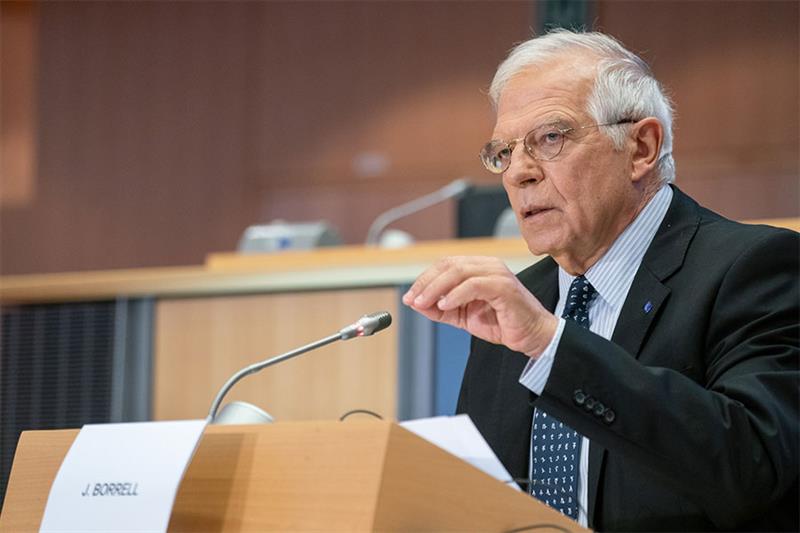
The European Union (EU) provided roughly €10 billion to support non-government organisations (NGOs) in its partner countries over the past seven years (2014-2021) EU High Representative and Vice-President Josep Borrell said in a statement in celebration of World NGO day, 26 February.
File Photo: EU s High Representative and Vice-President Josep Borrell. Photo courtesy of European parliament website.
“On World NGO Day, we honour all civil society actors who, every day, are at the forefront of the fight for human rights, the respect of democratic values and the rule of law. The EU commends their role in supporting and giving a voice to the most vulnerable as well as their essential contribution to building peaceful, just, and inclusive societies.”
“Today, with the unprovoked and unjustified military aggression against Ukraine by the Russian Federation, international peace and the rule of law are under attack. The EU stands firmly by the Ukrainian and Russian people along with their civil society and youths, whose future and voices are threatened by President Putin’s disregard of democracy, human rights, and international rules,” Borrell stated.
Borrell added that countries that curtail NGOs’ activity through legal and administrative measures hamper universal human rights and fundamental freedoms. See e.g.: https://humanrightsdefenders.blog/tag/foreign-agents/
EngageMedia posted on 28 February 2022 an anthology of films which highlight Myanmar’s long struggle for democracy
This movie playlist is from Cinemata, a platform for social and environmental films about the Asia-Pacific. It is a project of EngageMedia, a nonprofit that promotes digital rights, open and secure technology, and social issue documentary. This is edited and republished as part of a content-sharing agreement with Global Voices.
EngageMedia has curated a playlist of films that shows the extent of rights abuses in the country, as well as courageous forms of resistance against the continuing infringement on people’s rights. Marking the one-year anniversary of the coup, “A Year of Resistance” turns the spotlight on the long-standing struggle of the people of Myanmar for democracy.
This film collection is curated in solidarity with the people of Myanmar. In bringing the stories of unrest and atrocities to light, these films hope to inspire action and advocacy towards justice and freedom.
“Burma Rebel Artist: Moe Thandar Aung”
After the Myanmar military coup in February 2021, Moe Thandar Aung, a graphic designer whose work touched on themes on feminism, began making protest art in support of calls to defend and uphold democracy in the country.
“Black out”
In the aftermath of the 2021 Myanmar coup, the country is faced with state-mandated internet and information blackouts. Hnin, a single mother, and Mon, her daughter and an anti-coup protester, are among those who can no longer access the internet at home. In their pursuit of news on what is happening on the ground, they find only fabricated stories and unreliable information.
During the six months of the junta coup, at least 950 civilians have been violently killed. A total of 90 children under the age of 18 have been murdered, while at least 48 children were arrested.
An independent female humanitarian activist from Shan State describes the trauma she experiences in working in an environment pervaded by despair but also her commitment to helping those forced to flee armed conflict. This film was directed by Sai Naw Kham, Mon Mon Thet Khin, and Soe Yu Maw.
In this video, Myanmar activists talk about the digital rights and digital security challenges they face, arguing that freedom of expression, freedom to organize, and freedom to associate should be kept, protected elements of digital rights.
This song was made by 24 Youth from six different corners from Myanmar that participated in Turning Tables Myanmar’s yearlong social cohesion project “The Voice of the Youth.” Together they produced and recorded the song “Wake Up” which calls for democracy, youth participation, and sustainable development to replace corruption and injustice.
This 2009 film shows powerful footage from the Saffron Revolution, a series of economic and political protests led by students and Buddhist monks that swept Myanmar from August to September 2007. It also highlights the continuing need for international solidarity amongst Southeast Asians in times of political upheavals as in the current situation in Myanmar.
The global human rights organizations market is expected to grow from $16.60 billion in 2021 to $17.47 billion in 2022 at a compound annual growth rate (CAGR) of 5.3%. The growth is mainly due to the companies rearranging their operations and recovering from the COVID-19 impact, which had earlier led to restrictive containment measures involving social distancing, remote working, and the closure of commercial activities that resulted in operational challenges.
The market is expected to reach $20.53 billion in 2026 at a CAGR of 4.1%.
The human rights organizations market consists of revenue generated through human rights services by entities that are engaged in promoting causes associated with human rights either for a broad or a specific constituency.
Establishments in this industry address issues such as protecting and promoting broad constitutional rights and civil liberties of individuals and those suffering from neglect, abuse, or exploitation, promoting the interests of specific groups such as children, women, senior citizens, or persons with disabilities, improving relations between racial, ethnic, and cultural groups, and promoting voter education and registration.
The main types of human rights organizations are nongovernmental organizations, intergovernmental organizations, governmental organizations and international organizations. Governmental human rights organizations are run by government bodies and are involved in the protection of human rights and the reduction of human rights violations.
The different modes of donation include online, offline. The organization locations can be domestic, international and have various applications in areas such as all humans, children, women, disabled, LGBTQ, others.
Asia Pacific was the largest region in the human rights organizations market in 2021. North America was the second largest region in the human rights organizations market. The regions covered in this report are Asia-Pacific, Western Europe, Eastern Europe, North America, South America, Middle East and Africa.
The rise in hate crimes is expected to drive the human rights organizations market. Hate crime is a form of criminal violence upon a person or property, caused in whole or in part by an offender’s bias against a race, religion, disability, sexual orientation, ethnicity, gender, or gender identity.
As per the annual report of FBI published in 2019, physical attacks against individuals have risen, accounting for 61% of the 7,120 cases reported by law enforcement authorities nationally as hate crimes in the USA. Government and non-governmental organizations aim to curb the abuses that challenge people’s human rights, which further aids in the growth of the human rights organizations market. Increasing attacks against human rights defenders are anticipated to hinder the human rights organization market. Attacks against human rights organizations that strive to safeguard human rights are rising at an alarming rate.
It is of course the worst for the direct victims of Russia’s aggression in Ukraine, but the very courageous people who stand up against the autocratic government and nationalistic media in Russia deserve all our attention. On 26 February 2022, Human Rights Watch wrote “Russia: Arbitrary Detentions of Anti-War Protesters“:
Police arbitrarily detained hundreds of peaceful protesters across Russia on February 24, 2022, at rallies in solidarity with Ukraine and against the war, Human Rights Watch said. The authorities also arrested at least two human rights defenders who spoke up against Russia’s full-scale invasion in Ukraine, threatened to block mass media outlets in case their reporting on the war differed from the official narrative, and demanded that foreign social media platforms stop restricting reports from Russian state media.
“For years, Russian authorities have been suppressing free speech and peaceful protests to stifle critical voices,” said Hugh Williamson, Europe and Central Asia director at Human Rights Watch. “Now the government is silencing all those who speak out against the war with Ukraine.”
According to OVD-Info, an independent human rights project working to protect freedom of assembly in Russia, by the evening of February 25, police had detained at least 1,858 people for participation in anti-war protests in 57 cities, including Moscow, Saint Petersburg, Krasnodar, Ekaterinburg, Saratov, Nizhny Novgorod, and Voronezh. Some of detained protesters stood in single pickets and held posters saying “no to war, do not be silent,” “stop the war,” and other similar slogans.
At around 3 p.m. on February 24, the police detainedMarina Litvinovich, a human rights activist, in Moscow after she had made a call over social media to “come out and say we are against war.” She was released several hours later, pending a court hearing and the next day was fined for violating the rules on public gatherings. https://www.rferl.org/a/russia-litvinovich-fined-ukraine-invasion-protest/31723131.html
In response to calls for peaceful protests, Russia’s Investigative Committee published a news release with a warning that organizing unsanctioned gatherings is a prosecutable offense and threatening “harsh punishment” for organization of “mass riots.”
In the evening of February 24, protesters gathered in different cities across Russia to demonstrate against war. According to OVD-Info, more than 1,000 protesters were arbitrarily detained in Moscow and around 400 in Saint Petersburg where the biggest protests took place.
Human Rights Watch analyzed and verified 27 videos recorded north of the Gostinny Dvor metro station in Saint Petersburg and close to Pushkinskaya Square in Moscow that were published on social media on February 24. The vast majority document brutal arrests of peaceful activists by police officers. In at least four cases, videos show police officers beating protestors, pushing them to the ground, dragging them, grabbing them by the head, and choking them.
Mass media and OVD-Info also reported other cases of excessive use of force by the police, refusal of medical assistance, and denial of access to lawyers. At night, at least six police stations in Moscow, and some stations in Saint Petersburg, Saratov, Voronezh and Ekaterinburg refused access to outside visitors after initiating the “Fortress” protocol, authorized for a situation of potential attack, which meant lawyers were denied access to their clients for hours. On February 25, OVD-info reported they could not get in touch with three of the detainees on their list.
Russian public figures, journalists, scientists, activists, and average social media users have been publicly expressing their shock and indignation at the full scale Russian military operations in Ukraine and calling for the hostilities to end. Thousands used the hashtag #нетвойне (#notowar).
Lev Ponomarev, a prominent human rights defender and the founder of the Movement for Human Rights, initiated a petition “against war,” calling on the Russian military to withdraw from Ukraine and inviting people to join the peaceful anti-war movement. The police detained Ponomarev on February 24 and charged him with organizing unsanctioned protests in connection with the petition, which had gathered over 550,000 signatures by the evening of February 25.
On February 24, the internet regulator Roskomnadzor published a warning to mass media disseminating “unverified” and “false” information, claiming that only information from official sources can be used when reporting on the “special operation” in Ukraine. The authorities also said that all “false” information would be instantly blocked and warned about fines for disseminating “fake” news.
Roskomnadzor also sent official letters to Facebook (Meta) demanding that it should lift restrictions imposed by the social media platform on official pages of state and government mass media. The authorities said that Facebook had marked them as “untrustworthy” and hid their publications from the platform’s search. Roskomnadzor also called on Russian users to switch to national internet resources and social networks due to “unfounded blockings by foreign platforms.”
On February 25, the Office of the Prosecutor General, in coordination with the Ministry of Foreign Affairs, accused Facebook of being “involved in violation of fundamental human rights and freedoms” and imposed restrictions on access to the platform in Russia.
The authorities’ actions to prevent people from participating in peaceful public protests and freely expressing their opinions violate fundamental rights, including those to freedom of expression and assembly and the prohibition on arbitrary detention, guaranteed by the European Convention on Human Rights (ECHR), the International Covenant on Civil and Political Rights (ICCPR), and Russia’s own Constitution.
“The ability to express disagreement in a peaceful way is crucially important in any society that respects human rights and rule of law,” Williamson said. “This abusive crackdown on a peaceful anti-war movement is yet further proof, if more was needed, of the government’s intolerance of independent voices.”
On the other hand, in a post of 25 February 2022, Brian Dooley of Human Rights First relates what human rights defenders in Ukraine are telling about the immediate impact on them of the Russian invasion.
Dolkun Isa, President of the World Uyghur Congress, was labelled a “terrorist” by the Chinese Embassy in Ireland on Monday. Photo: REUTERS/Denis Balibouse.
Eoghan Moloney in the Irish Independent of 22 February 2022 describes another case of undue pressure by the Chinese authorities on a nation that differs from their view on human rights. For other such behaviour, see my earlier post;
Ireland has been urged to “respect China’s sovereignty” and to “stop interfering in China’s internal affairs” after an Uyghur leader attended a meeting in the Department of Foreign Affairs on Monday.
Dolkun Isa, President of the World Uyghur Congress (WUC), urged Ireland to “take action on Uyghur genocide” when he met with UN Special Rapporteur on Human Rights Defenders Mary Lawlor and with officials from the Department of Foreign Affairs.
In response, the Chinese Embassy in Dublin said they “strongly condemn the anti-China separatist activities of the so-called ‘World Uyghur Congress’ in Ireland, and firmly oppose Irish government officials’ meeting with Dolkun Isa”.
The Embassy also accused “a few” Irish politicians of spreading “lies on Xinjiang and support for terrorist and separatist activities” and jumping “on the bandwagon of dirty political farce against China”.
The Chinese Embassy labelled the WUC as an “extremist organisation” and said its leader Dolkun Isa is a “terrorist” who is suspected of “organising and committing a series of violent terrorist activities and serious crimes in China”.
“The issues concerning Xinjiang are not about human rights, nationality or religion, but about fighting terrorism, separatism and religious extremism. The so-called “genocide”, “cultural extermination” or “forced labour” in Xinjiang, which are based on flat lies and disinformation, are political manipulations with hidden motives,” a statement from the Chinese Embassy said.
“We urge the Irish side to respect China’s sovereignty and territorial integrity, and stop interfering in China’s internal affairs under the guise of “human rights”. For those Irish politicians who have jumped on the bandwagon of dirty political farce against China, we urge them to stop parroting disinformation,” the statement continued.
It finds that Latin American human rights defenders and their organizations face intimidation, harassment, physical attacks, and legislation that criminalizes their work, among other threats.
Latin America was the most dangerous region in the world for human rights defenders during 2020, and according to Defending Latin American Human Rights and Democracy Activists, a new report released today by Freedom House, the ongoing COVID-19 pandemic has only made things worse. Under the guise of enforcing public health measures, governments have deployed authoritarian restrictions to inhibit movement, curtail freedoms of expression and assembly, and implement militarized security policies.
“This is a seminal study that lays the foundation for further areas of inquiry and analysis,” said Gerardo Berthin, vice president of international programs at Freedom House. “The report identifies the main needs of vulnerable activists and human rights defenders in Latin America and highlights major issues that merit regional and national attention.”
The report found that worsening human rights conditions have also spurred unprecedented levels of migration and displacement—including of human rights defenders—across the region. Growing migrant and refugee populations in Latin America have been especially vulnerable in the context of COVID-19, as border closures and lockdowns made living conditions even more precarious and curtailed mobility and access to information and services. See also: https://humanrightsdefenders.blog/2020/07/29/global-witness-2019-worst-year-ever-for-land-rights-and-environmental-defenders/
The democratic landscape in Latin America is discouraging. According to Freedom House’s Freedom in the World2021 report, fewer than 40 percent of the countries in the region are classified as Free. Against this backdrop, the new study provides a baseline review of regional efforts to protect human rights defenders and prodemocracy civil society organizations in Latin America, including through shelter and relocation programs.
Key findings:
Human rights defenders are increasingly being forced into exile in neighbouring countries, and many are unable to continue their work.
The pressure experienced by human rights defenders can push them beyond the limits of physical and psychosocial safety. This can result in some level of trauma, as well as severe psychological symptoms including anxiety, depression, feelings of isolation, and suicidal inclinations. The symptoms have also taken the form of physiological conditions such as high blood pressure and diabetes.
Human rights defenders, especially women and Indigenous people, have sought to rethink “security,” moving away from a military and policing approach toward a more comprehensive and gender-balanced understanding. For example, women human rights defenders are incorporating the body, self-care, and self-awareness when defining security, and examining how these elements can affect other types of security, including the security of the family. For them, security is not just about reacting to a threat; it is also about maintaining economic security, food security, mental or psychological security, and physical health security. Indigenous human rights defenders are proposing to include their perspective in the design of protections for activists, dissidents, journalists, and others. This has begun to shift the focus of some protection mechanisms from the individual toward a more community-based model that accounts for the collective nature of human rights defense.
State-run protection mechanisms are often prescriptive, offering a predetermined menu of services that do not necessarily address the specific needs or risks faced by human rights defenders.
International protection organizations have implemented good practices pertaining to protection and security in general, aided by the expansion of internet access. This has enabled enhanced connection and communication with civil society organizations on the ground, including continuous and more systematic meetings and planning for effective protection.
The report contains two case studies of Venezuelan and Nicaraguan human rights defenders who have been forced into exile in Colombia and Costa Rica, respectively. The cases highlight key forms of individual, collective, and contextual support that would strengthen protection and allow human rights defenders to expand their work while in exile.
Few approaches to protect human rights defenders in Latin America have been evaluated systematically. The need for systematic evaluation is a key recommendation of the report, as such analysis could be used to develop future programs and strategic plans, and would help to identify the potential security risks that human rights defenders may face at home or in exile.
There are still gaps in knowledge about how to best support human rights defenders. However, human rights defenders themselves are driving efforts to share information about effective protection approaches. Thanks to their active involvement in protection strategies, temporary relocation providers, national protection organizations, and human rights defenders are more frequently raising the notion of holistic protection or integral security, which goes beyond physical or traditional security to include services such as medical, psychosocial, and psycho-emotional support.
All charges against Öztürk Türkdoğan, the co-chair of Turkey’s most prominent human rights organisation and a respected lawyer, should be immediately dropped, Amnesty International said ahead of the start of his trial. Öztürk Türkdoğan, the co-chair of the Human Rights Association (IHD), faces baseless charges of “membership of a terrorist organization”, “insulting a public official” and “insulting the Turkish nation and the Turkish state” for public statements he made in relation to his association’s human rights work. See also: https://humanrightsdefenders.blog/2021/03/22/turkey-arrests-and-backsliding-on-femicide/.
“The prosecution of Öztürk Türkdoğan is an undisguised attack on this one human rights defender and also on all those who speak out for human rights in Turkey,” said Julia Hall, Amnesty International’s Deputy Director for Research for Europe. “With these spurious charges against the co-chair of Turkey’s longest-standing human rights organisation, the prosecuting authorities send a chilling message that increases the climate of intense fear among Turkey’s already beleaguered human rights community.”
According to IHD’s records, over 200 separate criminal investigations and prosecutions of IHD members and elected representatives of the organization are ongoing across Turkey.
“The criminalization of human rights defenders and of the Human Rights Association are the true insults here. The authorities’ unrelenting attack on Öztürk Türkdoğan and Turkey’s civil society movement has to end,” said Julia Hall. “Turkey must immediately drop all charges against Öztürk Türkdoğan and create an enabling, protective environment for civil society in line with its obligations under international human rights law.”
In December 2021, the Turkish authorities initiated three separate prosecutions against Öztürk Türkdoğan. He was tried under Article 125 of the Turkish Penal Code allegedly for “insulting” a public official in a statement published on the IHD website on 29 June 2018. The first hearing of this prosecution, in which the Minister of Interior is the alleged victim, was held on 18 February 2022. The next hearing will be held on 11 May.
He was also charged with “membership of a terrorist organization” under Article 314/2 of the penal code after the authorities detained him and searched his home on 19 March 2021. During the search, his phone and laptop were confiscated. The first hearing for this case will take place on 22 February 2022.
On 22 February 2022 Imogen Foulkes (a journalist reporting from Geneva for SWI swissinfo.ch as well as the BBC) published a piece: “What can the Human Rights Council do for you?”
It’s too easy, sometimes, to be overwhelmed by all the paperwork and protocol of the human rights council. The 47 council members sit, day after day, in the vast council chamber, listening to those endless reports, and waiting for their two minutes to speak.
Of course, the content of the reports is utterly serious; from possible war crimes and crimes against humanity in Syria, Yemen, or Myanmar, to the plight of child soldiers, to violence against women, and racial discrimination. Our world continues, day after day, to flout the human rights standards we’ve all signed on to defend.
But the very quantity of those reports, the way multiple human rights crises are addressed in a single day, before moving on to the next litany of cruelty and misery, can be exhausting, and, somehow, desensitising. I, and my journalist colleagues at the UN in Geneva, often find it difficult to interest our editors in what the human rights council is doing. Not least because, when those editors ask “so, once they’ve passed the resolution condemning x or y country, what happens then?” our answer has to be “not much”. The council has no power to impose sanctions, it cannot prosecute, its investigators can never apprehend someone they know to be a war criminal, and drag him or her to the International Criminal Court.
So what’s the point of it? That’s the question we try to answer in this week’s edition of Inside Geneva. We talk to human rights investigators, and to human rights defenders, people who bring their own testimonies of atrocities to the UN, often at great risk to themselves, and, often, because the UN is their last and only hope.
Andrew Clapham, who is currently a member of the UN team investigating violations in South Sudan, tells us that “The idea that someone has listened to your story, and you have taken your case to the United Nations is incredibly important.”
But is that enough? Is the UN’s human rights work simply a form of counselling, a way for victims of violations to talk through their trauma?
Feliciano Reyna, a human rights defender from Venezuela, explains that the UN’s regular reviews of a country’s record, from its upholding of the convention against torture, on women’s rights or the rights of the child, allow human rights defenders to participate – they come to Geneva to present their version of what’s happening in their country. This process, Feliciano tells Inside Geneva has been “absolutely key in advancing our work on human rights and putting Venezuela on the international and local agenda”.
We also talk to Collette Flanagan, whose son Clinton was shot and killed by Dallas police in 2013. Together with many other US mothers who have lost a child to police violence, Collette brought her case to the UN, because, she told us, her attempts at home to get answers for what had happened to her son, who was unarmed, were “dismissed by…the police department, we couldn’t get any answers to what happened to our child.”
Collette’s campaigning resulted, eventually in the UN’s report on the treatment of people of African descent. Presenting that report last year, UN Human Rights Commissioner Michelle Bachelet drew a direct link between slavery and the violence and discrimination inflicted on people of African descent today. She said there was “an urgent need to confront the legacies of enslavement” and called for “amends for centuries of violence and discrimination”, including “formal acknowledgment and apologies, truth-telling processes and reparations in various forms”.
For Collette, the report was a hugely important sign that even the most powerful country on earth, with its oft repeated promise of “liberty and justice for all”, is not above international scrutiny.
“The United States is a democracy,” Collette says. “And we are supposed to uphold life, liberty and freedom for every citizen. And that is not happening in the United States. And if those things are not happening in the United States then that is an egregious attack on democracy and human rights and freedom. How can the United Nations not be involved?”
One of the most disturbing investigations currently underway by UN human rights officers is the Fact Finding Mission on Myanmar, which is examining, among other things, the treatment of the Rohingya Muslim community by Myanmar’s ruling military regime.
In 2016 and 2017 over a million Rohingya fled appalling violence. When human rights officer Ilaria Ciarla arrived in the refugee camps in Bangladesh to take witness accounts, among them from mothers whose babies had been killed before their eyes, she tells Inside Geneva her initial reaction was “incredulity… is this possible? How can human beings do such horrible things to other human beings?”
Australian lawyer Chris Sidoti also served on the Fact Finding Mission, and highlights the inherent weakness in the human rights council’s inability to legally hold perpetrators to account. “I still know that the Myanmar butchers who are responsible for what happened may never individually be brought to justice,” he says.
But, he explains, those UN investigations are quietly growing some teeth. Names of perpetrators, and all the evidence to convict them, is available to courts, national or international, who do have the power to try and convict.
“We are seeing court cases in the top international courts now, dealing with Myanmar,” he notes. “The International Court of Justice is using our report. The International Criminal Court is using our report.”
And for Khin Ohmar, who has devoted her life to the struggle for democracy in her native Myanmar, this is a milestone. “Oh yes, that is what I have been working for, there is no other way. We have allowed this military to enjoy blanket impunity for so long, and that must stop,” she says. “These perpetrators [must be] held to account by law, and there is no domestic law available, so now we need international law to hold them to account for all the crimes they have committed against the people of Myanmar.”






 Hans Thoolen on Human Rights Defenders and their awards