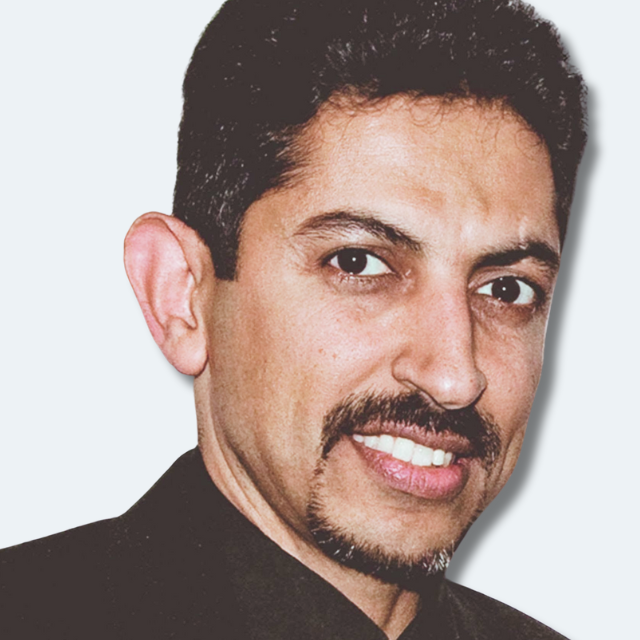
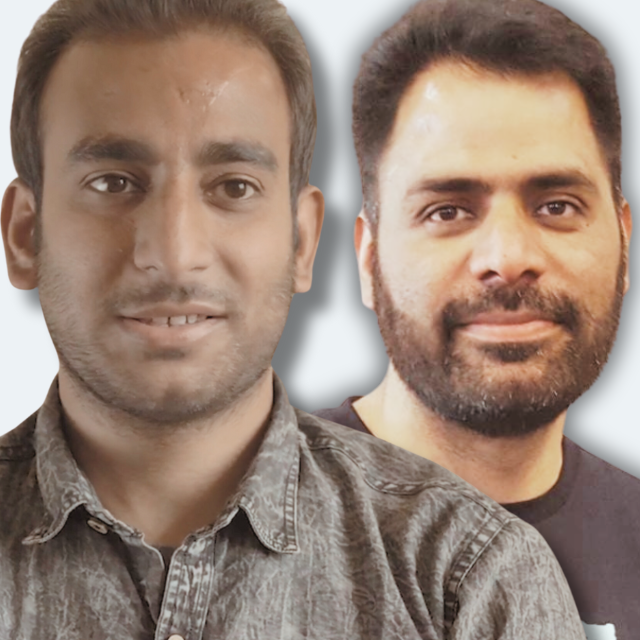
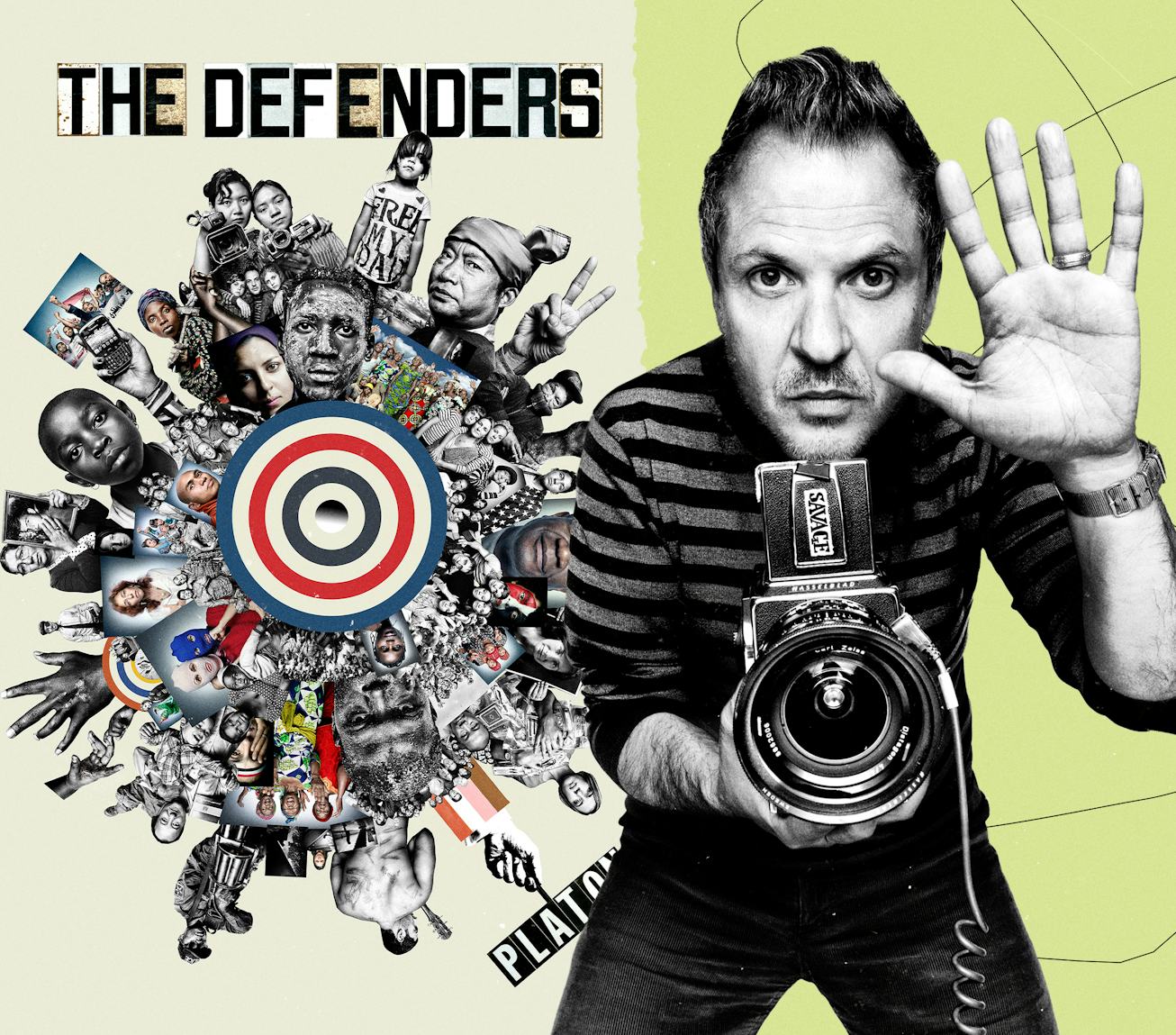
Kadar Abdi Ibrahim is a human rights defender and journalist from Djibouti. He has drawn inspiration from iconic figures in the human rights movement in the hopes of building a genuine and lasting democracy in his country.
Kadar Abdi Ibrahim has also been the subject of acts of reprisals by his government for his engagement with international bodies. In 2018, days after returning from Geneva where he carried out advocacy work ahead of Djibouti’s Universal Periodic Review, intelligence service agents raided his house and confiscated his passport.
On 15 February 2024 AP carried the story that Venezuela’s government has ordered the local UN office on human rights to suspend operations, giving its staff 72 hours to leave, after accusing the office of promoting opposition to the South American country. The UN office was established in Caracas in September 2019.
The foreign affairs minister, Yván Gil, announced the decision at a news conference in Caracas on Thursday. Gil’s announcement came on the heels of the detention of the human rights attorney Rocío San Miguel, which set off a wave of criticism inside and outside Venezuela.
The South American country’s government said it had made a decision “to suspend the activities of the technical advisory office of the UN high commissioner for human rights and carry out a holistic revision of the technical cooperation terms”.
The government said the UN human rights office must rectify its “colonialist, abusive and violating attitude”, accusing it of playing an “inappropriate role” in the country and supporting impunity for people involved in attempts at assassination, coups, conspiracies and other plots.
The Venezuelan government regularly accuses members of the political opposition of plotting takeovers or the assassination of President Nicolas Maduro, all accusations vehemently denied by opposing parties and their members.
“We regret this announcement and are evaluating the next steps. We continue to engage with the authorities and other stakeholders,” said UN human rights office spokesperson Ravina Shamdasani. “Our guiding principle has been and remains the promotion and protection of the human rights of the people of Venezuela.”
Venezuelan state television on Wednesday harshly criticized comments by the UN’s special rapporteur on the right to food, Michael Fakhri, who just concluded a visit to Venezuela. Fakhri had said in a statement the government food program does not tackle the root causes of hunger and is susceptible to political influences.
San Miguel was taken into custody on Friday at the airport near Caracas while she and her daughter awaited a flight to Miami. Authorities did not acknowledge her detention until Sunday, and as of Wednesday her attorney had not been allowed to meet with her.
San Miguel’s daughter, ex-husband, two brothers and former partner were also detained following her arrest. Of them, only her former partner remains in custody.
On 5 February 2024, the Swedish Government adopted a new five-year strategy for development cooperation for human rights and freedoms, democracy and the rule of law. This strategy is an important part of the implementation of the Government’s new reform agenda for development assistance and contributes to free and inclusive democratic societies built on respect for human rights and freedoms.
Democracy, human rights and freedoms, and the rule of law are essential for freedom, security and the continued development of society. At the same time, we see storm clouds gathering. Democracy is in decline for the seventeenth consecutive year, which gives rise to increased oppression and conflicts. Russia’s full-scale invasion of Ukraine is a clear example of this.
Another is the way authoritarian states are undermining fundamental human rights and freedoms and using new digital technology for oppression and to spread disinformation.
“With this strategy, the Government is placing greater emphasis on the individuals around the world who fight for their freedom every day. We want to help those living under oppressive systems. Unfortunately, we see that democracy is headed in the wrong direction. That’s why Sweden has to do its part. We will do what we can to support the positive forces that exist,” says Minister for International Development Cooperation and Foreign Trade Johan Forssell.
The strategy outlines the Swedish Government’s increased focus on supporting defenders of human rights and democracy, free elections and independent journalism, in comparison with the previous strategy. The allocated budget for the strategy in 2024 is SEK 900 million. This budget is set out by the Government each year.
The Human Rights Foundation (HRF) announced that “Beyond Utopia,” a BAFTA-nominated and du-Pont-Columbia Award-winning film that follows the harrowing journeys of several individuals as they attempt to escape North Korea, is now available to stream on Amazon Prime, Apple TV, and YouTube. Pastor Seungeun Kim, who has made it his life’s work to rescue North Koreans. Over the past 23 years, he has saved more than 1,000 people through a network of smugglers and activists. As the film depicts, Pastor Kim frequently risks his own life by joining defectors on parts of their treacherous journey to safety, a trek that spans thousands of miles through jungles and rivers. Dubbed “an astonishing, real-life geopolitical thriller” by The Hollywood Reporter and “a staggering look at the nightmare of North Korea and the brave souls who tried to escape it” by Variety, the film has already received critical acclaim. It won the Audience Award for US Documentary at the 2023 Sundance Film Festival, received a du-Pont-Columbia Award, has been nominated for the 2024 British Academy Film Award for Best Documentary, and was shortlisted for the 2024 Oscar for Best Documentary. Stream “Beyond Utopia” today on Amazon Prime, Apple TV, and YouTube.
The Gulf Centre for Human Rights (GCHR) is working with journalists in the Middle East and Northern Africa to investigate various violations affecting the safety of journalists and their ability to do their work.
Shutterstock
“I find myself wishing there was more protection [for investigative journalists], a sense of safety and even simply just hope. I watch in awe as they investigate crimes that they unfortunately know they could well be victims of in the future, or in some cases already have been.“ Zaynab Al-Khawaja, GCHR’s Journalists Protection Coordinator, working with journalists conducting the investigations
With a strong gender focus, the GCHR ensures that the majority of the investigations are carried out by women, empowering them and shedding light on cases involving women.
One investigation highlights the story of an anonymous woman journalist who quit her job and relocated due to sexual harassment. She writes:
A large proportion of society is aware of widespread harassment in the streets, resulting from an exacerbated hypermasculinity. However, statements by several Iraqi women journalists confirm that this phenomenon did not spare women in press and media outlets, forcing a considerable number of them to quit journalism for good.
The investigation also reported that 41% of women journalists in Iraq have been victims of harassment, forcing 15% to leave their jobs and 5% to quit their profession for good.
This data aligns with UNESCO’s Chilling report, revealing increasing offline and online attacks against women journalists, including stigmatization, sexist hate speech, trolling, physical assault, rape and murder.
Another investigation looked into the imprisonment and silencing of journalists, some facing fabricated allegations of sexual harassment. GCHR collaborates with the NGO Vigilance and 40 partners on a joint appeal to end the persecution and detention of journalists and human rights defenders exercising their right to freedom of expression. GCHR also supported a journalist in the Middle East investigating the case of a disappeared journalist in Syria.
Since 2022, GCHR and UNESCO have joined forces to support investigative journalism, reducing impunity for crimes against journalists and enhancing their safety through the Global Media Defence Fund. Established in 2019, this fund has supported over 120 projects globally, directly benefiting over 5,000 journalists, 1,200 lawyers and 200 non-governmental organizations.
In 2022, UNESCO published recommendations on addressing violence against women journalists, based on The Chilling, a global research project by UNESCO and the International Center for Journalists (ICFJ). All reports related to this project are available here on UNESCO’s website.
Almost a third of the world’s population now lives in countries with closed civic space. This is the highest percentage since 2018, when CIVICUS began systematically tracking civic space conditions around the world. This startling decline – from 26 per cent living in closed countries in 2018 to 30.6 per cent today – points to a major civic space crisis that requires immediate, global efforts to reverse. This year we also recorded the lowest percentage of humanity living in open countries, where civic space is both free and protected. Today, just two per cent of the world’s population enjoys the freedom to associate, demonstrate and express dissent without significant constraints, down from almost four per cent just five years ago.
Since the previous edition of this report, which covered 2022, civic space ratings have changed for 12 countries over the last year, worsening in seven countries and improving in five.
The latest CIVICUS Monitor country ratings update in December 2023 indicates that civil society faces an increasingly hostile environment. There are now 28 countries or territories with closed civic space, 50 with repressed civic space and 40 with obstructed civic space, meaning that 118 of 198 countries and territories are experiencing severe restrictions in fundamental freedoms. In comparison, 43 countries have narrowed civic space and just 37 have an open rating.
The severity of the civic space deterioration is exemplified by the number of countries moving to the repressed or closed category. Of the seven countries being downgraded, five moved to the two worst categories. Bangladesh and Venezuela are now rated as closed and Kyrgyzstan, Senegal and Sri Lanka are downgraded to the repressed rating as conditions for civil society continue to worsen.
Europe continues to add to the list of downgraded countries, with Bosnia and Herzegovina now placed in the obstructed category and Germany moving from an open to a narrowed rating. Over the past six years, 12 European countries have seen their ratings downgraded due to deteriorating civic space conditions.
Five countries have upgraded ratings in 2023, although, as in previous years, the situation for civil society in these countries continues to be challenging. Libya moved from the closed to the repressed category. Benin, Lesotho and Madagascar have moved from the repressed to the obstructed category. Notably, Timor-Leste has joined the narrowed category. Regional sections describe the conditions that led to ratings changes.
Justice & Peace Netherlands is launching its new call for applications for human rights defenders at risk to participate in Shelter City Netherlands. The deadline for applications is 28 February 2024 . Shelter City is a global movement of cities, organizations and people who stand side by side with human rights defenders at risk. Shelter City provides temporary safe and inspiring spaces for human rights defenders at risk where they re-energize, receive tailor-made support and engage with allies. The term ‘human rights defender’ is intended to refer to the broad range of activists, journalists and independent media professionals, scholars, writers, artists, lawyers, civil and political rights defenders, civil society members, and others working to advance human rights and democracy around the world in a peaceful manner. From June and September 2024 onwards, several cities in the Netherlands will receive human rights defenders for a period of three months. At the end of their stay in the Netherlands, participants are expected to return with new tools and energy to carry out their work at home.
Application forms must be submitted by 28 February 2024. An independent commission will select the participants. Note that selected human rights defenders will not automatically participate in Shelter City as Justice & Peace is not in control of issuing the required visas to enter the Netherlands. For more information, please contact us at info[@]sheltercity.org.
Last week, on 23 January 2024, the UN Human Rights Council reviewed the human rights record of China during its fourth Universal Periodic Review (UPR). The International Service for Human Rights reporst back on its successful campaign: Following ISHR campaign and your messages to UN member States, sixcountries, including France, Luxembourg, the UK, the US, Sweden, and Australia urged Beijing to put an end to the practice of ‘Residential Surveillance at a Designated Location’ (RSDL) – which UN experts have branded a form of enforced disappearance. This would not have been possible without you!
Following this session, the Chinese government must review the recommendations and decide whether to accept or simply note them, and report back to the Human Rights Council at its 56th session (June 2024). ISHR will closely monitor this and keep you informed. Our call to raise the case of Cao Shunli got unanswered. Cao was detained by Chinese police in September 2013 in retaliation for her work to seek meaningful civil society participation in China’s second UPR cycle. Ten years ago, on 14 March 2014, Cao died of multiple organ failure following continued denial of medical treatment in custody. Despite the emblematic nature of her case Cao’s name was not once cited by UN member States. Nevertheless, at least four States recommended to China to end reprisals against human rights defenders seeking to engage with the United Nations. We’re ramping up efforts for honouring the memory of Cao Shunli and calling for accountability in her case. We are preparing a small event on 14 March 2024 in Geneva. Stay tuned for more very soon!
Human rights activist Gregori Vinter appears in court in Cherepovets, Russia, on January 17.
On 29 January 2024, Rafio Free Europe reported that Russian paleontologist and human rights defender Gregori Vinter, who was sentenced to three years in prison earlier this month on a charge of distributing “false” information about Russian armed forces involved in Moscow’s ongoing invasion of Ukraine, has asked President Vladimir Putin to euthanize him “to avoid an excruciating death of diabetes.”
Vinter’s lawyer, Sergei Tikhonov, on January 28 called the letter written by his client before he was handed his sentence on January 18 “a gesture of despair.”
In the letter, Vinter says prisons could not supply the insulin he needs to treat his diabetes, while getting supplies from outside the institution would be impossible because he would have to visit doctors to get prescriptions, something that wouldn’t be allowed.
“My experience tells me that without my medicine my life in custody will be very short…. I will face a process of a long and cruel death…. Knowing that as an inmate I will face a mere excruciatingly painful death among the alien, cruel, and absolutely indifferent people of the prison, I ask you to allow a voluntary medical euthanasia for me,” Vinter’s letter to Putin says.
“Imprisonment for a person like me, a person who survived a stroke, a clinical death during COVID, an attempted murder in 2018, actually means an execution, a public execution accompanied with long-term suffering through a slow and painful death. This is not just 1937 [period of Josef Stalin’s great purge] — it is perverted pathological sadism that is known to the whole world as the Russian Federation’s Federal Penitentiary Service.”
Prison officials have not commented on Vinter’s letter and whether he would have regular access to the medical assistance he needs.
The 55-year-old Vinter is the leader of the For Human Rights group branch in his native city of Cherepovets. His human rights activities in recent years helped to reveal the mass beatings of inmates at a local prison and investigations of the penitentiary’s guards. He also made headlines in 2019 after he led several rallies protesting against the local government’s deforestation activities in the region around Cherepovets.
During the pandemic in 2020, Vinter was handed a parole-like two-year sentence over an online post about the transportation of convicts without medical masks and other COVID precautions.
Before the sentence was pronounced, Vinter spent time in a detention center where, he said, investigators tortured him with electricity and broke his leg.
Vinter later told journalists about what he endured in the detention center, which led to a public outcry and investigations of the center’s administration.
The case against Vinter was initiated in August 2022 after he posted materials on the Internet about alleged atrocities committed by Russian troops against civilians in Ukraine.
The Memorial human rights group has recognized Vinter as a political prisoner.
On 31 January 2024 several NGOs – including HRW and AI -came out in support of a bill in the US Senate. Senator Ben Cardin introduced the Human Rights Defenders Protection Act of 2024, which aims to protect individuals abroad “who face reprisals for defending human rights and democracy.” The law, if enacted, would strengthen the US government’s ability to “prevent, mitigate, and respond” to such cases.
Senator Cardin said this legislation “will help elevate, guide, and enhance US efforts to support these courageous individuals globally at a time when their efforts are more important than ever.”
HRW said: The bill would integrate support for rights defenders into various US policies and programs and encourage engagement with the private sector. It aims to improve assistance for rights defenders living in exile from their home countries and strengthen US tools to hold perpetrators of rights abuses accountable.Human Rights Watch has long documented the risks, threats, and attacks that rights defenders across the globe face. In Rwanda, for example, the government for many years has targeted with impunity rights defenders at home and extended its repression beyond its borders to silence Rwandan critics living abroad. Last December, the Emirati government brought new charges under its counterterrorism law against 87 activists and dissidents, including imprisoned rights defender Ahmed Mansoor.
The proposed legislation would create a new US visa for rights defenders who face a “credible fear of an urgent threat,” allowing those who qualify to reach safety before they are detained or harmed. It would also increase the number of US government personnel dedicated to democracy and human rights issues in the federal government and at embassies in countries with a high risk of rights abuses.
Andrew Fandino, Advocacy Director for the Individuals at Risk Program at Amnesty International USA. stated: “The Human Rights Defenders Protection Act of 2024 is a critical piece of legislation that will help strengthen and improve the U.S. government’s ability to support human rights defenders around the world,” ..“With over 401 human rights defenders killed globally in 2022 alone, now more than ever, human rights defenders need this additional support and protection.”
If passed, the legislation would require the US government to establish a “Global Strategy for Human Rights Defenders.” The strategy would survey current tools and resources to support human rights, identify how the government would prioritize and bolster protections for rights defenders, and establish specific goals for implementing the legislation’s policy objectives. This would link to the existing EU Guidelines on Human Rights Defenders (2008), and the OSCE Guidelines on the Protection of Human Rights Defenders (2014) and those of a small group of European countries.