Archive for the 'Human Rights Defenders' Category

Daouda Diallo, the 2022 recipient of the Martin Ennals Award, abducted

September 27, 2024

A prominent human rights defender in Burkina Faso has been abducted by unknown individuals, rights groups have said. Activists say it could be the latest attempt by the military government to target dissidents using a controversial law.

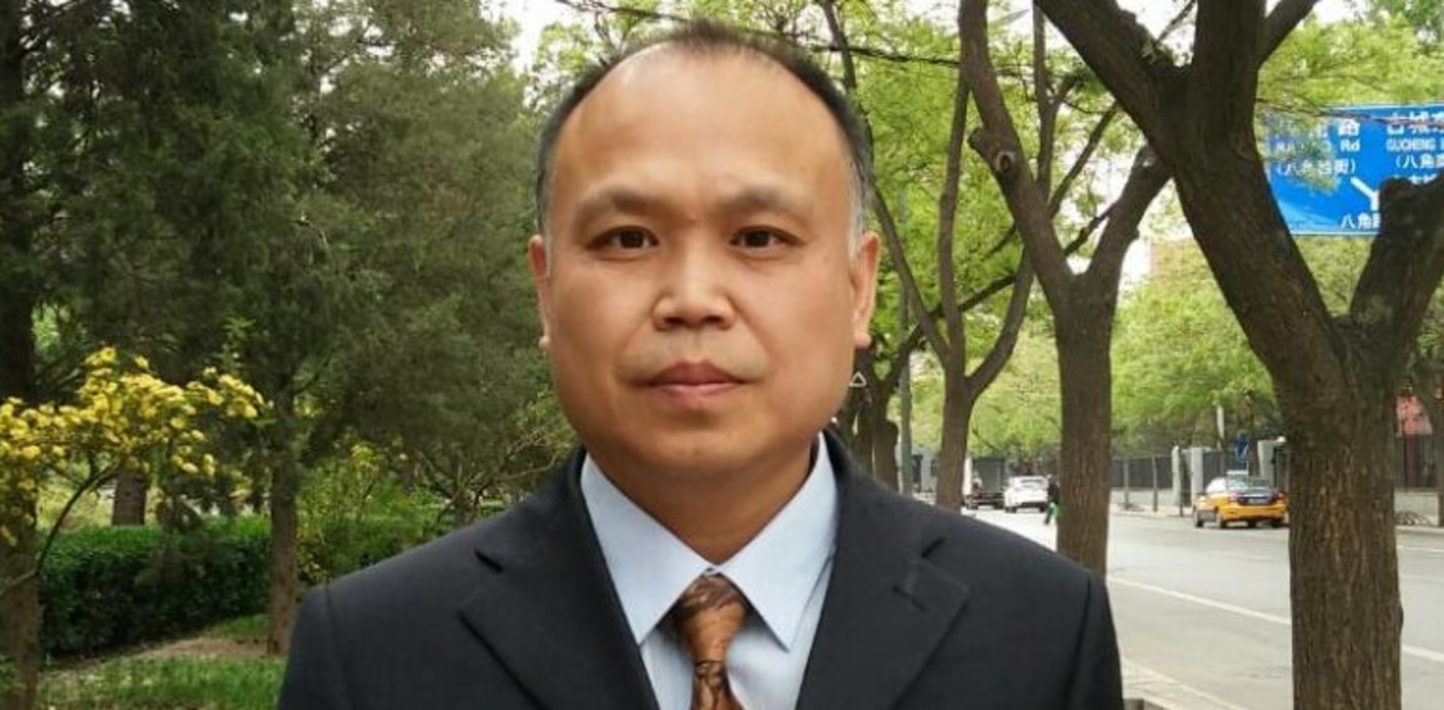
Daouda Diallo, 2022 recipient of the Martin Ennals international human rights award, was abducted on Friday in the capital Ouagadougou after visiting the passport department where he had gone to renew his documents, according to the local Collective Against Impunity and Stigmatisation of Communities civic group, which Mr Diallo founded.

https://www.trueheroesfilms.org/thedigest/laureates/ca7f1556-8f73-4b48-b868-b93a3df9b4e1

His captors – in civilian clothing – accosted him as he tried to enter his car and took him to “an unknown location”, the group said in a statement on Friday, warning Mr Diallo’s health could be at risk and demanding his “immediate and unconditional” release.

Amnesty International’s west and central Africa office said the abduction was “presumably (for him) to be forcibly conscripted” after he was listed last month among those ordered to join Burkina Faso’s security forces in their fight against jihadi violence as provided by a new law.Right now, civil society activists, human rights defenders and even leaders of opposition political parties do not dare express freely their opinions

“Amnesty International denounces the use of conscription to intimidate independent voices in #BurkinaFaso and calls for the release of Dr Diallo,” the group said via X, formerly known as Twitter.

Earlier this year, Burkina Faso’s junta announced the “general mobilisation” decree to recapture territories lost as jihadi attacks continue to ravage the landlocked country.

https://www.msn.com/en-ie/news/national/human-rights-activist-abducted-in-burkina-faso-group-says/ar-AA1kT5Gr

United Nations adopts ground-breaking Pact for the Future to transform global governance

September 27, 2024

New York, 22 September 2024 – World leaders today adopted a Pact for the Future that includes a Global Digital Compact and a Declaration on Future Generations. This Pact is the culmination of an inclusive, years-long process to adapt international cooperation to the realities of today and the challenges of tomorrow. The most wide-ranging international agreement in many years, covering entirely new areas as well as issues on which agreement has not been possible in decades, the Pact aims above all to ensure that international institutions can deliver in the face of a world that has changed dramatically since they were created.

“The Pact for the Future, the Global Digital Compact, and the Declaration on Future Generations open the door to new opportunities and untapped possibilities,” said the Secretary-General during his remarks at the opening of the Summit of the Future.

The Pact covers a broad range of issues including peace and security, sustainable development, climate change, digital cooperation, human rights, gender, youth and future generations, and the transformation of global governance. Key deliverables in the Pact include:

In the area of peace and security

On sustainable development, climate and financing for development

  • The entire Pact is designed to turbo-charge implementation of the Sustainable Development Goals.
  • The most detailed agreement ever at the United Nations on the need for reform of the international financial architecture so that it better represents and serves developing countries.
  • Improving how we measure human progress, going beyond GDP to capturing human and planetary wellbeing and sustainability.
  • A commitment to consider ways to introduce a global minimum level of taxation on high-net-worth individuals.
  • On climate change, confirmation of the need to keep global temperature rise to 1.5 °C above pre-industrial levels and to transition away from fossil fuels in energy systems to achieve net zero emissions by 2050.

On digital cooperation

  • The Global Digital Compact, annexed to the Pact, is the first comprehensive global framework for digital cooperation and AI governance.
  • At the heart of the Compact is a commitment to design, use and govern technology for the benefit of all.

Youth and future generations

  • The first ever Declaration on Future Generations, with concrete steps to take account of future generations in our decision-making, including a possible envoy for future generations.
  • A commitment to more meaningful opportunities for young people to participate in the decisions that shape their lives, especially at the global level.

Human rights and gender

  • A strengthening of our work on human rights, gender equality and the empowerment of women.
  • A clear call on the need to protect human rights defenders.
  • Strong signals on the importance of engagement of other stakeholders in global governance, including local and regional governments, civil society, private sector and others.

There are provisions across the Pact and its annexes for follow-up action, to ensure that the commitments made are implemented.

The Summit brought together over 4000 individuals from Heads of State and Government, observers, IGOs, UN System, civil society and non-governmental organizations. In a broader push to increase the engagement of diverse actors, the formal Summit was preceded by the Action Days from 20-21 September, which attracted more than 7,000 individuals representing all segments of society. The Action Days featured strong commitments to action by all stakeholders, as well as pledges of USD 1.05 billion to advance digital inclusion.

For more information:  https://www.un.org/en/summit-of-the-future

https://www.un.org/sustainabledevelopment/blog/2024/09/press-release-sotf-2024/

https://www.civicus.org/index.php/media-resources/news/united-nations/new-york/7322-civicus-urges-the-un-to-prioritise-strengthening-the-human-rights-pillar-at-unga79-and-the-summit-of-the-future

CAFOD calls for justice as another environmental defender is killed in Honduras

September 26, 2024

Juan Lopes - Screenshot

Juan Lopes

Catholic aid agency CAFOD has called for justice, after the murder of a prominent environmentalist that CAFOD supported.

Following the news of the murder of Juan Lopez – anti-mining, environmentalist, community leader and Municipal Councillor of Tocoa, northern Honduras – who was shot dead by several men as he headed home in his car from church, Paz Redondo, CAFOD’s Country Representative for Central America said: “The assassination of Juan Lopez clearly shows once again the complicity between the authorities, international companies, and organised crime in Tocoa, and the inability of the government to protect environmental and human rights defenders in the emblematic case of the Guapinol river – despite the fact that precautionary measures had been ordered by the Interamerican Court of Human Rights – IACHR.

Juan Lopez denounced the corruption within local and central governments in Honduras during a public press conference just before he was killed.

Paz Redondo continues: “Justice needs to be more than words for the state of Honduras, a state that shows once again its fragility and inability to combat corruption within its ranks, as it continues to serve the interests of extractives and organised crime. Juan publicly denounced this corruption within local and central governments and was killed days after his and his fellow activists’ latest public press conference.”

For over a decade, the communities of Guapinol, San Pedro and other areas in the vicinity of Tocoa have been denouncing the illegal granting of mining concessions in the “Carlos Escaleras National Park” in Honduras. Their advocacy efforts were fruitful in February, when the Honduran government approved Decree 18-2024 to protect the core zone of the national park, a key achievement to safeguard the environment against mining and energy projects in the area.

The murder of Juan Lopez is not the first killing in the Guapinol case. Over 160 community members in Tocoa have been killed protecting their land and natural resources since 2010 (Amnesty, 2024). In 2023, three community leaders were killed in what the community saw as retaliation, following the release of defenders who had been criminalised. Later in the year, in October 2023, 30 members of the Municipal Committee for the Defense of Common and Public Goods of Tocoa and of the Bufete Justicia para los Pueblos, were granted precautionary measures by the Human Rights Interamerican Court (IACHR).

Juan Lopez was killed despite precautionary measures which were ordered by the IACHR last October. The community of Tocoa believes his death could have been prevented if the Honduran authorities had implemented the precautionary measures granted to Juan Lopez. CAFOD, alongside ERIC has accompanied the Guapinol community in their fight to protect the land and natural resources essential for their survival, and we will continue supporting them as they defend their environmental rights.

https://www.frontlinedefenders.org/en/case/killing-human-rights-and-environmental-defender-juan-lopez

Call for Input: Special Rapporteur’s Human Rights Council report on human rights defenders in remote and rural areas

September 26, 2024

The Special Rapporteur on the situation of human rights defenders is seeking input for her upcoming report to the Human Rights Council, which will focus on human rights defenders working in remote and rural areas. The report, to be presented in March 2025, will explore the unique challenges faced by these human rights defenders, such as geographic isolation, limited access to resources, and lack of meaningful consultation. Despite these challenges, human rights defenders in these regions play a critical role in defending human rights, maintaining public institutions, and ensuring the rule of law.

This call for input invites contributions from a range of stakeholders, including States, businesses, civil society organizations, and human rights defenders themselves. The aim is to assess the nature of threats, obstacles, and opportunities for human rights defenders in these remote regions. Submissions should focus on topics like gender-specific challenges, protection strategies, successes achieved, and examples of good practices. These inputs will help shape practical recommendations on improving safety, access to resources, and support for defenders in rural areas.

The collected inputs will inform the report and be published on the OHCHR website to foster dialogue and improve protection measures for human rights defenders in these challenging environments.

The Rafto Prize 2024 to Cuban ‘artivist’ Luis Manuel Otero Alcántara

September 19, 2024

Luis Manuel Otero Alcántara. Foto: María Matienzo

The Rafto Prize 2024 is awarded to Cuban artist and activist Luis Manuel Otero Alcántara for his fearless opposition to authoritarianism through art.

https://www.trueheroesfilms.org/thedigest/laureates/05024dea-3b59-42d7-8509-bd0c7f4f6e87

36-year-old Luis Manuel Otero Alcántara is a Afro-Cuban self-taught artist. He comes from a poor and marginalized neighbourhood in Havana and uses sculptural and performance art to protest violations against freedom of expression. He has been arrested multiple times for his art and activism and is currently in prison.

Otero Alcántara is the general coordinator of the San Isidro Movement – a constellation of artists, journalists and academics promoting freedom of expression. It was established in 2018 as a reaction to Decree 349. The decree requires artists to obtain advance permission for public and private exhibitions and performances. Decree 349 is one of the legal instruments used to silence artists, musicians and performers who are critical to the Cuban government.

Otero Alcántara’s artivism has come at a high personal cost. Since 2016 he has been the subject of interrogations, political persecution and arrests, and his art has been confiscated and destroyed by state security officers.

Luis Manuel Otero Alcántara creates sculptures, drawings, and performative art. He is currently serving a five-year sentence in the high-security prison Guanajay outside of Havana.

Expressing oneself through art: A basic human right

Despite this, he continued his artivism through performance pieces to raise awareness of Cuba’s ongoing repression of independent artists and activists. Otero Alcántara was detained on July 11, 2021, after posting a video online of his planned participation in the protests. In 2022, he was convicted for “contempt, public disorder and insults to national symbols”. He is currently serving a five-year sentence in Guanajay maximum security prison outside Havana.

The Rafto prize 2024 aims to highlight the importance of the work of Luis Manuel Otero Alcántara and the basic human right to expressing oneself through art. We call upon the Cuban government to stop the persecution of artists and human rights defenders. We also urge them to free Otero Alcántara and all political prisoners in Cuba.

https://www.rafto.no/en/news/the-rafto-prize-2024-to-artivist-luis-manuel-otero-alcantara

Global Witness 2023-2024 Annual Report: Violent Erasure of Land and Environmental Defenders

September 18, 2024

According to a new report by Global Witness released on 10 September, more than 2,100 land and environmental defenders were killed globally between 2012 and 2023.

  • An estimated 196 land and environmental defenders were killed in 2023 around the world, according to a new Global Witness report published today
  • The new figures take the total number of defenders killed between 2012 to 2023 to 2,106
  • For the second year running, Colombia had the highest number of killings worldwide – with a record 79 defenders killed last year, followed by Brazil (25), Mexico (18) and Honduras (18)
  • Once again, Latin America had the highest number of recorded killings worldwide, with 166 killings overall – 54 killings across Mexico and Central America and 112 in South America
  • Environmental defenders are also being increasingly subject to range of tactics for silencing those who speak out for the planet across Asia, the UK, EU and US

The new figures bring the total number of defender killings to 2,106 between 2012 and 2023.

Overall, Colombia was found to be the deadliest country in the world, with 79 deaths in total last year – compared to 60 in 2022, and 33 in 2021. This is the most defenders killed in one country in a single year Global Witness has ever recorded. With 461 killings from 2012 to 2023, Colombia has the highest number of reported environmental defender killings globally on record.

See:https://humanrightsdefenders.blog/2023/09/25/global-witness-annual-report-2022-a-land-rights-defender-killed-every-other-day/

Other deadly countries in Latin America include Brazil, with 25 killings last year, and Mexico and Honduras, which both had 18 killings.

Central America has emerged as one of the most dangerous places in the world for defenders. With 18 defenders killed in Honduras, the country had the highest number of killings per capita in 2023. A total of 10 defenders were also killed in Nicaragua last year, while four were killed in Guatemala, and four in Panama.

Worldwide, Indigenous Peoples and Afrodescendents continue to be disproportionately targeted, accounting for 49% of total murders.

Laura Furones, Lead Author and Senior Advisor to the Land and Environmental Defenders Campaign at Global Witness, said:

“As the climate crisis accelerates, those who use their voice to courageously defend our planet are met with violence, intimidation, and murder. Our data shows that the number of killings remains alarmingly high, a situation that is simply unacceptable.

While establishing a direct relationship between the murder of a defender and specific corporate interests remains difficult, Global Witness identified mining as the biggest industry driverby far, with 25 defenders killed after opposing mining operations in 2023. Other industries include fishing (5), logging (5), agribusiness (4), roads and infrastructure (4) and hydropower (2).

In total, 23 of the 25 mining-related killings globally last year happened in Latin America. But more than 40% of all mining-related killings between 2012 and 2023 occurred in Asia – home to significant natural reserves of key critical minerals vital for clean energy technologies.

As well as highlighting the number of killings worldwide, the report unearths wider trends in non-lethal attacks and their harmful impacts on communities globally. It highlights cases of enforced disappearances and abductions, pointed tactics used in both the Philippines and Mexico in particular, as well as the wider use of criminalisation as a tactic to silence activists across the world.

The report also explores the crackdown on environmental activists across the UK, Europe and the US, where laws are increasingly being weaponised against defenders, and harsh sentences are more frequently imposed on those who have played a role in climate protests. The findings form part of a concerning trend of criminalisation cases emerging worldwide.

https://www.euronews.com/green/2024/09/11/european-governments-are-using-harsh-overly-broad-laws-to-silence-climate-protesters

Despite the escalating climate crisis – and governments pledging to achieve the Paris Agreement target of 1.5C – land and environmental defenders are being increasingly subject to a wide range of attacks to stop their efforts to protect the planet. At least 1,500 defenders have been killed since the adoption of the Paris Agreement on 12 December 2015.

Nonhle Mbuthuma, author of the report’s foreword and Goldman Environmental Prize Winner 2024, said:

“Across every corner of the globe, those who dare to expose the devastating impact of extractive industries — deforestation, pollution, and land grabbing — are met with violence and intimidation. This is especially true for Indigenous Peoples, who are essential in the fight against climate change, yet are disproportionately targeted year after year.

Download Report (PDF | 2.76 MB | Full Report)

Young volunteers are the torch-bearers of today, leaders of tomorrow

August 30, 2024
Mehmet Onat Sarıtaş, UN Volunteer with UNICEF in Türkiye supports the design and implementation of climate change-related programmes.

Mehmet Onat Sarıtaş, UN Volunteer with UNICEF in Türkiye supports the design and implementation of climate change-related programmes.

Diana Assenova, Mehmet Onat Sarıtaş and Madinabonu Salaidinova have one thing in common — They are young volunteers who believe that progress cannot be made without youth. Let’s hear from them in their own words.

“By investing in education, building the capacity of community members, and fostering global citizenship, young people play a crucial role in creating a better future that is inclusive, equitable, and sustainable for generations to come.” The words of Diana Assenova, a UN Volunteer Education Assistant with the UN Refugee Agency (UNHCR) in Kazakhstan resonate with the importance of youth and progress.

Diana focuses on the rights of youth refugees by making sure they have equal access to education. She coordinates the DAFI Scholarship Programme, through which, young refugees get education support. She encourages many more opportunities for education for refugee youth in Kazakhstan via awareness and advocacy campaigns.

The enthusiasm of youth propels her efforts — she recounts how she volunteered to organize a summer camp for teenagers from the displaced population.

The energy of working together with young people was unforgettable! This reaffirmed my dedication to making a positive impact through volunteerism.” Diana Assenova, UN Volunteer with UNHCR Kazakhstan

Another young and skilled UN Volunteer is Mehmet Onat Sarıtaş who serves with the UN Children’s Fund (UNICEF) in Türkiye as an Adolescent Development and Participation Assistant. Onat is witness to the disproportionate impact of climate change on the lives of children and adolescents in Türkiye and that is when he decided to volunteer. He values collective volunteer action to create a greener world for children.

Onat supports the design and implementation of environment-related projects. He also coordinates UNICEF’s climate-focused youth platforms, performs administrative tasks and collects data.

Youth platforms give Onat the opportunity for peer-to-peer support and technical assistance to young people. This close communication and learning has helped strengthen UNICEF’s relations with young people, he notes.

Next, we have the voice of UN Volunteer, Madinabonu Salaidinova, “I focus on increasing the engagement of young leaders from the south of Kyrgyzstan in civic activism and strengthening their potential to promote human rights.”

Madinabonu serves as a Legal and Monitoring Volunteer with the Office of the United Nations High Commissioner for Human Rights (OHCHR) Regional Office for Central Asia in Kyrgyzstan.

She monitors media channels, observes trials, and engages with the government and civil society partners, including human rights defenders. She also responds to individual complaints of alleged human rights violations submitted to OHCHR from five Central Asian countries — Kazakhstan, Kyrgyzstan, Tajikistan, Turkmenistan and Uzbekistan. 

Being familiar with the UN Human Rights Instruments and Mechanisms, Madinabonu deems locally-led solutions as effective in safeguarding human rights. 

Including youth in decision-making is crucial, says Madinabonu. She feels that her voice is heard and appreciated. This gives her momentum to bring her ideas to fruition.

I appreciate that OHCHR gives me opportunities to integrate my interests and ideas into my work. I feel that I’m where I’m supposed to be right now.” Madinabonu Salaidinova, UN Volunteer with OHCHR Kyrgyzstan.

https://www.unv.org/index.php/Success-stories/torchbearers-today-leaders-tomorrow

Three shortlisted candidates for the 2024 Václav Havel Prize of the CoE

August 29, 2024

August 27, 2024

The selection panel of the Václav Havel Human Rights Prize, which rewards outstanding civil society action in defence of human rights in Europe and beyond, has announced the shortlist for the 2024 Award.

Meeting in Prague, the panel – made up of independent figures from the world of human rights and chaired by the President of the Parliamentary Assembly of the Council of Europe (PACE) Theodoros Rousopoulos – decided to shortlist the following three nominees, in alphabetical order:

Akif Gurbanov, Azerbaijan

The nominee is a human rights defender, political activist and active member of the Azerbaijani civil society. He is the co-founder of the Institute of Democratic Initiative (IDI) and of the Third Republic Platform. He was arrested in March 2024 in a wave of arrests targeting journalists and activists in the country.

María Corina Machado, Venezuela

The nominee is a leading political figure in Venezuela engaged in denouncing human rights abuses in her country and defending democracy and the rule of law. She is the co-founder of the Venezuelan volunteer civil organisation ‘Súmate’ for civil and political freedom, rights and citizen participation.

Babutsa Pataraia, Georgia

The nominee is a leading feminist activist and human rights lawyer in Georgia. She is the Director of ‘Sapari’, an NGO focusing on women’s rights and providing support for victims of violence since 2013. She has worked for over a decade to fight against feminicide, sexual violence against women, and sexual harassment.

https://www.trueheroesfilms.org/thedigest/awards/7A8B4A4A-0521-AA58-2BF0-DD1B71A25C8D

Nominations for the 2024 Roger N. Baldwin Medal of Liberty Award now open

August 22, 2024

Human Rights First announced a call for nominations for the 2024 Roger N. Baldwin Medal of Liberty Award. Nominations are due by September 23, 2024.

“Honoring those who champion human rights despite immense personal risk is at the heart of what we do,” said Human Rights First President and CEO Sue Hendrickson. “This award stands as a testament to the power of individuals to make a difference, even in the face of adversity.”

https://www.trueheroesfilms.org/thedigest/awards/F23B5465-6A15-4463-9A91-14B2977D9FCE

Individuals or organizations can submit nominations. Nominees will be judged based on the following criteria:

  • The nominee’s work is unique or particularly distinctive.
  • The nominee’s work has been effective in advancing human rights in a country other than the United States.
  • The nominee faces risk or insecurity as a result of their work.
  • The nominee would benefit significantly from receiving the Baldwin Award in the form of enhanced protection or in any other way.

The nomination form can be found [here].

For any questions about the award or the nomination process, please contact Human Rights First at BaldwinAward2024@humanrightsfirst.org.

Panayote Dimitras – a Greek migrants’ rights defender – suffers judicial harassment

August 22, 2024

August 14, 2024:The recent summons by the Athens Magistrate marks a new development in Mr Dimitras’ long history of judicial harassment, this time also prospecting the criminal prosecution of his wife, constituting a major violation of their right to defend human rights as well as of the recently adopted European Union (EU) anti-SLAPP Directive. The Observatory for the Protection of Human Rights Defenders (FIDH-OMCT) urges the Greek authorities to put an immediate end to this practice of harassment and to ensure that all human rights defenders in the country can carry out their legitimate activities without hindrance or fear of reprisals.

his earlier troubles

Panayote Dimitras is a Greek migrants’ rights defender and Spokesperson of the Greek Helsinki Monitor (GHM) who, over the past ten years, has faced continuous episodes of judicial harassment as well as vicious smear campaigns deliberately aimed at discrediting him and his work. In the latest development, Mr Dimitras and his wife – Nafsika Papanikolatou – were summoned on May 31, 2024, by an Athens Magistrate carrying out a preliminary criminal investigation into alleged breach of trust and money laundering (in violation of paragraph 1 of Article 390 of the Greek Criminal Code and paragraphs 1 b) and 1 c) of Article 39 of Law 4557/2018, respectively), following the opening of a criminal case by the Athens First Instance Prosecutor. Mr Dimitras and Ms Papanikolatou replied to the summons and their file is in the hands of the Athens First Instance Prosecutor since then.

Exactly one year earlier, on May 31, 2023, the Greek Anti-Money Laundering Authority had already ordered the freezing of Mr Dimitras’ and Ms Papanikolatou’s personal account, pending an investigation into alleged misuse of donations to the Communication and Political Research Society (ETEPE) – a non-profit research organisation co-founded in 1990 by Mr Dimitras that manages human rights NGOs like GHM and Minority Rights Group – Greece (MRG-G). The same day the order was issued, Greek media published apparently leaked and inaccurate information about the case, reporting that all Mr Dimitras’ personal assets as well as those of the NGOs headed by him had been frozen, and that the alleged money laundering concerned funding received mainly from the EU “to support human rights causes” that “was used for other purposes than those claimed.” In fact, only a joint personal account of Mr Dimitras and Ms Papanikolatou had been frozen, and Mr Dimitras was accused of misusing, between 2010 and 2015, private donations to ETEPE amounting to 178.666,80 Euros and not EU funding.

Mr Dimitras and Ms Papanikolatou received the official notification from the Anti-Money Laundering Authority only one month and a half after the decision to freeze their personal account was taken, thereby delaying their right to access a remedy. The account freeze was initially ordered for nine months and then renewed for another nine months in February 2024. At the time of publication of this statement, the freeze is still effective notwithstanding Mr Dimitras’ and Ms Papanikolatou’s repeated requests to terminate it.

In another court case, the Three-Member Misdemeanours Court of Athens acquitted, in April 2024, Panayote Dimitras after five years of judicial harassment. Mr Dimitras was prosecuted under criminal charges of “false accusation” and “aggravated defamation” (Articles 229 and 363 of the Criminal Code of Greece, respectively) for having denounced racist comments from a public official, Christos Kalyviotis, who in return filed a complaint against Mr Dimitras for defamation.

The Observatory recalled, already at that time, that the procedure initiated by Mr Kalyviotis was only one of many abusive cases brought against Mr Dimitras over the past few years and constitutive of strategic lawsuits against public participation (SLAPPs), abusive civil proceedings aimed at criminalising human rights defenders and journalists.

Notably, since November 2022 a criminal case is ongoing against Panayote Dimitras at the Kos Court of First Instance in which he is accused of “forming or joining for profit and by profession a criminal organisation with the purpose of facilitating the entry and stay of third country nationals into Greek territory” under several articles of Law 4251/2014 (Immigration and Social Integration Code), for having provided humanitarian assistance to asylum-seekers. On January 23, 2023, preventive measures were imposed pending trial. Mr Dimitras was banned from carrying out activities with the GHM, a measure which was subsequently lifted. He was also banned from leaving the country, subjected to the obligation to report to the police station of his place of residence every 15 days, and required to pay a bail of 10,000 Euros.

More than one-and-a-half year later, these last three measures are still in place, with the consequence that Mr Dimitras cannot travel abroad for GHM human rights activities. In August 2023, he requested that the travel ban be lifted so that he could attend international meetings, and to be allowed temporarily to report to the police station in Kelafonia, where he has a summer home. Both requests were rejected by the First Instance Court of Kos. The European Parliament expressed concern about these measures in its resolution of February 7, 2024, on the rule of law and media freedom in Greece (2024/2502(RSP)). The responses provided by the Supreme Court and the Greek government to the resolution are of particular concern and seem to constitute both smear campaigns against Mr Dimitras as well as violations to his right to a fair trial, as it was falsely claimed that he had been arrested and that he had contacted a human smuggler.

The Observatory recalls that the anti-SLAPP Directive adopted by the European Parliament entered into force on May 6, 2024. The Observatory encourages the Greek authorities to bring into force the laws, regulations and administrative provisions necessary to comply with this Directive and to ensure its effective implementation to protect human rights defenders from abusive proceedings.

The Observatory expresses concern about the continued judicial harassment against Mr Dimitras and its recent enlargement towards his wife. The Observatory urges the Greek authorities to put an immediate end to all acts of harassment against Panayote Dimitras and Nafsika Papanikolatou and to allow their free exercise of the right to defend human rights.

https://www.fidh.org/en/region/europe-central-asia/greece/greece-continued-judicial-harassment-of-migrants-rights-defender

https://www.fidh.org/en/issues/human-rights-defenders/greece-continued-judicial-harassment-against-migrants-rights-defender