Archive for the 'Human Rights Defenders' Category
March 8, 2017
International Women’s Day focuses on many different aspects of the struggle for the human rights of women. I have selected three special actions this year:
(1) a short piece honoring woman who are land rights defenders;
(2) a digital protection tool for women human rights defenders (Cyberwomen);
(3) a documentary film on how rape was made into a international war crime.
[Of course this blog has had many earlier posts on women human rights defenders: https://humanrightsdefenders.blog/tag/women-human-rights-defenders/ ] Read the rest of this entry »
Posted in human rights, Human Rights Defenders | Leave a Comment »
Tags: Ana Mirian Romero, Common Dreams, digital security, FFIDH, Honduras, ICC, Institute for War and Peace Reporting (IWPR), international women's day, Josephine Pagalan, Latin America, Melania Chiponda, Philippines, rape, Rwanda, Standing Rock, The Uncondemned (film), USA, women human rights defenders, Zimbabwe
March 7, 2017
On 6 March the ISHR reported on that first week during which several dignitaries emphasised the key role that a vibrant civil society plays in promoting and protecting human rights.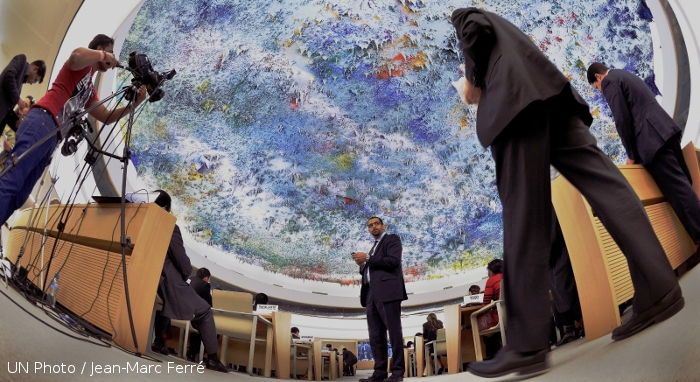
The President of the General Assembly, Peter Thomson, highlighted the importance of civil society by calling States, the UN and civil society to work shoulder to shoulder and advance with common purpose. Other high-level speakers expressed concern regarding increasing restrictions to civil society space, particularly against HRDs and journalists.
- Delegates from Botswana, the Czech Republic, Costa Rica, the European Union, France, Malta, Liechtenstein and Luxembourg, among others, reiterated their support to the work of HRDs and journalists and stressed the importance of guaranteeing their protection.
- Delegates from Germany, Norway, Poland, Slovenia, Sweden and the United Kingdom, among others, condemned acts of reprisals against HRDs and emphasised that HRDs must be able to participate and engage with the Council without fear of intimidation or reprisals.
The pivotal role defenders play in promoting sustainable development was also recognised. Georgia underscored the importance of strengthening the role of NGOs and safeguarding civil society’s space to ensure they are heard. ‘Without close cooperation with all stakeholders, it is impossible to secure the sustainable development of the country.’
So, there is no shortage of good statements in Geneva, but the what matters most is the upcoming renewal of the mandate of the Special Rapporteur on Human Rights Defenders and any real action on reprisals!
Source: #HRC34 | High-level officials kick off Council session, emphasise critical role of defenders | ISHR
Posted in human rights, Human Rights Council, Human Rights Defenders, ISHR, UN | Leave a Comment »
Tags: high level segment, ISHR, reprisals, Special Rapporteur on Human Rights Defenders, UN Human Rights Council
March 7, 2017
Why digitise? Digitising your documents greatly improves access to your information, whether you are building an online public library to share documents related to corruption, or making documents searchable for your team. Digitisation also helps to preserve and protect important human rights information. Many defenders run the risk that malevolent groups seeking to destroy or confiscate witness testimony, evidence of abuse, and other sensitive information. Others run the risk of documents being subject to harmful storage conditions, such as humidity, insects, and rodents. These are just a few reasons for digitising your documents. However, figuring out the most efficient, affordable, and responsible way to digitise thousands of documents can be a daunting task especially for human rights defenders in the field.
Therefore the NGO
HURIDOCS is organizing two live webinars. These webinars will explore the process of digitising documents and the best practices that should be applied. A summary of the discussion will be written and shared on the HURIDOCS website.

- When:
- Where: ReadyTalk (use the access code 2458641 to join)
- Who: Open to anyone who wants to learn more about digitizing documents
Whether you are a seasoned digitization expert or a human rights defender just starting to think about digitisation, this is a good occasion to learn and share.
If you are interested, please contact Kristin Antin at kristin@huridocs.org. Here is an example of a webinar hosted in January on managing contact information.
Source: Community Discussion: Best practices for digitising documents | HURIDOCS
Posted in human rights, Human Rights Defenders, HURIDOCS | Leave a Comment »
Tags: digital security, distance learning, documentation tools, HURIDOCS, information technology, on-line, training, webinar
March 6, 2017
The
Human Rights Foundation reported that
Cuban graffiti artist Danilo ‘
El Sexto’ Maldonado was
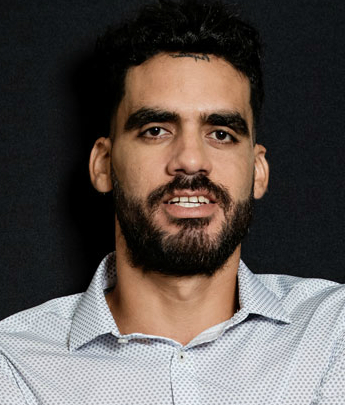
finally released from prison on 21 January 2017, after spending two months in detention. Cuban authorities arrested El Sexto for spray painting “
Se fue” (in English, “He’s gone”) shortly after the death of the island’s former dictator, Fidel Castro. He was sent to one of Cuba’s most notorious maximum security prisons, El Combinado de Este, where he was subjected to daily psychological torture and frequent death threats. The Human Rights Foundation filed an individual complaint with the U.N. Working Group on Arbitrary Detention for its Havel Prize Laureate.[
https://humanrightsdefenders.blog/2015/04/16/havel-prize-for-creative-dissent-awarded-to-girifna-sakdiyah-maruf-and-el-sexto/]
Posted in awards, human rights, Human Rights Defenders, Human Rights Foundation | Leave a Comment »
Tags: Cuba, El Sexto, freedom of expression, Human rights defender, Human Rights Foundation, release, Vaclav Havel International Prize for Creative Dissent
March 6, 2017
I have written earlier about the wisdom of having purely governmental human rights awards. Now Canada adds to the discussion:
In my article for Oxford University Press (“Human Rights Awards for the Protection of Human Rights Defenders” J Hum Rights Pract (2013) 5 p552) I wrote: “A word of caution with regard to ‘governmental’ awards is in order. While it is one thing for a government to ‘support’ (e.g. financially) an otherwise independent award with an autonomous jury, the notion that governments (such as the USA, the Netherlands, France, Poland, Sweden, Canada) should run their own awards, select the winner, have the Minister hand it out and promote the award through the diplomatic service, does not sit well with the desire to protect HRDs from the charge of being ‘foreign agents’, a frequent claim by repressive governments trying to depict HRDs as being supported and funded from abroad… A degree of distance would benefit governments and would also serve the laureates themselves who usually want to be seen as spearheading the non-governmental human rights movement. Intergovernmental organizations face similar problems in having awards, as was demonstrated by the controversy surrounding UNESCO’s decision in 2010 to launch an award paid for and named after the president/dictator of Equatorial Guinea, Obiang Nguema.”
In a post of 2011 I expressed some doubt about the USA State Department giving an award to Cuba dissidents (see: https://humanrightsdefenders.blog/2011/04/24/us-state-department-gives-its-human-rights-defenders-award-to-cuban-ladies-in-white-how-wise/).
A recent article (5 March 2017) by Dean Beeby of the Canadian Broadcasting Corporation (CBC) entitled “Diefenbaker award missing in action after Liberals take over” brings home another aspect, namely that such an award becomes a ‘political tit-for-tat’. An award created by Stephen Harper’s government, which honoured former Progressive Conservative prime minister John Diefenbaker, was inaugurated in early 2011 and given out for four years running before ‘disappearing’ in 2015 and 2016. Read the rest of this entry »
Posted in awards, human rights, Human Rights Defenders | Leave a Comment »
Tags: Canada, Canadian Broadcasting Corporation, Dean Beeby, governmental awards, human rights awards, Human Rights Defenders, John Diefenbaker Defender of Human Rights and Freedom Awards, John Humphrey Freedom Award, politics, Rights & Democracy
March 4, 2017
Posted in books, HRF, HRW, human rights, Human Rights Defenders | Leave a Comment »
Tags: annual report 2016, Country Reports on Human Rights Practices (USA), HRF, HRW, Sarah Margon, Tillerson, US State Department, USA
March 3, 2017

Campaigns for individual human rights defenders are plenty especially from the well known human rights NGOs such as AI, HRW, Front Line and the Observatory. But here are specialized inter-professional groups such as Scholars at Risk (SAR) which regularly appeal for assistance for one of their members. Here the case of Dr. Merera Gudina in Ethiopia. A former professor of political science at Addis Ababa University, Dr. Gudina is expected to stand trial this Friday on charges stemming from his peaceful exercise of the right to freedom of expression and association.
On 1 December 2016, Ethiopian security officers arrested Dr. Gudina following his return from Belgium, where he addressed members of the European Union Parliament on alleged human rights violations and the current political crisis in Ethiopia. Ethiopian authorities placed Dr. Gudina in solitary confinement, and over two months later brought multiple charges against him, which apparently relate to his peaceful activism.
SAR calls for emails, letters, and faxes respectfully urging the authorities to release and drop all charges against Dr. Gudina; or, pending this, to ensure his well-being while in custody, including access to legal counsel and family, his removal from solitary confinement, and to ensure that his case proceeds in a manner consistent with Ethiopia’s obligations under international law, in particular internationally recognized standards of due process, fair trial, and free expression.
See also https://humanrightsdefenders.blog/2013/02/12/scholars-at-risk-stellar-example-of-specialized-protection-tool-for-human-rights-defenders/
Posted in Human Rights Defenders | Leave a Comment »
Tags: campaign, Ethiopia, Human rights defender, illegal detention, Merera Gudina, SAR, Scholars at Risk
March 2, 2017
One of the side events in Geneva during the UN Human Rights Council that is of special importance for human rights defenders is held tomorrow, 3 March 2017, from 13:00 – 14:00, in Room XXI, Palais Des Nations, Geneva.
Across the world, well-established principles and standards fundamental to maintaining a safe and enabling environment for civil society are being questioned and threatened in mature and consolidated democracies. In both the global North and global South, governments with vibrant civil societies and constitutional and historical commitments based on their struggles for democracy and freedom are adopting increasingly hostile and corrosive policies and practices to suppress independent civil society voices. The event will provide an opportunity for the UN Special Rapporteur on human rights defenders and civil society leaders to reflect on the global climate for civil society operating in mature democracies and articulate key measures these states must take to ensure an enabling environment for civil society and human rights defenders both at home and at the UN Human Rights Council. In advance of their examination under the Universal Periodic Review in May 2017, the event will also bring together civil society leaders from India, Brazil, Poland, and South Africa to examine state backsliding on civic space norms.[see also: https://humanrightsdefenders.blog/2017/02/24/2017-10-need-to-reset-for-h…]
Panelists:
- Michel Forst, UN Special Rapporteur on the situation of human rights defenders
- Camila Asano, Conectas – Brazil
- Henri Tiphagne, Human Rights Defenders Association – India
- Maciej Kozłowski, Committee for the Defence of Democracy (KOD) – Poland
- Corlett Letlojane, HURISA- South Africa
Moderator: Mandeep Tiwana, Head of Policy and Research, CIVICUS
The event is co-sponsored by key international NGOs: –Amnesty International, CIVICUS, Asian Forum for Human Rights and Development (FORUM-ASIA), International Society for Human Rights (ISHR), Human Rights Watch (HRW), Human Rights Defenders Alert India (HRDA), The Observatory for the Protection of Human Rights Defenders (OBS)
https://www.forum-asia.org/?p=23168
Posted in AI, HRW, human rights, Human Rights Defenders, ISHR, Observatory for the Protection of Human Rights Defenders | Leave a Comment »
Tags: Brazil, Camila Asano, CIVICUS, Corlett Letlojane, Forum Asia, Geneva, Henri Tiphagne, India, Maciej Kozłowski, Mandeep Tiwana, Michel Forst, Poland, side event, South Africa, Special Rapporteur on the situation of human rights defenders, UPR
March 2, 2017
The banquet hall at the National Museum in Copenhagen played host to the presentation of the PL Foundation Freedom Award on 12 December 2016, an annual prize given in honour of a Danish resistance fighter that recognises the exercise of human rights in an extraordinary manner. The winner was Breaking the Silence, an Israeli organisation that collects and shares testimonies (some anonymous) from soldiers who have served in the West Bank and Gaza – over a thousand at the last count. “Breaking the Silence shows great personal courage to talk about their own experience in the West Bank” commented the PL Foundation, named after the Danish resistance fighter Poul Lauritzen. Previous winners include Turkish publisher Ragıp Zarakolu and Turkish playwright Ali Tuygan. One of Breaking the Silence’s co founders, Yehuda Shaul, 33, along with spokesperson Achiya Schatz, appeared in person to receive the award, which included a prize of 100,000 kroner, from Poul Søgaard, a leading judge at the Supreme Court.
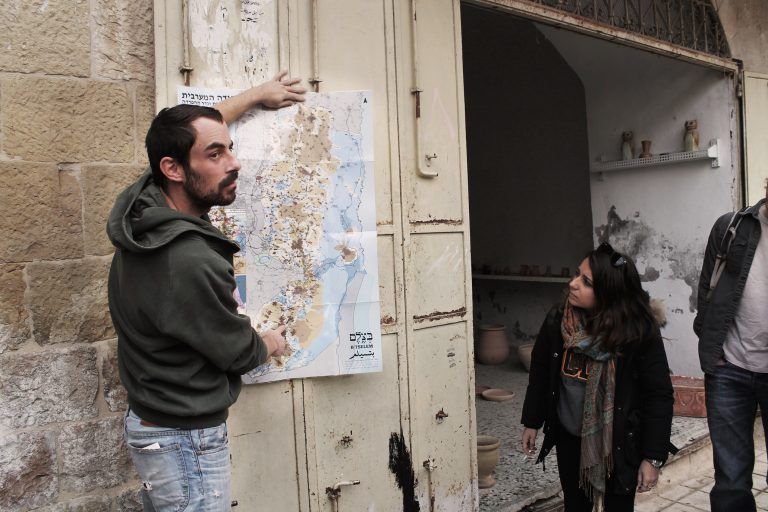
Founded in 2004, Breaking the Silence initially published the testimonies of the soldiers in an art gallery in Tel Aviv. Today, it publishes them in booklets and articles and shares them in lectures and guided tours of cities like Hebron in the West Bank.

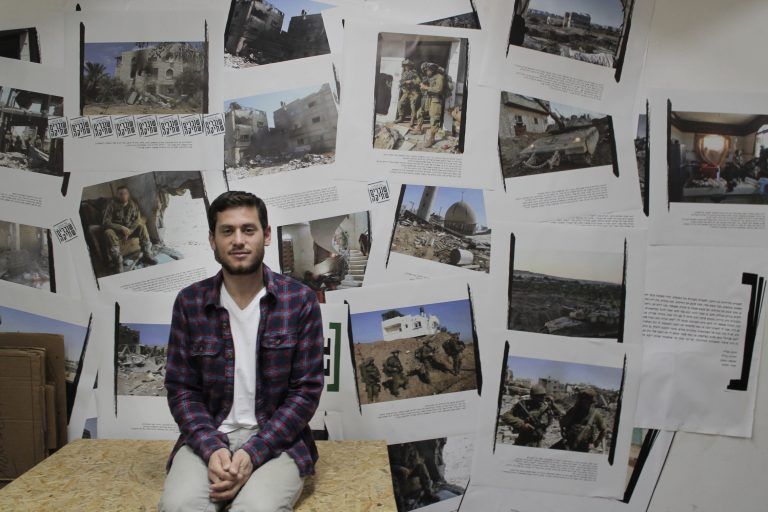
Achiya Schatz in front of the testimonies at the Breaking the Silence office in Tel Aviv. (all photos: Cornelia Mikaelsson)
Banned by the Israeli authorities from speaking to soldiers or schoolchildren, Breaking the Silence has been accused of spreading mistruths and of betraying the Israeli military. Threats are an occupational hazard. “To remain silent is no longer an option,” explains Achiya Schatz, 31, who did his national service in the Israeli army from 2005-08. Schatz recalls that many of his missions to search Palestinian residences were pointless – commanding officers would throw away the gathered intelligence without reading it. “After completing my service I got time to think. One question led to another and all of a sudden I asked myself: how can you ever occupy morally?”
Over half of Breaking the Silence’s funding comes from abroad (7 million kroner in 2014 alone) and one of its biggest supporters is Danish – Dan Church Aid, the humanitarian NGO. And this has led to extra suspicion in Israel. Earlier this year, the Israeli government passed a transparency bill forcing NGOs that receive more than half of their funding from foreign sources to declare them openly. Those who voted for the bill claimed that it served a democratic purpose. Critics, however, argued that it only was an attempt to target NGOs critical of Israel’s governmental policies. Israeli PM Benjamin Netanyahu wrote a statement on his Facebook page, claiming that the bill aims to “prevent an absurd situation, in which foreign states meddle in Israel’s internal affairs by funding NGOs, without the Israeli public being aware of it”. [see also: https://humanrightsdefenders.blog/2016/01/05/michael-sfardjan-israels-human-rights-activists-arent-traitors/]

Ido Even-Paz, one of the guides on the Breaking the Silence tour of Hebron
Source: Former Israeli soldiers pick up Danish freedom award in Copenhagen – The Post
Posted in awards, human rights, Human Rights Defenders | Leave a Comment »
Tags: Achiya Schatz, Benjamin Netanyahu, Breaking the Silence, Denmark, funding restrictions, human rights award, Israel, Israeli-occupied territories, PL (Paul Lauritzen) Foundation Peace Prize, PL Foundation Freedom Award, testimony, Yehuda Shaul
March 1, 2017
The increasing use of images in the human rights world seems unstoppable. One (small) feature is the organisation of local human rights film festivals. Movies that Matter has an International Support Programme that offers small grants to stage human rights film events in countries in Africa, Asia, Latin America, Middle East and Eastern Europe.
To promote the screenings of human rights cinema worldwide, Movies that Matter zooms in especially on countries with limited resources and freedom of press. These events can take various forms, such as human rights film festivals, LGBT film festivals, mobile cinema projects, school screenings and grassroots distribution. Each year the grant programme has two selection rounds. Deadlines are usually around mid-April [NEXT DEADLINE 17 APRIL 2017] and mid-September. Movies that Matter judges every project on its individual quality. If you’re not sure whether your project fits within the criteria, please contact MTM at international (at) moviesthatmatter.nl.
Please note that Movies that Matter does not support film production. Find an overview of possible resources for film production here.!
Posted in films, human rights, Human Rights Defenders, THF | 1 Comment »
Tags: films, grants, human rights film festivals, International Support Programme, Movies that Matter, power of images, subsidies, THF, visualisation



 Hans Thoolen on Human Rights Defenders and their awards