From the 24th of March until the 1st of April the Movies that Matter Festival takes place at Filmhuis Den Haag and ‘Theater aan het Spui’ in The Hague. The selected films and documentaries can be found here: Films – Movies that Matter Film Festival
Archive for the 'Human Rights Defenders' Category
Even landmark UN decision does not change Cambodia’s treatment of human rights defenders
March 11, 2017I was reading (belatedly) about the UN Special Rapporteur on the situation of human rights in Cambodia, Rhona Smith, who in January 2017 intervened strongly in the case of the 5 Cambodian human rights defenders of ADHOC (#FreeThe5KH) who have been in detention since April last year. [https://humanrightsdefenders.blog/2016/05/04/civil-society-condemns-charges-human-rights-defenders-cambodia/] Only then did I realize that the case had led a few months earlier to a landmark decision by the United Nations Working Group on Arbitrary Detention (WGAD): the first time that any UN body has referred to HRDs as a protected group.

On 21 November 21, 2016, the WGAD ruled that the ongoing detention of Mr. Ny Chakrya, Deputy Secretary-General of the National Election Committee (NEC), and four staff members of the Cambodian Human Rights and Development Association (ADHOC), Messrs. Ny Sokha, Yi Soksan, Nay Vanda, and Ms. Lim Mony, was “arbitrary.” Following a submission made by the Observatory for the Protection of Human Rights Defenders (OMCT-FIDH partnership), the Cambodian Center for Human Rights (CCHR) and the Cambodian League for the Promotion and Defense of Human Rights (LICADHO) in June 2016, the WGAD’s Opinion No. 45/2016 ruled that the five human rights defenders (HRDs) “have been discriminated against based on their status as human rights defenders, and in violation of their right to equality before the law and equal protection of the law under article 26 of the ICCPR.” This is the first time ever that the WGAD – or any other UN mechanism receiving individual complaints – has referred to HRDs as a protected group that is entitled to equal legal protection under Article 26 of the International Covenant on Civil and Political Rights (ICCPR). The ruling also recognised the violation of the five HRDs’ “rights to offer and provide professionally qualified legal assistance and other relevant advice and assistance in defending human rights.”
In addition, the WGAD found that the targeting of ADHOC staff members for having provided “legitimate legal advice and other assistance” violated the five HRDs’ right to freedom of association. It ruled that violations of fair trial rights (including the fact that the five were denied legal counsel from the beginning of their questioning), unjustified pre-trial detention, and statements made by the Cambodian authorities which denied the five the presumption of innocence – all of which contravene Cambodia’s international human rights obligations in respect to the right to a fair trial – are also serious enough to consider their ongoing detention as arbitrary. The WGAD concluded that “the deprivation of liberty of Ny Sokha, Nay Vanda, Yi Soksan, Lim Monyand Ny Chakrya, being in contravention of articles 7, 9, 10, 11 and 20 of the Universal Declaration of Human Rights and of articles 9, 10, 14, 22 and 26 of the International Covenant on Civil and Political Rights, is arbitrary.”
That Cambodian authorities are not impressed is shown by the continued detention of the 5 ADHOC HRDs and by the press release of 7 February 2017 calling for the cessation of the politically motivated criminal investigation of human rights defenders Am Sam-at and Chan Puthisak. Amnesty International, Civil Rights Defenders, Human Rights Watch, and the International Commission of Jurists signed the statement.
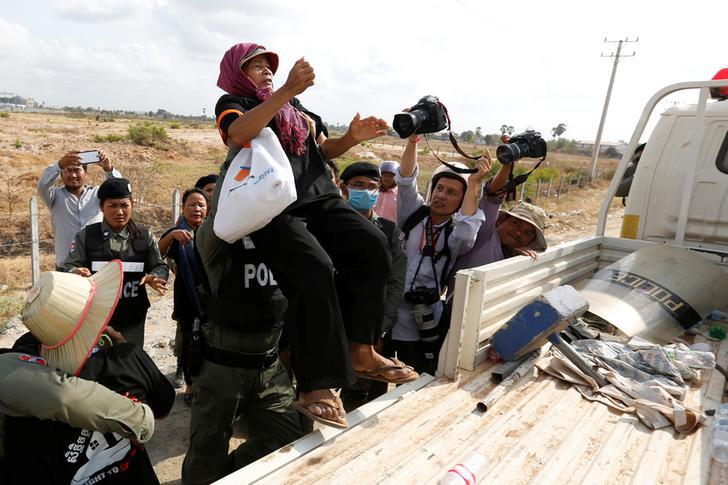
Cambodian police detain protesters during a protest to free jailed activists in Phnom Penh, Cambodia May 9, 2016.© Reuters/Samrang Pring
Cambodian officials have accused Sam-at, a respected human rights monitor at the Cambodian League for the Promotion and Defense of Human Rights (LICADHO) for nearly 20 years, and Puthisak, a land rights activist from Boeung Kak Lake and former prisoner of conscience, of instigating violence at an October 10, 2016 demonstration. Para-police forces, who are regularly used to suppress demonstrations, violently dispersed what had been a peaceful protest in Phnom Penh. When Puthisak attempted to prevent para-police from confiscating a drum that was being used by a demonstrator, four or five para-police attacked him, repeatedly beating him on the head with their fists, according to a video of the incident. When Sam-at tried to stop the assault, the para-police attacked him, also beating him on the head. Both men sustained injuries that needed medical attention.
“The investigation of Sam-at and Puthisak by the Cambodian authorities is a typically absurd and undisguised case of judicial harassment,” said Champa Patel, Southeast Asia and Pacific director at Amnesty International. “As usual, unnecessary and excessive use of force by the para-police goes unpunished, and those who work to promote and protect human rights find themselves subject to criminal proceedings.”
Sources:
http://www.un.org/apps/news/story.asp?NewsID=56036#.WMP0Dhhh2V4
https://www.hrw.org/news/2017/02/07/cambodia-drop-farcical-investigation-human-rights-defenders
Human rights defender profile: Otgonbaatar Tsedendemberel from Mongolia
March 10, 2017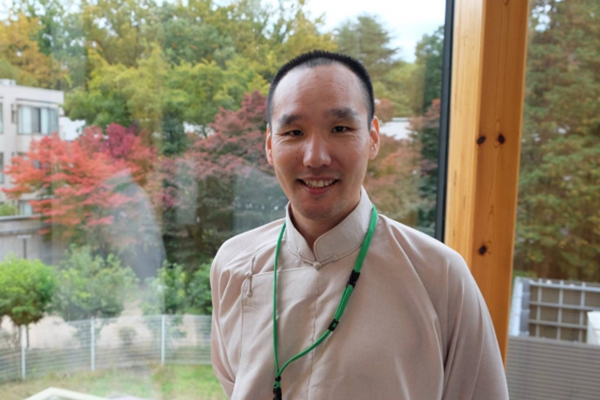 Otgonbaatar Tsedendemberel has advocated for the rights of LGBT persons in Mongolia for many years. On 6 March 2017 the ISHR published the following interview with him:
I am a co-founder of LGBT Center of Mongolia and worked as Advocacy Program Manager and then Executive Director from 2009 to 2014. We conducted workshops and training on LGBTI rights to raise awareness among the general public and law enforcement officers, health professionals, NGOs, public and private schools, etc. LGBT Center also worked hard in cooperation with other organisations to become one of the leading rights-based civil society organisations (CSOs) in Mongolia, contributing to the overall civil society development in the country and the mainstreaming of LGBTI issues into human rights issues as a whole. One of the highlights of what we have done collectively is the successful use of UN mechanisms such as the Universal Periodic Review (UPR), Committee against Torture (CAT) and Human Rights Committee to make the Government of Mongolia acknowledge its sexual minorities for the first time, express its political will to protect our rights and commit to implement the UPR and treaty bodies’ recommendations.
What motivated you to become involved in human rights work?
Having lived, studied and worked in Japan for 7 years, I felt that I needed to contribute to the development of my own country. As a young gay man who has seen the world, I was optimistically ambitious and daring enough to slip my hand into a tiger’s mouth, as the Mongolian saying goes. However, the situation for the LGBTI community was quite bleak with no rights-based NGO for the community operating. Then I joined the Mongolian Red Cross Society and where I met other co-founders of the LGBT Center. My personal desire for a better future for LGBTI Mongolians, the invincible passions of the co-founders Robyn Garner and Anaraa Nyamdorj, and the remarkable feminists and human rights defenders of vibrant, active Mongolian civil society motivated and still inspire me to work on LGBTI issues at home and abroad.
What risks, challenges or threats do you face as a human rights defender in your country?
Together with fellow activists I appeared on TV shows and gave interviews especially before, during and after UN and domestic advocacy efforts. Personal risks involved automatically “outing” my friends, family members and everyone around me, and in the process passively encroaching upon their right to privacy. They were so understanding and loving that they endured the negative attitudes, threats and attacks. Most of these threats come from a lack of information and misconceptions about LGBTI people and issues, as well as fear of being associated in any way with sexual minorities. I had to deactivate my Facebook account a few years ago to protect my family and what’s left of my privacy. Nevertheless, the situation is getting better after all these awareness-raising activities and LGBT Center’s work with the government and civil society, and I think now the private sector needs to join the cause for the sake of a better future for all.
What is the legal situation for NGOs and human rights defenders in Mongolia? What changes would you like to see to create a fully enabling environment for their work?
The NGO Law of Mongolia allows many NGOs to emerge and operate. The LGBT Center struggled initially to be registered as a legal entity back in 2007-2009. Since then we have not had any issues with the authorities in terms of the NGO registration. However, there is no law that enshrines the rights of human rights defenders (HRDs). In addition to the challenges of engaging in human rights work, LGBTI activists further suffer verbal and physical abuse and intimidation, family pressure and violence, financial obstacles, housing difficulties and even terrible treatment by landlords of NGO offices. Therefore, we desperately need a state policy and legislation on human rights defenders.
Can you give some examples of how you have engaged with the UN Special Procedures?
Ms. Magdalena Sepulveda Carmona, UN Special Rapporteur on Extreme Poverty and Human Rights, made an official visit to Mongolia in 2012. I met her towards the end of her visit and updated her on the situation of the LGBTI community. Ms. Magdalena Sepulveda observed that “the recent economic achievements made in Mongolia has not benefited the country’s poor” and highlighted vulnerable groups, including people living with HIV (PLHIV) and LGBTI persons.
In 2013, the Special Rapporteur’s report was released, concluding that “there is a high level of inequality at a time when the country is experiencing a major economic boom.” Given the pervasive inequality affecting the LGBTI community and the government’s recently expressed political will, the Center was encouraged to collect our own data on how poverty affects the LGBTI community and its root causes so that our advocacy efforts would be better informed and effectively targeted.
What have you achieved through this engagement?
The study – “Poverty and the Lesbian, Gay, Bisexual and Transgender Community in Mongolia” – was conducted in 2014. Its main author Dr. A. Bulbul discovered that the unemployment rate of survey participants was 10.4%, higher than the official rate of 7.8% among the general population, and approximately 22% lived below the national poverty line. The study concluded that enabling a legal environment to ensure equal access to education and employment and changing public perception and attitudes was necessary. This study – inspired by the Special Rapporteur’s visit – was significant since we got to utilise the UN Special Procedures and started to gather evidence to better inform the public and the relevant officials in the government and international organisations for better advocacy.
How do you think using the international human rights system assists in achieving domestic advocacy goals?
International human rights norms and standards definitely guide defenders to identify gaps, to better use the mechanisms established and available for us and to network with other like-minded activists, scholars, diplomats and UN officials. I would also like to thank organisations such as ISHR, ARC International, OutRight Action International, ILGA, COC Netherlands, OSCE, Open Society Foundations and FORUM-ASIA which act as a bridge between us – local and national activists – and the international and regional human rights systems, allowing us to lobby our government and make our advocacy more effective through their financial and technical assistance and support.
What if anything could the UN do to make the Special Procedures system easier/safer for you to engage with?
From experiences of working as an activist at the UN in Geneva and New York, I know that the UN is a political institution. However, it has been reformed to genuinely ensure the representation and participation of civil society. The UPR is a prime example because it brought LGBTI issues to the attention of our government, leading to legal reform. I would like to see those who work in the Special Procedures’ teams be present both online and offline. Country visits by Ms. Magdalena Sepulveda and meetings with diverse stakeholders were truly amazing and productive. Online presence of UN Special Rapporteur on Freedom of Assembly and Association Mr. Maina Kiai, who listens to activists’ voices from the ground is absolutely impressive. And most importantly, I wish the UN work at the headquarters could be translated into the UN country offices as swiftly, effectively and efficiently as possible.
Source: Human rights defender profile: Otgonbaatar Tsedendemberel from Mongolia | ISHR
2017 (9): Business can be better allies of human rights defenders
March 9, 2017 Just discovered that the penultimate post in my series “2017” was never published. So here comes – with delay- the missing piece “2017 (9)“:

With the USA government abandoning any leadership on human rights issues, perhaps we should turn more to the business world. So writes Sarah Brooks who works for the Geneva-based NGO, the International Service for Human Rights, in Open Democracy on 1 February 2017 (“Business can and should ally with those defending human rights”)
Business should heed the views of human rights defenders, and do more to protect their crucial work—which advances the rule of law that benefits business too. Global businesses and grassroots human rights activists may seem like strange bedfellows. But as attacks on basic democratic freedoms and the rule of law intensify around the world, they may have more shared values and interests than one might think. We know businesses are driven by the bottom line. If they didn’t seek to increase profits, they simply wouldn’t exist. But we also know—and many business leaders are coming around to the idea—that long-term success relies on more than just profit generation and is linked to a range of external factors such as transparency, certainty, stability. And a social license to operate. Failures to understand that social license, and in particular to prevent and respond to the human rights impacts of their work, have thrust many global businesses into an unwanted spotlight. They didn’t need to find themselves there.
Because human rights defenders use public advocacy as a key tool for change, businesses often make the mistake of seeing them as additional drivers of cost. Reputational damage and operational risks for a company are expensive. Because human rights defenders—such as lawyers, trade unionists, community leaders, or NGO workers—use public advocacy as a key tool for change, businesses often make the mistake of seeing them as additional drivers of cost. However, business should see human rights defenders as priceless allies. They are the canaries in the coal mines, pointing to when governance failures become real financial, legal, and reputational risks to business. They are also the witnesses to corporate abuse of communities and the environment. Because of this, the work of defenders often makes those in power uncomfortable—both states and non-state actors. They are targeted with laws and policies to stifle their activities, and face intimidation and threats to their work and their lives. Yet without the work of defenders, whole societies and economies lose out. And that means businesses lose out, too.
[the author refers as examples to the 2013 Rana Plaza factory collapse in Bangladesh and Berta Caceres in Honduras which both let business to reassess their work]
These cases show business can make a difference. It has a unique ability to create, maintain, and defend space for civil society through three tools: leverage, leadership, and partnerships. How do these work? Take as an example a government drafting a law that aims to close down space for NGOs to operate. In addition to running counter to international law, this would also close off channels for businesses to benefit from NGOs’ work—whether implementing community projects or helping train workers. So how might businesses respond? They can use the leverage provided by access, personal relationships and market share to push back on authoritarian impulses. To take just one example, when 30 global brands and global trade unions joined together to speak out against violent dispersal of protests and detention of activists in Cambodia in 2014, not only were the activists released, but the underlying issues of minimum wage took center stage in brand discussions with the government.
Businesses, and especially progressive businesses, also need to show leadership. In 2015, Adidas released a policy statement on human rights defenders that clearly led the pack, creating a company-wide commitment to speak out in defense of fundamental freedoms in the countries where they source. It takes a lot for a business to get in front, especially when they know that NGOs will be watching carefully to see those policies implemented. But setting the bar high has consumer appeal and can drive a race to the top. [see also my: https://humanrightsdefenders.blog/tag/business-and-human-rights/]
Finally, businesses have resources. Partnerships directly with NGOs can be contentious, and businesses need to listen to and address the concerns of co-optation and whitewashing. But the global environment for traditional funding mechanisms is increasingly toxic. According to UN experts and leading funders, nearly a hundred governments have put limits on NGOs’ operations, including the ability to accept foreign (especially NGO) funding. For the financial survival of civil society, seeking support from businesses might be an option—if it is on equal footing and with clear redlines to maintain independence.
Civil society needs space and protection to carry out its work, and it is not just a moral imperative, but an investment opportunity for businesses to help secure that space and protection. The leadership, leverage and solidarity shown by companies who see support to civic freedoms and human right defenders as part of core business will pay long-term dividends.
Along similar lines runs the article “Davos | Global crackdown on civil society and civic freedoms warrants global business response” by the International Service of Human Rights on 20 January 2017:
Business and civil society alike thrive in open democracies. It is in their collective interest that business enterprises play an active role in responding to the global crackdown on human rights defenders and civic freedoms, participants at the World Economic Forum in Davos have been told.

Human rights defenders and other civil society actors play a vital role in promoting and contributing to good governance, sustainable development and the rule of law. This is explicitly recognised in Sustainable Development Goal 16 and its associated indicators. In many cases, this work involves defenders exposing corruption, protesting environmental degradation, and demanding that the benefits of development are shared by all, including the most poor and disadvantaged. In an increasing number of jurisdictions, this work also involves defenders being subject to restrictions and attacks, with recent research demonstrating that those working on land and environment rights and in the field of business and human rights are most at risk of being killed. This week’s assassination of Mexican indigenous and environmental rights activist Isidro Baldenegro is just the most recent tragic example of the global crackdown on human rights defenders and civic freedoms.
What is the role and responsibility, and what should be the response, of business enterprises to this crackdown? This was a key question at the World Economic Forum attended by ISHR representatives in Davos, Switzerland this week. Progressive business enterprises are increasingly recognising the shared values and interest of business and civil society in an open, enabling operating environment. This is an environment characterised by respect for the rights to freedom of expression, association, assembly, access to information, public participation, non-discrimination and the rule of law. It is in such open environments that innovation, productivity and development thrive. Progressive business enterprises are also recognising the significant costs associated with the global crackdown on human rights defenders and civic freedoms, with the World Economic Forum’s most recent Global Risks Reportidentifying the ‘fraying of the rule of law and declining civic freedoms’ as a key business risk. In his statement to the Forum, the UN High Commissioner for Human Rights similarly said: ‘Business cannot thrive in failing societies, where tension spikes and communities bristle with grievances and mutual contempt. Strong civil societies, due process, equality and justice: these are what enable real economic empowerment’.
Business enterprises and business leaders exercise significant influence in shaping public and political opinion and legislative and policy-making processes, not just in areas of corporate and economic policy but on social issues such as LGBTI rights. They should exercise similar influence in response to the increasing restrictions and risks faced by defenders. The conversations in Davos this week recognised the shared interest of business and civil society in the protection of human rights defenders and civic freedoms. The killing in Mexico of Isidro Baldenegro at the same time as these discussions were taking place tragically demonstrates the need for business to move beyond recognition to action.
This action could encompass a range of responses, such as:
- the adoption of a corporate policy on human rights defenders, such as that of Adidas which sends a powerful message through its supply chains and the States in which it operates;
- public or private advocacy on behalf of defenders who are at risk, such as that undertaken by Tiffany & Co on behalf of detained Angolan journalist Rafael Marques; and
- convening business dialogues to promote collective action, such as that convened by Microsoft, together with ISHR and the Business and Human Rights Resource Centre in Davos this week.
The global crackdown on civil society and civic freedoms warrants a global business response.
Sources:
Business can and should ally with those defending human rights | openDemocracy
Independence of the Legal Profession subject of side event on 16 March 2017
March 9, 2017 Lawyers for Lawyers and The Law Society of England & Wales organize a UN side event on the “The Independence of the Legal Profession” on Thursday 16 March 2017, 3 – 5 pm in Room XXIII of the Palais des Nations, Geneva.
Keynote speaker: Diego García-Sayán, Special Rapporteur on the Independence of Judges and Lawyers
Panelists:
· Khalid Baghirov, lawyer (Azerbaijan)
· Ayse Bingol Demir, lawyer (Turkey) [https://humanrightsdefenders.blog/2015/01/23/persecution-of-lawyers-and-journalists-in-turkey-side-event-in-geneva-on-27-january/]
· Michel Togué, lawyer (Cameroon) [https://humanrightsdefenders.blog/2013/02/13/death-threats-against-human-rights-defenders-alice-nkom-and-michel-togue-in-cameroon/]
The panelists will share their experiences, obstacles faced by members of the legal profession in their respective countries, and possible ways to improve the safety of lawyers who work in challenging contexts.
The event is co-sponsored by the Permanent Missions of the Kingdom of the Netherlands, Australia and Paraguay as well as the following NGOs: – Lawyers’ Rights Watch Canada (LRWC),- Union Internationale des Avocats (UIA), – Southern African Litigation Centre (SALC), – International Commission of Jurists (ICJ), – Avocats Sans Frontières Suisse (ASF Switzerland), – International Bar Association’s Human Rights Institute (IBAHRI), – Judges for Judges (J4J), – Human Rights House Foundation and- Peace Brigades International (PBI, UK)
To register (for those without passes, until 12 March 2017): S.deGraaf@lawyersforlawyers.nl
For enquiries: Roberta.Taveri@lawsociety.org.uk
Amnesty International campaigns with “7 women who refuse to wait for their rights”
March 8, 2017Also in the light of International Women’s Day 2017…….here are the seven Women Human Rights Defenders whom AI UK are profiling in their campaign of women who “refuse to wait in the face of injustice, and often paying the price of freedom in the process”..:
Dr Tlaleng Mofokeng – She won’t wait… while women are still denied abortions
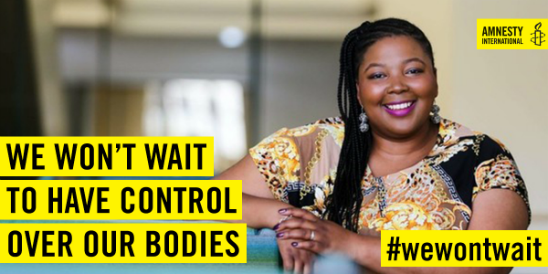
Tlaleng is a medical doctor in South Africa. She fearlessly advocates for sexual health as a radio presenter, spreading her message far and wide. ‘I won’t stop until the right of women to have an abortion is respected and provided for safely,’ she says. ‘In South Africa, women die every year due to unsafe abortions, yet politicians think they can use women’s reproductive rights as a political ping pong ball.‘ Tlaleng is also challenging rape culture, and championing the drive to get health practitioners to treat patients with respect and without discrimination.
Karla Avelar – She won’t wait… while refugees are denied safety
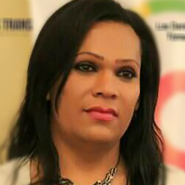
Karla Avelar is a survivor. She’s made it through gang attacks, murder attempts and prison in El Salvador. Today, she heads Comcavis Trans, which supports LGBTI people, all of whom face threats and violence in El Salvador. Their situation is so difficult in the country that many flee as refugees. Through Comcavis, Karla provides information and other support to help them on what is often a treacherous journey that normally takes them to the USA or Mexico. But the US’s hardline stance on refugees and migrants entering the country has thrown these LGBTI refugees into even greater jeopardy – something Karla is now tackling with energetic defiance.
Su Changlan – She won’t wait … to reunite another child bride with her parents
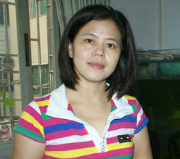
Former school teacher Su Changlan’s story is not unique. One of her closest friends says that hers is the story of many women in China. She couldn’t stand by when she heard about girls trafficked as brides or parents whose children had gone missing. She did her best to help them and many others, her activism extending to land rights issues and support for pro-democracy protests in Hong Kong. She did all this knowing that she might have to sacrifice her freedom in the process. Sadly, this is just what happened. She has been detained by the authorities since 2015. ‘I hope that parents do not despair about searching for their missing children. We, civil society, should work together to help them reunite with their children. The government should also invest more in these efforts instead of hindering our work!‘
Samira Hamidi – She won’t wait… while women are excluded from government
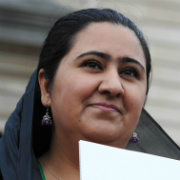
Since 2004, Samira Hamidi has been blazing a trail for women in Afghanistan. As Chairperson of the Afghan Women’s Network (AWN) she has actively tried to ensure that women’s voices and concerns are represented at the highest levels of government. At the same time, she is a staunch advocate in the international arena, reminding governments and potential aid donors that promoting and securing women’s rights in Afghanistan must be part of any conversation they may have with the country’s leaders. She faces a steep road, but she remains undaunted, championing other women human rights defenders, ensuring that their concerns are amplified. Women should be given an equal opportunity to make a better Afghanistan.
Jeanette John Solstad Remø – She won’t wait… for the right to be recognised as a woman
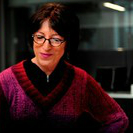
Until recently, she was John Jeanette, her name signifying the dual identity she was forced to accept every day in Norway. Although this former submarine commander felt her future could only be female, Norwegian law did not allow her to change her legal gender without undergoing a compulsory ‘real sex conversion’. This would have involved having her reproductive organs removed, as well as a psychiatric diagnosis. She refused to put herself through any of this. As a result, her driving license, passport, medical prescriptions, even her library card, still referred to her as male. She campaigned hard against Norway’s abusive law and her actions, alongside those of her supporters – including Amnesty – scored a huge victory. In 2016, Norway finally adopted a new law on legal gender recognition, which allows transgender people to choose their gender. Today, in acknowledgement of this milestone, she has changed her name to Jeanette John.
Loujain al-Hathloul – She won’t wait… for the right to drive a car
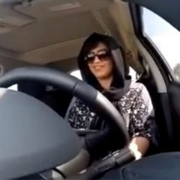
Fearless and formidable, Loujain defied Saudi Arabia’s driving ban and faced the consequences. In November 2014, she was detained for 73 days for live-tweeting herself driving into Saudi Arabia from the United Arab Emirates. Released in February 2015, she went on to stand for election in November that year – the first time women were allowed to both vote and stand in elections in the state. However, despite finally being recognised as a candidate, her name was never added to the ballot. Today, she continues her fight to create a better future for her fellow Saudis – one where women enjoy their rights as full citizens of their nation. ‘I will win. Not immediately, but definitely.’
Connie Greyeyes – She won’t wait… for another sister to be stolen
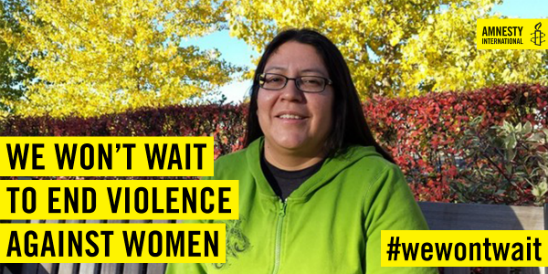
Connie Greyeyes is an ‘accidental’ activist. An Indigenous Cree woman living in the province of British Columbia in Western Canada, she realised that a shocking number of Indigenous women in her community had gone missing or had been murdered. She began organising to support the families of these women and took the demand for a national inquiry to the Canadian capital in Ottawa. According to official figures, more than 1,000 Indigenous women have gone missing or been murdered in Canada in the last three decades. The efforts of Connie and many other Indigenous women across Canada have borne fruit, with the Canadian government finally announcing an inquiry in 2016. ‘When we’re together, there’s so much strength. Being able to smile even after finding out that your loved one was murdered. How can you not be inspired by women who have been to hell and back over their children? How can you not be inspired and want to continue fighting?‘
https://www.amnesty.org.uk/blogs/campaigns/international-womens-day
International Women’s Day 2017: honoring, defending and watching women human rights defenders
March 8, 2017International Women’s Day focuses on many different aspects of the struggle for the human rights of women. I have selected three special actions this year:
(1) a short piece honoring woman who are land rights defenders;
(2) a digital protection tool for women human rights defenders (Cyberwomen);
(3) a documentary film on how rape was made into a international war crime.
[Of course this blog has had many earlier posts on women human rights defenders: https://humanrightsdefenders.blog/tag/women-human-rights-defenders/ ] Read the rest of this entry »
High-level endorsements of crucial role of human rights defenders in UN Human Rights Council
March 7, 2017The 34th Session of the UN Human Rights Council started off last week (as usual) with the so-called “high-level segment” during which important officials addressed the Council [see: https://humanrightsdefenders.blog/2017/02/28/new-secretary-general-at-human-rights-council-tells-human-rights-defenders-and-i-am-on-your-side/].
On 6 March the ISHR reported on that first week during which several dignitaries emphasised the key role that a vibrant civil society plays in promoting and protecting human rights.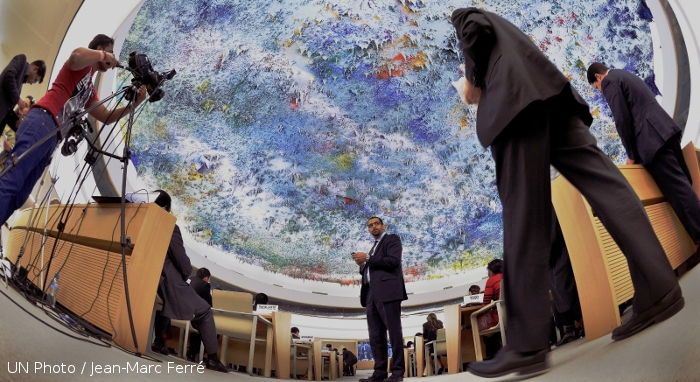
The President of the General Assembly, Peter Thomson, highlighted the importance of civil society by calling States, the UN and civil society to work shoulder to shoulder and advance with common purpose. Other high-level speakers expressed concern regarding increasing restrictions to civil society space, particularly against HRDs and journalists.
- Delegates from Botswana, the Czech Republic, Costa Rica, the European Union, France, Malta, Liechtenstein and Luxembourg, among others, reiterated their support to the work of HRDs and journalists and stressed the importance of guaranteeing their protection.
- Delegates from Germany, Norway, Poland, Slovenia, Sweden and the United Kingdom, among others, condemned acts of reprisals against HRDs and emphasised that HRDs must be able to participate and engage with the Council without fear of intimidation or reprisals.
The pivotal role defenders play in promoting sustainable development was also recognised. Georgia underscored the importance of strengthening the role of NGOs and safeguarding civil society’s space to ensure they are heard. ‘Without close cooperation with all stakeholders, it is impossible to secure the sustainable development of the country.’
So, there is no shortage of good statements in Geneva, but the what matters most is the upcoming renewal of the mandate of the Special Rapporteur on Human Rights Defenders and any real action on reprisals!
Source: #HRC34 | High-level officials kick off Council session, emphasise critical role of defenders | ISHR
WEBINARS on best practices for digitising documents in March 2017
March 7, 2017Why digitise? Digitising your documents greatly improves access to your information, whether you are building an online public library to share documents related to corruption, or making documents searchable for your team. Digitisation also helps to preserve and protect important human rights information. Many defenders run the risk that malevolent groups seeking to destroy or confiscate witness testimony, evidence of abuse, and other sensitive information. Others run the risk of documents being subject to harmful storage conditions, such as humidity, insects, and rodents. These are just a few reasons for digitising your documents. However, figuring out the most efficient, affordable, and responsible way to digitise thousands of documents can be a daunting task especially for human rights defenders in the field.
Therefore the NGO HURIDOCS is organizing two live webinars. These webinars will explore the process of digitising documents and the best practices that should be applied. A summary of the discussion will be written and shared on the HURIDOCS website.

- When:
- Thursday, March 16 at 16:00 UTC (other time zones), and
- Thursday, March 23 at 13:00 UTC (other time zones).
- Where: ReadyTalk (use the access code 2458641 to join)
- Who: Open to anyone who wants to learn more about digitizing documents
Whether you are a seasoned digitization expert or a human rights defender just starting to think about digitisation, this is a good occasion to learn and share.
If you are interested, please contact Kristin Antin at kristin@huridocs.org. Here is an example of a webinar hosted in January on managing contact information.
Source: Community Discussion: Best practices for digitising documents | HURIDOCS
‘El Sexto’ Maldonado Released from Cuban Prison
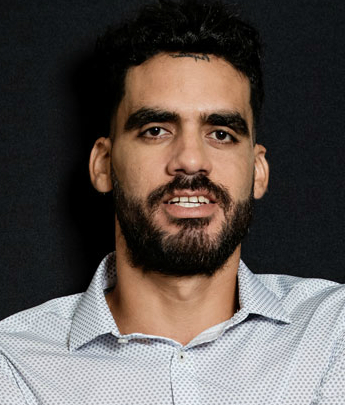
March 6, 2017The Human Rights Foundation reported that Cuban graffiti artist Danilo ‘El Sexto’ Maldonado was finally released from prison on 21 January 2017, after spending two months in detention. Cuban authorities arrested El Sexto for spray painting “Se fue” (in English, “He’s gone”) shortly after the death of the island’s former dictator, Fidel Castro. He was sent to one of Cuba’s most notorious maximum security prisons, El Combinado de Este, where he was subjected to daily psychological torture and frequent death threats. The Human Rights Foundation filed an individual complaint with the U.N. Working Group on Arbitrary Detention for its Havel Prize Laureate.[https://humanrightsdefenders.blog/2015/04/16/havel-prize-for-creative-dissent-awarded-to-girifna-sakdiyah-maruf-and-el-sexto/]
 Hans Thoolen on Human Rights Defenders and their awards