In a little-noted speech at the Leadership Summit of the United Nations Association of the USA (Washington, D.C., 12 June 2017) Assistant Secretary-General for Human Rights, Andrew Gilmour, tackles populism and does not mince his words. After viewing a Chaeli video [see e.g. https://www.worldofchildren.org/honoree/michaela-chaeli-mycroft/] to illustrate the message that “we can all make a difference for human rights. Every day, everywhere, at school or the workplace, commuting, or on holiday. It starts with each of us taking concrete steps to exercise our rights and our responsibility to protect and defend the rights of others“, Gilmour describes how after 3 decades of progress for human rights we have come up against a serious backlash, one that takes many forms but all of them counter to the values of rights, freedoms and tolerance. The text is worth reproducing as a whole: Read the rest of this entry »
The European Union – when criticizing countries by name in the UN Human Rights Council – does so with unanimity. It was the first time that the European Union did not make a statement in the Human Rights Council regarding rights violations in specific countries, including China as it was blocked by one of its member countries: Greece! A spokesman for the Greek Foreign Ministry in Athens called it “unproductive criticism.” The NYT reports that a spokesman for the Greek Foreign Ministry (who requested anonymity) said in a telephone interview: “When the stability of a country is at stake, we need to be more constructive in the way we express our criticism” …“because if the country collapses, there will be no human rights to protect.” It was an odd explanation, commented the NYT, considering that China’s stability does not appear to be at risk. Unless the stability at stake was referring to Greece?!
In its struggle for economic recovery, Greece is indeed increasingly courting Chinese trade and investment. China’s largest shipping company, known as China COSCO Shipping, bought a majority stake last year in the Greek port of Piraeus. The Greek prime minister, Alexis Tsipras, has visited China twice in two years. And China will be the “country of honor” at Greece’s annual international business fair in September in the port of Thessaloniki.
In the previous Human Rights Council session in March, the European Union statement pointed to China’s detention of lawyers and human rights defenders [see e.g. https://humanrightsdefenders.blog/2016/01/19/letter-from-legal-experts-on-detained-lawyers-in-china/]. Human Rights Watch said it was “shameful that Greece sought to hold the E.U. hostage to prevent much-needed attention to China’s human rights crackdown.”
“Hi, my name is Maria Torres. I come from Peru and I work as a lawyer for the International Institute on Law and Society. I became a lawyer because I wanted to fight against injustice. As a student, I travelled to the Amazon and I saw how indigenous people were suffering violations of their most basic human rights; and there was a lot of indifference from civil society. At that moment, I decided that I wanted to dedicate my life to this cause.It was really important that one of us in my organisation learns about UN mechanisms and that’s why I came to Geneva to attend ISHR’s training.”
SOMINI SENGUPTAin the The Saturday Profileof 16 June 2017 wrote a long profile of Saudi human rights defender Manal al-Sharif. How she went from puritanical teenager to becoming the face of the women’s struggle in Saudi Arabia.
Manal al-Sharif, an activist for women’s rights in Saudi Arabia, in Central Park during a tour for her new memoir.Credit Nathan Bajar for The New York Times
Manal al-Sharif was 14 when she burned her brother’s Back Street Boys cassettes, then her mother’s fashion magazines. She gave up drawing human figures and reading her prized Agatha Christie novels — forbidden, she had learned, under the puritanical strain of Islam sweeping through her native Saudi Arabia at the time. All kinds of things were forbidden for women and girls, she had also learned: no plucking your bushy eyebrows, no parting your hair fashionably to the side, no revealing your face in public. The one thing she could not destroy was a plastic bag of family photographs that her mother had stashed in her bedroom. She found them, years later, after her mother had died. There was a photo of herself, in a red dress for Eid; another of her mother, in a calf-length skirt she had stitched herself; another of her dad, barechested, for the hajj. “I’m so happy she hid them from me,” Ms. al-Sharif said the other day, scrolling through the images she had uploaded on her phone. “I thought we didn’t have any.”
Ms. al-Sharif, 38, has undergone a radical change of heart since those Salafi firebrand days. She is now best known for challenging the laws and mores that keep women down in Saudi Arabia, including what she considers the kingdom’s infantilizing restrictions on the right of women to drive. Her first book, “Daring to Drive: A Saudi Woman’s Awakening,” published this week by Simon & Schuster, is a memoir of her political coming of age. It is equally a portrait of tumult and tyranny in Saudi Arabia over the last four decades — and the kingdom’s vexing relationship with the United States……..
..
…………..She lives in Australia now, with her husband, a Brazilian, and their 3-year-old son. She has applied for the Saudi government to recognize her second marriage and has yet to receive it. Exile is frustrating. “When you’re there you don’t just talk. You take action,” she said. “I feel little bit helpless now, being outside.”
And then there’s her firstborn son. He lives in Saudi Arabia, with his father. Ms. al-Sharif visits as often as she can. He asks her all kinds of questions about all kinds of things, like whether to talk to a girl.
“I say: ‘Abdalla, you’re a very intelligent boy. I’ll give you two answers. An answer that I believe in. And an answer that’ll keep you away from trouble,’” she said.
He is now 12, and she hopes he will one day read the book and understand her choices. “It tells my whole story.”
On 15 June 2017 the BBC came out with a special report on “How BAE sold cyber-surveillance tools to Arab states’.
A year-long investigation by BBC Arabic and a Danish newspaper [Dagbladet Information] has uncovered evidence that the UK defence giant BAE Systems has made large-scale sales across the Middle East of sophisticated surveillance technology, including to many repressive governments. These sales have also included decryption software which could be used against the UK and its allies. While the sales are legal, human rights campaigners and cyber-security experts have expressed serious concerns these powerful tools could be used to spy on millions of people and thwart any signs of dissent. The investigation began in the small Danish town of Norresundby, home to ETI, a company specialising in high-tech surveillance equipment. ETI developed a system called Evident, which enabled governments to conduct mass surveillance of their citizens’ communications. A former employee, speaking to the BBC anonymously, described how Evident worked. “You’d be able to intercept any internet traffic,” he said. “If you wanted to do a whole country, you could. You could pin-point people’s location based on cellular data. You could follow people around. They were quite far ahead with voice recognition. They were capable of decrypting stuff as well.”
One early customer of the new system was the Tunisian government. The BBC tracked down a former Tunisian intelligence official who operated Evident for the country’s veteran leader, President Zine al-Abidine Ben Ali. “ETI installed it and engineers came for training sessions,” he explained. “[It] works with keywords. You put in an opponent’s name and you will see all the sites, blogs, social networks related to that user.” The source says President Ben Ali used the system to crack down on opponents until his overthrow in January 2011, in the first popular uprising of the Arab Spring. As protests spread across the Arab world, social media became a key tool for organisers. Governments began shopping around for more sophisticated cyber-surveillance systems – opening up a lucrative new market for companies like BAE Systems. In 2011, BAE bought ETI and the company became part of BAE Systems Applied Intelligence. Over the next five years, BAE used its Danish subsidiary to supply Evident systems to many Middle Eastern countries with questionable human rights records (such as Saudi Arabia, the UAE, Qatar, Oman, Morocco and Algeria).
“I wouldn’t be exaggerating if I said more than 90% of the most active campaigners in 2011 have now vanished,” says Yahya Assiri, a former Saudi air force officer who fled the country after posting pro-democracy statements online. “It used to be that ‘the walls have ears’, but now it’s ‘smartphones have ears,‘” says Manal al-Sharif, a Saudi women’s rights activist who also now lives abroad. “No country monitors its own people the way they do in the Gulf countries. They have the money, so they can buy advanced surveillance software.” [see also: https://humanrightsdefenders.blog/2013/12/13/five-women-human-rights-defenders-from-the-middle-east/]
Manal al-Sharif says Gulf states have the money to buy advanced surveillance equipment‘Responsible trading’
….The BBC has obtained a 2015 email exchange between the British and Danish export authorities in which the British side clearly expresses concern about this capability with reference to an Evident sale to the United Arab Emirates. “We would refuse a licence to export this cryptanalysis software from the UK because of Criteria 5 concerns,” says the email. [“Criteria 5” refers to the national security of the UK and its allies.]…Despite British objections, the Danish authorities approved the Evident export…..
…….Dutch MEP Marietje Schaakeis one of the few European politicians prepared to discuss concerns about surveillance technology exports. She says European countries will ultimately pay a price for the compromises now being made. “Each and every case where someone is silenced or ends up in prison with the help of EU-made technologies I think is unacceptable,” she told the BBC. “I think the fact that these companies are commercial players, developing these highly sophisticated technologies that could have a deep impact on our national security, on people’s lives, requires us to look again at what kind of restrictions maybe be needed, what kind of transparency and accountability is needed in this market before it turns against our own interest and our own principles.“
Human Rights Watch (HRW) on Thursday 8 June 2017 called on Turkish authorities to immediately release Taner Kılıç, chair of the board of Amnesty International’s Turkey section, who has been under detention since June 6. It is heartening to see the two biggest NGOs coming to each other’ rescue from time to time. In February this year AI Israel co-signed a statement deploring the decision not to allow Omar Shakir of Human Rights Watch to take on his post [“We stand in solidarity with him and our colleagues at HRW.” – see https://humanrightsdefenders.blog/2017/02/26/israel-denies-work-permit-to-human-rights-watch-and-continues-harassment-of-hrds/]
The anti-terror unit of the Izmir police on Tuesday detained lawyer and human rights defender Kılıç together with 22 other attorneys as part of a witch-hunt targeting people linked to the Gülen movement. “Turkey should release Taner Kılıç, who is a tireless defender of human rights, known for his support for Amnesty International over many years,” said Hugh Williamson, Europe and Central Asia director at Human Rights Watch. “Detaining Kılıç on suspicion of terrorist offenses looks like a tactic aimed at discrediting his legitimate human rights work.”
Kılıç is a founding member of AI Turkey and has been chairman of its board of directors since 2014. He has also played a strong role in advocating for refugee rights as a lawyer and with domestic nongovernmental groups and others working on these issues. The European Union on Thursday expressed concern about the recent detention of Taner Kılıç.
(According to a report by the state-run Anadolu news agency on May 28, 154,694 individuals have been detained and 50,136 have been jailed due to alleged Gülen links since the failed coup attempt.
Shelter City, Call for applications https://sheltercity.nl/new-call-for-shelter-city/
Justice and Peace is launching a new call for Human Rights Defenders to participate in the Shelter City Initiative. <http://en.justiceandpeace.nl/human-rights-defenders-and-security/shelter-city-initiative> The Shelter City Initiative offers human rights defenders a possibility for rest and respite by letting them escape temporarily from a threatening situation. Shelter City offer a safe space to human rights defenders at a moment where they are particularly vulnerable and their security can no longer be guaranteed at home. Meant for human rights defenders who might be helped with a short relocation programme, because they are threatened or under intense pressure due to their work.
Applicants must fulfil the following conditions:
The applicant must be a human rights defender (HRD) in the broad sense of the word (lawyers, members of NGOs, poets or artists can all apply, as long as their work promotes Human Rights or he/she fights against human rights violations)
The HRD is threatened or otherwise under intense pressure and can be helped by a short period of time abroad
The HRD should be able and willing to return to the country of origin after 3 months
The HRD should be willing to speak out in public and speak basic English (limited spots are available for French or Spanish speaking HRDs)
The HRD should be willing/able to come alone
The HRD has to be willing to come to the Netherlands around September 2017
Note that additional factors will be taken into consideration in the final round of selection, such as the added value of a stay in The Netherlands (giving priority to those working at grass-roots level), the possibility for the HRD to make use of the new contacts and knowledge after they return, and gender and geographical balance. HRDs who are already relocated in a third country will only be accepted under exceptional circumstances.
To apply or submit the application of a human rights defender, please e-mail sheltercity@justiceandpeace.nl. You will then receive an application form. Application forms must be returned before 25 June 2017. An independent commission will select the participants. Note that the selected human rights defenders will not be automatically allowed into the shelter programme as Justice and Peace is not in control of issuing the required visas to enter The Netherlands. For more information, please contact us at sheltercity@justiceandpeace.nl.
Campaign: Are we all human rights defenders? Join us https://en.justiceandpeace.nl/news/are-we-all-human-rights-defenders Every individual can make a change. No matter your age, gender, beliefs, education, profession, social situation or background. It doesn’t matter at what scale. You are a potential change maker, willing to help others. We are all human rights defenders.
The mandate of the Special Rapporteur on Human Right Defenders– Michael Forst – was extended for a period of three years. The draft of this resolution was submitted by Norway and adopted without a vote. Hostile amendments to the resolution were submitted by the Russian Federation and China. All of these amendments were rejected.
Amendment L.43 sought to have the term Human Rights Defenders removed from the text. Such a motion undermines the importance of the work of Human Right Defenders and seeks to remove a well established term that has been mainstreamed within UN resolutions.
Amendment L.44 proposed the removal of the term Women Human Rights Defenders. In response several delegations emphasized the double violence that Women Human Right Defenders face due to their gender and their work and thus the importance of this term. They also recalled that part of the Special Rapporteur’s mandates is to focus on the violence specifically directed to Women Human Right Defenders and as such the term is key to the completion of the mandate.
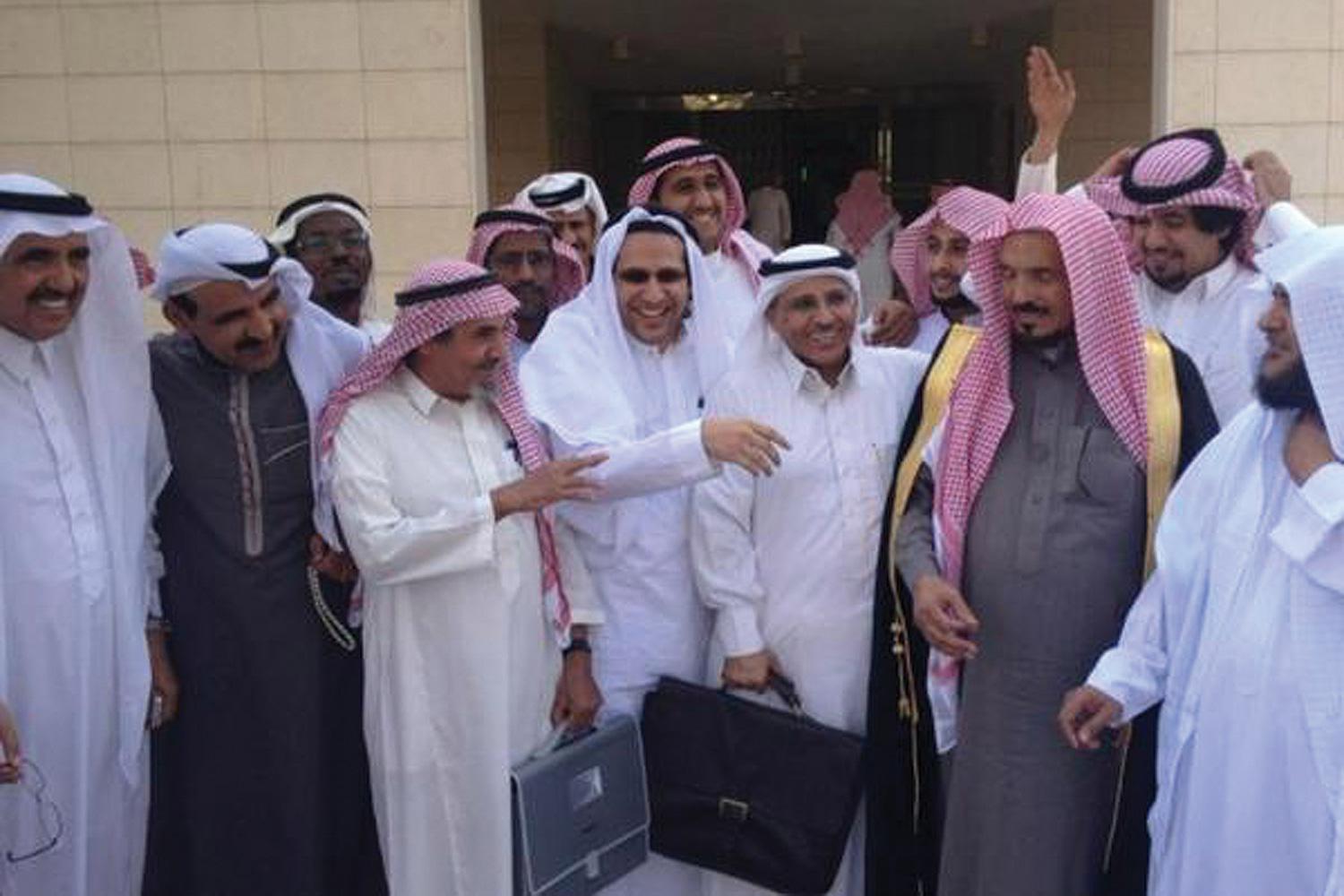
On 31 May 2017 ALQSTreported that Qatar has extradited the prominent Saudi human rights defender Mohammed bin Abdullah al-Otaibi to Saudi Arabia, even after Norway accepted his application for political asylum. Otaibi was arrested at Doha International Airport on Wednesday 24 May, 2017 as he was about to travel with his wife to Norway, on travel documents provided by the Norwegians. Days later, on Sunday, 28 May 28 3 a.m., Otaibi was deported overland to Saudi Arabia via the Salwa border crossing and delivered to the Saudi authorities, who sent him with an escort of Saudi security vehicles to the Dammam Prisons Department.