On 3 April 2020Michael Caster wrote “If you care about human rights in China, April 5 – this Sunday – should be circled on your calendar. On that day, human rights lawyer Wang Quanzhang, my old friend and colleague, after an outrageous series of abuses by the Chinese state, is set to walk free. Wang, a defender of villagers’ rights and religious minorities, has been disappeared into Residential Surveillance at a Designated Location (RSDL), hidden under a false name in pre-trial detention for years, and subjected to a secret trial where he was refused legal representation.“
An activist holds a sign calling for Wang Quanzhang’s release in Hong Kong. Photo: HKFP/Catherine Lai.
…..China law scholar Jerome Cohen coined the term “non-release release” in 2016, then discussing the fake release of human rights lawyer Wang Yu. Like Wang Quanzhang, she had been held in secret for months under RSDL, where she was also tortured….Since Wang was disappeared, his wife Li has also become a fierce defender, despite mounting intimidation from the police. On March 24, Li received a hand-written letter from Wang in prison saying that after release he will likely have to return to his hometown in Jinan. Those of us who know China can read between the lines. Wang risks being forcibly sent away, where he will be kept, apart from his police escorts, away from all others including his family. See also: https://humanrightsdefenders.blog/2018/12/05/li-wenzu-wife-of-wang-quanzhang-wins-2018-edelstam-award/
Responding to the release of Chinese human rights lawyer Wang Quanzhang after four and a half years in prison for “subverting state power”, Amnesty International’s China Researcher Doriane Lau said on 5 April 2020: “There are reasons to fear that Wang Quanzhang’s release from prison offers merely the illusion of freedom. The Chinese government has a history of monitoring and controlling human rights defenders even after they’re released from jail…..Wang Quanzhang was targeted by the government for his work defending human rights and helping to expose corruption. It is an outrage that he was ever jailed in the first place, but now he has served his sentence the authorities must immediately lift all restrictions on him and allow him to return to his family home.”
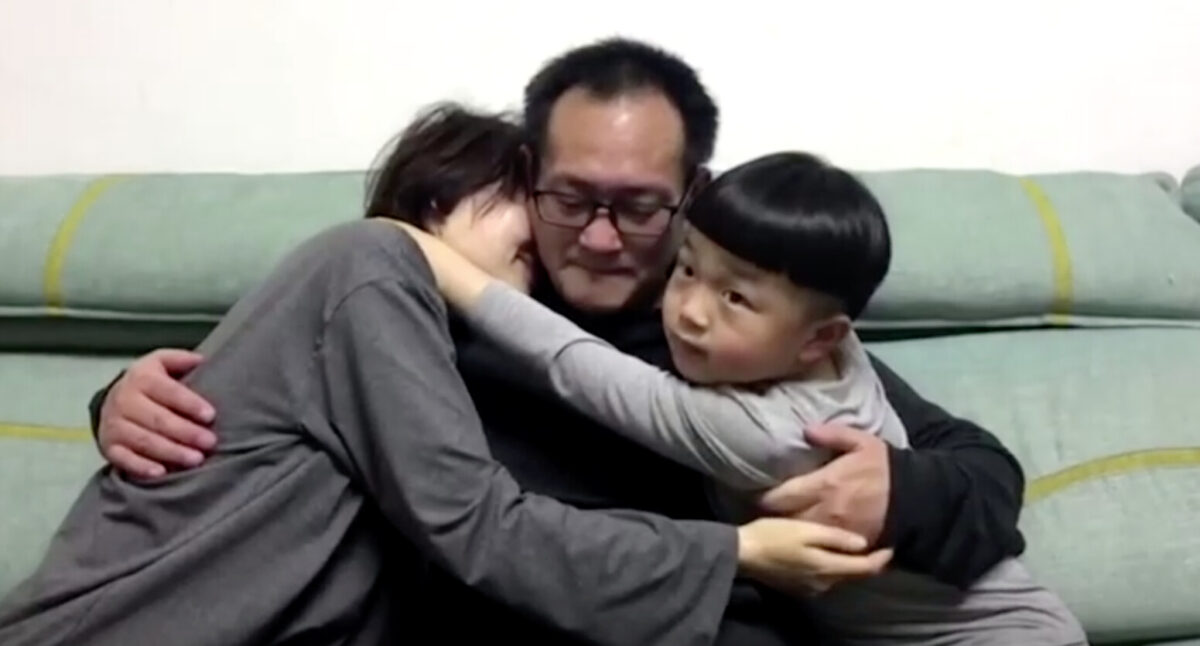
And then on 27 April 2020: ‘Feels Like a Dream’: Teary Reunion for Freed Chinese Human Rights Lawyer and Family
Wang Quanzhang embraces his wife and son at their home in Beijing, on April 27, 2020. (Screenshot via Reuters)
In the midst of the COVID-19 crisis, many human rights organisations have been formulating a policy response. While I cannot be complete or undertake comparisons, I will try and give some examples in the course of the coming weeks. If there are special ones you would like to draw my attention to, please do not hesitate. Here is one from Phil Lynch, the Director of the International Service for Human Rights:
Staying true to our values is never more important than during times of hardship or crisis. At ISHR, there are five values driving our response to the COVID-19 global pandemic: solidarity, dynamism, alertness, wellbeing and hope.
Solidarity
…Solidarity is an essential value at this time. At ISHR this means showing solidarity with colleagues – with a number of staff volunteering to help and alleviate the workload of others who may have reduced capacity – as well as solidarity with human rights defenders, with our programme staff reaching out to national and regional-level partners to discuss their wellbeing, situation, priorities and needs. Please do reach out to us if there are any ways we can provide support to you at this vital time. In addition to showing solidarity, we’ve also greatly appreciated receiving solidarity. I’ve personally benefited from the wisdom, insights and advice of other NGO directors in terms of their response to this crisis, and discovered the musical talents of neighbours as we’ve gathered on our balconies every evening to clap and sing our gratitude to the doctors, health care professionals and sanitation workers on the frontlines of this crisis.
Dynamism
This crisis has highlighted the importance of dynamism, adaptability and planning for uncertainty, as well as the limitations of log frames, tightly earmarked funds, and donor restrictions on building organisational reserves.
At ISHR we are determined to use this crisis as an opportunity to innovate and to test and expand new ways of working. Last year, thanks to the support of several donors – including the United Kingdom, Canada, Switzerland and the Netherlands – we launched the ISHR Academy – an interactive, online platform to build the capacity and skills of human rights defenders to leverage the UN human rights system to contribute to national level change. With a significantly increased demand for online training and strategic advocacy support, we’re currently working on new modules for the Academy, as well as translation into Spanish. With further financial support we’d love to develop even more modules and in additional languages. This would increase access to resources, strategic advice and tailored advocacy support for human rights defenders from all regions. The suspension, postponement and cancellation of a significant number of meetings and sessions of international and regional human rights mechanisms has starkly exposed the need for such bodies to develop means by which human rights defenders can more effectively engage and participate remotely. This is relevant not only now in response to the COVID-19 crisis, but in the longer term in response to the climate crisis and the imperative of reducing travel-related emissions. Effective means of virtual participation are also critical for defenders who lack the resources to travel to Geneva or New York, as well as those for whom travel may be restricted or banned by repressive governments. ISHR programme staff are actively engaged on these issues – leading and participating in strategic discussions and the formulation of practical recommendations as to how to use this crisis as an opportunity to make human rights mechanisms more accessible, effective and protective for defenders worldwide.
Alertness
ISHR is not the only body looking at ways to use this crisis as an opportunity. Unfortunately, some governments will use this emergency as a subterfuge to more permanently increase surveillance, as well as restrict fundamental rights to freedom of expression, association, assembly, protest and movement. Alertness is therefore a critical value at this time. We must be vigilant to ensure that any laws or regulations enacted in response to COVID-19 are for the legitimate purpose of protecting public health, and that any restrictions they impose are reasonable, proportionate and strictly time bound….With persons in detention at particular risk, ISHR staff are also using the opportunity to push for the release of arbitrarily detained human rights defenders, including several with underlying health conditions in States including China, the United Arab Emirates and Bahrain.
Wellbeing
..All ISHR staff have worked remotely since at least 13 March, with exceptions only for staff that need to attend the Geneva office for short periods for essential functions. Staff are working from various locations and states of confinement in Switzerland, France, New York, London, Brussels, Abidjan and Jakarta. We have agreed a complete restriction on work-related travel, with both this restriction and the work from home arrangements remaining in place for the indefinite future.
….Financial security is imperative at this time and I am so impressed and thankful for the initiative of major donors such as the Sigrid Rausing Trust and the Open Society Foundations to proactively reaffirm their funding commitment, to indicate that they will be highly flexible in the use of funds and reporting requirements, and to invite us to reach out if we need further support. Best practice at this time of unprecedented uncertainty is to enable the conversion of project or earmarked funds to core or unrestricted funds. I am working with the Board to evaluate and prepare for a range of scenarios, ensuring the long term sustainability of ISHR. Your contributions as private donors will be vital in this regard – every donation helps!
Hope
The final value motivating ISHR at this time is that of hope, which we draw from many places.
We take hope from the doctors, health care professionals and sanitation workers who bravely and tirelessly provide vital care and support.
….
I wish you, your families, your loved ones and your colleagues are and remain healthy, safe and well.
There is a list – updated monthly – by the One Free Press Coalition of nearly 40 news organizations, which identifies the 10 most urgent cases threatening press freedom around the world. Understanding the COVID-19 requires unbiased journalists, whose work requires protection. Not only does the act of informing the public carry risk to one’s own health but, in many countries, risk of retaliation. In China, freelance video journalist Chen Quishi disappeared on February 6 after informing family of plans to report on a temporary hospital in Wuhan, where the virus originated. Beijing has since expelled journalists from outlets including The Wall Street Journal, The New York Times and The Washington Post and demanded personnel information from Voice of America and TIME. Mohammad Mosaed, a reporter in Iran who criticized the government’s response to the pandemic, has been barred from practicing journalism and suspended from social media. Family members of imprisoned Egyptian journalist Alaa Abdelfattah were detained for protesting on behalf of prisoners who are vulnerable to the spread of the virus. An Azerbaijani journalist freed in mid-March described detention conditions allowing one shower per week, without soap, he told CPJ
Journalist, who warned about pandemic, banned from work and social media.
Freelance economic reporter Mohammad Mosaed awaits a court date, after intelligence agents of the Islamic Revolutionary Guard Corps (IRGC) arrested and interrogated him in February regarding social media accounts critical of government. The criticism included lack of preparedness to tackle the coronavirus outbreak. Until trial, authorities bar him from practicing journalism and suspended his social media accounts. Last year he endured 16 days in Evin prison for his tweets and was released on bail.
Editor facing potential detention, arrested again March 28.
Rappler editor Maria Ressa is scheduled for trial April 24, expecting a verdict on a cyber-libel charge brought by local businessman Wilfredo Keng regarding a May 2012 story. The relevant law took effect four months after the story in question was published. Depending how judges interpret the 2012 Cybercrime Prevention Act, Ressa could face six years in prison.
Family of jailed journalist protests prisons’ inaction to prevent COVID-19 threat.
While blogger Alaa Abdelfattah is held in Cairo’s Tora Prison, three of his family members face charges of unlawful protest, illegal assembly and obstructing traffic in their call to protect prisoners from the spread of coronavirus. They were released on bail exceeding $300 apiece. After reporting about politics and human rights violations, Abdelfattah has endured threats and been told he will never go free if he speaks of guards’ abuse.
Journalist covering coronavirus disappeared more than six weeks ago.
Freelance video journalist Chen Quishi has not been seen since February 6, when he informed family of plans to report on a temporary hospital. In late January, he had traveled from Beijing to the city of Wuhan in Hubei province and began filming and reporting on the coronavirus health crisis, according to his posts on YouTube. Friends running his Twitter account believe he is likely held in residential surveillance.
Journalist fears for her life, amid government-orchestrated threats.
After 19 years of persecution and legal censorship, award-winning journalist Claudia Julieta Duque told IWMF that she learned on February 29 about an ongoing criminal threat against her life. According to Duque, agents of the state institution in charge of protecting human rights defenders and at-risk journalists, called the National Protection Unit (UNP), were reportedly ordered to carry out intelligence activities to infiltrate Duque’s security scheme and threaten her welfare.
Imprisoned publisher undertook hunger strike while awaiting appeal.
No date has been set, following postponement of a March 12 appeal in the case of Martin Inoua Doulguet, publisher of Salam Info. He was found guilty on criminal charges of defamation and conspiracy in September, and sentenced to three years in prison. The privately owned quarterly newspaper reports on crime and politics in Chad, and Doulguet’s penalty includes a $1,675 fine and paying part of $33,514 in plaintiff damages.
Journalist serving life sentence prepares for final appeal.
On April 6, a Kyrgyz court is scheduled to hear the final appeal in the case of award-winning journalist Azimjon Askarov. The ethnic Uzbek, who reported on human rights, has spent more than nine years imprisoned on trumped-up charges that included incitement to ethnic hatred and complicity in the murder of a police officer. The decade-long case has drawn persistent international condemnation, and Kyrgyzstan’s only imprisoned journalist’s health deteriorates.
Cuban journalist Roberto Jesús Quiñones has spent more than six months behind bars, experiencing worsening treatment. Staff listen to all of his phone calls, have served him food containing worms, and upon learning of his secretly publishing from prison, suspended family visits and put him in solitary confinement. A municipal court in Guantánamo sentenced him to serve one year as a result of “resistance” and “disobedience” when police beat and detained him for covering a trial as a CubaNet contributor last April and his refusal to pay a fine imposed on him following this incident.
Reporter experiences repeated retaliation for his work.
On two different occasions last year, Benin courts delivered prison sentences to Ignace Sossou, a reporter for privately owned site Web TV. First was a one-month imprisonment and fine of $850 for publishing “false information” about local business dealings. Then an 18-month sentence and fine of $337 for defamation and disinformation in his reporting public statements made by Public Prosecutor Mario Mètonou.
Turkish and U.S. leaders continue pressuring for murdered journalist’s justice.
On March 25 Turkish officials indicted 20 Saudi nationals in the ongoing pursuit for answers surrounding Jamal Khashoggi’s brazen killing in Istanbul in 2018 and the Saudi crown prince’s role. That follows a March 3 news conference with U.S. Senator Ron Wyden, Representative Tom Malinowsk, and The Washington Post columnist’s fiancé, Hatice Cengiz, announcing that they are invoking procedures within the Senate Intelligence Committee to provide a congressional release of information from intelligence agencies.
Since the adoption of the EU strategic framework on human rights and democracy in 2012, the EU has adopted two EU Action Plans (2012-2014 and 2015-2019). The new proposal follows up on this, setting out the priorities for the period of 2020-2024.
This Action Plan identifies priorities around five mutually reinforcing lines of action:
Protecting and empowering individuals;
Building resilient, inclusive and democratic societies;
Promoting a global system for human rights and democracy;
New technologies: harnessing opportunities and addressing challenges;
Delivering by working together.
What is new in this Action Plan?
The new Action Plan builds on the previous action plans and continues to focus on some long-standing priorities, such as supporting human rights defenders and the fight against death penalty. More importance is given to empower people and defeat discrimination on all grounds. It also addresses more prominently the accountability gap, the erosion of rule of law and access to justice. This Action Plan takes account of today’s world new challenges and therefore focuses in particular on:
environmental challenges and climate change;
leveraging the benefits of digital technologies and minimising the risks of misuse in line with EU’s commitment to lead the transition to a new digital world;
stepping up economic, social and cultural rights;
more emphasis on democracy, including on the misuse of online technologies and shrinking civic and political space;
a stronger focus on human rights defenders;
strategic communication and public diplomacy.
How will the Action Plan be implemented?
The objectives under the Action Plan will be implemented at country, regional and multilateral level, taking account of local circumstances and specificities. The EU will leverage the broad range of policies, tools and political and financial instruments at its disposal to implement it, such as:
political, human rights and sectoral policy dialogues;
EU trade policies, including the EU’s generalised scheme of preferences;
thematic and geographical instruments under the 2021-2027 multiannual financial framework;
actions in multilateral and regional human rights fora;
communication activities and awareness‑raising campaigns;
dialogue with civil society, human rights organisations and the business sector.
The EU Action Plan provides guidance to over 140 EU Delegations and Offices as well as Member States embassies for targeted initiatives and actions at country level all over the world.
How will the Commission and the High Representative follow up on and monitor the implementation of this Action Plan?
Actions apply to all regions in the world taking into consideration local needs and specificities. The EU’s 142 Delegations and Offices will take a lead in reflecting the priority actions in initiatives at the country level including through the adoption of tailored-made strategies at a local level. The EU will also engage with different stakeholders on the overall implementation, and organise an annual meeting with civil society. The public EU annual report on Human rights and democracy in the worldis another effective tool to monitor the progress made in a transparent manner. A mid-term review of the implementation is foreseen.
What has the EU achieved on human rights and democracy worldwide so far?
Since 2015, more than 30 000 human rights defenders were protected by the EU via the dedicated mechanism ProtectDefenders.eu. In 2019 alone, the EU raised Human Rights Defenders cases in dialogues and consultations with over 40 countries.
The EU advocated for abolition of death penalty.
Between January 2015 and October 2019, the EU supported over 3 350 actions relevant to children’s rights in 148 third countries and territories. For example, under the global programme on Female Genital Mutilation (€11 million), 16 countries adopted action plans and 12 established national budget lines to put an end to Female Genital Mutilation.
In 2014-2019, the EU supported democracy in more than 70 partner countries with €400 million aiming at, for instance, contributing to the organisation of elections and supporting oversight bodies, independent media, parliaments and political parties to play their essential role in democratic societies. 98 EU Election Observation Missionswere deployed worldwide.
The General System of Preference contributed to the implementation of human rights and labour Conventions, including through monitoring missions in 11 countries in the last year. For example, this contributed to a reduction of child labour to 1% in Sri Lanka through pioneering ‘Child Labour Free Zones’.
Joint Proposal
…Article 22 of the Treaty on the European Union offers the European Council the possibility to adopt a unanimous Decision setting out the EU’s strategic interests and objectives in specific areas of the Common Foreign and Security Policy (CFSP). Once the European Council sets the strategic objectives, the Council would then be able to adopt by qualified majority (QMV) decisions implementing the European Council’s strategic decisions.
Why is this proposed now? In 2018, the Commission has proposed to move from unanimity to QMV in certain areas of the CFSP. The Von Der Leyen Commission recognises that to be a global leader, the Union needs to take decisions in a faster and more effective way and overcome unanimity constraints that hamper our foreign policy, as set out in the High Representative/Vice-President’s mission letter. The Joint Proposal adopted by the College today offers such a possibility, by proposing to take decision related to the implementation of the Action Plan by QMV.
Catholic priest Moon Kyu-hyun, chief of the Jury for the Gwangju Prize for Human Rights, speaks during a press conference in the southwestern city of Gwangju on 20 March 2020, to name Indonesia’s Bedjo Untung, founder of the 1965 Murder Victims Research Foundation, the 2020 winner of the prize. The award commemorates the 1980 pro-democracy uprising in Gwangju. For more info see: http://www.trueheroesfilms.org/thedigest/awards/gwangju-prize-for-human-rights.
Belarussian Human Rights CentreViasna(‘Spring’) has received the 2020 Democracy Defender Award of the OSCE. The award honours a person or group for exceptional contributions to the promotion of democracy and the defense of human rights in the spirit of Helsinki Final Act principles and other OSCE commitments. It was established in 2016 to recognize the contribution civil society makes to defending and promoting democracy. Earlier, the award was received by the Russian movement “Golos”, the Serbian non-governmental organization CRTA, and the Ukrainian activist Oleksandra Matviychuk. “Human Rights Centre Viasna receives the award this year for its mission of defending human rights in Belarus and building a just, free and democratic society for all its citizens,” the OSCE statement reads.
According to Viasna Chairman Ales Bialiatski[https://humanrightsdefenders.blog/2014/06/22/good-news-ales-bialiatski-belarus-best-known-human-rights-defender-freed-from-prison/], the award is a clear signal to the Belarusian authorities as an incentive to serious reforms in the field of human rights and a substantial improvement of the situation with the rights and freedoms of Belarusian citizens. “..The repressions against the Belarusian human rights defenders will not stop our work in support of democracy and human rights in our country. We are grateful to the OSCE member countries that nominated HRC Viasna. We believe that the courageous and persistent efforts by human rights defenders in the OSCE region, in spite of the obstacles, will help make our world a better place,” he stressed.
Active from 1996, the organisation was founded on the principle of respect for human rights, and its main goal is to contribute to the development of civil society in Belarus. HRC Viasna conducts research on the state of civil society and rule of law in Belarus, with the aim of improving implementation of human rights obligations and commitments, the OSCE notes.
Ding Jiaxi was disbarred and previously jailed for protesting against official corruption. (Twitter pic/L4L_INT)
A group of UN special rapporteurs said on Monday 23 March 2020 that they were “gravely concerned” about the welfare of three human rights lawyers “forcibly disappeared” by Chinese authorities shortly after their arrests last December. Ding Jiaxi, a prominent Beijing-based disbarred lawyer, previously jailed for protesting against official corruption, and lawyers Zhang Zhongshun and Dai Zhenya have been held since late last year in so-called “residential surveillance in a designated location” (RSDL – see: https://humanrightsdefenders.blog/2018/01/10/more-on-residential-surveillance-in-a-designated-location-rsdl-in-china/). The three were among more than a dozen lawyers and activists who were detained or went missing in the final days of 2019 in what rights groups have said was a crackdown on participants of a private democracy gathering.
Nine other lawyers and activists who attended the informal weekend gathering in the city of Xiamen “have also been summoned for questioning or detained in what has been a cross-provincial operation led by a special taskforce of Yantai City police,” the experts pointed out.
The experts acknowledged that there are provisions in international law that allow exceptional measures to be taken to protect public order and national security. But they insisted that “enforced disappearance is a grave and flagrant violation of human rights and is unacceptable in all circumstances” .“We are dismayed that national security provisions are used to target human rights defenders who meet peacefully and exercise their right to free speech, even if such speech is critical of the state,” they said.The experts also cautioned that the arrest and detention of the three lawyers could have a “chilling effect” on the defence of human rights in China. “When the authorities in any country systemically charge human rights defenders with ‘subversion of state power’ or other terror-related charges without clearly communicating the factual basis for such accusations, we worry that these defenders are just being persecuted for the exercise of their most basic human rights,” they said. Earlier this month, activists revealed that Xu Zhiyong, an outspoken Chinese rights activist who called for President Xi Jinping to step down over the coronavirus outbreak, had been charged with “inciting state subversion” and had been placed in RSDL since mid-February. [see also: https://humanrightsdefenders.blog/2014/03/06/2013-turned-into-nightmare-for-human-rights-defenders/]
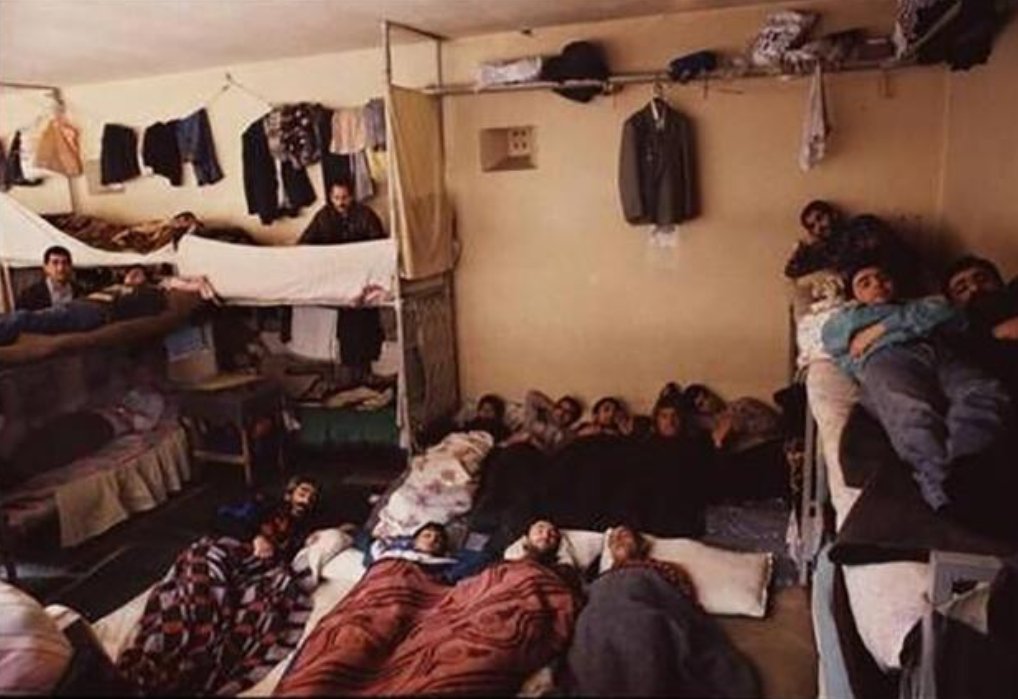
Human rights defenders are often kept in detention and that is bad enough, but with the Covid-19 pandemic this risks killing many of them. Overcrowded prison conditions are such that infection is bound to occur. Following a request from the UN Special Rapporteur on Human Rights in Iran, Tehran released 85,000 prisoners, including many political prisoners, in an attempt to help stop the spread of the virus. China, Italy and Bahrain also have released prisoners over coronavirus concerns.
Now a coalition of human rights groups, activists, and politicians, including former Tunisian President Moncef Marzuki, sent a letter to UN Secretary and the UN High Commissioner for Human Rights urging the prisoner releases after the first case among prisoners was confirmed in Egypt. …..”Even more worrying in this time of pandemic, prisoners are crammed in cells that are so small that they have to wait for their turns to lay down and sleep,” the letter read.
Coronavirus: Egypt detains novelist Ahdaf Soueif for demanding prisoners’ release
On Wednesday the Egyptian government’s reaction was – surprise, surprise – to detain four activists who staged a protest calling for the release of prisoners in the country. The writer Ahdaf Soueif protested in front of the cabinet building in Cairo, alongside academic Rabab al-Mahdi, Soueif’s sister and academic Leila Soueif, and her niece, activist Mona Seif. Mona Seif live streamed the protest on Facebook, recording a confrontation with police officers who reportedly asked them to stop and “discuss the matter” at a police station…..On 19 March the Middle East Eye reported that Laila Soueif remained in custody late on Wednesday but the three others were freed. This comes as Egyptian prosecutors on Thursday ordered the release of 15 political dissidents, including a prominent academic arrested as part of a crackdown on nationwide protests in September. Mona Seif, Laila Soueif’s daughter, is the sister of Alaa Abdel Fattah, a left-wing activist currently in pre-trial detention.
On 19 March 2020, the Nordic Monitor reports that President Erdoğan’s government in Turkey has rejected calls from human rights organizations to release inmates from two overcrowded prisons despite detection in those facilities of the coronavirus, which has caused the death of more than 8,000 people around the world. A purge of thousands of dissidents in the aftermath of a coup attempt in July 2016 has filled Turkey’s prisons, which today are overcrowded with tens of thousands of political prisoners…On Wednesday Erdoğan announced a number of measures to battle the spread of the coronavirus following an emergency meeting convened to coordinate the fight. Yet the release of prisoners was not among the measures disclosed by the Turkish president.
Ömer Faruk Gergerlioğlu, a member of parliament and one of Turkey’s most prominent human rights defenders, revealed how he received news from Edirne Prison that three prison guards tested positive there for COVID-19, as a result of which the prison was put under quarantine. A day later, Balıkesir’s Kepsut Prision was also quarantined, Turkish media reported. “A short while ago my husband called and informed me that contamination in a cell had been detected and that they had put everyone in quarantine,” the wife of an inmate told reporters. On March 16 Gergerlioğlu launched a campaign for the release of all prisoners starting with those at greatest risk and submitted a parliamentary question directed to the Ministry of Justice about health conditions in the country’s prisons.
The Corona virus relates to human rights in many ways.
One is of course that emergency measures are abused or used for other purposes. The UN Special Rapporteur on the promotion and protection of human rights and fundamental freedoms while countering terrorism, Fionnuala Ní Aoláin, indicates that emergency measures tend to become permanent and underlines ‘emergency or not, states must reach the same threshold of legality, legitimacy, necessity and proportionality for each measure taken’. Human Rights Watch’s Executive Director, Ken Roth, called upon states to ensure that COVID-19 is ‘reason to reaffirm, not abandon, everyone’s rights’. See also: https://humanrightsdefenders.blog/2020/03/17/covid-19-emergencies-should-not-be-shortcut-to-silencing-human-rights-defenders/.
Another asepect is that the COVID-19 context makes it very difficult to operate for non-governmental organisations [see also: https://humanrightsdefenders.blog/2020/03/20/covid-19-starts-to-affects-aid-and-civil-society/]. Florian Irminger, of Penal Reform International (PRI), in a piece in Medium on 19 March 2020 warns that …...charities will fall out of donations very quickly, at a time their services are more needed than ever. Right now, even the best intended of us tend to stop donations to charities. Foodbanks, shelters for victims of domestic violence, health charities or charities working with prisoners and their relatives will rapidly reach a cash-crisis.
Such service providing organisations will aim at being able to continue delivering their services to those most vulnerable of us. …..Organisations addressing human rights violations are more than ever needed to monitor situations in areas affected by COVID-19 outbreak…and …COVID-19 represents a high risk to populations in prisons. ……Detention facilities are always a risky place in regard to infectious deceases and are now more exposed than ever. Similarly for other human rights organisations, to be able to continue to operate where we are most needed right now means we must divert resources from other projects and invest in protecting their staff working in the frontlines….. COVID-19 must lead governments to empower and support civil society to continue its work. ..In a funding landscape for human rights and humanitarian NGOs largely based on project grants, civil society has little flexibility to adapt to external events hampering its ability to operate in certain territories and to deploy its staff. In other words, just like the for-profit-sector, not-for-profit organisations see their revenue decrease and have costs associated to a crisis like this one, but do not have reserves and little ability to divert costs associated to a specific project to address the new challenges.
Many private donors have already adapted their grant making. One of them, Ford Foundation, should be applauded for strengthening even further its flexibility on the use of resources by its grantees. Fritt Ord, a Norwegian foundation specialised in promoting freedom of expression, announced it would invest 40 million Norwegian kroner in its programmes, at a time the kind of human rights work it wishes to support will face financial difficulties.
Following on the heels of the joint statement on the Corona virus by the two High Commissioners [see: https://humanrightsdefenders.blog/2020/03/17/two-high-commissioners-issue-rare-joint-statement-re-covid-19/], more than a dozen U.N. experts on issues including on the rights to freedom of expression, peaceful assembly, health, education, and religious belief, along with the U.N. working group on arbitrary detention signed a statement urging Governments in crisis mode not to use the emergency measures to suppress human rights.
The rights experts, who are appointed by the United Nations Human Rigbhts Council but who do not speak on behalf of the world body, said they recognized “the severity of the current health crisis and acknowledge that the use of emergency powers is allowed by international law in response to significant threats” but they went on to “urgently remind states that any emergency responses to the coronavirus must be proportionate, necessary and non-discriminatory.”
The experts stressed that the use of emergency powers should be declared publicly and the U.N. treaty bodies should be notified if fundamental rights, including movement, family life, and assembly were being significantly limited. “Moreover, emergency declarations based on the COVID-19 outbreak should not be used as a basis to target particular groups, minorities, or individuals,” they insisted. The emergency, the experts said, “should not function as a cover for repressive action under the guise of protecting health nor should it be used to silence the work of human rights defenders.”
They warned that some states might find the use of emergency powers “attractive because it offers shortcuts.” “To prevent such excessive powers to become hardwired into legal and political systems, restrictions should be narrowly tailored and should be the least intrusive means to protect public health,” they said.




 Ding Jiaxi was disbarred and previously jailed for protesting against official corruption. (Twitter pic/L4L_INT)
 Hans Thoolen on Human Rights Defenders and their awards