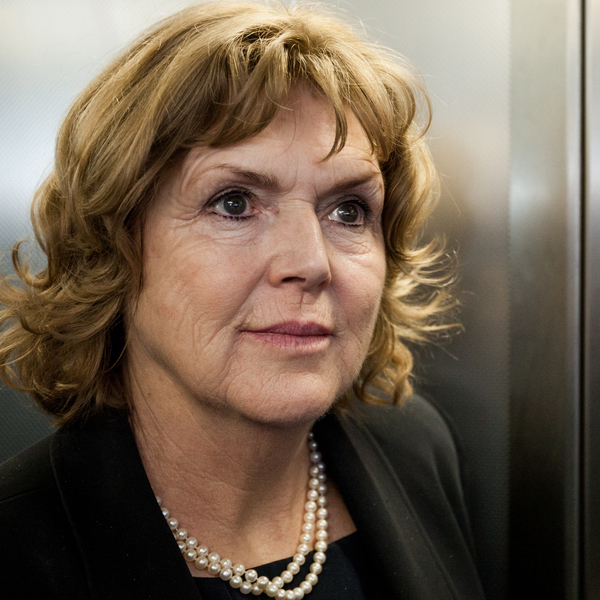
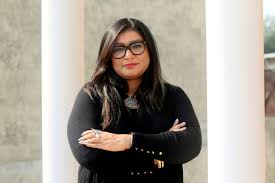
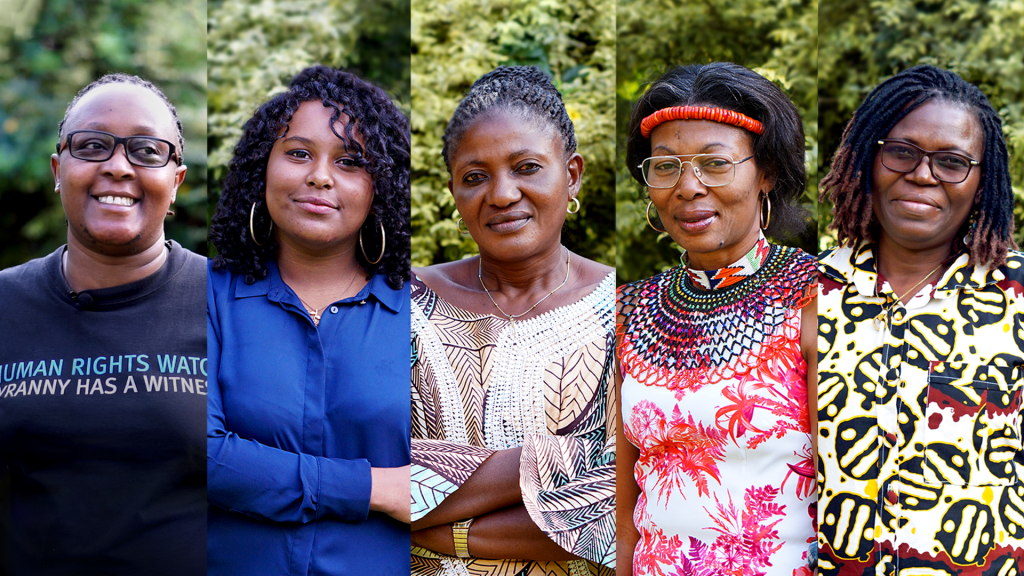
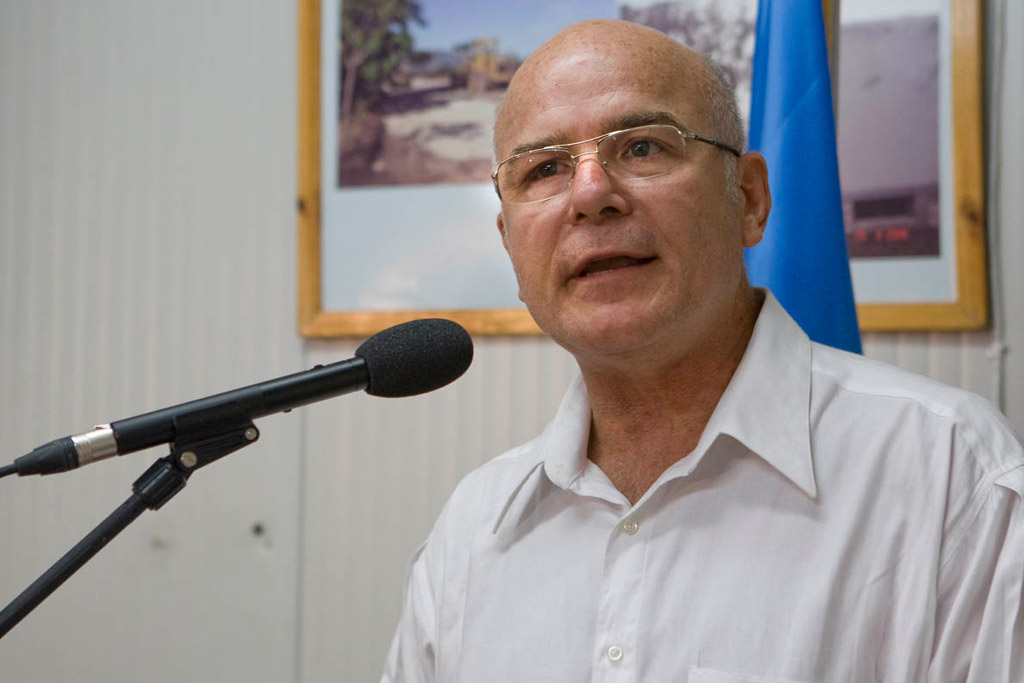
The Human Rights Funders Network announces a WEBINAR: “Uncalculated Risks: How funders can address threats to human rights defenders in development” to be held on 14 January 2020.
Archive for the 'Human Rights Defenders' Category
Save the date: 14 January 2020 Webinar on protection of human rights defenders in development
December 1, 2019Behrouz Boochani gives interview in New Zealand – finally out of Manus island
December 1, 2019
On 28 November, 2019 Sally Blundel inteviewed Iranian asylum seeker Behrouz Boochani. The award winning refugee [see: https://humanrightsdefenders.blog/2019/02/04/manus-island-detainee-behrouz-boochani-wins-major-literary-prize-putting-more-pressure-on-detention-policy/] was invited to New Zealand. Where he will be after his month-long visa expires, he cannot say, but he will still write, he says, this time a novel. “Because literature has the power to give us freedom. Because through literature we can challenge the power structure.”
But find time he did, to write poems and articles, film a documentary on a smartphone and tap out an entire book, furtively sent paragraph by paragraph via What’sApp text messages, chronicling the squalid conditions, medical neglect, mental anguish, suicide, even murder, experienced by asylum seekers held on Manus Island under Australia’s “stop the boats” policy.
It is six years since Boochani was pulled from a sinking boat just days out of Indonesia and taken to Australia’s “offshore processing centre” on Manus Island, Papua New Guinea. It is just over a week since he left Port Moresby to fly to Auckland, taking a route that avoided Australia, to speak at Christchurch’s WORD book festival as a free man. “I got my freedom through literature,” he says.
Boochani knows the power of words. As a journalist in Iran in 2013, he reported on the arrest and detention of his colleagues on Kurdish-language magazine Werya in Ilam, north-west Iran. His fellow journalists were eventually released – they attributed their survival to Boochani’s article – but by then he was in danger. He fled, travelling through South-east Asia to Indonesia where, in July that year, he was among a group of 75 men, women and children who boarded an unseaworthy boat heading for Australia. The vessel’s bilge pump failed in rough seas. When rescued by the Royal Australian Navy, Boochani requested asylum under the 1951 Convention Relating to the Status of Refugees, to which Australia is a party. Instead, he and his fellow asylum seekers were incarcerated on Christmas Island before being transferred to the Manus Island detention centre as part of Australia’s “Pacific Solution II”.
………To write his book, he adopted a new routine, sleeping from 6pm until 11pm when everyone was too busy to note his absence. From 11pm, he would write under the blankets until 8am, then sleep until noon. In 2016, after the PNG Supreme Court declared the indefinite detention of asylum seekers to be unlawful, phones were no longer prohibited. Each night, he would sit outside, smoking, writing, absorbing as much of the natural environment as he could from his side of the prison fence. “For the prisoner who is alone, nature is so important,” he says. “Always, it is a place you can escape to – even the sky, they cannot take the sky away. But it is very harsh to look up at the many birds flying and knowing you cannot follow them.”
….
“If someone asked me to write this book again, of course I am able to write it, but I could not write it this way. When I describe starving, I was starving. When I describe the characters, those people were around me in prison. It is the same with the feelings. In that camp people rely on each other; there’s a culture of brotherhood because there is no space, but there’s also a kind of hatred because you are so tired of having so many other people around you. I have lost those feelings now, but in prison they were true feelings.”

Through articles sent to the Guardian, the Sydney Morning Herald, the Refugees Action Collective and the United Nations, and the support of a global network of writers, translators, academics and activists, including Australia’s Janet Galbraith, founder of online project Writing Through Fences, Boochani refused to let the thousands of asylum seekers sent to Manus Island and Nauru fade from public gaze. In 2017, the UN High Commissioner for Human Rights described Australia’s offshore processing centres as “unsustainable, inhumane and contrary to human rights” (New Zealand’s offers under National first, then Labour, to settle at least 150 detainees were rejected by successive Australian prime ministers).
Plea for release
But within the camp the book also drew attention to Boochani himself. This year, the Media, Entertainment and Arts Alliance, the union for Australia’s creative professionals, sent an open letter to the Government of Scott Morrison urging Boochani’s release. Signed by prominent journalists and writers, including Tom Keneally Helen Garner, Christos Tsiolkas, Kate Grenville and Nobel laureate JM Coetzee, it said, “We are deeply concerned for Behrouz Boochani’s welfare and safety. The success of his book and his status as a journalist have made him a target of the Manus authorities; a danger that has only increased with his rising profile.”
In June, WORD Christchurch programme director Rachael King invited Boochani to speak at a special festival event. Especially after the city’s March 15 mosque shootings, she explained, “it felt important to share the stories of refugees”.
With help from author Lloyd Jones, whose recent book The Cage is itself a dark parable about the human capacity for inhumanity, she was able to email her invitation directly to Boochani. Boochani was receptive to the idea. By then he was one of more than 300 people moved from Manus Island to Port Moresby. He was hoping to be part of Australia’s “refugee swap” deal with the US (he was later accepted for this programme), but he wanted to wait until the Manus Island camp was finally closed.
“It would have been immoral for me to leave those people in Manus, to create a platform and have this privilege and this recognition, because it is about all our resistance – it was not only for me.”
In October, Australia’s Home Affairs Minister, Peter Dutton, told Parliament “we’ve completely closed” the Manus Island facility. By then, only three asylum seekers were left on the island. The remaining detainees still in Papua New Guinea were in Port Moresby, including a reported 46 held in Bomana Prison.
Listen to Behrouz Boochani in conversation at WORD Christchurch with broadcaster John Campbell.
New Amnesty report: Governments failing women human rights defenders
December 1, 2019
Women in Lahore, Pakistan, march to mark International Women’s Day 2019 © Ema Anis for Amnesty International
Governments around the world are failing to protect women human rights defenders from increasing attacks, Amnesty International said on 29 November 2019, International Women Human Rights Defenders Day. In a new report – “Challenging power, fighting discrimination” – based on interviews with 23 activists across 21 countries, Amnesty highlights how women human rights defenders continue to be assaulted, threatened, intimidated, criminalised and even killed for their campaigning.
Kumi Naidoo, Amnesty International’s Secretary General, said: “Women human rights defenders are attacked because of who they are and what they do. The risks are even greater for those facing intersecting forms of discrimination: if you are a woman and from a racial minority, indigenous, poor, lesbian, bisexual, trans, or a sex worker, you have to fight so much harder to have your voice heard by those in power…All over the world, women human rights defenders are speaking out against injustice, abuse and discrimination, often because they have experienced it first-hand…..They are central to human progress: they fight for human rights and against patriarchy and racism, while pushing for ground-breaking reforms on so many fronts. Governments must live up to their commitment to ensure these activists can operate freely and safely.”
In recent years, campaigners working on the rights of women, LGBTI people and other marginalised groups have come under growing pressure from politicians, religious leaders and violent groups. Women campaigning on these issues tend to be the first to be targeted in increasingly frequent backlashes against a more inclusive, fairer world.
Sexual violence
The report highlights several cases in which violence, including sexual violence as a form of torture, was used against women human rights defenders to silence them. In Bahrain, Ebtisam El-Saegh, an activist with the human rights organisation SALAM for Democracy and Human Rights, was sexually assaulted, badly beaten, kicked in the stomach and kept standing for most of the seven hours she was being interrogated while in detention in 2017. El-Saegh told Amnesty: “I was threatened that they would harm my family and that they would bring my husband and torture and electrocute him. The men told me ‘no one can protect you’.”
In Egypt, Malak al-Kashef, a 19-year-old transgender woman human rights defender was arrested in March this year following her involvement in peaceful protests in Cairo. She faced trumped-up charges of ‘aiding a terrorist organisation’ and ‘misusing social media to commit a crime punishable by law.’ While in detention, she was subjected to a forced anal examination and other forms of sexual assault. Even though she was undergoing gender affirming treatment, Malak was placed in an all-male detention facility which put her at increased risk of sexual violence. She was eventually released in July this year.
Smear campaigns
Women activists are often subjected to smear campaigns which vilify their “deviant behaviour” and are designed to fuel hostility against them. After rescuing migrants from the central Mediterranean Sea in June 2019, Carola Rackete, the Italian captain of the rescue boat Sea-Watch 3, was repeatedly insulted by the Italian Minister of Interior who called her a pirate and a criminal. His slurs were followed by vicious verbal attacks by others who incited sexual violence against her while also targeting her gender and appearance.
In Mauritania, Mekfoula Brahim, a woman human rights defender who has campaigned for an end to female genital mutilation, was branded an apostate in 2016 Facebook posts after defending a blogger sentenced to death for criticising those who use religion to discriminate against minorities. The slur exposed her to the risk of being prosecuted and sentenced to death.
COP25: climate defenders also needed to be shielded
November 28, 2019Tomorrow, 29 November, 2019, young people will gather at locations around the world for a Fridays for Future Global Climate Strike. On 2 December, United Nations delegates, world leaders, business executives, and activists will meet at the 25th Conference of the United Nations Framework Convention on Climate Change (COP25) in Madrid to discuss ways to protect the environment. Participants in these events should also discuss ways to protect the protectors: the individuals and groups targeted around the world for their efforts on behalf of the planet.
First High Note Global Prize goes to Cyndi Lauper for her work with LGBTQ youth
November 28, 2019
Cyndi Lauper will receive the inaugural High Note Global Prize from the Office of the High Commissioner for Human Rights and the High Note Global Initiative.
For her decades of activism with LGBTQ youth, Cyndi Lauper will be awarded the inaugural High Note Global Prize presented by the United Nations Human Rights and the High Note Global Initiative at her annual Home for the Holidays concert December 10, according to Rolling Stone. For more on this award: http://www.trueheroesfilms.org/thedigest/awards/high-note-global-prize
The High Note Global Initiative stated: “In 2008, Lauper co-founded True Colors United after learning that while 10% of American youth identify themselves as LGBTQ, up to 40% of American youth experiencing homelessness do so. The organization works to prevent and end youth homelessness, focusing on the unique experiences of LGBTQ youth. In 2008, Cyndi Lauper co-founded True Colors United, a nonprofit organization that implements innovative solutions to youth homelessness that focus on the unique experiences of LGBTQ young people, who make up to 40% of the youth homelessness population in America.”
The 2019 High Note Global Prize will be presented during the High Note Honors segment of Cyndi Lauper & Friends: Home for the Holidays at the Novo Theater at LA Live on December 10th. The award will be presented to Lauper by Kesha during the concert in Los Angeles. In 2008, Lauper cofounded True Colors United (named for her smash hit song about celebrating otherness), which “implements innovative solutions to youth homelessness that focus on the unique experiences of LGBTQ young people,” according to its website. In addition to Kesha, additional celebrities supporting Cyndi at the Novo Theater on UN Human Rights Day include, Billy Porter, Brandi Carlile, Belinda Carlisle, King Princess, Charlie Musselwhite, Henry Rollins, Perry Farrell with Etty Lau Farrell, Justin Tranter, K. Flay, Emily Estefan, Shawn Wasabi, comics Carol Leifer and Lily Tomlin, U.K. comedian Gina Yashere, Margaret Cho, and Carson Kressley. Taylor Swift, Billie Eilish, Mariah Carey, Dolly Parton, Lady Gaga, Kelly Clarkson, Dua Lipa, Kacey Musgraves, RuPaul, and Tegan and Sara are among the artists who have donated items and experiences for a charity auction with 100% proceeds supporting True Colors.
The prize was created by David Clark, founder of the High Note Global Initiative, which celebrates artists whose work intersects with human rights issues. The award was announced in 2017: https://humanrightsdefenders.blog/2017/12/08/new-human-rights-award-music-to-our-ears/
Cyndi Lauper to Be Honored with Inaugural UN Human Rights Award for Work Helping LGBTQ Youth
Algerian human rights defender Halim Feddal sent to preventive detention
November 26, 2019Halim Feddal is the founder and secretary general of the Algerian National Association Against Corruption (ANLC) which works on exposing and fighting corruption in Algeria. He is also a member of the Hirak Movement, which is a grassroots human rights movement that calls for the promotion of civil and political rights in Algeria. The human rights defender frequently participates in peaceful demonstrations in the city of Chlef.
On 17 November 2019, Halim Feddal was arrested by security forces in plain clothes from a peaceful demonstration that he was attending in front of the court in Chlef. The protesters were demonstrating against the politically motivated detention of some members of the Hirak movement. Halim Feddal was taken to a local police station where he spent three days under interrogation and was not allowed to contact his lawyer or his family. On 20 November 2019, the Public Prosecution charged him with “threatening the unity of the country” and “incitement of an illegal gathering”. The Public Prosecution ordered preventive detention for Halim Feddal without scheduling a date for his court hearing.
Human rights defenders in Algeria are continually harassed and arbitrarily detained by the authorities. Halim Feddal has frequently been called to the police station and interrogated about his human rights work. Front Line Defenders is deeply concerned about the detention and harassment of Halim Feddal, and finds the general crackdown on human rights defenders in Algeria increasingly worrying. Front Line Defenders believes that Halim Feddal is being detained solely as a result of his peaceful and legitimate human right work.
https://www.frontlinedefenders.org/en/case/halim-feddal-sent-preventive-detention
Afghanistan: human rights defenders targeted but fearless
November 26, 2019The two human rights defenders began receiving threats, including from local officials in Logar, on Facebook after they gave interviews to The Guardian and Afghanistan’s TOLO News about the existence of a paedophile ring in the area. The human rights defenders uncovered more than 100 videos of the alleged abuse. Some of the victims of abuse have been murdered, according to The Guardian. “This is the latest case where human rights defenders have been targeted by the authorities for carrying out their important work. Faced with threats from both the state and non-state actors, they are operating in some of the most hazardous conditions anywhere in the world. There is impunity for attacks on these brave defenders, who have little to no protection.”
One day before he disappeared, Musa Mahmudi told a fellow Afghan human rights defender that he feared for his safety and that the NDS was planning to arrest him. He added that he was worried that he was under surveillance. Musa Mahmudi said that he had also received death threats, accusing him of “dishonouring the people of Logar.” In August 2019, Amnesty International published a briefing entitled, “Defenceless Defenders: Attacks on Afghanistan’s Human Rights Community,” where the organization detailed how the Afghan government has persistently failed to investigate attacks on human rights defenders – sometimes accusing them of ‘fabricating’ their claims, declining to offer them protection; telling them to arm themselves instead. [on 26 november: https://www.rferl.org/a/afghan-president-orders-probe-into-alleged-pedophile-ring/30293787.html] and then; https://www.rferl.org/a/afghanistan-releases-activists-who-exposed-alleged-pedophile-ring/30294906.html
The same day AI continued with its series of 16 omen human rights defenders from Afghanistan“16 Days of Activism against Gender-Based Violence” campaign [see: https://humanrightsdefenders.blog/2019/11/19/16-days-of-activism-against-gender-based-violence-start-on-25-november-2019/]. Untill December 10, their stories will be published one a day.
Day two: Maria Raheen
I am the director of the Journalism and Mass Communication Unit at Balkh University. I also head a non-governmental organization that works on human rights. For 20 years, as a women’s rights activist, I have pushed to address issues that prevent women from accessing their rights, not only in Balkh but also in other neighbouring provinces such as Samangan, Jowzjan, and Faryab.
One of my achievements is the establishment of the first private university in Balkh – Taj Higher Education Institute, which offers medicine, economy and law. Similar to Kabul, Herat and Kandahar, Balkh has some developments and achievements in terms of women’s rights. However, the province is still well known for the presence of armed groups, the local mafia and warlords, who have no respect for human rights. Due to existing challenges and the weak rule of law, self-censorship is embedded in the day-to-day lives of people in Balkh.
I am no stranger to tolerating injustices, especially when it is a matter of saving my life and my family’s lives. It gets challenging especially when it involves former war commanders who are now elected representatives of the area and, who would not hesitate to exert their power to commit crimes.
I hope in future like-minded women will join hands for the women’s revolution in Afghanistan, to reclaim the rights that we are entitled to.
Day one: Khawar Amiri
I am the Head of the Literacy Department of the Directorate of Education in Khost Province and have worked for many years as a mediator for women’s issues. As most women of Khost Province are illiterate, and some districts are yet to establish schools for girls, through the Literacy Department, I have conducted courses for women and girls above the age of 14 to enable their basic reading and writing skills. As a well-known human rights defender, I have worked in solving many of women’s issues through the Committee on Elimination of Violence against Women and tribal Jirgas (councils), with help of the police.
Women in Khost are exposed to discrimination and violence. Girls’ education is till grade six, after which they are sent off to marriage or asked to stay home. Forced marriages, being sold off, physical violence, lack of access to inheritance rights are some of the issues women face on daily basis. Women don’t work in government posts in Khost, as most of the positions are held by men. Women are discouraged from applying for government positions as their posts are given to men and justified with unlawful reasons for not being appointed.
I have intervened in many cases of women being abused, sometimes solving the case with the help of local elders and at times through direct mediation. One of my biggest successes is organizing a Master’s Degree programme for women in Khost to study in India, funded by the US Embassy. Despite being threatened and attacked, I am continuing my activism.
I hope women are independent, have security, and have equal opportunities for studies, get to live a life free from violence.
You can send a solidarity message to all of the 16 WHRDs in Afghanistan, or any one of them, and let them know that they are not alone. Please email your thoughts in a personal message to AfghanDefenders@amnesty.org and AI will share them with the activists.
https://www.amnesty.org/en/latest/news/2019/11/afghanistan-release-hrds-now/
https://www.amnesty.org/en/latest/news/2019/11/16-days-of-activism-afghanistan-whrds/
BREAKING NEWS: MEA has 3 women HRDs as finalists for 2020
November 26, 2019
Late on Monday 25 November 2019 the Martin Ennals Award for Human Rights Defenders announced that its has three exceptional women as the finalists for the 2020 award, a demonstration of the leading position now occupied by women in the defence of human rights. In Yemen, Huda Al-Sarari has exposed and challenged the existence of secret prisons and many cases of torture. In Mexico, Norma Ledezma is fighting against femicides and disappearances. In South Africa, Sizani Ngubane is fighting for access for women to education and to land.
In 2020, for the first time the Jury nominated three women who defend the fundamental rights of their communities in sensitive contexts. ‘The Martin Ennals Foundation is proud to recognise the courageous work of three women. For the 2020 edition, our Jury’s choice reflects the ever-greater global impetus of individuals – whatever their gender – who are committed to respect for human rights and women’s rights in particular’, says Isabel de Sola, Director of the Martin Ennals Foundation. [see also: https://humanrightsdefenders.blog/2019/11/19/16-days-of-activism-against-gender-based-violence-start-on-25-november-2019/]
The 2020 Finalists are:
- In Yemen, where the conflict has been ongoing since 2005, Huda Al-Sarari, a Yemeni lawyer, unveiled the existence of several secret detention centres where the worst violations of human rights were committed: torture, disappearances or even extrajudicial executions.
- In South Africa, women face discrimination, the worst expression of which is widespread gender violence. In rural communities, they frequently have their land expropriated and are deprived of access to education and justice. Sizani Ngubane founded an organisation of more than 50,000 women from rural areas in her country and has fought successfully for over 40 years for the recognition of their rights.
- In Mexico, the civil population is paying a high price for the weakness of the rule of law which is underpins widespread violence and impunity. Women are the primary victims, with more than 3,500 femicides committed each year. Norma Ledezma, who is the mother of one of the victims, puts all her energy into supporting families seeking access to justice in the state of Chihuahua.
Huda Al-Sarari is a Yemeni lawyer and human rights activist. She graduated in Sharia and Law from Aden University in 2011 and holds a masters in Women’s Studies and Development from the Women’s Centre at Aden University. She has been working for more than a decade with numerous local Yemeni human rights organisations such as the Yemeni Women’s Union, the Adalah Centre for Rights and Freedoms and the National Committee to Investigate Allegations of Human Rights Violations. Over the last years, she investigated, exposed and challenged the network of secret prisons run by foreign governments in Yemen since 2015, where thousands of men and boys suffered arbitrary detention and torture. Huda Al-Sarari collected evidence on more than 250 cases of abuse taking place within the prisons and succeeded in convincing international organisations such as Amnesty International and Human Rights Watch to take up the cause. Despite the threats, defamation campaigns and sacrifices she and her family endured, she continues to stand alongside the families of those who have disappeared and pursue justice. In October 2019, she was honoured as a co-finalist by the Aurora Prize.
‘Huda Al Sarari has chosen not to leave Yemen. That is a decision which shows a rare courage, all the more so as she is working in a high-risk context and a source of danger for herself’ declared Alice Mogwe of the FIDH
Norma Librada Ledezma began her career as a human rights defender the day her daughter, Paloma, disappeared on her way home from school in Chihuahua, Mexico. Since that moment, Norma has dedicated herself to seeking justice for the families and victims of femicide, disappearance and human trafficking in Mexico. She is one of the founders and Director of Justicia Para Nuestras Hijas, a local organisation that offers legal counsel and support to ongoing cases. She is a member of the Board of the Centre for Justice for Women of Chihuahua, the Consultative Assembly of the Executive Committee for Victim’s Redress, and Deputy Coordinator of the Committee for Prevention and Redress of Domestic and Gender-based Violence. Norma has supported over 200 investigations into cases of femicide and disappearances, on behalf of both male and female victims. As a party in the case over her daughter’s murder, which was brought before the Interamerican Commission on Human Rights, Norma is responsible for the creation of a Special Prosecutor for Women Victims of Violence in her native state of Chihuahua. In spite of having received numerous death threats, she continues with her human rights work.
‘Norma Ledezma has received numerous death threats, but she is not daunted and continues her work seeking not only to obtain justice for the murder of her daughter, but for all the young women who have been murdered,’ noted Andrew Anderson of Frontline Defenders.
Sizani Ngubane is a South African activist who has dedicated her life to promoting gender equality, fighting for women’s and indigenous people’s rights. After her initial career as an activist with the ANC, she became Provincial Coordinator of the SA Women’s National Coalition in 1991 and contributed to the development of the Women’s Charter for Effective Equality in South Africa. That contribution was instrumental in building the section on rural and indigenous women of the Bill of Rights within the South African Constitution. In 1998, Sizani founded the Rural Women’s Movement (RWM), a unique organisation striving against gender-based violence and for women’s access to land, education, land rights, property and inheritance rights in courts operating under customary law. Recently, she is focused on fighting against traditional courts legislation, such as the Ingonyama Trust, which could lead to the misappropriation of many families’ land in KwaZulu-Natal Province.
‘Sizani Ngubane’s work has greatly advanced the rights of women and girls in South Africa over more than 40 years,’ underlined Guadalupe Marengo of Amnesty International.
The jury of the MEA is made up of ten of the world’s leading human rights organisations. They are: Amnesty International, Bread for the World, the International Commission of Jurists, the FIDH, Front Line Defenders, Human Rights First, Human Rights Watch, HURIDOCS, the World Organisation against Torture and the International Service for Human Rights. In order to reflect the cultural and geographic diversity of the human rights movement, a global network of regional human rights organisations consults with the selection process.
The 2020 Martin Ennals Award for Human Rights Defenders will be presented to one of them on 19 February during a ceremony hosted by the City of Geneva in the Salle Communale de Plainpalais (Geneva), in the presence of the three finalists. The event, organised by the City of Geneva, is open to the public. In order to make it possible for an international audience to participate, the event is also livestreamed. All the details on the evening’s event is available here: www.martinennalsaward.org
For more information on this and other awards, see: http://www.trueheroesfilms.org/thedigest/awards/martin-ennals-award-for-human-rights-defenders
For media inquiries contact: Chloé Bitton, Communications Manager, Martin Ennals Foundation media@martinennalsaward.org Mobile: +41.78.734.68.79
Twitter : @martinennals
Facebook : facebook.com/martinennals
Youtube : youtube.com/martinennalsaward
LinkedIn : https://www.linkedin.com/company/martin-ennals-foundation/