Archive for the 'Human Rights Defenders' Category

Dunja Mijatović calls on Russia to end judicial harassment of human rights defenders

October 1, 2020

Yuri Dmitriev

Yuri Dmitriev

On 30 September 2020 the Commissioner for Human Rights of the Council of Europe in Strasbourg issued the following statement:

“Yesterday’s judgment against Yuri Dmitriev, a Russian historian and human rights defender, sentenced to 13 years’ imprisonment in a high-security prison having been acquitted earlier on the same charges, raises serious doubts as to the credibility of his prosecution”, says today Dunja Mijatović, Council of Europe Commissioner for Human Rights. [see: https://humanrightsdefenders.blog/2020/07/24/gulag-historian-yury-dmitriyev-returns-to-prison/]

Mr Dmitriev is widely known in Russia and beyond for his research and his work focusing on the commemoration of victims of past political repression. The harsh verdict delivered by the Karelian Supreme Court in the absence of the legal counsel chosen by Mr Dmitriev cannot be deemed to have complied with fair trial guarantees and is a further illustration of a broader pattern of judicial harassment against human rights defenders, journalists and other independent or critical voices, which has been growing in the Russian Federation in recent years.

Once again I urge the Russian authorities to reverse this alarming trend of targeting Russian civil society. As a matter of urgency the criminal prosecution of a number of human rights defenders, journalists and civil society activists, including those of Abdulmumin Gadzhiyev, Yulia Tsvetkova, Anastasia Shevchenko [see https://humanrightsdefenders.blog/2019/01/22/in-russia-first-criminal-case-under-undesirable-organizations-law/%5Dand Semyen Simonov for engaging in legitimate civil society activities, must stop. As a Council of Europe member state, Russia should also adopt structural measures at the political, legislative and practical level which genuinely create a safe and enabling environment for the work of human rights defenders, as required by European human rights standards. Instead of intimidating and harassing civil society, the Russian authorities at all levels should effectively co-operate with them and publicly acknowledge their essential role and invaluable contribution to society’s democratic development.”

 Commissioner website

Human Rights for the Planet conference starts 5 October

October 1, 2020
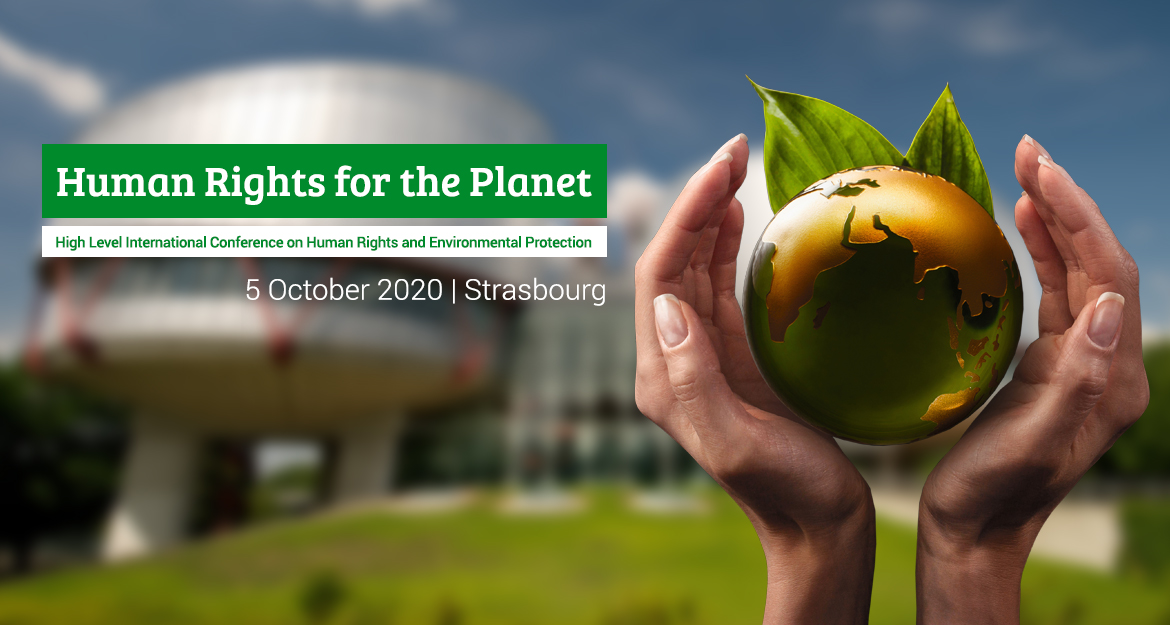
Human Rights for the Planet conference

What is the future role of international human rights law in helping to tackle challenges posed by climate change and the degradation of the natural environment? On Monday 5 October 2020, the European Court of Human Rights will host a high-level conference entitled “Human Rights for the Planet”. Both in person and online, participants will look at the rapidly-developing case-law on environmental issues of the Strasbourg court and other international tribunals. Speakers will include the President of the European Court of Human Rights, Robert Spano, the Secretary General of the Council of Europe, Marija Pejčinović Burić, and the UN High Commissioner for Human Rights, Michelle Bachelet.

Contributors will include environmental lawyers, academics and NGO representatives as well as a number of current and former ECHR judges.

If you would like to take part, register via the conference website.


More information: Human rights and the environment

Brooking’s webinar on China’s growing international ambition

September 30, 2020


Over the last several years, the world has seen China taking on more responsibility and power in international institutions. China’s growing ‘activism’ has provided a glimpse into its ambitions to assert a greater role for itself on matters of global governance. China’s growing activism also has raised key questions about the scale of Beijing’s ambitions and the tools it would be willing to use to advance them. On September 21, Foreign Policy at Brookings hosted a webinar to address these and other questions concerning China’s evolving approach to international institutions, rules, and norms. The event launched the next tranche of Brookings papers released as part of its series “Global China: Assessing China’s Growing Role in the World.” From human rights to energy to trade, these papers present a range of arguments for observers of China and policymakers to consider as they evaluate China’s role on the international stage.

in this context see also; https://humanrightsdefenders.blog/2012/12/06/china-and-its-amazing-sensitivity-on-human-rights-defenders/ and https://humanrightsdefenders.blog/2018/03/07/china-and-the-un-human-rights-council-really-win-win/  as well as recent: https://humanrightsdefenders.blog/2020/09/29/kenneth-roth-speaks-plainly-on-international-human-rights-china-a-violator-and-us-unprincipled/

Business and human rights: Updated list of companies supporting HRDs

September 30, 2020

Business support for HRDs & civic freedoms does exist but is not widespread. The Business and Human Rights Resource Centre just updated its list of 29 companies that do.

One of the most important and urgent opportunities for responsible business is to support civic freedoms – freedoms of association, assembly, expression and privacy – and the people who exercise the rights to defend all human rights. There is a clear normative responsibility for companies to respect human rights, as set forth in the Guiding Principles on Business & Human Rights (UNGPs), and companies also have a discretionary opportunity to go above and beyond these defined responsibilities and expectations. The UNGPs are a hard floor, not a low ceiling, for company action to support civic freedoms and human rights defenders (HRDs). This page gathers the latest news on business action in support of human rights defenders and features a collection of company and investor policies that mention HRDs.

You can download the List of statements and commitments on HRDs & civic freedoms (last updated in August 2020) from:

https://www.business-humanrights.org/fr/th%C3%A8mes-majeurs/human-rights-defenders-civic-freedoms/how-companies-investors-can-support-hrds/

This would seem to fit nicely with the Open call for input by the UN: June 2021 marks the tenth anniversary of the unanimous endorsement by the Human Rights Council of the United Nations Guiding Principles on Business and Human Rights (UNGPs). A major step forward in efforts to prevent and address business-related human rights abuse, they provide a global authoritative framework for State duties and business responsibilities to achieve the UNGPs’ vision of “tangible results for affected individuals and communities, and thereby also contributing to a socially sustainable globalization.”

UN Working Group on Business and Human Rights is undertaking a new project to chart a course for a decade of action on business and human rights. This effort, informed by wide-ranging stakeholder consultations, will take stock of achievements to date, assess existing gaps and challenges, and, most importantly, develop an ambitious vision and roadmap for implementing the UNGPs more widely and more broadly between now and 2030.

Open call for input – ‘Have your say’ PDF: English

see also: https://humanrightsdefenders.blog/2020/04/29/covid-and-human-rights-shifting-priorities-also-for-companies/

https://www.ohchr.org/EN/Issues/Business/Pages/UNGPsBizHRsnext10.aspx

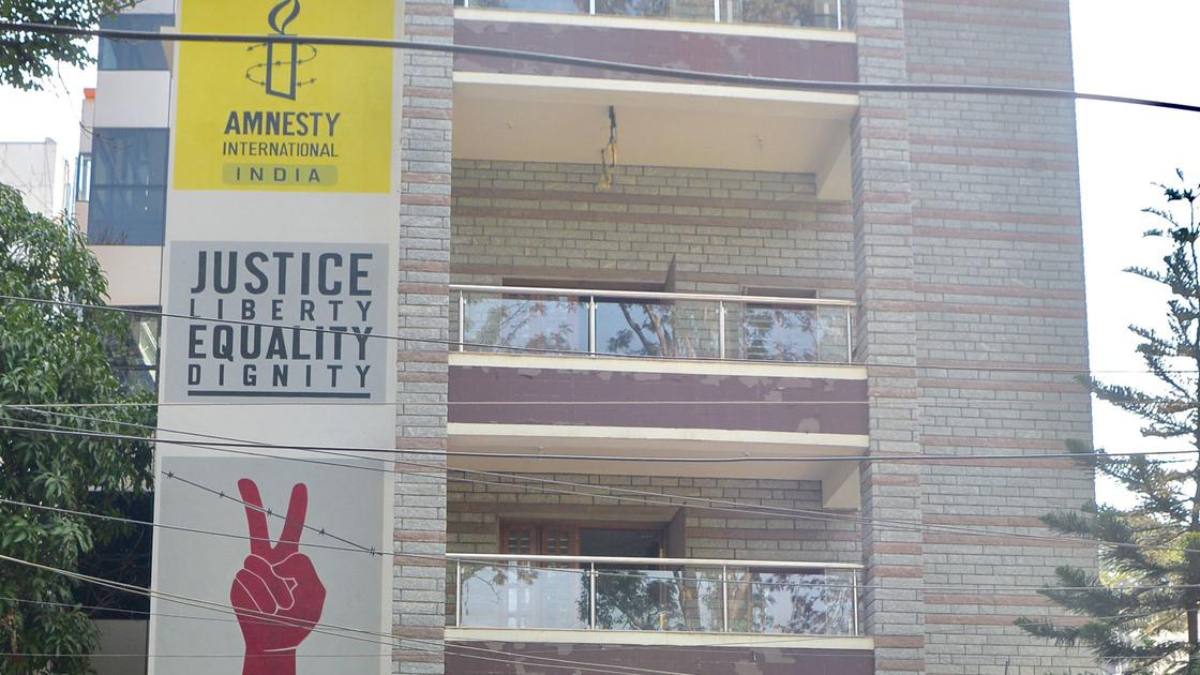
Amnesty feels forced to shut down its India office under govenment pressure

September 29, 2020

On 29 September 2020, it was announced that Amnesty International has shut down its India operations, alleging ‘a ‘witch-hunt’ by the Government

Amnesty India shuts operations

The complete freezing of Amnesty International India’s bank accounts by the Government of India which it came to know on 10 September 2020, brings all the work being done by the organization to a grinding halt. The organisation has been compelled to let go of its staff in India and pause all its ongoing campaign and research work. This is latest in the incessant witch-hunt of human rights organizations by the Government of India over unfounded and motivated allegations, Amnesty International India said today. See below the CHRONOLOGY OF ATTACKS AND HARASSMENT OF AI INDIA, starting in October 2018:

The continuing crackdown on Amnesty International India over the last two years and the complete freezing of bank accounts is not accidental. The constant harassment by government agencies including the Enforcement Directorate is a result of our unequivocal calls for transparency in the government, more recently for accountability of the Delhi police and the Government of India regarding the grave human rights violations in the Delhi riots and Jammu & Kashmir. For a movement that has done nothing but raises its voices against injustice, this latest attack is akin to freezing dissent,” said Avinash Kumar, Executive Director of Amnesty International India.

Amnesty International India stands in full compliance with all applicable Indian and international laws. For human rights work in India, it operates through a distinct model of raising funds domestically. More than four million Indians have supported Amnesty International India’s work in the last eight years and around 100,000 Indians have made financial contributions. These contributions evidently cannot have any relation with the Foreign Contribution (Regulation) Act, 2010. The fact that the Government is now portraying this lawful fundraising model as money-laundering is evidence that the overbroad legal framework is maliciously activated when human rights activists and groups challenge the government’s grave inactions and excesses.

The attacks on Amnesty International India and other outspoken human rights organizations, activists and human rights defenders is only an extension of the various repressive policies and sustained assault by the government on those who speak truth to power. “Treating human rights organisations like criminal enterprises and dissenting individuals as criminals without any credible evidence is a deliberate attempt by the Enforcement Directorate and Government of India to stoke a climate of fear and dismantle the critical voices in India. It reeks of fear and repression, ignores the human cost to this crackdown particularly during a pandemic and violates people’s basic rights to freedom of speech and expression, assembly, and association guaranteed by the Indian Constitution and international human rights law. Instead, as a global power and a member of the United Nations Human Rights Council, India must fearlessly welcome calls for accountability and justice,” said Avinash Kumar.

See also: https://humanrightsdefenders.blog/2020/09/15/lawyers-are-the-frontline-warriors-and-defenders-of-the-rule-of-law/

——

BACKGROUND: CHRONOLOGY OF ATTACKS AND HARASSMENT OF AMNESTY INTERNATIONAL INDIA:

  1. On 25 October 2018, Amnesty International India endured a 10-hour-long raid as a group of officers from the Enforcement Directorate (ED), a financial investigation agency under the Ministry of Finance, entered its premises and locked the gates behind them. Most of the information and documents that were demanded during the search were already available in the public domain or filed with the relevant government authorities. The residence of a Director was also raided.
  2. Immediately after the raid, the bank accounts were also frozen by the ED. As a result, Amnesty International India was forced to let go of a number of its staff, adversely affecting its work in India including with the marginalised communities. Despite the ongoing investigations and before the framing of charges, the Government of India started a smear campaign against Amnesty International India in the country through selective leaking of documents gathered by the ED, to government-aligned media outlets. This resulted in a malicious media trial against the organization.
  3. In early 2019, the Department of Income Tax started sending investigative letters to more than 30 small regular donors. Apparently, the department did not find any irregularities but the process adversely affected the fundraising campaigns of Amnesty International India.
  4. In June 2019, Amnesty International India was denied permission to hold the press conference launch in Srinagar to release its third ‘Lawless Law’ report on the misuse and abuse of Public Safety Act in Jammu and Kashmir. It was forced to digitally release it.
  5. On 22 October 2019, Amnesty International testified at the US Congressional hearing on the situation of human rights in South Asia with a specific focus on Jammu and Kashmir since the unilateral abrogation of Article 370 of the Constitution of India.
  6. On 15 November 2019, two weeks after the testimony and amid rumours of impending arrests of the organization’s top officials, the offices of Amnesty International India and the residence of one of its directors were raided again by the CBI. The raids were conducted on the basis of a First Information Report filed by the Ministry of Home Affairs over unsubstantiated allegations of suspected violations of Foreign Contribution Regulation Act. It suggested investigations be launched under other laws like the Prevention of Money Laundering Act.
  7. On 13 April 2020, Amnesty International India called on the Uttar Pradesh Government to stop its intimidation of journalists through use of repressive laws during a pandemic. On 15 April 2020, the Cyber Crime Police Station, Lucknow, Uttar Pradesh notified Twitter to furnish information about Amnesty International India’s Twitter account @AIIndia which the organization uses to monitor and analyse developments in international human rights law and Indian constitutional and criminal law related to human rights issues.
  8. On 5 August 2020, marking the first anniversary of the abrogation of Article 370 of the Constitution of India, Amnesty International India released an update on the situation of human rights in Jammu and Kashmir.
  9. On 28 August 2020, marking the six-month anniversary of the riots that took place in North-East Delhi in February 2020, Amnesty International India released an investigative brief on the complicity of Delhi police in the riots which claimed the lives of at least 53 people, mostly from the minority Muslim community.
  10. The release of the two publications has provided fresh impetus to the establishment to harass and intimidate Amnesty International India through its investigative agencies.
  11. On 10 September 2020 Amnesty International India came to know that all its bank accounts were completely frozen by the Enforcement Directorate bringing most of the work of the human rights organization to a grinding halt.

see also:

https://www.newsx.com/national/amnesty-shuts-india-operations-alleges-witch-hunt-by-government.html

What can funders do for Human Rights Defenders during COVID-19?

September 29, 2020

 David Mattingly in Open Global Rights asks: “What Kind of Support Do Human Rights Defenders Need During COVID-19?“. The details are worth it:


…as governments grapple to provide relief, local organizations and activists are playing a critical role in responding to the pandemic. But they continue to face increased restrictions, threats, and attacks intended to curtail activism and stifle dissent—and they urgently need sufficient resources and political support from the international philanthropic community to continue their efforts.  The Fund for Global Human Rights initiated a COVID-19 impact survey to assess the challenges and opportunities that emerged for civil society over the first three months of the pandemic. Drawing on a deep global network of frontline activists and organizations from more than twenty countries, the Fund surveyed over 200 grantee human rights organizations in late April and early May to better understand how the pandemic has impacted their work. [see: https://humanrightsdefenders.blog/2020/07/23/us1-million-fund-to-support-100-ngos-hit-by-covid-19/]

The survey offers valuable insights into how the activism landscape has changed—and what kind of support is necessary to sustain human rights work through this period of global crisis and beyond. Despite the challenging circumstances, frontline activists are demonstrating remarkable resilience and pivoting to respond differently to community needs. 

Nearly half of the survey’s respondents reported that they were still able to engage in their core work areas, like advocating for LGBTQ equality or defending Indigenous peoples’ land and resource rights. And 40% of respondents said that they were able to continue some core activities while also taking on new areas of work such as monitoring government actions in response to the pandemic, documenting the impact of COVID-19 on their constituencies, or providing community education on health and safety. Remarkably, 11% of respondents said that they had engaged entirely with these new areas of work or activities, which  they had not previously carried out, in order to address the pandemic. A minimal number of respondents—only 3%—answered that they were unable to continue working, and none expected to shut down entirely. 

Despite this largely positive outlook, the picture is likely to change over time as groups learn of more lost funding, donors shift priorities, and the public health crisis deepens across new geographies. This change is already taking place as activists working with historically marginalized groups—including Indigenous peoples and religious, ethnic, and racial minorities disproportionately impacted by COVID-19—have seen firsthand.

Around the world, botched or wanting pandemic responses have highlighted deep cracks in global and domestic systems—from massive disruptions in the transnational food supply chain to marginalized workers being excluded from government assistance programs. Human rights activists have demonstrated their capacity to redirect their resources and balance short-term—and often life-or-death—priorities with their longer-term goals. Thanks to this capacity for adaptation and responsiveness, civil society is poised to meet this moment of reckoning. 

However, human rights defenders are working under tremendous pressure. The pandemic has generated new priorities and urgencies, even as the immense challenges of frontline activism have multiplied. 

From Hungary to Brazil, governments have taken advantage of lockdowns and emergency measures to close civic spaces, curb fundamental freedoms, and stifle opposition. And in an effort to consolidate power, authoritarian or populist leaders are abusing prudent health and safety restrictions to specifically target human rights defenders. Nearly half of survey respondents reported that they had already been targeted by restrictions, curfews, or containment measures.

In Honduras, several prominent activists were arrested on trumped-up charges related to the pandemic, many of whom were attacked or jailed without access to legal recourse. Over 50% of survey respondents reported challenges to the normal functioning of protection mechanisms for human rights defenders.

In addition to these mounting dangers, survey respondents reported that infrastructure issues—including lost funding (37 respondents), sick staff (10 respondents), and reduced staff due to budget cuts (25 respondents)—were impacting their work. A quarter of respondents reported that technical difficulties, such as the lack of reliable internet or access to banks, pose a major challenge. Others mentioned dealing with impacts to their personal well-being, looking after sick family, or lacking access to critical supplies as paramount difficulties—an important reminder that human rights defenders are vulnerable to the same systemic inequalities they fight to overcome.

The imperative for human rights groups to demonstrate their relevance by addressing their community’s needs is made crystal clear by the impacts of the pandemic, which cut across areas of economic and social rights, health rights, migrants’ rights, and beyond. As they fill gaps in governments’ pandemic responses and fight for those most vulnerable to receive the resources and attention they need, frontline groups have the opportunity to continue expanding their grassroots constituencies by demonstrating their value to more people.

In recent years, the international human rights movement has been in a process of rethinking its role and strategies, and the pandemic is accelerating this reflection. This kind of crisis—and the myriad effects reported by survey respondents—begs funders to consider how they balance being nimble, adaptive, and reactive to emergencies such as COVID-19 with the values and strategy of long-term support and movement building.

These examples and data demonstrate the importance but also the effectiveness of partnering with frontline groups that are rooted in their communities and well-positioned to continue their critical, long-term work even as they adapt to shifting priorities. As funders, we must trust our frontline partners to assess their communities’ greatest needs and offer the flexibility to pivot amid a crisis. This means flexible funding, of course, but it also entails support for holistic security and wellness, and emergency funds and political support for activists that are targeted.

As different groups learn to navigate this new operating environment, it is critical that funders make space for cross-regional and intersectional exchanges, following the lead and priority of frontline activists, to compare  strategies, share learning, and foster solidarity.

More than 70% of survey respondents said they had explored or considered engaging with other groups working on similar issues and were interested in connecting with their peers. But with nearly a quarter indicating they have unreliable internet, funders must play a greater role in providing tech support and the means to collaborate. 

The Fund’s COVID-19 impact survey set out to answer the same question activists ask every day: what does our community need? The answers were a heartening reaffirmation of the resilience of civil society, as well as a pertinent reminder that, in times of crisis, our support must meet the demands of the moment.  

The pandemic is accelerating the need for adaptation and, as funders, we should take our cue from how local rights groups are nimbly pivoting to address both immediate and longer-term needs. As grassroots activists and advocates overcome mounting adversities to offer life-changing support in a historic moment of global turmoil, funders must learn, adapt, and evolve alongside them.

https://www.openglobalrights.org/what-kind-of-support-do-human-rights-activists-need-during-covid-19/

Turns out State Department did lie about revoking award to Finnish journalist

September 29, 2020

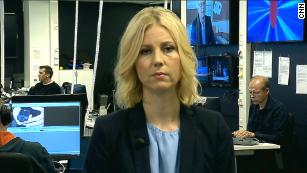
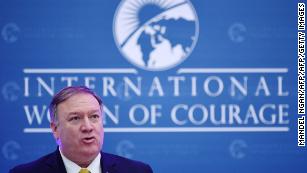
Back in March 2019 I reported on the US State Department revoking an award to a Finnish journalist [https://humanrightsdefenders.blog/2019/03/12/one-journalist-who-did-not-get-the-women-of-courage-award-but-almost/], but saying it was done in error. Now the State Department’s Office of Inspector General has established that it was done – as suspected already – because of the journalist had posted critically on President Donald Trump.

Finnish journalist speaks out after Trump administration cancels 'Courage' award

After a Foreign Policy report suggested that the State Department may have retaliated against her because of her criticism Trump on social media, then-State Department deputy spokesperson Robert Palladino asserted it was a miscommunication and that she had been “incorrectly notified” of her award. He called it a “regrettable error,” saying Aro actually “had not” been a finalist. However, the 16-page OIG report found that Aro’s social media posts were the only reason her award was rescinded. “Indeed, every person OIG interviewed in connection with this matter acknowledged that had (the Secretary’s Office of Global Women’s Issues) not highlighted her social media posts as problematic, Ms. Aro would have received the IWOC Award,” it states. Asked about the findings of the report, Aro told CNN Friday, “In my heart I feel like an international woman of courage. That the Trump administration can’t take away from me.” The release of the report comes more than a year after a group of Democratic senators on the Senate Foreign Relations Committee requested an OIG probe into the circumstances of Aro’s award being revoked. Sen. Bob Menendez, the ranking member on the committee, said in a statement Friday that the “State Department owes Ms. Aro an apology.”
..
Moreover, the report found that the State Department had provided false information to the press and Congress to explain why the award had been rescinded. Officials from the department’s Bureau of European and Eurasian Affairs “told OIG that they disagreed with the language in the talking points and press statements suggesting that Ms. Aro was incorrectly notified and was not an awardee,” the report says. In a briefing with the Senate Foreign Relations Committee in March 2019, the acting director of the Office of Global Women’s Issues said “not really” when asked if Aro’s social media posts played a role in the department’s decision and the ambassador claimed he was not “worried” about Aro’s social media posts. The “Department’s statements during this briefing do not align with the internal discussions that occurred at the time the decision was made to rescind Ms. Aro’s selection. OIG found no documentary evidence to corroborate the Department’s claims during the briefing with congressional staff,” the report states. “Also, Department officials from (the Secretary’s Office of Global Women’s Issues), (the Bureau of European and Eurasian Affairs), and Embassy Helsinki all told OIG that, had Ms. Aro’s social media content not come to light, she would have received the award.”

New documents raise questions over State Dept. move to rescind honor for Trump critic

Menendez said in his statement Friday that the report “confirmed that Secretary Pompeo’s Department misled the public and Congress about why it rescinded Ms. Aro’s award, covering up that her social media posts were the reason the award was withdrawn. The Trump administration also drafted talking points that falsely stated Ms. Aro had never been selected as a recipient.” “Secretary Pompeo should have honored a courageous journalist willing to stand up to Kremlin propaganda. Instead, his department sought to stifle dissent to avoid upsetting a President who, day after day, tries to take pages out of Putin’s playbook,” the New Jersey Democrat said.

Kenneth Roth speaks plainly on international human rights: China a violator and US “unprincipled”

September 29, 2020
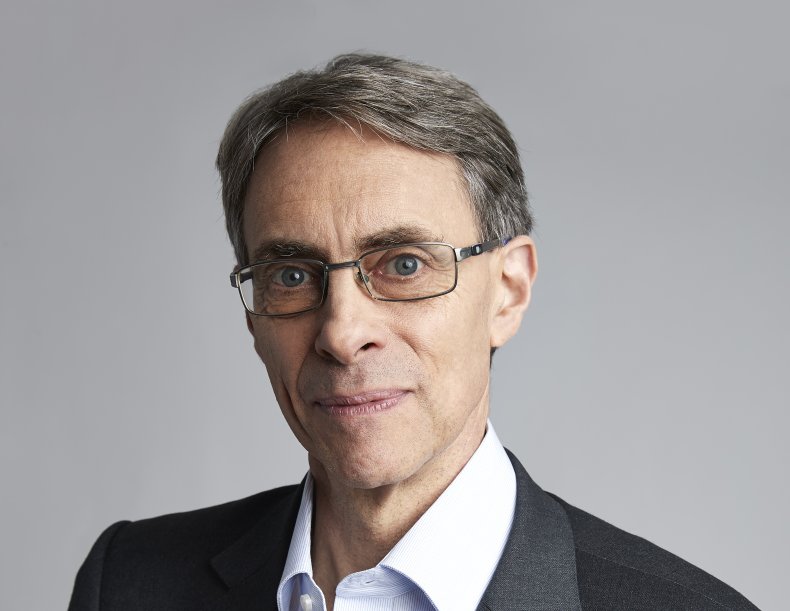
In Newsweek of 21 September 2020 did an interview with Kenneth Roth who has spent 27 years as the executive director of Human Rights Watch (HRW) in which he warns that China poses a threat to the global human rights system, that U.S. is no longer to be relied on as a supporter of human rights and how this has left a void, emboldening autocrats who have used the pandemic to undermine democratic societies.

China and the threat it poses to human rights both at home and around the world is a huge issue,” he says, identifying the current period as the darkest in China’s history when it comes to human rights since the Tiananmen Square massacre in 1989. More than a million Uighur Muslims have been put in internment camps in the country’s Xinjiang province, According to the United Nations (U.N.). China says the camps serve as “re-education” centers designed to combat extremism, but those who have managed to escape share stories of forced labor, torture, medical experiments and rape. Roth says: “The Uighurs are the most severe example of worsening repression under Xi Jinping (China’s prime minister). It’s quite clear that this is the darkest moment in China in human rights terms since the massacre of Tiananmen Square protesters in 1989, the Uyghurs have been the most grievous sufferers of that where a million or more have been detained essentially to force them to abandon Islam and their culture.” The worsening repression doesn’t just extend to minorities, it’s something Roth says we can see also occurring in Hong Kong and Tibet as well as against China’s own population more widely.

There is no independent civil society,” he says. “There is no independent media, human rights defenders are routinely imprisoned. There is a complete lockdown on any organized public dissent and that is just across the board, not just minority population areas. China’s also building this so-called social credit system which is designed to condition access to various governmental benefits on one’s social reliability. So it’s using high-tech tools to control the population.“…

….

On the human rights challenges facing Europe, Roth expresses particular concern about the situation in Belarus, where the man dubbed “Europe’s last dictator“, Alexander Lukashenko, is facing widespread protests over a disputed election. Lukashenko has been in power since 1994, with the government frequently accused of repressing the opposition….

Kenneth Roth
Kenneth Roth, executive director of Human Rights Watch

He also thinks India‘s Prime Minister Modi has got away with what he calls his systematic discrimination against the country’s 172 million Muslims because of the West’s desire to tap into Indian markets and use it as a counterweight against China, which Newsweek will be reporting on in the coming days.

Roth is highly critical of the Trump administration, accusing the president’s foreign policy of being driven by the guiding principle of “self-glorification” and only speaking out in defense of human rights when the offending country is a perceived adversary.

Trump is utterly uninterested in calling out any human rights violation by anybody other than a handful of perceived adversaries, China, Venezuela, Iran, Nicaragua and Cuba and that’s about it, which is a completely unprincipled approach to human rights which does not attract any adherence and greatly weakens the force of US intervention,” he says. “Human Rights Watch has been living with Trump for four years now and we have already stopped relying on the U.S. as anything like a principled supporter of human rights.”

With the U.S. increasingly withdrawing from the world stage and with the European Union not really filling the void, as he says, is there a new approach to the defense of human rights emerging?

See also: https://humanrightsdefenders.blog/2019/01/19/are-human-rights-defenders-making-a-comeback-kenneth-roth-thinks-so/

https://www.newsweek.com/human-rights-china-u-s-foreign-policy-trump-democracy-europe-human-rights-watch-1533239

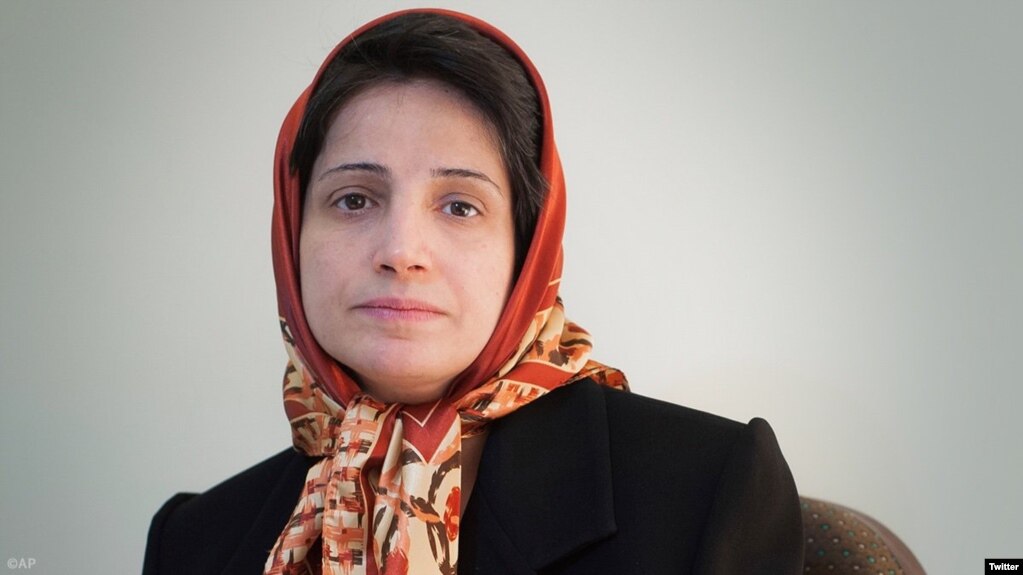
Nasrin Sotoudeh ends her hunger strike as UN experts write joint letter

September 27, 2020
Iranian human rights lawyer Nasrin Sotoudeh

Sotoudeh had been on a hunger strike in Tehran’s Evin prison since August 11 to protest the risk that political prisoners in Iran face amid the coronavirus pandemic. [see also: https://humanrightsdefenders.blog/2020/09/06/german-judges-give-their-human-rights-award-to-iranian-human-rights-lawyer-nasrin-sotoudeh/%5D

On September 19, she was taken to hospital for a serious heart condition. But four days later, she was taken back to Evin prison, triggering disbelief from UN independent experts among others.

“It is unfathomable that the Iranian authorities would return Ms. Sotoudeh to prison where she is at heightened risk to COVID-19, as well as with her serious heart condition,” the experts said.

We urge the authorities to immediately reverse this decision, accept her requests to recuperate at home before undergoing a heart procedure, and allow her to freely choose her own medical treatment,” they added in a statement.

The experts echoed Sotoudeh’s call for the Iranian authorities to grant temporary release to human rights defenders, lawyers, dual and foreign nationals, prisoners of conscience, political prisoners, and all other individuals detained without sufficient legal basis during the COVID-19 pandemic.

47 countries called on Iran to “protect the human rights of all its citizens and release all political prisoners and arbitrarily detained” in a Friday session of the UN Human Rights Council, according to a German diplomat, Susanne Baumann:

Susanne Baumann
@GERMANYonUN
Joint Statement on the dire human rights situation in Iran today in the Human Rights Council #HRC45, presented by Germany on behalf of 47 countries. We call on Iran to protect the human rights of all its citizens and release all political prisoners & arbitrarily detained.
———

https://www.rferl.org/a/jailed-iranian-human-rights-defender-ends-hunger-strike-as-health-deteriorates/30859117.html

https://www.rudaw.net/english/middleeast/iran/26092020

https://www.scoop.co.nz/stories/WO2009/S00203/iran-human-rights-lawyer-nasrin-sotoudeh-must-be-freed-for-treatment-say-un-experts.htm

Timtik sisters in Turkey share 2020 Ludovic Trarieux Prize

September 26, 2020

This year’s Ludovic Trarieux International Human Rights Prize has been granted to arrested lawyers Barkın Timtik and her sister lawyer Ebru Timtik, who lost her life on a death fast for a fair trial.

See: https://humanrightsdefenders.blog/2020/08/29/human-rights-defender-ebru-timtik-dies-in-istanbul-hospital-after-238-days-hungerstrike/

For more on this and other awards for human rights lawyers, see: https://www.trueheroesfilms.org/thedigest/award/7C413DBA-E6F6-425A-AF9E-E49AE17D7921

For last year, see: https://humanrightsdefenders.blog/2019/10/22/2019-ludovic-trarieux-international-human-rights-award-goes-to-rommel-duran-castellanos-of-colombia/

—–

http://bianet.org/english/human-rights/231534-ludovic-trarieux-human-rights-prize-awarded-to-lawyers-barkin-and-ebru-timtik

Read more at: https://www.deccanherald.com/international/posthumous-award-for-turkish-lawyer-who-died-on-hunger-strike-892583.html