Clea Skopeliti reports in the Independent of 27 January 2021 that an 11-year-old environmental and children’s rights activist in Colombia has received death threats after he urged the government to improve children’s access to remote education during the Covid-19 pandemic.
Francisco Vera was sent a death threat from an anonymous Twitter account in mid-January after posting a video calling on the government to better internet connection for pupils learning from home during the coronavirus crisis. The child activist has since been awarded with a letter of congratulations from the UN for his work, personally delivered by a UN representative who also expressed solidarity with the 11-year-old for the intimidation he has faced.
Francisco’s mother, Ana María Manzanare was the first to noticed the threatening messages. Ms Manzanare told Columbian newspaper El Tiempo: “I was the one who noticed that message because I checked all of Francisco’s networks. He had already received many ridicules, criticism and insults for his activism in defence of life and the environment, but he had never been threatened with death.”
Colombian President Ivan Duque condemned the threats of violence, and ordered the police to “find those bandits” who threatened Francisco. Police say the investigation is ongoing.
The UN Human Rights Council (UNHRC) must take urgent steps to address the worsening human rights situation in Sri Lanka, said Amnesty International, on 27 January 2021 following the release of a damning UN report on the country’s efforts to ensure accountability for crimes committed during the civil conflict.
In February 2020, the Sri Lankan government announced that it would no longer cooperate with the UNHRCs landmark resolution 30/1, which promotes reconciliation, accountability, and human rights in the country, and would instead pursue its own reconciliation and accountability process. This report lays bare Sri Lanka’s abject record on delivering justice and accountability and the decaying effect this has had on human rights in the country David Griffiths, Director of the Office of the Secretary General at Amnesty International
“This report lays bare Sri Lanka’s abject record on delivering justice and accountability and the decaying effect this has had on human rights in the country. The seriousness of these findings highlights the urgent need for the UN Human Rights Council to step up its efforts in Sri Lanka,” said David Griffiths.
“For more than a decade, domestic processes have manifestly failed thousands of victims and their families. Given the government’s decision to walk away from resolution 30/1, and regression on the limited progress that had been made, the Human Rights Council must send a clear message that accountability will be pursued with or without the cooperation of the government.”
Amnesty International is calling on the UN Human Rights Council to implement the report’s key recommendations to put in place more stringent oversight on Sri Lanka, including more robust monitoring and reporting on the human rights situation, and the collection and preservation of evidence for future prosecutions.
“UN member states should learn from past experience, and this time heed the early warning indicators identified by the UN’s top human rights official.” said David Griffiths
The OHCHR report, published on 27 January 2021, is available to download here:. The Human Rights Council will meet for its 46th session from 22 February to 23 March, during which Canada, Germany, Montenegro, North Macedonia and the UK – the current core group of states leading on Sri Lanka – are expected to present a resolution in follow-up to the OHCHR report.
Amnesty International published an assessment of the situation in Sri Lanka, setting out clear expectations for HRC action, earlier this month. The High Commissioner’s report supports the call for more robust monitoring and reporting on the situation, as well as the collection and preservation of evidence for future prosecutions.
The human rights organization Amnesty International published a scathing report on 25 January 2021 decrying the inhumane conditions in Egyptian prisons. The report comes a decade after the Arab Spring uprising.
The report detailed the experiences of 67 individuals in detention, 10 of whom died in custody and two who died shortly after being released. It was carried out primarily between February 2020 and November 2020 and focused on 16 prisons. It found that:
Prisoners were kept in squalid conditions and received unhealthy food;
There was no proper access to health care, which may have resulted in death;
Overcrowding, poor ventilation and limited access to water and toilets led inevitably to outbreaks of coronavirus.
The report also found that some prisoners were deliberately denied access to health care due to their political affiliations. Activists, politicians and human rights defenders were denied basic treatments available to other inmates. There was also evidence of prison authorities “targeting prisoners critical of the government and denying them adequate food or family visits,” Markus Beeko, Secretary General of Amnesty International in Germany, asserted. According to UN estimates, there are 114,000 people incarcerated in the north African country.
On 22 January 2021 Mary Lawlor also deplored the arrest and prolonged pre-trial detention of human rights defenders and bloggers, and their accusation of being members of a terrorist organisation, continuing Egypt’s practice to intimidate and criminalise human rights defenders, journalists and their families.
“I am extremely concerned by the seemingly unrelenting efforts of the Egyptian authorities to silence dissent and shrink civic space in the country, despite repeated calls from UN mechanisms and the international community,” said Mary Lawlor, UN Special Rapporteur on the situation of human rights defenders.
The Special Rapporteur said she was disturbed by the detention since 2018 of human rights defender and blogger Mohamed Ibrahim Radwan, also known as ‘Mohamed Oxygen’, on charges of “membership of a terrorist organisation” and “misuse of social media” in retaliation for his posts and videos reporting on human rights issues. He was granted conditional release by the Cairo Criminal Court in November last year but was attached to a new case on charges of joining a terrorist organisation and kept in detention. He remains in pre-trial detention in Al-Aqrab Prison, south of Cairo.
Lawlor said that human rights defenders such as researcher and post-graduate student Patrick Zaki, who was arrested in February last year, have endured repeated renewals of detention without trial. “Pre-trial detention should only be used as the exception to the rule, rather than the default approach,” said Lawlor.
“Not only are these human rights defenders, journalists and other civil society actors unduly targeted for their legitimate and peaceful defence of human rights and fundamental freedoms, they are wrongfully accused of belonging to terrorist organisations and portrayed as a national security threat under vague legal provisions,” the Special Rapporteur said. “This is an issue which I and a number of UN experts have previously communicated our concern about to the Egyptian authorities.”
Ten years after the Tahrir square protests in Cairo, Egypt’s human rights record is disastrous. On the occasion of the anniversary of the 2011 revolution, several international campaigns are calling for the release of imprisoned activists writes Sofian Philip Naceur in Qantara.de Violent, authoritarian and extremely paranoid: since his bloody takeover in 2013, Egypt’s President Abdul Fattah al-Sisi has restored a regime whose brutality far outstrips even the reign of long-term ruler Hosni Mubarak. Hopes for real political and social change after the mass uprising that forced Mubarak out of office after 30 years in power have faded away, leaving a disillusionment that is omnipresent.
Egyptian opposition figures are using the current media attention around the tenth anniversary of the “25 January Revolution” to highlight the fate of those currently in prison for their political engagement. Some have been sentenced to heavy jail terms, while others are subjected to pre-trial detention lasting years by the Egyptian security forces and the country’s judiciary. European opposition politicians are also participating in corresponding campaigns.
Eight politicians from Germany’s left-wing party – Die Linke – have signed a solidarity statement calling for the immediate release of all political detainees, which explicitly highlights the fate of six detained leftist activists, journalists and trade unionists. Although the campaign specifically highlights six individual cases, it expresses solidarity not only with Egyptian leftists, but with all those “who are resisting Sisi’s dictatorship”. In addition to journalist Hishem Fouad, who advocated for striking workers and independent trade unions long before 2011, the German politicians are also calling for the release of novelist Ayman Abdel Moati, lawyer and trade union activist Haitham Mohamadeen and trade unionist Khalil Rizk. All four are detained on flimsy, terrorism-related charges.
The Danish government should renew and strengthen efforts to secure the immediate and unconditional release of prominent human rights defender and dual Danish-Bahraini citizen, Abdulhadi Al-Khawaja, 108 international and Bahraini rights groups said on 24 January 2021 in a joint letter to Prime Minister Mette Frederiksen of Denmark. As reported by the AhlulBayt News Agency (ABNA).
The human rights defender, Abdulhadi Al-Khawaja, 59, is serving a life sentence in Bahrain’s Jaw prison for his peaceful political and human rights activities, in violation of his right to freedom of expression. [see also https://humanrightsdefenders.blog/tag/abdulhadi-al-khawaja/]
“There is no doubt that the conviction and sentencing of Abdulhadi al-Khawaja was unfair and oppressive and tried to silence his prominent voice demanding the rights of Bahrainis,” said Joe Stork, deputy Middle East director at Human Rights Watch. “Al-Khawaja should not have had to spend a single minute behind bars, yet he has been unjustly detained for almost a decade.”
On 21 January, 2021 Ellen Moore in Earthworks reports that more than 190 organizations have denounced an armed attack against Guatemalan land defender Julio David González Arango, a leader in the peaceful resistance to Pan American Silver’s Escobal mine. Julio was shot and wounded on January 16 at his home. Since the attack, two other members of the peaceful resistance have received threatening messages saying they’ll be next. The letter calls on the Guatemalan Attorney General to immediately launch a thorough investigation into the attack and hold the material and intellectual authors of this crime responsible. Julio has led opposition to the Escobal mine for nearly a decade, facing numerous criminalization and defamation campaigns against him by supporters of the mine. Saturday’s terrifying attack is part of a long history of violence against opponents of the Escobal mine since the project was first imposed in 2011. A Constitutional Court order suspended the mine in 2017 pending consultation with the Xinka people. But the threats and defamation campaigns against community leaders never stopped. In early December, a complaint was filed with Guatemalan authorities denouncing threats against Julio. Community leaders report that following the filing of the complaint, threats against them actually increased, including threats directed at Xinka representatives who are participating in the consultation process.
This is a dangerous time for land-defenders impacted by the Escobal mine, which Xinka leaders say is made worse by Pan American Silver’s ongoing community outreach. For more than two years, the Xinka have called on the company to respect the court ordered suspension and halt all mining activities, including community programs, which they say stoke tensions and undermine their ability to freely participate in the consultation process.
While the Ministry of Energy and Mines (MEM) recently agreed to accept all 59 Xinka representatives in the consultation process, marking the first significant advancement in almost two years, serious obstacles remain. A recent report details a slew of attacks against judicial independence in Guatemala, including allegations of corruption within the Supreme Court. This is significant for the Escobal mine consultation given that the Supreme Court is the main arbiter in the process, responsible for ensuring that the Constitutional Court order is upheld and Xinka rights are respected. Without an independent and impartial Supreme Court, Xinka communities are left in an increasingly precarious and dangerous situation.
As this blog has abundantly shown, Human Rights Awards have become an increasingly important tool in the protection of Human Rights Defenders. They give HRDs visibility and provide support and protection for those at risk. [see e.g. https://humanrightsdefenders.blog/tag/human-rights-awards/].
On February 2nd 2021 a new one-stop resource will allow to find and search human rights awards and their laureates.
The Digest of International Human Rights Awards and their Laureates, a unique centralised resource for the human rights community, gives visibility, strengthens legitimacy of human rights defenders’ work, and could influence authorities to better apply human rights. There are now 200 awards and over 2400 HRDs/laureates in the digests.
It will give researchers, students, activists, the media and the public a searchable overview on who has won which awards and their short profiles. The digest will allow people to filter (re)searches on laureates by, e.g. theme, prize, profession, country or region, gender, etc.
On February 2nd, 2021True Heroes Films will be launching the new platform to the public. See the clip below:
Yu Wensheng was detained in Beijing in January 2018 in front of his young son just hours after he wrote an open letter calling for constitutional reforms, including multi-candidate elections.
“His physical state is very poor. His right hand is deformed and trembles so much that he cannot write,” his wife Xu Yan told AFP. Last week, she was allowed to have a 25-minute video call with her husband, who is being held in a detention centre in the eastern province of Jiangsu. It was their first such meeting in three years, she said. Four of Yu’s teeth were missing and he was unable to chew food properly, Xu said, and that there was no heating in the detention centre.. “There are probably a lot of things he cannot say right now, we will only know the full extent of what he experienced after he is released,” she said.
Xu said her husband’s nomination “not only supports and honours (him), but is also encouragement and affirmation to other human rights lawyers and defenders”. Yu’s defence lawyer Lu Siwei had his legal licence revoked by authorities last week after handling several sensitive human rights cases..
Beijing denied knowledge of either Yu or the Martin Ennals Award on Tuesday. “There are indeed some people abroad who are always using human rights as a pretext to create a disturbance,” said foreign ministry spokeswoman Hua Chunying at a regular briefing on Tuesday. “I think this behaviour has no meaning whatsoever.”
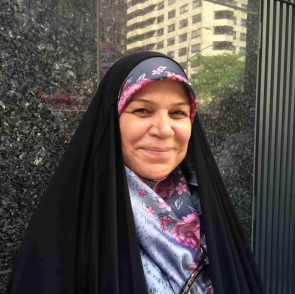
It has now been made public that Fatima Al-Bahadly, a human rights defender from the city of Basra, has received the 2020 Frontline Defenders Award.
The award was granted to Al-Bahadly for her role in founding Al-Firdaws Society, an organisation that focuses on protecting women affected by war and strengthening their role in peace building.
Today 18 January 2021, the Martin Ennals Foundation announced that three outstanding human rights defenders based in authoritarian states are nominated for the 2021 Martin Ennals Award.
In isolated Turkmenistan, Soltan Achilova documents human rights violations and abuses through photojournalism.
Imprisoned in Saudi Arabia, Loujain AlHathloul is a leading advocate for gender equality and women’s rights.
A lawyer, Yu Wensheng defended human rights cases and activists before his conviction and imprisonment in China.
The Finalists distinguish themselves by their bravery and deep commitment to the issues they defend, despite the many attempts to silence them by respective governmental authorities. The 2021 Martin Ennals Award Ceremony will celebrate their courage on 11 February during an online ceremony hosted jointly with the City of Geneva which, as part of its commitment to human rights, has for many years supported the Award. “Every year thousands of human rights defenders are persecuted, harassed, imprisoned, even killed. The Martin Ennals Foundation is honored to celebrate the 2021 Finalists, who have done so much for others and whose stories of adversity are emblematic of the precarity faced by the human rights movement today”, says Isabel de Sola, Director of the Martin Ennals Foundation.
“Authoritarian states tend to believe that by jailing or censoring human rights defenders, the world will forget about them. During the COVID-pandemic, it seemed like lockdowns would successfully keep people from speaking out. This year’s Finalists are a testament to the fact that nothing could be further from the truth”, says Hans Thoolen, Chair of the Jury.
In Turkmenistan, one of the world’s most isolated countries, freedom of speech is inexistent and independent journalists work at their own peril. Soltan Achilova (71), a photojournalist, documents the human rights abuses and social issues affecting Turkmen people in their daily lives. Despite the repressive environment and personal hardships, she is one of the very few reporters in the country daring to sign independent articles.
In Saudi Arabia, women still face several forms of gender discrimination, so much so, that the Kingdom ranks in the bottom 10 places according to the World Economic Forum’s Global Gender Gap Report 2020. Loujain AlHathloul (31) was one of the leading figures of the Women to drive movement and advocated for the end of the male guardianship system. She was imprisoned in 2018 on charges related to national security together with several other women activists. Tortured, denied medical care, and subjected to solitary confinement, Loujain was sentenced to 5 years and 8 months in prison on 28 December 2020. [see: https://humanrightsdefenders.blog/tag/loujain-al-hathloul/]
In China, more than 300 human rights activists and lawyers disappeared or were arrested in 2015 during the so called 709 Crackdown. A successful business lawyer, Yu Wensheng (54) gave up his career to defend one of these detained lawyers, before being arrested himself. Detained for almost three years now, Yu Wensheng’s right hand was crushed in jail and his health is failing. [see also: https://humanrightsdefenders.blog/2019/06/26/lawyers-key-to-the-rule-of-law-even-china-agrees-but-only-lip-service/]
Online Award Ceremony on 11 February 2021
The 2021 Martin Ennals Award will be given to the three Finalists on 11 February 2021 at an online ceremony co-hosted by the City of Geneva (Switzerland), a long-standing supporter of the Award. “The City of Genevareaffirmsits support to human rights, especially during these times of crisis and upheaval. Human rights are the foundation of our society, not even the pandemic will stop us from celebrating brave persons who have sacrificed so much”, says Member of the executive Alfonso Gomez.
A candidate should be active in the struggle for the ideals and principles underlying the United Nations Universal Declaration of Human Rights.
A candidate’s struggle for human rights should represent a non-violent perspective.
A candidate may be a person or an organization, and two or more candidates may share the prize.
Anyone with an interest in and knowledge about human rights is welcome to nominate candidates. Candidates nominated by themselves or by their staff or by honorary officers will not be taken into consideration.
How do I nominate?
Fill in the form below by clicking the blue “make a nomination”-button and attach required documents.
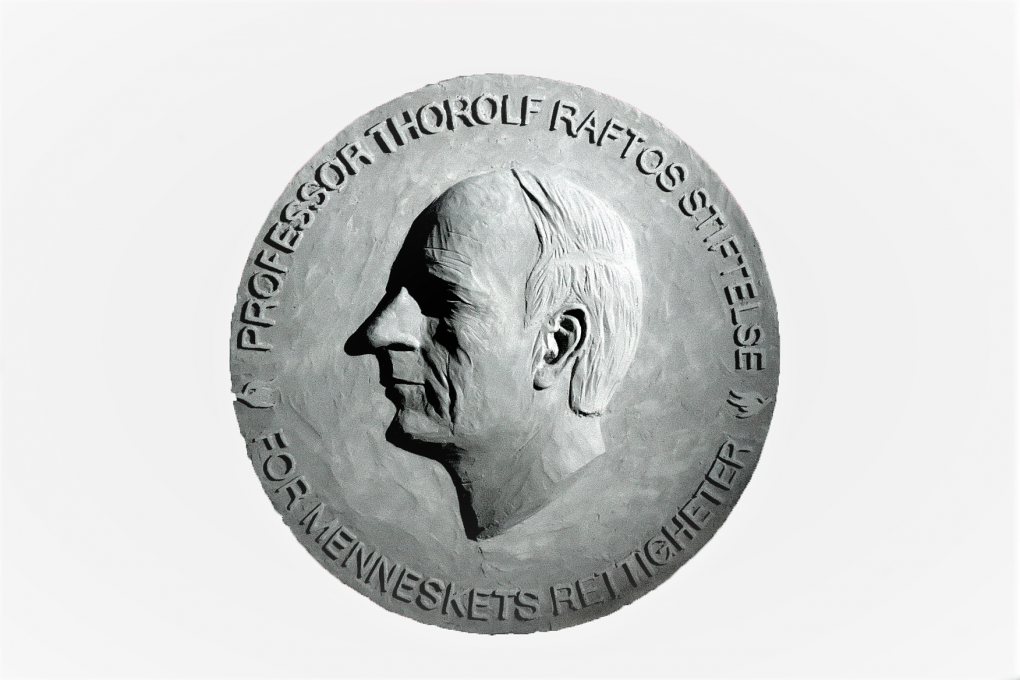
Deadline for nominations: 1 February. Nominations received after 1 February will be taken into consideration for the Rafto Prize the following year.
Each year we announce the recipient of the Rafto Prize in the end of September at a press conference at the Rafto House in Bergen. The announcement is live streamed on our website and on Facebook.




 Hans Thoolen on Human Rights Defenders and their awards